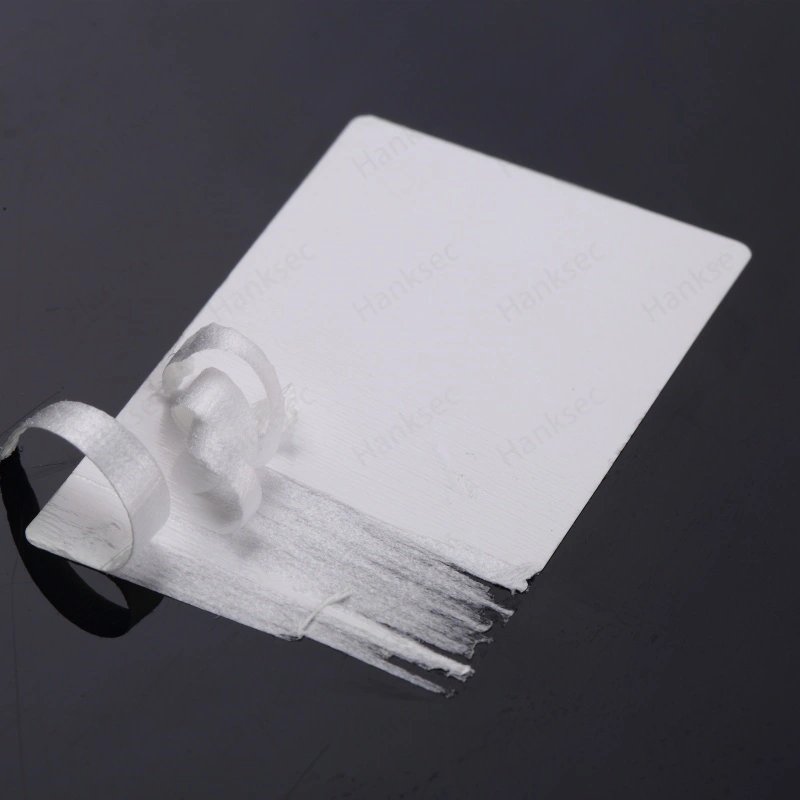
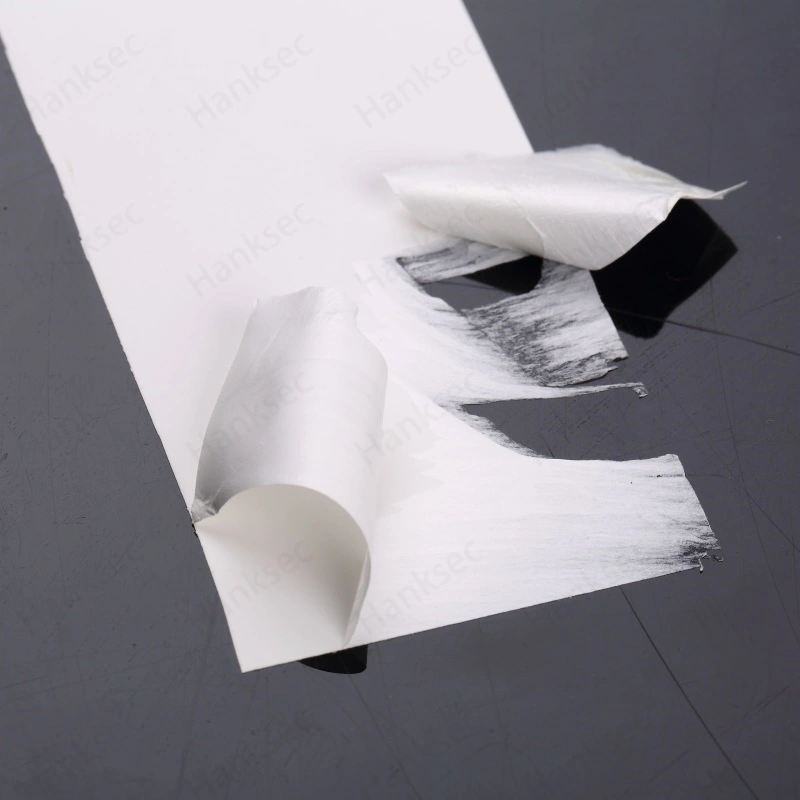
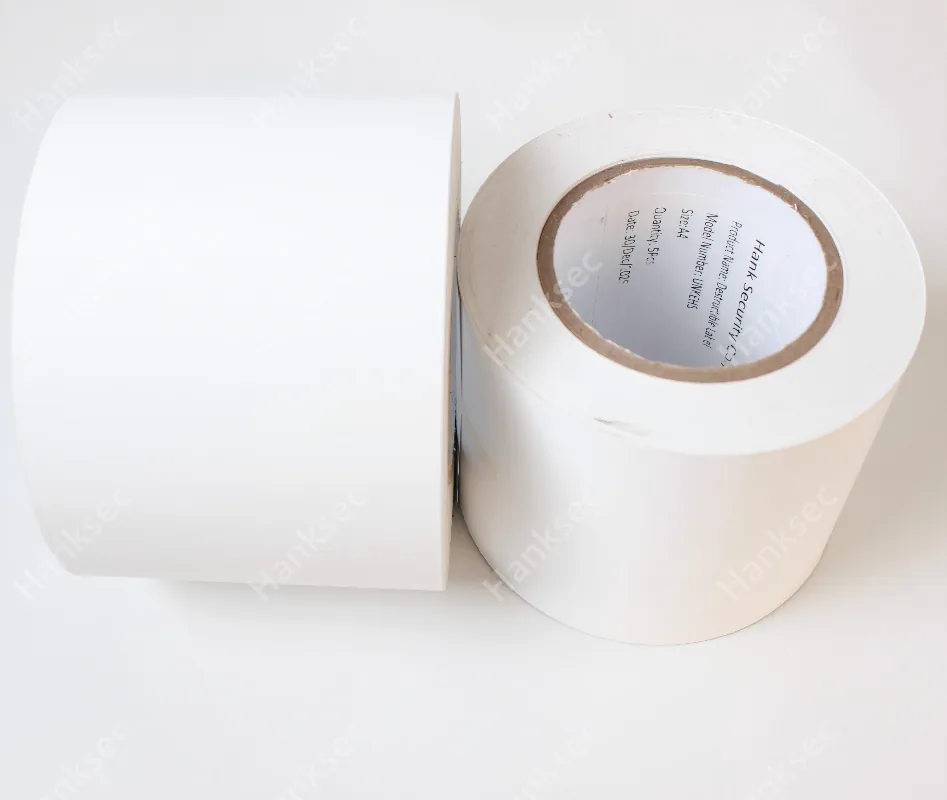
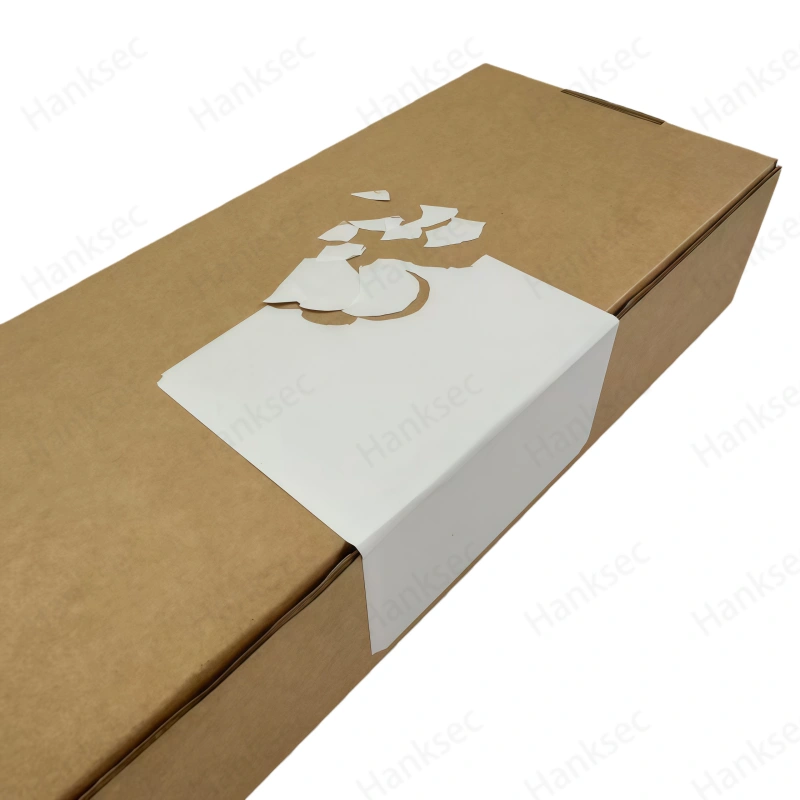
Les étiquettes destructibles Foamtack sont des matériaux de sécurité inviolables conçus pour se briser en fragments lors de leur retrait.
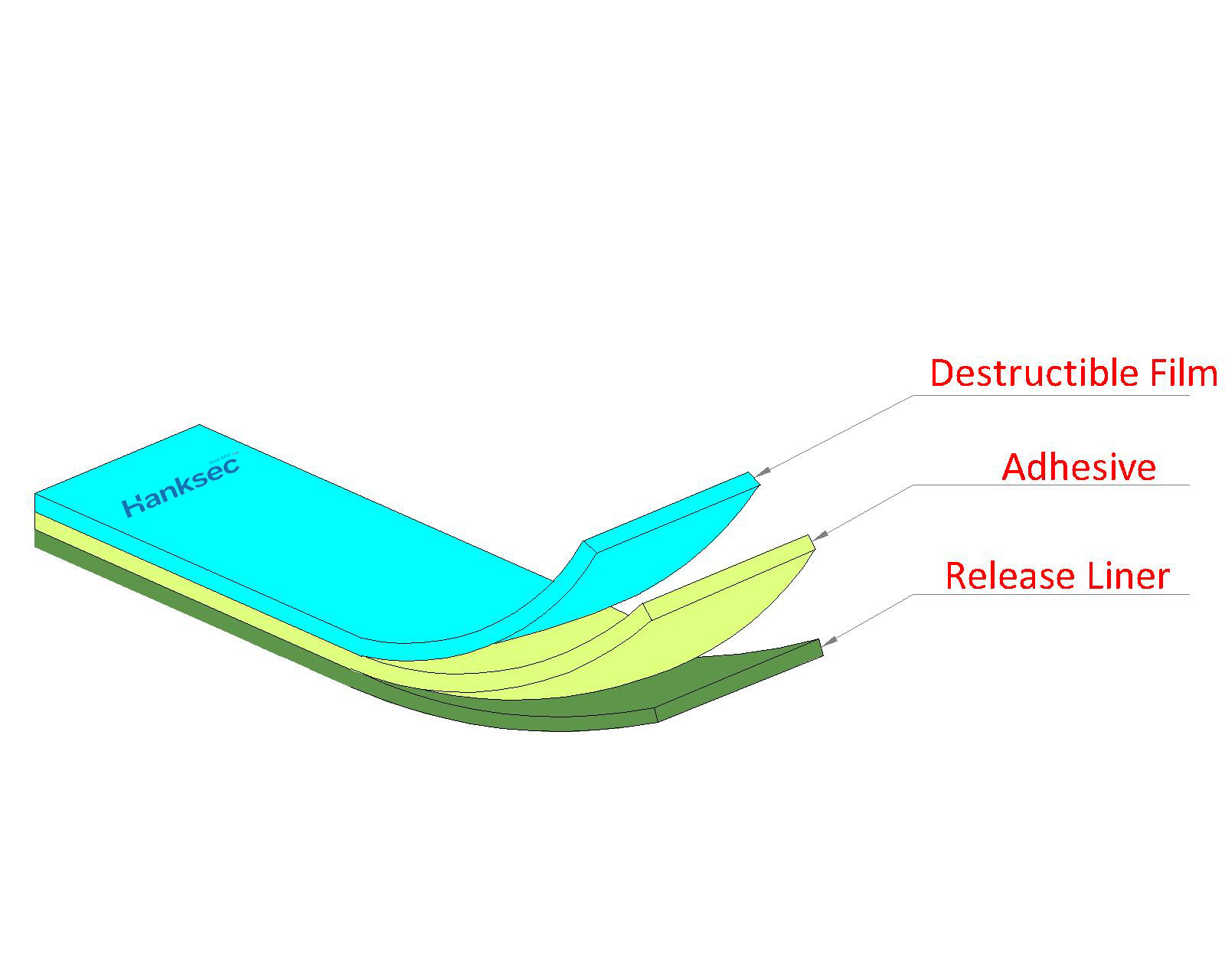
Les étiquettes destructibles Foamtack utilisent un adhésif et une structure de film spécialement conçus pour garantir des dommages irréversibles lors de toute tentative de retrait.
Une fois appliqué, le matériau ne peut être entièrement retiré sans laisser de traces visibles, constituant ainsi une preuve de falsification.
Ces matériaux sont largement utilisés dans la protection des produits électroniques, le scellement des garanties, la sécurité logistique et les emballages anti-contrefaçon.
Caractéristiques principales du matériau d'étiquettes destructibles Hanksec Foamtac
- Structure adhésive à base de mousse pour un meilleur contact de surface
- Le film fragile et destructible se brise après les tentatives de retrait.
- Convient aux surfaces rugueuses, irrégulières, texturées ou légèrement incurvées
- Contribue à prévenir le retrait propre, la réutilisation des étiquettes et le remplacement non autorisé
- Utile pour les emballages industriels, les étiquettes d'équipement, les scellés de cartons et les pièces en plastique
- Logo personnalisé, numéro de série, code QR, code-barres, texte d'avertissement et forme découpée disponibles
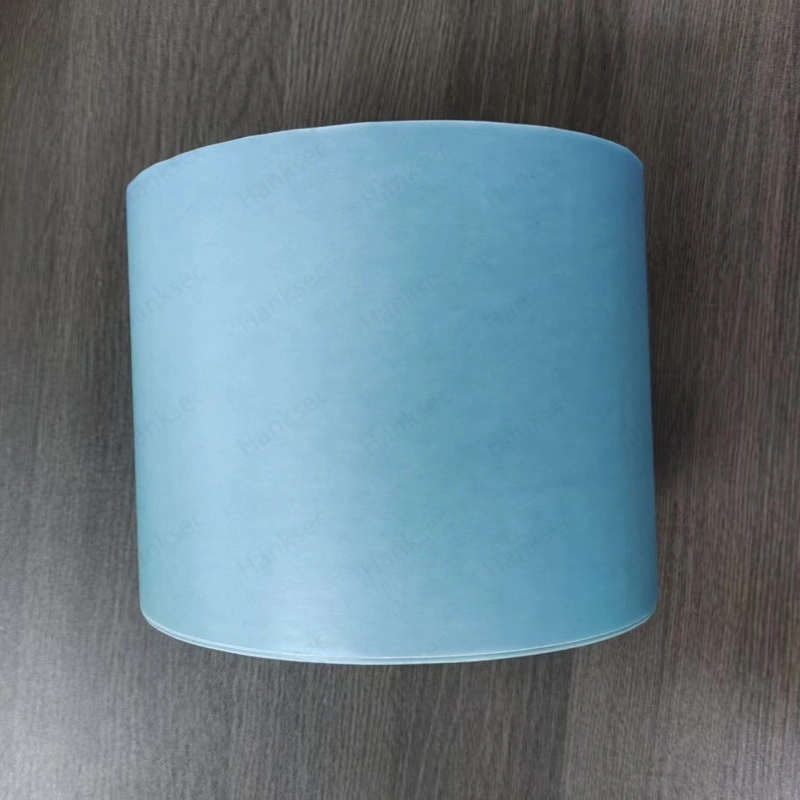
- Disponible en rouleaux jumbo, rouleaux refendus, feuilles ou étiquettes personnalisées finies
- Assistance OEM et ODM pour les transformateurs d'étiquettes, les fournisseurs d'emballages et les propriétaires de marques
Applications recommandées
Le matériau d'étiquettes destructibles Foamtac est couramment utilisé pour les scellés d'emballages rugueux, les étiquettes de garantie d'équipements, les étiquettes d'actifs industriels, les scellés de boîtiers en plastique, les étiquettes de surfaces métalliques, les emballages logistiques, les cartons de formes spéciales, la sécurité des documents et l'authentification des produits contrefaits.
Ce matériau est recommandé lorsque la surface d'application n'est pas parfaitement lisse et que le client a besoin d'une meilleure adhérence que celle des étiquettes fines et fragiles ordinaires. Il contribue à améliorer la fiabilité de la fermeture tout en laissant apparaître une trace visible de dommages physiques après retrait.
Foamtac contre matériau d'étiquette destructible standard
Les étiquettes destructibles standard sont généralement plus fines et adhèrent mieux aux surfaces lisses, propres et planes. L'étiquette destructible Foamtac, quant à elle, est composée d'une structure en mousse plus épaisse, ce qui la rend plus adaptée aux emballages ou aux produits nécessitant un meilleur remplissage des interstices et une adhérence optimale.
Pour les petits scellés de garantie plats, les clients peuvent opter pour du vinyle ultra-destructible ou des films destructibles standard. Pour les cartons rugueux, le plastique moulé, les surfaces texturées ou les emballages de formes spéciales, le matériau Foamtac offre une solution de collage plus pratique.
Compatibilité d'impression et de conversion
Le matériau d'étiquettes destructibles Foamtac peut être personnalisé avec des logos de marque, des numéros de série, des codes QR, des codes-barres, des textes d'avertissement, des marques d'inspection et des motifs de sécurité. Du fait de sa structure en mousse plus épaisse, la profondeur de découpe, la pression de découpe, la stabilité des bords, la tension du rouleau et la qualité de distribution doivent être testées avant la production en série.
Pour les transformateurs d'étiquettes et les imprimeries, les points clés du processus comprennent la compression de la couche de mousse, le collage de l'adhésif, le contrôle de la rupture du support, la performance du décollement de la matrice, la force de détachement du support et l'épaisseur finale de l'étiquette. Hanksec peut fournir un accompagnement pour les tests d'échantillons en fonction du processus de transformation du client.
Compatibilité et tests de surface
Avant la production en série, il est conseillé aux clients de tester l'étiquette sur la surface d'application réelle. Les cartons rugueux, les pièces en plastique moulé, le métal peint, les boîtiers d'équipements texturés, le carton couché, les emballages en mousse et les surfaces courbes peuvent présenter des performances d'adhérence et de résistance à la rupture différentes.
La poussière, l'huile, le traitement de revêtement, la texture de surface, la pression d'application, la température, l'humidité et le temps de séchage de l'adhésif peuvent tous influencer le résultat final. Pour les surfaces rugueuses ou irrégulières, les tests doivent inclure l'adhérence au pelage, la stabilité au contact, la résistance au décollement des bords, l'effet de fragmentation, la durabilité de l'impression et l'aspect final après application.
Matériaux Hanksec destructibles et étiquettes de sécurité associés
Les clients peuvent également consulter les documents Hanksec connexes, notamment destructible label materials, Matériaux d'étiquette VOID, bandes de sécurité inviolables, bandes de sécurité VOID non transférables, et produits de sécurité inviolables.
Références sur les essais et les adhésifs sensibles à la pression
Pour les étiquettes destructibles Foamtac, les clients évaluent souvent l'adhérence au pelage, la compression de la couche de mousse, l'adhérence de surface, la résistance au décollement des bords, le comportement à la fragmentation, la durabilité de l'impression et la stabilité à la transformation. Des références externes utiles incluent : Essai d'adhérence par pelage ASTM D3330, Méthodes d'essai des rubans adhésifs sensibles à la pression PSTC, et Méthodes d'essai FINAT pour les étiquettes auto-adhésives.
Spécification
|
Facestock |
Film destructible auto-développé |
|
Épaisseur du plateau |
50 à 110 microns ou sur mesure |
|
Couleur |
Blanc mat ou personnalisé |
|
Adhésif |
Acrylique sensible à la pression ou sur mesure |
|
Finition couleur |
Mat |
|
Degré destructible |
Facile/Moyen/Difficile |
|
MOQ |
530 mm x 500 m ou sur mesure |
|
Doublure |
Papier glassine 60/80g ou papier kraft |
|
Largeur de la taille |
100 / 200 / 300 / 530 / 1060 mm ou sur mesure |
|
Taille Longueur |
400 / 500 / 1000 / 2000 m ou sur mesure |
|
Taille standard du noyau |
3 pouces ou sur mesure |
|
Plage de températures |
-20°C - 80℃ |
|
Délai de mise en œuvre |
3 à 7 jours |
|
durée de conservation |
1 an en conditions normales, éviter la lumière directe du soleil et une humidité élevée. |
|
Méthodes d'impression : |
Impression numérique, impression UV, sérigraphie, impression en creux, impression rotative, impression offset, impression par transfert thermique, impression jet d'encre, etc. |
Structure du produit