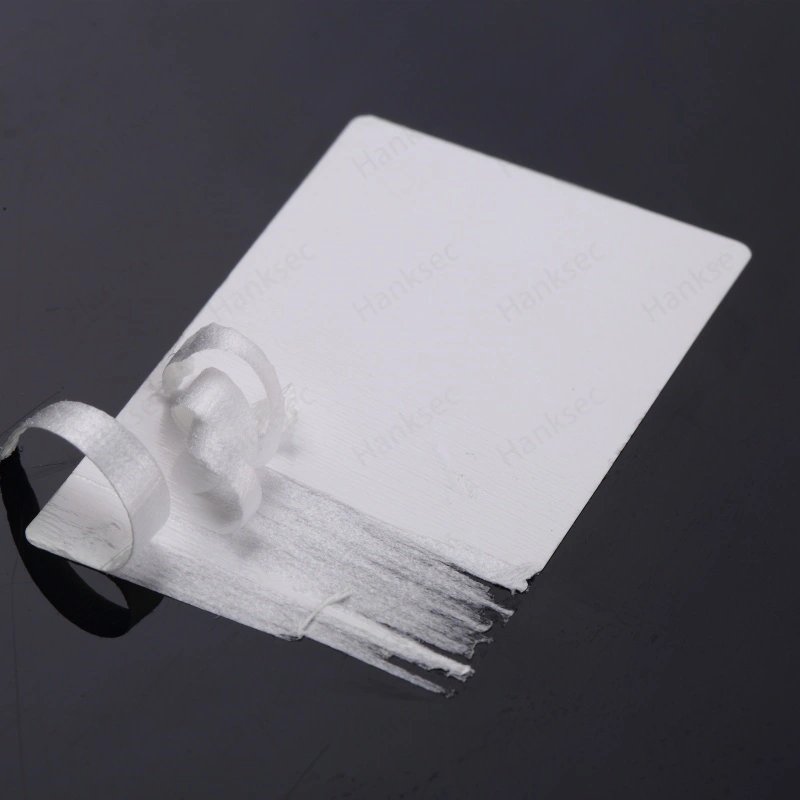
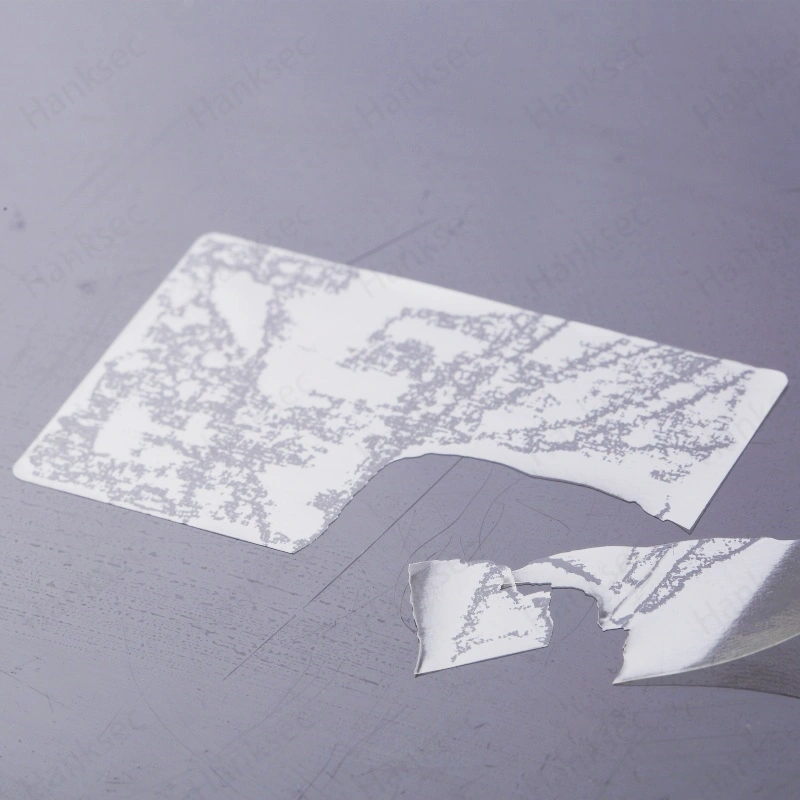
Foamtack Destructible Label Materials are engineered tamper-evident security materials designed to break into fragments upon removal.
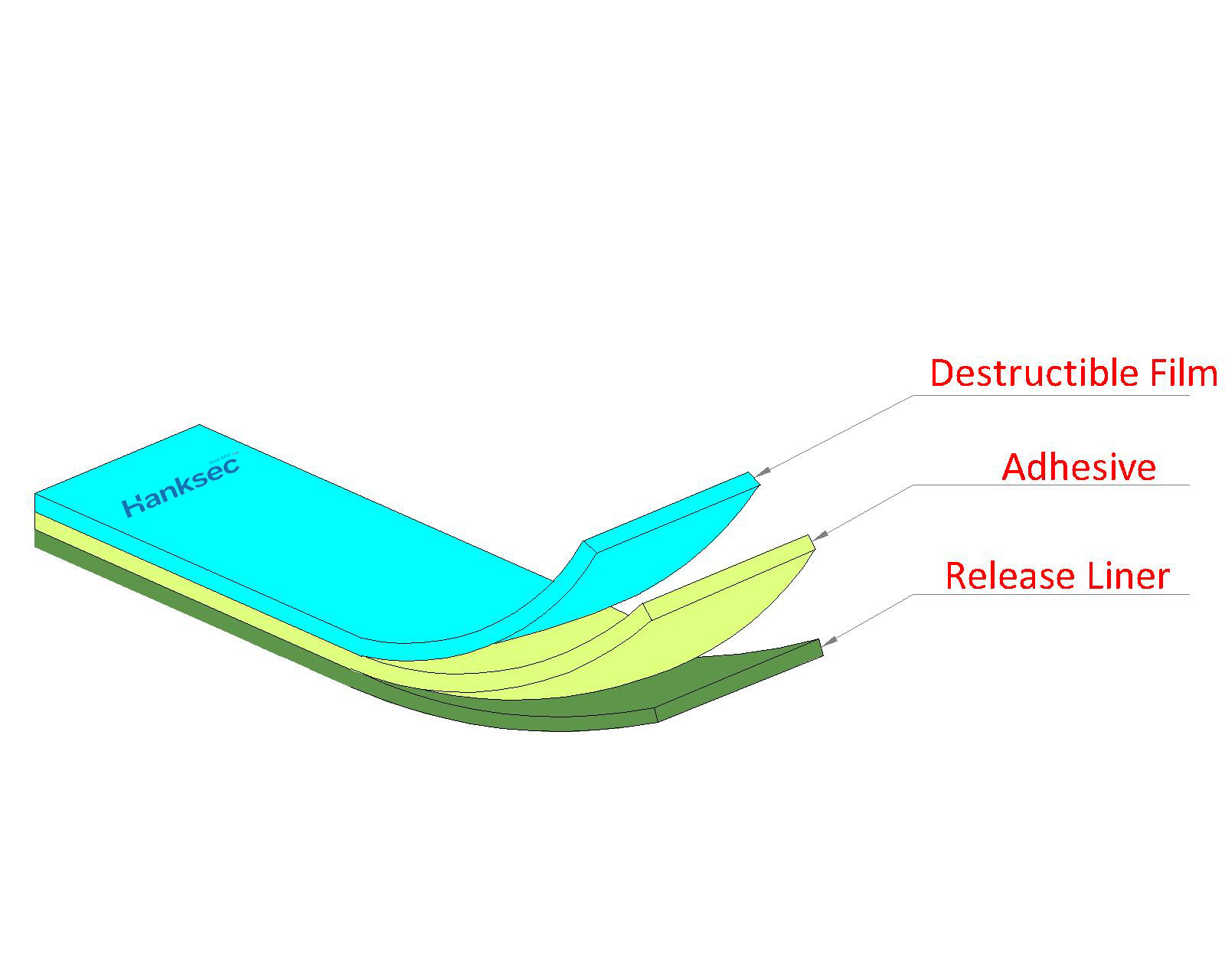
Foamtack destructible label materials use a specially engineered adhesive and film structure that ensures irreversible damage when removal is attempted.
Once applied, the material cannot be fully removed without leaving visible breakage, ensuring tamper evidence.
These materials are widely used in electronics protection, warranty sealing, logistics security, and anti-counterfeit packaging.
Key Features of Hanksec Foamtac Destructible Label Material
- Foam-based adhesive structure for improved surface contact
- Fragile destructible film breaks after removal attempts
- Suitable for rough, uneven, textured, or slightly curved surfaces
- Helps prevent clean removal, label reuse, and unauthorized replacement
- Useful for industrial packaging, equipment labels, carton seals, and plastic parts
- Custom logo, serial number, QR code, barcode, warning text, and die-cut shape available
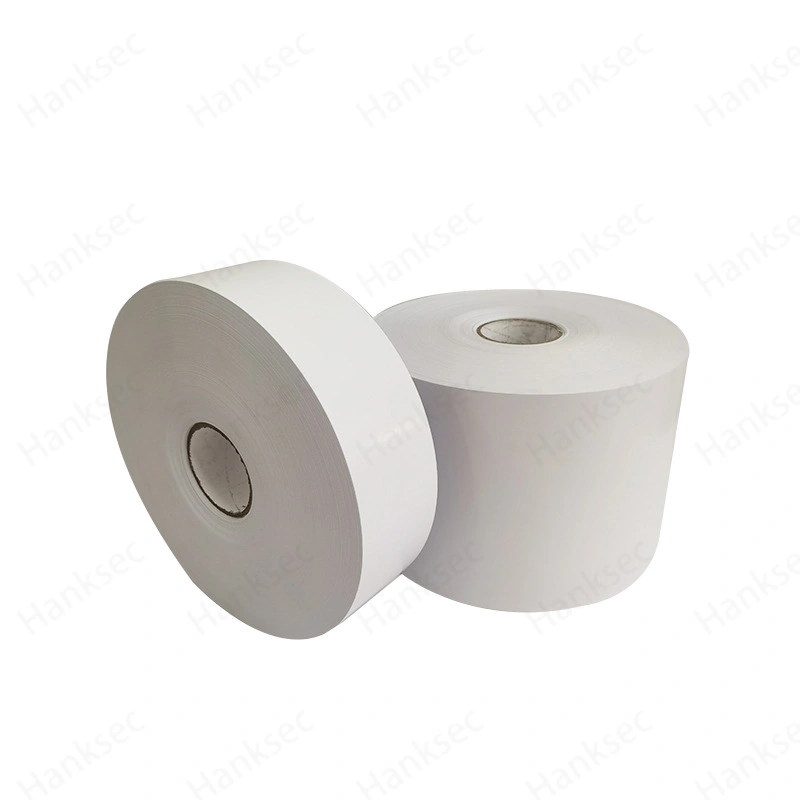
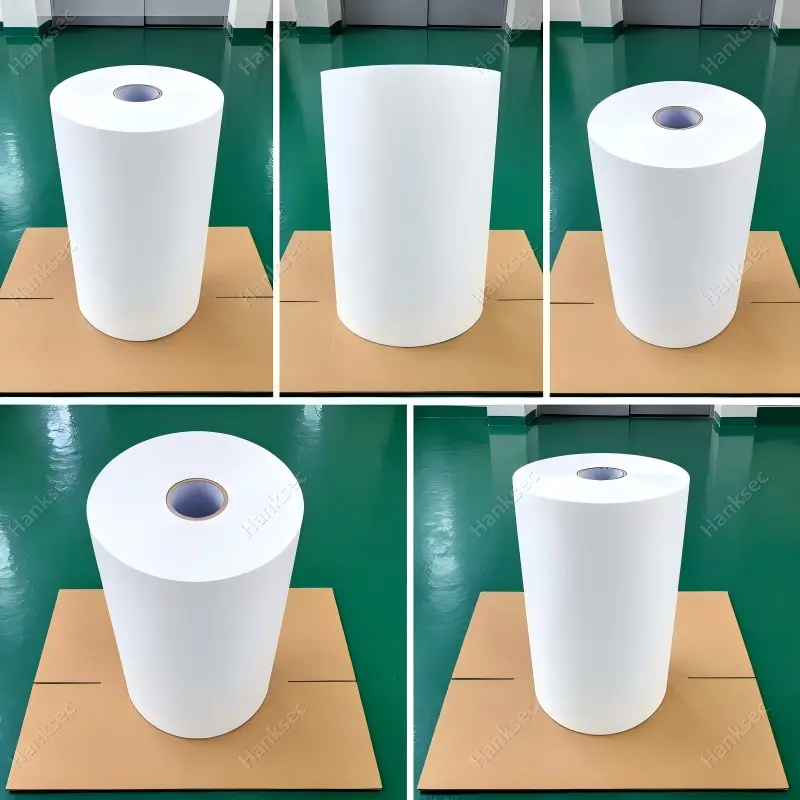
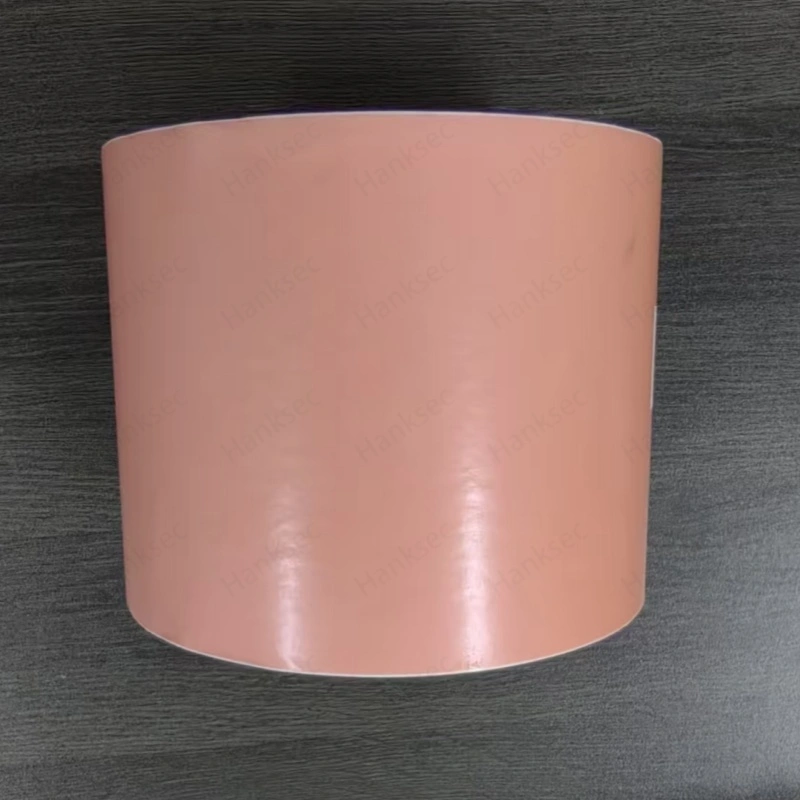
- Can be supplied as jumbo rolls, slit rolls, sheets, or finished custom labels
- OEM and ODM support for label converters, packaging suppliers, and brand owners
Recommended Applications
Foamtac Destructible Label Material is commonly used for rough packaging seals, equipment warranty labels, industrial asset labels, plastic housing seals, metal surface labels, logistics packaging, special-shaped cartons, document security, and anti-counterfeit product authentication.
This material is recommended when the applied surface is not perfectly smooth and the customer needs stronger contact performance than ordinary thin fragile labels. It can help improve sealing reliability while still providing visible physical damage evidence after removal.
Foamtac vs Standard Destructible Label Material
Standard destructible label materials are usually thinner and work best on smooth, clean, and flat surfaces. Foamtac destructible label material uses a thicker foam-based structure, making it more suitable for packaging or product surfaces that require better gap filling and bonding contact.
For small flat warranty seals, customers may choose ultra destructible vinyl or standard destructible films. For rough cartons, molded plastic, textured surfaces, or special-shaped packaging, Foamtac material can provide a more practical bonding solution.
Printing and Converting Compatibility
Foamtac destructible label material can be customized with brand logos, serial numbers, QR codes, barcodes, warning text, inspection marks, and security patterns. Because the material includes a thicker foam-based structure, die-cutting depth, cutting pressure, label edge stability, roll tension, and dispensing performance should be tested before mass production.
For label converters and printing factories, the key processing points include foam layer compression, adhesive bonding, face material breakage control, matrix stripping performance, liner release force, and final label thickness. Hanksec can provide sample testing support according to the customer’s converting process.
Surface Compatibility and Testing
Before bulk production, customers should test the label on the real application surface. Rough cartons, molded plastic parts, painted metal, textured equipment housings, coated paperboard, foam packaging, and curved surfaces may show different adhesion and breakage performance.
Surface dust, oil, coating treatment, surface texture, application pressure, temperature, humidity, and adhesive curing time can all affect the final result. For rough or uneven surfaces, testing should include peel adhesion, contact stability, edge lifting resistance, fragmentation effect, print durability, and final appearance after application.
Related Hanksec Destructible and Security Label Materials
Customers can also explore related Hanksec materials, including destructible label materials, VOID label materials, tamper evident security tapes, non-transfer VOID security tapes, and tamper evident security products.
Testing and Pressure-Sensitive Adhesive References
For Foamtac destructible label material, customers often evaluate peel adhesion, foam layer compression, surface bonding, edge lifting resistance, fragmentation behavior, print durability, and converting stability. Useful external references include ASTM D3330 peel adhesion testing, PSTC pressure-sensitive tape test methods, and FINAT test methods for self-adhesive labels.
Specification
|
Facestock |
Self-developed Destructible Film |
|
Facestock Thickness |
50 - 110 Microns or Custom |
|
Color |
Matt White or Custom |
|
Adhesive |
Pressure Sensitive Acrylic or Custom |
|
Color Finish |
Matt |
|
Destructible Degree |
Easy/Medium/Hard |
|
MOQ |
530mm*500m or Custom |
|
Liner |
60/80g Glassine Paper Or Kraft Paper |
|
Size Width |
100 / 200 / 300 / 530 / 1060mm or Custom |
|
Size Length |
400 / 500 / 1000 / 2000M or Custom |
|
Standard Core Size |
3 Inch or Custom |
|
Range of temperature |
-20°C - 80℃ |
|
Lead Time |
3-7 Days |
|
Shelf Life |
1 Year Under Normal Condition, Avoid Direct Sunlight And High Humidity |
|
Printing methods: |
Digital Printing, UV Printing, Silk Screen, Intaglio Printing, Rotary Printing, Offset Printing, Thermal Transfer Printing, Inkjet Printing, Etc. |
Product Structure