Risposta rapida: Cosa sono le etichette anticontraffazione VOID?
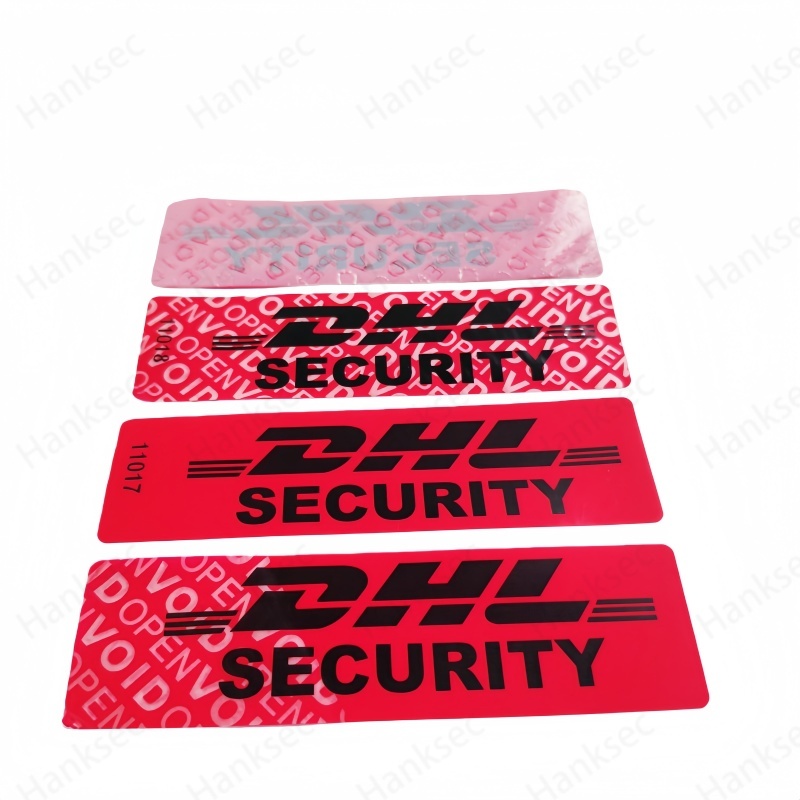
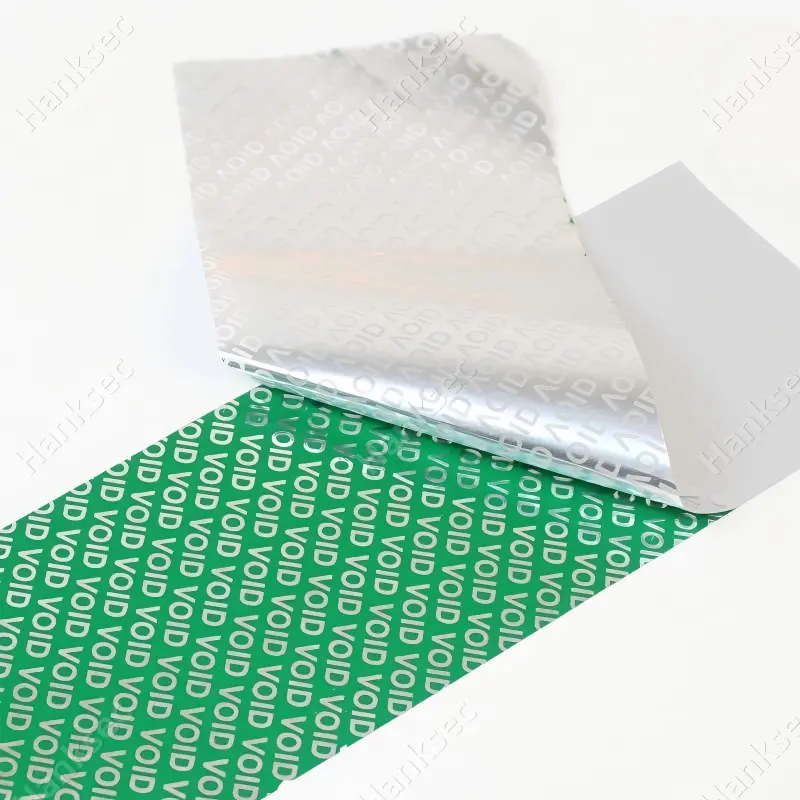
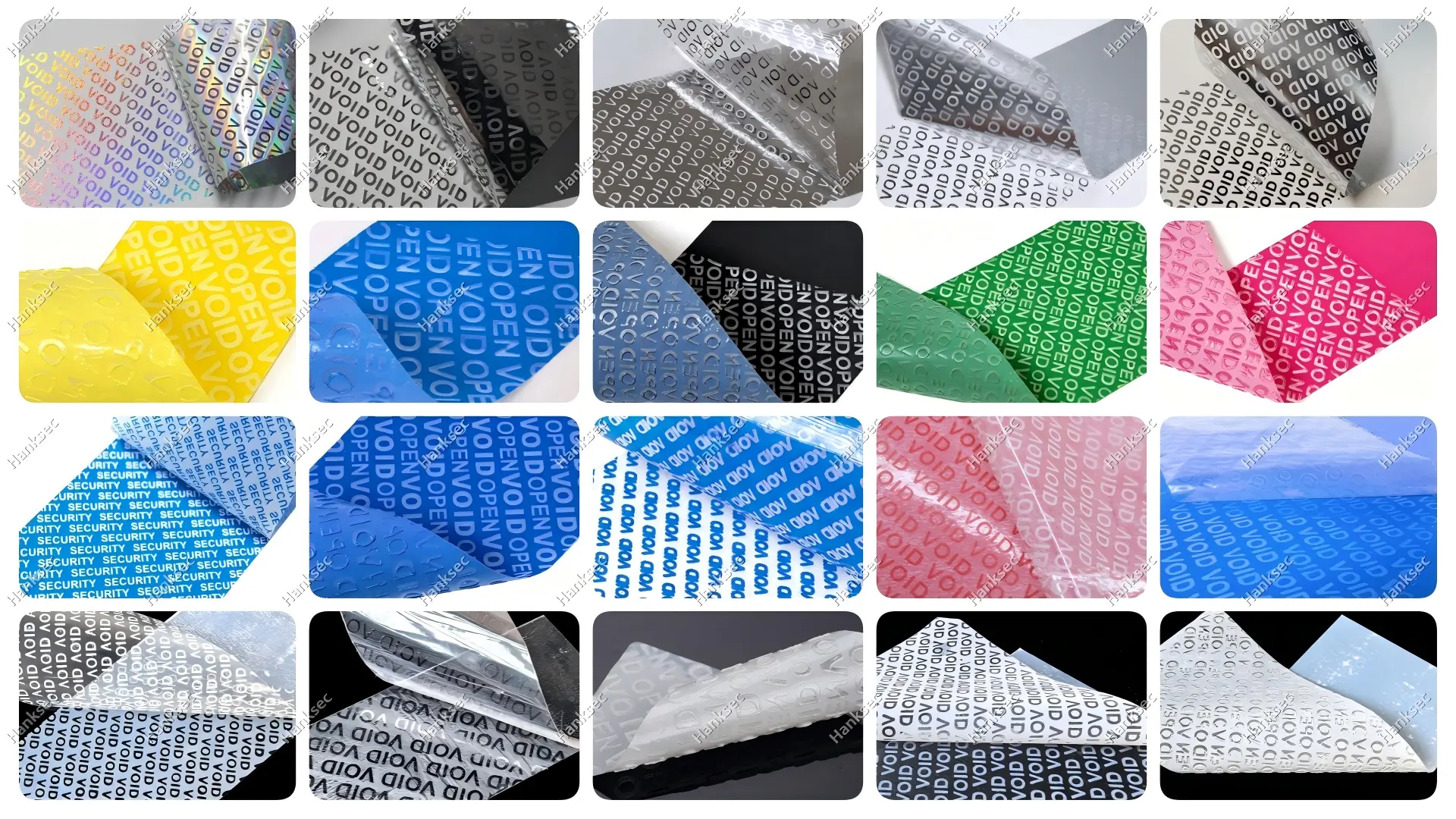
Etichette anticontraffazione VOID Si tratta di etichette di sicurezza autoadesive progettate per rivelare un messaggio nascosto, un motivo di avvertimento o un marchio personalizzato dopo la rimozione. Quando viene applicata una forza di distacco, uno strato a rilascio controllato si separa all'interno della struttura del materiale e attiva l'effetto antimanomissione.
A seconda della costruzione, la parola nascosta “VOID”, “OPENED”, un logo personalizzato o un altro schema di sicurezza possono:
- trasferimento quasi completo sulla superficie di applicazione;
- divisione tra la superficie e l'etichetta rimossa; oppure
- rimangono principalmente visibili sulla pellicola dell'etichetta rimossa.
Queste tre strutture sono note come Etichette VOID per trasferimento completo, trasferimento parziale e non trasferimento.
Tuttavia, la corretta struttura dell'etichetta VOID dipende dalla superficie di applicazione, dal sistema adesivo, dal tempo di posa, dal processo di stampa, dal metodo di ispezione e dall'ambiente operativo. Questa guida tecnica spiega il funzionamento di ciascun tipo e come selezionare la soluzione antimanomissione più adatta prima della produzione in serie.
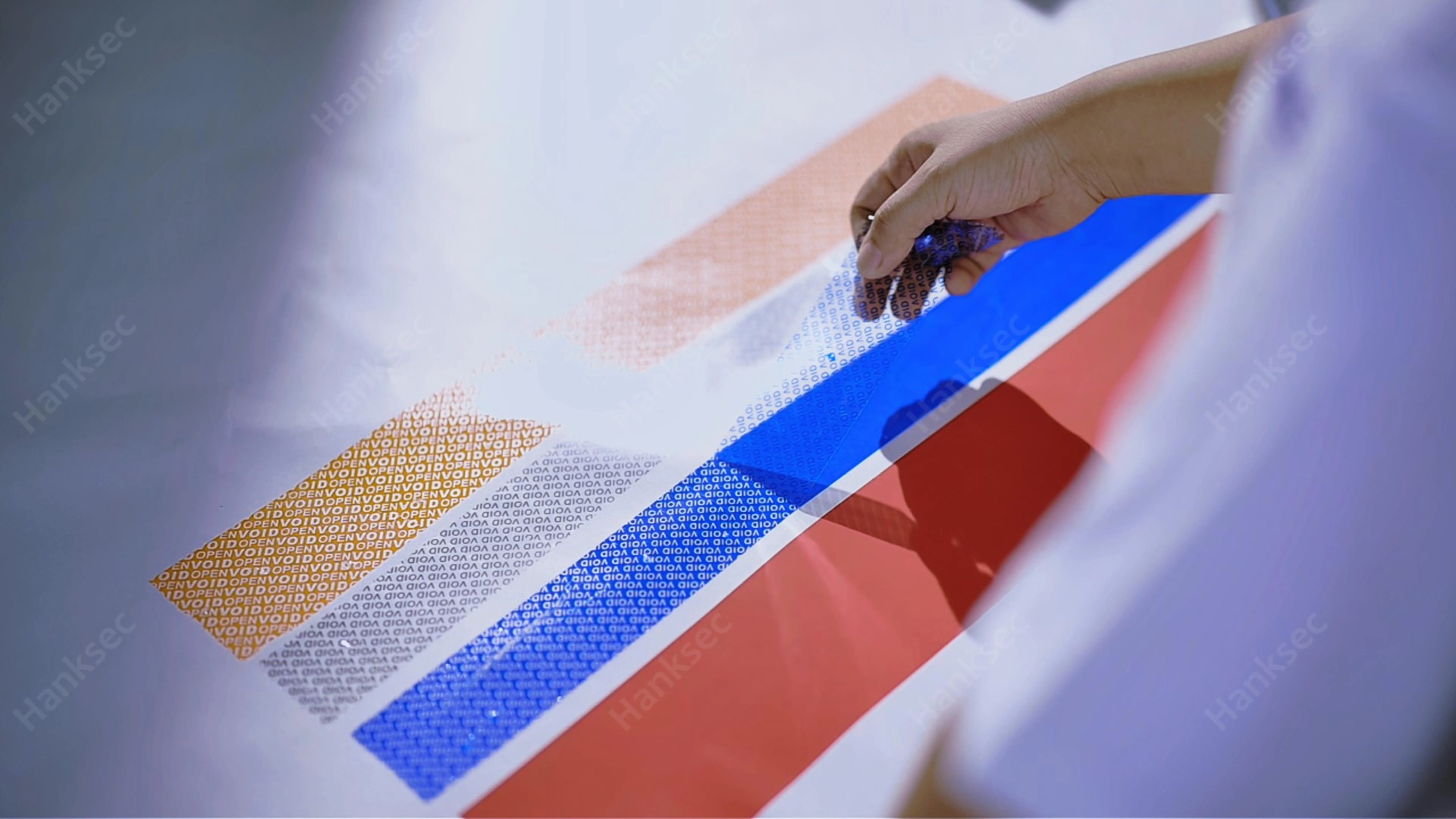
Un'etichetta VOID è principalmente una tecnologia di indicazione di manomissione. Mostra che un'etichetta o una confezione è stata aperta o rimossa. Se combinata con sicurezza olografica Oltre a pellicole, marchi UV nascosti, numeri di serie, codici QR o dati di prodotto sicuri, può anche diventare parte di un sistema più ampio di anticontraffazione e autenticazione del prodotto.Materiali con etichetta VOID
Perché i marchi hanno bisogno delle etichette anticontraffazione VOID
I prodotti contraffatti e non autorizzati colpiscono ben più dei beni di lusso. Elettronica, cosmetici, pezzi di ricambio, prodotti medicali, componenti industriali, imballaggi e prodotti venduti online possono essere tutti copiati, sostituiti, aperti o rivenduti attraverso canali non autorizzati.
IL Rapporto dell'OCSE e dell'EUIPO sulla mappatura del commercio globale di prodotti contraffatti entro il 2025 Si stima che nel 2021 i prodotti contraffatti e piratati abbiano rappresentato fino al 2,3% del commercio globale. L'impatto commerciale può includere perdite di vendite, frodi sulle garanzie, reclami dei clienti, rischi per la sicurezza, controversie con i distributori e danni a lungo termine alla fiducia nel marchio.
Un normale adesivo stampato può identificare un prodotto, ma offre poche prove una volta rimosso. A volte può essere staccato, sostituito o trasferito su un'altra confezione senza creare un avvertimento chiaro. Le etichette anticontraffazione VOID, se progettate correttamente, creano una risposta fisica e visibile che non può essere ripristinata allo stato originale.
I rischi comuni affrontati dalle etichette di sicurezza VOID includono:
- apertura non autorizzata del pacco;
- sottoprodotto o componente;
- rimozione del sigillo di garanzia;
- riparazioni o ispezioni non autorizzate;
- Riutilizzo delle etichette su prodotti contraffatti;
- ridistribuzione del mercato grigio;
- frode sui resi e riconfezionamento dei pacchi;
- accesso non autorizzato durante lo stoccaggio o il trasporto.
Le etichette VOID servono principalmente a dimostrare l'avvenuta manomissione. Se combinate con ologrammi, marchi UV, numeri di serie o codici QR, possono anche supportare un sistema di autenticazione del prodotto più ampio.
Come funziona un sistema di etichette anticontraffazione VOID
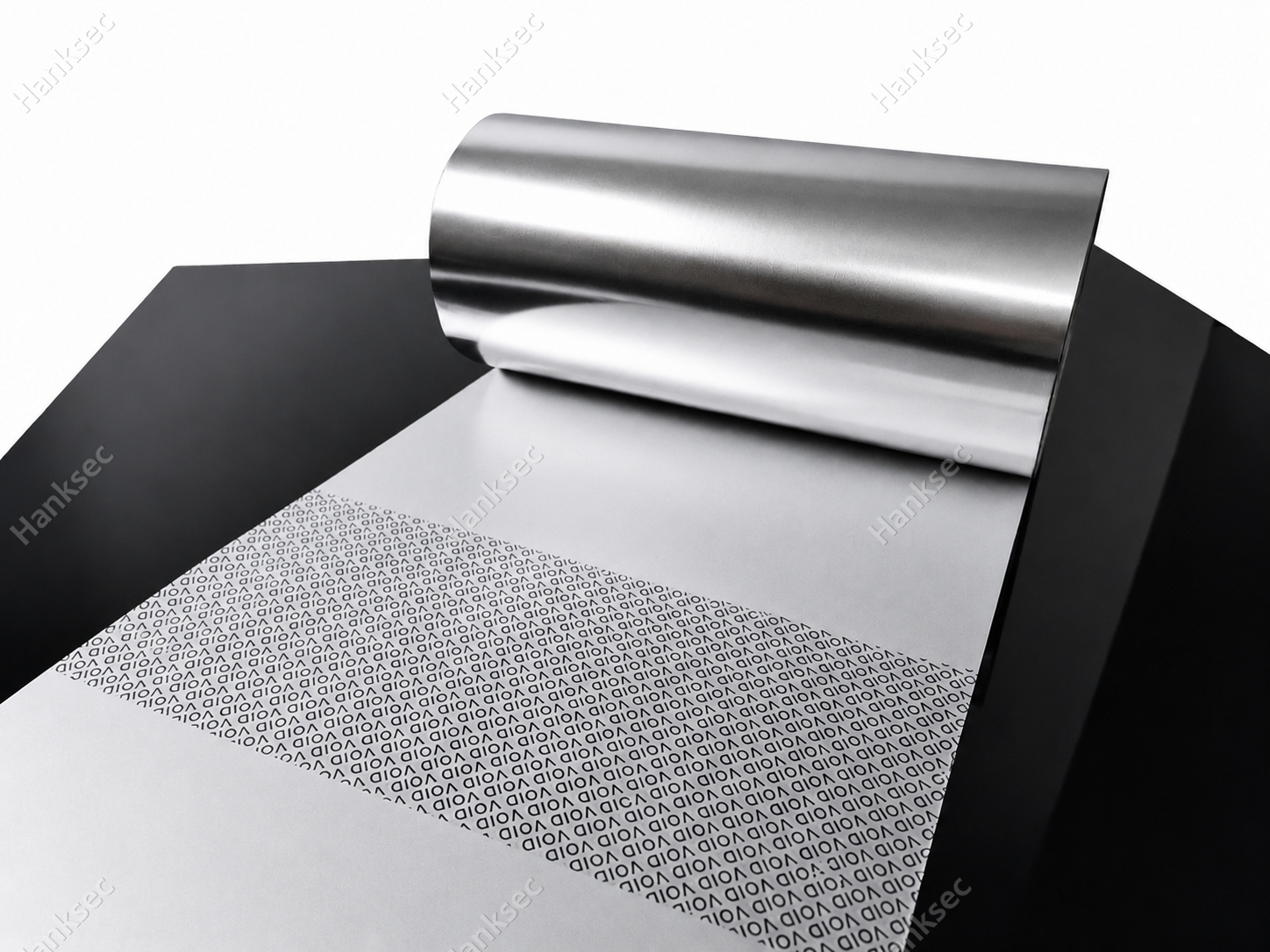
Un'etichetta VOID professionale non è semplicemente una pellicola in PET rivestita di adesivo. Si tratta di un sistema multistrato controllato in cui il materiale di superficie, il rivestimento, le caratteristiche di rilascio, lo strato con il messaggio nascosto, l'adesivo e il liner devono interagire correttamente.
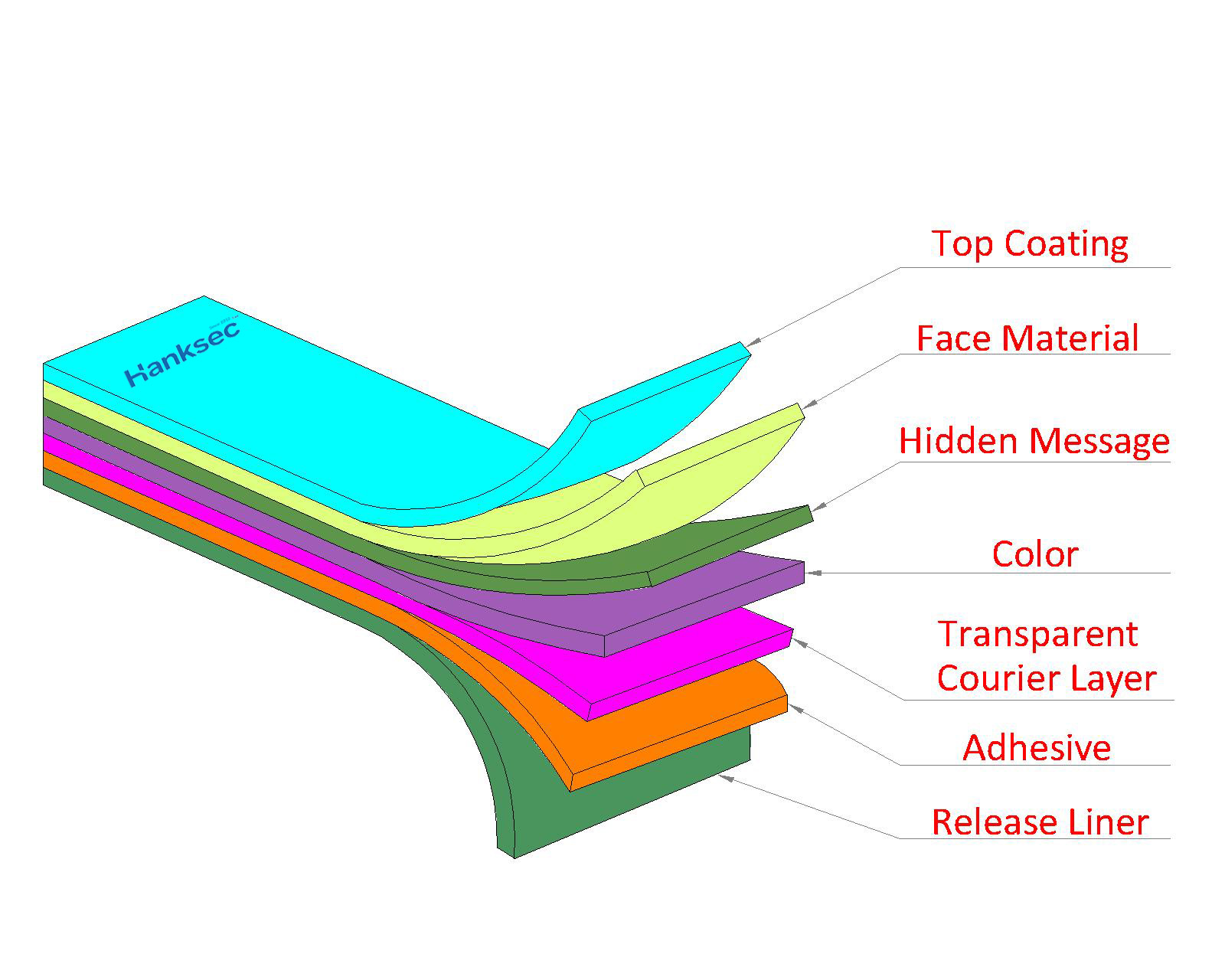
1. Cartoncino stampabile
Il rivestimento superficiale favorisce l'adesione dell'inchiostro, la leggibilità dei codici a barre e la durata della superficie. Può essere progettato per processi di stampa flessografica, UV, serigrafica, a trasferimento termico, a getto d'inchiostro, offset o digitali selezionati.
Senza un rivestimento stampabile adeguato, gli inchiostri possono graffiarsi, sbavare, delaminarsi o non aderire correttamente durante la trasformazione e l'applicazione.
Il pannello frontale garantisce stabilità dimensionale, resistenza e un aspetto estetico gradevole. Le opzioni più comuni includono:
- PET bianco;
- PET argento opaco o lucido;
- PET trasparente;
- pellicole dorate o colorate;
- PET olografica;
- materiali per il viso a base di carta.
Lo spessore, la rigidità e l'allungamento della pellicola influenzano la stampa, la fustellatura, la rimozione della matrice, l'erogazione e il comportamento di rimozione finale.
2. Livelli di rilascio controllato e messaggi nascosti
Il rivestimento a rilascio controllato determina la modalità di separazione degli strati interni durante la rimozione dell'etichetta. Questa è una delle componenti più critiche di un'etichetta anticontraffazione VOID.
Se il saldo di rilascio è troppo basso, il messaggio di sicurezza potrebbe attivarsi prematuramente durante la conversione o l'erogazione. Se è troppo alto, il messaggio potrebbe apparire incompleto o non essere trasferito correttamente.
Lo strato nascosto contiene il messaggio o la sequenza di sicurezza. Le opzioni più comuni includono:
- VUOTO;
- MATITA A BASE DI OLIO;
- APERTO;
- SICUREZZA;
- testo di avviso personalizzato;
- logo aziendale ripetuto;
- schemi nascosti positivi o negativi.
3. Rivestimento colorato o funzionale
Un rivestimento colorato o funzionale controlla il contrasto e la nitidezza visiva dopo la rimozione. Può anche supportare effetti olografici, reattivi ai raggi UV, termoreattivi o altri effetti di sicurezza.
4. Adesivo sensibile alla pressione
L'adesivo sensibile alla pressione crea il legame tra l'etichetta e il substrato. La scelta dell'adesivo deve tenere conto di:
- energia superficiale;
- struttura della superficie;
- Sistema di rivestimento o verniciatura;
- temperatura e umidità;
- pressione di applicazione;
- tempo di permanenza prima del test;
- livello di residui richiesto;
- durata di servizio prevista.
Cartoni rivestiti, cartone kraft, vetro, metallo, ABS, PET, PP e PE non offrono le stesse condizioni di adesione. Le plastiche a bassa energia superficiale possono richiedere un adesivo diverso rispetto al vetro o al metallo verniciato.
5. Rilasciare il rivestimento
Il liner di rilascio protegge l'adesivo prima dell'applicazione e influisce sulle prestazioni di trasformazione. È possibile scegliere liner in carta pergamena, carta kraft e PET in base alle esigenze di stampa, fustellatura, rimozione della matrice e dosaggio automatico.
Etichette anticontraffazione VOID a trasferimento completo
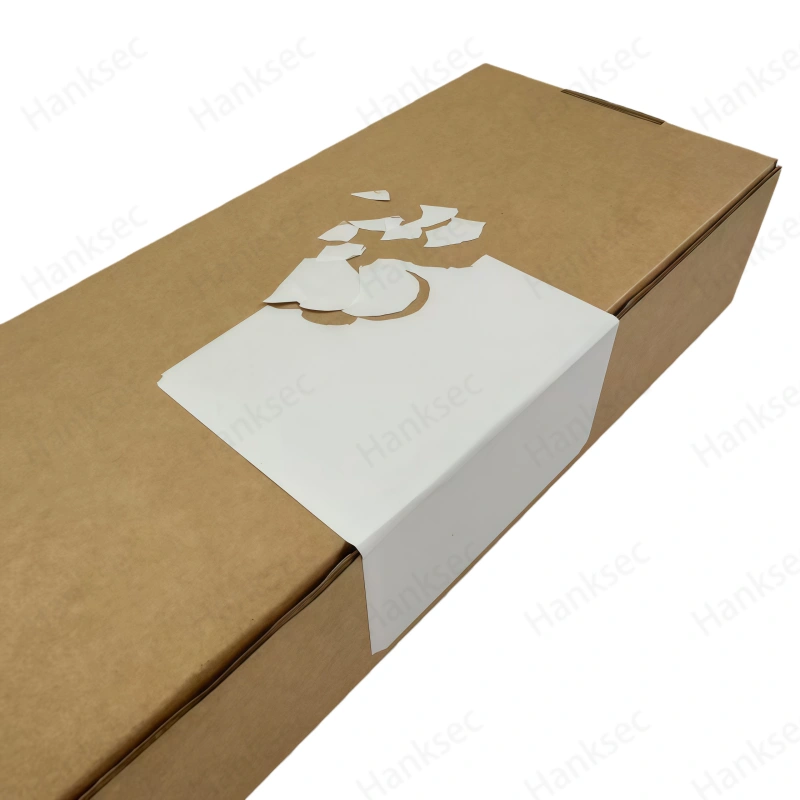
Le etichette VOID a trasferimento completo lasciano Lasciare la maggior parte o la totalità del messaggio di sicurezza nascosto e delle tracce di adesivo sulla superficie di applicazione dopo la rimozione.
Quando l'etichetta viene rimossa, il disegno di avvertenza rimane direttamente sul cartone, sulla custodia di plastica, sul vetro, sul metallo o su qualsiasi altro supporto. L'etichetta rimossa di solito perde il suo aspetto originale e la sua integrità adesiva, rendendo difficile una riapplicazione pulita.
Migliori applicazioni per etichette VOID a trasferimento completo
- Scatole per spedizioni e logistica;
- Imballaggio di garanzia per dispositivi elettronici;
- prodotti al dettaglio di alto valore;
- Sigillatura di documenti e fascicoli;
- protezione del patrimonio;
- Imballaggio di componenti industriali;
- Confezionamento secondario per prodotti farmaceutici;
- sigilli di sicurezza monouso.
Per le applicazioni farmaceutiche e sanitarie, i requisiti per gli imballaggi a prova di manomissione devono tenere conto anche delle normative applicabili, come le linee guida della FDA in materia di imballaggi a prova di manomissione.
Vantaggi principali
- Sulla superficie protetta permangono prove evidenti;
- I tentativi di apertura sono facili da identificare;
- L'etichetta originale non può essere ripristinata al suo aspetto iniziale;
- È possibile personalizzare il testo degli avvisi, i colori e i motivi del logo;
- Adatto per applicazioni in cui non è richiesta una rimozione pulita.
Limitazioni importanti
I materiali a trasferimento totale non sono adatti quando la superficie protetta deve rimanere pulita dopo la rimozione. Inoltre, le loro prestazioni possono variare su cartoni riciclati, materiali con superficie ruvida, superfici verniciate a polvere o plastiche a basso consumo energetico.
L'obiettivo non dovrebbe essere semplicemente "massima forza adesiva". L'adesivo, il rivestimento di rilascio e lo strato con il messaggio nascosto devono rimanere in equilibrio in modo che il messaggio desiderato venga trasferito chiaramente senza attivazioni premature.
Etichette anticontraffazione VOID a trasferimento parziale
Le etichette VOID di trasferimento parziale dividono dividere il motivo di sicurezza nascosto tra la superficie di applicazione e l'etichetta rimossa.
Una parte del messaggio VOID rimane sulla confezione, mentre un'altra parte rimane sulla pellicola. Ciò fornisce una prova su entrambi i lati e crea un equilibrio tra una forte visibilità della manomissione e un residuo controllato.
Migliori applicazioni per le etichette VOID a trasferimento parziale
- cosmetici e imballaggi di alta gamma;
- confezioni per la vendita al dettaglio;
- confezioni regalo di marca;
- accessori elettronici;
- Imballaggi per la logistica e l'e-commerce;
- sigilli di garanzia;
- Imballaggio di componenti industriali;
- Protezione di documenti e certificati.
Vantaggi principali
- Le prove di manomissione sono presenti sia sull'etichetta che sul substrato;
- minore copertura superficiale rispetto a una struttura a trasferimento completo;
- facile ispezione visiva;
- Adatto a colori pregiati, finiture oro, argento e olografiche;
- Offre una soluzione intermedia pratica tra i materiali a trasferimento totale e quelli senza trasferimento.
Per ottenere risultati ottimali con il trasferimento parziale è necessario un controllo preciso. Un rivestimento non uniforme, una scarsa corrispondenza tra adesivo e vernice o una polimerizzazione non omogenea possono produrre un residuo incompleto o irregolare.
Etichette anticontraffazione non trasferibili VOID
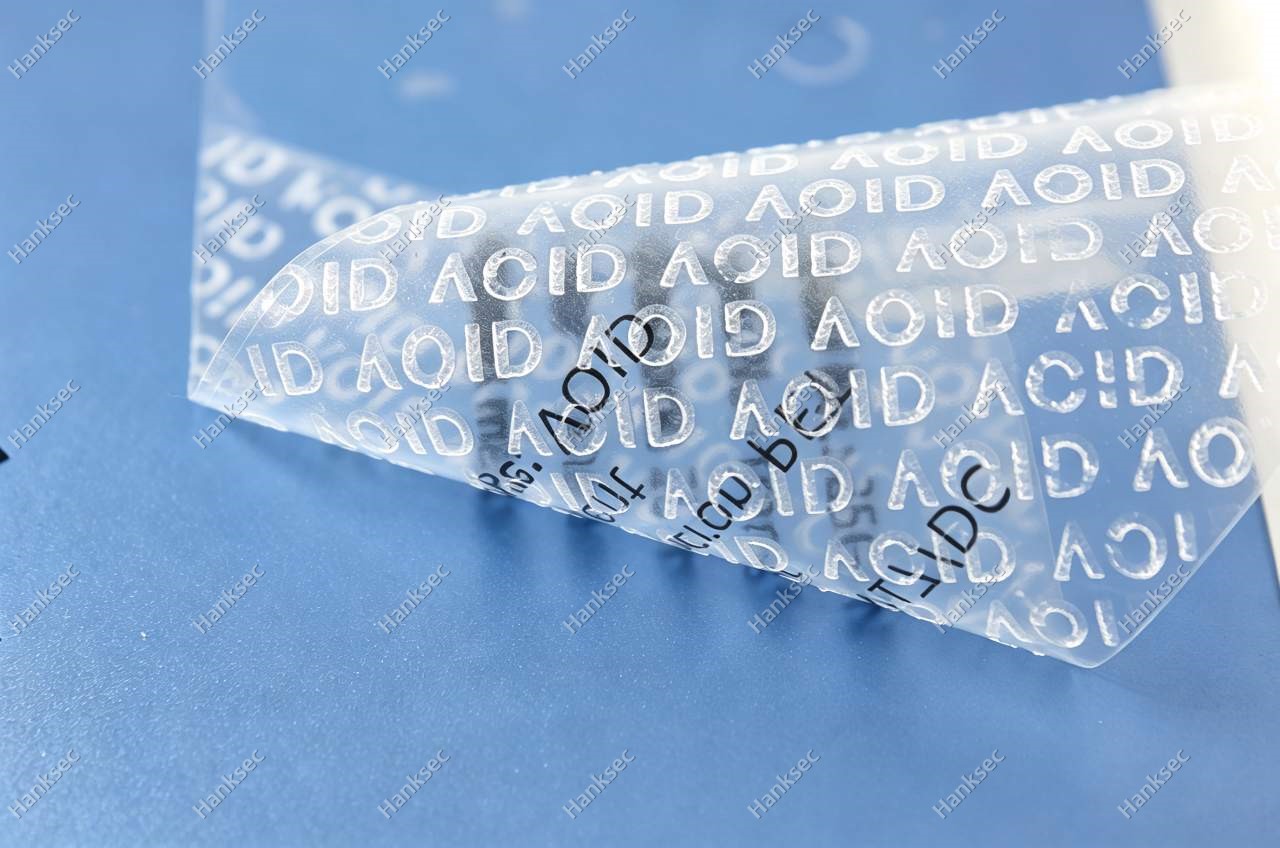
Le etichette VOID non trasferibili rivelano rivela il messaggio nascosto principalmente sulla pellicola rimossa, lasciando un motivo VOID poco o per nulla visibile sulla superficie di applicazione.
Questa struttura è progettata per prodotti in cui è richiesto un segno di prova di manomissione, ma la presenza di residui di adesivo consistenti o di un marchio di avvertimento permanente sul prodotto sarebbe indesiderabile.
Come funziona la tecnologia di non trasferimento: I materiali VOID non trasferibili utilizzano una delaminazione interna controllata all'interno della struttura dell'etichetta. Quando viene applicata una forza di distacco, lo strato ottico o di colore si separa in un'interfaccia predeterminata, rivelando il motivo VOID nascosto sulla pellicola rimossa.
Il sistema adesivo è progettato per mantenere la superficie di applicazione relativamente pulita, rendendo al contempo l'etichetta rimossa permanentemente diversa dalla sua condizione originale. Il comportamento finale dei residui deve comunque essere verificato sul substrato effettivo del cliente, poiché il rivestimento della superficie, il tempo di posa, la temperatura e la pressione di applicazione possono influenzare il risultato.
Migliori applicazioni per etichette VOID non trasferibili
- telefoni cellulari, tablet e computer;
- Coperture per fotocamere e dispositivi di registrazione;
- involucri per apparecchiature elettroniche;
- contenitori di trasporto riutilizzabili;
- attrezzature a noleggio;
- vetro, metallo rivestito e superfici di alta qualità;
- dispositivi medici;
- Sigilli di ispezione e calibrazione.
Non trasferibile non significa rimovibile ordinario
Un'etichetta VOID non trasferibile non deve essere confusa con un normale adesivo rimovibile.
Un'etichetta rimovibile standard etichette distruttibili È progettato per staccarsi senza lasciare residui e può conservare gran parte del suo aspetto originale. Un'etichetta di sicurezza VOID non trasferibile è progettata per modificarsi in modo permanente durante la rimozione. Il messaggio nascosto appare sulla pellicola e fornisce la prova che l'etichetta è stata aperta.
Vantaggi principali
- la superficie di applicazione rimane relativamente pulita;
- La pellicola rimossa presenta evidenti segni di manomissione;
- Adatto a prodotti di alta qualità o riutilizzabili;
- supporta messaggi, colori e stampe personalizzati;
- Riduce il rischio di danni superficiali causati da residui di adesivo consistenti.
Le prestazioni relative ai residui devono essere comunque verificate sul substrato effettivo. Il comportamento adesivo può variare in base al rivestimento superficiale, al tempo di posa, alla temperatura, al processo di pulizia e alle condizioni di conservazione.
Quali sono i diversi tipi di etichette anticontraffazione VOID?
Etichette VOID complete, parziali o non trasferibili
| Confronto | Trasferimento completo | Trasferimento parziale | Non trasferibile |
|---|---|---|---|
| Posizione del passaggio | Principalmente sulla superficie applicata | Separazione tra etichetta e superficie | Principalmente sulla pellicola rimossa |
| residui superficiali | Alto | Medio o controllato | Basso o nullo |
| Prove di manomissione | Prove consistenti sul substrato | Prove visibili da entrambi i lati | Prove principalmente su filmati |
| Aspetto della superficie dopo la rimozione | Marcato in modo permanente | Parzialmente contrassegnato | Relativamente pulito |
| Substrati tipici | Cartoni, imballaggi, metallo, vetro | Cartoni premium, scatole di plastica, imballaggi per la vendita al dettaglio | Elettronica, vetro, metallo rivestito, superfici riutilizzabili |
| Miglior obiettivo di sicurezza | Massima evidenza superficiale | Prove e apparenze bilanciate | Indicazione di manomissione su superficie pulita |
In parole semplici: Scegliere il trasferimento completo quando le prove devono rimanere ben visibili sulla superficie protetta, il trasferimento parziale quando le prove sono necessarie su entrambi i lati e il non trasferimento quando la superficie protetta deve rimanere relativamente pulita.
Come scegliere l'etichetta anticontraffazione VOID giusta
La scelta dell'etichetta anticontraffazione VOID più adatta dipende dal livello di sicurezza richiesto, dalla superficie di applicazione e dalle prove di manomissione previste.
Per i dispositivi elettronici e per la protezione della garanzia, si preferiscono spesso le etichette VOID non trasferibili perché lasciano la superficie pulita dopo la rimozione.
Per cartoni, imballaggi logistici e spedizioni ad alto rischio, etichette VOID a trasferimento completo forniscono prove visibili più solide perché il messaggio di sicurezza viene trasferito in modo permanente sulla superficie.
Per il packaging al dettaglio e la protezione del marchio, le etichette VOID a trasferimento parziale offrono un equilibrio tra prestazioni di sicurezza e aspetto estetico.
Come scegliere il tipo di trasferimento VOID corretto
La scelta dovrebbe partire dal rischio per la sicurezza e dal materiale di base, non dal colore o dal prezzo.
Scegli Trasferimento completo quando:
- È necessaria una prova di superficie permanente;
- la confezione non verrà riutilizzata;
- Un'apertura forte è più importante dell'aspetto;
- Il personale del magazzino o i clienti devono ispezionare rapidamente la superficie.
Scegli il trasferimento parziale quando:
- È necessario che la prova sia presente sull'etichetta e sulla confezione;
- il marchio desidera residui controllati piuttosto che residui totali;
- La presentazione visiva rimane importante;
- L'etichetta rimossa può essere conservata per ispezione.
Scegli "Non trasferibile" quando:
- la superficie del prodotto deve rimanere pulita;
- il prodotto è riutilizzabile o di alto valore;
- Un'eccessiva quantità di residui di adesivo potrebbe compromettere l'aspetto estetico;
- L'ispezione si concentra sulle condizioni dell'etichetta rimossa.
Scenario applicativo 1: Protezione della garanzia per dispositivi elettronici
Un produttore di componenti elettronici necessita di un sigillo di garanzia per l'involucro di un dispositivo in ABS. Il team di assistenza deve essere in grado di identificare eventuali aperture non autorizzate, ma residui eccessivi potrebbero danneggiare l'aspetto del prodotto.
Un'etichetta anticontraffazione VOID non trasferibile viene testata sulla superficie effettiva dell'ABS. Una volta rimossa, l'avvertenza nascosta appare in modo permanente sulla pellicola, mentre l'involucro del prodotto rimane relativamente pulito.
Questa struttura consente l'ispezione post-vendita senza dover ricorrere a un sistema adesivo altamente distruttivo sul dispositivo finito.
Scenario applicativo 2: Sicurezza degli imballaggi logistici
Un fornitore di servizi logistici necessita di una prova visibile qualora un collo di valore elevato venga aperto durante il trasporto. Il collo è monouso, pertanto mantenere una superficie pulita non è una priorità.
Un'etichetta VOID a trasferimento completo rappresenta l'opzione più sicura. Dopo essere stata rimossa, il messaggio di sicurezza rimane sulla scatola e può essere identificato dal personale del magazzino o dal destinatario finale.
Funzioni di sicurezza aggiuntive per VOID Etichette
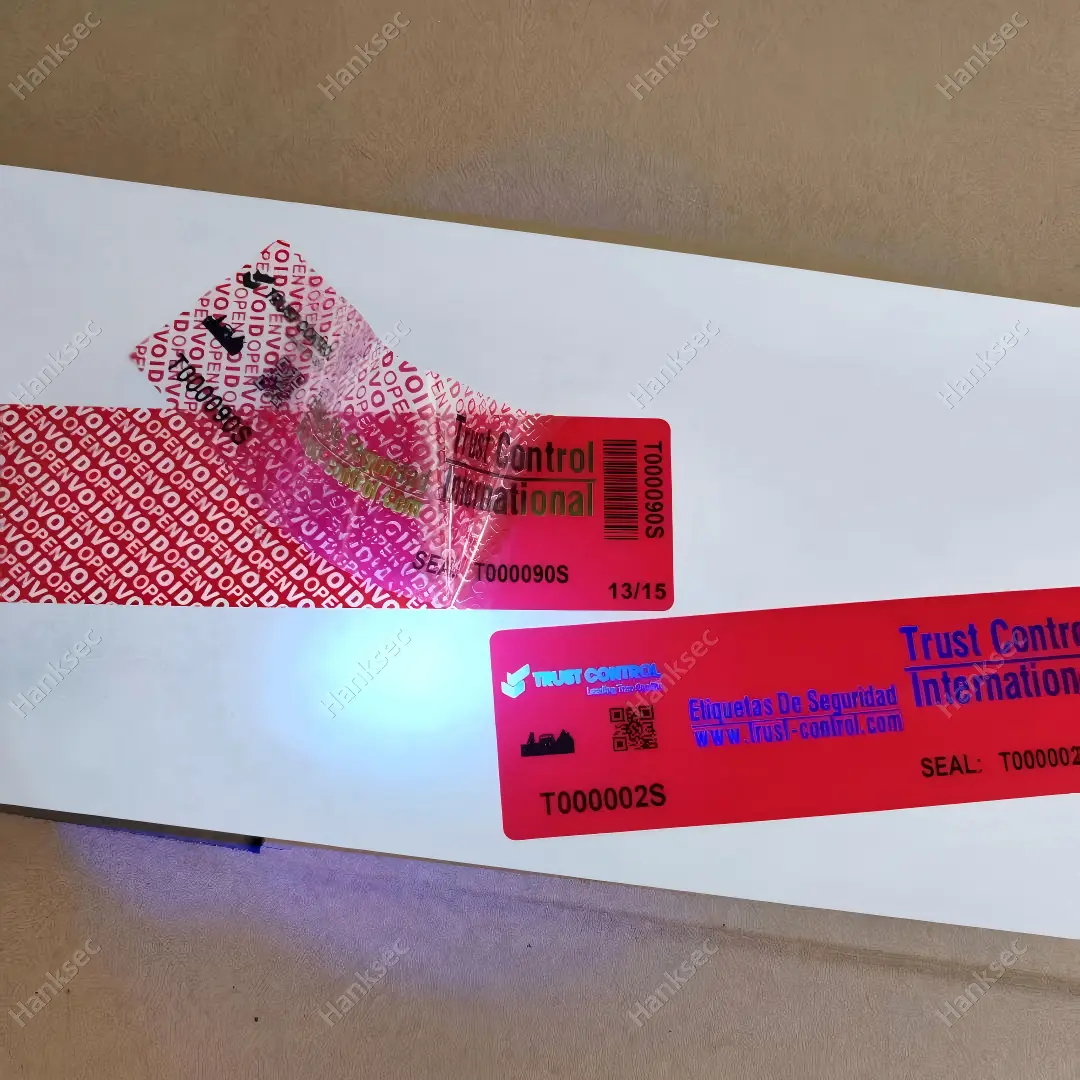
Messaggi nascosti personalizzati
La parola standard “VOID” può essere sostituita o combinata con:
- Loghi aziendali personalizzati;
- marchi commerciali;
- La dicitura APERTO o SICUREZZA;
- Testo di avviso multilingue;
- modelli positivi o negativi;
- disegni a micro-pattern ripetuti.
Un messaggio nascosto personalizzato aumenta la specificità del marchio e rende meno convincenti le etichette di ricambio generiche.
Etichette olografiche VOID anticontraffazione
Le etichette olografiche VOID combinano due funzioni di sicurezza.
La superficie olografica garantisce un riconoscimento visivo immediato, mentre la struttura interna VOID rivela l'avvenuta rimozione fisica. Questa combinazione può essere utilizzata per cosmetici, elettronica, astucci personalizzati, certificati e altre applicazioni di alta gamma.
Tuttavia, una pellicola olografica decorativa da sola non dovrebbe essere automaticamente considerata una soluzione anticontraffazione completa. Una protezione più efficace si ottiene combinando prove di manomissione controllate, effetti ottici personalizzati e una procedura di verifica ben definita.
Funzionalità di sicurezza sensibili ai raggi UV
Testi, loghi o motivi personalizzati reattivi ai raggi UV possono fornire un livello di ispezione nascosto. Il marchio rimane difficile da vedere in condizioni di illuminazione normale e diventa visibile sotto una sorgente di luce ultravioletta adeguata.
L'autenticazione UV può essere utile a distributori, centri di assistenza, personale doganale o ispettori interni, ma non sostituisce la funzione di autenticazione fisica. Le due tecnologie svolgono ruoli diversi.
Numeri di serie, codici a barre e codici QR
I dati variabili possono collegare ciascuna etichetta a un lotto, un prodotto, un distributore o un record di verifica. Le opzioni includono:
- numeri di serie sequenziali;
- codici a barre unidimensionali;
- Codici QR;
- dati relativi al lotto e al batch;
- informazioni variabili del cliente.
IL Standard di collegamento digitale GS1 Fornisce un metodo standardizzato per collegare identificatori come GTIN, numeri di serie e informazioni sul lotto a risorse online. Un'etichetta VOID fisica e un identificatore digitale possono quindi supportare sia la prova di manomissione che le informazioni sul prodotto.
Perché alcune etichette anticontraffazione VOID falliscono
Un'etichetta può funzionare correttamente su un pannello di prova in vetro, ma non sul prodotto finale del cliente. Ciò non significa necessariamente che la tecnologia VOID sia difettosa. Spesso, invece, indica che il sistema di materiali e le condizioni di applicazione non sono stati abbinati correttamente.
| Fallimento | Possibile causa | Controllo consigliato |
|---|---|---|
| Il messaggio VOID appare incompleto | Rivestimento antiaderente non uniforme o adesione insufficiente | Verificare la consistenza del rivestimento, il tempo di posa e la compatibilità con il substrato. |
| L'etichetta si rimuove in un unico pezzo. | L'adesivo non aderisce sufficientemente alla superficie. | Verificare l'energia superficiale, la contaminazione e la scelta dell'adesivo. |
| Il messaggio non si trasferisce al cartone grezzo | Area di contatto ridotta o superficie porosa | Prova un adesivo con maggiore adesività o una diversa struttura di trasferimento |
| I bordi dell'etichetta si sollevano | Polvere, olio, superficie curva o eccessiva rigidità dell'etichetta | Verificare le condizioni di pulizia, lo spessore del materiale di rivestimento e le dimensioni dell'etichetta. |
| VOID si attiva durante il taglio della fustella | Rilasciare l'equilibrio o convertire la tensione non è adatto | Verificare le condizioni di rilascio del rivestimento, la pressione dello stampo e la rimozione della matrice. |
| I diversi rulli mostrano effetti diversi | Incoerenza del rivestimento, della polimerizzazione o dell'adesivo | Revisione dei campioni di controllo del lotto e dei campioni di produzione conservati |
| Il calore consente una rimozione più pulita | Ammorbidimento dell'adesivo o comportamento di rilascio instabile | Valutazione di una struttura resistente al calore e test di manomissione termica reale |
La qualità delle etichette anticontraffazione VOID non dovrebbe essere giudicata solo in base alla presenza o meno della parola "VOID" durante una singola dimostrazione di rimozione. Una valutazione professionale dovrebbe considerare anche la chiarezza del messaggio, il bordo del residuo, la stabilità dell'adesione, la stampabilità, le prestazioni di conversione, la resistenza all'invecchiamento e la coerenza tra i diversi lotti.
Come testare le etichette anticontraffazione VOID prima della produzione
I test devono essere eseguiti sul prodotto o sulla superficie di imballaggio reale del cliente. I pannelli standard sono utili per il confronto, ma non possono rappresentare completamente cartoni rivestiti, plastiche testurizzate, cartone riciclato, metallo verniciato, involucri curvi o superfici trattate con agenti antiaderenti.
Procedura di prova consigliata
- Confermare il substrato: Identificare il materiale della superficie, il rivestimento e la consistenza.
- Preparare e applicare il campione: Pulire la superficie e applicare l'etichetta esercitando una pressione costante.
- Tempo di permanenza registrato: Confrontare l'adesione immediata e quella entro 24 ore, quando necessaria.
- Eseguire il test di peeling: Verificare la chiarezza del messaggio, i residui e il comportamento di rimozione.
- Tentativo di ripresentazione della domanda: Verificare se è possibile ripristinare l'aspetto originale.
- Valutare le condizioni finali: stampa di prova, temperatura, umidità o invecchiamento, se pertinente
Test di adesione per pelatura
L'attivo ASTM D6252/D6252M-98(2025) Il metodo di prova comprende il test di adesione a 90 gradi di etichette autoadesive e può essere utilizzato per confronti di controllo qualità su acciaio standard o altre superfici rappresentative.
La forza di distacco è solo una componente delle prestazioni di un'etichetta VOID. Un materiale può presentare un elevato valore di resistenza al distacco, ma produrre comunque una prova di manomissione poco chiara. La valutazione finale deve considerare anche lo strato di trasferimento, l'aspetto del messaggio, la resistenza alla riapplicazione e il substrato effettivo.
Valutazione del sistema di autenticazione
ISO 22383:2020 Fornisce linee guida per la selezione e la valutazione di soluzioni di autenticazione volte a stabilire l'autenticità e l'integrità dei beni materiali durante tutto il loro ciclo di vita.
Lo standard non prescrive una tecnologia di etichettatura specifica. Piuttosto, supporta una valutazione basata sul rischio per stabilire se una soluzione di autenticazione sia appropriata per il prodotto protetto, gli utenti e l'ambiente di verifica.
Come vengono prodotte le etichette anticontraffazione VOID personalizzate
La produzione di etichette VOID personalizzate dovrebbe partire dal problema di sicurezza e dalla superficie di applicazione, non solo dalla grafica di stampa.
1. Analisi dei requisiti e del substrato
Il produttore conferma:
- il prodotto o l'imballaggio protetto;
- substrato di applicazione;
- tipo di trasferimento richiesto;
- aspettative residue;
- dimensioni dell'etichetta;
- metodo di stampa;
- condizioni operative;
- procedura di ispezione;
- Formato in rotolo, foglio o etichetta finita.
2. Design dei materiali e dei messaggi nascosti
In base all'aspetto e ai requisiti di trasformazione, è possibile scegliere tra PET, pellicola olografica, pellicola trasparente, pellicola colorata o carta. Il rivestimento superficiale deve essere compatibile con il sistema di stampa previsto.
Il messaggio nascosto viene preparato secondo uno schema standard o personalizzato. Le dimensioni del messaggio, la direzione, l'intervallo di ripetizione, il disegno in positivo o in negativo e il contrasto visivo devono essere confermati prima della preparazione della lastra o del rivestimento.
3. Rivestimento, adesivi e laminazione
Il rivestimento distaccante viene applicato e polimerizzato in condizioni controllate. Il peso del rivestimento e la consistenza della polimerizzazione influenzano il risultato finale: se il prodotto sarà a trasferimento totale, a trasferimento parziale o non trasferibile.
L'adesivo sensibile alla pressione viene selezionato in base al substrato, alle condizioni di esercizio e al livello di residuo desiderato. La struttura rivestita viene laminata al supporto richiesto e lasciata stabilizzare secondo il processo produttivo.
4. Trasformazione e controllo qualità
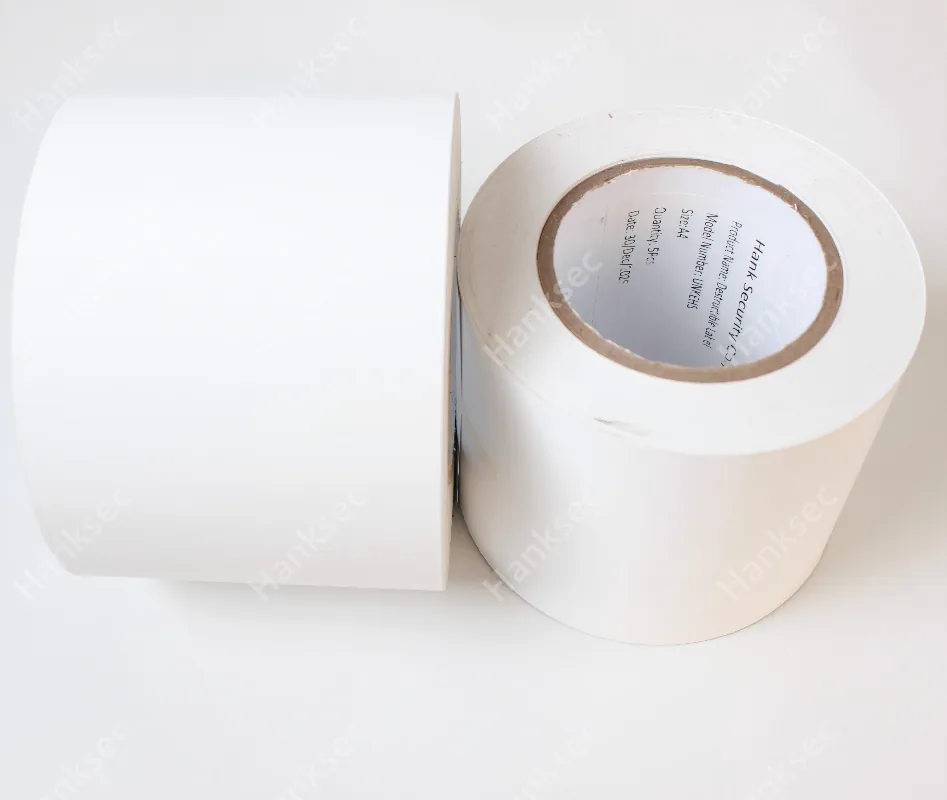
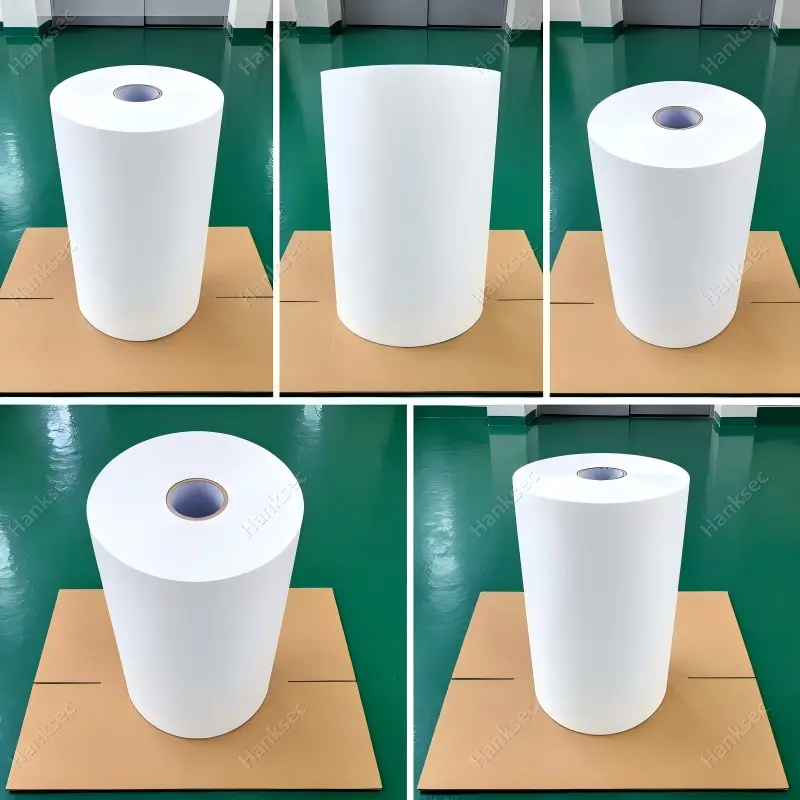
I rotoli jumbo possono essere tagliati per i convertitori di etichette oppure stampati e fustellati per ottenere etichette finite. Il controllo della conversione include la tensione del nastro, la registrazione, la pressione della fustella, la rimozione della matrice e l'avvolgimento del rotolo. Con oltre 15 anni di esperienza nei materiali antimanomissione, Hanksec valuta ogni progetto in base alla compatibilità del substrato, al comportamento di trasferimento, ai requisiti di stampa e alla coerenza della produzione prima della produzione di massa.
I controlli tipici includono:
- aspetto del rivestimento;
- chiarezza del messaggio nascosto;
- consistenza adesiva;
- Rilascio del rivestimento;
- comportamento di trasferimento;
- compatibilità di stampa;
- Larghezza del rotolo e qualità dell'avvolgimento;
- identificazione del lotto;
- campioni conservati per confronto.
Opzioni di personalizzazione
| Elemento di personalizzazione | Direzione disponibile |
|---|---|
| Tipo di trasferimento | Trasferimento totale, parziale o nullo |
| Facestock | Bianco, argento, oro, trasparente, colorato, olografico o carta |
| Messaggio nascosto | ANNULLATO, APERTO, SICUREZZA, logo o testo personalizzato |
| Formato modello | Modello personalizzato positivo, negativo o ripetuto |
| Adesivo | Selezionato in base al substrato, alla temperatura e ai requisiti relativi ai residui. |
| Fodera | Carta pergamena, carta kraft o PET a seconda delle esigenze di trasformazione. |
| Funzioni di sicurezza | Ologramma, marcatura UV, caratteristica termocromica o effetto ottico personalizzato |
| Dati variabili | Numero di serie, codice a barre, codice QR o informazioni sul lotto |
| Formato di fornitura | Etichette in rotolo jumbo, in rotolo tagliato, in foglio o fustellate finite |
| Stampa | Flexo, UV, serigrafia, trasferimento termico, inkjet o sistemi digitali selezionati |
Hanksec fornisce materiali di sicurezza VOID in rotoli jumbo, rotoli tagliati, fogli e formati di etichette finite. Le opzioni OEM e ODM includono messaggi nascosti personalizzati, stampa, numeri di serie, codici QR e test di applicazione.
Quale tipo di trasferimento VOID è compatibile con il tuo prodotto?
Inviate a Hanksec le dimensioni della superficie di applicazione, l'effetto residuo desiderato, il metodo di stampa, le dimensioni dell'etichetta e le condizioni operative. Il nostro team potrà confrontare le strutture a trasferimento totale, a trasferimento parziale e senza trasferimento prima della produzione in serie.
Domande frequenti sulle etichette anticontraffazione VOID
Che cosa sono le etichette anticontraffazione VOID?
Le etichette anticontraffazione VOID sono etichette di sicurezza antimanomissione che, una volta rimosse, rivelano un messaggio o un motivo nascosto. La modifica visibile e irreversibile aiuta a identificare aperture, rimozioni o riutilizzi non autorizzati dell'etichetta.
Qual è la differenza tra etichette VOID a trasferimento completo e etichette VOID non trasferibili?
Le etichette a trasferimento totale lasciano la maggior parte del messaggio nascosto e dei residui sulla superficie di applicazione. Le etichette non a trasferimento rivelano il messaggio principalmente sulla pellicola rimossa, mantenendo la superficie protetta relativamente pulita.
Come scelgo l'etichetta anticontraffazione VOID più adatta?
L'etichetta VOID corretta dipende dal substrato, dai requisiti di residuo, dal livello di sicurezza, dal metodo di stampa e dalle condizioni ambientali. I componenti elettronici spesso richiedono strutture non trasferibili, mentre gli imballaggi per cartoni e logistica utilizzano comunemente soluzioni a trasferimento totale o parziale.
Quando è opportuno utilizzare le etichette VOID per il trasferimento parziale?
Le etichette a trasferimento parziale sono adatte quando è necessaria una prova di manomissione sia sulla superficie di applicazione che sull'etichetta rimossa. Offrono un equilibrio tra una forte indicazione di manomissione e un residuo controllato.
È possibile personalizzare il messaggio VOID standard?
Sì. Il messaggio nascosto può includere il logo aziendale, il nome del marchio, la scritta "APERTO", un testo di avvertimento o un altro schema personalizzato, positivo o negativo.
È possibile utilizzare le etichette VOID su plastica, metallo e vetro?
Sì, ma ogni substrato può richiedere un adesivo e una struttura del materiale diversi. Vetro liscio, metallo verniciato, ABS, PET, PP e PE possono produrre comportamenti di adesione e trasferimento differenti.
Hanksec è in grado di fornire materie prime ed etichette finite?
Sì. Hanksec può fornire rotoli jumbo, rotoli tagliati, fogli ed etichette anticontraffazione VOID fustellate finite per trasformatori, fornitori di imballaggi, distributori e proprietari di marchi.
Conclusione: Selezionare la struttura VOID attorno al rischio di sicurezza reale
Etichette anticontraffazione VOID Forniscono prove visibili e irreversibili dell'apertura di un prodotto, di una confezione o di un sigillo di garanzia. Tuttavia, le strutture a trasferimento totale, a trasferimento parziale e a non trasferimento servono a scopi diversi.
Le etichette VOID a trasferimento totale forniscono una prova inequivocabile direttamente sulla superficie protetta. Le etichette a trasferimento parziale dividono l'avvertenza tra la pellicola e il substrato. Le etichette VOID non a trasferimento mantengono la superficie di applicazione relativamente pulita, mostrando al contempo l'avvertenza sull'etichetta rimossa.
L'opzione migliore dipende dalla superficie di applicazione, dai requisiti relativi ai residui, dalle prestazioni adesive, dall'ambiente di utilizzo, dal metodo di stampa e dalla procedura di ispezione. Nessuna etichetta di sicurezza dovrebbe essere selezionata basandosi unicamente su una foto o su una semplice dimostrazione di distacco.
Testare il materiale sulla superficie del prodotto reale prima della produzione in serie è il metodo più affidabile per confermare la chiarezza del messaggio, l'adesione, il comportamento dei residui, la resistenza alla riapplicazione e l'idoneità a lungo termine.
Contatta Hanksec per richiedere campioni di materiale VOID a trasferimento totale, parziale e non trasferibile, raccomandazioni tecniche e soluzioni di etichette anticontraffazione OEM o ODM.
Hanksec correlato Materiali per etichette VOID e guide tecniche
- Scopri i materiali per etichette antimanomissione VOID
- Etichette di sicurezza VOID a trasferimento completo per una prova di superficie permanente
- Etichette VOID a trasferimento parziale per residuo bilanciato
- Materiali di sicurezza VOID non trasferibili per superfici pulite
- Come funzionano i sistemi di etichette di sicurezza
- Etichette VOID resistenti al calore per la manomissione assistita dal calore
Scritto da: Jimmy, specialista in materiali per etichette di sicurezza
Revisione tecnica: Team di ricerca e sviluppo e test sui materiali di Hanksec
Esperienza nel settore: Oltre 15 anni di esperienza nel settore delle pellicole antimanomissione, dei materiali per etichette VOID e delle etichette di sicurezza finite.
Ultimo aggiornamento: Luglio 2026