Markenschutz: Manipulationssicheres Material für fälschungssichere Verpackungen
Markenschutz Manipulationssicheres Material Es wurde für Verpackungssicherheit, Fälschungsschutzetikettierung, Garantiesiegelung, Logistikkontrolle und Produktauthentifizierung entwickelt. Es hilft Marken, unbefugtes Öffnen, Wiederverschließen von Verpackungen, Austauschen von Etiketten und Produktwechsel zu verhindern, indem es nach Entfernungsversuchen sichtbare Spuren von Manipulationen hinterlässt.
Dieses Material eignet sich für Elektronikverpackungen, Zubehörboxen für Mobiltelefone, Etiketten für Einzelhandelsprodukte, Garantiesiegel, Kartonverpackungen, Kosmetikverpackungen, Sekundärverpackungen für pharmazeutische Produkte sowie für OEM/ODM-Sicherheitsetikettenprojekte von Markenherstellern. Markeninhaber nutzen manipulationssichere Materialien nicht nur zum Versiegeln, sondern auch zum Schutz des Produktvertrauens, zur Vertriebskanalkontrolle und zur Überprüfung nach dem Kauf.
Wie manipulationssicheres Markenschutzmaterial funktioniert
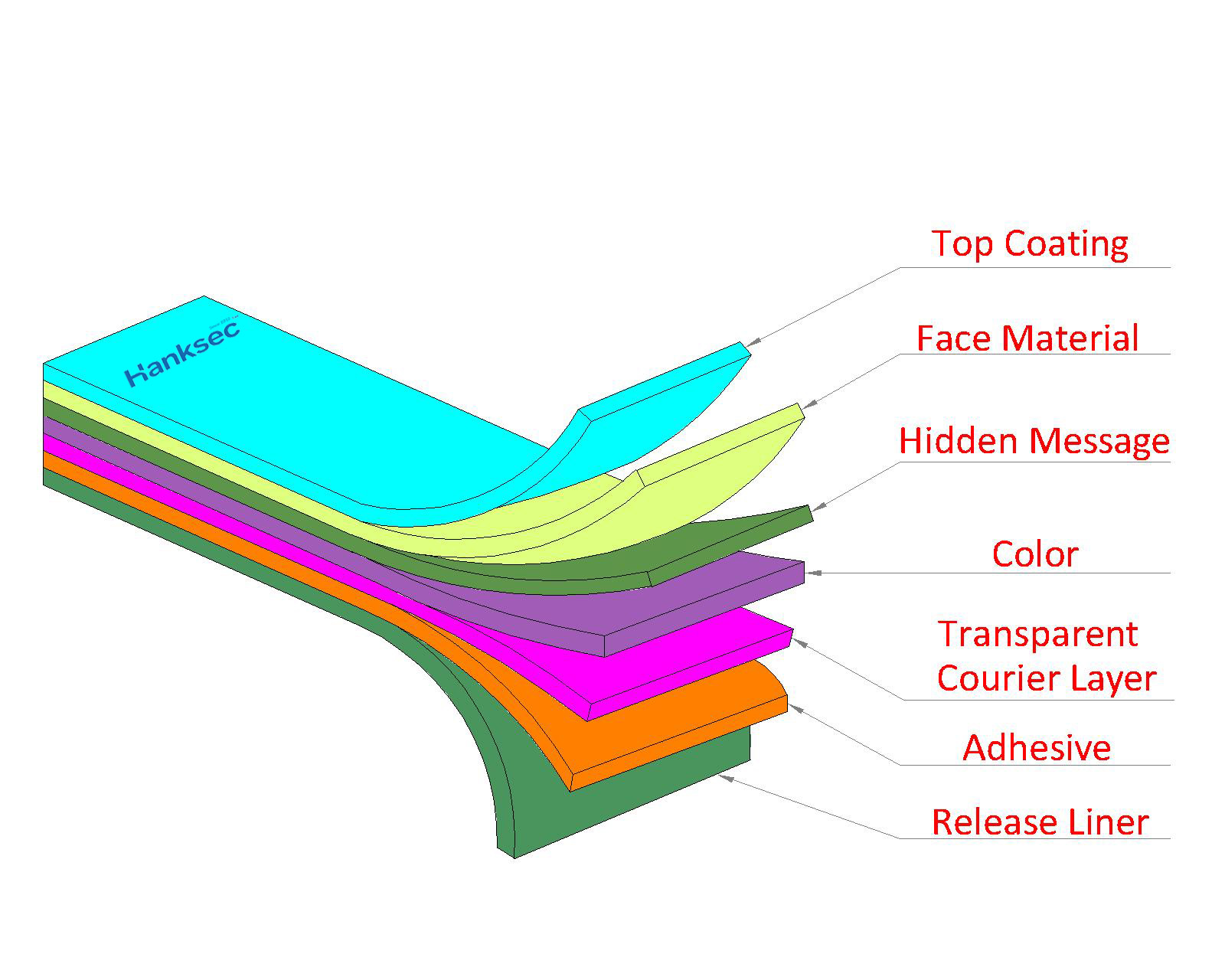
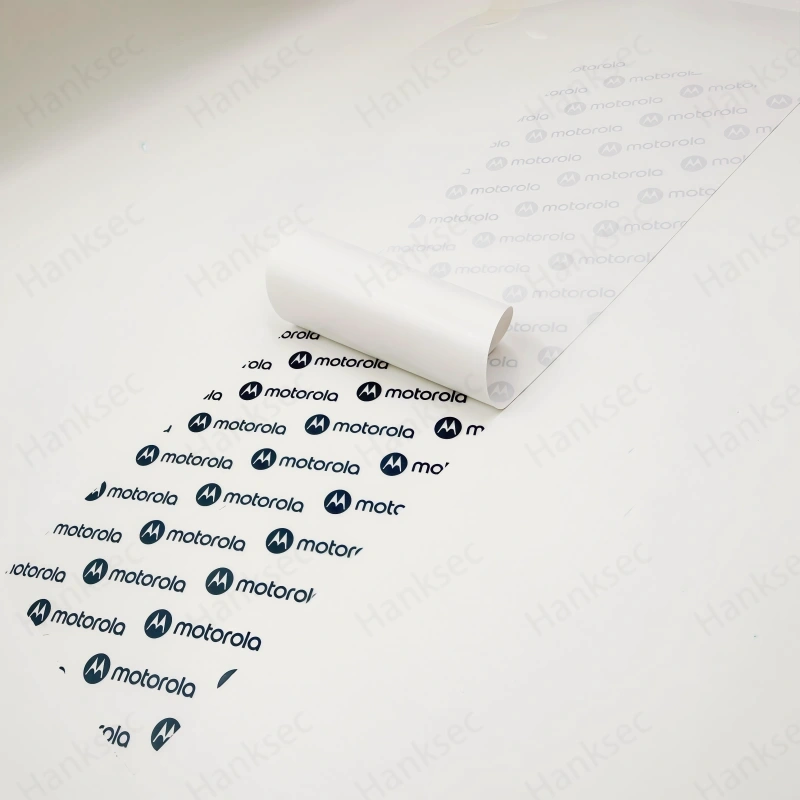
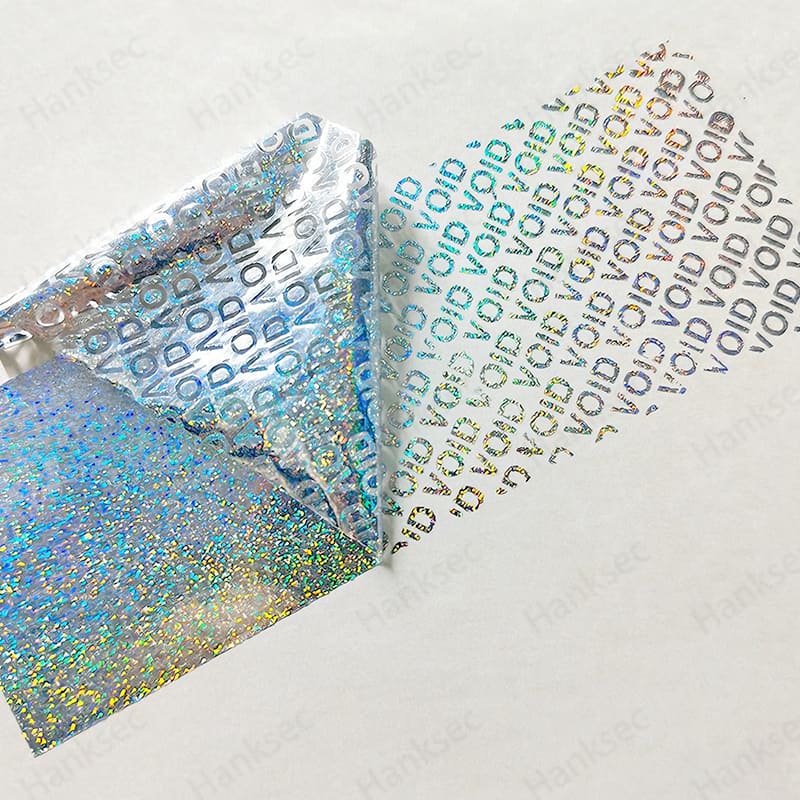
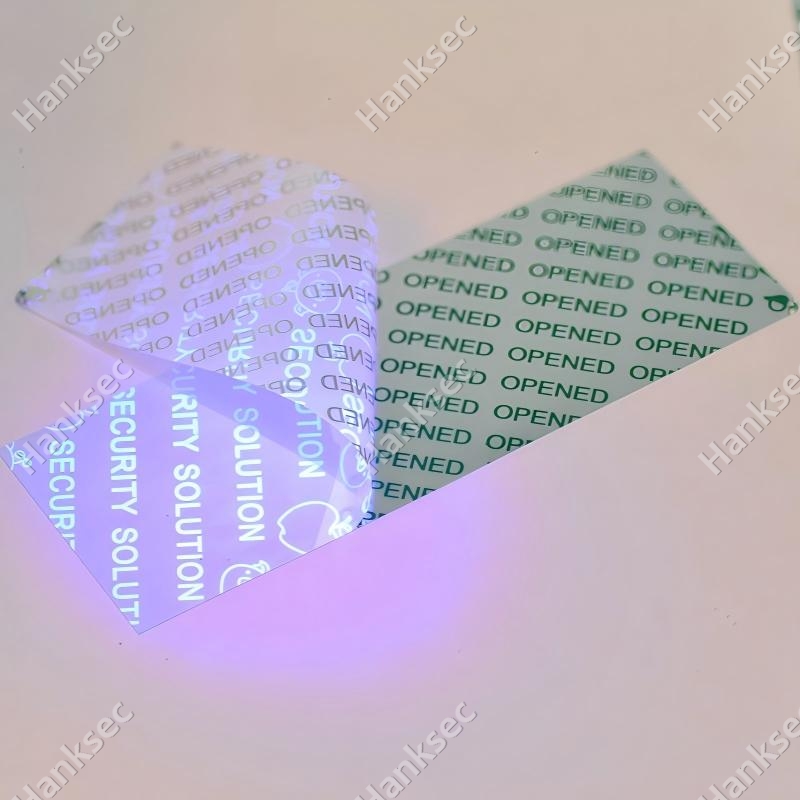
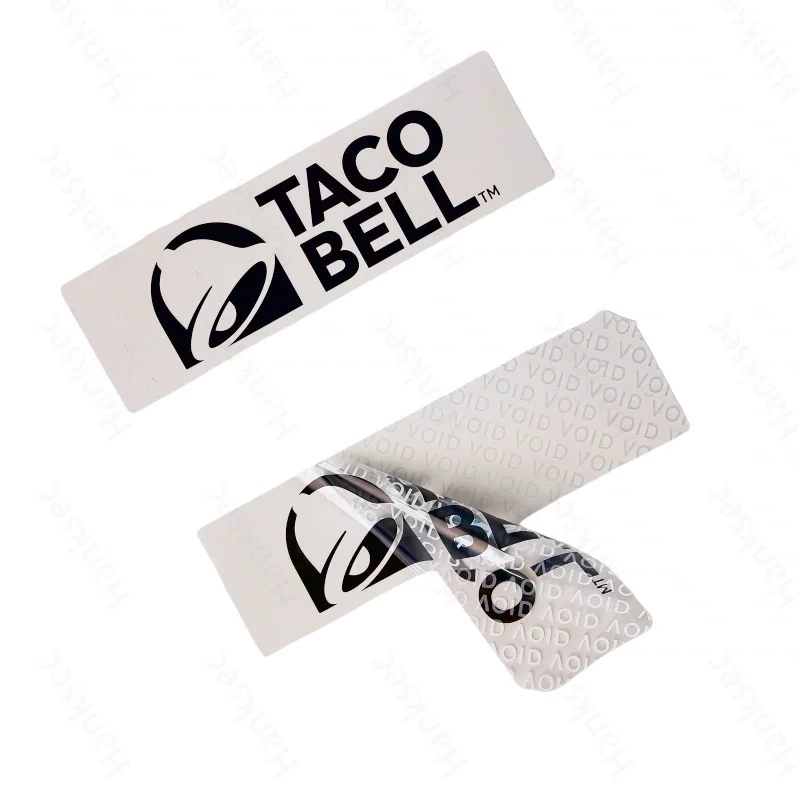
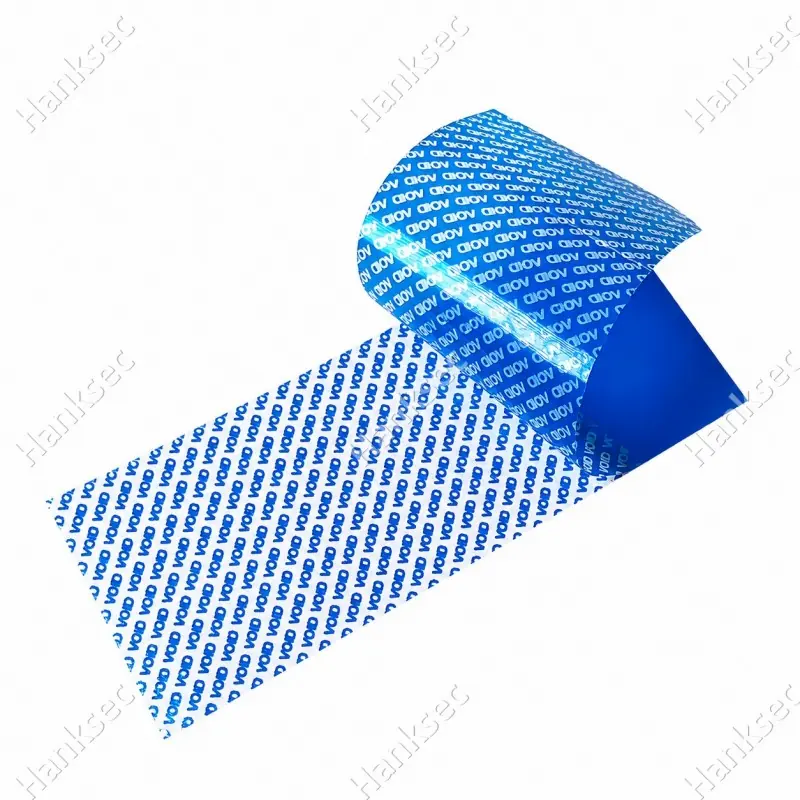
Markenschutzmaterialien mit Manipulationsschutz bestehen üblicherweise aus einer bedruckbaren Deckschicht, einer verdeckten Sicherheitsinformationsschicht, einer Farb- oder Transferschicht, einem Klebstoffsystem und einer Trennfolie. Nach dem Aufbringen des Etiketts auf das Produkt oder die Verpackung kann jeder Entfernungsversuch sichtbare Spuren hinterlassen, wie z. B. die Übertragung der VOID-Aufschrift, Klebereste, Einrisse oder irreversible Oberflächenschäden, abhängig von der gewählten Materialstruktur.
Dadurch lässt sich das Etikett nur schwer rückstandsfrei entfernen und eine Wiederverwendung verhindern. Sobald Spuren einer Manipulation sichtbar sind, kann der ursprüngliche Versiegelungszustand nicht wiederhergestellt werden. Dies hilft Herstellern festzustellen, ob die Verpackung, das Etikett oder das geschützte Produkt geöffnet, ausgetauscht oder manipuliert wurde.
Warum Marken manipulationssichere Materialien verwenden
Markenhersteller verwenden manipulationssichere Materialien, um Produktwechsel, unbefugtes Öffnen, Umpacken, Produktfälschungen, Probleme mit dem Graumarkt und Garantiestreitigkeiten zu reduzieren. In vielen Branchen dient ein Sicherheitsetikett zudem als sichtbares Vertrauenssignal für Händler, Einzelhändler, Serviceteams und Endverbraucher.
Im Vergleich zu herkömmlichen bedruckten Aufklebern sind fälschungssichere Materialien so konzipiert, dass sie nach dem Entfernen physische oder visuelle Spuren hinterlassen. Dieser zusätzliche Schutz ist besonders wichtig für Markenprodukte, die über lange Lieferketten, E-Commerce-Kanäle und internationale Vertriebsnetze verkauft werden.
Hauptmerkmale des Hanksec-Markenschutzes: Manipulationssicheres Material
- Sichtbare Spuren von Manipulation nach Entfernungsversuchen
- Geeignet für Fälschungsschutz, Garantiesiegel und Verpackungssicherheit
- Kann VOID-, OPENED-, benutzerdefinierte Text- oder markenspezifische versteckte Nachrichten unterstützen.
- Verfügbar in den Ausführungen Übertragbarkeit, Teilübertragbarkeit, Nichtübertragbarkeit oder zerstörbare Strukturen
- Unterstützt Logodruck, Barcode, QR-Code, Seriennummer, Warntext und Sicherheitsmuster
- Erhältlich als Jumborollen, geschnittene Rollen, Bogenware oder fertige, kundenspezifische Etiketten.
- OEM- und ODM-Unterstützung für Verarbeiter, Verpackungshersteller und Markeninhaber
Empfohlene Anwendungen
Markenschutz-Manipulationssicheres Material wird häufig für Smartphone-Verpackungen, Elektronikzubehör, Garantieetiketten, Einzelhandelsproduktkartons, Logistikkartons, Fälschungsschutzetiketten, Etiketten zur Anlagenverfolgung, Dokumentenverpackungen, Kosmetikverpackungen und Verpackungen für hochwertige Konsumgüter verwendet.
Dieses Material eignet sich für Produkte, die sowohl ein ansprechendes Aussehen als auch Sicherheit erfordern. Es hilft Marken dabei, ein professionelles Verpackungsdesign zu bewahren und gleichzeitig eine sichtbare Manipulationsschutzfunktion zu integrieren, die Inspektion, Kundendienst und Echtheitsprüfung unterstützt.
Markenschutzmaterial vs. gewöhnliche bedruckte Etiketten
Herkömmliche bedruckte Etiketten dienen hauptsächlich der Markenbildung, Dekoration oder der Vermittlung grundlegender Produktinformationen. Markensichere, manipulationssichere Materialien bieten zusätzlichen Schutz, indem sie das Entfernen sichtbar und unwiderruflich machen. Dadurch fungiert das Etikett sowohl als Markeninstrument als auch als Schutzschicht.
Für risikoarme Einzelhandelsverpackungen kann ein normales Etikett ausreichen. Bei höherwertigen Produkten mit längeren Lieferketten, Garantieanforderungen oder Fälschungsschutz bietet manipulationssicheres Material eine stärkere und praktischere Sicherheitslösung.
Individueller Markenschutz, manipulationssichere Materialoptionen
Hanksec fertigt markensichere, manipulationssichere Materialien nach individuellen Vorgaben: Oberflächenmaterial, versteckte Botschaft, Farbe, Klebkraft, Rückstandsfreiheit, Trennfolie, Rollenbreite, Druckverfahren, Etikettengröße und Anwendungsfläche. Kunden können je nach Produkt und Prüfanforderungen zwischen übertragbaren, nicht übertragbaren oder zerstörbaren Strukturen wählen.
Gängige Individualisierungsoptionen umfassen Firmenlogo, private, versteckte Nachricht, Seriennummer, Barcode, QR-Code, Warnhinweis, Farbdruck, Hologramm-Effekt und variable Codierung. Kunden können Rohmaterialrollen zur Weiterverarbeitung oder fertige, individuell gestaltete Etiketten zur direkten Verwendung wählen.
Oberflächenverträglichkeit und Prüfung
Vor der Massenproduktion sollten Kunden das Material an der Oberfläche der tatsächlichen Verpackung oder des Produkts testen. Kunststoffgehäuse, beschichtete Kartons, Glas, lackiertes Metall, Papierboxen, laminierte Verpackungen und strukturierte Oberflächen können unterschiedliche Haftungs- und Manipulationssicherheitseigenschaften aufweisen.
Oberflächenstaub, Öl, Beschichtungsbehandlung, Temperatur, Luftfeuchtigkeit, Anpressdruck und Aushärtezeit des Klebstoffs können das Endergebnis beeinflussen. Die Prüfung sollte die Schälfestigkeit, die Lesbarkeit verdeckter Botschaften, das Verhalten von Klebstoffrückständen, die Lesbarkeit des Aufdrucks, die Barcode-Scanfähigkeit und das endgültige Erscheinungsbild nach der Anwendung umfassen.
Zugehörige Hanksec-Sicherheitsetikettenmaterialien
Kunden können auch verwandte Hanksec-Materialien erkunden, darunter VOID-Etikettenmaterialien, zerstörbare Etikettenmaterialien, manipulationssichere Sicherheitsbänder, nicht übertragbare VOID-Sicherheitsbänder, Und manipulationssichere Sicherheitsprodukte.
Referenzen zu Tests und Markenschutz
Bei manipulationssicheren Materialien zum Markenschutz bewerten Kunden häufig die Haftung beim Abziehen, die Übertragung versteckter Botschaften, die Lesbarkeit von Barcodes, die variable Codierung, die Verpackungssicherheit und die Stabilität bei der Etikettenverarbeitung. Nützliche externe Referenzen sind: ASTM D3330 Schälhaftungsprüfung, GS1-Barcode-Standards, Und Qualitätsmanagement nach ISO 9001.
Wie wählt man das richtige Material für VOID-Etiketten aus?
Manipulationssichere VOID-Etiketten sind üblicherweise in den Ausführungen Voll-, Teil- und Nicht-Übertragbarkeit erhältlich. Jede Ausführung bietet eine unterschiedliche Manipulationssicherheit und eignet sich für verschiedene Verpackungs-, Etikettierungs- und Sicherheitsanwendungen. Der folgende Vergleich hilft Käufern, das richtige Material entsprechend Oberflächenbeschaffenheit, Rückstandsanforderungen und Sicherheitsstufe auszuwählen.
| Materialart |
Manipulationsnachweis-Effekt |
Rückstände auf der behandelten Oberfläche |
Hauptmerkmale |
Empfohlene Anwendungen |
| Vollständiges Transfer-VOID-Etikettenmaterial |
Der Klebstoff überträgt sich nach dem Entfernen vollständig auf die behandelten Oberflächen. |
Ja |
Gut sichtbare Manipulationsspuren, irreversibler Sicherheitseffekt, hohe Öffnungssicherheit |
Garantiesiegel, Elektronikplomben, Exportkartons, hochwertige Verpackungen, Sicherheitsetiketten |
| Material für teilweise Übertragung von VOID-Etiketten |
Ein Teil des Rückstands gelangt nach der Entfernung auf die behandelte Oberfläche. |
Teilweise |
Manipulationssicher, sauberere Oberfläche, einfachere Inspektion, geeignet für allgemeine Verpackungssicherheit |
E-Commerce-Verpackungen, Einzelhandelskartons, Logistiketiketten, Versandkartons, allgemeine Manipulationssicherungen |
| Nicht übertragbares VOID-Etikettenmaterial |
Nach dem Entfernen erscheint die Meldung VOID / OPEN VOID auf der Etikettenfolie. |
NEIN |
Rückstandsfreier, manipulationssicherer Verschluss, saubere Oberfläche nach dem Entfernen, geeignet für hochwertige und empfindliche Oberflächen |
Mehrwegbehälter, Elektronik, Medizinprodukte, umweltfreundliche Verpackungen, IT-Asset-Etiketten, Verpackungen für Luxusprodukte |
Spezifikation
|
Facestock |
PET oder kundenspezifisch |
|
Stirnplattenstärke |
25/36/50 Mikron oder kundenspezifisch |
|
Zerstörungsmuster |
UNGÜLTIG / UNGÜLTIG GEÖFFNET / GEÖFFNET / SICHERHEIT / Benutzerdefiniert / Kann auf Anfrage mit Ihrem Logo oder anderen Aufdrucken personalisiert werden. |
|
Farbe |
Hologramm, Silber, Gold, Blau, Rot, Schwarz, Weiß, Gelb, Grün, Transparent, Orange oder kundenspezifisch (Pantone-Nummer) |
|
Klebstoff |
Druckempfindlicher Acryl-/Schmelzkleber |
|
Farbausführung |
Glänzend / Matt |
|
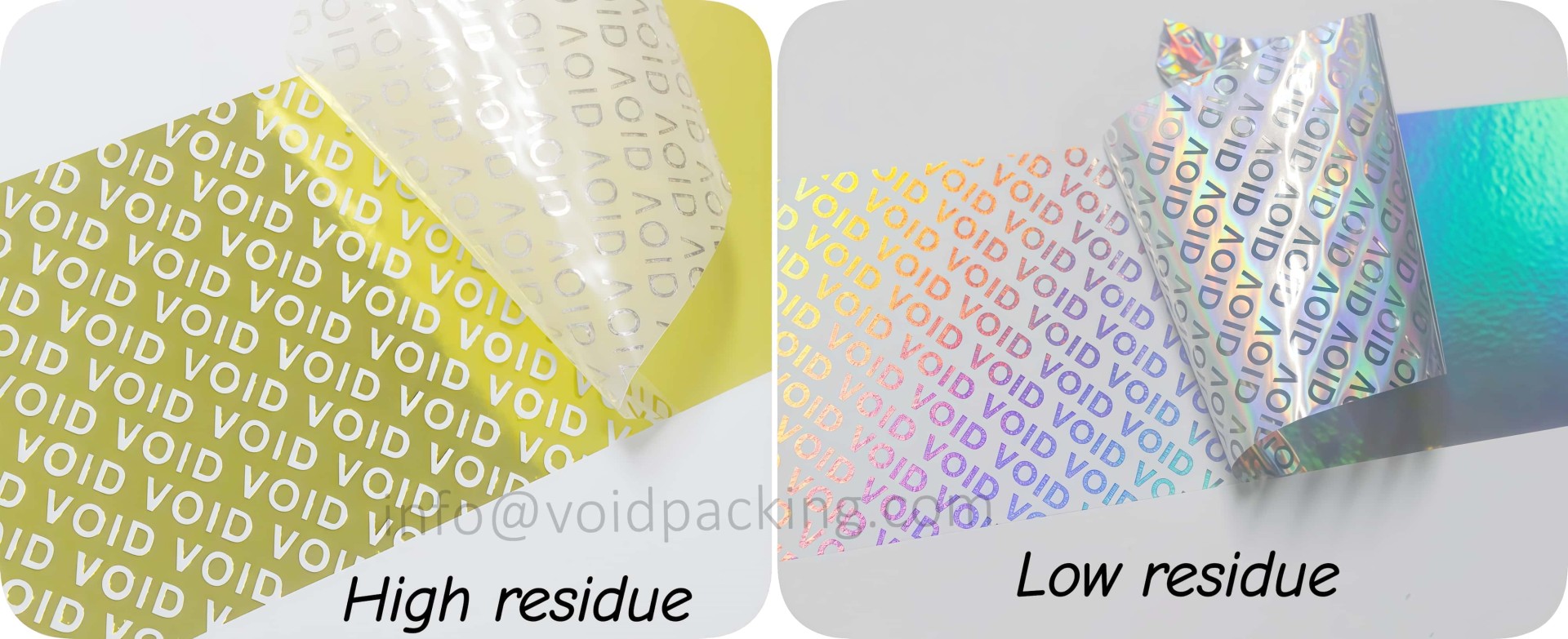
Rückstand |
Hoher Rückstand / Niedriger Rückstand |
|
Mindestbestellmenge |
1070 mm x 500 m oder kundenspezifisch oder keine Mindestbestellmenge für Lagermaterialien |
|
Liner |
60/80 g Pergaminpapier / Kraftpapier oder nach Kundenwunsch |
|
Größe Breite |
100 / 200 / 300 / 530 / 1070 mm oder kundenspezifisch |
|
Größe Länge |
400 / 500 / 1000 / 2000M oder kundenspezifisch |
|
Standardkerngröße |
3 Zoll oder individuell |
|
Temperaturbereich |
-20 °C - 80 °C |
|
Lieferzeit |
3-7 Tage oder länger für Sonderanfertigungen, einschließlich der Herstellung von Kupferplatten |
|
Haltbarkeit |
Unter normalen Bedingungen 2 Jahre haltbar. Direkte Sonneneinstrahlung und hohe Luftfeuchtigkeit vermeiden. |
|
Druckverfahren: |
Digitaldruck, UV-Druck, Siebdruck, Tiefdruck, Rotationsdruck, Offsetdruck, Thermotransferdruck, Tintenstrahldruck usw. |
Niedrige/Hohe Rückstände
Produktstruktur