Brand Protection Tamper Proof Material for Anti-Counterfeit Packaging
Brand Protection Tamper Proof Material is designed for packaging security, anti-counterfeit labeling, warranty sealing, logistics control, and product authentication. It helps brands prevent unauthorized opening, package resealing, label replacement, and product switching by creating visible tamper evidence after removal attempts.
This material is suitable for electronics packaging, phone accessory boxes, retail product labels, warranty seals, carton packaging, cosmetic boxes, pharmaceutical secondary packaging, and branded OEM/ODM security label projects. For brand owners, tamper proof materials are not only used for sealing but also for protecting product trust, channel control, and after-sales verification.
How Brand Protection Tamper Proof Material Works
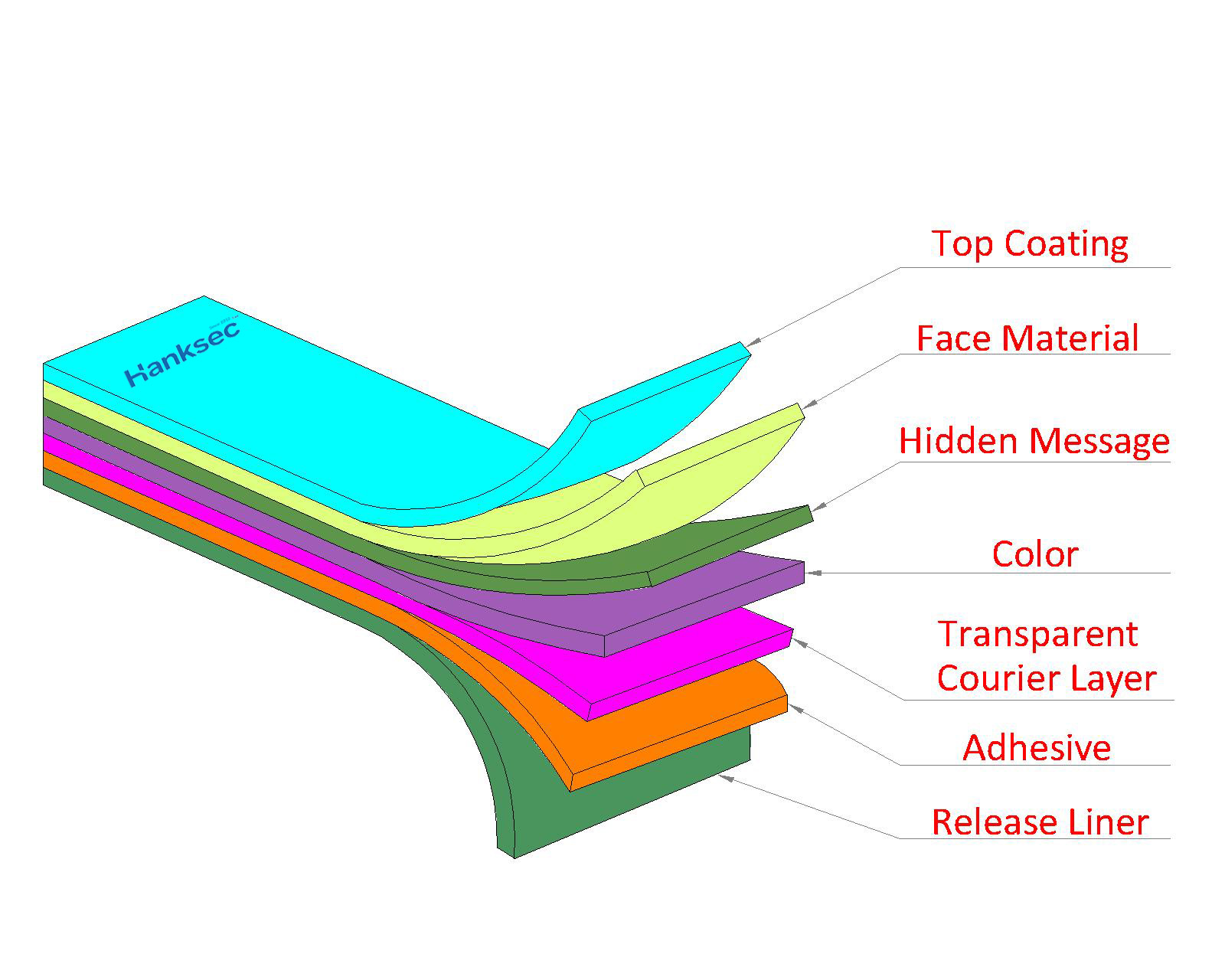
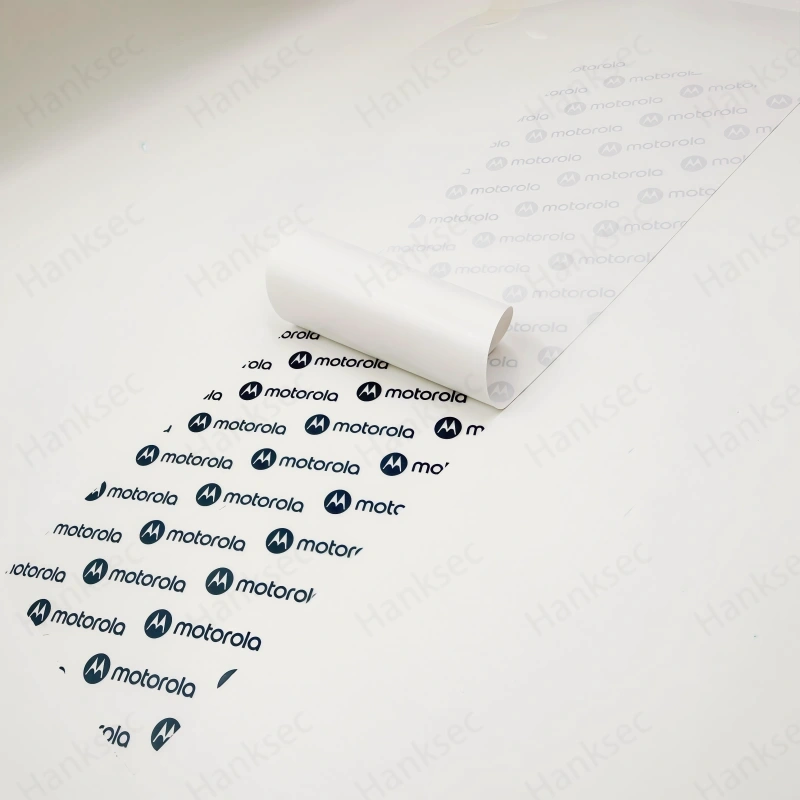
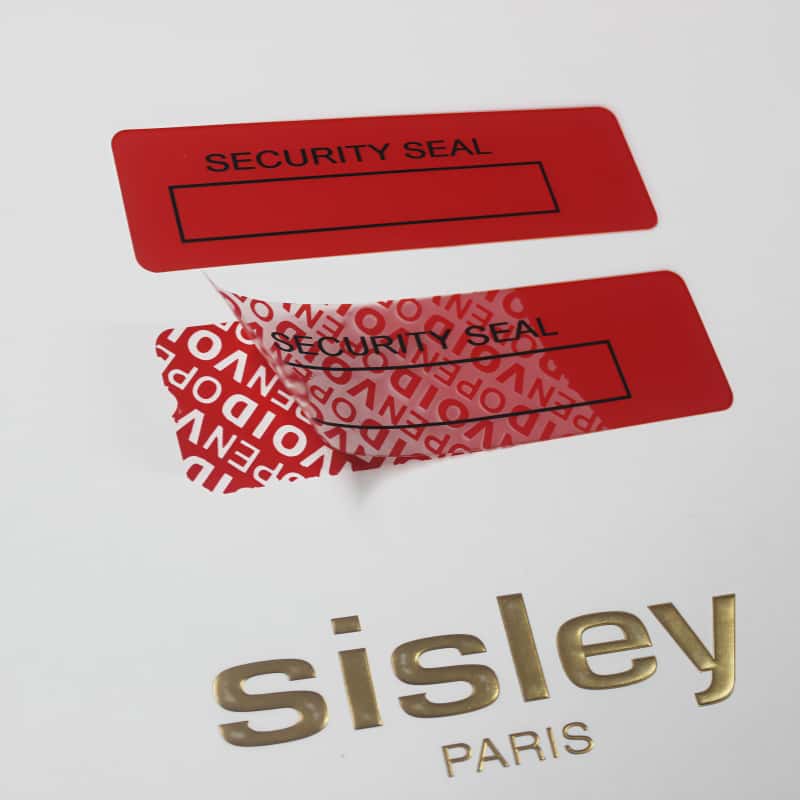
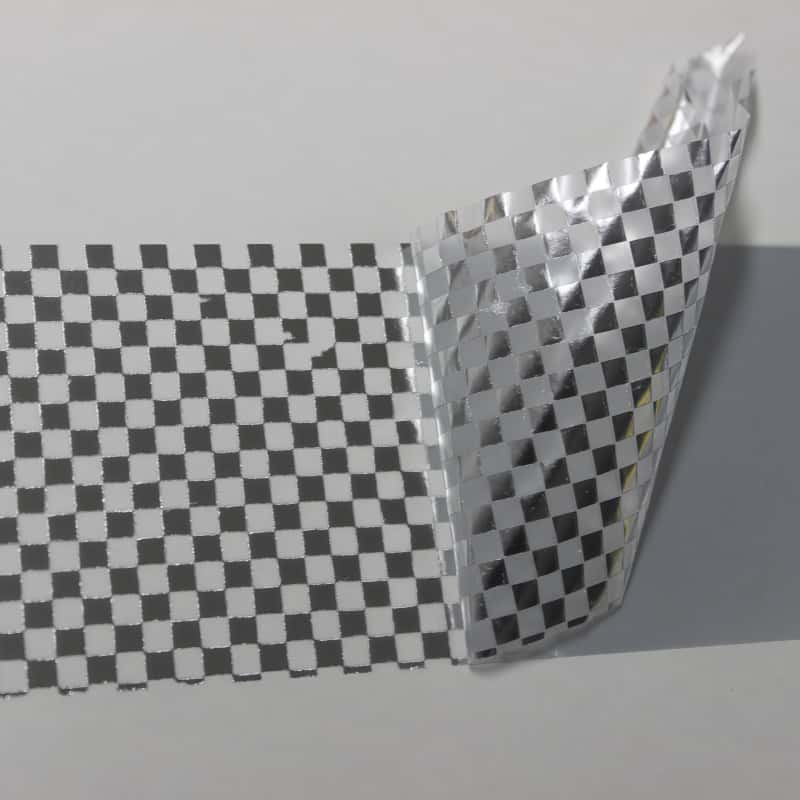
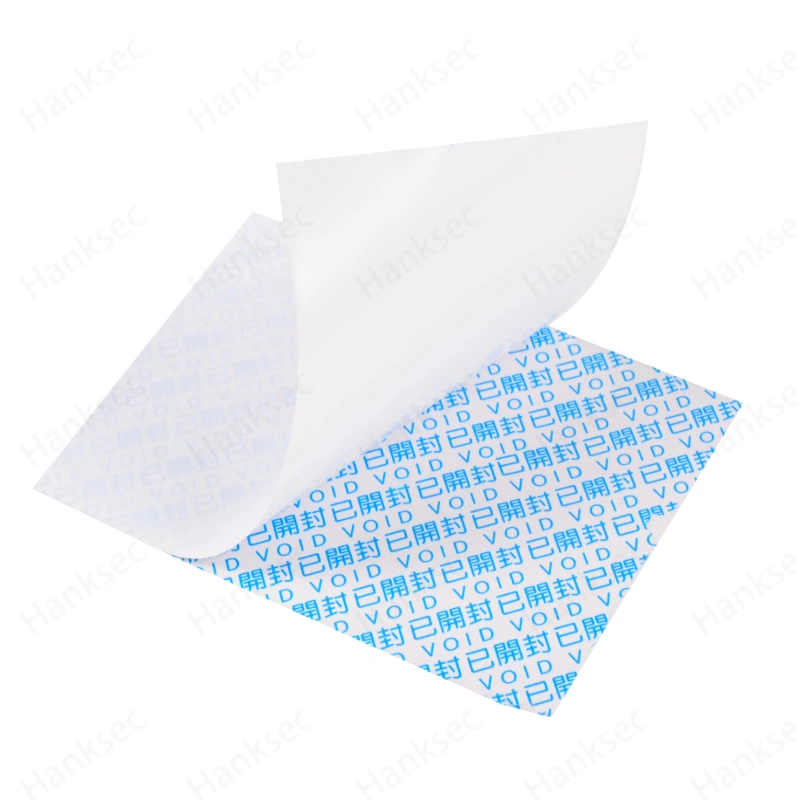
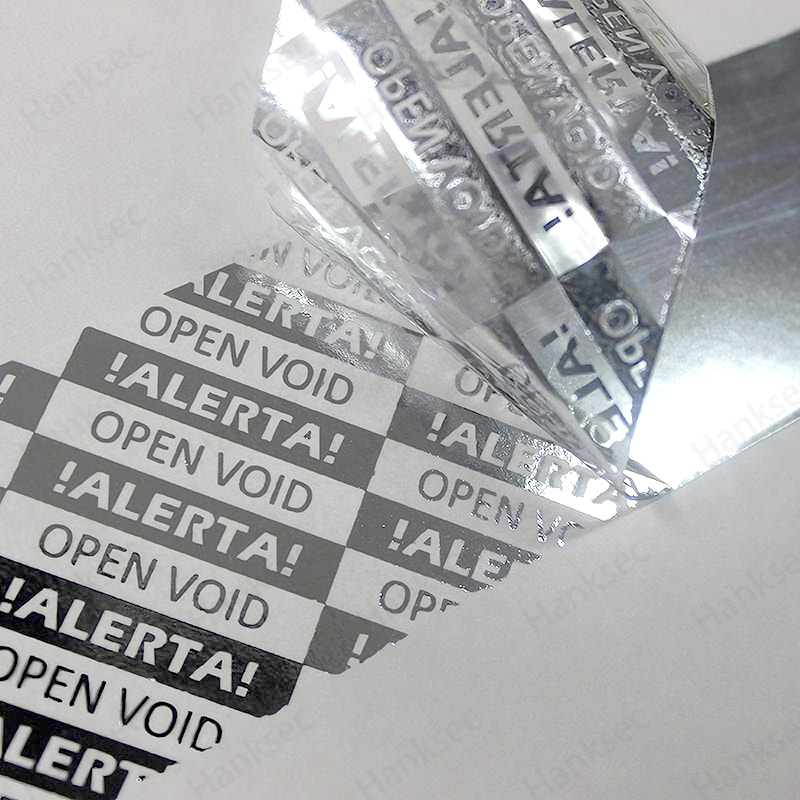
Brand protection tamper proof material usually combines a printable face layer, hidden security message layer, color or transfer layer, adhesive system, and release liner. After the label is applied to the product or package, any removal attempt can trigger visible evidence such as VOID message transfer, residue marks, tearing, or irreversible surface damage depending on the selected material structure.
This makes the label difficult to remove cleanly and prevents reuse. Once the tamper evidence appears, the original sealing condition cannot be restored, helping brands identify whether the package, label, or protected product has been opened, replaced, or manipulated.
Why Brands Use Tamper Proof Materials
Brand owners use tamper proof materials to reduce product switching, unauthorized opening, repacking, counterfeiting, gray-market problems, and warranty disputes. In many industries, a security label also works as a visible trust signal for distributors, retailers, service teams, and end users.
Compared with ordinary printed stickers, tamper proof materials are engineered to create physical or visual evidence after removal. This additional protection is especially important for branded products sold through long supply chains, e-commerce channels, and international distribution networks.
Key Features of Hanksec Brand Protection Tamper Proof Material
- Visible tamper evidence after removal attempts
- Suitable for anti-counterfeit, warranty sealing, and packaging security
- Can support VOID, OPENED, custom text, or brand-specific hidden messages
- Available in transfer, partial transfer, non-transfer, or destructible structures
- Supports logo printing, barcode, QR code, serial number, warning text, and security pattern
- Can be supplied as jumbo rolls, slit rolls, sheets, or finished custom labels
- OEM and ODM support for converters, packaging suppliers, and brand owners
Recommended Applications
Brand Protection Tamper Proof Material is commonly used for smartphone packaging, electronics accessories, warranty labels, retail product boxes, logistics cartons, anti-counterfeit labels, asset tracking labels, document packaging, cosmetic boxes, and premium consumer goods packaging.
This material is useful for products that require both appearance and security. It can help brands maintain a professional package look while adding a visible anti-tamper function that supports inspection, after-sales control, and authenticity verification.
Brand Protection Material vs Ordinary Printed Labels
Ordinary printed labels mainly provide branding, decoration, or basic product information. Brand protection tamper proof materials add a security function by making removal visible and irreversible. This helps the label act as both a branding tool and a protection layer.
For low-risk retail packaging, a normal label may be enough. For products with higher value, longer supply chains, warranty requirements, or anti-counterfeit concerns, tamper proof material provides a stronger and more practical security solution.
Custom Brand Protection Tamper Proof Material Options
Hanksec can customize brand protection tamper proof materials according to face material, hidden message, surface color, adhesive strength, residue level, release liner, roll width, printing method, label size, and application surface. Customers can choose transfer, non-transfer, or destructible structures depending on the product and inspection requirement.
Common customization options include company logo, private hidden message, serial number, barcode, QR code, warning text, color printing, holographic effect, and variable coding. Customers can choose raw material rolls for converting or finished custom labels for direct use.
Surface Compatibility and Testing
Before mass production, customers should test the material on the real package or product surface. Plastic housings, coated cartons, glass, painted metal, paper boxes, laminated packaging, and textured surfaces may show different bonding and tamper evidence performance.
Surface dust, oil, coating treatment, temperature, humidity, application pressure, and adhesive curing time can affect the final result. Testing should include peel adhesion, hidden message clarity, residue behavior, print readability, barcode scanning, and final appearance after application.
Related Hanksec Security Label Materials
Customers can also explore related Hanksec materials, including VOID label materials, destructible label materials, tamper evident security tapes, non-transfer VOID security tapes, and tamper evident security products.
Testing and Brand Protection References
For brand protection tamper proof material, customers often evaluate peel adhesion, hidden message transfer, barcode readability, variable coding, packaging security, and label converting stability. Useful external references include ASTM D3330 peel adhesion testing, GS1 barcode standards, and ISO 9001 quality management.
How to Choose the Right VOID Label Material?
Tamper evident VOID label materials are commonly available in full transfer, partial transfer, and non transfer types. Each type provides a different tamper evidence effect and is suitable for different packaging, labeling, and security applications. The comparison below helps buyers select the right material according to surface condition, residue requirement, and security level.
| Material Type |
Tamper Evidence Effect |
Residue on Applied Surface |
Key Features |
Recommended Applications |
| Full Transfer VOID Label Material |
The adhesive fully transfers to the applied surfaces after removal |
Yes |
Highly visible tamper evidence, irreversible security effect, strong anti-opening performance |
Warranty labels, electronics seals, export cartons, high-value packaging, security labels |
| Partial Transfer VOID Label Material |
Part of the residue transfers to the applied surface after removal |
Partial |
Tamper evidence, cleaner finish, easier inspection, suitable for general packaging security |
E-commerce packaging, retail boxes, logistics labels, shipping cartons, general anti-tamper sealing |
| Non Transfer VOID Label Material |
The VOID / OPEN VOID message appears on the label film after removal |
No |
No-residue tamper evidence, clean surface after removal, suitable for premium and sensitive surfaces |
Reusable containers, electronics, medical devices, clean packaging, IT asset labels, luxury product packaging |
Specification
|
Facestock |
PET or Custom |
|
Facestock Thickness |
25/36/50 Microns or Custom |
|
Destruct Pattern |
VOID / VOIDOPEN / OPENED / SECURITY / Custom / It Can Be Customized With Your Logo Or Any Other Printing Upon Request |
|
Color |
Hologram, Silver, Gold, Blue, Red, Black, White, Yellow, Green, Transparent, Orange or Custom (Pantone number) |
|
Adhesive |
Pressure Sensitive Acrylic / Hot Melt Adhesive |
|
Color Finish |
Glossy / Matt |
|
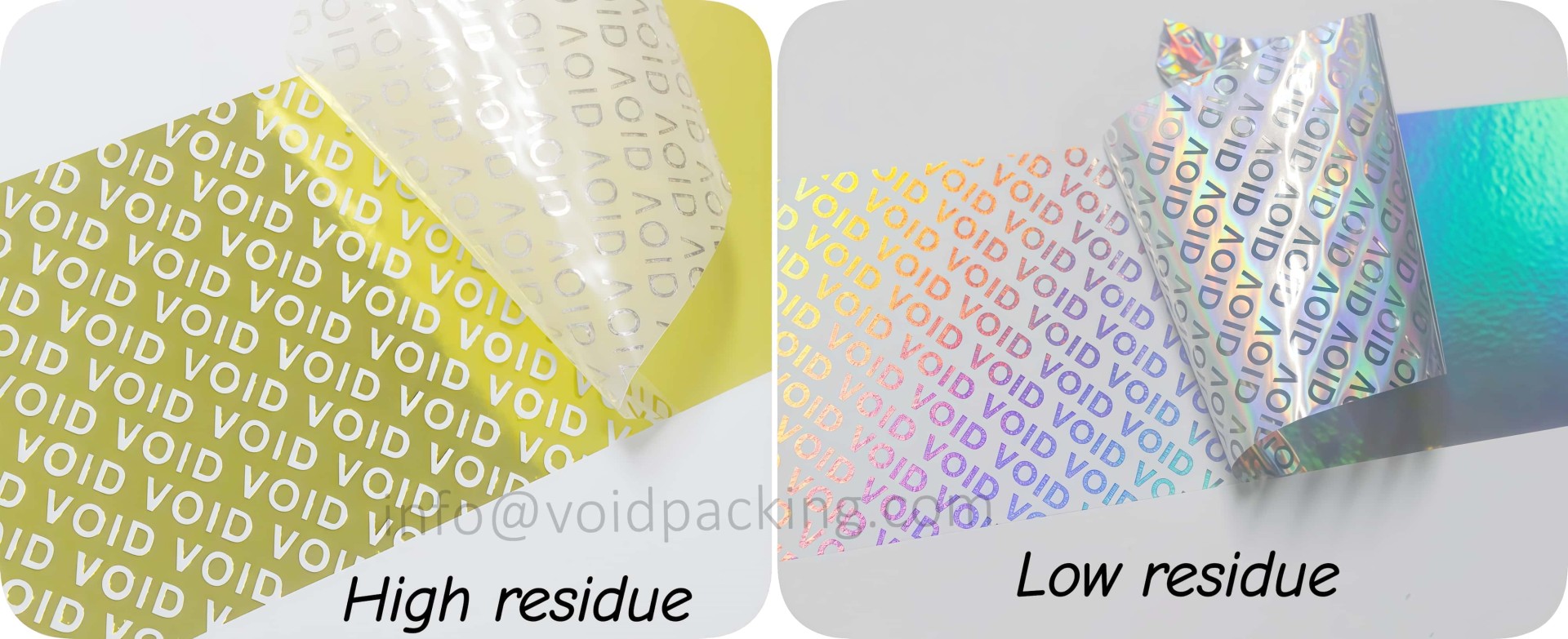
Residue |
High residue / Low residue |
|
MOQ |
1070mm*500m or Custom or No MOQ for Stock Materials |
|
Liner |
60/80g Glassine Paper / Kraft Paper Or Custom |
|
Size Width |
100 / 200 / 300 / 530 / 1070mm or Custom |
|
Size Length |
400 / 500 / 1000 / 2000M or Custom |
|
Standard Core Size |
3 Inch or Custom |
|
Tamperature Range |
-20°C - 80℃ |
|
Lead Time |
3-7 Days or Longer for Bespoke Types Including Making Copperplates |
|
Shelf Life |
2 Years Under Normal Condition, Avoid Direct Sunlight And High Humidity |
|
Printing methods: |
Digital Printing, UV Printing, Silk Screen, Intaglio Printing, Rotary Printing, Offset Printing, Thermal Transfer Printing, Inkjet Printing, Etc. |
Low/High Residue
Product Structure