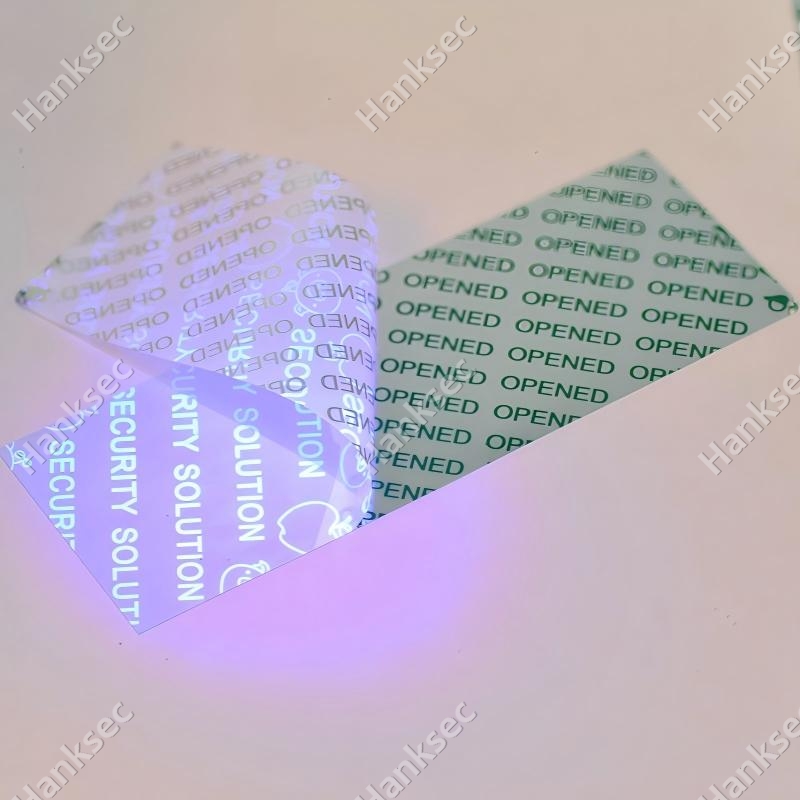
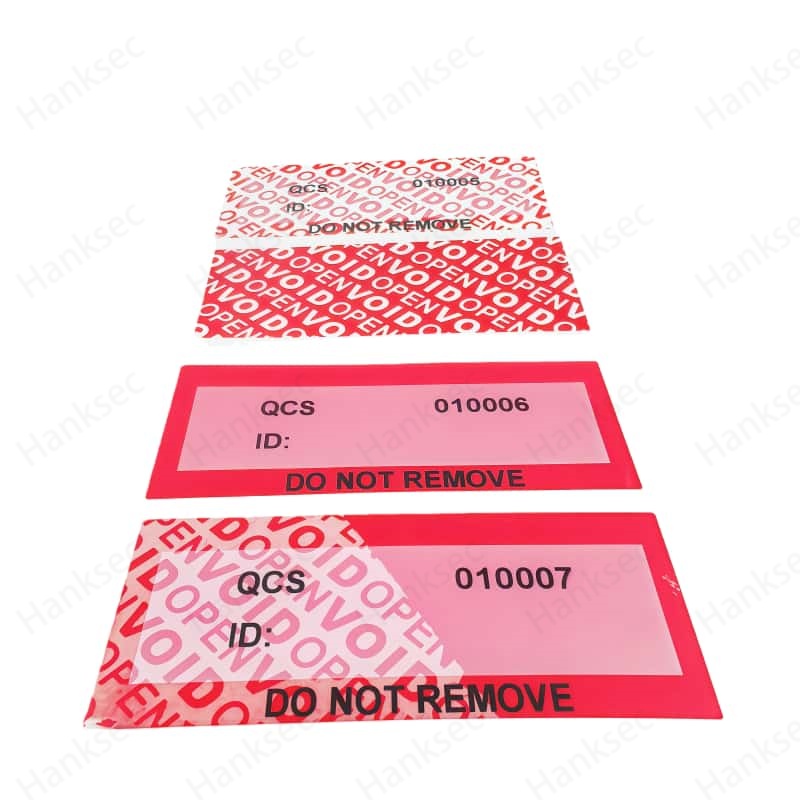
Sicherheitsetikettenmaterial aus Papier für umweltfreundliche, manipulationssichere Verpackungen
Sicherheitsetikettenmaterial aus Papier Es handelt sich um ein manipulationssicheres Etikettenmaterial auf Papierbasis, das für Verpackungssiegel, Garantiesiegel, Kartonsicherung, Dokumentenschutz und Markenauthentifizierung entwickelt wurde. Im Vergleich zu herkömmlichen Sicherheitsetiketten aus Kunststoff bieten Papieretiketten ein verpackungsfreundlicheres Erscheinungsbild und liefern dennoch sichtbare Spuren nach Entfernungsversuchen.
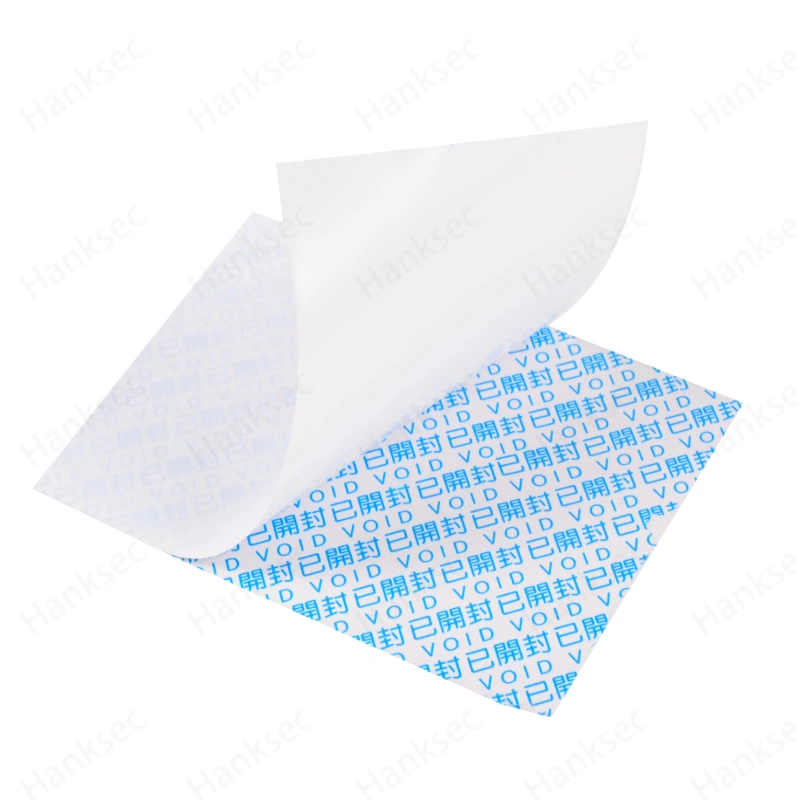
Dieses Material eignet sich für Kartons, Papierboxen, Briefumschläge, Einzelhandelsverpackungen, Lebensmittelverpackungen, Kosmetikverpackungen, pharmazeutische Sekundärverpackungen, Dokumentenverschlüsse und E-Commerce-Verpackungen. Beim Entfernen des Etiketts kann das Papier einreißen, spalten oder eine versteckte Manipulationswarnung freilegen, wodurch Kunden unbefugtes Öffnen oder Austauschen des Etiketts erkennen können.
Wie Sicherheitsetiketten aus Papier funktionieren
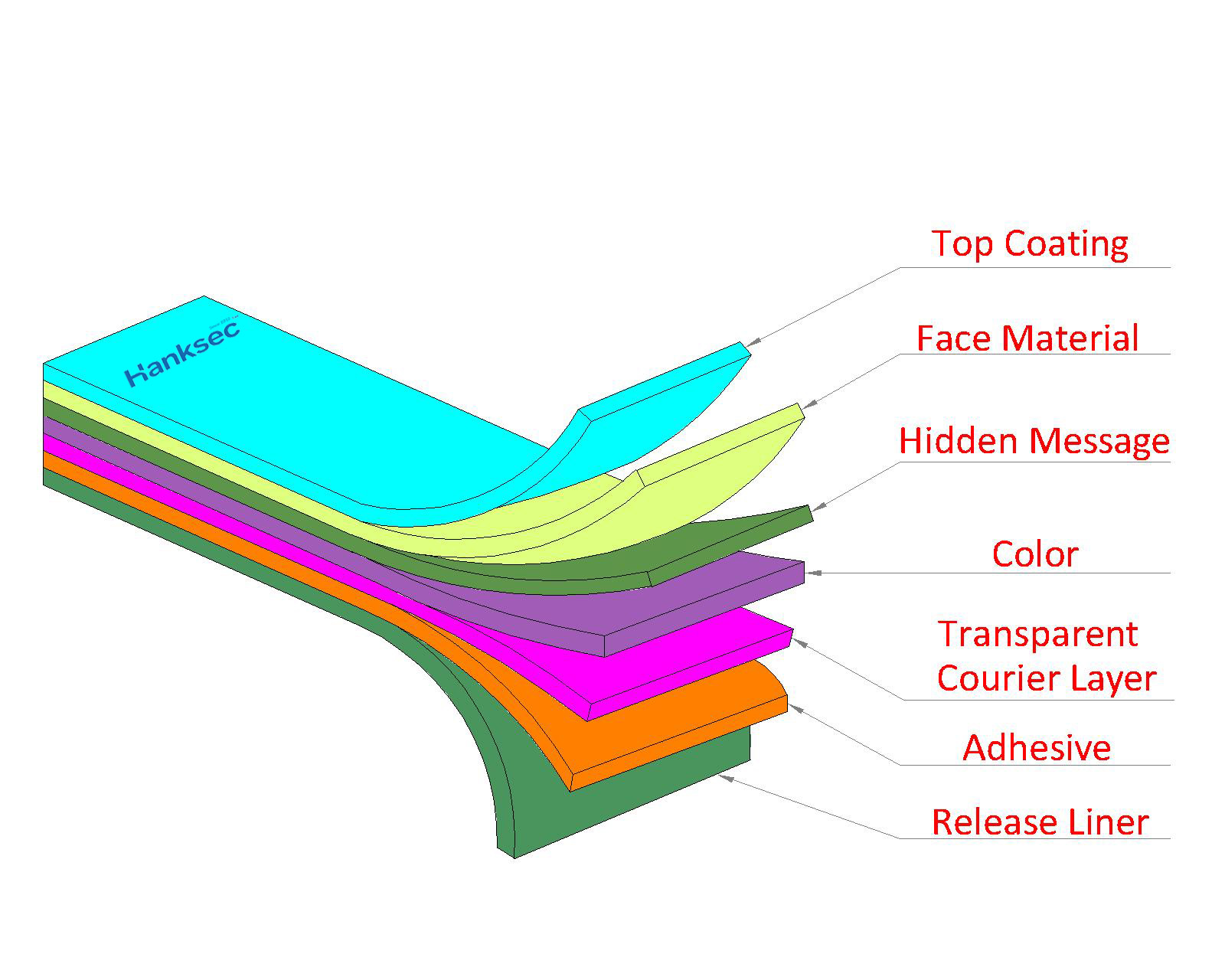
Das Material für Sicherheitsetiketten besteht aus einer Kombination von Papieroberseite, Sicherheitsbeschichtung, einer verdeckten Manipulationsschutzschicht, einem Klebstoffsystem und einer Trennfolie. Nach dem Aufbringen des Etiketts verbindet sich der Klebstoff mit der Verpackung. Beim Versuch, das Etikett zu entfernen, entstehen durch die Etikettenstruktur sichtbare Spuren der Manipulation, wie z. B. Papierfaserrisse, Klebstoffreste oder eine verdeckte Meldung wie „UNGÜLTIG“ oder „GEÖFFNET“.
Dadurch lässt sich das Etikett nur schwer rückstandsfrei entfernen und nicht wiederverwenden. Die Papierschicht verstärkt den Effekt des Einreißens, während die Sicherheitsbeschichtung oder die Schicht mit der versteckten Botschaft zusätzliche visuelle Hinweise liefert. Diese Kombination eignet sich für Verpackungsanwendungen, bei denen Kunden sowohl Manipulationsschutz als auch ein papierbasiertes Material benötigen.
Warum sollte man sich für Sicherheitsetiketten aus Papier entscheiden?
Sicherheitsetiketten aus Papier eignen sich, wenn Kunden eine manipulationssichere Lösung wünschen, die auf Kartons, Papierboxen, Briefumschlägen und recycelbaren Verpackungen natürlich wirkt. Sie werden häufig für Verpackungsprojekte bevorzugt, bei denen Kunststoffetiketten zu industriell wirken oder mit dem Design der Papierverpackung nicht harmonieren.
Für Marken, die Kartonverpackungen verwenden, können Sicherheitsetiketten aus Papier ein einheitlicheres Verpackungsbild erzeugen. Sie ermöglichen zudem individuelle Bedruckung mit Markenlogos, Seriennummern, QR-Codes, Barcodes, Warnhinweisen und verschiedenen versteckten Sicherheitsmeldungen, je nach Anwendungszweck.
Hauptmerkmale des Hanksec-Papiersicherheitsetikettenmaterials
- Papierbasiertes Oberflächenmaterial für Karton- und Papierverpackungen
- Sichtbare Risse oder Spuren von Manipulation nach Entfernungsversuchen
- Kann VOID-, OPENED-, benutzerdefinierte Text- oder markenspezifische versteckte Nachrichten unterstützen.
- Geeignet für Kartons, Briefumschläge, Verkaufsverpackungen, Dokumentenverschlüsse und Garantiesiegel.
- Individuelles Logo, QR-Code, Barcode, Seriennummer, Warntext und Stanzform verfügbar
- Erhältlich als Jumborollen, geschnittene Rollen, Bogenware oder fertige, kundenspezifische Etiketten.
- OEM- und ODM-Unterstützung für Verpackungshersteller, Etikettenverarbeiter und Markeninhaber
Empfohlene Anwendungen
Papiersicherheitsetikettenmaterial wird häufig für E-Commerce-Kartons, Papierverpackungskartons, Dokumentenumschläge, Garantiesiegel, Zertifikatsetiketten, Lebensmittelverpackungen, Siegel für Einzelhandelsprodukte, Kosmetikverpackungen, pharmazeutische Sekundärverpackungen und zur Authentifizierung von Produkten gegen Produktfälschungen verwendet.
Dieses Material eignet sich besonders für Verpackungsprojekte, die einen sichtbaren Manipulationsschutz erfordern, ohne das Erscheinungsbild der Papierverpackung zu verändern. Es hilft Marken, die Produktintegrität zu schützen und gleichzeitig einen schlichteren und natürlicheren Verpackungsstil zu bewahren.
Sicherheitsetiketten aus Papier vs. Sicherheitsetiketten aus PET
PET-Sicherheitsetiketten sind widerstandsfähiger, haltbarer und eignen sich für hochfeste Oberflächen wie Kunststoff, Metall, Glas und Industrieverpackungen. Papier-Sicherheitsetiketten eignen sich besser für Kartons, Kraftpapier, gestrichenen Karton, Briefumschläge und papierbasierte Einzelhandelsverpackungen.
Für Umgebungen mit hoher Luftfeuchtigkeit, im Freien oder in stark beanspruchten Industrieumgebungen bieten Sicherheitsmaterialien auf PET-Basis möglicherweise eine höhere Haltbarkeit. Für Papierverpackungen, Dokumentenversiegelung und umweltbewusste Verpackungsprojekte kann Papier für Sicherheitsetiketten eine bessere optische Übereinstimmung und eine verpackungsfreundlichere Materialwahl bieten.
Optionen für individuelle Sicherheitsetiketten aus Papier
Hanksec kann Sicherheitsetikettenmaterialien aus Papier individuell anpassen, je nach Papiersorte, Klebestärke, versteckter Botschaft, Rückstandsmenge, Oberflächenfarbe, Druckverfahren, Trennpapier, Rollenbreite, Etikettengröße und Anwendungsfläche.
Gängige Individualisierungsoptionen umfassen die Kennzeichnungen VOID, OPENED, ABIERTO, individuelle Markenbotschaften, Seriennummern, QR-Codes, Barcodes, Warnhinweise, Logodruck, Farbdruck und spezielle Stanzformen. Kunden können Rollenmaterial zur Weiterverarbeitung oder fertige Etiketten für die direkte Verwendung auf Verpackungen wählen.
Kompatibilität beim Drucken und Konvertieren
Papiersicherheitsetiketten eignen sich je nach Deckpapier, Beschichtung, Klebstoffsystem und Trägerstruktur für gängige Druck- und Weiterverarbeitungsverfahren. Für Etikettenhersteller sind wichtige Verarbeitungsparameter die Tintenhaftung, die Stanztiefe, die Kantenstabilität, das Ablösen der Trägerfolie, die Ablösekraft und die Dosierleistung des fertigen Etiketts.
Da Papiermaterialien unterschiedlich auf Feuchtigkeit, Druck und Oberflächenbeschichtungen reagieren können, empfiehlt sich vor der Serienproduktion eine Musterprüfung. Hanksec bietet Materialprüfungen an, die auf die Druckmaschinen des Kunden, die Verpackungsoberfläche, die Etikettengröße und die endgültigen Sicherheitsanforderungen abgestimmt sind.
Oberflächenverträglichkeit und Prüfung
Vor der Massenproduktion sollten Kunden das Etikett auf der tatsächlichen Verpackungsoberfläche testen. Kraftkartons, gestrichener Karton, Wellpappkartons, Papierumschläge, laminierte Papierkartons und Recyclingpapierverpackungen können unterschiedliche Klebe- und Reißfestigkeitseigenschaften aufweisen.
Oberflächenstaub, Beschichtungsbehandlung, Papierrauheit, Luftfeuchtigkeit, Temperatur, Anpressdruck und Aushärtezeit des Klebstoffs können das Endergebnis der Manipulationssicherheit beeinflussen. Die Prüfung sollte die Schälfestigkeit, das Reißen der Papierfasern, die Lesbarkeit der verdeckten Botschaft, die Drucklesbarkeit, das Scannen von Barcodes und das endgültige Erscheinungsbild nach der Anwendung umfassen.
Verwandte Hanksec-Papier- und Sicherheitsetikettenmaterialien
Kunden können auch verwandte Hanksec-Materialien erkunden, darunter VOID-Etikettenmaterialien, zerstörbare Etikettenmaterialien, manipulationssichere Sicherheitsbänder, nicht übertragbare VOID-Sicherheitsbänder, Und manipulationssichere Sicherheitsprodukte.
Prüf- und Nachhaltigkeitsverpackungsreferenzen
Bei Sicherheitsetiketten aus Papier bewerten Kunden häufig die Haftung beim Abziehen, die Reißfestigkeit der Papierfasern, die Haltbarkeit des Drucks, die Lesbarkeit des Barcodes, die Papierherkunft und die Anforderungen an die Nachhaltigkeit der Verpackung. Hilfreiche externe Referenzen sind: ASTM D3330 Schälhaftungsprüfung, FSC-Produktkettenzertifizierung, Und EPA Nachhaltiges Materialmanagement.
Wie wählt man das richtige Material für VOID-Etiketten aus?
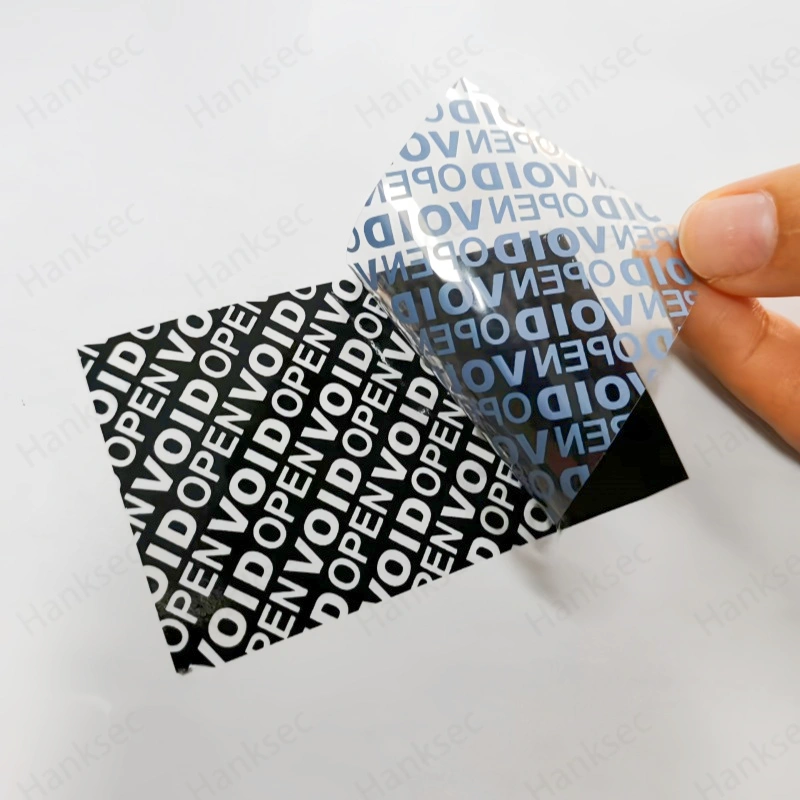
Manipulationssichere VOID-Etiketten sind üblicherweise in den Ausführungen Voll-, Teil- und Nicht-Übertragbarkeit erhältlich. Jede Ausführung bietet eine unterschiedliche Manipulationssicherheit und eignet sich für verschiedene Verpackungs-, Etikettierungs- und Sicherheitsanwendungen. Der folgende Vergleich hilft Käufern, das richtige Material entsprechend Oberflächenbeschaffenheit, Rückstandsanforderungen und Sicherheitsstufe auszuwählen.
| Materialart |
Manipulationsnachweis-Effekt |
Rückstände auf der behandelten Oberfläche |
Hauptmerkmale |
Empfohlene Anwendungen |
| Vollständiges Transfer-VOID-Etikettenmaterial |
Der Klebstoff überträgt sich nach dem Entfernen vollständig auf die behandelten Oberflächen. |
Ja |
Gut sichtbare Manipulationsspuren, irreversibler Sicherheitseffekt, hohe Öffnungssicherheit |
Garantiesiegel, Elektronikplomben, Exportkartons, hochwertige Verpackungen, Sicherheitsetiketten |
| Material für teilweise Übertragung von VOID-Etiketten |
Ein Teil des Rückstands gelangt nach der Entfernung auf die behandelte Oberfläche. |
Teilweise |
Manipulationssicher, sauberere Oberfläche, einfachere Inspektion, geeignet für allgemeine Verpackungssicherheit |
E-Commerce-Verpackungen, Einzelhandelskartons, Logistiketiketten, Versandkartons, allgemeine Manipulationssicherungen |
| Nicht übertragbares VOID-Etikettenmaterial |
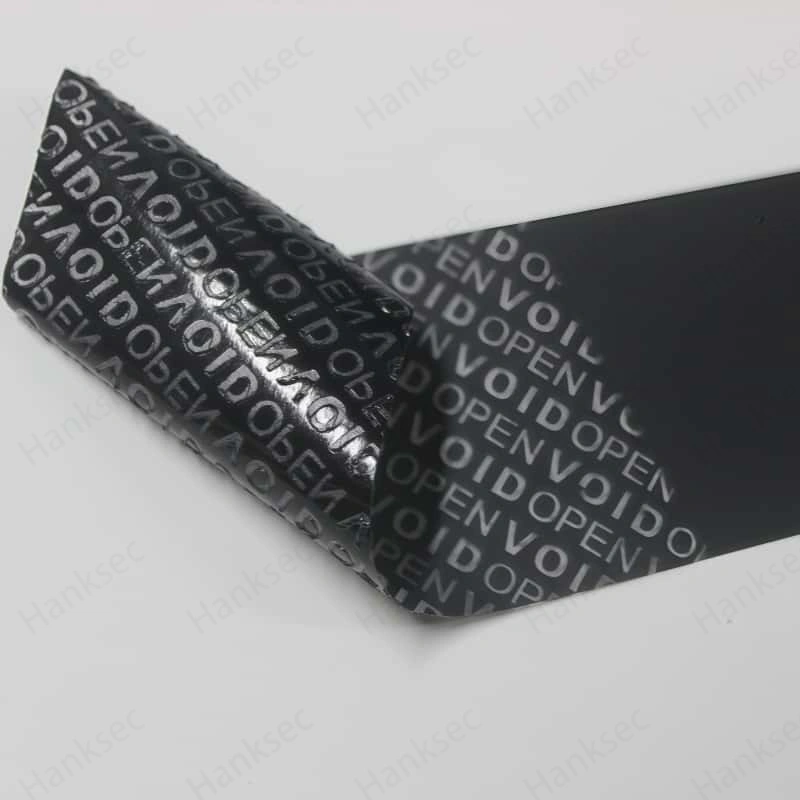
Nach dem Entfernen erscheint die Meldung VOID / OPEN VOID auf der Etikettenfolie. |
NEIN |
Rückstandsfreier, manipulationssicherer Verschluss, saubere Oberfläche nach dem Entfernen, geeignet für hochwertige und empfindliche Oberflächen |
Mehrwegbehälter, Elektronik, Medizinprodukte, umweltfreundliche Verpackungen, IT-Asset-Etiketten, Verpackungen für Luxusprodukte |
Spezifikation
|
Facestock |
PET oder kundenspezifisch |
|
Stirnplattenstärke |
25/36/50 Mikron oder kundenspezifisch |
|
Zerstörungsmuster |
UNGÜLTIG / UNGÜLTIG GEÖFFNET / GEÖFFNET / SICHERHEIT / Benutzerdefiniert / Kann auf Anfrage mit Ihrem Logo oder anderen Aufdrucken personalisiert werden. |
|
Farbe |
Hologramm, Silber, Gold, Blau, Rot, Schwarz, Weiß, Gelb, Grün, Transparent, Orange oder kundenspezifisch (Pantone-Nummer) |
|
Klebstoff |
Druckempfindlicher Acryl-/Schmelzkleber |
|
Farbausführung |
Glänzend / Matt |
|
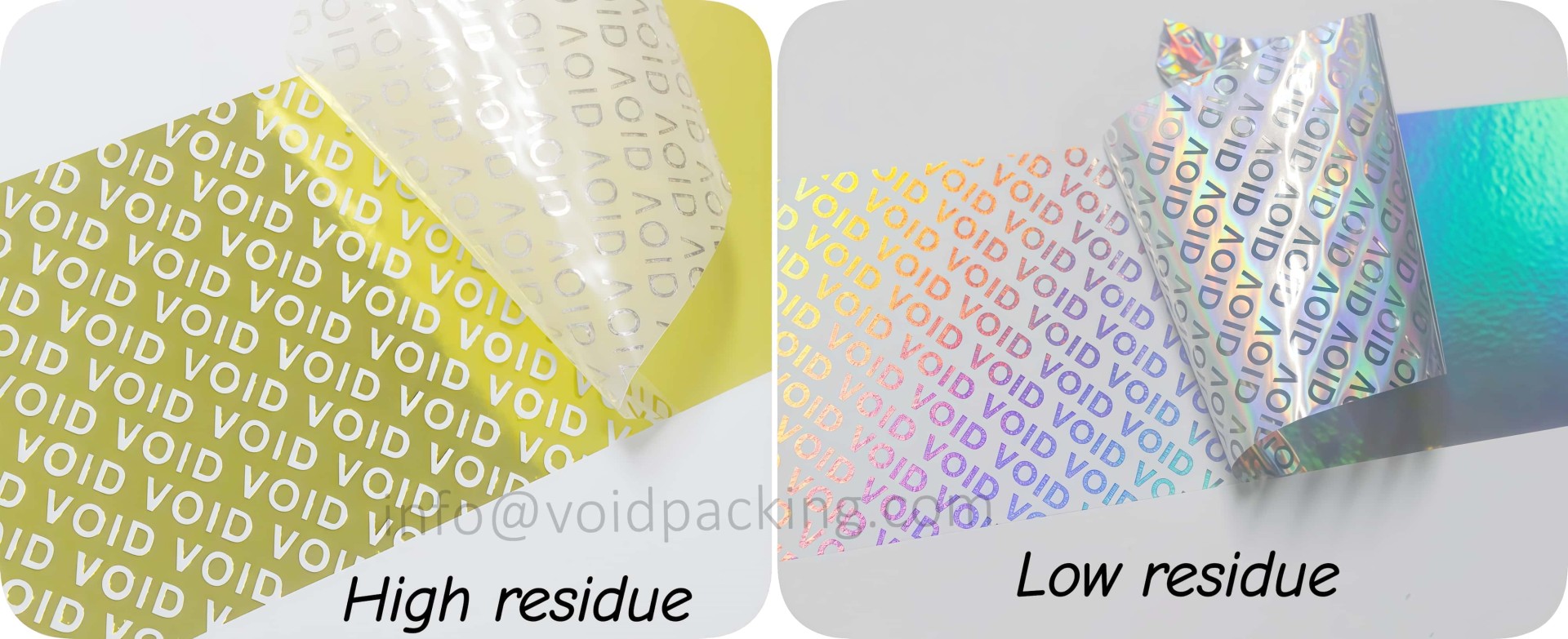
Rückstand |
Hoher Rückstand / Niedriger Rückstand |
|
Mindestbestellmenge |
1070 mm x 500 m oder kundenspezifisch oder keine Mindestbestellmenge für Lagermaterialien |
|
Liner |
60/80 g Pergaminpapier / Kraftpapier oder nach Kundenwunsch |
|
Größe Breite |
100 / 200 / 300 / 530 / 1070 mm oder kundenspezifisch |
|
Größe Länge |
400 / 500 / 1000 / 2000M oder kundenspezifisch |
|
Standardkerngröße |
3 Zoll oder individuell |
|
Temperaturbereich |
-20 °C - 80 °C |
|
Lieferzeit |
3-7 Tage oder länger für Sonderanfertigungen, einschließlich der Herstellung von Kupferplatten |
|
Haltbarkeit |
Unter normalen Bedingungen 2 Jahre haltbar. Direkte Sonneneinstrahlung und hohe Luftfeuchtigkeit vermeiden. |
|
Druckverfahren: |
Digitaldruck, UV-Druck, Siebdruck, Tiefdruck, Rotationsdruck, Offsetdruck, Thermotransferdruck, Tintenstrahldruck usw. |
Niedrige/Hohe Rückstände
Produktstruktur