Краткий ответ:
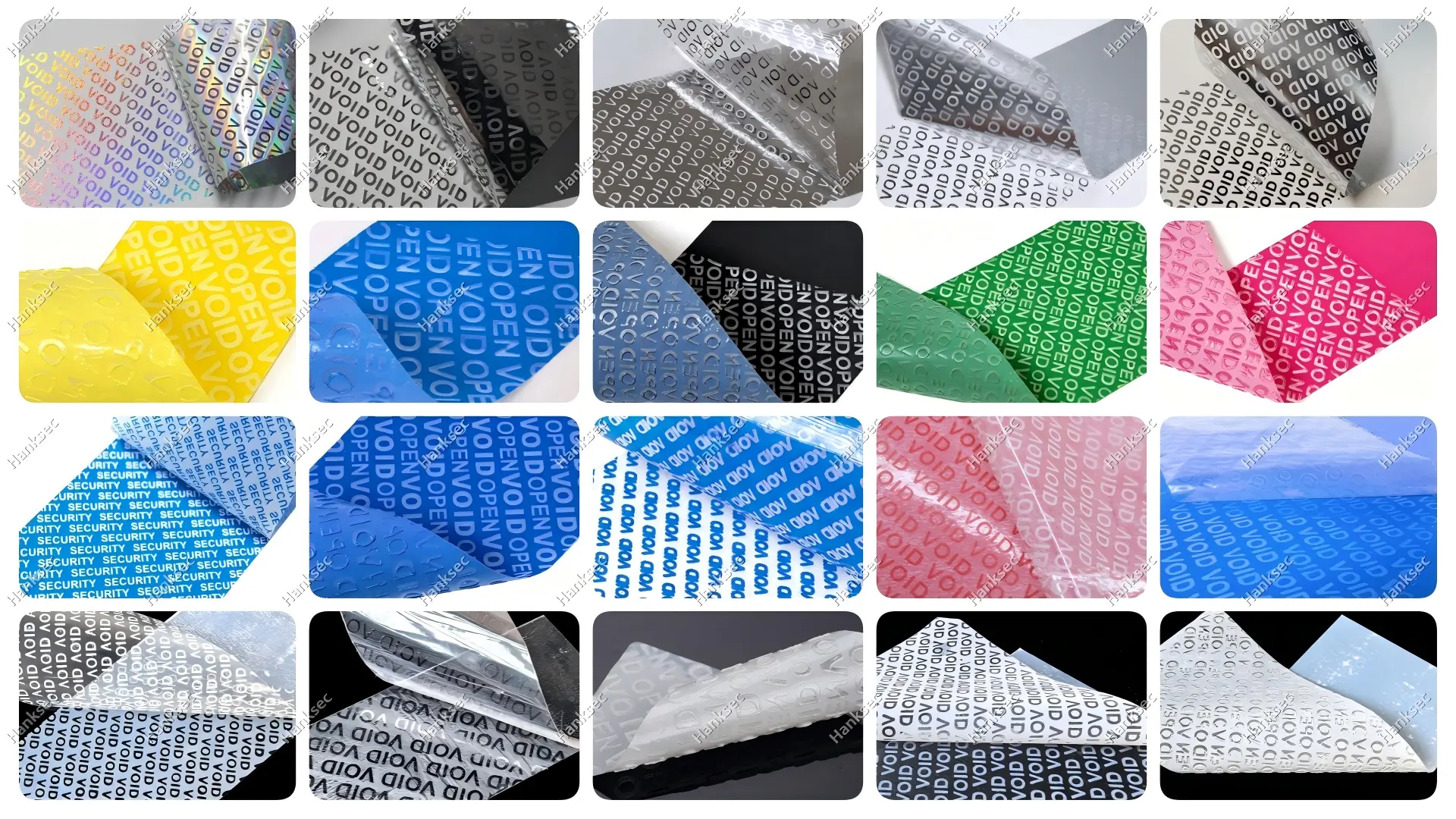
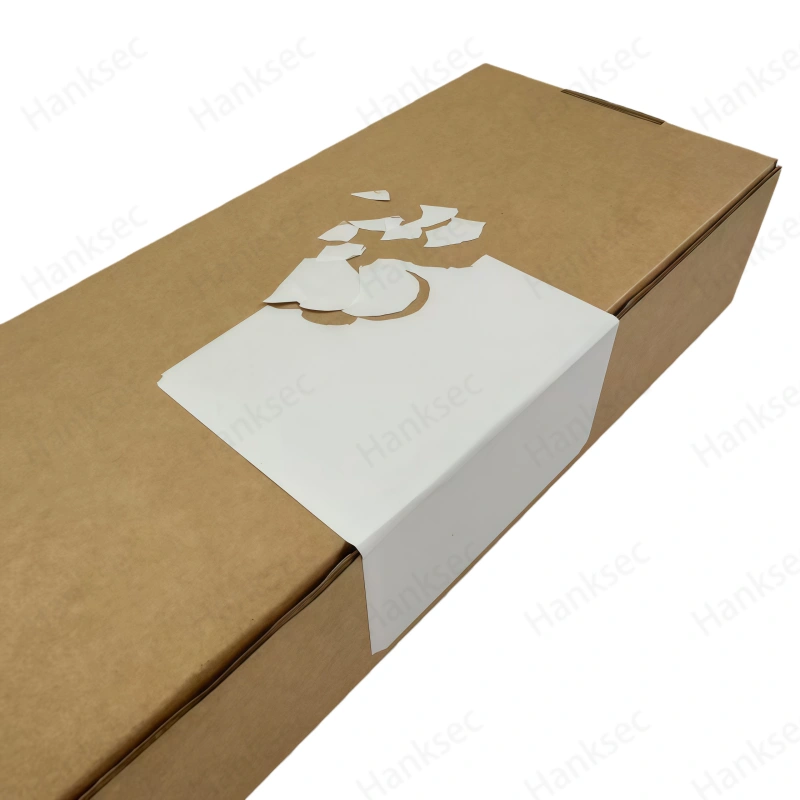
Tamper evident seals for takeaway are one-time security labels or closure features designed to provide visible evidence if a food delivery bag, box or container is opened after the restaurant seals the order. Common options include destructible labels, VOID seals, perforated security labels and custom branded seals.
For restaurants and packaging buyers, the correct seal should be selected according to packaging surface, adhesive compatibility, grease or condensation exposure, application method and the level of visible tamper evidence required.For restaurant chains and packaging buyers, tamper evident seals for takeaway should be selected according to the packaging surface, adhesive compatibility, application process and required tamper-response level.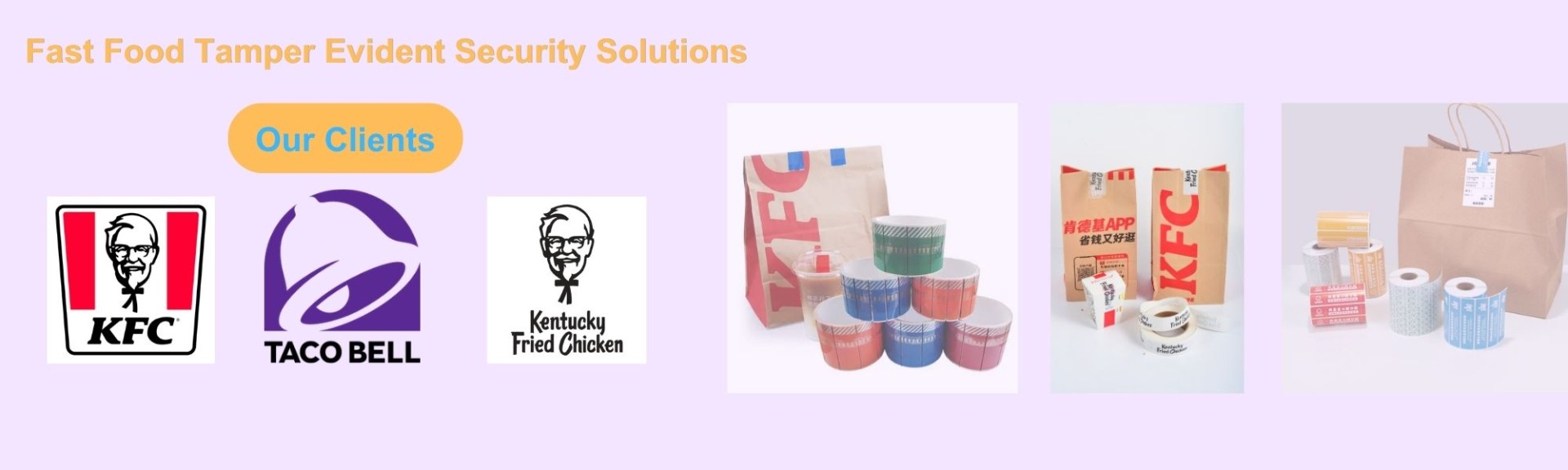
Why Tamper Evident Seals Matter in Food Delivery
Food delivery creates a handoff between the restaurant, delivery provider and customer. Once an order leaves the kitchen, the customer cannot directly observe how the package is handled during transportation.
A tamper-evident seal does not make a package impossible to open. Its purpose is to make unauthorized opening visible by tearing, revealing a VOID message, breaking along a controlled perforation or otherwise changing irreversibly.
Consumer demand for this type of visible protection is well established. US Foods reported in 2020 that 85% of consumers said they would like restaurants to use tamper-evident labels for takeout and delivery orders.
Types of Tamper Evident Seals for Takeaway Packaging
| Seal Type | Подделка доказательств | Best Packaging | Main Selection Consideration |
|---|---|---|---|
| Разрушаемая этикетка | Tears into pieces during removal | Clamshells, cups, boxes | Strong anti-reuse evidence |
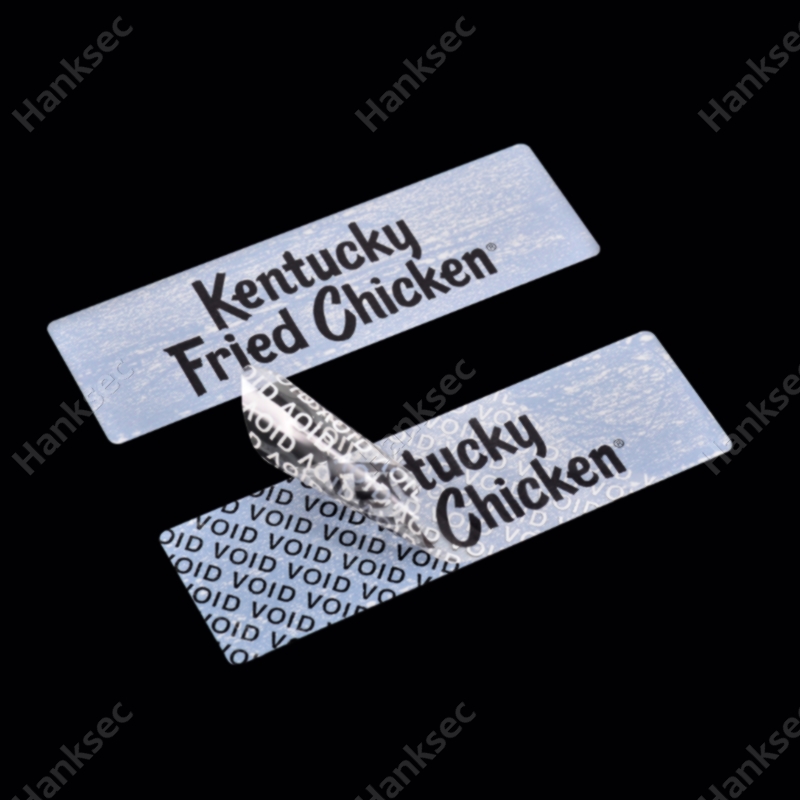
| VOID Tamper-Evident Label | Reveals VOID/OPENED message | Bags, cartons, premium orders | Clear visual evidence |
| Perforated Security Seal | Breaks along controlled cuts | Paper bags, boxes | Fast application and visible breakage |
| Custom Branded Seal | Combines security effect with logo/printing | Restaurant chains, branded takeaway | Security + brand identification |
From our experience producing all four types, the most popular choice for takeaway restaurants is the warranty VOID labels. It is affordable, easy to apply, and the tear pattern is immediately obvious to customers.
Manufacturing Case: Tamper Evident Delivery Labels for KFC Takeaway Packaging
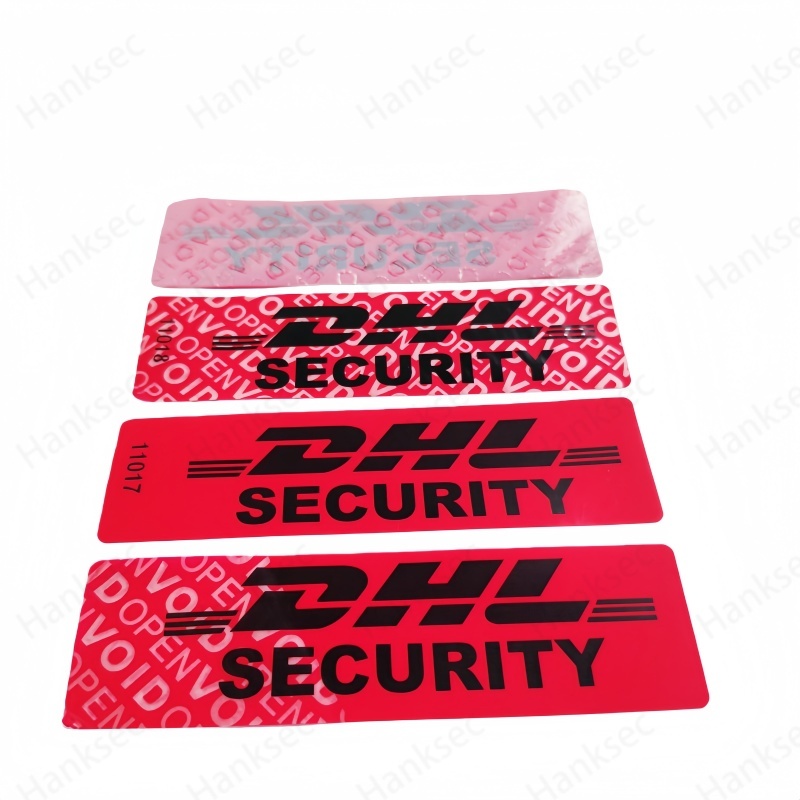
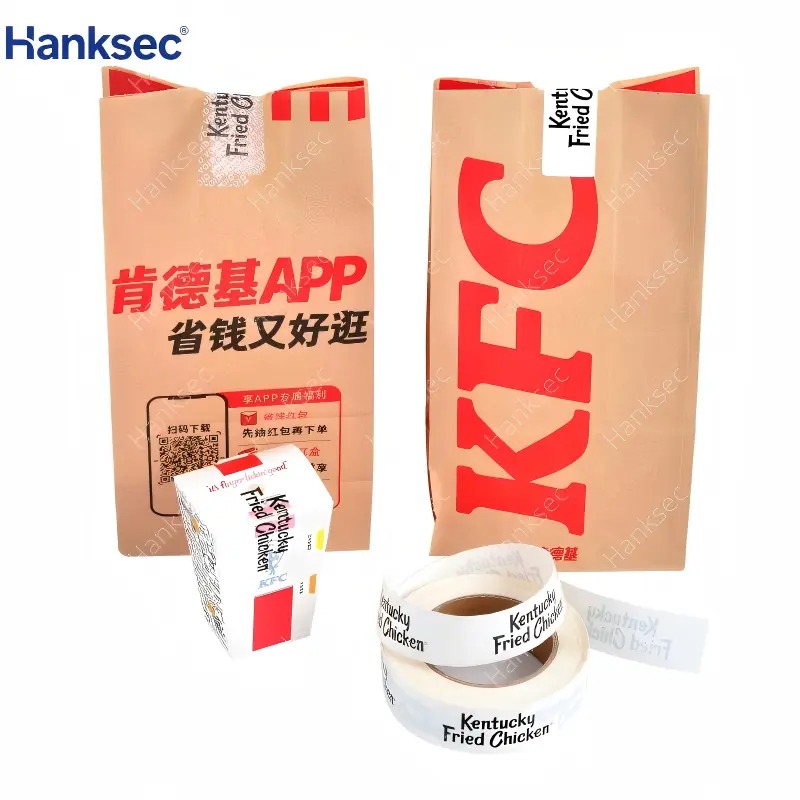
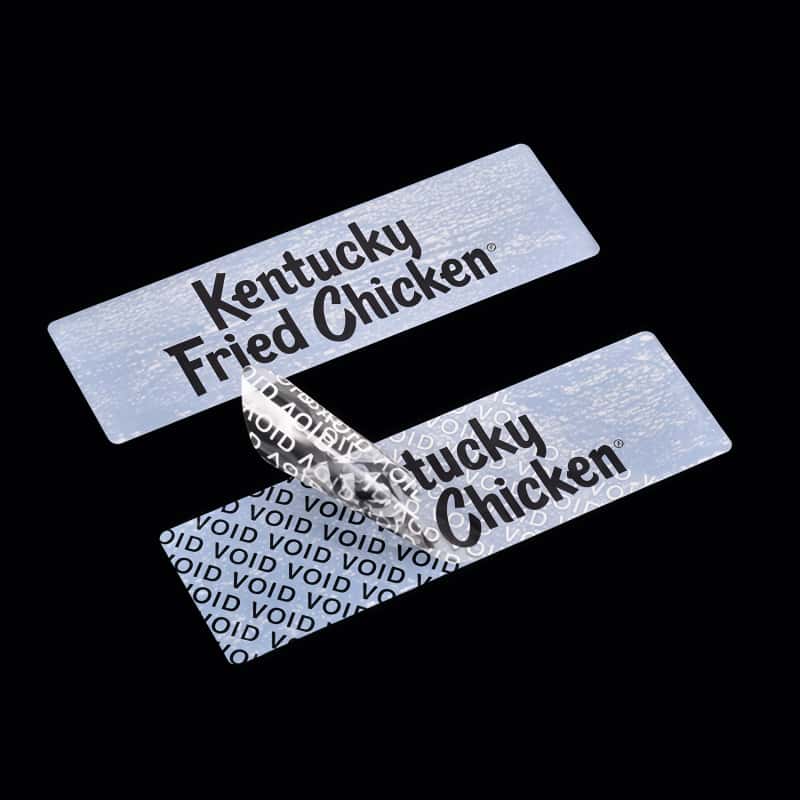
Hanksec has developed tamper-evident food delivery labels for an authorized KFC takeaway packaging project. The labels were designed for delivery bags, meal boxes, food cartons and other restaurant packaging where unauthorized opening needed to leave visible evidence.
The project used a hidden VOID security effect so that removal attempts changed the appearance of the label and made resealing easier to identify.This project demonstrates how tamper evident seals for takeaway can be engineered around real restaurant packaging, closure geometry, branding requirements and visible tamper evidence.
For large restaurant chains, the final seal design may also include custom logo printing, color control, barcode or QR code integration, sequential data, customized dimensions and surface-matched adhesive systems.
The important engineering lesson from restaurant projects is that the seal cannot be selected only by appearance. Packaging substrate, closure geometry, adhesive compatibility, application speed and customer opening experience must all be considered before mass production.See the KFC takeaway delivery label project for a finished application example.
How Takeaway Tamper-Evident Seals Are Tested Before Production
For restaurant chains and packaging distributors, tamper evident seals for takeaway should be evaluated as a complete packaging system rather than by checking only whether a label sticks during a short sample test.
Typical validation points include:
Начальный курс — whether the label bonds correctly during application.
Dwell adhesion — whether bonding improves and remains stable after application.
Tamper-response clarity — whether tearing, VOID transfer or perforation damage is obvious after opening.
Совместимость поверхностей — performance on the actual kraft paper, coated carton, PP, PE, PET or other packaging surface.
Grease and moisture exposure — whether contamination near the sealing area affects bonding.
Temperature exposure — performance on warm takeaway cartons or chilled delivery packaging.
Die-cutting and dispensing — whether the seal converts and applies reliably during high-volume restaurant or packaging operations.
Стабильность партии — whether production rolls provide repeatable tamper behavior.
Takeaway seals are normally applied to the exterior packaging surface. If a label, coating or adhesive is intended to contact food directly, the food business and packaging supplier should separately confirm that the materials comply with the applicable food-contact requirements for that market and intended use.
Small Details That Build Big Trust
Here is something many restaurant owners overlook: the label is often the first thing a customer touches. Before they see the food, before they smell it, they interact with the label. If that label looks professional, secure, and intentional, it sets the tone for the entire meal experience.
We always recommend restaurants print their logo or a short message on the seal (label) — something like “Sealed for your safety.” It costs almost nothing extra, but it tells the customer you care.
✔ 85% of delivery customers feel more confident when their food arrives with a tamper-evident seal True
A 2022 US Foods study confirmed this statistic, and over half of surveyed customers said they would hesitate to reorder from restaurants that don’t use sealed packaging.
✘ Customers don’t notice or care whether their takeaway food is sealed False
Consumer surveys consistently show that sealed packaging is a top factor in delivery satisfaction. Unsealed food creates immediate distrust and reduces the likelihood of repeat orders.
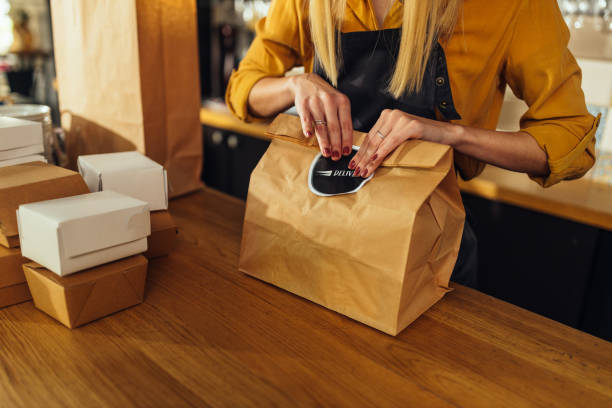
How Tamper Evident Seals Provide Visible Evidence During Delivery
On our production line, we test every adhesive formula to make sure one thing happens: if someone peels the seal, the evidence is impossible to hide. That single feature solves one of the biggest headaches in food delivery — food theft and tampering by third parties.
Yes, tamper-evident seals (anti-fraud labels) significantly deter food theft during delivery. While no seal can physically stop a determined person from opening a package, these seals leave unmistakable visible evidence — such as “VOID” marks, torn patterns, or shredded material — that immediately exposes any unauthorized access, making theft far riskier for anyone in the delivery chain.
How Seals Change the Equation
A tamper-evident seal changes the dynamic completely. Here is why:
- Before handoff: Restaurant staff apply the seal and confirm package integrity.
- During transportation: Any attempt to open the package should create visible and irreversible evidence.
- At delivery: The customer can inspect the seal before accepting or opening the order.
Seal Performance Comparison for Anti-Theft
| Особенность | Разрушаемая этикетка | VOID Label | Perforated Seal |
|---|---|---|---|
| Visible evidence | Фрагментация | VOID / OPENED message | Broken perforation |
| Reapplication resistance | Высокий | Высокий | High when correctly designed |
| Остатки на поверхности | Depends on adhesive | Depends on transfer type | Usually limited |
| Совместимость поверхностей | Adhesive dependent | Adhesive dependent | Adhesive dependent |
| Best selection factor | Physical destruction | Clear message evidence | Simple visible break |
When we formulate adhesives in our lab, grease resistance is one of the toughest challenges. Takeaway packaging gets oily fast. We have spent years developing adhesive coatings that bond securely even on greasy kraft paper and plastic containers. This is a detail that cheap, generic labels often fail on.
How to Match Takeaway Security Seals to Packaging Surfaces
The performance of tamper evident seals for takeaway depends heavily on the interaction between the adhesive system and the actual food-delivery packaging surface.
| Packaging Surface | Typical Challenge | What Buyers Should Test |
|---|---|---|
| Kraft Paper Bag | Porosity, fibers, grease contamination | Initial tack, fiber tear, edge lifting |
| Coated Paperboard | Gloss/varnish may reduce bonding | Adhesion after dwell time |
| PP / PE Plastic | Low surface energy | Adhesive compatibility and lifting resistance |
| PET / Clear Clamshell | Smooth rigid surface | Peel behavior and residue appearance |
| Hot Food Carton | Heat and vapor exposure | Adhesion after warm filling |
| Cold Drink / Dessert Packaging | Конденсация | Wet-surface and humidity performance |
The same seal can perform differently on kraft paper, coated board, PP, PE, PET or painted surfaces. For this reason, takeaway seals should be tested on the customer’s actual packaging rather than evaluated only on a standard laboratory panel.
Oil, condensation, surface coatings, application pressure and dwell time can all influence final bonding performance.
How Tamper Evident Takeaway Seals Protect Delivery Drivers
Here is a perspective most people miss. Delivery drivers are the most vulnerable party in this chain. When food spills, when an item is missing, when something looks wrong — the driver is the first person blamed.
A tamper-evident seal protects the driver just as much as it protects the customer. If the seal is intact at delivery, the driver is cleared. No argument. No he-said-she-said. Just physical evidence.
This is why several large delivery platforms are now encouraging or requiring their restaurant partners to use tamper-evident seals. It reduces disputes across the board.
✔ Tamper-evident seals protect delivery drivers from false accusations by providing physical proof of an intact package True
When a seal arrives unbroken, it verifies that the package was not opened during transit, clearing the driver of any tampering or theft allegations.
✘ Tamper-evident seals physically prevent anyone from opening a food package False
Tamper-evident seals do not make packages impossible to open. They provide visible evidence of tampering, which acts as a powerful deterrent, but a determined person can still break the seal.
How Branded Tamper-Evident Seals Support Customer Experience
A food delivery seal can serve both a security and communication function. Custom printing allows restaurants to combine visible tamper evidence with brand identity, safety instructions and digital information.
К распространенным параметрам настройки относятся:
Logo and restaurant colors
“Sealed for Your Safety” messaging
QR codes for feedback or loyalty programs
Order or batch identification
Sequential numbering
Customized VOID or OPENED messages
These functions do not replace food-safety procedures, but they provide customers with a visible indication that the restaurant has implemented a controlled delivery-packaging process.
Brand Presentation and Customer Handoff
A tamper-evident food delivery seal can support both package security and brand presentation at the final customer handoff. When the order arrives, the customer can visually inspect whether the designated seal remains intact before opening the package.
For restaurant chains and food-delivery operators, custom printed seals can also provide consistent branding across takeaway bags, cartons and containers. Logos, safety messages, QR codes, order identification and customized tamper indicators can be integrated into the seal without changing the basic packaging workflow.
Compared with an ordinary staple or non-security closure, a properly designed tamper-evident seal provides a clearer visual indication of package integrity while supporting a more standardized delivery-packaging process.
The Trust-to-Loyalty Pipeline
Trust is the foundation of loyalty. And in food delivery, trust is fragile. One bad experience — a missing item, a container that looks opened, food that seems off — can destroy a customer relationship permanently.
Tamper-evident seals build trust at every single delivery. Over time, that consistent trust converts into loyalty. Loyal customers order more frequently, spend more per order, and recommend your restaurant to others.
Brand Differentiation
The takeaway market is brutally competitive. On any delivery app, your restaurant sits next to dozens of alternatives. Price and menu variety matter, but so does perceived quality. A branded tamper-evident seal is one of the simplest ways to stand out.
Here is what we have seen work for our restaurant clients:
- Logo printed on the seal— reinforces brand recognition
- A short safety message— “Sealed fresh for you” or “Your safety, our promise”
- Consistent color scheme— matches the restaurant’s branding
- QR code on the seal— links to a feedback page or loyalty program
Operational Value of Tamper Evident Food Delivery Packaging
Many restaurant owners ask us: “Is it worth the cost?” Let’s look at the numbers.
| Operational Area | Without Visible Seal Evidence | With Tamper-Evident Seal |
|---|---|---|
| Package inspection | Difficult to verify opening | Seal condition can be inspected |
| Complaint investigation | Limited physical evidence | Additional visible evidence available |
| Brand presentation | Basic closure | Custom security + brand communication |
| Handoff procedure | May vary by staff | Can support standardized sealing SOP |
| Customer opening | No security indicator | Customer can inspect before opening |
For just a few cents per order, the return is enormous. Fewer refunds. More repeat customers. Better reviews. Stronger brand.
The Ripple Effect of Positive Reviews
When customers feel safe, they leave positive reviews. And in the delivery world, reviews are everything. A single comment like “Love that they seal every order — feels so much safer” can influence dozens of future customers.
We have seen restaurant clients go from 3.8 to 4.5 stars on delivery platforms within months of implementing branded tamper-evident seals. The seal itself becomes a talking point — a visible differentiator that customers mention in their feedback.
✔ Branded tamper-evident seals serve as both a security feature and a marketing tool that reinforces brand identity True
Custom-printed seals with logos, colors, and messages create a professional unboxing experience that strengthens brand recognition while simultaneously proving the package was not tampered with.
✘ Tamper-evident seals are too expensive for small restaurants to justify the investment False
Reduce Liability and Complaints Regarding Food Safety
When we ship tamper-evident materials to restaurant supply distributors in the US and Europe, we always include application guides — because even the best seal fails if it is applied wrong. Reducing liability starts with doing the basics right.
To reduce liability and complaints, implement tamper-evident seals on every order, train staff on proper sealing procedures, document your food safety protocols, and choose seals appropriate for your packaging type. These steps create a verifiable chain of custody that protects your business legally and operationally when disputes arise.
Food Delivery Tamper-Evident Packaging: Regulatory and Food-Safety Considerations
Regulations vary by jurisdiction, so food businesses should confirm the requirements that apply to their location and delivery model.
In California, Health and Safety Code §113982 requires bags or containers carrying ready-to-eat food through a third-party food delivery platform to be closed by the food facility using a tamper-evident method before the delivery person takes possession of the order.
California food-delivery requirements also emphasize protecting ready-to-eat food from contamination during transportation and maintaining appropriate handling conditions.
Other markets may regulate delivery packaging differently. For example, UK food-delivery guidance requires food to be delivered in a way that does not make it unsafe or unfit to eat, while packaging and handling practices should also reduce contamination risks during transportation.
How Seal Status Supports Delivery Handoff Documentation
A tamper-evident seal provides an observable package-integrity indicator at different stages of delivery. It should be treated as one part of the restaurant’s handling and complaint-investigation process rather than as definitive proof of legal responsibility.
Например:
Seal intact at restaurant handoff: package closure was visibly intact at the recorded handoff point.
Seal broken during delivery: the package requires investigation before conclusions are made.
Seal intact at customer receipt: the seal provides additional evidence that the designated closure was not visibly opened before delivery.
Restaurants can strengthen this process by combining seal inspection with order records, timestamps, staff procedures and photographs for high-value or disputed orders.
Standard Operating Procedure for Applying Takeaway Tamper-Evident Seals
A professional seal program requires consistent application, not only a good label material.
Here is a step-by-step approach we recommend to every restaurant client:
- Choose the right seal for your packaging.Not every seal works on every surface. Test adhesion on your actual containers.
- Apply seals consistently.Every order. Every time. No exceptions. One unsealed order can undermine your entire system.
- Train your staff.Show them where to place the seal, how to press it firmly, and why it matters.
- Document your process.Keep records of your sealing protocol. This is valuable if you ever face a legal claim.
- Use seals with clear tamper indicators.VOID labels or destructible labels are better than plain stickers because the evidence of tampering is unmistakable.
- Photograph sealed orders for high-value complaints.Some restaurants photograph every sealed order before handoff. It takes seconds and provides powerful evidence.
- Validate the seal on the real package before rollout. Test the final label on the actual bag, carton or container after realistic exposure to heat, grease, condensation and normal delivery handling.
Addressing Common Complaint Scenarios
| Complaint Type | Without Seal | With Seal |
| “My food was opened” | No way to verify; restaurant usually refunds | Seal status provides clear evidence |
| “Items were missing” | Blame falls on restaurant or driver; no proof | If seal intact, kitchen error; if broken, transit issue |
| “Food tasted contaminated” | Serious liability risk; no chain of custody proof | Sealed packaging demonstrates proper handling |
| “Order was tampered with” | Restaurant reputation damaged; no defense | Intact seal clears the restaurant immediately |
Compliance Is Becoming the Norm
Beyond California, health departments in multiple US cities are beginning to recommend tamper-evident solutions for delivery-focused restaurants. In Europe, food safety regulations are tightening as well. Australia has its own set of food handling standards that increasingly reference tamper-evident packaging.
The trend is clear: tamper-evident seals are moving from “nice to have” to “must have.” Restaurants that adopt them now are ahead of the curve. Those that wait may find themselves scrambling to comply when regulations catch up.
FAQ About Tamper Evident Seals for Takeaway
1. What are tamper evident seals for takeaway?
Tamper evident seals for takeaway are one-time security labels or closure features designed to show visible evidence if a food delivery bag, box or container is opened after the restaurant seals the order. Common options include destructible labels, VOID seals, perforated security labels and custom branded seals.
2. Which tamper evident seal is best for food delivery packaging?
The best seal depends on the packaging surface, required tamper response and application process. Destructible labels provide physical breakage, VOID labels reveal a hidden warning message, and perforated seals create visible tearing. The final choice should be tested on the actual takeaway bag, carton or container.
3. Can tamper evident seals stick to greasy takeaway packaging?
They can, but performance depends on the adhesive system and the level of grease, coating or surface contamination. Kraft paper, coated cartons, PP, PE and PET packaging may require different adhesive formulations, so real-package testing is recommended before mass production.
4. Are tamper evident seals required for food delivery?
Requirements vary by jurisdiction. In California, Health and Safety Code §113982 requires ready-to-eat food delivered through a third-party platform to be closed by the food facility using a tamper-evident method before the delivery person takes possession of the order. Businesses should confirm the rules that apply in their own market. LegInfo
5. Can takeaway security seals be customized with logos, QR codes or serial numbers?
Yes. Tamper evident takeaway seals can be customized with restaurant logos, colors, safety messages, QR codes, barcodes, sequential numbers and customized VOID or OPENED patterns. The printing method and label construction should be matched to the required packaging surface and production process.
6. Should tamper evident takeaway seals contact food directly?
Takeaway security seals are normally applied to the exterior of bags, boxes or containers. If a label, coating or adhesive is intended for direct food contact, the business and packaging supplier should separately confirm compliance with the applicable food-contact requirements for that market and intended use. FDA regulations include specific provisions for adhesives used in food-contact applications.
A Small Seal Protects Three Parties
This is the insight that ties everything together. A single tamper-evident seal simultaneously protects:
- The customer— who can verify their food was not touched
- The restaurant— which can prove it sealed the order properly
- The delivery driver— who can demonstrate the package was intact during their custody
Three parties. One seal. That is extraordinary value for a product that costs a few cents.
✔ California’s Fair Food Delivery Act legally requires tamper-evident seals on all ready-to-eat food containers handed to third-party delivery drivers True
This law mandates that restaurants must close food containers with a tamper-evident method before transferring them to delivery services, making compliance a legal obligation in California.
✘ Tamper-evident seals are only necessary for large restaurant chains and are overkill for small businesses False
Small restaurants face the same liability risks and customer trust challenges as large chains. In fact, small businesses have more to lose from a single food safety complaint, making tamper-evident seals even more critical for them.
Заключение
Tamper-evident seals have become a standard, not an option, in modern food delivery. They help restaurants prevent disputes, protect their brand reputation, and provide clear proof of package integrity throughout the delivery process.The most reliable tamper evident seals for takeaway are not selected by appearance alone; they are matched to the packaging substrate, adhesive requirements, delivery environment and required opening evidence.
As a manufacturer and supplier of tamper-evident solutions, we work closely with restaurants, packaging distributors, and delivery-focused brands to provide reliable, customizable sealing options that fit real-world operations. Whether you need branded seals, fast lead times, or consistent quality at scale, the right solution makes a measurable difference—order after order.