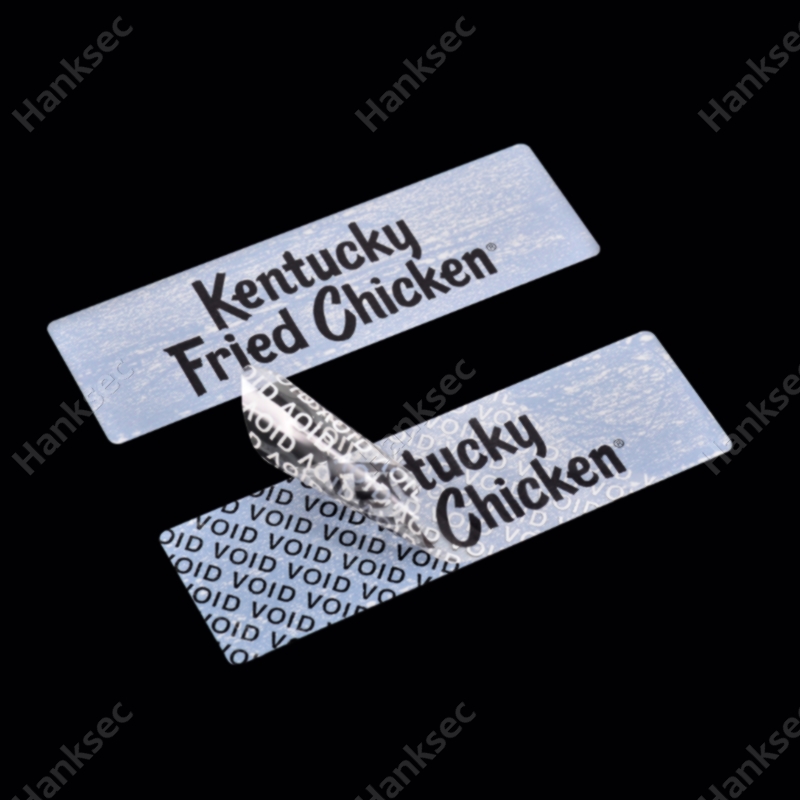
Quick Answer: Tamper evident seals for takeaway are security labels designed to reveal visible evidence when removal or unauthorized opening is attempted. For a KFC takeaway project, Hanksec developed and manufactured customized tamper-evident security materials and finished labels, combining tailored VOID security effects, printing and converting capabilities with consistent manufacturing quality control to meet project-specific requirements.
This real-world project illustrates how a security material manufacturer can support restaurant packaging applications beyond supplying ordinary printed stickers. The performance of the finished label depends on the security material construction, adhesive bonding, printed design, converting accuracy and the intended packaging surface.
For restaurant chains, food-delivery brands, packaging suppliers and label converters, the key is to select a security label system that provides clear opening evidence while remaining practical for production, application and delivery.
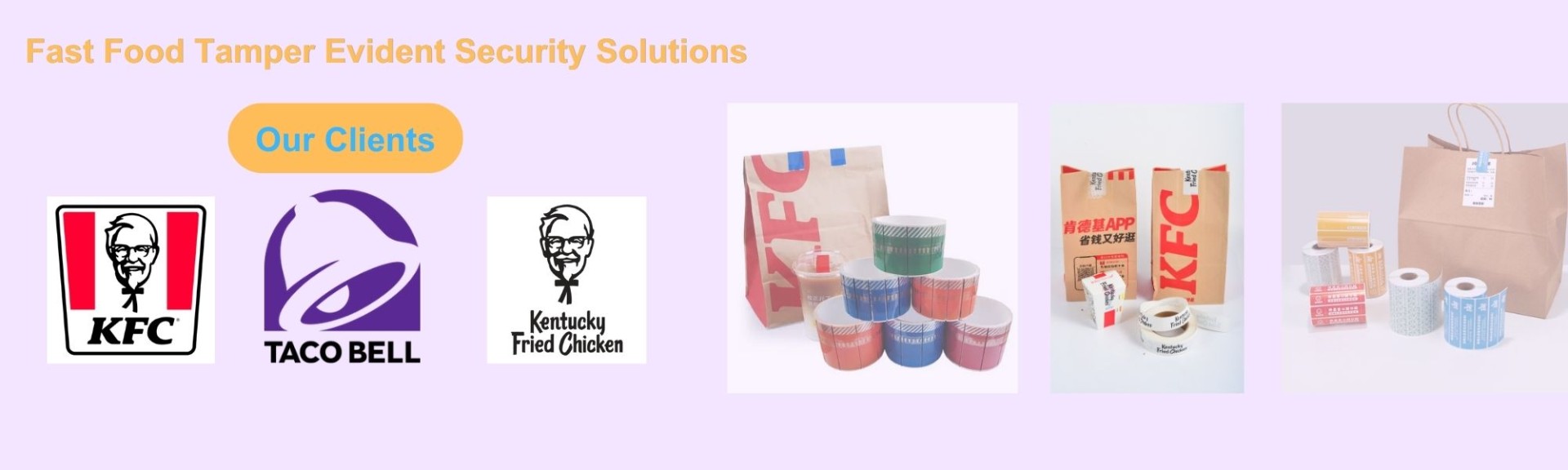
KFC Takeaway Project: Customized Tamper-Evident Materials and Labels
Hanksec has manufactured customized tamper-evident security materials and finished labels for a KFC takeaway application. The project demonstrates our capabilities in security material construction, customized VOID effects, label printing, converting and manufacturing quality control.
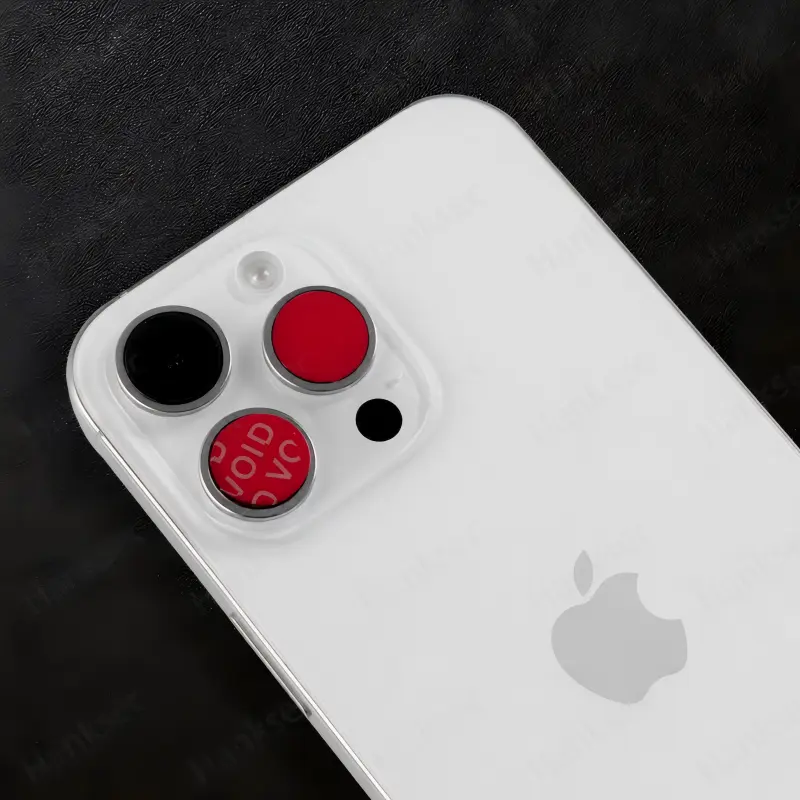
The security labels were developed for takeaway packaging applications where an attempted removal should create a visible change. Instead of relying only on the appearance of a printed label, the construction incorporates a functional tamper-evident mechanism.
For this type of project, material performance and final label usability must be considered together. The label needs to provide the intended opening evidence, accommodate the required printed design and be suitable for the designated packaging closure.
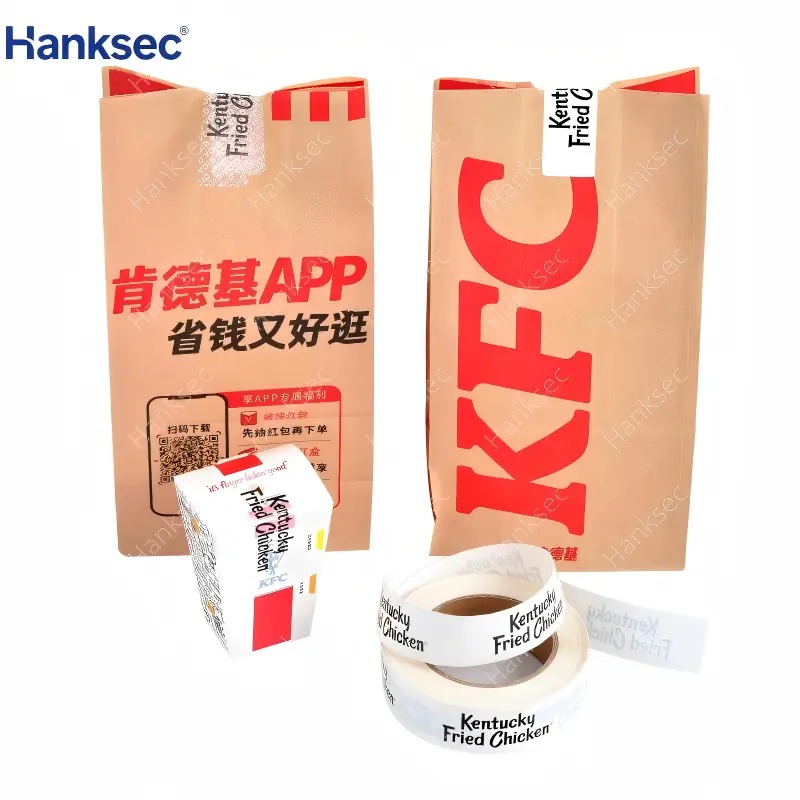
The value of this project is not simply the presence of a recognizable restaurant brand on the label. It is the combination of functional security material manufacturing and finished-label customization for a defined commercial application.
See the related Delivery Labels Made for KFC product page for the label application and available customization directions.
What Makes a Customized Takeaway Security Label Different from an Ordinary Sticker?
A conventional printed sticker may provide branding, identification or a closing function. However, its removal does not necessarily produce a controlled security response.
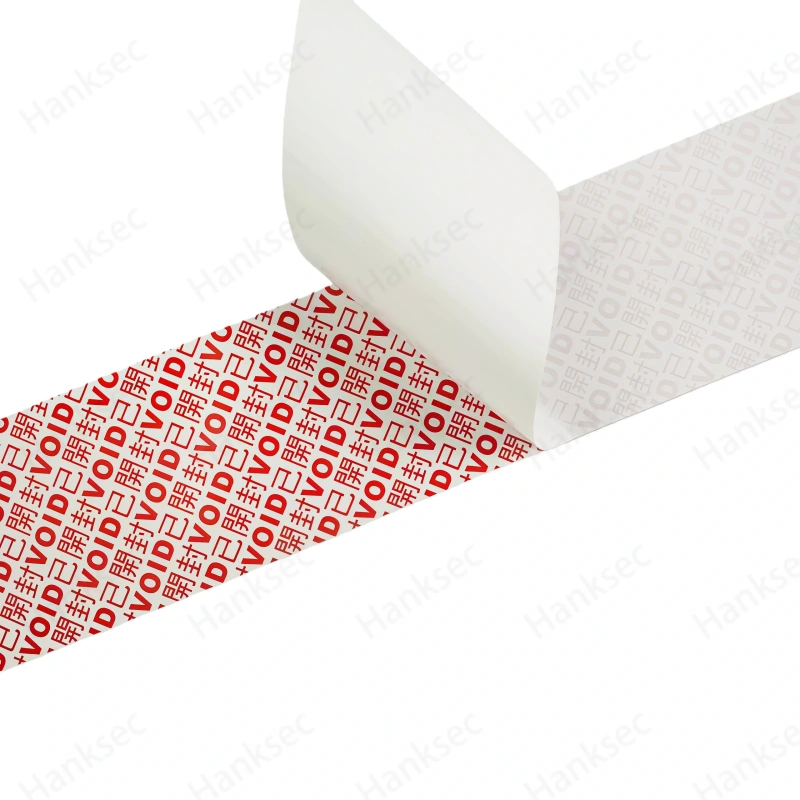
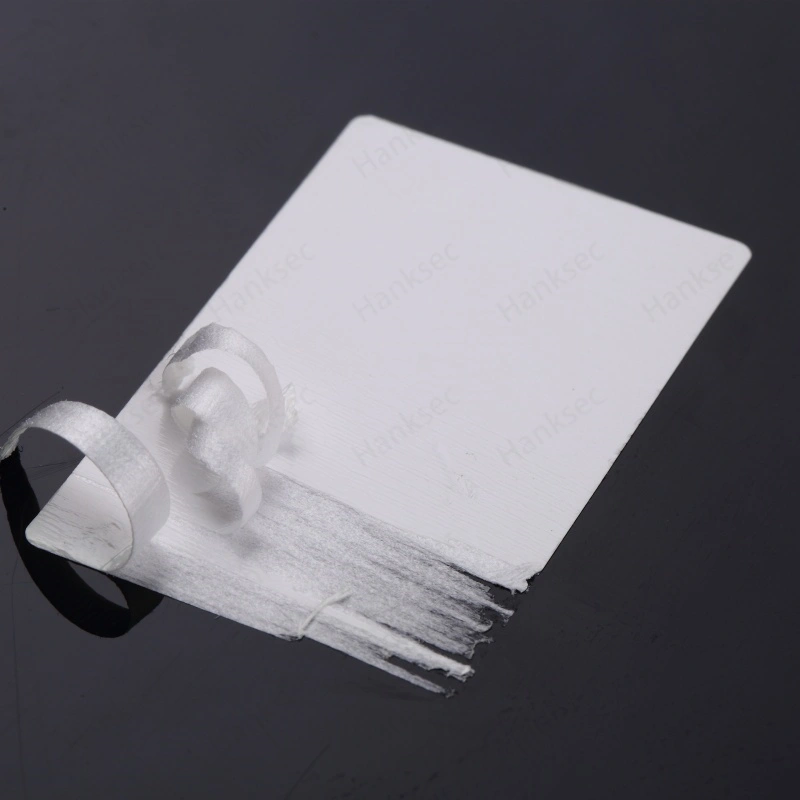
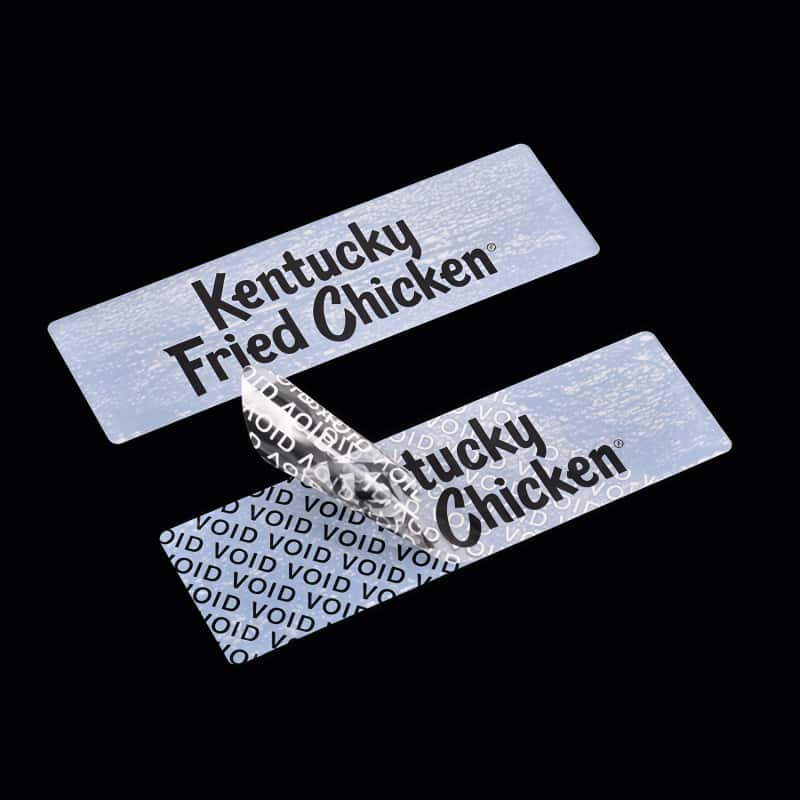
A tamper-evident security label uses a functional material construction designed to create visible evidence when removal is attempted. Depending on the selected mechanism, this may involve a hidden VOID message, transferred security pattern, physical facestock destruction or a controlled tear.
For the KFC takeaway project, the relevant security mechanism is a customized VOID-based response.
The important technical distinction is that the security effect is engineered into the material system, rather than depending only on printed artwork.
How Does the VOID Effect Work?
VOID materials use controlled separation within a pressure-sensitive construction. When the label is applied to a suitable surface and subsequently peeled, removal stress reaches the functional security layers.
The construction is designed to separate in a controlled manner, revealing a previously hidden message or pattern.
Depending on the selected material, the evidence may appear on the removed label, the application surface or both.
Actual VOID activation depends on adhesive bonding, substrate characteristics, dwell time, removal conditions and the engineered security-layer construction.
Hanksec’s Custom Security Material Manufacturing Capabilities
The KFC takeaway project demonstrates an important distinction between purchasing a generic finished sticker and working with a manufacturer that develops tamper-evident security materials.
Hanksec’s manufacturing capabilities cover the material system itself, including functional security construction, printable surfaces, pressure-sensitive adhesive selection and release-liner options.
1. Security Material Construction
A typical VOID security label material can include a PET or other selected facestock, functional security layers, pressure-sensitive adhesive and release liner.
Each component influences the finished result. Facestock selection affects durability and converting performance, while the functional security layer determines how the hidden message activates.
The adhesive must develop sufficient bonding on the intended surface to support the designed security response.
2. Customized VOID Security Effects
Hanksec develops different VOID constructions according to customer requirements. Available development directions may include:
- Full-transfer, partial-transfer or non-transfer security effects.
- VOID, OPENED, VOIDOPEN or customized hidden messages.
- Custom security patterns and selected visual effects.
- Different facestock appearances and colors.
- Substrate-specific pressure-sensitive adhesive systems.
These are Hanksec’s broader customization capabilities. The exact construction selected for an individual project is defined by its approved requirements and material specification.
3. Printable Surface and Label Compatibility
Security material performance must remain compatible with the final printing process. Depending on the construction, surface treatments or printable coatings may be required for the selected ink, toner or printing technology.
Printing quality should be assessed together with the security response. A clear printed logo or barcode is not enough if the material becomes unstable during converting or fails to reveal the intended VOID pattern after application.
For additional information about Hanksec’s production processes, visit our Security Label Material Manufacturing Capabilities page.
From Custom Security Material to Finished Takeaway Labels
Hanksec supports both converter-ready security material supply and finished-label manufacturing. This allows buyers to select a cooperation model according to their printing, converting and application requirements.
Custom Label Printing
Restaurant and packaging security labels may require specific brand colors, logos, warning messages and additional identification information.
Depending on the product, available customization can include:
- Custom brand artwork and printed graphics.
- Warning text or opening instructions.
- QR codes, barcodes or sequential identification.
- Customized label dimensions and shapes.
- Material and adhesive options based on the intended application.
The printing process must be qualified for the selected security material. Ink adhesion, printed-message clarity and durability should be considered before production approval.
Precision Converting and Finished-Label Production
After the security material construction and artwork are established, finished labels can be converted according to the required specifications.
Relevant manufacturing operations may include printing, die cutting, matrix stripping, slitting and rewinding.
Label geometry, die-cut accuracy, release-liner behavior and roll configuration influence both production efficiency and final application.
For restaurant packaging projects, these manufacturing details are important because security labels need to be practical for staff handling and suitable for the designated sealing position.
Converter-Ready Material Supply
In addition to finished labels, Hanksec supplies security materials to professional label converters, printers and packaging-material manufacturers.
Depending on the project, material can be supplied in jumbo rolls, slit rolls, sheets or other agreed formats for downstream processing.
This manufacturing model allows customers to purchase the functional security material while retaining their own printing or converting operations.
How Does Hanksec Control Tamper-Evident Label Quality?
Quality control for security labels involves more than checking artwork or finished-label dimensions. The functional material system must produce a consistent tamper response under the specified application conditions.
Hanksec’s general material qualification and production quality-control capabilities include inspection of security-layer performance, adhesive properties, printing compatibility and converting behavior.
| Quality Control Area | What Is Evaluated | Why It Matters |
|---|---|---|
| VOID Activation | Message clarity and security-layer separation. | Supports a visible and repeatable removal response. |
| Peel Adhesion | Adhesive bonding under specified test conditions. | Helps identify premature lifting or poor contact. |
| Printing Quality | Artwork clarity, ink anchorage and rub resistance. | Maintains identification and visual consistency. |
| Die Cutting | Label dimensions, cut quality and matrix stripping. | Supports reliable converting and dispensing. |
| Release Liner | Release behavior during converting and application. | Helps avoid premature release or difficult dispensing. |
| Production Consistency | Comparison with agreed specifications and reference samples. | Supports repeatability between production batches. |
Not every project requires an identical test program. The inspection plan, acceptance criteria and test conditions should be established according to the material construction and the customer’s specifications.
For information about application-based material selection, see Hanksec Application Engineering & Technical Support.
Why Application Surface Testing Matters for Takeaway Security Labels
Even a correctly manufactured VOID label can produce different results on different packaging surfaces.
For example, kraft paper, coated paperboard, PP, PE and PET packaging can have different surface energy, texture, coating strength and adhesive interaction.
Restaurant packaging may also be exposed to grease, moisture, warm food, chilled products and handling pressure.
These conditions should be considered when selecting a security material and evaluating its final performance.
| Application Surface | Typical Challenge | Recommended Evaluation |
|---|---|---|
| Kraft Paper | Surface porosity, loose fibers and texture. | Adhesion, edge lifting, fiber interaction and VOID response. |
| Coated Carton | Varnish or coating may form a weak interface. | Adhesive bonding and coating-lift behavior. |
| PP / PE Surface | Low surface energy and material flexibility. | Adhesive wet-out and tamper activation. |
| Warm Packaging | Heat, humidity and vapor. | Adhesion stability and opening response. |
| Chilled Packaging | Condensation and temperature changes. | Application conditions, edge lifting and moisture effects. |
These are general application-testing considerations, not a statement that every condition was part of the KFC project’s documented qualification program.
For example, a material may pass a peel-adhesion test yet still reveal an incomplete VOID message on a coated carton. Proper qualification should therefore evaluate the adhesive and security-layer response together.

Which Tamper-Evident Label Constructions Can Be Customized?
Hanksec supports different tamper-evident constructions for restaurant chains, packaging suppliers and professional label converters.
The KFC case is an example of customized VOID-based security labels. Other projects may require different evidence mechanisms depending on the packaging design.
| Material Type | Security Response | Typical Selection Direction |
|---|---|---|
| VOID Label Material | Reveals a hidden VOID, OPENED or customized pattern. | Readable opening evidence on takeaway closures. |
| Destructible Material | Facestock tears or fragments during removal. | Applications requiring physical label destruction. |
| Perforated Security Seal | Visible damage along a designed tear line. | Closures requiring controlled opening. |
| Custom Printed Security Label | Selected security mechanism combined with branding. | Restaurant chain identity and application-specific sealing. |
For the underlying material constructions, see Hanksec’s Tamper Evident VOID Label Materials and Destructible Label Materials guides.
What Does the KFC Project Demonstrate About Hanksec?
The KFC takeaway project provides a practical example of how Hanksec combines security material manufacturing and finished-label production for a branded commercial application.
Three capabilities are especially relevant to other B2B buyers:
1. Material-Level Customization
Hanksec can work from the functional security construction rather than being limited to ordinary finished-sticker printing.
This provides flexibility in selecting a suitable VOID effect, adhesive system, facestock, printable surface and other material characteristics.
2. Finished-Label Manufacturing
Security material development can be combined with printing and converting to produce application-ready labels according to the project specification.
For buyers that operate their own printing lines, converter-ready material formats are also available.
3. Quality-Oriented Repeat Production
Repeat orders require consistency in material response, printing, die cutting and release performance.
Manufacturing controls and sample qualification are therefore important parts of supporting customized OEM and ODM security-label projects.
The broader lesson is that a recognizable brand application can require more than custom artwork. It requires cooperation between material selection, functional security engineering, manufacturing and production quality control.
How Can Other Restaurant and Food-Delivery Brands Develop Similar Labels?
The KFC project illustrates a customization approach that can also be applied to other restaurant chains, delivery-focused businesses, packaging suppliers and label converters.
A typical project-development workflow includes:
- Application review: Identify the packaging surface, sealing position and required opening evidence.
- Material selection: Evaluate VOID, destructible or another suitable security construction.
- Artwork and format: Confirm logo, warning text, label dimensions, printing and roll requirements.
- Sample preparation: Produce suitable material or finished-label samples for evaluation.
- Functional testing: Check adhesion, security response, printing and converting compatibility.
- Production approval: Confirm the agreed specification and reference samples before bulk manufacture.
- Repeat supply: Maintain the relevant production and inspection requirements for future orders.
Not every customer requires the same level of customization. Standard security materials may be appropriate for some applications, while more specialized projects may need custom functional layers, adhesives, printing or label geometry.
Hanksec works with B2B buyers to define the relevant material and production requirements before recommending a construction.
Food-Delivery Seals: Practical and Regulatory Considerations
Tamper-evident labels can support food-delivery packaging security by providing visible evidence at the intended closure. They do not replace food hygiene, temperature control or the wider packaging and handling procedures.
In California, Health and Safety Code Section 113982 requires applicable bags or containers carrying ready-to-eat food through third-party delivery platforms to be closed by the food facility using a tamper-evident method before delivery handoff, subject to the law’s specified exceptions.
The requirement does not prescribe one universal VOID label construction. Applicable regulations and package specifications should be assessed for each market and use case.
Security labels for takeaway applications are normally positioned on exterior package closures. Where direct food contact is intended, the exact materials and use conditions require separate assessment under applicable food-contact requirements. The US FDA’s food-contact materials guidance explains that substances used in packaging can include adhesives, coatings and other components.
Frequently Asked Questions
Did Hanksec manufacture customized security labels for a KFC takeaway project?
Yes. Hanksec has manufactured customized tamper-evident security materials and finished labels for a KFC takeaway application, using a VOID-based security mechanism designed to create visible evidence during removal.
What is the difference between tamper-evident label materials and finished labels?
Security label materials are functional constructions supplied in rolls or sheets for further printing and converting. Finished labels have already been processed into the required printed, die-cut or application-ready format. Hanksec supports both supply models.
Can takeaway security labels include customized VOID messages?
Yes. Depending on the selected material, Hanksec can develop VOID, OPENED, VOIDOPEN and other customized security patterns. The final effect and specifications must be confirmed for the project.
Can Hanksec customize restaurant logos, colors and label dimensions?
Yes. Customization can include printed artwork, branding, dimensions, die-cut shapes, label format and selected identification features such as barcodes, QR codes or serial numbers.
Which quality checks matter most for VOID security labels?
Important checks include VOID message clarity, adhesive bonding, printing quality, die-cutting accuracy, matrix stripping, release-liner behavior and production consistency. The exact test plan depends on the application and approved specification.
Will a VOID label work on every food packaging surface?
No. Kraft paper, coated cartons, plastic films and other surfaces have different bonding characteristics. The material should be tested on the intended package surface before bulk production.
Can Hanksec supply security label material rolls instead of finished labels?
Yes. Hanksec primarily manufactures security label materials and can supply converter-ready jumbo rolls, slit rolls and other agreed formats. Finished customized labels are also supported where required.
What information is needed for a customized takeaway security-label quotation?
Provide the intended application surface, required VOID or other tamper response, printed artwork, label dimensions, roll or sheet format, expected quantity, application conditions and any project-specific performance requirements.
Hanksec combines tamper-evident material manufacturing with customized finished-label production for restaurant packaging suppliers, label converters, distributors and OEM brand projects.
From tailored VOID security effects and adhesive selection to printing, die cutting and quality control, our manufacturing capabilities support project-specific security-label requirements.
Share your application surface, required security response, artwork, label or roll specifications and expected quantity. Hanksec can help evaluate suitable materials and sample requirements before bulk production.
REQUEST CUSTOM SECURITY LABEL DEVELOPMENT →
Hanksec® | Tamper-Evident Material Manufacturing · Custom VOID Labels · Printing & Converting · OEM/ODM