Kurze Antwort:
Ein Sicherheitsetikettenmaterialsystem ist ein mehrschichtiger Aufbau, bei dem Obermaterial, Sicherheits- oder Trennschicht, Klebstoffsystem und Trägerfolie so aufeinander abgestimmt sind, dass sie einen kontrollierten Manipulationsschutz gewährleisten. Hochwertige, manipulationssichere Materialien erzielen eine gleichbleibende Leistung, da diese Funktionsschichten auf das Substrat, den Druckprozess, das Weiterverarbeitungsverfahren und die tatsächlichen Anwendungsbedingungen abgestimmt sind.
Warum Sicherheitsetikettensysteme komplexer sind als sie aussehen
Auf den ersten Blick ein Sicherheitsetikettenmaterial Es mag wie eine einfache Klebefolie aussehen. Es mag lediglich wie ein transparentes Etikett, ein aufgedrucktes VOID-Muster, ein Haftkleber und eine Trennfolie wirken. Äußerlich ähneln sich viele Produkte auf dem Markt. Sie werden mitunter sogar mit ähnlichen Worten beschrieben: manipulationssicheres Etikett, fälschungssicheres Klebeetikett, Sicherheits-Barcode-Etikett, VOID-Etikettenmaterialwasserdicht Sicherheitsaufkleberoder Verpackung Sicherheitssiegel.
Die tatsächliche Leistungsfähigkeit eines Sicherheitsetiketts beruht jedoch nicht allein auf seinem Aussehen. Sie resultiert aus einem kontrollierten, mehrschichtigen Materialsystem.
Ein hochwertiges Sicherheitsetikettenmaterial muss ein ausgewogenes Verhältnis zwischen Oberflächenbeschichtung, Deckfolie, verdeckter Botschaftsschicht, Farbschicht, Trägerschicht, Klebeeigenschaften, Trennpapierleistung, Bedruckbarkeit, Stanzstabilität, Alterungsbeständigkeit und Anwendungseigenschaften aufweisen. Ist eine Schicht instabil, kann die gesamte Manipulationssicherheit beeinträchtigt werden.
Deshalb sehen Sicherheitsetikettenmaterialien zwar einfach aus, sind aber nicht einfach gut herzustellen.
Ein minderwertiges Marktmuster kann zwar auf einem Foto einen sichtbaren Hohlraumeffekt aufweisen, versagt aber bei der Verwendung auf realen Verpackungsoberflächen, beim Bedrucken, nach dem Stanzen, während der Lagerung oder nach Einwirkung von Hitze, Feuchtigkeit, Reibung oder Transportdruck. Ein hochwertiges Sicherheitsetikettenmaterial muss von der Musterprüfung bis zur Massenproduktion, von Rolle zu Rolle und von einer Anwendungsfläche zur anderen gleichbleibende Leistung erbringen.
Für Käufer, Etikettenhersteller, Verpackungsunternehmen, Sicherheitsdruckereien, Händler und Markenschutzprojekte lautet die eigentliche Frage nicht nur: „Kann dieses Etikett eine VOID-Botschaft anzeigen?“ Die wichtigere Frage ist: „Kann dieses Material unter realen Marktbedingungen einen stabilen, reproduzierbaren und kontrollierten Manipulationsnachweis erbringen?“
Das ist der entscheidende Unterschied zwischen einem preisgünstigen Produkt für die Optik und einem hochwertigen, technisch ausgereiften Sicherheitsetikettensystem.
Weltweit stellt Produktpiraterie weiterhin ein gravierendes Problem für Lieferketten und Verbrauchersicherheit dar. Die OECD berichtete 2025, dass gefälschte Waren im Jahr 2021 einen geschätzten Wert von 467 Milliarden US-Dollar im Welthandel ausmachten (basierend auf den aktuellsten verfügbaren Daten). OECD-EUIPO-Studie. Dieser Hintergrund erklärt, warum Verpackungssicherheit, Authentifizierungstechnologien und manipulationssichere Materialien für Markeninhaber und regulierte Branchen immer wichtiger werden.
Was ist ein Sicherheitsetikettenmaterialsystem?
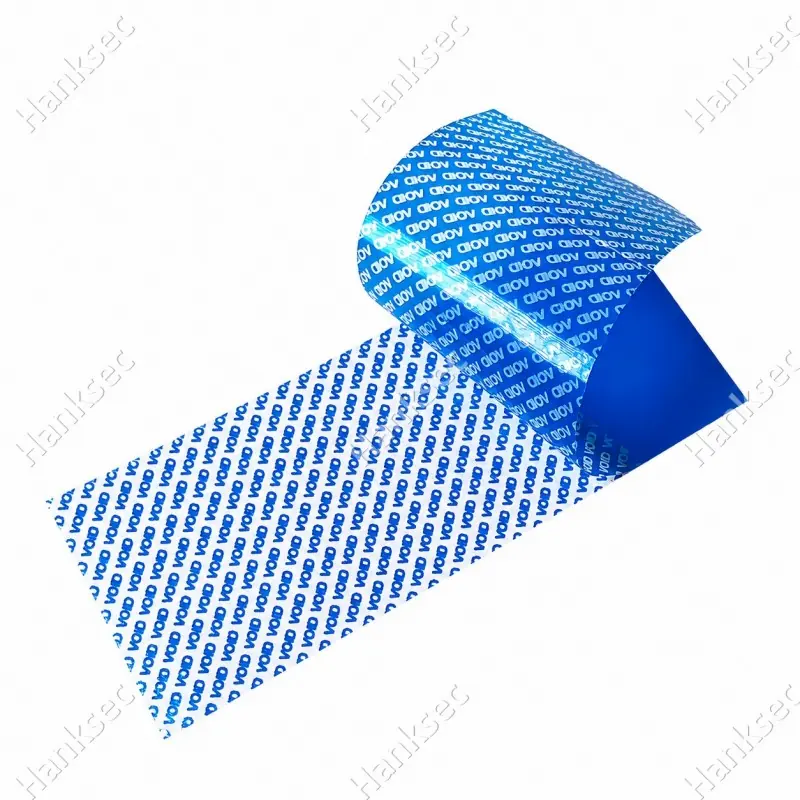
Ein Sicherheitsetikettensystem ist ein mehrschichtiger Aufbau, der sichtbare Spuren hinterlässt, wenn versucht wird, das Etikett zu entfernen, zu öffnen, auszutauschen oder zu manipulieren. Im Gegensatz zu herkömmlichen Haftetiketten… Sicherheitsetikettenmaterialien Sie dienen nicht nur der Dekoration, Kennzeichnung oder dem Barcode-Druck. Sie sind darauf ausgelegt, eine Sicherheitsreaktion hervorzurufen.
Kernstruktur eines Sicherheitsetikettenmaterialsystems
| Layer | Function |
|---|---|
| Oberflächenmaterial | Bietet Druckfläche und Schutz |
| Sicherheitsbeschichtung | Steuert versteckte Nachrichten oder Sicherheitseffekte |
| Trennschicht | Steuert das Aktivierungsverhalten von Manipulationsmechanismen |
| Klebeschicht | Erzeugt Substratbindung |
| Trennpapier | Protects adhesive before application |
Eine detailliertere Erklärung des Materialaufbaus und des Transferverhaltens finden Sie in unserer VOID-Etikettenmaterial Technischer Leitfaden.
Diese Antwort kann Folgendes beinhalten:
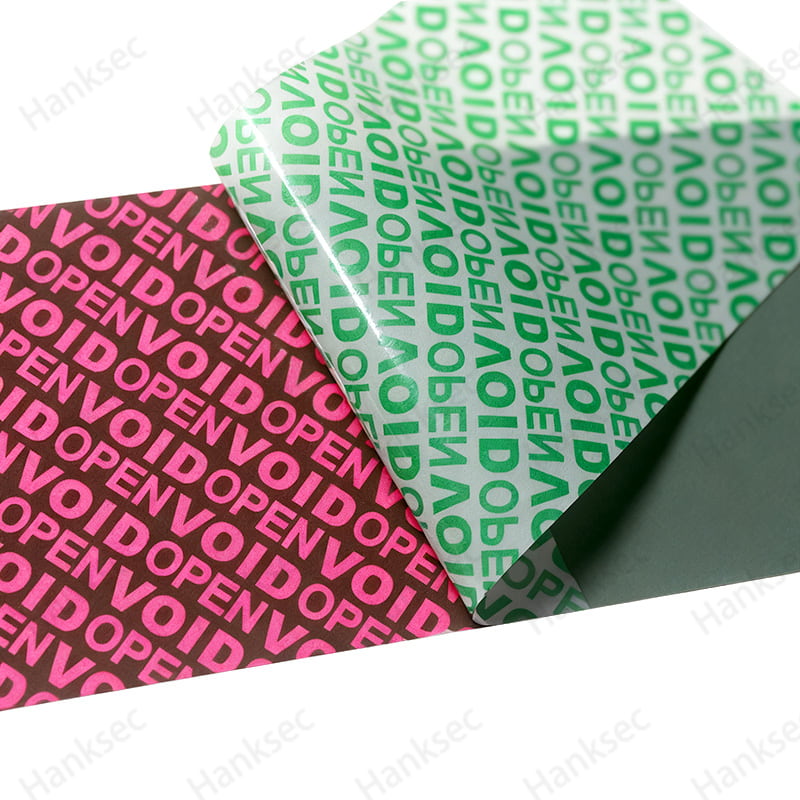
- Nach dem Abziehen erscheint die Meldung „VOID“ oder „OPEN VOID“.
- Eine zerstörte Etikettenoberfläche
- Klebstoffreste auf der behandelten Oberfläche
- Ein Nicht-Transfer-Effekt, bei dem die Spuren auf dem Etikett verbleiben.
- Ein partieller Transfereffekt zwischen Label und Oberfläche
- Eine vollständige Übertragungsnachricht auf dem Substrat
- Ein Farbänderungs- oder Umweltindikator
- Eine individuell gestaltete versteckte Nachricht, ein Logo, ein Muster, eine Seriennummer, ein QR-Code oder ein Markenzeichen
Ein wirkliches System für Sicherheitsetikettenmaterialien muss mehrere technische Fragen gleichzeitig beantworten:
Haftet das Etikett ordnungsgemäß auf der Zieloberfläche?
Kann die versteckte Nachricht vor ihrer Verwendung unsichtbar bleiben?
Ist die Nachricht nach dem Entfernen noch deutlich sichtbar?
Lässt sich der Klebstoff kontrolliert verhalten?
Lässt sich das Etikett bedrucken, einschneiden, stanzen, aufwickeln und glatt anbringen?
Bleibt das Material nach Lagerung, Transport und Klimaveränderungen stabil?
Lässt sich der gleiche Effekt in der Massenproduktion wiederholen?
Deshalb ist die Herstellung professioneller Sicherheitsetikettenmaterialien nicht nur ein Druckvorgang. Es handelt sich um einen Materialentwicklungsprozess.
WIPO explains Authentifizierungstechnologien können Prüfern helfen, Originalprodukte von Fälschungen zu unterscheiden, und Authentifizierungsgeräte können mehrere Ebenen oder Kombinationen aus sichtbaren, verdeckten und forensischen Merkmalen nutzen. Dies untermauert den übergeordneten Grundsatz, dass ein wirksamer Fälschungsschutz häufig auf mehrschichtiger Sicherheit und nicht auf einem einzelnen sichtbaren Merkmal beruht.
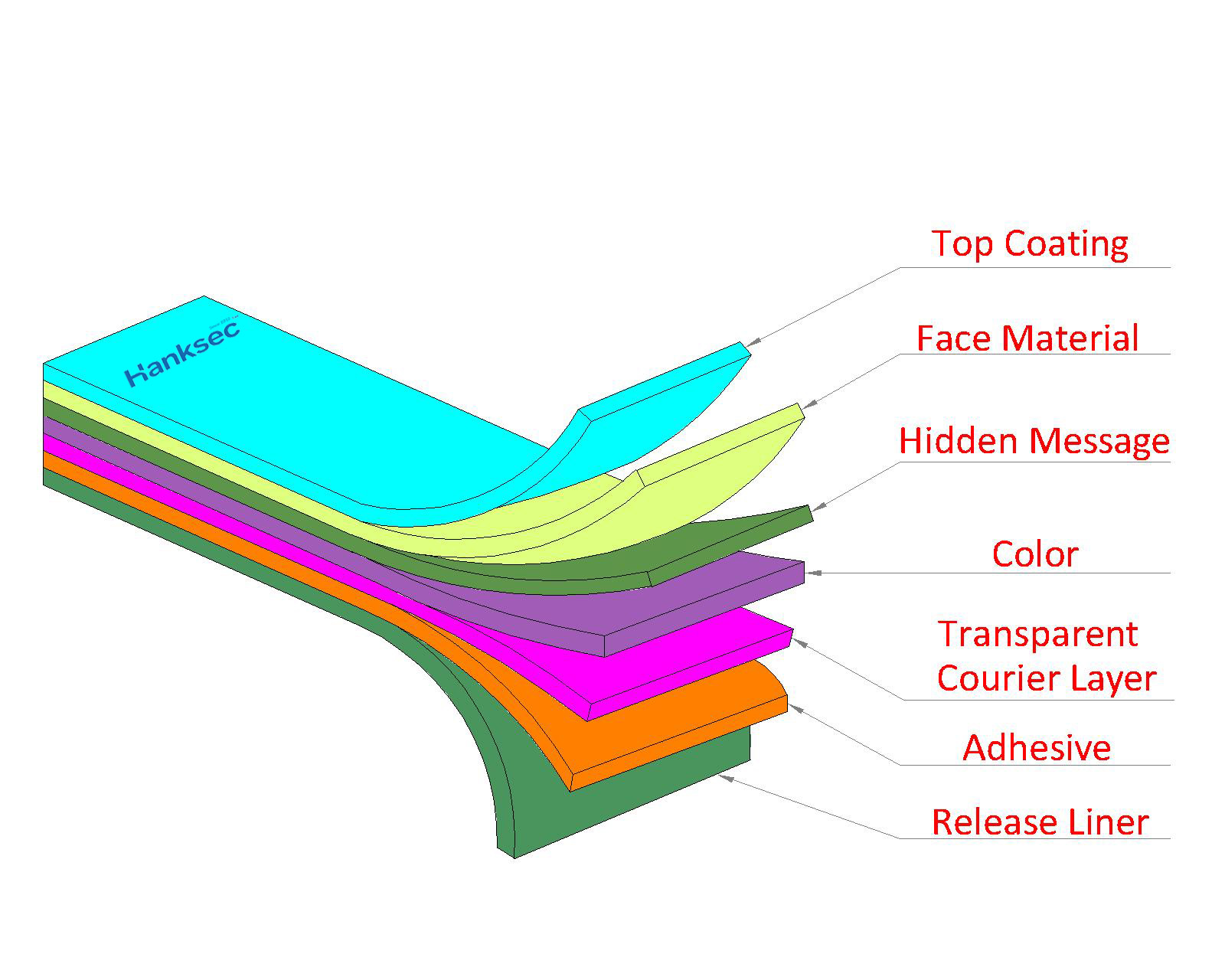
Materialstruktur von Sicherheitsetiketten: Funktionsweise der einzelnen Funktionsschichten
Ein typisches Material für manipulationssichere Sicherheitsetiketten kann folgende Schichten umfassen:
- Decklack
- Face material
- Ebene der verborgenen Nachricht
- Farbschicht
- Transparente Trägerschicht
- Klebstoff
- Trennfolie
Jede einzelne Schicht mag dünn und einfach erscheinen, doch jede beeinflusst die Gesamtleistung. Die Herausforderung besteht nicht nur darin, diese Schichten zu kombinieren, sondern sie auch kontrolliert zusammenwirken zu lassen. Kontrollierte Strukturen für versteckte Nachrichten werden häufig verwendet in VOID-Fälschungsschutzetiketten um nach der Entfernung sichtbare und unumkehrbare Spuren zu hinterlassen.
Oberflächenbeschichtung: Mehr als nur eine bedruckbare Oberfläche
Die oberste Lackschicht ist das Erste, was Kunden sehen, aber ihre Rolle geht weit über das Aussehen hinaus.
Eine stabile Deckbeschichtung beeinflusst:
- Tintenhaftung
- Druckkompatibilität
- Kratzfestigkeit
- Barcode-Lesbarkeit
- Leistung von UV-Tinte
- Leistung beim Digitaldruck
- Oberflächenbeständigkeit
- Widerstand gegen Handhabungsreibung
- Langfristige visuelle Stabilität
Für Etikettenhersteller ist die Qualität der Deckschicht von entscheidender Bedeutung. Ein Material mag vor dem Bedrucken akzeptabel aussehen, doch wenn die Deckschicht instabil ist, kann dies zu Abblättern der Tinte, schlechter Barcode-Erkennung, mangelhafter Haftung von UV-Tinte, Farbabweichungen oder Oberflächenkratzern nach der Handhabung führen.
Bei Sicherheitsetikettenmaterialien kann eine mangelhafte Deckschicht schwerwiegende Probleme verursachen. Ist die Beschichtung zu schwach, kann der Aufdruck beim Aufbringen beschädigt werden. Ist sie zu stark oder nicht mit dem Trennsystem kompatibel, kann die Sicherheitsfolie nicht ordnungsgemäß brechen. Ist die Beschichtung für das Druckverfahren des Kunden ungeeignet, sind unter Umständen erneute Tests, zusätzlicher Primer oder zusätzliche Produktionsanpassungen erforderlich.
Aus diesem Grund müssen hochwertige Sicherheitsetikettenmaterialien unter Berücksichtigung von Druck- und Weiterverarbeitungsbedingungen entwickelt werden.
Die Etikettenindustrie verwendet häufig standardisierte Prüfverfahren zur Bewertung von Selbstklebematerialien. FINAT listet Prüfmethoden auf, die unter anderem Schälfestigkeit, Ablösekraft, beschleunigte Alterung, UV-Beständigkeit, Scherfestigkeit, Klettverschluss, Haftung bei niedrigen Temperaturen, Oberflächenspannung, Tintenhaftung und Kratzfestigkeit abdecken. Diese Kategorien verdeutlichen, dass die Qualität von Etikettenmaterialien von vielen Faktoren abhängt und nicht nur von einem sichtbaren Effekt.
Frontmaterial: Die physische Basis des Sicherheitssystems
Das Oberflächenmaterial bildet die physische Grundlage des Sicherheitsetiketts. Es kann aus PET, PP, Papier, selbstzerstörender Folie, Hologrammfolie, transparenter Folie, matter Silberfolie oder einem anderen technischen Trägermaterial bestehen. Für Anwendungen, bei denen das Oberflächenmaterial selbst beim Entfernen brechen muss, zerstörbare Etikettenmaterialien einen anderen Manipulationsschutzmechanismus bereitstellen.
- Dicke
- Flexibilität
- Reißfestigkeit
- Transparenz
- Oberflächenenergie
- Dimensionsstabilität
- Stanzverhalten
- Etikettenabgabeleistung
- Schälreaktion
Zum Beispiel ein transparentes VOID-Etikettenmaterial Für Elektronikverpackungen sind gute Lesbarkeit und ein sauberes Erscheinungsbild erforderlich. Sicherheitsetiketten auf Kraftpapierverpackungen benötigen eine starke Haftung und einen deutlichen Kontrast der Botschaft. Etiketten für Kosmetik- oder Premium-Einzelhandelsverpackungen erfordern unter Umständen ein saubereres Erscheinungsbild, eine bessere Glanzkontrolle oder ein individuelles Branding.
Minderwertige Materialien verwenden oft Deckfolien, die auf den ersten Blick ähnlich aussehen, aber möglicherweise keine formstabilen Eigenschaften aufweisen. Sie können sich einrollen, schrumpfen, verformen, Falten bilden oder beim Schneiden und Aufwickeln ungleichmäßige Spannungen erzeugen. Diese Probleme treten bei kleinen Mustern möglicherweise nicht auf, werden aber in der Massenproduktion zu kostspieligen Folgen.
Ein hochwertiges Oberflächenmaterial muss mit der Deckschicht, der verdeckten Botschaftsschicht, dem Klebstoff und der Trennfolie harmonieren. Ziel ist nicht nur die Erstellung eines Etiketts, sondern ein kontrolliert manipulationssicheres Ergebnis. Für Anwendungen, die ein kontrolliertes Übertragungsverhalten nutzen, lesen Sie bitte unseren Leitfaden. VOID-Fälschungsschutzetiketten für Sicherheitslösungen mit vollständiger, teilweiser und nicht-übertragender Übertragung.
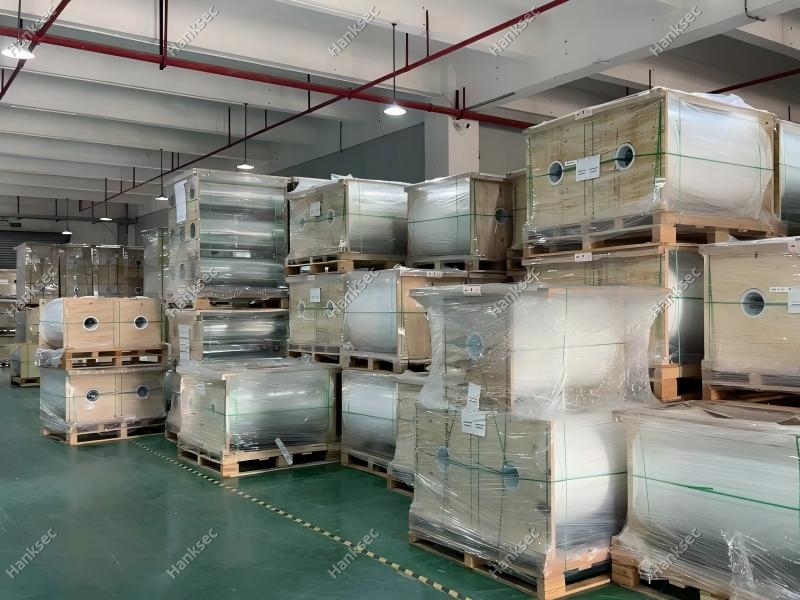
Ebene der versteckten Botschaft: Der Kern der Manipulationsnachweise
Die verborgene Nachrichtenebene ist einer der wichtigsten Bestandteile eines VOID-Etikettenmaterialsystems.
Vor dem Anbringen muss die versteckte Nachricht unauffällig sein und darf keinen offensichtlichen optischen Mangel verursachen. Nach dem Entfernen muss die Nachricht klar, deutlich und dauerhaft sichtbar sein, um zu zeigen, dass die Verpackung oder das Produkt geöffnet oder manipuliert wurde.
Eine gute versteckte Nachrichtenschicht sollte Folgendes leisten:
- Anzeige „VOID löschen“ oder „VOID öffnen“
- Stabile Musterübertragung
- Guter Kontrast nach dem Abziehen
- Kontrollierter Restrand
- Keine vorzeitige Anzeige von Nachrichten vor der Verwendung
- Keine unvollständige oder verschwommene Nachricht nach dem Abziehen
- Stabile Leistung nach der Lagerung
- Gleichbleibender Effekt über alle Produktionschargen hinweg
Bei minderwertigen Marktmustern tritt dieses Problem häufig auf. Die versteckte Botschaft kann zu schwach, zu dick, ungleichmäßig, verschwommen, unvollständig oder inkonsistent sein. In manchen Fällen ist die Botschaft nur teilweise auf dem Etikett sichtbar. In anderen Fällen reißt der Klebstoff unregelmäßig und hinterlässt anstelle einer klaren Sicherheitsbotschaft einen unkontrollierten weißen Fleck.
Dies ist einer der wichtigsten Unterschiede zwischen einem billigen Sicherheitsetikett und einem hochwertigen manipulationssicheren Material.
Bei Sicherheitsetiketten geht es nicht nur darum, ein Wort erscheinen zu lassen. Es geht darum, zu kontrollieren, wie, wann, wo und wie deutlich dieses Wort erscheint.
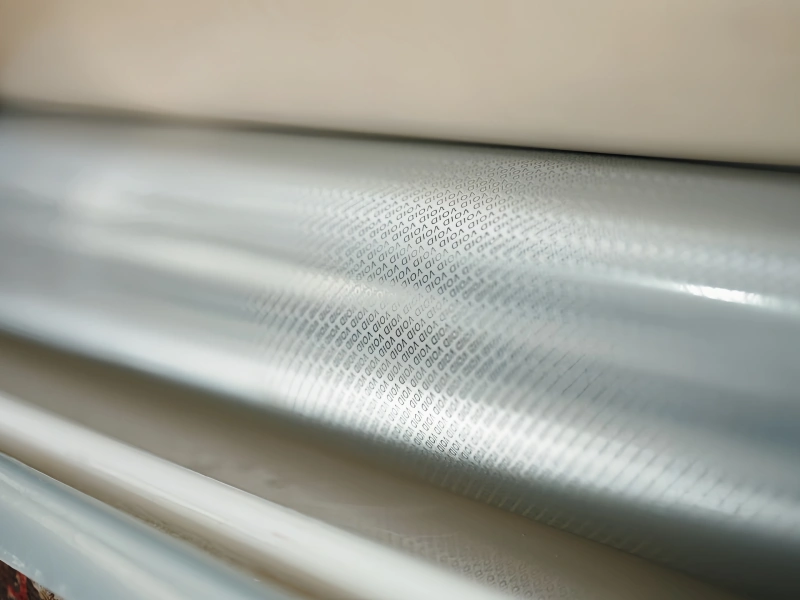
Farbebene: Visueller Kontrast, Markenidentität und Sicherheitsklarheit
Die Farbschicht wird oft fälschlicherweise nur als Design- oder Dekorationsschicht angesehen. Tatsächlich spielt sie eine wichtige Rolle für die Sicherheitsleistung.
Farbeffekte:
- Sichtbarkeit von VOID-Nachrichten
- Kontrast nach dem Peeling
- Markenbekanntheit
- Produkterscheinung
- Lichtblockierung
- Transparenzkontrolle
- Chargenkonsistenz
- Visuelle Qualität unter verschiedenen Lichtverhältnissen
Eine schwache oder instabile Farbschicht kann die Erkennung der versteckten Botschaft erschweren. Sie kann außerdem zu einem uneinheitlichen Erscheinungsbild der einzelnen Rollen führen, was ein erhebliches Problem für B2B-Kunden darstellt, die Markeninhaber beliefern.
Bei minderwertigen Produkten können Farbunterschiede zwischen den einzelnen Chargen auftreten. Die Botschaft kann in einem Muster deutlich, in einem anderen jedoch schwach erscheinen. Unter Lichteinfall können ungleichmäßige Beschichtungsspuren, mangelnder Glanz oder ein trübes Aussehen des Etiketts sichtbar sein. Solche Mängel beeinträchtigen das Kundenvertrauen.
Ein hochwertiges Sicherheitsetikettenmaterial verwendet eine kontrollierte Farbgebung und ein spezielles Schichtdesign, um die Manipulationssicherheitshinweise gut lesbar zu machen und gleichzeitig ein professionelles Erscheinungsbild der Verpackung zu gewährleisten.
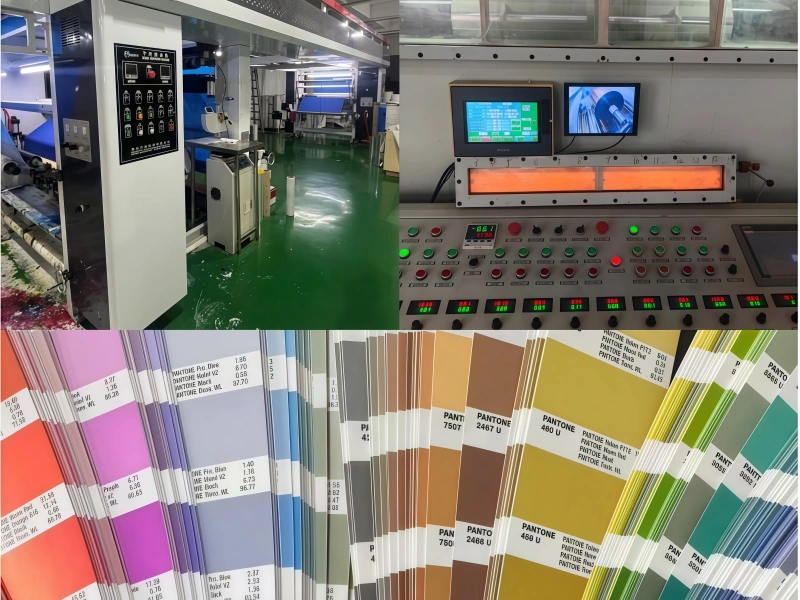
Transparente Trägerschicht: Die Steuerschicht hinter dem Effekt
Die transparente Trägerschicht ist eine der verborgenen technischen Komponenten des Systems. Kunden sehen sie möglicherweise nicht direkt, aber sie beeinflusst das Abziehergebnis maßgeblich.
Diese Ebene hilft bei der Steuerung:
- Nachrichtenübertragungsverhalten
- Spaltposition
- Restgrenze
- Voller Übertragungseffekt
- Partieller Übertragungseffekt
- Nicht-Transfer-Effekt
- Transparenz der Etiketten
- Endgültiges Oberflächenbild
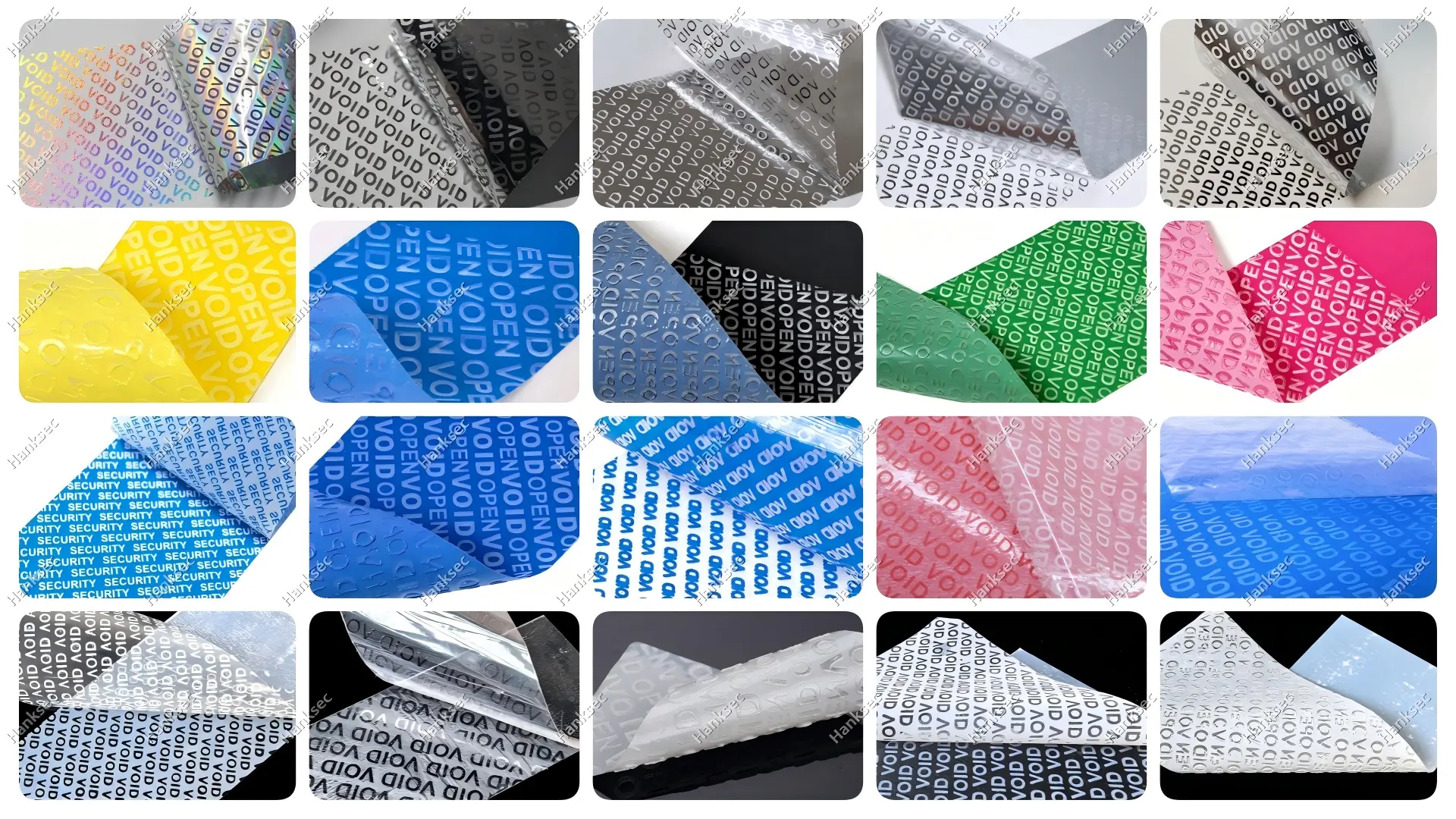
Bei vollständig übertragbaren VOID-Materialien wird die Botschaft nach dem Abziehen auf die Oberfläche übertragen. Bei teilweise übertragbaren Materialien verteilt sich der Rückstand zwischen Etikett und Oberfläche. Bei nicht übertragbaren Materialien erscheint die Botschaft auf dem Etikett, während die Oberfläche sauber bleibt.
Diese Effekte hängen von einer kontrollierten Schichttrennung ab. Ist die Trägerschicht instabil, kann sich das Material unkontrolliert ablösen, anstatt die gewünschte Botschaft freizulegen.
Deshalb bedeutet der gleiche Produktname nicht zwangsläufig die gleiche Qualität. Zwei Lieferanten können beide „VOID-Etikettenmaterial„aber das interne Trägerdesign und die Schichtsteuerung können völlig anders sein.“

Klebstoff: Die Verbindungsschicht, die die Sicherheitsreaktion aktiviert
Der Klebstoff ist Bestandteil der mehrschichtigen Sicherheitskonstruktion, da er die Haftung des Etiketts auf dem Substrat steuert und bestimmt, ob die vorgesehene Hohlraum-, Rückstands- oder Zerstörungsreaktion beim Entfernen ausgelöst wird. Die Auswahl des Klebstoffs sollte daher zusammen mit dem Oberflächenmaterial, der Trennstruktur und der tatsächlichen Applikationsfläche erfolgen. Ein detaillierterer Abschnitt zum Klebstoff folgt weiter unten.
Trennfolie: Die Schicht, die viele Käufer ignorieren
Die Trennfolie ist nicht die Sicherheitsfunktion selbst, hat aber einen starken Einfluss auf die Produktionsleistung.
Eine stabile Trennfolie unterstützt:
- Sanftes Entspannen
- Stabiles Stanzen
- Einfache Abfallentsorgung
- Automatische Etikettierung
- Walzenebenheit
- Rückspulqualität
- Etikettenausgabe
- Reduzierter Produktionsabfall
Viele kostengünstige Materialien verwenden instabile Trennfolien. Das Material mag auf einem Foto einwandfrei aussehen, aber beim Stanzen kann es zu Problemen wie Trennfolienbruch, schwieriger Abfallentsorgung, Ablösen des Etiketts, Verlaufen des Klebstoffs oder ungleichmäßiger Ablösekraft kommen.
Für B2B-Käufer entstehen dadurch versteckte Kosten. Ein Material mit einem günstigeren Stückpreis kann zu einer geringeren Produktionsgeschwindigkeit, häufigeren Maschinenstillständen, einer höheren Ausschussquote und mehr Reklamationen von nachgelagerten Kunden führen.
Deshalb muss hochwertiges Sicherheitsetikettenmaterial als komplettes Rollenmaterial und nicht nur als kleines, abgezogenes Muster beurteilt werden.
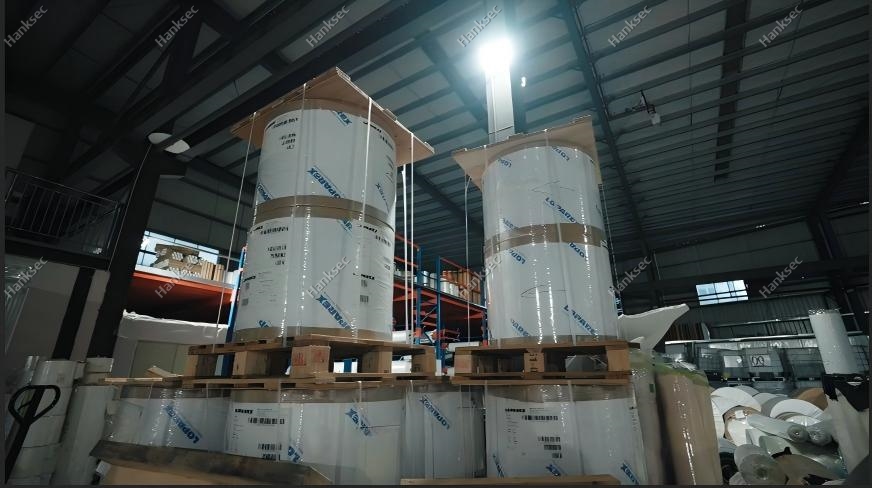
Materialien für die Oberseite von Sicherheitsetiketten: PET, Papier, Hologramm- und selbstzerstörbare Folien
Das Oberflächenmaterial bestimmt maßgeblich die physikalischen Eigenschaften, die Druckleistung und die Stabilität bei der Weiterverarbeitung eines Sicherheitsetikettensystems. Die richtige Wahl hängt von der geforderten Manipulationssicherheit, der Applikationsfläche, dem Druckverfahren, der Haltbarkeit und dem nachfolgenden Verarbeitungsprozess ab.
PET-Sicherheitsetikettenmaterialien
PET wird häufig verwendet für Materialien für ungültige und manipulationssichere Sicherheitsetiketten PET bietet Dimensionsstabilität, Zugfestigkeit und gute Kompatibilität mit Beschichtung, Druck, Stanzen und Rollenverarbeitung. Es eignet sich für Voll-, Teil- und Nicht-Transfer-Konstruktionen, wobei Foliendicke und -steifigkeit auf die Abmessungen von Klebstoff, Trägermaterial und Etikett abgestimmt sein müssen.
Sicherheitsetikettenmaterialien aus Papier
Papierkonstruktionen können durch Hohlraumübertragung, Delamination oder Faserbeschädigung Manipulationssicherheit bieten und sind besonders relevant für Kartons, Dokumente und papierbasierte Verpackungen. Die Leistungsfähigkeit hängt jedoch weiterhin von der Beschichtung, dem Klebstoff und der eigentlichen Verpackungsoberfläche ab. Käufer, die diese Richtung in Betracht ziehen, können sich die Produkte von Hanksec ansehen. Leitfaden für Papier-VOID-Etiketten.
Holographische Sicherheitsmaterialien
Holografische Materialien bieten eine zusätzliche optische Authentifizierungsebene. Wenn auch ein Nachweis der Entfernung erforderlich ist, sollte das holografische Merkmal mit einer geeigneten VOID-, destruktiven oder anderweitig manipulationssicheren Konstruktion kombiniert werden, anstatt allein als Manipulationsnachweis zu dienen. Siehe Hanksec. Leitfaden für Hologramm-Etiketten zur detaillierten Auswahl.
Zerstörbare Etikettenmaterialien
Zerstörbare Materialien sind so konzipiert, dass das Oberflächenmaterial beim Ablösen bricht, fragmentiert oder reißt. Ihre Leistungsfähigkeit hängt vom optimalen Verhältnis zwischen Sprödigkeit des Oberflächenmaterials, Klebekraft und Stabilität während der Weiterverarbeitung ab. Für Druck, Stanzen, automatische Etikettierung und die Endanwendung können unterschiedliche Zerstörungsgrade erforderlich sein. Siehe Hanksec. Leitfaden für zerstörbare Etikettenmaterialien.
Wie manipulationssichere Sicherheitsetiketten funktionieren
Manipulationssichere Sicherheitsetiketten funktionieren durch kontrollierte Wechselwirkung zwischen Obermaterial, Sicherheits- oder Trennschicht, Klebstoff und Applikationsfläche.
Vor der Entfernung bleiben die Funktionsschichten in einer vorgegebenen Struktur miteinander verbunden. Beim Entfernungsversuch trennt sich das System an einer kontrollierten Schnittstelle. Je nach Konstruktion kann dies eine „VOID“- oder „OPENED“-Meldung auf dem Substrat hinterlassen, das Sicherheitsmuster auf zwei Oberflächen aufteilen, Spuren auf dem entfernten Etikett freilegen oder das Oberflächenmaterial physisch zerstören.
Entscheidend ist, dass Manipulationssicherheit nicht durch eine einzelne Schicht allein gewährleistet wird. Zuverlässige Sicherheit ergibt sich aus dem Zusammenspiel von Schichthaftung, Ablösekraft, Oberflächenmaterialverhalten und Substratbindung. Daher können sich zwei Sicherheitsmaterialien, die vor dem Aufbringen ähnlich aussehen, nach dem Abziehen sehr unterschiedlich verhalten.
Arten von Sicherheitsetikettenmaterialsystemen
Sicherheitsetikettenmaterialien können so konstruiert werden, dass sie unterschiedlich auf die Entfernung reagieren. Die grundlegende Konstruktion sollte danach ausgewählt werden, wo der Käufer den Manipulationsnachweis anbringen möchte und wie viel Rückstand oder physische Beschädigung akzeptabel ist.
Volltransfer-VOID-Materialien
Vollflächig übertragbare VOID-Materialien sind so konzipiert, dass sie nach dem Entfernen deutliche sichtbare Spuren hauptsächlich auf der Applikationsoberfläche hinterlassen. Sie werden häufig für Kartons, Verpackungen und andere Anwendungen eingesetzt, bei denen dauerhafte Rückstände akzeptabel sind.
Teilweise übertragene Hohlraummaterialien
Bei den partiell übertragbaren VOID-Materialien wird der sichtbare Manipulationsnachweis zwischen dem entfernten Etikett und dem Substrat aufgeteilt. Dadurch entsteht auf beiden Seiten ein Nachweis, was eine ausgewogene Option darstellt, wenn keine vollständige Übertragung erforderlich ist.
Nicht übertragbare VOID-Materialien
Nicht übertragbare VOID-Materialien wurden entwickelt, um Manipulationen primär innerhalb des Etiketts sichtbar zu machen und gleichzeitig die Anwendungsfläche sauber zu halten. Sie eignen sich für Elektronik, Glas und andere Oberflächen, bei denen starke, sichtbare Klebstoffrückstände unerwünscht sind.
Zerstörbare Sicherheitsmaterialien
Zerstörbare Konstruktionen nutzen ein kontrolliertes Materialversagen anstelle einer alleinigen Übertragung der VOID-Nachricht. Beim Versuch der Entfernung bricht oder zersplittert das Etikett, sodass es nicht unbeschädigt entfernt und wiederverwendet werden kann.
Holographische manipulationssichere Materialien
Holografische Manipulationsschutzmaterialien kombinieren optische Authentifizierung mit einem separaten Mechanismus zum Nachweis der Manipulation, wie z. B. VOID-Transfer oder destruktives Verhalten. Der holografische Effekt verbessert die visuelle Authentifizierung, während die Materialstruktur die tatsächliche Reaktion auf Manipulationen bestimmt.
Einen umfassenderen Vergleich dieser Labelkategorien finden Sie bei Hanksec. Sicherheitsetiketten: Arten, Materialien & Auswahlleitfaden.
Materialien für VOID-Sicherheitsetiketten mit niedrigem vs. hohem Rückstandsgehalt
Der Begriff „Rückstandsmenge“ beschreibt, wie viel sichtbares Material oder Klebstoffreste nach dem Entfernen auf der Applikationsfläche zurückbleiben.
Hochrückstandshaltige Konstruktionen Sie sind so konzipiert, dass sie stärkere sichtbare Spuren auf dem Untergrund hinterlassen und werden häufig dort eingesetzt, wo eine eindeutige Manipulationsanzeige erforderlich ist. rückstandsarme Konstruktionen Die Menge des auf dem Untergrund verbleibenden Materials reduzieren und gleichzeitig eine sichtbare Entfernungsreaktion erzielen.
Der Rückstandsgrad sollte nicht mit den Begriffen vollständige, teilweise oder keine Übertragung gleichgesetzt werden. Die Übertragungsart beschreibt, wie sich das Sicherheitsmuster trennt, während der Rückstandsgrad die Menge und Beschaffenheit der auf der Oberfläche verbleibenden Spuren beschreibt. Die erforderliche Kombination sollte entsprechend dem Untergrund und dem erwarteten Erscheinungsbild nach der Entfernung ausgewählt werden.
Sicherheitsetiketten-Klebesysteme: Warum die Haftung Manipulationssicherheit gewährleistet
Klebstoff ist oft der eigentliche Schlüssel zum Erfolg oder Misserfolg.
Ein Klebstoff für Sicherheitsetiketten muss mehr leisten als nur kleben. Er muss kontrolliert haften, sich kontrolliert ablösen und auf vorhersehbare Weise mit der darunterliegenden Informationsschicht interagieren.
Ein hochwertiges Klebstoffsystem sollte Folgendes berücksichtigen:
- Anfangstaktik
- Endgültige Haftung
- Oberflächenkompatibilität
- Temperaturbeständigkeit
- Feuchtigkeitsbeständigkeit
- Rückstandskontrolle
- Alterungsstabilität
- Konsistenz der Schälkraft
- Tieftemperaturverhalten
- Hochtemperaturlagerung
- Kompatibilität mit Verpackungsmaterialien
Minderwertige Sicherheitsetikettenmaterialien versagen oft, weil der Klebstoff nicht richtig ausbalanciert ist. Häufige Probleme sind:
- Schwache Haftung an den Kartons
- Schlechte Haftung auf Kunststoff
- Klebstoffüberschuss
- Unvollständige VOID-Übertragung
- Zufälliges Einreißen
- Rückstände, die schmutzig aussehen
- Kantenhebung
- Leistungsänderung nach der Speicherung
- Schlechte Leistung in kalten oder feuchten Umgebungen
- Instabile Wirkung auf beschichtete Verpackungen
Bei herkömmlichen Etiketten kann ein Versagen des Klebstoffs dazu führen, dass sich das Etikett ablöst. Bei Sicherheitsetiketten bedeutet ein Versagen des Klebstoffs, dass die Sicherheitsfunktion versagt.
ASTM D3330/D3330M-04(2025) Es bietet standardisierte Methoden zur Bewertung der Schälfestigkeit von Haftklebebändern und kann für Qualitätsvergleiche innerhalb von Rollen, zwischen Rollen oder zwischen Produktionschargen verwendet werden. Bei Sicherheitsetikettenmaterialien ist das kontrollierte Schälverhalten ein wichtiger Bestandteil der Bewertung der Klebstoffkonsistenz und der Substratverträglichkeit.
Der FINAT-Testmethoden Zusätzliche Referenzmethoden für selbstklebende Etikettenmaterialien sind bereitzustellen. Beispiele hierfür sind FTM 2 für die Haftung bei 90°-Schälung, FTM 4 für die Ablösekraft bei hoher Geschwindigkeit (bezogen auf das Abziehen der Matrix), FTM 5 für beschleunigte Alterung und FTM 9 für die Kletthaftung. Die geeignete Prüfung sollte anhand der zu bewertenden Eigenschaft ausgewählt werden, anstatt einen einzelnen Haftungswert als vollständiges Maß für die Etikettenleistung zu betrachten.
Informationen zur substratspezifischen Klebstoffauswahl für PP, PE, HDPE, PET, Glas und beschichtete Kartons finden Sie bei Hanksec. Leitfaden für Klebstoffe von manipulationssicheren Etiketten.
Optionen für kundenspezifische Sicherheitsetikettenmaterialien
Sicherheitsetikettenmaterialien lassen sich sowohl auf Materialebene als auch auf Verarbeitungsebene individuell anpassen. Käufer sollten zunächst die erforderliche Manipulationsreaktion definieren und anschließend die Spezifikationen für Optik, Druck und Lieferung bestätigen.
| Anpassungselement | Typische Optionen |
|---|---|
| Facestock | PET-, Papier-, holografische, zerstörbare oder andere Spezialkonstruktionen |
| Filmdicke | Ausgewählt nach Haltbarkeits-, Druck- und Verarbeitungsanforderungen |
| Farbe und Oberfläche | Transparente, weiße, silberne, kundenspezifische Farben, glänzende, matte oder holografische Effekte |
| Sicherheitsmeldung | LEER, GEÖFFNET, Logo oder benutzerdefinierter versteckter Text/Muster |
| Übertragungsantwort | Vollständige Übertragung, teilweise Übertragung, Nichtübertragung oder destruktive Reaktion |
| Klebstoff | Ausgewählt nach Substrat-, Temperatur-, Verweilzeit- und Rückstandsanforderungen |
| Decklack | Geeignet für UV-, Flexo-, Thermotransfer-, Digital- und andere Druckverfahren |
| Zusätzliche Sicherheit | Holografische Effekte, UV-Merkmale, Seriennummern, Barcodes, QR-Codes oder thermochrome Merkmale |
| Trennpapier | Pergamin, PET oder andere Auskleidung je nach Verarbeitungsanforderungen |
| Rollenspezifikation | Individuelle Breite, Länge, Kern und Wickelrichtung |
Spezifikationen für Sicherheitsetikettenmaterialien – Käufer sollten bestätigen
Eine Musteranforderung wird effizienter, wenn der Käufer die technischen Spezifikationen angibt, die sowohl die Manipulationsreaktion als auch die Konvertierungsleistung beeinflussen.
| Spezifikation | Was Käufer bestätigen sollten |
|---|---|
| Facestock | PET-, Papier-, Hologramm-, selbstzerstörende oder Spezialfolie |
| Dicke | Erforderliche Deckmaterialstärke und etwaige Einschränkungen der Gesamtkonstruktion |
| Klebstoff | Anwendungssubstrat, Klebrigkeit, Endhaftung und Umgebungsanforderungen |
| Trennpapier | Pergaminpapier, PET-Auskleidung oder eine andere vom Verarbeiter geforderte Auskleidung |
| Transfer Type | Vollständige Übertragung, teilweise Übertragung, Nichtübertragung oder destruktive Reaktion |
| Versteckte Botschaft | UNGÜLTIG, GEÖFFNET, Logo oder benutzerdefinierter Text/Muster |
| Druckkompatibilität | Flexodruck, UV-Druck, Thermotransferdruck, Digitaldruck, Siebdruck oder andere Verfahren |
| Lieferformat | Jumborolle, geschnittene Rolle, Bogen oder fertiges Etikett |
| Rollenabmessungen | Breite, Länge, Kerngröße und Wickelrichtung |
| Anwendungsbedingungen | Oberfläche, Temperatur, Luftfeuchtigkeit, Lagerung und Verweilzeit |
Lieferformate für Sicherheitsetiketten: Jumbo-Rollen, geschnittene Rollen, Bogen und fertige Etiketten
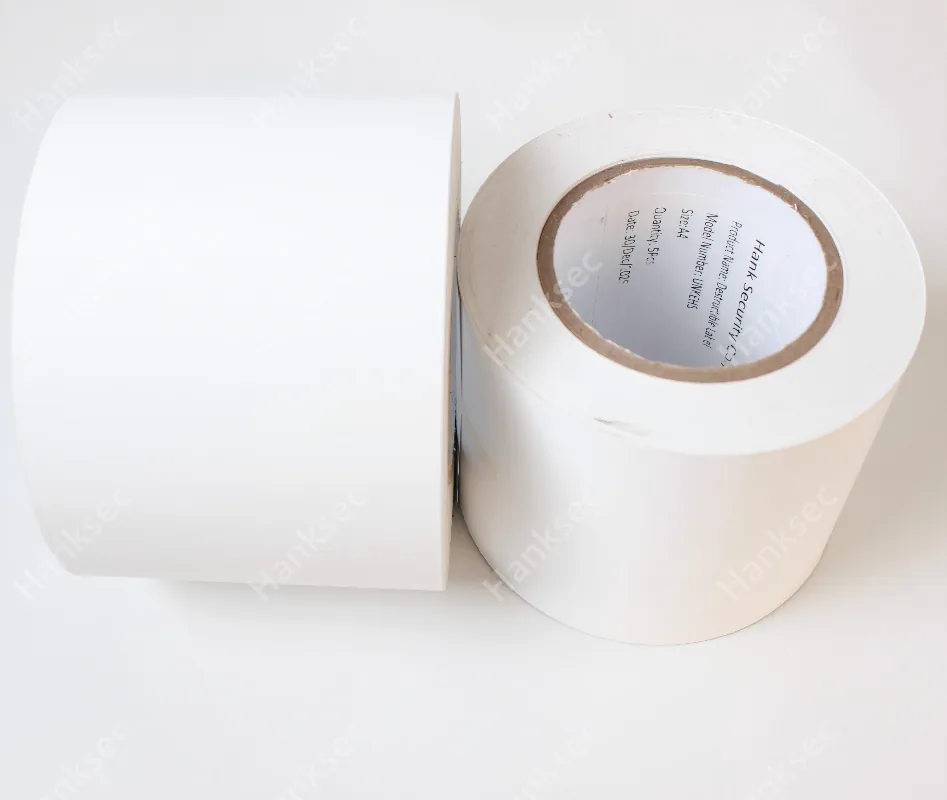
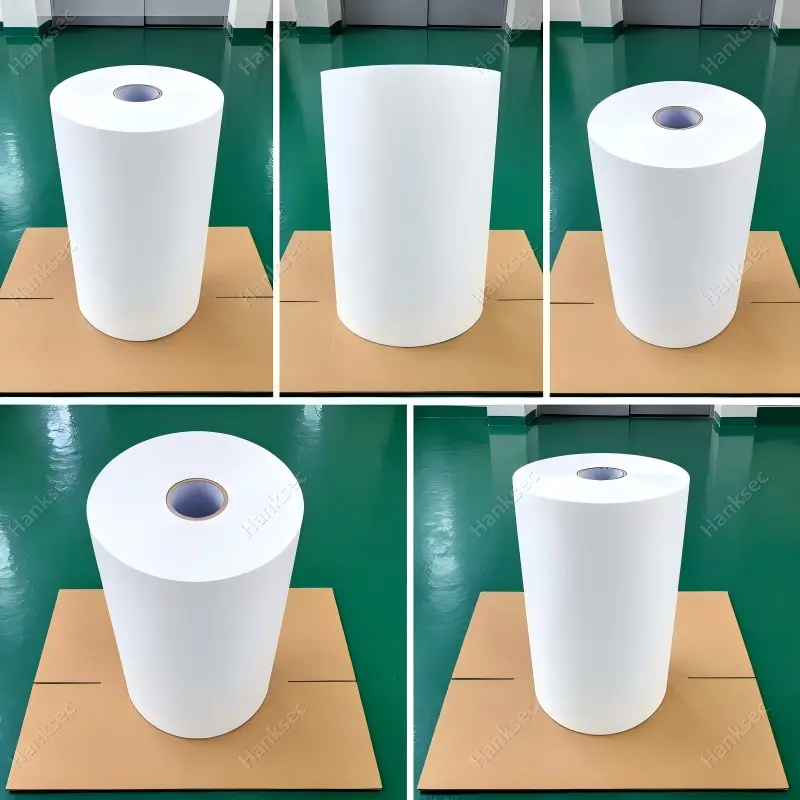
Sicherheitsetikettenmaterialien können je nach Produktionsprozess des Käufers in verschiedenen Formaten geliefert werden. Etikettenhersteller benötigen üblicherweise VOID-Etikettenmaterial, Jumborollen oder geschnittene Rollen für den Druck, das Stanzen und die Weiterverarbeitung, während andere Kunden möglicherweise Bogenware oder fertige Etiketten zur direkten Anwendung benötigen.
| Lieferformat | Typischer Käufer / Verwendung | Wichtigste zu bestätigende Details |
|---|---|---|
| Jumbo-Rollen | Etikettenhersteller und Sicherheitsdrucker | Masterbreite, Rollenlänge, Kern, Wickel- und Beschichtungskonsistenz |
| Geschnittene Rollen | Konverter, die schmalere Produktionsbreiten benötigen | Toleranz der Fertigbreite, Rollenlänge, Kern und Wickelrichtung |
| Blätter | Bogenoffsetdruck oder Spezialverarbeitung | Blattgröße, Planlage des Trägermaterials und Bedruckbarkeit |
| Fertige Etiketten | Markeninhaber, Verpackungsbetriebe und direkte Anwender | Etikettengröße, -form, -abstand, Abrollrichtung, Druck- und Applikationsmethode |
Das Zufuhrformat sollte zusammen mit den nachgelagerten Anlagen bestätigt werden, da die Walzengeometrie, die Wahl des Trägermaterials und die Wickelrichtung Einfluss auf den Druck, das Stanzen, das Abstreifen der Matrix und die automatische Dosierung haben können.
Wie Sicherheitsetikettenmaterialien hergestellt werden: Von der Beschichtung bis zum Schneiden
Sicherheitsetikettenmaterialien werden als aufeinander abgestimmtes Mehrschichtsystem und nicht als herkömmliche Klebefolie hergestellt. Der Herstellungsprozess muss die Wechselwirkung zwischen Oberflächenmaterial, Sicherheitsbeschichtung, Ablöseverhalten, Klebesystem und Trägerfolie so steuern, dass nach dem Entfernen stets der erforderliche Manipulationsschutz erkennbar ist.
1. Auswahl des Oberflächenmaterials
PET, BOPP, Papier, Hologrammfolie oder andere Substrate werden je nach Druckanforderungen, Dimensionsstabilität, Haltbarkeit und der endgültigen Anwendungsoberfläche ausgewählt.
2. Oberflächenbehandlung und Funktionsbeschichtung
Vor der Herstellung der Sicherheitsschichten können Corona-Behandlungen, Grundierungen oder bedruckbare Decklacke aufgebracht werden, um die Tintenhaftung und die Kompatibilität der Beschichtung zu verbessern.
3. Sicherheitsmuster- und Release-Layer-Bildung
Das verborgene VOID-, OPENED-Logo oder das individuelle Sicherheitsmuster wird zusammen mit einem kontrollierten Freigabesystem erstellt. Die Zusammensetzung der Beschichtung bestimmt, wie sich das Material beim Entfernen ablöst.
4. Auswahl des Klebstoffsystems und Beschichtung
Der druckempfindliche Klebstoff wird je nach Substratart, Oberflächenenergie, Temperatur, Einwirkzeit und gewünschtem Rückstandsverhalten ausgewählt. Er muss mit dem Trennsystem zusammenwirken und darf nicht nur maximale Schälfestigkeit gewährleisten.
5. Laminierung, Stabilisierung und Konvertierung
Das beschichtete Material wird mit dem entsprechenden Trennpapier laminiert und stabilisiert, bevor es geschnitten, bedruckt oder weiter zu maschinenfertigen Rollen oder fertigen Etiketten verarbeitet wird.
6. Qualitätsprüfung und Anwendungstests
Vor der Massenproduktion sollten fertige Sicherheitsmaterialien auf Beschichtungskonsistenz, Klebeleistung, Übertragungsverhalten, Bedruckbarkeit, Ablösung des Trägermaterials und tatsächliche Substrateigenschaften geprüft werden.
Bei Hanksec wird die Entwicklung von Sicherheitsmaterialien anhand des tatsächlichen Substrats, des Druckprozesses und des geforderten Manipulationsverhaltens des Kunden validiert, da sich ein Material, das auf Glas korrekt funktioniert, auf beschichteten Kartons, ABS, PP, PE oder lackiertem Metall anders verhalten kann. Erfahren Sie mehr über Hanksec. Fertigungskapazitäten für Sicherheitsetikettenmaterialien und dem Produktionsprozess in der Fabrik.
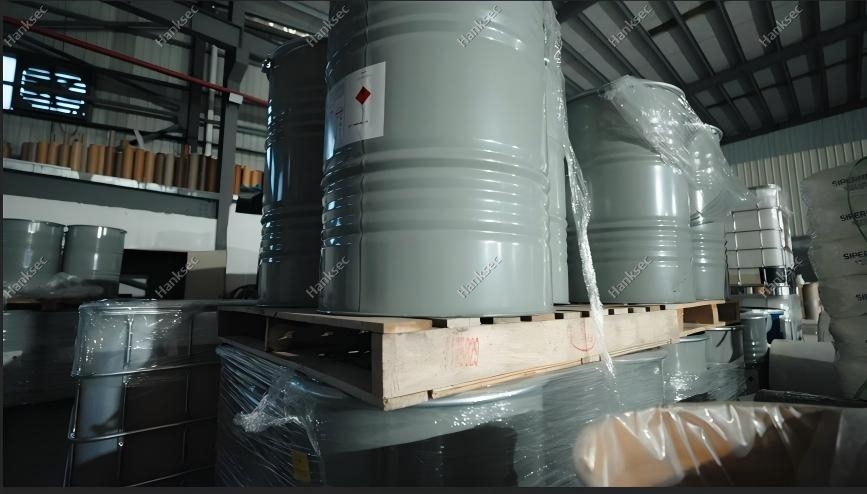
Konfektionierung von Sicherheitsetiketten: Drucken, Schneiden, Stanzen & Matrixentfernung
Die Herstellung des Sicherheitsmaterials ist nur der erste Schritt. Das Material muss sich auch auf den Geräten des Kunden zuverlässig verarbeiten lassen.
Wichtige Verarbeitungsschritte umfassen Drucken, Schneiden, Aufwickeln, Stanzen, Entformen und automatisches Dosieren. Für Verarbeiter, die UV-, Flexo-, Thermotransfer- oder Digitaldruckverfahren einsetzen, Bedruckbarkeit des Sicherheitsetikettenmaterials Die Leistung der Deckschicht sollte zusammen mit der Deckschichtleistung bewertet werden. Selbst ein korrekt konstruiertes Material kann Produktionsschwierigkeiten verursachen, wenn die Deckschicht, die Trägerschicht, der Klebstoff, die Stanztiefe, die Abstreifgeometrie oder die Maschineneinstellungen nicht auf die Anwendung abgestimmt sind.
Verarbeiter sollten Sicherheitsmaterialien daher im Rahmen des gesamten Produktionsprozesses qualifizieren und nicht nur anhand einer manuell entnommenen Probe beurteilen. Ein konkretes Beispiel für das Zusammenspiel von Materialkonstruktion und Verarbeitungsbedingungen finden Sie bei Hanksec. Kundenfall zur Etikettenmatrix-Entfernung bei hohen Temperaturen.
Wichtigste Leistungsanforderungen an ein zuverlässiges Sicherheitsetikettenmaterialsystem
Warum minderwertige Marktmuster vor der Verwendung ähnlich aussehen können
Eine der größten Herausforderungen in dieser Branche ist, dass minderwertige Produkte vor der Anwendung ähnlich aussehen können.
Ein Käufer könnte Produktfotos vergleichen und denken:
„Das VOID-Muster ist sichtbar.“
„Der Preis ist niedriger.“
„Der Lieferant sagt, es sei wasserdicht.“
„Das Etikett kann individuell gestaltet werden.“
„Die Probe weist einen Abschäleffekt auf.“
Die Leistungsfähigkeit eines Sicherheitsetiketts kann jedoch nicht allein anhand eines Fotos beurteilt werden.
Die eigentliche Bewährungsprobe ist:
Was passiert nach dem Drucken?
Was geschieht nach dem Stanzen?
Was passiert auf Kraftpapier?
Was passiert mit beschichteten Kartons?
Was passiert mit Plastik?
Was passiert nach 30 Tagen Lagerung?
Was passiert in heißen Schiffscontainern?
Was passiert im Winterverkehr?
Was passiert, wenn ein Kunde versucht, es langsam zu entfernen?
Was passiert, wenn das Etikett maschinell mit hoher Geschwindigkeit aufgebracht wird?
Was passiert bei Bestellungen von 10 Rollen, 100 Rollen oder bei Nachbestellungen?
Minderwertige Produkte bestehen oft einen einfachen Sichttest, versagen aber in der realen Produktion.
Dies ist der Unterschied zwischen einem Probeneffekt und einem Materialsystem.
Hochwertige vs. minderwertige Sicherheitsetikettenmaterialien
Der folgende Vergleich hilft Käufern, den tatsächlichen Unterschied zu verstehen.
| Vergleichspunkt | Hochwertiges Sicherheitsetikettenmaterial | Material aus minderwertigem Markt |
|---|---|---|
| Schichtdesign | Jede Schicht ist so konzipiert, dass sie als kontrolliertes System funktioniert. | Schichten können hauptsächlich aus ästhetischen Gründen und zur Kostenreduzierung kombiniert werden. |
| Versteckte Botschaft | Klar, gleichmäßig und kontrolliert nach der Entfernung | Die Nachricht kann verschwommen, unvollständig, ungleichmäßig oder zu hell sein. |
| Klebstoffleistung | Ausgewogene Haftung für verschiedene Oberflächen und Umgebungen | Die Haftung kann versagen, überlaufen, austrocknen oder unkontrollierte Rückstände hinterlassen. |
| Peeling-Effekt | Stabile Spuren von Manipulation nach Öffnungsversuch | Der VOID-Effekt kann zufällig auftreten oder nicht ordnungsgemäß übertragen werden. |
| Surface Compatibility | Getestet auf Kunststoff, Metall, Glas, Kartons, beschichteten Schachteln und anderen Oberflächen | Funktioniert möglicherweise nur auf begrenzten Oberflächen oder nur unter idealen Bedingungen |
| Druckleistung | Stabile Oberflächenbeschichtung für Tintenhaftung und Barcode-Lesbarkeit | Die Tinte kann nach dem Drucken abkratzen, abblättern, verblassen oder versagen. |
| Stanzleistung | Glatter Stanzvorgang, stabile Ablösung des Trägerpapiers, einfache Abfallentsorgung | Kantenabhebung, Folienbruch, schwierige Abfallentsorgung |
| Alterungsbeständigkeit | Stabil nach Lagerung, Transport, Hitze- und Feuchtigkeitsänderungen | Die Leistungsfähigkeit kann sich nach Lagerung oder Transport verändern. |
| Chargenkonsistenz | Gleichbleibende Wirkung von Rolle zu Rolle und Charge zu Charge | Farbe, Klebstoff und VOID-Effekt können variieren. |
| Reale Kosten | Reduziert Abfall, Beschwerden und wiederholte Tests | Niedrige Preise können zu Produktionsausfällen und Kundenreklamationen führen. |
Bildvergleich: Budgetmarkt-Stichproben vs. Premium-Kontrollstichproben
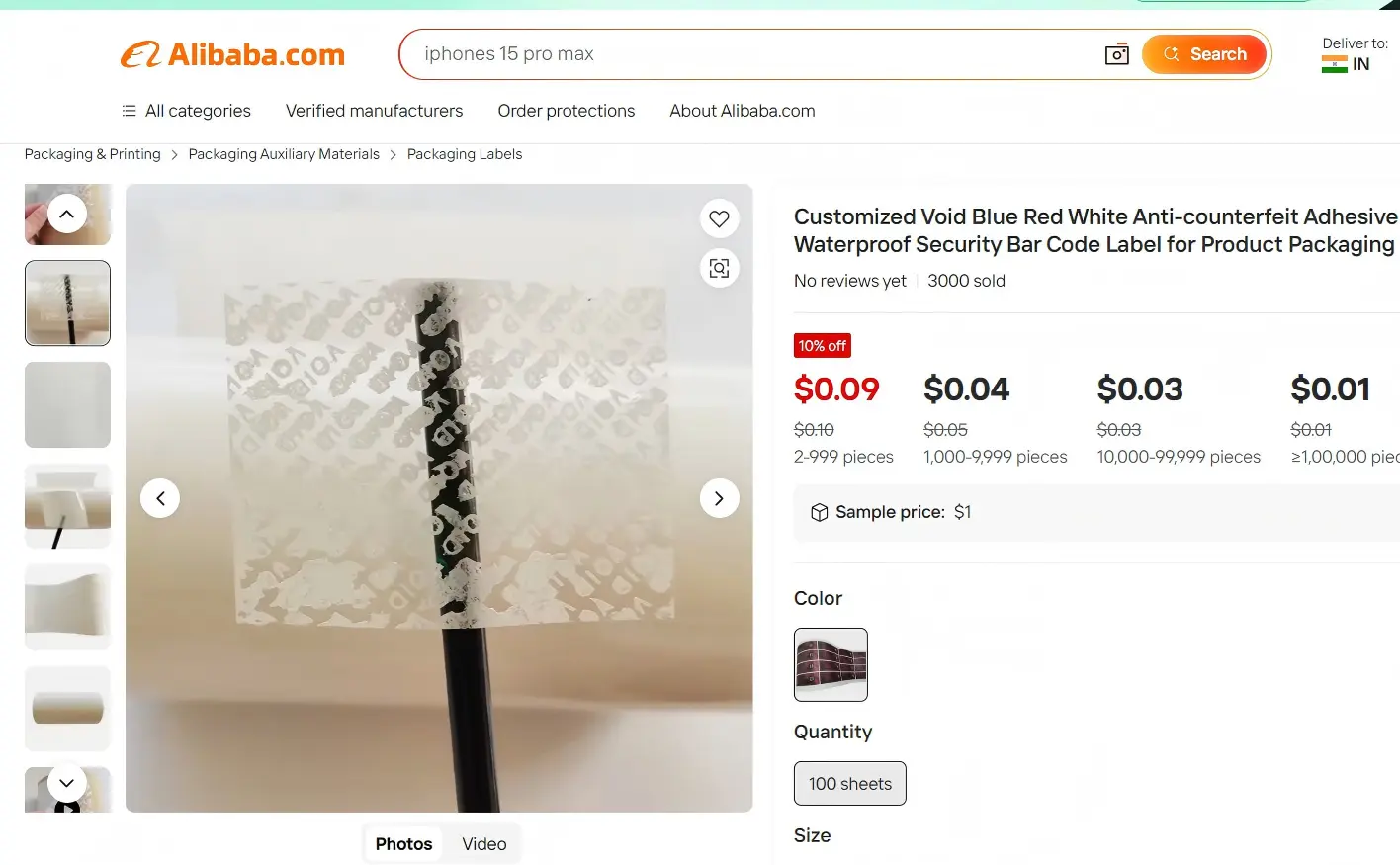
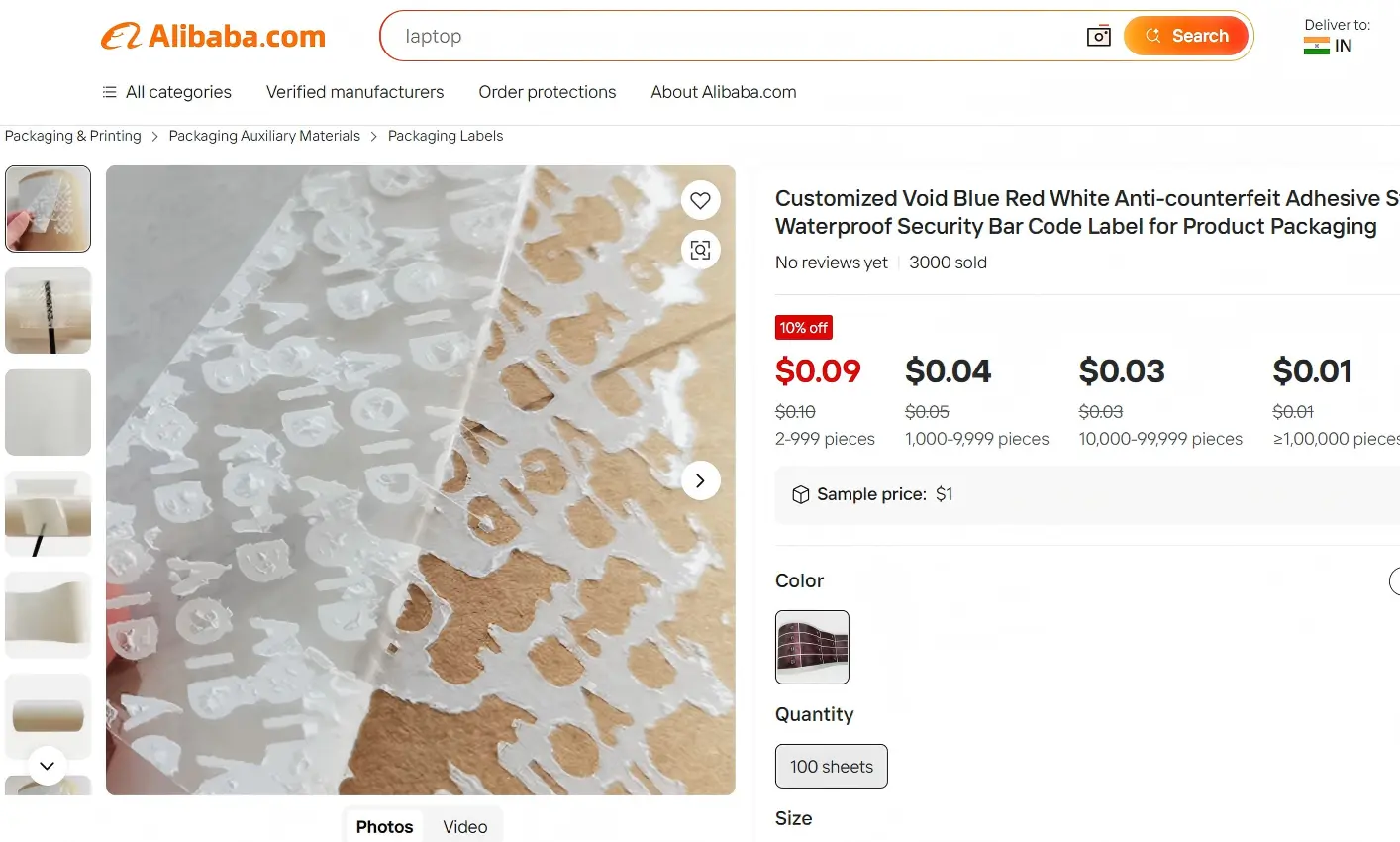
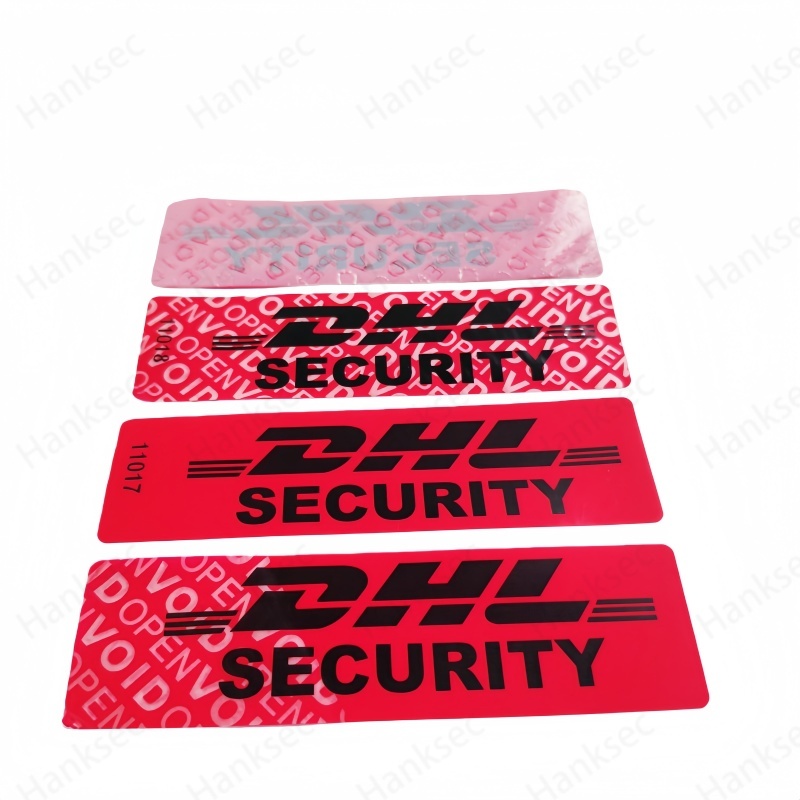
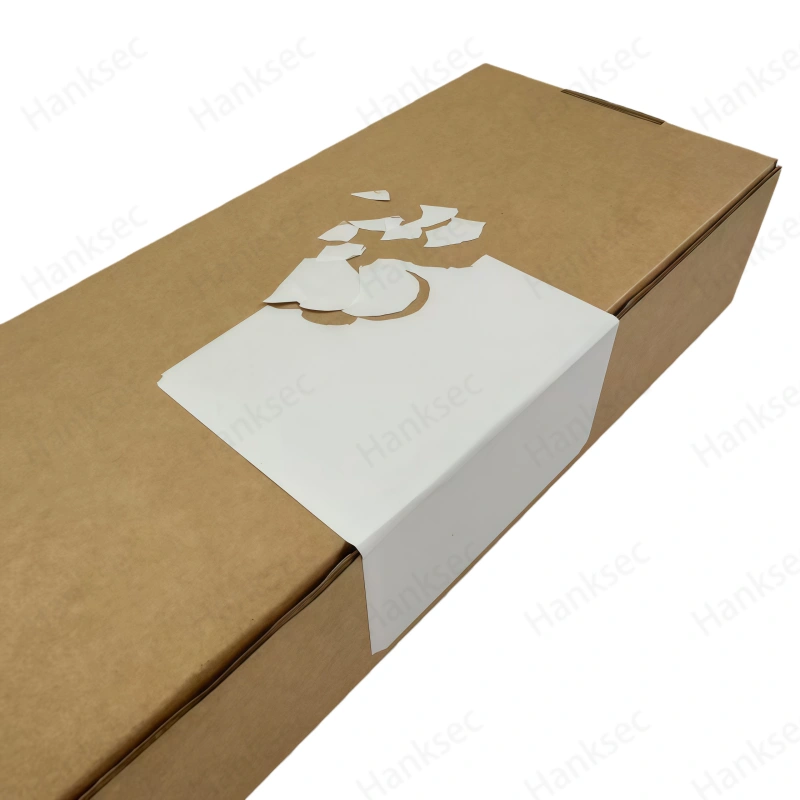
Budget-Void-Etikettenmaterial mit ungleichmäßigem Ablöseeffekt auf der Verpackungsoberfläche
Bei einigen minderwertigen Marktmustern kann ein sichtbarer VOID-Effekt auftreten, jedoch sind die Rückstandsränder, die Verständlichkeit der Botschaft, das Klebeverhalten und das Oberflächenbild möglicherweise nicht stabil genug für professionelle Markenschutzanwendungen.
Häufige Probleme bei minderwertigen Sicherheitsetikettenmaterialien
Minderwertige Sicherheitsetikettenmaterialien weisen oft Mängel auf, die vor dem Kauf nicht erkennbar sind.
1. Unklare VOID-Meldung
Die VOID-Meldung kann zu schwach, zu stark, verschwommen, unvollständig oder ungleichmäßig erscheinen. Dadurch wird die Möglichkeit eingeschränkt, eindeutige Manipulationsspuren nachzuweisen.
2. Zufällige Klebstoffreste
Statt einer kontrollierten Botschaft kann der Klebstoff unkontrolliert einreißen und unschöne Stellen hinterlassen. Dies wirkt unprofessionell und erfüllt möglicherweise nicht die Anforderungen an den Markenschutz.
3. Schwache Haftung
Das Etikett haftet möglicherweise nicht ausreichend fest auf Kartons, Kunststoffen, beschichteten Schachteln oder anderen Verpackungsoberflächen. Lässt sich das Etikett ohne eindeutige Beweise entfernen, wird die Sicherheitsfunktion beeinträchtigt.
4. Kantenanhebung
Mangelhafte Haftung oder unzureichende Materialspannung können dazu führen, dass sich die Kanten nach dem Anbringen ablösen. Dies beeinträchtigt sowohl das Aussehen als auch die Sicherheit.
5. Schlechte Druckleistung
Die Tinte kann abkratzen, abblättern, verblassen oder sich nicht richtig mit der Deckschicht verbinden. Dies ist besonders problematisch bei Barcode-Etiketten, QR-Codes, Markenlogos und variablen Datendrucken.
6. Stanzabfall
Instabile Trägermaterialien und Oberflächenmaterialien können während der Weiterverarbeitung zu Schwierigkeiten bei der Abfallentsorgung, zum Einreißen der Trägermaterialien oder zum Ablösen der Etiketten führen.
7. Geringe Alterungsresistenz
Manche Materialien erscheinen zunächst akzeptabel, versagen jedoch nach Lagerung, Transport, Hitze, Feuchtigkeit oder UV-Bestrahlung. FINAT umfasst Testkategorien wie beschleunigte Alterung und UV-Beständigkeit und zeigt damit, dass die Langzeitstabilität ein wichtiger Bestandteil der Bewertung von Selbstklebematerialien ist.
8. Inkonsistente Chargenqualität
Eine Rolle kann funktionieren, die nächste hingegen nicht. Für die B2B-Produktion stellt dies ein ernstzunehmendes Risiko dar.
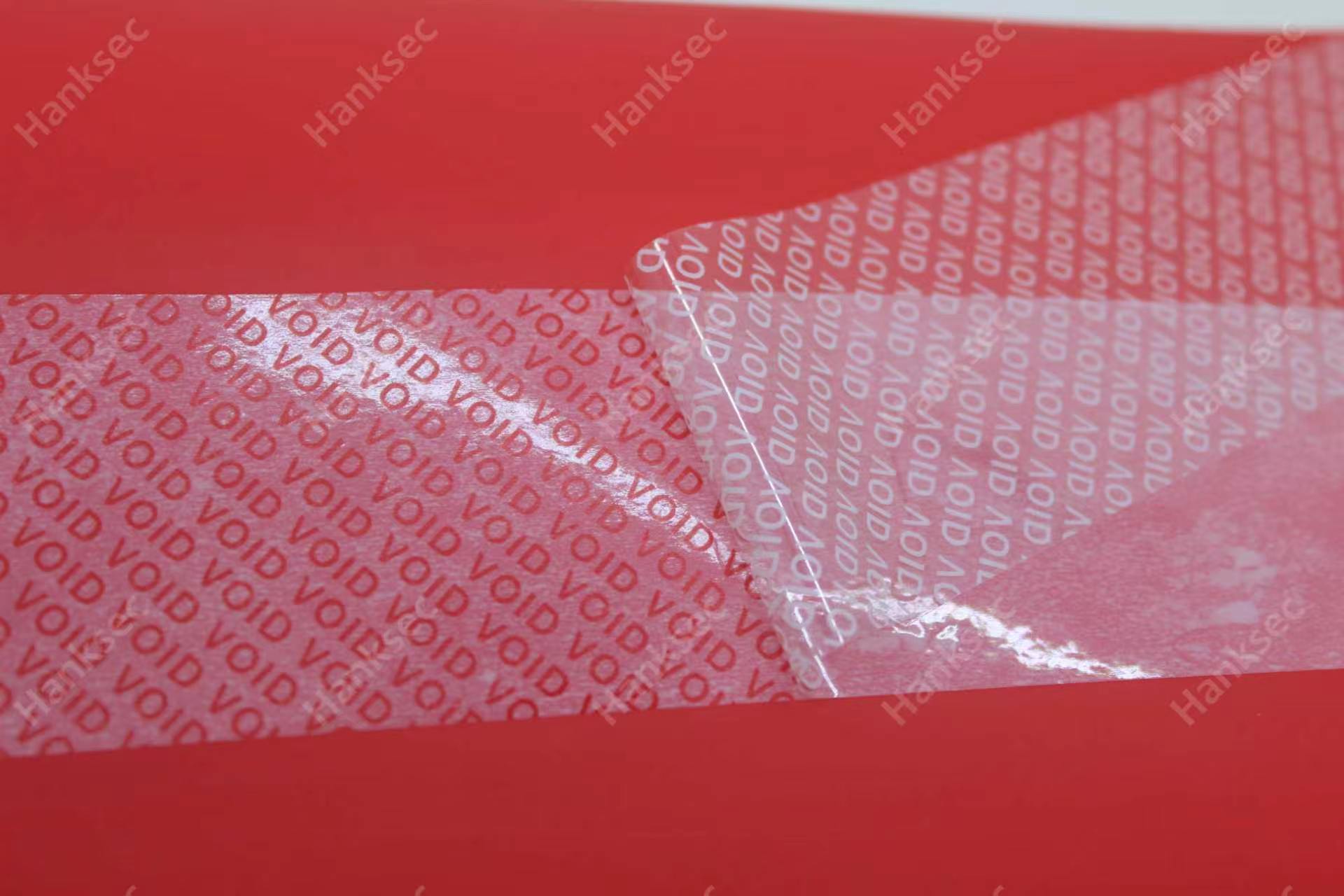
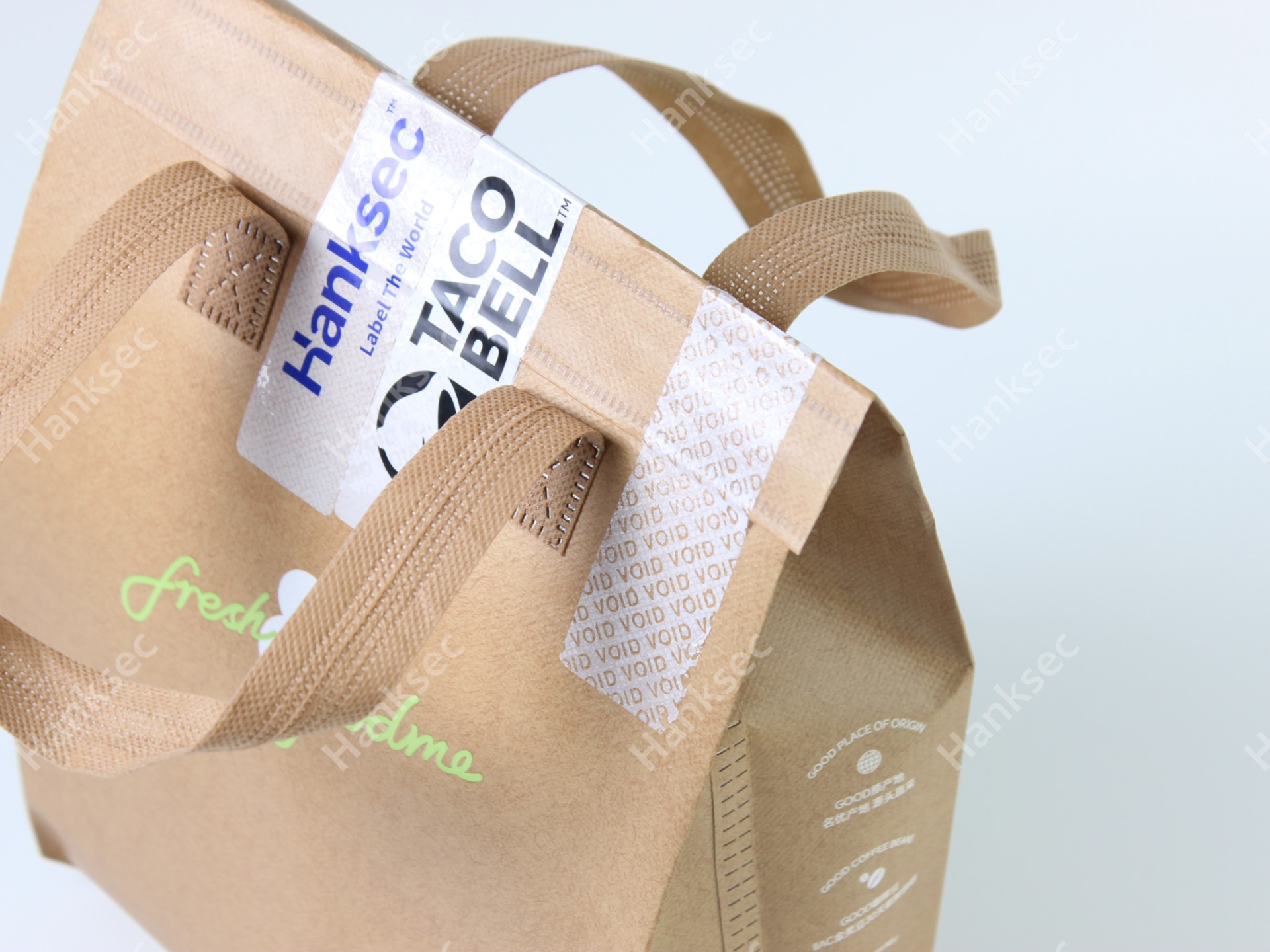
Manipulationssicheres VOID-Etikett, das auf Einzelhandelsverpackungen zum Schutz der Marke angebracht wird.
Warum sich die Marktanforderungen ständig ändern
Materialien für Sicherheitsetiketten können nicht ewig gleich bleiben. Die Marktanforderungen ändern sich ständig, da sich Verpackung, Logistik, Druckverfahren, Fälschungsmethoden und Verpackungsvorschriften weiterentwickeln. In Europa EU-Verordnung über Verpackungen und Verpackungsabfälle (PPWR), Verordnung (EU) 2025/40Die Aufmerksamkeit für Verpackungsdesign, Materialverträglichkeit und Recyclingfähigkeit nimmt zu. Diese Entwicklungen steigern auch das Interesse an paper VOID labels und andere Sicherheitskonstruktionen, die für Kartons und Verpackungssysteme auf Papierbasis entwickelt wurden. Anwendungen mit höherem Risiko kann auch erfordern Hitzebeständiger, manipulationssicherer Aufkleber Materialien, die entwickelt wurden, um bei thermischen Angriffen sichtbare Spuren von Manipulationen zu erhalten.
Heutige Kunden benötigen möglicherweise:
- Sauberere, rückstandsfreie Etiketten für Elektronik
- Stärkere Transferetiketten für mehr Kartonsicherheit
- Teilweise übertragene Etiketten für ein ausgewogenes visuelles Erscheinungsbild
- Benutzerdefiniertes Logo VOID-Nachrichten
- QR-Code- oder Barcode-Integration
- Kompatibilität mit Digitaldruck
- Bessere Leistung bei beschichteten Boxen
- Bessere Haftung auf energiearmen Kunststoffen
- Stabilere Leistung in heißen und feuchten Klimazonen
- Sicherheitsbänder für E-Commerce-Verpackungen
- Zerstörbare Etiketten zum Schutz der Garantie
- Sicherheitsmaterialien auf Papierbasis für nachhaltige Verpackungen
Deshalb kann ein starker Lieferant nicht nur eine einzige, feste Rezeptur anbieten. Ein professioneller Hersteller muss seine Materialsysteme kontinuierlich an das Marktfeedback anpassen.
Ein Etikettenhersteller benötigt beispielsweise eine verbesserte Oberflächenbeschichtung für den Digitaldruck. Ein Verpackungsunternehmen benötigt möglicherweise eine stärkere Haftung auf Recyclingkartons. Ein Markeninhaber benötigt unter Umständen eine bessere Anti-Abfärbe-Wirkung auf hochwertigen Elektronikprodukten. Ein Händler benötigt möglicherweise einen ausreichenden Lagerbestand für schnelle Lieferungen. Jede Marktanforderung beeinflusst die Materialentwicklung.
Das ist der wahre Wert eines Herstellers von technischen Sicherheitsetikettenmaterialien.
Warum hochwertige Materialien die Gesamtkosten senken
Minderwertige Materialien mögen pro Stück günstiger erscheinen, doch die tatsächlichen Kosten für B2B-Kunden umfassen mehr als nur den Stückpreis.
Die Gesamtkosten beinhalten:
- Probenprüfungszeit
- Fehlgeschlagene Druckversuche
- Stanzabfall
- Maschinenstillstand
- Nacharbeitskosten
- Kundenbeschwerden
- Verzögerte Lieferung
- Wiederholungstest
- Das Vertrauen der Markeninhaber ist verloren gegangen.
- Verpasste Marktchancen
Ein Sicherheitsetikettenmaterial, das während der Produktion versagt, kann viel mehr kosten als die Preisdifferenz zwischen einem minderwertigen und einem Premiumprodukt.
Für Etikettenhersteller ist Produktionseffizienz entscheidend. Führt ein Material zu instabiler Ablösung, schwieriger Abfallentsorgung oder mangelhafter Druckhaftung, verliert der Hersteller Zeit und Geld. Für Händler kann schwankende Qualität die Kundenbeziehungen schädigen. Für Markeninhaber kann ein unklarer Originalitätsnachweis die Schutzwirkung der Verpackung beeinträchtigen.
Hochwertige Materialien tragen dazu bei, diese versteckten Kosten zu reduzieren.
Aus diesem Grund sollten professionelle Einkäufer Sicherheitsetikettenmaterialien nicht nur nach dem Preis, sondern auch nach der Systemleistung bewerten.
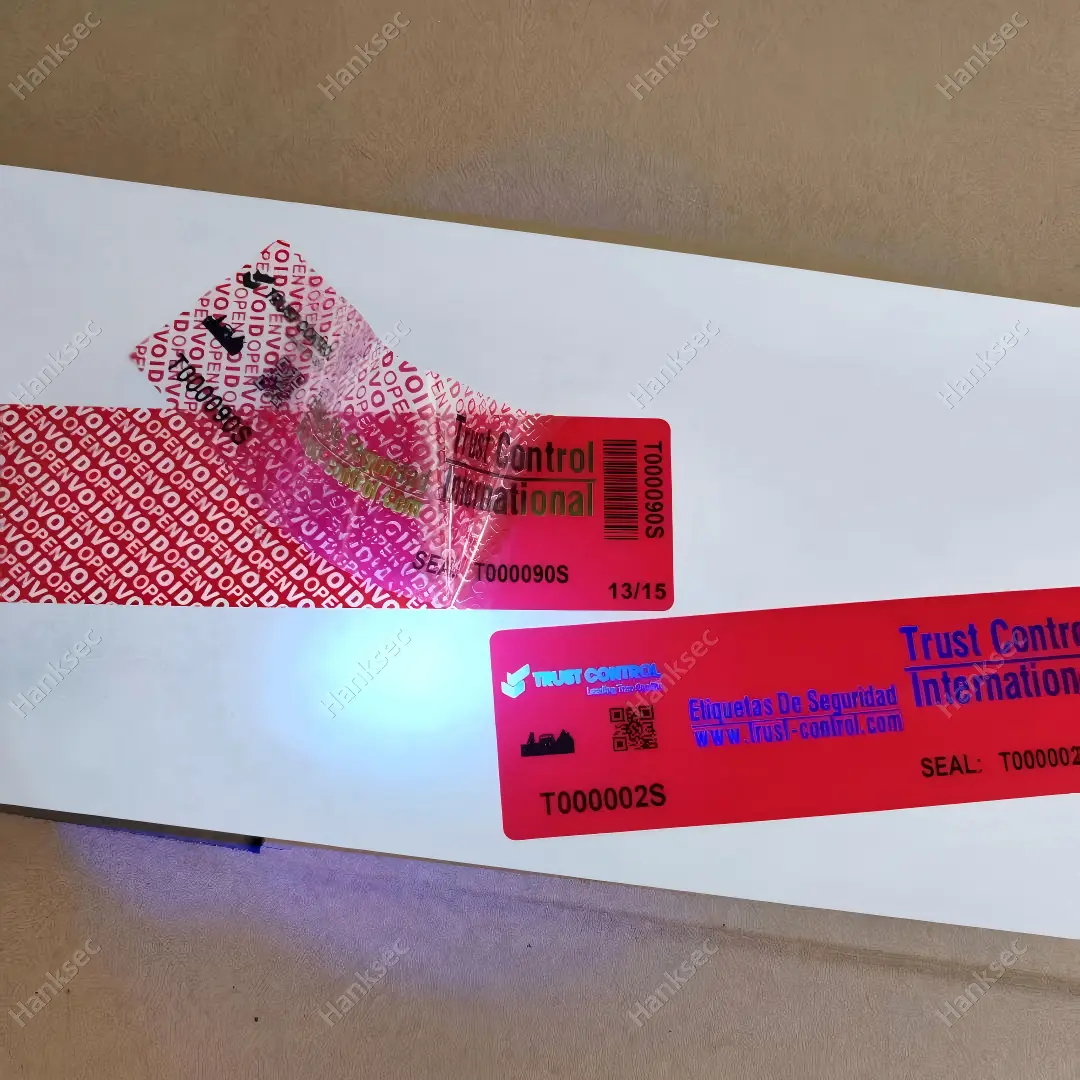
Prüfung und Qualitätskontrolle von Sicherheitsetikettenmaterialien
Sicherheitsetikettenmaterialien sollten als Gesamtsystem bewertet werden und nicht nur dadurch, dass geprüft wird, ob bei einer Abziehdemonstration eine VOID-Meldung erscheint.
Vor der Serienproduktion sollten Käufer Folgendes prüfen:
Substratkompatibilität — Testen Sie das Material auf der tatsächlichen Oberfläche von Karton, Kunststoff, Metall, Glas oder beschichteter Oberfläche.
Schälhaftung — bestätigen, dass der Klebstoff eine geeignete Verbindung herstellt, ohne die erforderliche Manipulationssicherheit zu beeinträchtigen.
Klarheit der Sicherheitsbotschaft — Prüfen Sie, ob das ausgeblendete Muster VOID, OPENED oder ein benutzerdefiniertes Muster deutlich und konsistent angezeigt wird.
Leistung der Trennfolie — Bewertung der Ablösung der Trägerfolie während des Stanzens, des Abstreifens der Matrize und der automatischen Dosierung.
Druck- und Konvertierungskompatibilität — Überprüfung der Tintenhaftung, Kratzfestigkeit, Stanzstabilität und Aufwickelleistung.
Umweltstabilität — Temperatur, Luftfeuchtigkeit, Lagerung und Alterung bewerten, wenn diese Bedingungen relevant sind.
Chargenkonsistenz — Vergleichen Sie Proben von verschiedenen Walzen oder Produktionschargen, um die Wiederholbarkeit der Leistung zu bestätigen.
Warum „wasserdicht“ allein die Leistungsfähigkeit eines Sicherheitsetiketts nicht definiert
Viele Billiganbieter verwenden pauschale Aussagen wie „wasserdicht“, „fälschungssicher“, „Barcode-Sicherheitslabel“ oder „individuell gestaltetes VOID-Label“. Diese Begriffe mögen zwar Aufmerksamkeit erregen, erklären aber nicht die tatsächliche Leistung.
Für professionelle Käufer sind die wichtigen Fragen spezifischer:
Ist das Material für meine Verpackungsoberfläche geeignet?
Kann es mit meinen Geräten gedruckt werden?
Lässt es sich stanzen, ohne dass sich die Kanten ablösen?
Funktioniert es auch nach längerem Alter?
Bleibt der VOID-Effekt nach der Lagerung stabil?
Ist der Klebstoff temperaturbeständig und hält Transport und Temperaturschwankungen stand?
Lässt sich die Nachricht anpassen, ohne die Stabilität zu beeinträchtigen?
Kann der Lieferant die gleiche Qualität auch bei Großbestellungen gewährleisten?
Ein qualitativ hochwertiger Hersteller sollte in der Lage sein, diese Fragen mit technischer Logik zu diskutieren, nicht nur mit einem niedrigen Preis.
Sicherheitsetikettenmaterial ist ein Lösungsprodukt, kein Massenprodukt.
Wie Hanksec die Leistung von Sicherheitsetikettenmaterialien kontrolliert
Hanksec konzentriert sich auf Sicherheitsetikettenmaterialien und VOID-Etikettenmaterialien. zerstörbare Etikettenmaterialien, SicherheitsbänderSicherheitsklebebänder für Beutel und fälschungssichere Verpackungslösungen. Mit langjähriger Produktionserfahrung, Hanksec versteht, dass eine stabile Manipulationssicherheit von einer kontrollierten Materialentwicklung abhängt.
Zu den wichtigsten Kontrollbereichen gehören:
1. Steuerung der Schichtstruktur
Jede Schicht muss entsprechend der gewünschten Manipulationssicherheit ausgelegt sein. Materialien mit vollständiger, teilweiser oder gar keiner Übertragung erfordern unterschiedliche Systemausrichtungen. Die Schicht mit der versteckten Botschaft, die Trägerschicht, der Klebstoff und die Trennfolie müssen optimal aufeinander abgestimmt sein.
2. Klebstoffanpassung
Unterschiedliche Oberflächen erfordern unterschiedliches Klebeverhalten. Kartons, beschichtete Papierboxen, Kunststoff, Metall, Glas, Elektronikgehäuse und stoffähnliche Oberflächen können jeweils unterschiedliche Klebestrategien erfordern.
3. Kontrolle der Nachrichtenklarheit
Die verborgene VOID-Botschaft muss vor Gebrauch kontrolliert werden und nach dem Abziehen deutlich sichtbar sein. Hochwertige Materialien verhindern zufälliges Einreißen, schwache Übertragung, verschwommene Rückstände oder unkontrollierte Klebestellen.
4. Kompatibilität beim Drucken und Weiterverarbeiten
B2B-Kunden benötigen häufig Druck-, Schneide-, Stanz-, Aufwickel- und automatische Etikettierfunktionen. Daher muss die Materialqualität für reale Verarbeitungsprozesse geeignet sein.
5. Chargenkonsistenz
Eine kleine Probe reicht nicht aus. Das Material muss in der Serienproduktion stabil bleiben. Gleichbleibende Qualität von Rolle zu Rolle ist eines der wichtigsten Kennzeichen eines professionellen Lieferanten.
6. Anwendungstests
Sicherheitsetikettenmaterialien sollten nach Möglichkeit auf realen Anwendungsflächen getestet werden. Dasselbe Material kann sich auf Kraftpapier, beschichteten Kartons, Kunststofffolie, lackiertem Metall, Glas oder strukturierten Oberflächen unterschiedlich verhalten.
7. Marktbasierte Anpassung
Hanksec passt die Systeme für Sicherheitsetikettenmaterialien kontinuierlich an Kundenanwendungen, Marktanforderungen, Druckverfahren und Verpackungsänderungen an.
Hier beginnt die eigentliche Technologie zur Bekämpfung von Produktfälschungen.
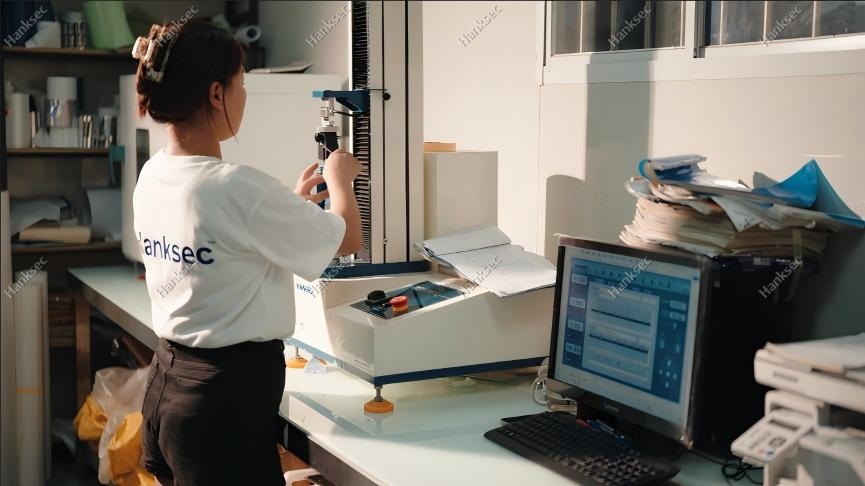
Anwendungen von Sicherheitsetikettenmaterialien nach Branche und Oberfläche
Die Auswahl des Materials für Sicherheitsetiketten sollte sowohl den Branchenanforderungen als auch den tatsächlichen Oberflächeneigenschaften entsprechen. Dieselbe manipulationssichere Konstruktion kann sich auf Glas, PET, PP, PE, lackiertem Metall und beschichteten Kartons unterschiedlich verhalten, da Oberflächenenergie, Rauheit und Beschichtungen das Benetzungs- und Ablöseverhalten des Klebstoffs beeinflussen.
| Branche / Anwendung | Typische Sicherheitsanforderung | Übliche Materialrichtung |
|---|---|---|
| Elektronik & Garantie | Beweise für unbefugtes Öffnen oder unbefugten Zugriff auf Komponenten | Nicht übertragbare, ungültige, zerstörbare oder spezielle Garantiekonstruktionen |
| Verpackung & Logistik | Sichtbare Anzeichen für eine Öffnung an Kartons, Säcken oder Schachteln | Voll- oder Teilübertragung von VOID-Materialien |
| Pharmazeutische Sekundärverpackung | Beweise für das Öffnen von Verpackungen und kontrollierte Identifizierung | Anwendungsspezifische, manipulationssichere Materialien, validiert an realen Verpackungen |
| Kosmetik & Luxusgüter | Manipulationssicherheit plus sichtbare Authentifizierung | VOID-, holographische oder kombinierte Sicherheitskonstruktionen |
| Anlagen- und Geräteschutz | Diebstahlschutz, Garantie- und Servicezugangskontrolle | Zerstörbare, ungültige oder serialisierte Sicherheitsetiketten |
Bei der Auswahl von Sicherheitsetiketten für Arzneimittelverpackungen müssen gegebenenfalls auch marktspezifische Anforderungen an die Manipulationssicherheit berücksichtigt werden. ISO 21976:2018 Die Richtlinie enthält Anforderungen und Leitlinien für die Anwendung, Verwendung und Überprüfung von Manipulationssicherungen an Arzneimittelverpackungen. Die endgültige Materialauswahl sollte daher mit der tatsächlichen Verpackungskonstruktion und den geltenden regulatorischen Anforderungen abgeglichen werden.
| Anwendungsfläche | Typische Überlegungen |
|---|---|
| Glas | Klebstoffbenetzung, Einwirkzeit und gewünschtes Rückstandsverhalten |
| PET / PC / ABS | Oberflächenbeschichtung, Sauberkeit und erforderliches Ansprechverhalten bei Manipulationen |
| PP / PE | Eine geringere Oberflächenenergie erfordert oft eine genauere Klebstoffqualifizierung. |
| Lackiertes oder beschichtetes Metall | Beschichtungsverträglichkeit, Temperatur und Ablöseerscheinungsbild |
| Beschichteter Karton / Pappe | Faserstruktur, Lack oder Beschichtung können die Haftung und den Transfer beeinflussen. |
Detaillierte Informationen zur Substrat- und Klebstoffqualifizierung finden Sie in der Dokumentation von Hanksec. Leitfaden für Klebstoffe von manipulationssicheren Etiketten.
Wie man das richtige Sicherheitsetikettenmaterialsystem auswählt
Es gibt kein einziges Sicherheitsetikettenmaterial, das für jede Anwendung perfekt geeignet ist.
Ein guter Lieferant sollte Kunden bei der Auswahl des richtigen Materials unterstützen gemäß:
- Surface type
- Residue requirement
- Sicherheitsstufe
- Druckverfahren
- Label size
- Verpackungsmaterial
- Anwendungstemperatur
- Speicherumgebung
- Erforderlicher visueller Effekt
- Markenanpassungsbedarf
- Automatischer oder manueller Etikettierungsprozess
Zum Beispiel:
Vollflächige VOID-Materialien eignen sich, wenn ein starker, sichtbarer Rückstand auf der behandelten Oberfläche erwünscht ist.
VOID-Materialien mit partieller Übertragung eignen sich, wenn Kunden sowohl Manipulationssicherheit als auch ein ausgewogeneres Erscheinungsbild benötigen.
Nicht abfärbende VOID-Materialien eignen sich, wenn die zu behandelnde Oberfläche sauber bleiben muss, wie z. B. bei Elektronik, zum Schutz von Kameraobjektiven, bei hochwertigen Verpackungen oder bei der Steuerung wiederverwendbarer Geräte.
Zerstörbare Materialien eignen sich, wenn nach der Entnahme eine physische Zerstörung erforderlich ist.
Sicherheitsklebebänder eignen sich für Kartons, Umschläge, Logistikboxen und E-Commerce-Verpackungen.
Wasserempfindliche Etiketten eignen sich für den Garantieschutz von Elektronikgeräten und zur Feuchtigkeitsanzeige.
Hochtemperaturwerkstoffe eignen sich für industrielle und elektronische Fertigungsumgebungen.
Die anwendungsbasierte Auswahl ist eine der wichtigsten Methoden, um die Testkosten zu senken und den Kundenerfolg zu steigern.
Wie man einen Lieferanten von Sicherheitsetikettenmaterial bewertet
Professionelle Einkäufer sollten Lieferanten nicht allein anhand des Preises oder von Produktfotos bewerten. Ein zuverlässiger Lieferant zeichnet sich vielmehr durch technische Kompetenz, gleichbleibende Produktionsqualität und Anwendungsunterstützung aus.
Hier sind wichtige Fragen, die Sie sich stellen sollten:
Kann der Lieferant die Materialstruktur erläutern?
Können sie Optionen für einen vollständigen Transfer, einen teilweisen Transfer und einen Nicht-Transfer anbieten?
Können sie benutzerdefinierte, versteckte Nachrichten unterstützen?
Können sie Materialien je nach Oberflächenart empfehlen?
Können sie Rollenmaterialien für Etikettenhersteller liefern?
Können sie die Anforderungen an Druck und Stanzung erfüllen?
Können sie das Klebeverhalten erklären?
Können sie eine gleichbleibende Chargenqualität gewährleisten?
Können sie bei OEM- und ODM-Anpassungen helfen?
Können sie Proben zum Testen bereitstellen?
Können sie die Materialien anhand von Marktrückmeldungen anpassen?
Ein Lieferant, der lediglich ein billiges Muster anbietet, kann reale Produktionsprobleme möglicherweise nicht lösen. Ein professioneller Hersteller sollte verstehen, wie sich das Material in der tatsächlichen Produktions- und Anwendungsumgebung des Kunden verhält.
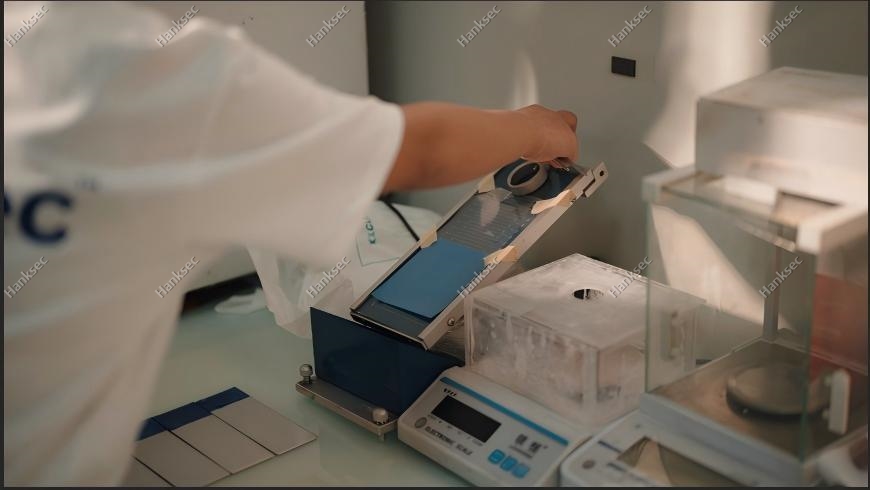
Wie Sicherheitsetikettenmaterialien für verschiedene B2B-Käufer Mehrwert schaffen
Für B2B-Kunden schaffen hochwertige Sicherheitsetikettenmaterialien auf vielfältige Weise einen Mehrwert.
Für Etikettenhersteller
Sie reduzieren den Ausschuss bei Probedrucken, verbessern die Druckleistung, unterstützen ein stabiles Stanzen und helfen Verarbeitern, ihren Kunden höherwertige Sicherheitsetiketten anzubieten.
Für Verpackungsunternehmen
Sie verbessern die Verpackungssicherheit, verringern das Risiko unbefugten Öffnens und liefern sichtbare Nachweise für Kartons, Beutel, Schachteln und Umschläge.
Für Vertriebspartner
Sie bieten eine stabilere Produktqualität, weniger Probleme nach dem Kauf und eine stärkere Marktpositionierung im Vergleich zu kostengünstigen Standardmaterialien.
Für Markeninhaber
Sie unterstützen Markenschutz, Produktauthentifizierung, Gewährleistungsabwicklung und Kundenvertrauen.
Für Anbieter von Sicherheitslösungen
Sie bilden die materielle Grundlage für maßgeschneiderte Fälschungsschutzsysteme, einschließlich VOID-Meldungen, Seriennummern, Barcodes, QR-Codes, holografischer Effekte und spezieller Sicherheitsmerkmale.
Deshalb sollte der Wert eines Sicherheitsetikettenmaterials nicht allein am Preis gemessen werden. Er sollte vielmehr an seiner Fähigkeit beurteilt werden, Risiken zu minimieren und eine zuverlässige Sicherheitsleistung zu gewährleisten.
Was Etikettenhersteller und Käufer vor der Anforderung von Mustern senden sollten
Um ein besser geeignetes Sicherheitsetikettenmaterialsystem empfehlen zu können, sollte der Lieferant vor der Mustererstellung die tatsächlichen Anwendungs- und Verarbeitungsanforderungen des Käufers verstehen.
- Anwendungsfläche oder tatsächliche Substratprobe
- Erforderliche Manipulationsreaktion
- Vollständig übertragbare, teilweise übertragbare, nicht übertragbare oder zerstörbare Präferenz
- Druckverfahren
- Abmessungen des fertigen Etiketts
- Erforderliche Rollenbreite, Rollenlänge, Kern und Wickelrichtung
- Anforderung an Trennfolie
- Informationen zur Umwandlung oder Kennzeichnung von Maschinen
- Anwendungs- und Betriebstemperatur
- Lagerung, Luftfeuchtigkeit oder besondere Umgebungsbedingungen
- Geschätzte Probe- und Bestellmenge
Die Bereitstellung dieser Informationen vor der Probenahme kann unnötige Versuche reduzieren und dem Lieferanten helfen, die Anforderungen an Material, Klebstoff, Auskleidung und Weiterverarbeitung als ein System zu bewerten.
Fordern Sie Materialprüfungen und technische Empfehlungen von Hanksec an.
Häufig gestellte Fragen zu Sicherheitsetikettensystemen
1. Was ist ein Sicherheitsetikettenmaterialsystem?
Ein Sicherheitsetikettenmaterialsystem ist ein mehrlagiges Etikettenmaterial Es ist so konzipiert, dass es bei einem Entfernungs- oder unbefugten Öffnungsversuch sichtbare Spuren von Manipulationen aufweist. Es besteht üblicherweise aus einem Oberflächenmaterial, einer Schicht mit versteckter Botschaft, Klebstoff, Trägerschicht und Trennfolie.
2. Wie funktioniert ein/e VOID-Etikettenmaterial arbeiten?
Das Material eines VOID-Etiketts funktioniert durch kontrollierte Schichttrennung. Beim Entfernen des Etiketts bricht die verborgene Nachrichtenschicht auf oder verschiebt sich auf eine bestimmte Weise und gibt so eine VOID-, OPEN VOID- oder eine individuell angepasste Sicherheitsnachricht frei.
3. Warum benötigen Sicherheitsetiketten mehrere Ebenen?
Sicherheitsetiketten benötigen mehrere Schichten, da jede Schicht eine andere Funktion steuert, darunter Druck, Aussehen, Informationsdarstellung, Klebeverbindung, Rückstandsübertragung, Stanzen und Ablöseleistung.
4. Warum versagen minderwertige Sicherheitsetikettenmaterialien?
Minderwertige Materialien versagen oft, weil die Schichten für die verdeckte Nachricht, den Klebstoff, die Trägerschicht und die Trennfolie nicht optimal aufeinander abgestimmt sind. Dies kann zu unscharfen Nachrichten, schwacher Haftung, unvorhergesehenen Rückständen, schlechtem Druck oder instabilen Eigenschaften nach der Lagerung führen.
5. Worin besteht der Unterschied zwischen VOID-Materialien mit vollständigem Transfer, teilweisem Transfer und ohne Transfer?
Vollflächige Transfermaterialien belassen die Sicherheitsbotschaft hauptsächlich auf der Oberfläche. Teilflächige Transfermaterialien verteilen die Botschaft zwischen Etikett und Oberfläche. Nicht-transferierende Materialien zeigen Spuren auf dem Etikett, halten die Oberfläche aber sauberer.
6. Warum ist Klebstoff bei manipulationssicheren Etiketten wichtig?
Der Klebstoff steuert Haftung, Ablösekraft, Rückstandsverhalten, Oberflächenverträglichkeit und Langzeitstabilität. Bei instabilem Klebstoff kann die Originalitätssicherung beeinträchtigt werden.
7. Können die Materialien für die Sicherheitsetiketten individuell gestaltet werden?
Ja. Sicherheitsetikettenmaterialien können mit verschiedenen versteckten Botschaften, Farben, Oberflächenmaterialien, Klebstoffen, Transfereffekten, Rollengrößen und Druckanforderungen individuell gestaltet werden.
8. Wie sollten Käufer einen Lieferanten für Sicherheitsetikettenmaterialien auswählen?
Käufer sollten einen Lieferanten wählen, der über Erfahrung in der Materialentwicklung, stabile Produktionskapazitäten, Unterstützung bei Anwendungstests, OEM- und ODM-Service sowie die Fähigkeit verfügt, eine gleichbleibende Chargenqualität zu gewährleisten.
9. Können Sicherheitsetikettenmaterialien in Jumbo-Rollen geliefert werden?
Ja. Sicherheitsetikettenmaterialien sind für Etikettenhersteller und Sicherheitsdruckereien als Jumbo- oder geschnittene Rollen sowie je nach Projekt als Bogen oder fertige Etiketten erhältlich. Rollenbreite, -länge, Kern, Wickelrichtung und Trägermaterial sind entsprechend der Ausstattung des Herstellers abzustimmen.
10. Welche Spezifikationen sollten Verarbeiter vor der Bestellung von Sicherheitsetikettenmaterialien angeben?
Verarbeiter sollten die erforderlichen Anforderungen an Manipulationssicherheit, Obermaterial, Dicke, Applikationsfläche, Druckverfahren, Etikettengröße, Rollenabmessungen, Trägermaterial, Klebstoff- und Temperaturvorgaben sowie relevante Maschineninformationen bereitstellen. Es wird empfohlen, das Material vor der Serienproduktion unter den tatsächlichen Verarbeitungs- und Anwendungsbedingungen zu testen.
Fazit: Die Leistungsfähigkeit von Sicherheitsetiketten hängt vom gesamten Materialsystem ab.
Materialien für Sicherheitsetiketten Es handelt sich nicht um gewöhnliche Klebeetiketten. Es sind speziell entwickelte Systeme, die unter realen Marktbedingungen kontrollierte Manipulationsnachweise erzeugen.
Ein Etikett mag von außen einfach aussehen, doch dahinter verbergen sich mehrere Schichten, die perfekt zusammenwirken müssen. Die Deckschicht beeinflusst den Druck. Das Oberflächenmaterial beeinflusst die Stabilität. Die Schicht mit der verborgenen Botschaft dient der Sicherheit. Die Farbschicht beeinflusst den Kontrast. Die Trägerschicht steuert das Übertragungsverhalten. Der Klebstoff bestimmt die Haftung und die Rückstandsfreiheit. Die Trennfolie beeinflusst das Stanzen und die Produktionseffizienz.
Wenn diese Schichten nicht ordnungsgemäß kontrolliert werden, mag das Material auf einem Produktfoto noch akzeptabel aussehen, aber es kann beim Drucken, Stanzen, Aufbringen, Lagern, Transportieren oder bei der Endverwendung versagen.
Dies ist der entscheidende Unterschied zwischen minderwertigen Marktmaterialien und hochwertigen Sicherheitsetikettensystemen.
Für Kunden bietet das richtige Sicherheitsetikettenmaterial mehr als nur die Anzeige einer UNGÜLTIGEN Botschaft. Es senkt die Testkosten, verbessert die Produktionseffizienz, stärkt den Markenschutz, reduziert Kundenreklamationen und unterstützt langfristiges Marktwachstum.
Hanksec entwickelt und passt Sicherheitsetikettenmaterialsysteme kontinuierlich an die sich ändernden Marktanforderungen an und hilft Etikettenherstellern, Verpackungsunternehmen, Händlern und Markeninhabern beim Aufbau zuverlässigerer manipulationssicherer und fälschungssicherer Verpackungslösungen.
Materialien für Sicherheitsetiketten sehen einfach aus.
Die eigentliche Technologie beginnt damit, sie stabil, wiederholbar und zuverlässig zu machen. Käufer, die benötigen Hanksec bietet fertige Rollen oder kundenspezifische Strukturen an. manipulationssichere VOID-Etikettenmaterialien für Anträge auf vollständige Übertragung, teilweise Übertragung und Anträge auf Nichtübertragung.