Quick Answer:
A security label material system is a multilayer construction in which the facestock, security or release coating, adhesive system and liner are engineered to work together and create controlled tamper evidence. High-quality tamper evident materials perform consistently because these functional layers are matched to the substrate, printing process, converting method and real application conditions.
Why Security Label Material Systems Are More Complex Than They Look
At first glance, a security label material may look like a simple adhesive film. It may appear to be only a transparent label, a printed VOID pattern, a pressure-sensitive adhesive, and a release liner. From the outside, many products in the market look similar. They may even be described with similar words: tamper evident label, anti-counterfeit adhesive label, security barcode label, VOID label material, waterproof security sticker, or packaging security seal.
However, the real performance of a security label does not come from appearance alone. It comes from a controlled multi-layer material system.
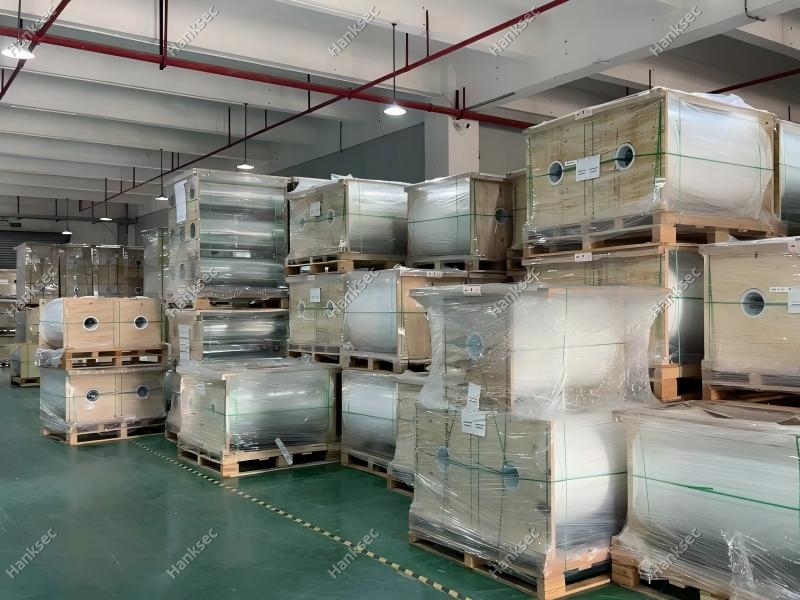
A high-quality security label material must balance surface coating, face film, hidden message layer, color layer, carrier layer, adhesive behavior, release liner performance, printing compatibility, die-cutting stability, aging resistance, and final application performance. If one layer is unstable, the entire tamper-evident effect may fail.
This is why security label materials look easy, but are not easy to manufacture well.
A low-grade market sample may show a visible VOID effect in one picture, but fail when used on real packaging surfaces, during printing, after die-cutting, during storage, or after exposure to heat, humidity, friction, or transportation pressure. A premium security label material must perform consistently from sample testing to mass production, from roll to roll, and from one application surface to another.
For buyers, label converters, packaging companies, security printers, distributors, and brand protection projects, the real question is not only: “Can this label show a VOID message?” The more important question is: “Can this material deliver stable, repeatable, and controlled tamper evidence under real market conditions?”
That is the key difference between a low-cost appearance product and a high-quality engineered security label material system.
Global counterfeiting remains a serious supply-chain and consumer-safety problem. OECD reported in 2025 that counterfeit goods accounted for an estimated USD 467 billion in global trade in 2021, based on the latest available data in the OECD–EUIPO study. This background explains why packaging security, authentication technologies, and tamper-evident materials are becoming increasingly important for brand owners and regulated industries.
What Is a Security Label Material System?
A security label material system is a multi-layer structure designed to reveal visible evidence when removal, opening, replacement, or tampering is attempted. Unlike ordinary pressure-sensitive labels, security label materials are not only used for decoration, identification, or barcode printing. They are designed to create a security response.
Core Structure of a Security Label Material System
| Layer | Function |
|---|---|
| Face Material | Provides printing surface and protection |
| Security Coating | Controls hidden message or security effect |
| Release Layer | Controls tamper activation behavior |
| Adhesive Layer | Creates substrate bonding |
| Release Liner | Protects adhesive before application |
For a deeper explanation of material construction and transfer behavior, see our VOID label material technical guide.
This response may include:
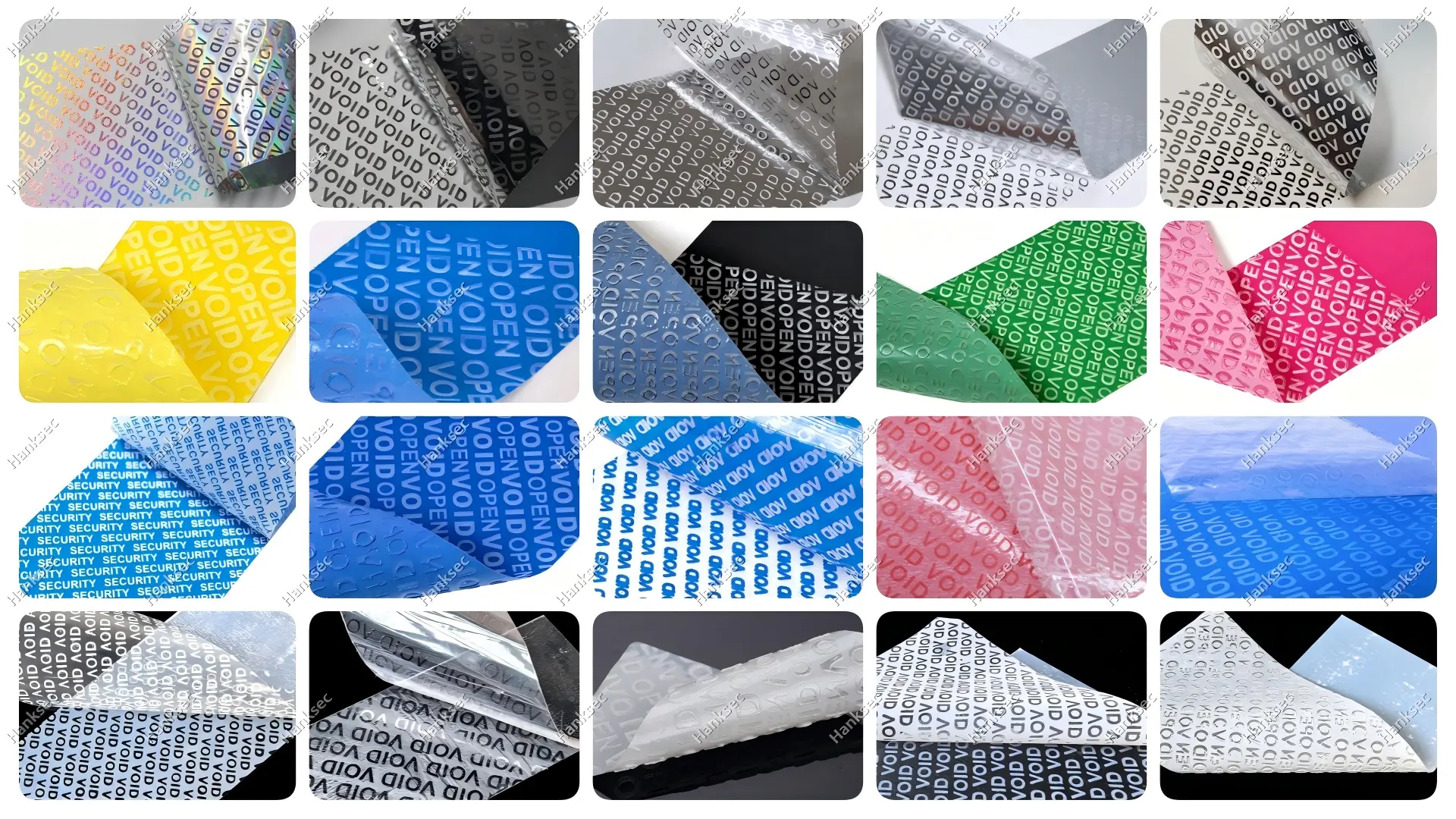
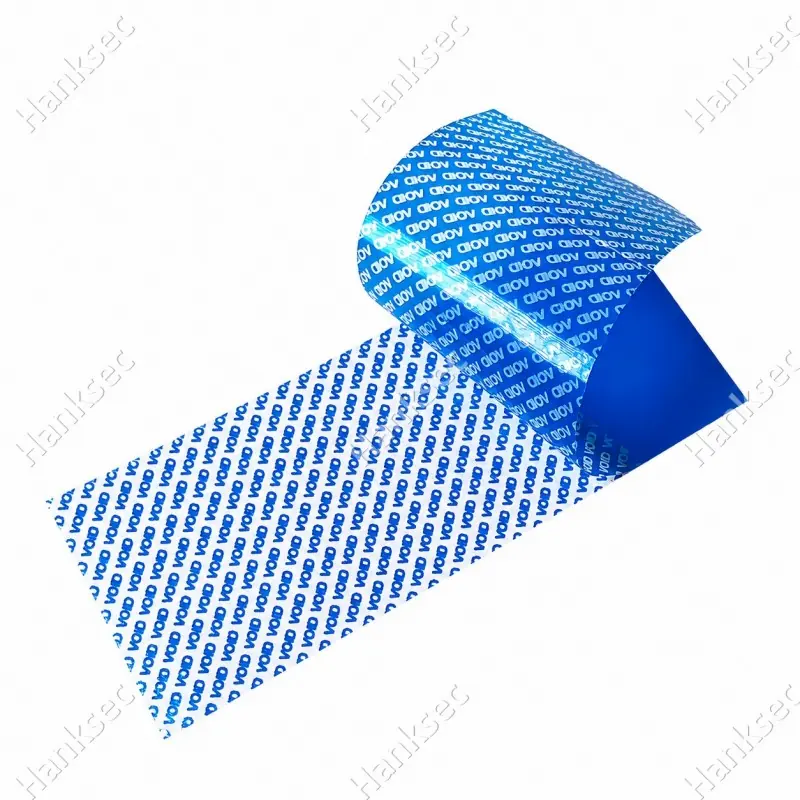
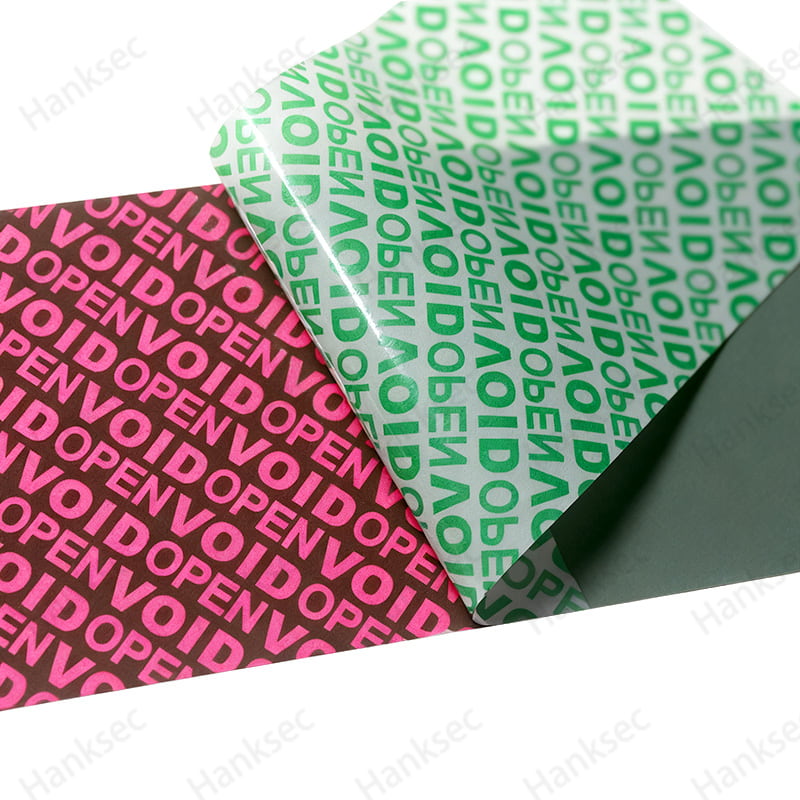
- A VOID or OPEN VOID message after peeling
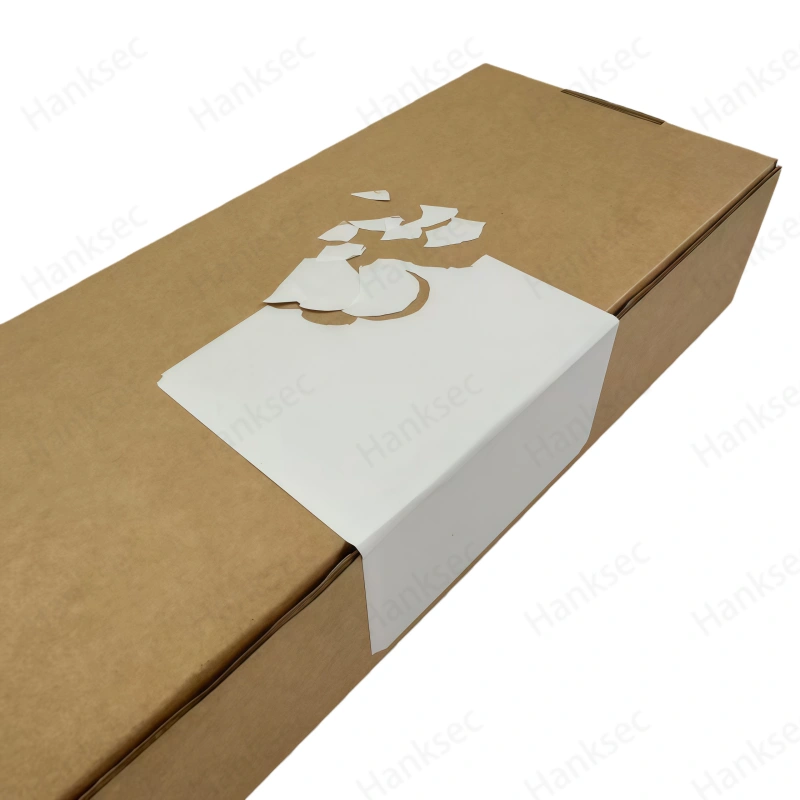
- A destroyed label surface
- Adhesive residue left on the applied surface
- A non-transfer effect with evidence remaining on the label
- A partial transfer effect between label and surface
- A full transfer message on the substrate
- A color-change or environmental indicator
- A customized hidden message, logo, pattern, serial number, QR code, or brand mark
A real security label material system must answer several technical questions at the same time:
Can the label bond properly to the target surface?
Can the hidden message remain invisible before use?
Can the message appear clearly after removal?
Can the adhesive behave in a controlled way?
Can the label be printed, slit, die-cut, rewound, and applied smoothly?
Can the material remain stable after storage, transportation, and climate changes?
Can the same effect be repeated in mass production?
This is why professional security label material manufacturing is not only a printing job. It is a material engineering process.
WIPO explains that authentication technologies can help examiners distinguish genuine products from counterfeits and that authentication devices may use multiple layers or combinations of overt, covert and forensic features. This supports the broader principle that effective anti-counterfeit protection often relies on layered security rather than a single visible feature.
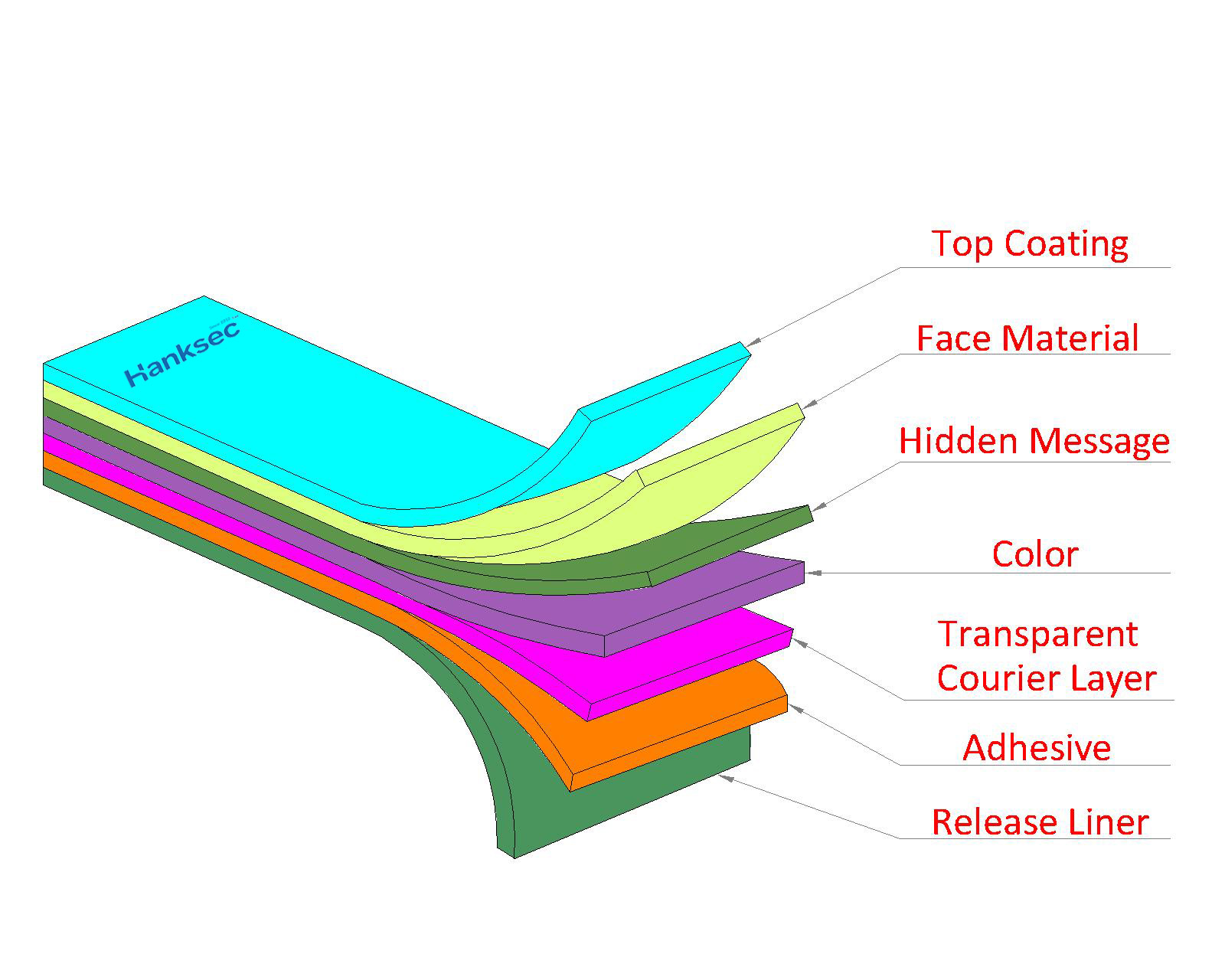
Security Label Material Structure: How Each Functional Layer Works
A typical tamper-evident security label material may include the following layers:
- Top coating
- Face material
- Hidden message layer
- Color layer
- Transparent carrier layer
- Adhesive
- Release liner
Each layer may look thin and simple, but each one affects final performance. The challenge is not only to combine these layers. The challenge is to make them work together in a controlled way. Controlled hidden-message structures are widely used in VOID anti-counterfeit labels to create visible and irreversible evidence after removal.
Top Coating: More Than a Printable Surface
The top coating is the first surface that customers see, but its role is much deeper than appearance.
A stable top coating affects:
- Ink adhesion
- Printing compatibility
- Scratch resistance
- Barcode readability
- UV ink performance
- Digital printing performance
- Surface durability
- Resistance to handling friction
- Long-term visual stability
For label converters, top coating quality is extremely important. A material may look acceptable before printing, but if the top coating is unstable, it can cause ink peeling, poor barcode scanning, weak UV ink adhesion, color inconsistency, or surface scratches after handling.
For security label materials, poor top coating can create more serious problems. If the coating is too weak, the printed information may be damaged during application. If the coating is too strong or incompatible with the release system, the tamper-evident layer may not break correctly. If the coating is not suitable for the customer’s printing method, the converter may need repeated testing, additional primer, or extra production adjustments.
This is why high-quality security label materials must be developed with printing and converting in mind.
The label industry often uses standardized testing methods to evaluate self-adhesive materials. FINAT lists test methods covering peel adhesion, release force, accelerated ageing, UV resistance, shear resistance, loop tack, low-temperature adhesion, surface tension, ink adhesion, scratch resistance, and other performance areas. These categories show that label material quality depends on many factors, not only one visible effect.
Facestock: The Physical Base of the Security System
The face material provides the physical foundation of the security label. It may be PET, PP, paper, destructible film, holographic film, transparent film, matte silver film, or another engineered substrate. For applications that require the face material itself to break during removal, destructible label materials provide a different tamper-evident mechanism.
- Thickness
- Flexibility
- Tear resistance
- Transparency
- Surface energy
- Dimensional stability
- Die-cutting behavior
- Label dispensing performance
- Peeling response
For example, a transparent VOID label material used on electronics packaging needs good clarity and clean visual appearance. A security label used on kraft paper packaging needs strong adhesion and a clear message contrast. A label used on cosmetics or premium retail packaging may require a cleaner appearance, better gloss control, or customized branding.
Low-grade materials often use face films that look similar at first, but they may not maintain stable dimensional performance. They can curl, shrink, deform, wrinkle, or create inconsistent tension during slitting and rewinding. These problems may not appear in a small sample, but they become costly during mass production.
A high-quality face material must work with the top coating, hidden message layer, adhesive, and release liner. The goal is not only to create a label. The goal is to create a controlled tamper-evident result. For applications that use controlled transfer behavior, see our guide to VOID anti-counterfeit labels for full-transfer, partial-transfer and non-transfer security solutions.
Hidden Message Layer: The Core of Tamper Evidence
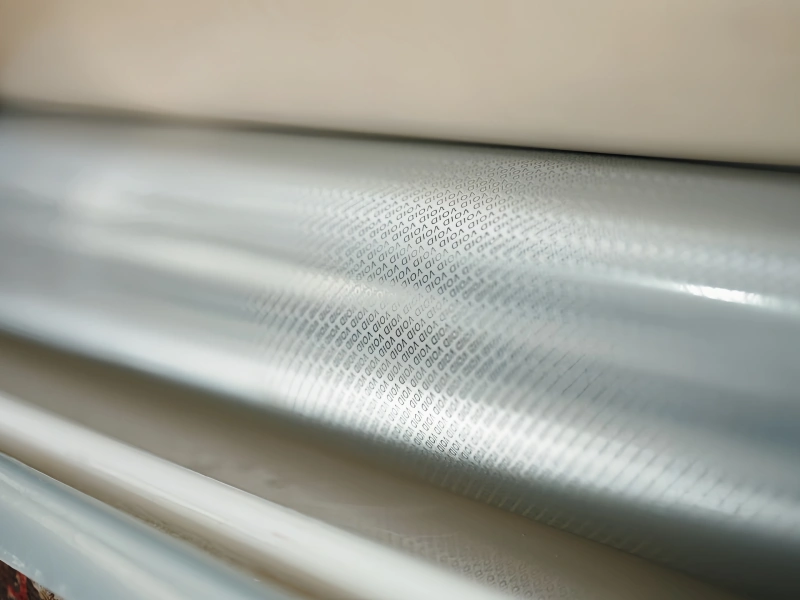
The hidden message layer is one of the most important parts of a VOID label material system.
Before application, the hidden message should remain controlled and should not create an obvious visual defect. After removal, the message should appear clearly, consistently, and permanently enough to show that the package or product has been opened or tampered with.
A good hidden message layer should achieve:
- Clear VOID or OPEN VOID display
- Stable pattern transfer
- Good contrast after peeling
- Controlled residue edge
- No premature message visibility before use
- No incomplete or blurred message after peeling
- Stable performance after storage
- Consistent effect across production batches
Low-grade market samples often fail in this layer. The hidden message may be too light, too thick, uneven, blurry, incomplete, or inconsistent. In some cases, the message appears only in part of the label. In other cases, the adhesive tears randomly, leaving an uncontrolled white patch instead of a clean security message.
This is one of the most important differences between a cheap security label and a high-quality tamper-evident material.
Security labels are not only about making a word appear. They are about controlling how, when, where, and how clearly that word appears.
Color Layer: Visual Contrast, Brand Identity, and Security Clarity
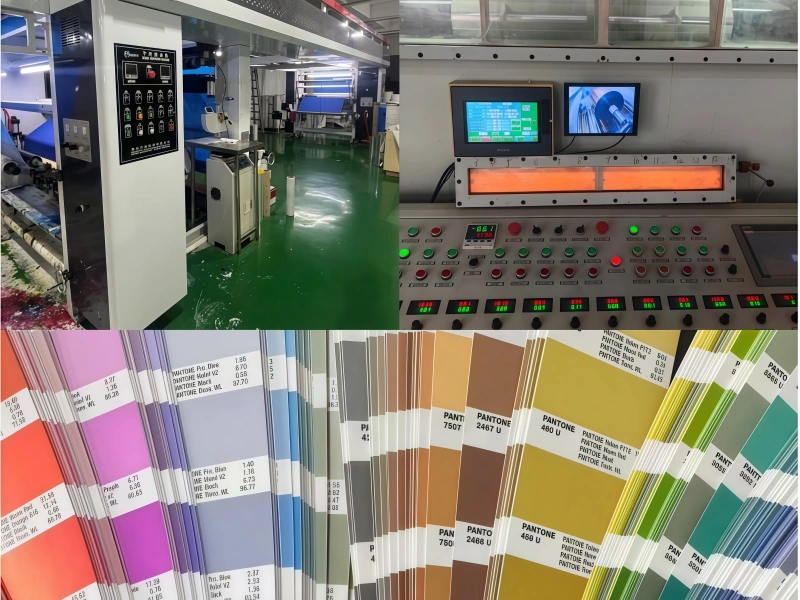
The color layer is often misunderstood as only a design or decoration layer. In reality, it plays an important role in security performance.
Color affects:
- VOID message visibility
- Contrast after peeling
- Brand recognition
- Product appearance
- Light blocking
- Transparency control
- Batch consistency
- Visual quality under different lighting conditions
A weak or unstable color layer can make the hidden message difficult to identify. It can also create inconsistent appearance between rolls, which is a major issue for B2B customers supplying brand owners.
In low-quality products, color difference may appear from batch to batch. The message may look strong in one sample but weak in another. Under light reflection, the label may show uneven coating marks, poor gloss control, or cloudy appearance. These defects reduce customer confidence.
A premium security label material uses controlled color and layer design to make the tamper evidence easy to read while maintaining a professional packaging appearance.
Transparent Carrier Layer: The Control Layer Behind the Effect
The transparent carrier layer is one of the hidden technical parts of the system. Customers may not see it directly, but it strongly affects the peeling result.
This layer helps control:
- Message transfer behavior
- Splitting position
- Residue boundary
- Full transfer effect
- Partial transfer effect
- Non-transfer effect
- Label transparency
- Final surface appearance
For full transfer VOID materials, the message transfers to the applied surface after peeling. For partial transfer materials, the residue splits between the label and surface. For non-transfer materials, the message appears on the label while the applied surface remains clean.
These effects depend on controlled layer separation. If the carrier layer is unstable, the material may peel randomly instead of revealing a designed message.
This is why the same product name does not mean the same quality. Two suppliers may both sell “VOID label material,” but the internal carrier design and layer control may be completely different.

Adhesive: The Bonding Layer That Activates the Security Response
The adhesive is part of the multilayer security construction because it controls how strongly the label bonds to the substrate and whether the designed VOID, residue or destructive response activates during removal. Adhesive selection should therefore be evaluated together with the facestock, release structure and real application surface. A more detailed adhesive section appears below.
Release Liner: The Layer Many Buyers Ignore
The release liner is not the security function itself, but it strongly affects production performance.
A stable release liner supports:
- Smooth unwinding
- Stable die-cutting
- Easy waste removal
- Automatic labeling
- Roll flatness
- Rewinding quality
- Label dispensing
- Reduced production waste
Many low-cost materials use unstable release liners. The material may look fine in a photo, but during die-cutting the converter may face liner breakage, difficult waste removal, label lifting, adhesive bleeding, or inconsistent release force.
For B2B buyers, this creates hidden cost. A material with a cheaper unit price may cause slower production speed, more machine stoppage, higher waste rate, and more complaints from downstream customers.
This is why high-quality security label material must be evaluated as a complete roll material, not only as a small peeled sample.
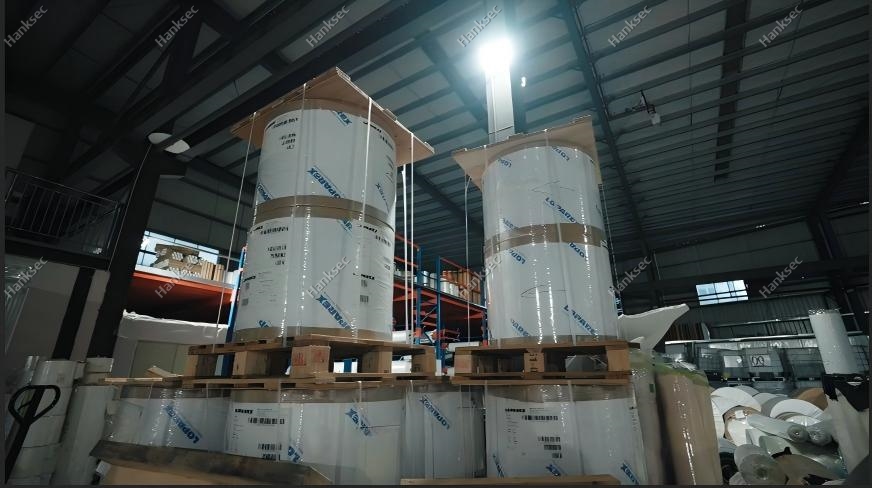
Security Label Facestock Materials: PET, Paper, Holographic & Destructible Films
The facestock determines much of the physical behavior, printing performance and converting stability of a security label material system. The correct choice depends on the required tamper response, application surface, printing method, durability and downstream converting process.
PET Security Label Materials
PET is widely used for VOID and tamper-evident security label materials because it provides dimensional stability, tensile strength and good compatibility with coating, printing, die cutting and roll converting. PET can support full-transfer, partial-transfer and non-transfer constructions, but film thickness and stiffness should be matched with the adhesive, liner and label dimensions.
Paper Security Label Materials
Paper constructions can provide tamper evidence through VOID transfer, delamination or fiber damage and are particularly relevant to cartons, documents and paper-based packaging. Performance still depends on coating, adhesive and the actual packaging surface. Buyers evaluating this direction can review Hanksec’s Paper VOID Labels Guide.
Holographic Security Materials
Holographic materials add an optical authentication layer. When removal evidence is also required, the holographic feature should be combined with a suitable VOID, destructive or other tamper-evident construction rather than treated as tamper evidence by itself. See Hanksec’s Hologram Labels Guide for detailed selection.
Destructible Label Materials
Destructible materials are engineered so that the facestock breaks, fragments or tears when removal is attempted. Their performance depends on the balance between facestock brittleness, adhesive strength and converting stability. Different destruction levels may be required for printing, die cutting, automatic labeling and final application. See Hanksec’s Destructible Label Materials Guide.
How Tamper-Evident Security Label Materials Work
Tamper-evident security label materials work through controlled interaction between the facestock, security or release layer, adhesive and application surface.
Before removal, the functional layers remain bonded in a designed structure. When removal is attempted, the system separates or fails at a controlled interface. Depending on the construction, this action may leave a VOID or OPENED message on the substrate, split the security pattern between two surfaces, reveal evidence on the removed label, or physically destroy the facestock.
The important point is that tamper evidence is not created by one layer alone. Reliable performance comes from the balance between layer adhesion, release force, facestock behavior and substrate bonding. This is why two security materials that look similar before application can behave very differently after peeling.
Types of Security Label Material Systems
Security label materials can be engineered for different removal responses. The main construction should be selected according to where the buyer wants the tamper evidence to appear and how much residue or physical damage is acceptable.
Full-Transfer VOID Materials
Full-transfer VOID materials are designed to leave strong visible evidence mainly on the application surface after removal. They are commonly considered for cartons, packaging and other applications where permanent residue is acceptable.
Partial-Transfer VOID Materials
Partial-transfer VOID materials split the visible tamper evidence between the removed label and the substrate. This creates evidence on both sides and can provide a balanced option when complete transfer is not required.
Non-Transfer VOID Materials
Non-transfer VOID materials are designed to reveal tampering primarily within the label while keeping the application surface cleaner. They can be useful for electronics, glass and other surfaces where strong visible adhesive residue is undesirable.
Destructible Security Materials
Destructible constructions use controlled facestock failure instead of relying only on a transferred VOID message. When removal is attempted, the label fractures or fragments so it cannot be removed intact and reused.
Holographic Tamper-Evident Materials
Holographic tamper-evident materials combine optical authentication with a separate removal-evidence mechanism such as VOID transfer or destructive behavior. The holographic effect improves visual authentication, while the material construction determines the actual tamper response.
For a broader comparison of these label categories, see Hanksec’s Security Labels: Types, Materials & Selection Guide.
Low-Residue vs High-Residue VOID Security Label Materials
Residue level describes how much visible material or adhesive evidence remains on the application surface after removal.
High-residue constructions are designed to leave stronger visible evidence on the substrate and are commonly used where obvious tamper indication is required. Low-residue constructions reduce the amount of material left on the substrate while still providing a visible removal response.
Residue level should not be treated as exactly the same concept as full-transfer, partial-transfer or non-transfer construction. Transfer type describes how the security pattern separates, while residue level describes the amount and character of evidence remaining on the surface. The required combination should be selected according to the substrate and the expected appearance after removal.
Security Label Adhesive Systems: Why Adhesion Controls Tamper Evidence
Adhesive is often the real key to success or failure.
A security label adhesive must do more than stick. It must stick in a controlled way, release in a controlled way, and interact with the hidden message layer in a predictable way.
A high-quality adhesive system should consider:
- Initial tack
- Final adhesion
- Surface compatibility
- Temperature resistance
- Humidity resistance
- Residue control
- Aging stability
- Peel force consistency
- Low-temperature performance
- High-temperature storage
- Compatibility with packaging materials
Low-grade security label materials often fail because the adhesive is not properly balanced. Common problems include:
- Weak bonding on cartons
- Poor adhesion on plastic
- Adhesive overflow
- Incomplete VOID transfer
- Random tearing
- Residue that looks dirty
- Edge lifting
- Performance change after storage
- Poor performance in cold or humid environments
- Unstable effect on coated packaging
For ordinary labels, adhesive failure may mean the label falls off. For security labels, adhesive failure means the security function fails.
ASTM D3330/D3330M-04(2025) provides standardized methods for evaluating peel adhesion of pressure-sensitive tape and can be used for quality-assurance comparisons within rolls, between rolls or between production lots. For security label materials, controlled peel behavior is one useful part of evaluating adhesive consistency and substrate compatibility.
The FINAT Test Methods provide additional reference methods relevant to self-adhesive label materials. Examples include FTM 2 for 90-degree peel adhesion, FTM 4 for high-speed release force relevant to matrix stripping, FTM 5 for accelerated ageing and FTM 9 for loop tack. The appropriate test should be selected according to the property being evaluated rather than treating one adhesion value as a complete measure of label performance.
For substrate-specific adhesive selection on PP, PE, HDPE, PET, glass and coated cartons, see Hanksec’s Tamper Evident Label Adhesive Guide.
Custom Security Label Material Options
Security label materials can be customized at both the material-system and converting levels. Buyers should define the required tamper response first, then confirm the visual, printing and supply specifications.
| Customization Item | Typical Options |
|---|---|
| Facestock | PET, paper, holographic, destructible or other specialty constructions |
| Film Thickness | Selected according to durability, printing and converting requirements |
| Color & Finish | Transparent, white, silver, custom color, glossy, matte or holographic effects |
| Security Message | VOID, OPENED, logo or customized hidden text/pattern |
| Transfer Response | Full-transfer, partial-transfer, non-transfer or destructive response |
| Adhesive | Selected according to substrate, temperature, dwell and residue requirements |
| Top Coating | Matched to UV, flexographic, thermal-transfer, digital or other printing processes |
| Additional Security | Holographic effects, UV features, serial numbers, barcodes, QR codes or thermochromic features |
| Release Liner | Glassine, PET or other liner according to converting requirements |
| Roll Specification | Custom width, length, core and winding direction |
Security Label Material Specifications Buyers Should Confirm
A sample request becomes more efficient when the buyer provides the technical specifications that affect both tamper response and converting performance.
| Specification | What Buyers Should Confirm |
|---|---|
| Facestock | PET, paper, holographic, destructible or specialty film |
| Thickness | Required facestock thickness and any total-construction constraints |
| Adhesive | Application substrate, tack, final adhesion and environmental requirements |
| Release Liner | Glassine paper, PET liner or another converter-required liner |
| Transfer Type | Full-transfer, partial-transfer, non-transfer or destructive response |
| Hidden Message | VOID, OPENED, logo or custom text/pattern |
| Printing Compatibility | Flexographic, UV, thermal-transfer, digital, screen or other process |
| Supply Format | Jumbo roll, slit roll, sheet or finished label |
| Roll Dimensions | Width, length, core size and winding direction |
| Application Conditions | Surface, temperature, humidity, storage and dwell time |
Security Label Material Supply Formats: Jumbo Rolls, Slit Rolls, Sheets & Finished Labels
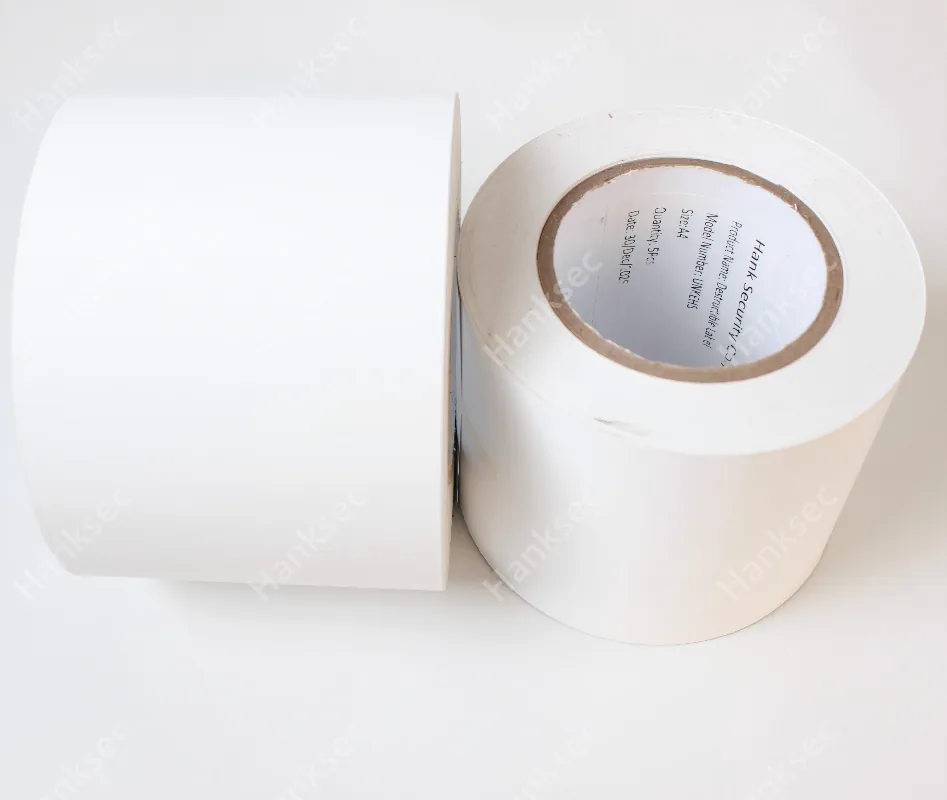
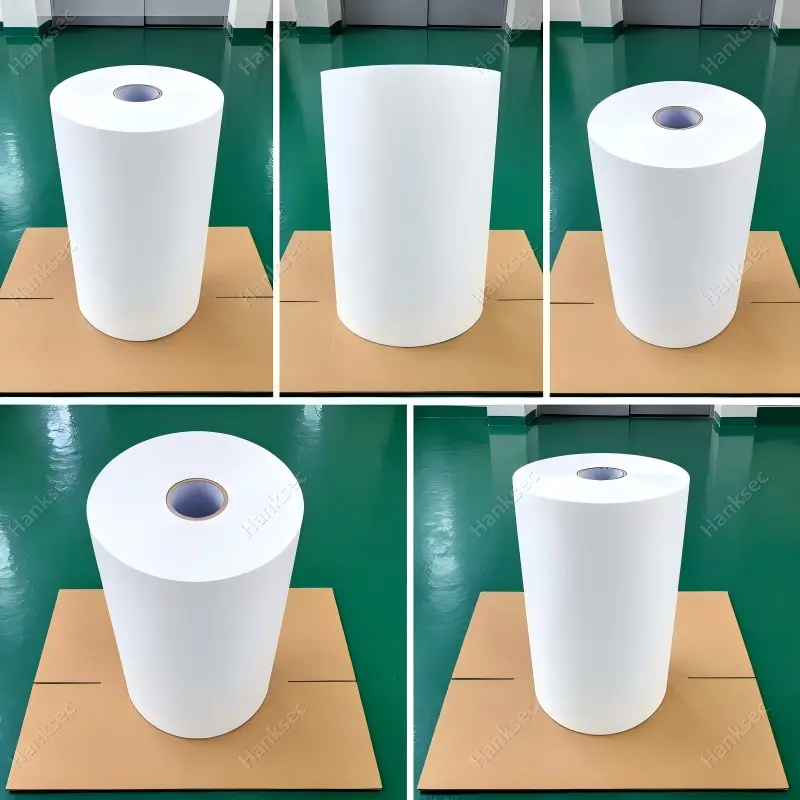
Security label materials can be supplied in different formats depending on the buyer’s production process. Label converters commonly require VOID label material jumbo rolls or slit rolls for printing, die cutting and further converting, while other customers may require sheets or finished labels ready for direct application.
| Supply Format | Typical Buyer / Use | Main Details to Confirm |
|---|---|---|
| Jumbo Rolls | Label converters and security printers | Master width, roll length, core, winding and coating consistency |
| Slit Rolls | Converters requiring narrower production widths | Finished width tolerance, roll length, core and winding direction |
| Sheets | Sheet-fed printing or specialty converting | Sheet size, liner flatness and printing compatibility |
| Finished Labels | Brand owners, packaging operations and direct users | Label size, shape, gap, roll direction, print and application method |
The supply format should be confirmed together with downstream equipment because roll geometry, liner choice and winding direction can affect printing, die cutting, matrix stripping and automatic dispensing.
How Security Label Materials Are Manufactured: From Coating to Slitting
Security label materials are manufactured as a coordinated multilayer system rather than as a standard adhesive film. The manufacturing process must control the interaction between the face material, security coating, release behavior, adhesive system and liner so that the required tamper evidence appears consistently after removal.
1. Face Material Selection
PET, BOPP, paper, holographic film or other substrates are selected according to printing requirements, dimensional stability, durability and the final application surface.
2. Surface Treatment and Functional Coating
Corona treatment, primer or printable top coatings may be applied to improve ink anchorage and coating compatibility before the security layers are produced.
3. Security Pattern and Release-Layer Formation
The hidden VOID, OPENED, logo or customized security pattern is created together with a controlled release system. The coating balance determines how the material separates during removal.
4. Adhesive System Selection and Coating
Pressure-sensitive adhesive is selected according to substrate type, surface energy, temperature, dwell time and required residue behavior. The adhesive must work together with the release system rather than simply provide maximum peel strength.
5. Lamination, Stabilization and Converting
The coated material is laminated with the appropriate release liner and stabilized before slitting, printing or further converting into converter-ready rolls or finished labels.
6. Quality Inspection and Real-Application Testing
Finished security materials should be evaluated for coating consistency, adhesive performance, transfer behavior, printing compatibility, liner release and actual substrate performance before mass production.
At Hanksec, security material development is validated according to the customer’s actual substrate, printing process and required tamper behavior because a material that performs correctly on glass may behave differently on coated cartons, ABS, PP, PE or painted metal. Learn more about Hanksec’s security label material manufacturing capabilities and factory production process.
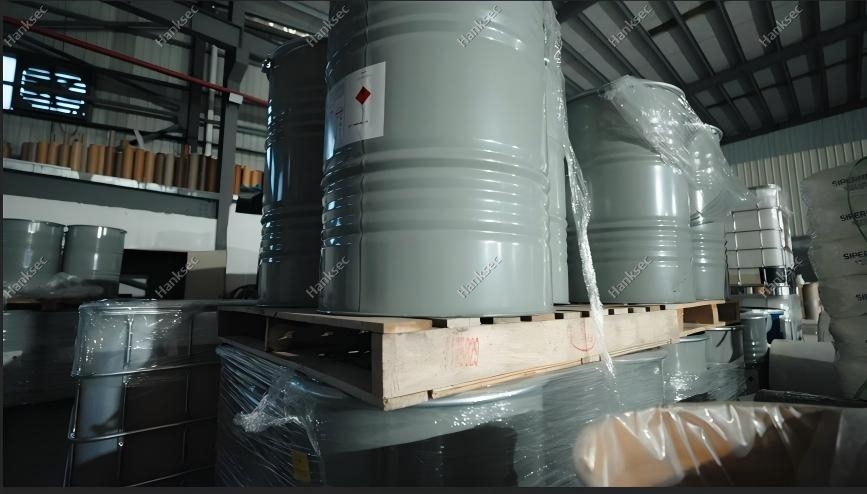
Security Label Converting: Printing, Slitting, Die Cutting & Matrix Stripping
Manufacturing the security material is only the first stage. The material must also convert reliably on the customer’s actual equipment.
Important converting steps include printing, slitting, rewinding, die cutting, matrix stripping and automatic dispensing. For converters using UV, flexographic, thermal-transfer or digital printing processes, printing compatibility of the security label material should be evaluated together with top-coating performance. Even a correctly engineered material can create production difficulties if the top coating, liner, adhesive, die-cut depth, stripping geometry or machine settings are not matched to the application.
Converters should therefore qualify security materials as part of the complete production workflow rather than judging them only from a hand-peel sample. For a real example of how material construction and converting conditions interact, see Hanksec’s High-Temperature Label Matrix Stripping Customer Case.
Key Performance Requirements of a Reliable Security Label Material System
Why Low-Grade Market Samples Can Look Similar Before Use
One of the biggest challenges in this industry is that low-grade products can look similar before application.
A buyer may compare product photos and think:
“The VOID pattern is visible.”
“The price is lower.”
“The supplier says it is waterproof.”
“The label can be customized.”
“The sample shows a peeling effect.”
But security label performance cannot be judged only by one photo.
The real test is:
What happens after printing?
What happens after die-cutting?
What happens on kraft paper?
What happens on coated boxes?
What happens on plastic?
What happens after 30 days of storage?
What happens in hot shipping containers?
What happens in winter transportation?
What happens when a customer tries to remove it slowly?
What happens when the label is applied by machine at high speed?
What happens across 10 rolls, 100 rolls, or repeat orders?
Low-grade products often pass a simple visual test but fail in real production.
This is the difference between a sample effect and a material system.
High-Quality vs Low-Quality Security Label Materials
The following comparison helps buyers understand the real difference.
| Comparison Point | High-Quality Security Label Material | Low-Quality Market Material |
|---|---|---|
| Layer Design | Each layer is designed to work as a controlled system | Layers may be combined mainly for appearance and low cost |
| Hidden Message | Clear, consistent, and controlled after removal | Message may be blurred, incomplete, uneven, or too light |
| Adhesive Performance | Balanced adhesion for different surfaces and environments | Adhesion may fail, overflow, dry out, or leave uncontrolled residue |
| Peeling Effect | Stable tamper evidence after opening attempt | VOID effect may appear randomly or fail to transfer properly |
| Surface Compatibility | Tested on plastic, metal, glass, cartons, coated boxes, and other surfaces | May work only on limited surfaces or only under ideal conditions |
| Printing Performance | Stable top coating for ink adhesion and barcode readability | Ink may scratch, peel, fade, or fail after printing |
| Die-Cutting Performance | Smooth die-cutting, stable liner release, easy waste removal | Edge lifting, liner breakage, difficult waste removal |
| Aging Resistance | Stable after storage, shipping, heat, and humidity changes | Performance may change after storage or transportation |
| Batch Consistency | Consistent effect from roll to roll and batch to batch | Color, adhesive, and VOID effect may vary |
| Real Cost | Reduces waste, complaints, and repeated testing | Low price may cause production loss and customer claims |
Image Comparison: Budget Market Samples vs Premium Controlled Samples
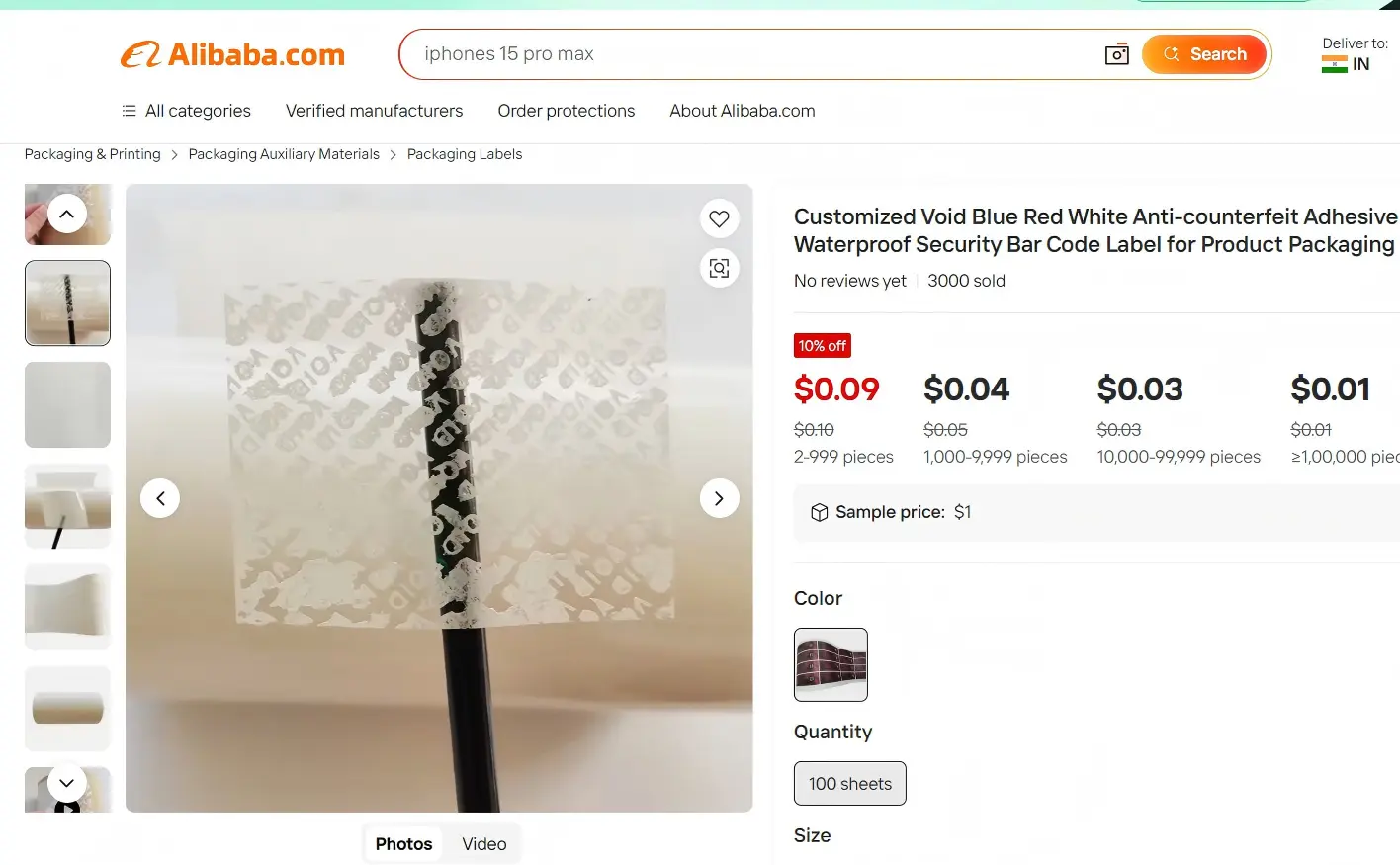
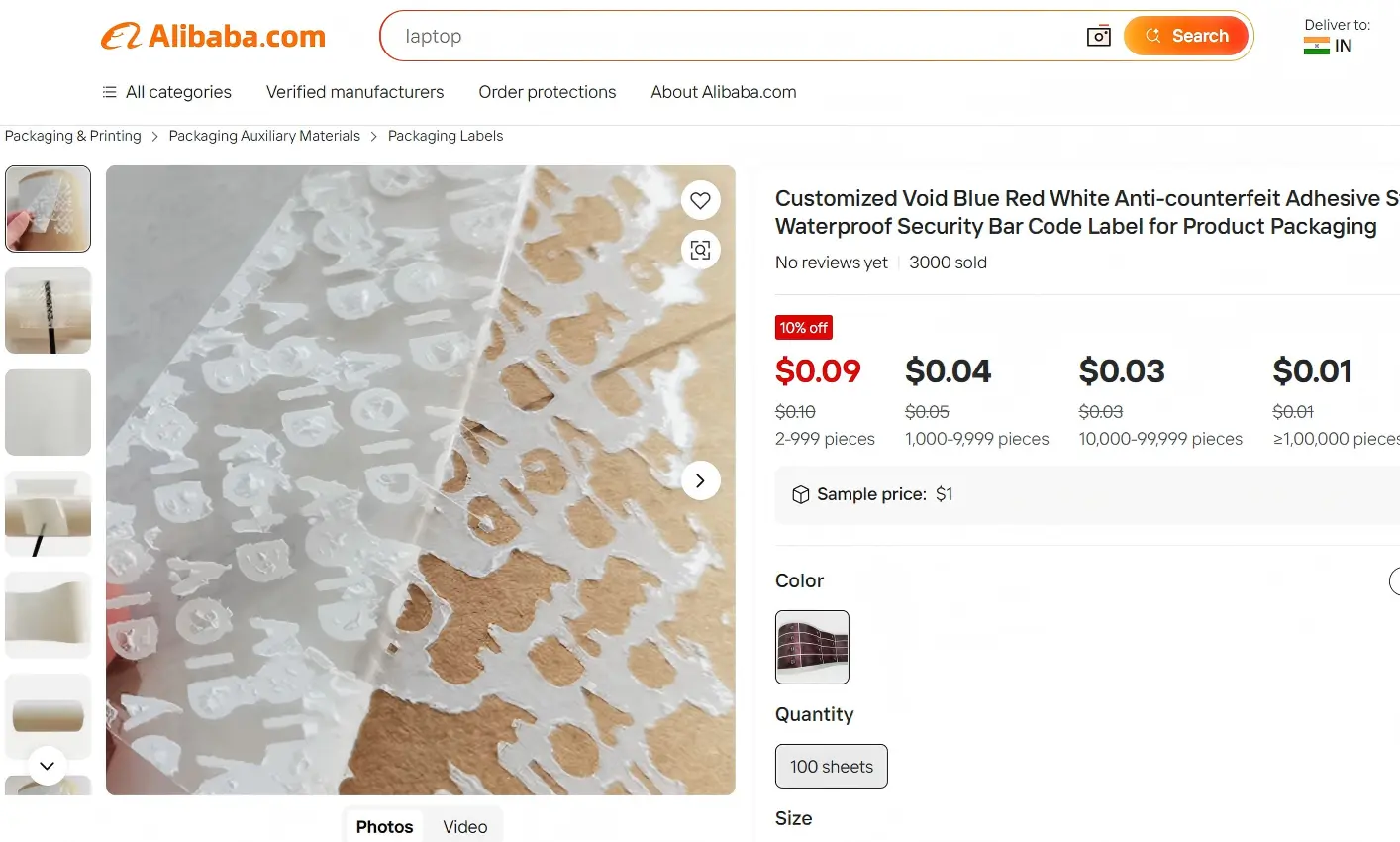
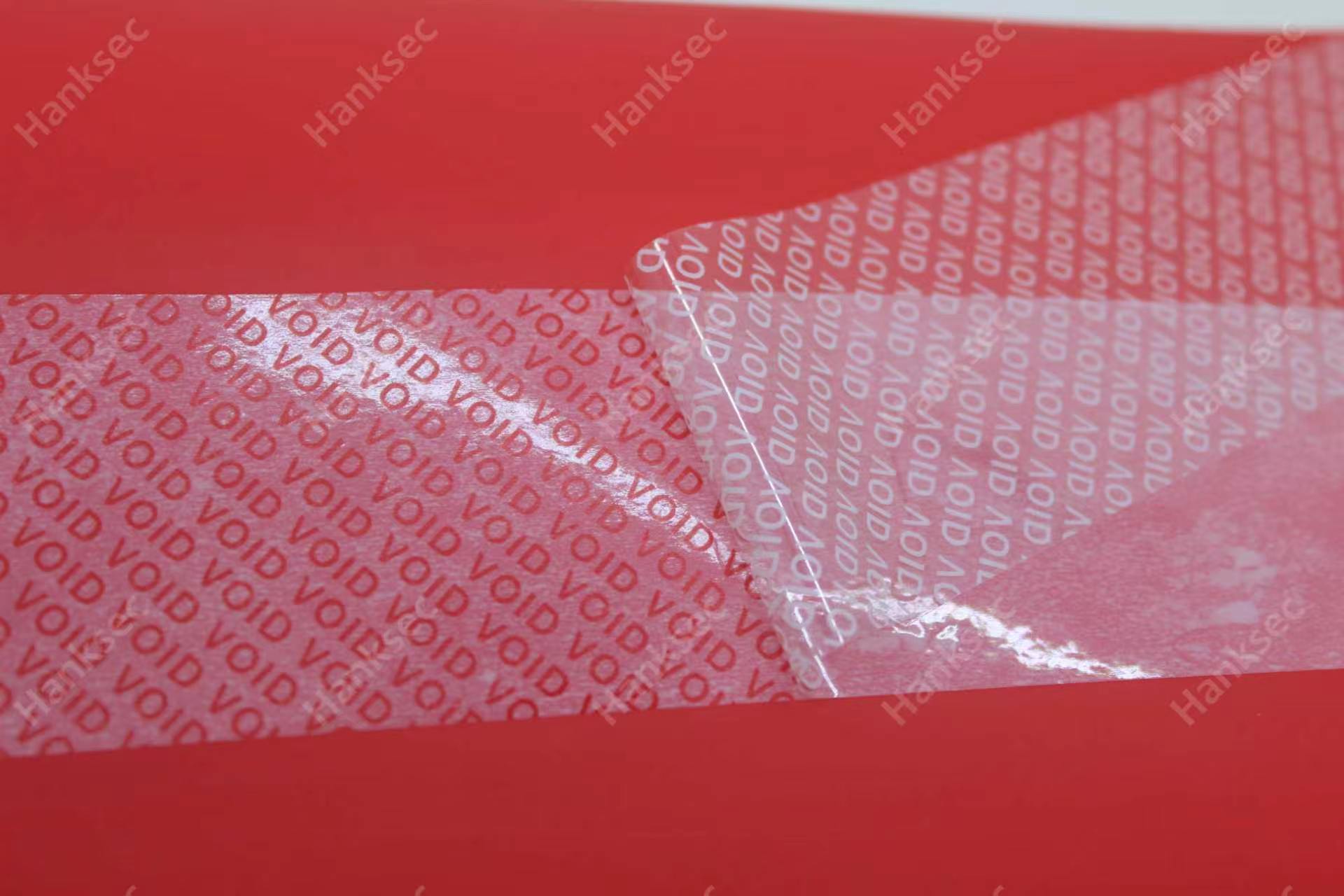
budget void label material with uneven peeling effect on packaging surface
Some low-grade market samples may show a visible VOID effect, but the residue edge, message clarity, adhesive behavior and surface appearance may not remain stable enough for professional brand protection applications.
Common Problems Found in Low-Quality Security Label Materials
Low-grade security label materials often fail in ways that are not obvious before purchase.
1. Unclear VOID Message
The VOID message may appear too light, too heavy, blurry, incomplete, or uneven. This reduces the ability to show clear tamper evidence.
2. Random Adhesive Residue
Instead of a controlled message, the adhesive may tear randomly and leave messy patches. This looks unprofessional and may not meet brand protection requirements.
3. Weak Adhesion
The label may not bond strongly enough to cartons, plastics, coated boxes, or other packaging surfaces. If the label can be removed without clear evidence, the security function is weakened.
4. Edge Lifting
Poor adhesive or poor material tension may cause edges to lift after application. This affects both appearance and security.
5. Poor Printing Performance
Ink may scratch, peel, fade, or fail to bond properly with the top coating. This is especially problematic for barcode labels, QR codes, brand logos, and variable data printing.
6. Die-Cutting Waste
Unstable liners and face materials can cause difficult waste removal, liner tearing, or label lifting during converting.
7. Poor Aging Resistance
Some materials look acceptable at first but fail after storage, shipping, heat, humidity, or UV exposure. FINAT includes test categories such as accelerated ageing and UV resistance, showing that long-term stability is an important part of self-adhesive material evaluation.
8. Inconsistent Batch Quality
One roll may work, while the next roll performs differently. For B2B production, this is a serious risk.
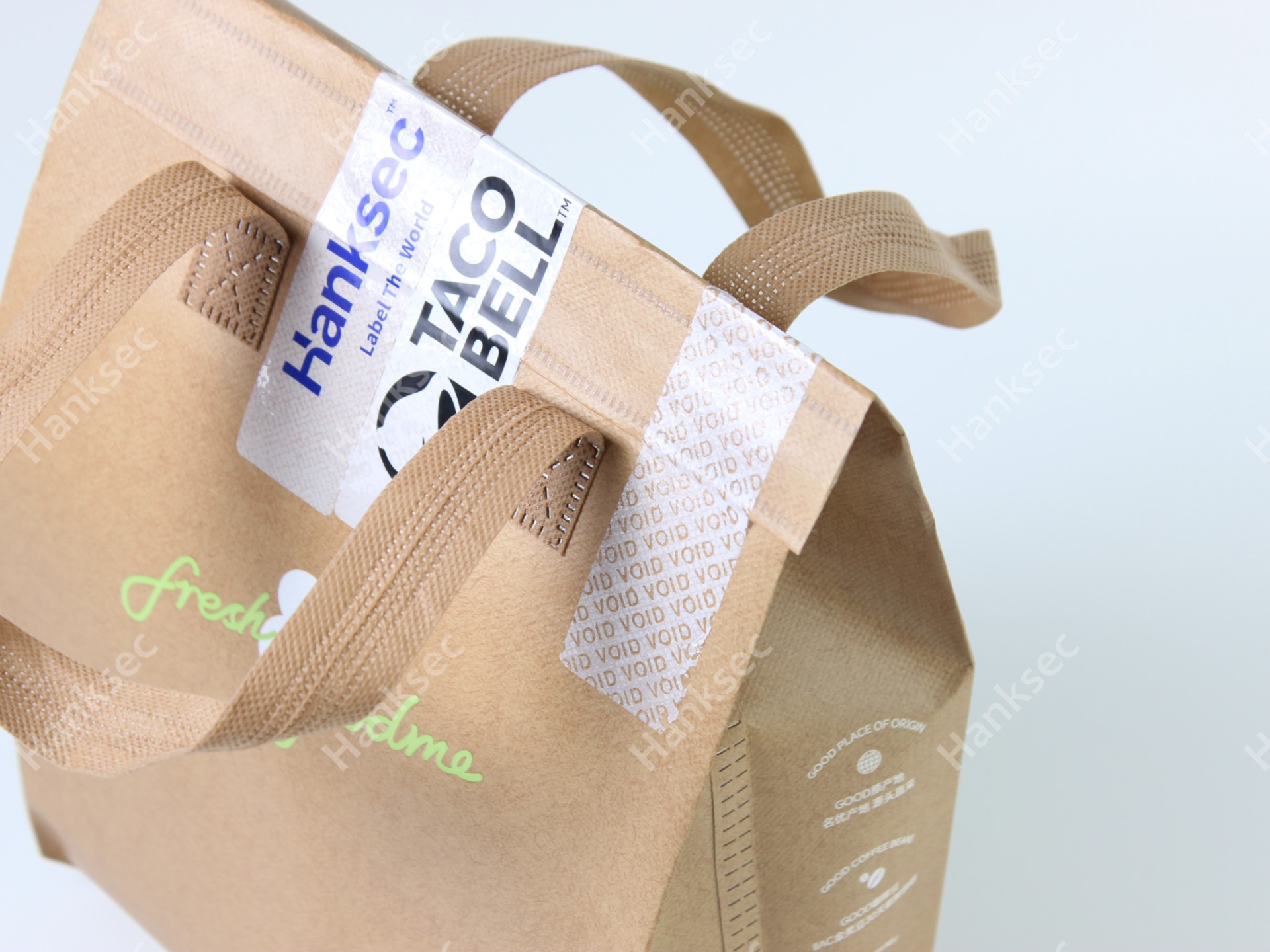
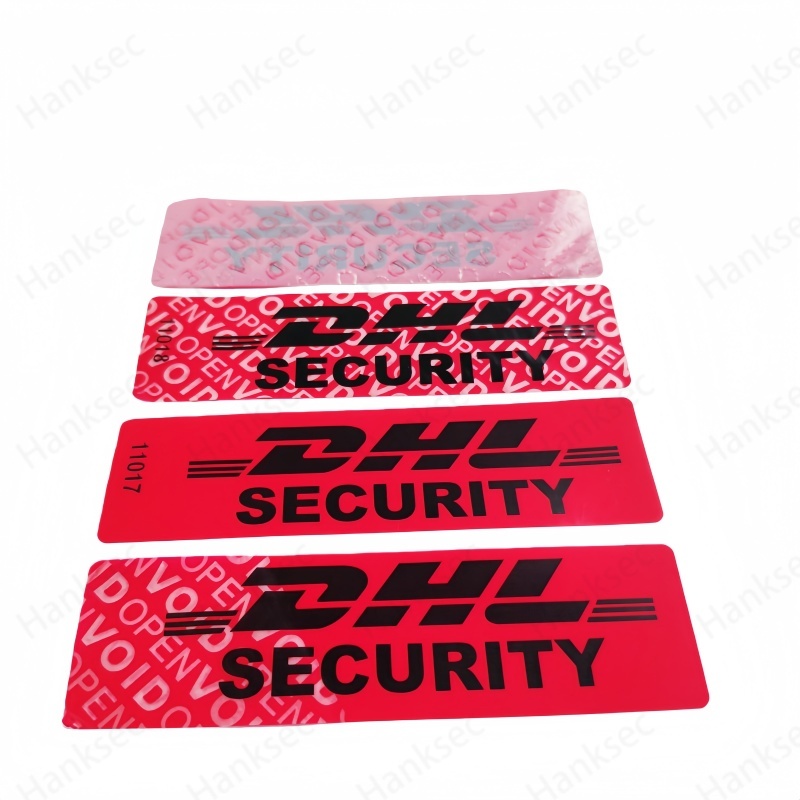
Tamper-evident VOID label applied on retail packaging for brand-protection applications.
Why Market Requirements Keep Changing
Security label materials cannot stay the same forever. Market requirements continue to change because packaging, logistics, printing, counterfeiting methods and packaging regulations continue to evolve. In Europe, the EU Packaging and Packaging Waste Regulation (PPWR), Regulation (EU) 2025/40, is increasing attention on packaging design, material compatibility and recyclability considerations. These developments are also increasing interest in paper VOID labels and other security constructions designed for paper-based cartons and packaging systems. Higher-risk applications may also require anti heat tamper evident sticker materials designed to preserve visible tamper evidence during thermal attacks.
Today’s customers may require:
- Cleaner non-residue labels for electronics
- Stronger transfer labels for carton security
- Partial transfer labels for balanced visual appearance
- Custom logo VOID messages
- QR code or barcode integration
- Digital printing compatibility
- Better performance on coated boxes
- Better adhesion on low-energy plastic
- More stable performance in hot and humid climates
- Security tapes for e-commerce packaging
- Destructible labels for warranty protection
- Paper-based security materials for sustainable packaging
This is why a strong supplier cannot only sell one fixed formula. A professional factory must continuously adjust material systems according to market feedback.
For example, a label converter may need better top coating for digital printing. A packaging company may need stronger adhesion on recycled cartons. A brand owner may need a cleaner non-transfer effect on premium electronics. A distributor may need stable stock material for fast delivery. Each market requirement changes the material design.
This is the real value of a technical security label material manufacturer.
Why High-Quality Materials Reduce Total Cost
Low-grade materials may look cheaper per piece, but the real cost for B2B customers includes more than the unit price.
The total cost includes:
- Sample testing time
- Failed printing trials
- Die-cutting waste
- Machine downtime
- Rework cost
- Customer complaints
- Delayed delivery
- Repeat testing
- Lost trust from brand owners
- Lost market opportunities
A security label material that fails during production can cost much more than the price difference between a low-grade product and a premium product.
For label converters, production efficiency is critical. If a material causes unstable release, difficult waste removal, or poor printing adhesion, the converter loses time and money. For distributors, inconsistent quality can damage customer relationships. For brand owners, unclear tamper evidence can weaken the protection value of the packaging.
High-quality materials help reduce these hidden costs.
This is why professional buyers should evaluate security label materials by system performance, not only by price.
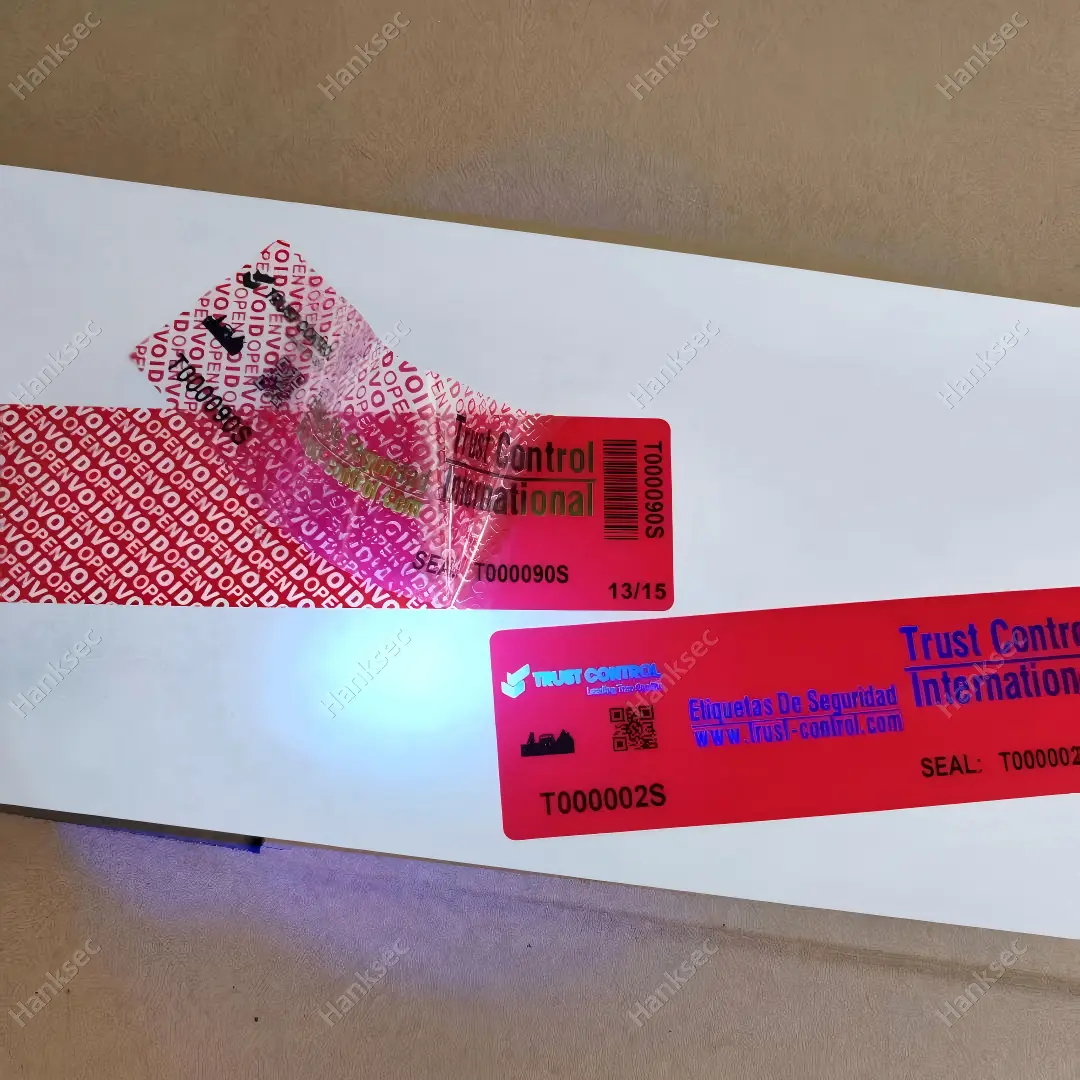
Security Label Material Testing & Quality Control
Security label materials should be evaluated as a complete system rather than by checking only whether a VOID message appears during one peel demonstration.
Before bulk production, buyers should evaluate:
Substrate compatibility — test the material on the actual carton, plastic, metal, glass or coated surface.
Peel adhesion — confirm that the adhesive provides appropriate bonding without interfering with the required tamper-evident response.
Security-message clarity — check whether the VOID, OPENED or customized hidden pattern appears clearly and consistently.
Release-liner performance — evaluate liner release during die cutting, matrix stripping and automatic dispensing.
Printing and converting compatibility — verify ink adhesion, scratch resistance, die-cutting stability and rewinding performance.
Environmental stability — evaluate temperature, humidity, storage and aging when these conditions are relevant.
Batch consistency — compare samples from different rolls or production lots to confirm repeatable performance.
Why “Waterproof” Alone Does Not Define Security Label Performance
Many low-cost listings use broad claims such as “waterproof,” “anti-counterfeit,” “barcode security label,” or “customized VOID label.” These terms may attract attention, but they do not explain real performance.
For professional buyers, the important questions are more specific:
Is the material suitable for my packaging surface?
Can it be printed by my equipment?
Can it be die-cut without edge lifting?
Does it work after aging?
Does the VOID effect remain stable after storage?
Can the adhesive handle shipping and temperature changes?
Can the message be customized without sacrificing stability?
Can the supplier repeat the same quality in bulk orders?
A high-quality manufacturer should be able to discuss these questions with technical logic, not only with low price.
Security label material is a solution product, not a commodity sticker.
How Hanksec Controls Security Label Material Performance
Hanksec focuses on security label materials, VOID label materials, destructible label materials, security tapes, security bag tapes, and anti-counterfeit packaging solutions. With long-term factory experience, Hanksec understands that stable tamper-evident performance depends on controlled material engineering.
The key control areas include:
1. Layer Structure Control
Each layer must be designed according to the final tamper-evident effect. Full transfer, partial transfer, and non-transfer materials require different system balance. The hidden message layer, carrier layer, adhesive, and release liner must work together.
2. Adhesive Matching
Different application surfaces require different adhesive behavior. Cartons, coated paper boxes, plastic, metal, glass, electronics housings, and fabric-like surfaces may all require different bonding strategies.
3. Message Clarity Control
The hidden VOID message must remain controlled before use and become clear after peeling. High-quality materials avoid random tearing, weak transfer, blurry residue, or uncontrolled adhesive patches.
4. Printing and Converting Compatibility
B2B customers often need printing, slitting, die-cutting, rewinding, and automatic labeling. Therefore, material quality must be suitable for real converting processes.
5. Batch Consistency
A small sample is not enough. The material must remain stable in bulk production. Consistency from roll to roll is one of the most important signs of a professional supplier.
6. Application Testing
Security label materials should be tested on real application surfaces whenever possible. The same material may behave differently on kraft paper, coated boxes, plastic film, painted metal, glass, or textured surfaces.
7. Market-Based Adjustment
Hanksec continuously adjusts security label material systems according to customer applications, market requirements, printing methods, and packaging changes.
This is where real anti-counterfeit technology begins.
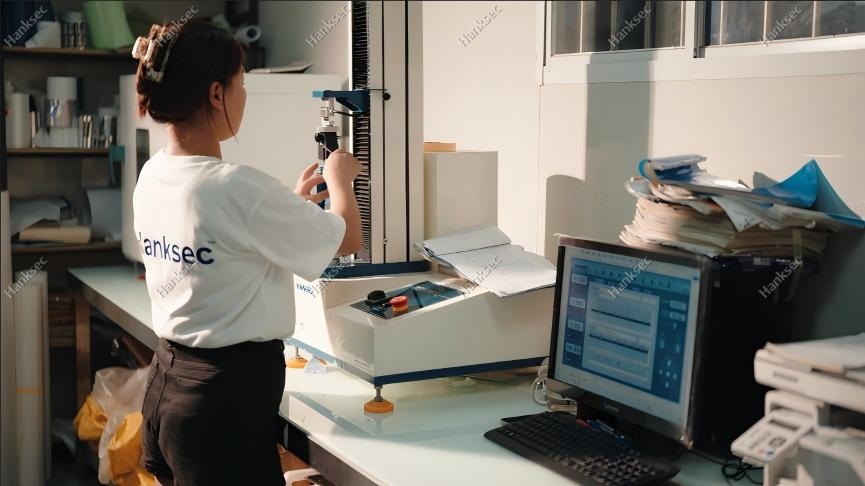
Security Label Material Applications by Industry and Surface
Security label material selection should reflect both the industry requirement and the actual surface. The same tamper-evident construction can behave differently on glass, PET, PP, PE, painted metal and coated cartons because surface energy, roughness and coatings affect adhesive wet-out and removal behavior.
| Industry / Application | Typical Security Requirement | Common Material Direction |
|---|---|---|
| Electronics & Warranty | Unauthorized opening or component-access evidence | Non-transfer VOID, destructible or specialty warranty constructions |
| Packaging & Logistics | Visible opening evidence on cartons, bags or boxes | Full-transfer or partial-transfer VOID materials |
| Pharmaceutical Secondary Packaging | Package-opening evidence and controlled identification | Application-specific tamper-evident materials validated on actual packaging |
| Cosmetics & Luxury Goods | Tamper evidence plus visible authentication | VOID, holographic or combined security constructions |
| Asset & Equipment Protection | Anti-removal, warranty and service-access control | Destructible, VOID or serialized security labels |
For medicinal-product packaging, security-label selection may also need to consider market-specific tamper-verification requirements. ISO 21976:2018 provides requirements and guidance for the application, use and checking of tamper-verification features for medicinal product packaging. Final material selection should therefore be validated against the actual package construction and applicable regulatory requirements.
| Application Surface | Typical Consideration |
|---|---|
| Glass | Adhesive wet-out, dwell time and desired residue behavior |
| PET / PC / ABS | Surface coating, cleanliness and required tamper response |
| PP / PE | Lower surface energy often requires closer adhesive qualification |
| Painted or Coated Metal | Coating compatibility, temperature and removal appearance |
| Coated Carton / Paperboard | Fiber structure, varnish or coating can influence bonding and transfer |
For detailed substrate and adhesive qualification, see Hanksec’s Tamper Evident Label Adhesive Guide.
How to Choose the Right Security Label Material System
There is no single security label material that is perfect for every application.
A good supplier should help customers choose the right material according to:
- Surface type
- Residue requirement
- Security level
- Printing method
- Label size
- Packaging material
- Application temperature
- Storage environment
- Required visual effect
- Brand customization needs
- Automatic or manual labeling process
For example:
Full transfer VOID materials are suitable when strong visible residue is required on the applied surface.
Partial transfer VOID materials are suitable when customers need both tamper evidence and a more balanced appearance.
Non-transfer VOID materials are suitable when the applied surface needs to remain cleaner, such as electronics, camera lens protection, premium packaging, or reusable equipment control.
Destructible materials are suitable when physical destruction is required after removal.
Security tapes are suitable for cartons, envelopes, logistics boxes, and e-commerce packaging.
Water-sensitive labels are suitable for electronics warranty protection and moisture indication.
High-temperature materials are suitable for industrial and electronics manufacturing environments.
Application-based selection is one of the most important ways to reduce testing cost and improve customer success.
How to Evaluate a Security Label Material Supplier
Professional buyers should not evaluate suppliers only by price or product photos. A reliable supplier should be evaluated by technical capability, production consistency, and application support.
Here are important questions to ask:
Can the supplier explain the material structure?
Can they provide full transfer, partial transfer, and non-transfer options?
Can they support custom hidden messages?
Can they recommend materials according to surface type?
Can they provide roll materials for label converters?
Can they support printing and die-cutting requirements?
Can they explain adhesive behavior?
Can they provide stable batch quality?
Can they help with OEM and ODM customization?
Can they provide samples for testing?
Can they adjust materials according to market feedback?
A supplier who only sells a cheap sample may not be able to solve real production problems. A professional manufacturer should understand how the material works inside the customer’s actual production and application environment.
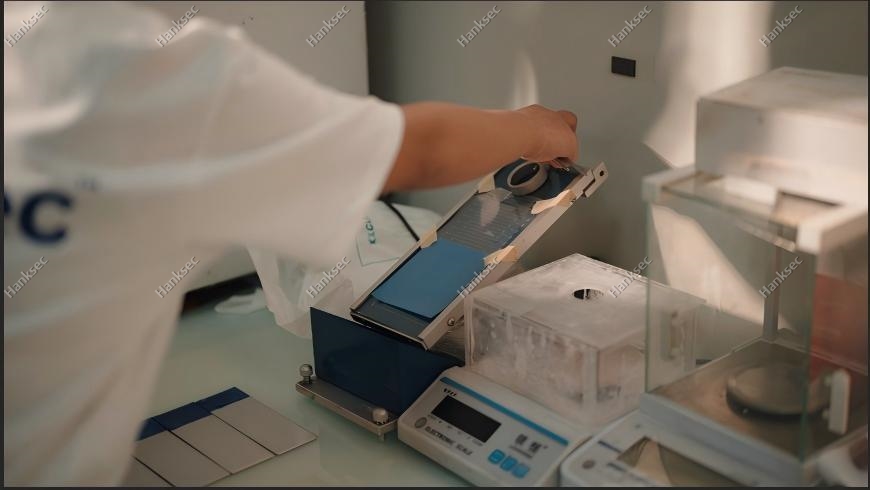
How Security Label Materials Create Value for Different B2B Buyers
For B2B customers, high-quality security label materials create value in several ways.
For Label Converters
They reduce trial waste, improve printing performance, support stable die-cutting, and help converters supply higher-value security labels to their customers.
For Packaging Companies
They improve packaging security, reduce unauthorized opening risks, and provide visible evidence for cartons, bags, boxes, and envelopes.
For Distributors
They provide more stable product quality, fewer after-sales problems, and stronger market positioning compared with low-cost commodity materials.
For Brand Owners
They support brand protection, product authentication, warranty control, and customer trust.
For Security Solution Providers
They provide a material foundation for customized anti-counterfeit systems, including VOID messages, serial numbers, barcodes, QR codes, holographic effects, and special security features.
This is why the value of a security label material should not be measured only by sticker price. It should be measured by its ability to reduce risk and create reliable security performance.
What Label Converters and Buyers Should Send Before Requesting Samples
To recommend a more suitable security label material system, the supplier should understand the buyer’s actual application and converting requirements before sample preparation.
- Application surface or actual substrate sample
- Required tamper response
- Full-transfer, partial-transfer, non-transfer or destructible preference
- Printing method
- Finished label dimensions
- Required roll width, roll length, core and winding direction
- Release liner requirement
- Converting or labeling machine information
- Application and service temperature
- Storage, humidity or special environmental requirements
- Estimated trial and order quantity
Providing this information before sampling can reduce unnecessary trials and help the supplier evaluate the material, adhesive, liner and converting requirements as one system.
Request material testing and technical recommendations from Hanksec.
Security Label Material Systems FAQs
1. What is a security label material system?
A security label material system is a multi-layer label material designed to show visible tamper evidence when removal or unauthorized opening is attempted. It usually includes a face material, hidden message layer, adhesive, carrier layer, and release liner.
2. How does a VOID label material work?
A VOID label material works by using controlled layer separation. When the label is removed, the hidden message layer breaks or transfers in a designed way, revealing a VOID, OPEN VOID, or customized security message.
3. Why do security labels need multiple layers?
Security labels need multiple layers because each layer controls a different function, including printing, appearance, message reveal, adhesive bonding, residue transfer, die-cutting, and release performance.
4. Why do low-quality security label materials fail?
Low-quality materials often fail because the hidden message layer, adhesive, carrier layer, and release liner are not properly balanced. This can cause blurry messages, weak adhesion, random residue, poor printing, or unstable performance after storage.
5. What is the difference between full transfer, partial transfer, and non-transfer VOID materials?
Full transfer materials leave the security message mainly on the applied surface. Partial transfer materials split the message between the label and the surface. Non-transfer materials reveal evidence on the label while keeping the applied surface cleaner.
6. Why is adhesive important in tamper-evident labels?
Adhesive controls bonding, peeling force, residue behavior, surface compatibility, and long-term stability. If the adhesive is unstable, the tamper-evident function may fail.
7. Can security label materials be customized?
Yes. Security label materials can be customized with different hidden messages, colors, face materials, adhesives, transfer effects, roll sizes, and printing requirements.
8. How should buyers choose a security label material supplier?
Buyers should choose a supplier with material engineering experience, stable production capability, application testing support, OEM and ODM service, and the ability to provide consistent batch quality.
9. Can security label materials be supplied in jumbo rolls?
Yes. Security label materials can be supplied in jumbo rolls or slit rolls for label converters and security printers, as well as sheets or finished labels depending on the project. Roll width, length, core, winding direction and liner should be confirmed according to the converter’s equipment.
10. What specifications should converters provide before ordering security label materials?
Converters should provide the required tamper response, facestock, thickness, application surface, printing method, label size, roll dimensions, liner, adhesive or temperature requirements and relevant machine information. Testing the material under the actual converting and application conditions is recommended before bulk production.
Conclusion: Security Label Performance Depends on the Complete Material System
Security label materials are not ordinary adhesive stickers. They are engineered systems designed to create controlled tamper evidence under real market conditions.
A label may look simple from the outside, but behind the surface are multiple layers that must work together. The top coating affects printing. The face material affects stability. The hidden message layer controls security evidence. The color layer affects contrast. The carrier layer controls transfer behavior. The adhesive determines bonding and residue performance. The release liner affects die-cutting and production efficiency.
When these layers are not controlled properly, the material may still look acceptable in a product photo, but it can fail during printing, die-cutting, application, storage, transportation, or end use.
This is the key difference between low-grade market materials and high-quality security label material systems.
For customers, the right security label material does more than show a VOID message. It reduces trial cost, improves production efficiency, strengthens brand protection, reduces customer complaints, and supports long-term market growth.
Hanksec continues to develop and adjust security label material systems according to changing market requirements, helping label converters, packaging companies, distributors, and brand owners build more reliable tamper-evident and anti-counterfeit packaging solutions.
Security label materials look easy.
Making them stable, repeatable, and reliable is where the real technology begins. Buyers who need converter-ready rolls or customized structures can explore Hanksec tamper evident VOID label materials for full-transfer, partial-transfer and non-transfer applications.