No Photography Phone Camera Stickers: Complete Guide to Camera Blocking VOID Security Labels for Phones, Webcams and USB Ports
Handykamera-Aufkleber mit dem Hinweis „Fotografieren verboten“ sind temporäre, manipulationssichere Sicherheitsetiketten, die Smartphone-Kameras in Sperrbereichen blockieren und gleichzeitig sichtbare Spuren hinterlassen, falls der Aufkleber entfernt wird. Für Besuchergeräte werden oft nicht übertragbare oder rückstandsarme VOID-Aufkleber bevorzugt, da diese Manipulationsspuren aufdecken und gleichzeitig Rückstände auf der Geräteoberfläche minimieren.
Individuelle Seriennummern, QR-Codes, Warnhinweise, Firmenlogos und Farbsysteme können ebenfalls zur Ein- und Ausgangskontrolle, Besucheridentifizierung und internen Sicherheitsdokumentation beitragen. Das endgültige Etikett sollte entsprechend der Geräteoberfläche, der erforderlichen optischen Blockierung, der Rückstandstoleranz und des Prüfverfahrens ausgewählt werden.
Mobile Geräte sind in Unternehmensumgebungen weit verbreitet und können sensible Organisationsdaten verarbeiten. NIST SP 800-124 Rev. 2 Bietet aktuelle Leitlinien für das Sicherheitsmanagement mobiler Geräte in Unternehmen. Kamerablockierungsetiketten ersetzen keine Sicherheitsmaßnahmen für Mobilgeräte oder Cybersicherheit, können aber physische Fotoverbote in kontrollierten Bereichen unterstützen.
What Are No Photography Phone Camera Stickers?
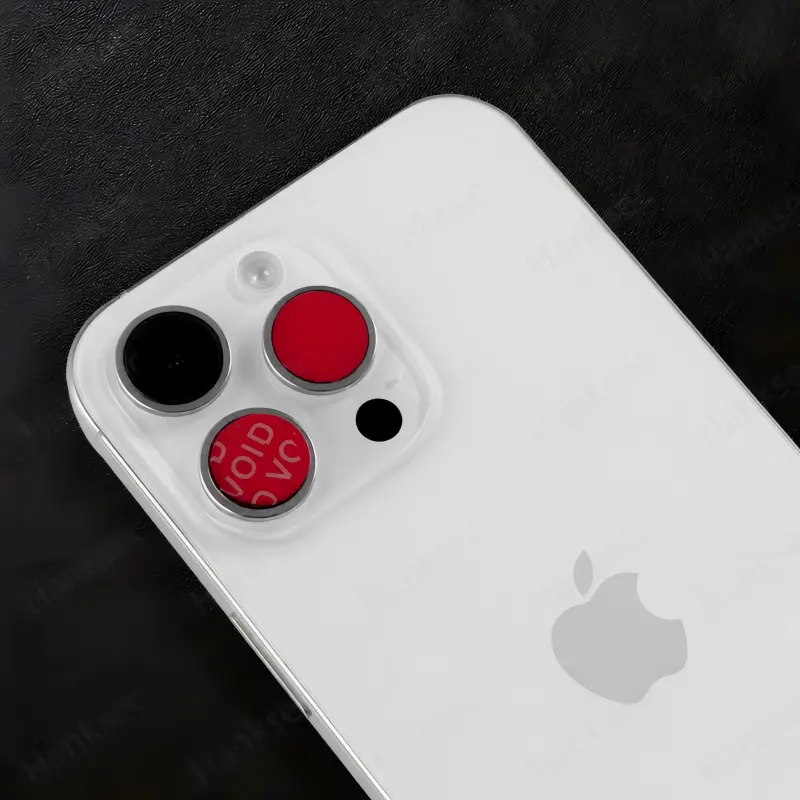
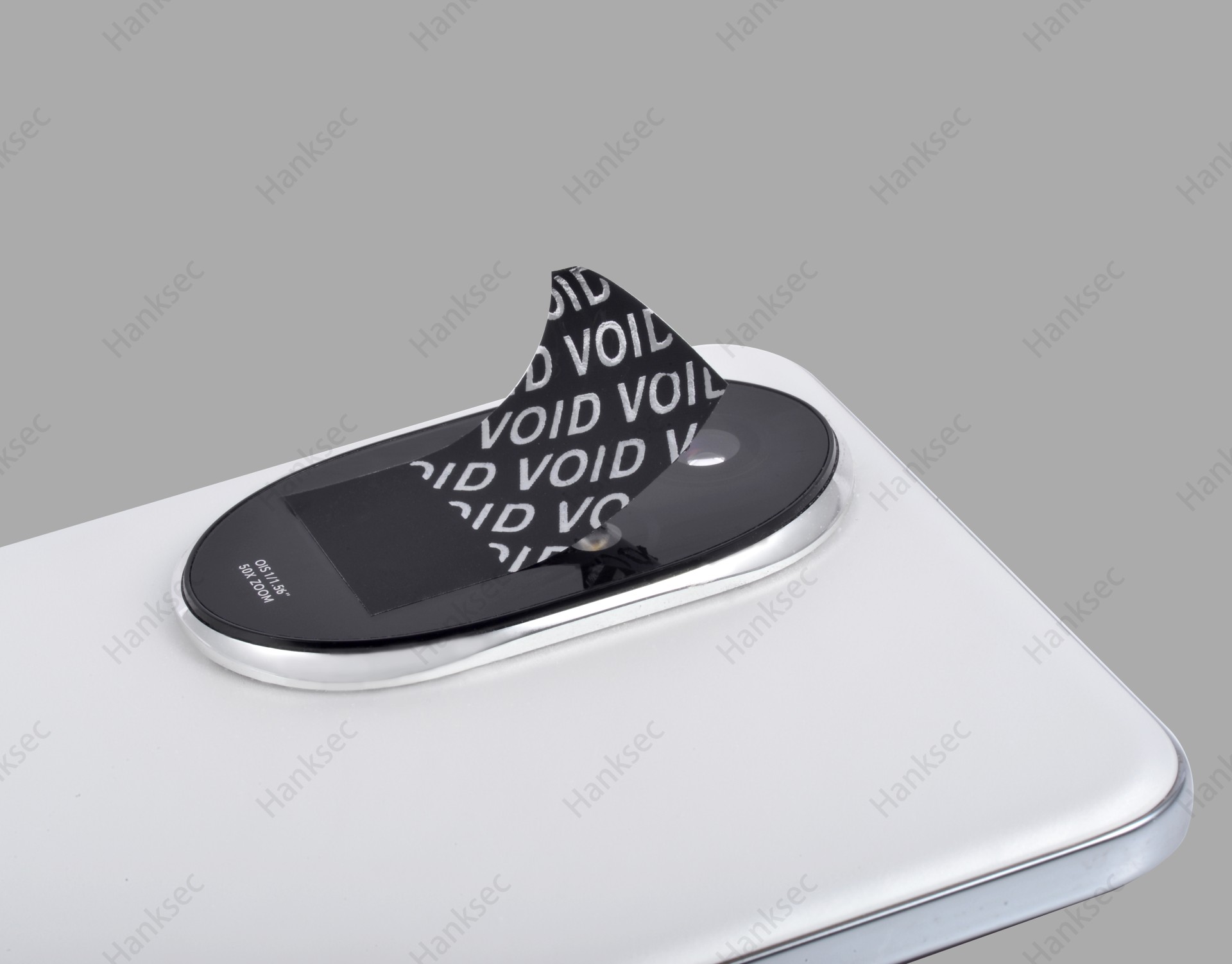
No photography phone camera stickers are small security labels applied over smartphone cameras before a visitor, contractor, employee, supplier, auditor, or temporary worker enters a restricted area. Their primary function is to prevent the camera lens from capturing images or videos while providing visible evidence if the label has been removed, lifted, replaced, or tampered with.
Unlike ordinary camera cover stickers, no photography phone camera stickers are not designed only for privacy. They are designed for security control. A normal sticker may cover the camera, but it often provides no proof if someone removes it and puts it back. A tamper evident camera sticker is different. Once removal is attempted, the label reveals a VOID, OPENED, TAMPERED, or custom warning message. This makes the removal attempt easy to detect during inspection.
These stickers are also called:
- Phone camera stickers
- No camera allowed stickers
- Camera blocking stickers
- Camera blocking VOID security labels
- Tamper evident camera stickers
- Mobile phone camera labels
- Visitor phone camera stickers
- Non-transfer VOID camera labels
- Low-residue camera security labels
- Webcam security labels
- USB port security labels
For buyers, the most important point is that no photography phone camera stickers are part of a controlled facility security process. They help security teams enforce a no-photography policy without completely removing personal devices from visitors.
Why No Photography Policies Need Physical Camera Control
A no photography policy is only effective when it can be enforced and verified. Many companies display signs such as “No Photography,” “No Camera Allowed,” or “Confidential Area,” but signs alone do not stop a smartphone camera from being used. A visitor can still take a photo in seconds, send it to a messaging app, upload it to cloud storage, or delete it before exit inspection.
This risk is especially serious in:
- Electronics manufacturing plants
- Battery factories
- Automotive R&D centers
- Pharmaceutical laboratories
- Medical device production sites
- Printing facilities
- Aerospace workshops
- Data centers
- Government facilities
- High-value product showrooms
- Prototype testing areas
- OEM and ODM factories
For many organizations, collecting every visitor’s phone at the reception desk is difficult. It can create delays, storage problems, liability risks, visitor resistance, and workflow interruptions. Executives, engineers, customers, auditors, and suppliers may still need mobile phones for calls, authentication, translation, messaging, access approvals, or emergency contact. No photography phone camera stickers offer a middle solution: visitors keep their phones, but cameras are visibly blocked and controlled.
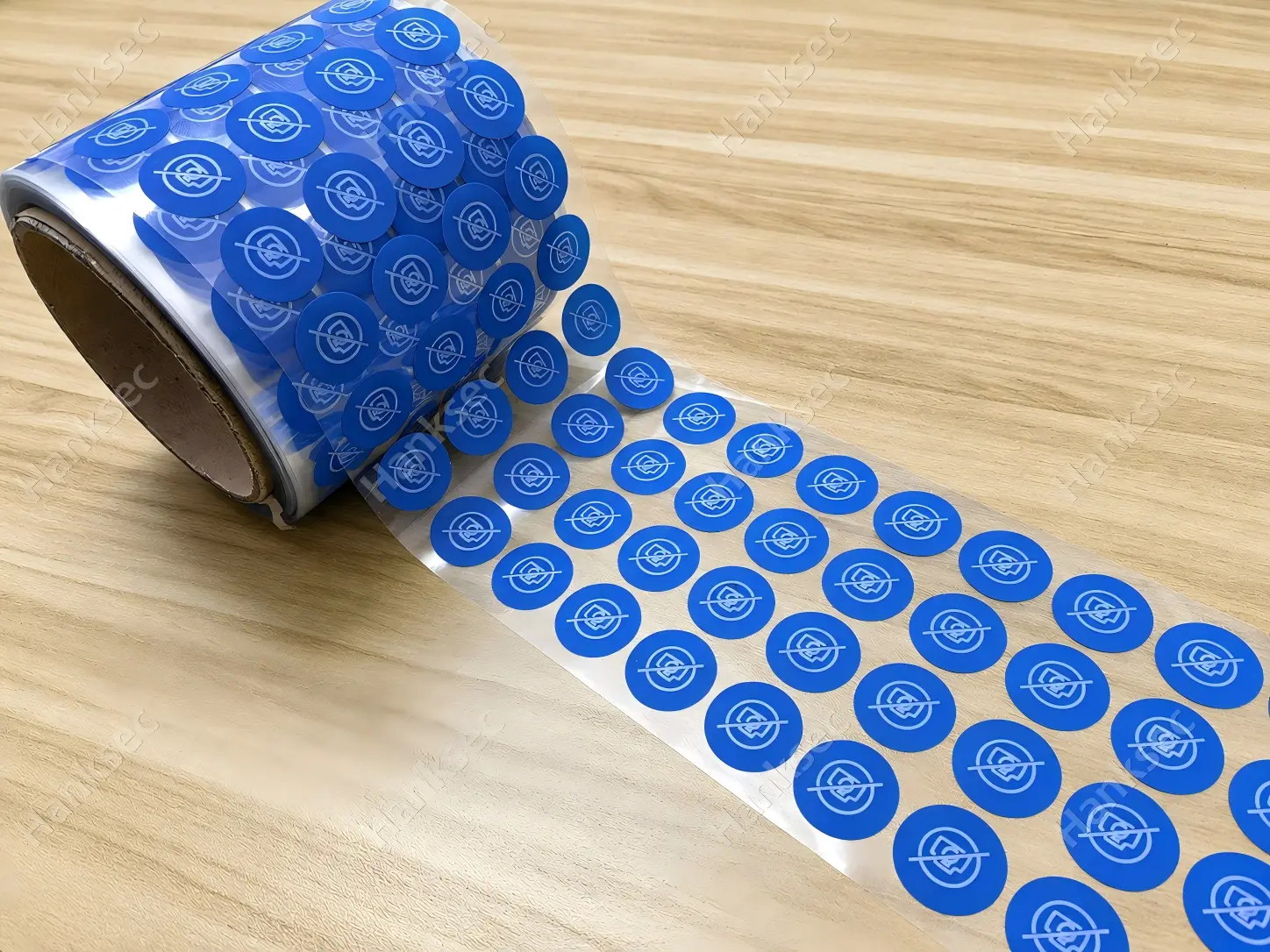
Wie VOID-Sicherheitsetiketten zur Kamerablockierung funktionieren
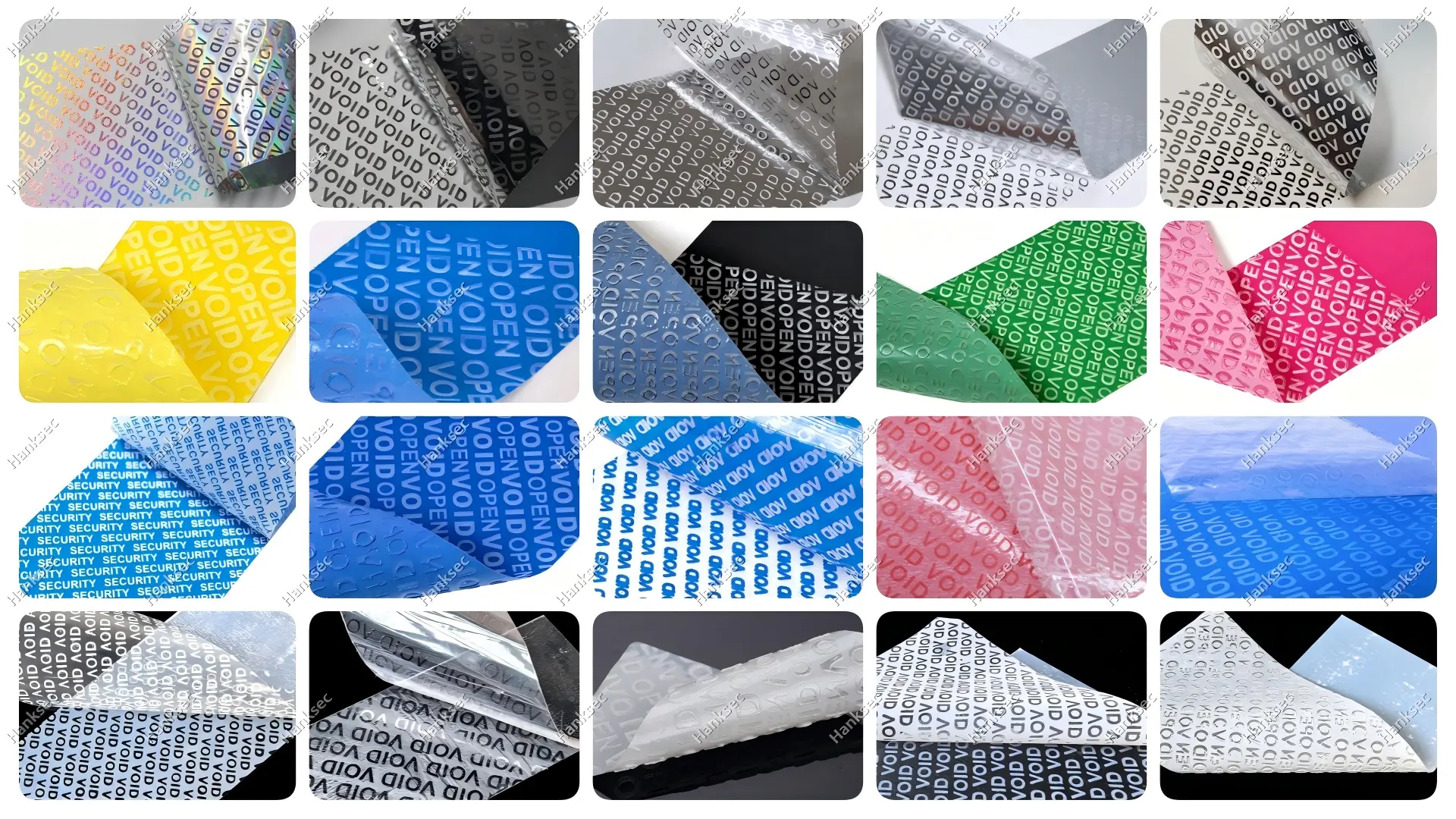
Camera blocking VOID security labels work through three main security layers: optical blocking, tamper evidence, and traceability.
Ein manipulationssicheres VOID-Etikett ist nicht automatisch kameraundurchlässig. Die Etikettenkonstruktion muss zwei separate Funktionen erfüllen: ausreichende Opazität, um brauchbare Bildaufnahmen zu verhindern, und eine Sicherheitsebene, die bei einem Entfernungsversuch sichtbare Spuren hinterlässt. Diese Funktionen sollten im Rahmen von Stichprobenprüfungen separat validiert werden.
Für Kameraanwendungen sind daher die Deckkraft des Oberflächenmaterials, die Druckdeckung, das Klebeverhalten, die Abmessungen und die Positionierung des Etiketts ebenso wichtig wie der VOID-Effekt selbst.
Optical Blocking
The first function is to physically block the camera lens. A camera can only capture an image when light reaches the sensor. A properly designed camera blocking label covers the lens area and prevents useful image capture during normal use.
Für die Versiegelung von Smartphone-Kameras muss das Etikett exakt dimensioniert und positioniert sein. Moderne Smartphones verfügen über Front- und Rückkameras, Weitwinkel-, Tele- und Makroobjektive, Blitzgeräte, LiDAR-Module, Tiefensensoren und Infrarotkomponenten. Ein Sicherheitsteam muss entscheiden, welche Kameramodule abgedeckt werden müssen und ob der Aufkleber nur ein einzelnes Objektiv oder die gesamte Kameraeinheit bedecken soll. Tests sollten bestätigen, ob alle Kameramodi nach der Versiegelung noch aktiv sind. Smartphones mit mehreren Kameras können unterschiedliche Objektive für Standard-, Weitwinkel-, Tele- und andere Aufnahmemodi verwenden. Daher reicht eine reine Sichtprüfung des Aufklebers nicht aus. Das versiegelte Gerät muss vor Betreten des Sicherheitsbereichs mit den tatsächlichen Kamerafunktionen überprüft werden.
For webcams, the label must cover the laptop camera opening without damaging the display frame. For USB port sealing, the label must cover the port entrance or panel area while providing visible removal evidence.
VOID Tamper Evidence
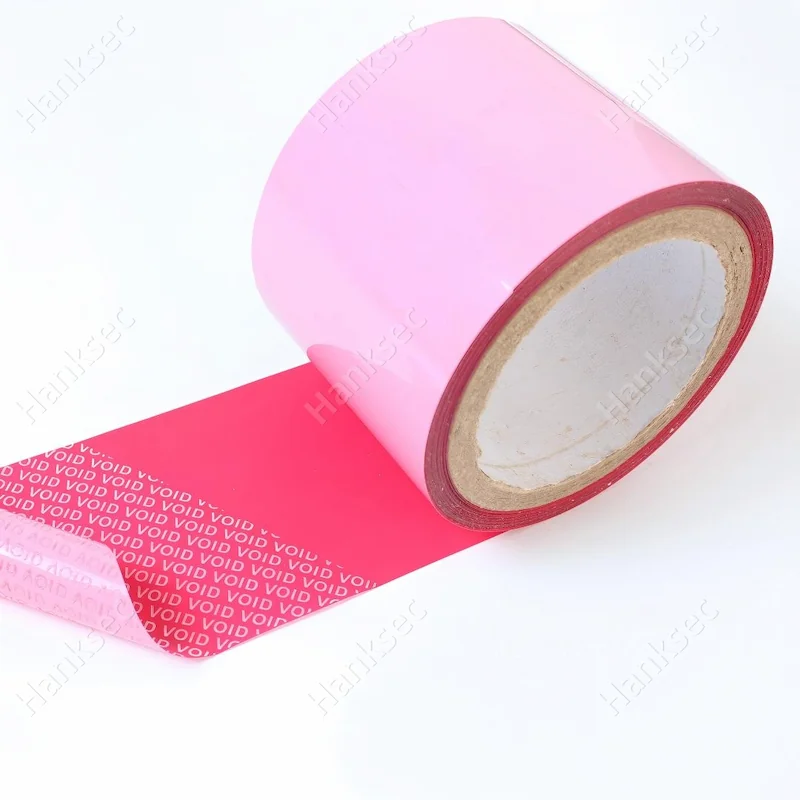
The second function is tamper evidence. If the label is removed, it reveals a visible message or pattern. Depending on the material structure, the message can appear on the label film, on the device surface, or on both.
Common tamper messages include:
- LEERE
- GEÖFFNET
- TAMPERED
- SICHERHEIT
- NO CAMERA
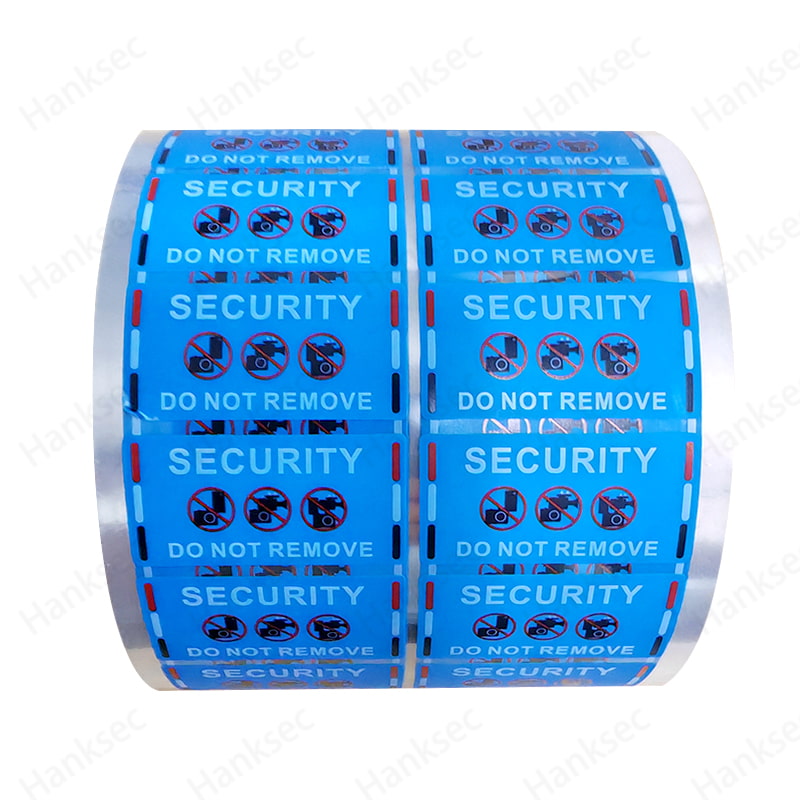
- DO NOT REMOVE
- CUSTOM LOGO TEXT
For phones, webcams, and electronic devices, many buyers prefer non-transfer VOID or low-residue tamper evident camera stickers. This structure allows the tamper message to appear mainly on the label itself while reducing residue on the device surface. This is important because the label is often applied to personal smartphones, visitor devices, laptops, or company IT assets that should not be permanently damaged.
Serialization and Audit Control
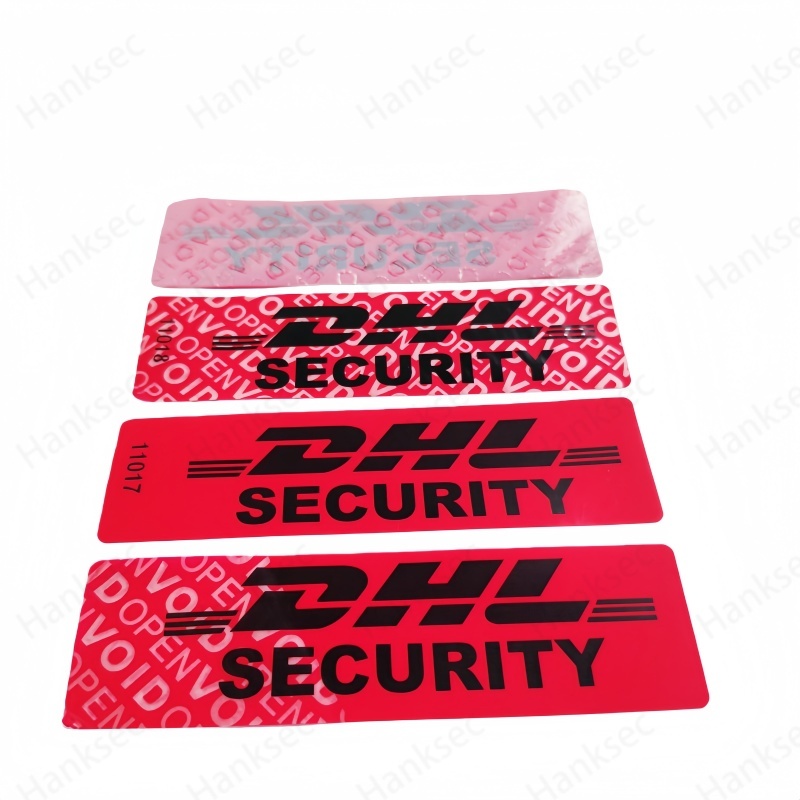
The third function is traceability. A no photography phone camera sticker can include a serial number, QR code, barcode, date code, daily color, visitor batch number, or company logo. This turns a simple sticker into an auditable security tool.
Security staff can record:
- Visitor name
- Company name
- Device type
- Sticker serial number
- Entry time
- Exit time
- Inspection result
- Incident notes
ISO/IEC 27001:2022 bietet einen Rahmen für die Einrichtung und Verbesserung eines Informationssicherheitsmanagementsystems auf Basis des organisatorischen Risikos. Kamerablockierungsetiketten sind keine Anforderung der ISO/IEC 27001, können aber, wenn sie im Rahmen der eigenen Risikobewertung der Organisation ausgewählt werden, ein umfassenderes physisches Sicherheitsverfahren oder ein Verfahren für Kontrollbereiche unterstützen.
No Photography Phone Camera Stickers vs Ordinary Camera Cover Stickers
Not all camera stickers are security labels. Many low-cost camera cover stickers are used for personal privacy. They may block a webcam, but they are not designed for industrial security inspection.
| Besonderheit | Ordinary Camera Cover Sticker | No Photography Phone Camera Sticker |
|---|---|---|
| Hauptzweck | Privatsphäre und grundlegende Kameraabdeckung | Sicherheitsmaßnahmen im Kontrollbereich und Durchsetzung des Fotografierverbots |
| Kamerablockierung | Verdeckt normalerweise die Kamera physisch | Entwickelt, um den erforderlichen Kamerabereich im Rahmen eines kontrollierten Sicherheitsprozesses abzudecken. |
| Manipulationsnachweis | Normalerweise nicht enthalten | Liefert einen sichtbaren Nachweis, wenn das Etikett abgelöst, entfernt oder ersetzt wird |
| VOID-Effekt | Normalerweise nicht verfügbar | Verfügbar mit den Meldungen VOID, OPENED, TAMPERED oder benutzerdefinierten versteckten Nachrichten |
| Serial Number | Normalerweise nicht enthalten | Optional für Besucheridentifizierungs- und Inspektionsprotokolle |
| QR-Code / Barcode | Normalerweise nicht enthalten | Optional für Besucherprotokolle, Anlagendatensätze oder scanbasierte Arbeitsabläufe |
| Benutzerdefiniertes Logo | Eingeschränkt oder nicht erforderlich | Kann hinzugefügt werden, um die Kennzeichnung von betrieblich ausgegebenen Etiketten zu erleichtern. |
| Nutzung in eingeschränkten Bereichen | In erster Linie für den Schutz der Privatsphäre konzipiert. | Konzipiert für Inspektionen in kontrollierten Bereichen und Besucherprozeduren |
| Audit-Tracking | Normalerweise nicht enthalten | Optional über Seriennummern, QR-Codes, Barcodes oder Besucherdatensätze |
| Reinigungs- und Entfernungsoption | Variiert je nach Klebstoff- und Produktqualität | Für die temporäre Verwendung können nicht-transferierende oder rückstandsarme Konstruktionen ausgewählt werden. |
| Surface Compatibility | Üblicherweise für den allgemeinen Verbrauchergebrauch konzipiert | Die Kompatibilität und Prüfung sollten an die jeweilige Oberfläche (Glas, beschichteter Kunststoff, Metall oder andere Geräteoberflächen) angepasst werden. |
| Typische Anwendungen | Persönliche Laptops, Webcams und Datenschutz | Fabriken, Forschungs- und Entwicklungszentren, Rechenzentren, Labore, Ausstellungsräume und besucherkontrollierte Bereiche |
For confidential facilities, the real value is not only blocking the camera. The real value is proving whether the camera cover was removed during the visit. That is why camera blocking VOID security labels are more suitable than ordinary stickers for no-photography enforcement.
Common Applications of No Photography Phone Camera Stickers
Restricted Factory Visits
Factories that produce electronics, automotive parts, batteries, semiconductors, films, chemicals, medical devices, packaging technology, or high-value consumer products often allow customers and suppliers to visit. However, production lines, machine settings, material structures, tooling, quality control methods, and process layouts may be confidential.
No photography phone camera stickers allow visitors to keep their phones while giving security staff a visible inspection method. The label can be applied at reception and checked again at exit.
R&D Centers and Prototype Labs
R&D centers often contain unreleased products, engineering samples, testing fixtures, drawings, research equipment, trial materials, and confidential process data. A single unauthorized photograph can expose a prototype design or testing method.
For these locations, no photography phone camera stickers can be combined with visitor badges, NDA procedures, escorted access, and restricted-zone rules.
Data Centers and IT Rooms
Data centers may restrict photography because photos can reveal rack layouts, asset tags, cable routing, equipment brands, network diagrams, security cameras, access control devices, or operational details. USB port security labels may also be used to prevent unauthorized data transfer or port access.
The U.S. Federal Trade Commission notes that effective business data security plans can involve physical security, electronic security, employee training, and contractor or service provider practices. Camera blocking labels are not a replacement for cybersecurity, but they can support physical control over devices in sensitive environments.
Government and Defense Facilities
Government facilities, military suppliers, law enforcement facilities, defense contractors, and secure project locations may require stronger visitor control. In these environments, camera blocking VOID security labels can be customized with serial numbers, restricted area text, daily color systems, and anti-substitution features.
Printing Plants and Security Packaging Factories
Printing plants may handle bank documents, government documents, security labels, authentication stickers, coupons, serial labels, QR code products, tax stamps, payment cards, or anti-counterfeit materials. Unauthorized photos can expose customer artwork, numbering systems, printing plates, security patterns, or production batches.
No photography phone camera stickers are especially practical for printing and packaging factories because they are quick to apply and easy to inspect.
Private Showrooms and Product Launch Events
Brands sometimes show unreleased products to distributors, buyers, investors, or media partners before official launch. In these cases, camera blocking labels can reduce the risk of leaked images while allowing visitors to keep phones for business communication.
Applications Beyond Phone Cameras: Webcams, USB Ports and Device Interfaces
Ähnliche, nicht abfärbende, rückstandsarme und manipulationssichere VOID-Etikettenkonstruktionen lassen sich auch für Laptop-Webcams, USB-Anschlüsse, IT-Geräte und Schnittstellen anpassen. Diese Anwendungen erfüllen jedoch unterschiedliche Sicherheitsfunktionen und erfordern möglicherweise andere Abmessungen, Klebesysteme und Manipulationsschutzmechanismen.
Laptop Webcam Security Labels
Webcam security labels can be applied over laptop cameras used in meeting rooms, remote work devices, company laptops, training rooms, testing equipment, or visitor computers. They help confirm that the camera has not been used or exposed without permission.
USB Port Security Labels
USB port security labels are used to seal laptop ports, desktop ports, server interfaces, printers, testing machines, laboratory equipment, industrial control panels, and restricted data ports. They help detect unauthorized access to physical data interfaces.
IT Asset Security Labels
Serialized VOID labels can also be used for IT asset management. A QR code or barcode can link the label to an internal asset record, inspection log, or maintenance database.
Equipment Panel Seals
Larger VOID security labels can be applied across device panels, control boxes, tool cabinets, or testing equipment covers to show whether equipment has been opened or accessed.
Recommended Label Structures for Electronic Devices
Choosing the correct material structure is critical. A camera label may be applied to glass, coated plastic, painted metal, anodized aluminum, laptop frames, curved phone camera areas, or oleophobic surfaces. Each surface reacts differently.
Non-Transfer VOID Camera Labels
Non-transfer VOID labels Sie werden häufig für Smartphones und Laptops bevorzugt, da die Manipulationswarnung hauptsächlich auf der Etikettenfolie erscheint. Dies trägt dazu bei, Rückstände auf der Geräteoberfläche zu reduzieren. Sie eignen sich für Besuchertelefone, hochwertige Elektronik, saubere Oberflächen und temporäre Zutrittskontrolle. Für Käufer, die das Rückstandsverhalten vergleichen, bieten unsere Leitfaden für VOID-Etiketten gegen Fälschungen erläutert die Unterschiede zwischen Sicherheitskonstruktionen mit vollständiger Übertragung, teilweiser Übertragung und ohne Übertragung.
Low-Residue Tamper Evident Camera Stickers
Low-residue labels are designed to hold securely during normal handling but peel away more cleanly after inspection. The final performance depends on adhesive type, application time, pressure, temperature, device surface, and removal angle.
Partial-Transfer VOID Labels
Partial-transfer labels show tamper evidence on both the label and surface. They may be suitable for company-owned assets or equipment where stronger evidence is needed and some residue is acceptable.
Full-Transfer VOID Labels
Full-transfer labels leave a clear VOID message on the applied surface. They provide strong tamper visibility but are usually not the first choice for personal mobile phones because surface cleanliness is important.
Destructible Camera Seals
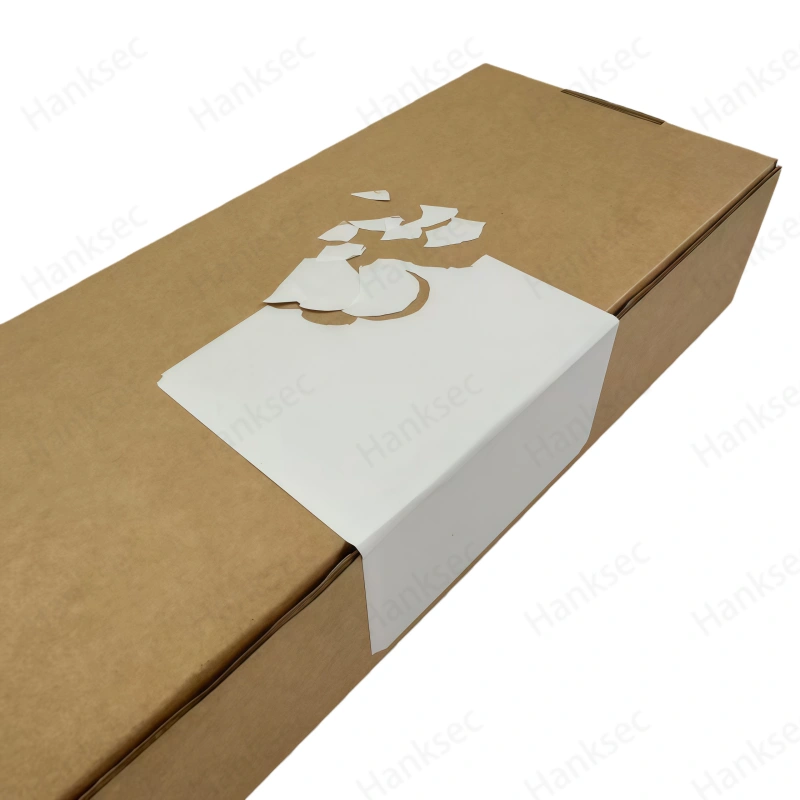
Für die dauerhafte Geräteverwaltung können selbstzerstörende Etiketten verwendet werden. Diese Etiketten zerbrechen beim Versuch, sie zu entfernen. Sie eignen sich besser für Anlagen, Schränke, Bedienfelder und den internen Sicherheitsbereich als für die temporäre Besuchertelefonkontrolle. Informationen zu dauerhaften Anwendungen für Geräte und Anlagen finden Sie in unserer [Website/Dokumentation einfügen]. Leitfaden für zerstörbare Etiketten für Materialarten, Bruchmuster und Auswahlkriterien.
Common Sizes for Phone Camera Stickers and Webcam Labels
The size of a no photography phone camera sticker depends on the device, lens layout, required visibility, and whether the label needs branding or serial data.
| Size | Typical Use | Notes |
| 8 × 8 mm | Small lens cover | Suitable for compact phone camera points |
| 10 × 10 mm | Single camera lens | Common for small round or square labels |
| 12 × 10 mm | Small phone camera area | Works in limited surface space |
| 15 × 10 mm | Front camera or small webcam | Good for minimal visual impact |
| 20 × 10 mm | Phone camera, webcam, USB port | Practical for many devices |
| 30 × 10 mm | Laptop webcam, USB port, phone camera seal | Better for warning text |
| 40 × 15 mm | Device interface sealing | Allows serial number and logo |
| 50 × 25 mm | Equipment panel or asset seal | Suitable for QR code or barcode |
| 50 × 35 mm | Larger equipment label | Good for asset tracking |
| 150 × 25 mm | Long panel security seal | Used for larger openings or covers |
For phone camera stickers, 12 × 10 mm, 20 × 10 mm, and 30 × 10 mm are common sizes. For laptop webcams and USB ports, 20 × 10 mm or 30 × 10 mm is often easier to inspect. For QR code, barcode, logo, or serial number printing, a larger label may be required.
Customization Options for No Photography Phone Camera Stickers
buyers often require custom camera blocking VOID security labels because each facility has different procedures, devices, branding rules, and security levels.
Common customization options include:
Custom Warning Text
Examples include:
- NO PHOTOGRAPHY
- NO CAMERA ALLOWED
- CAMERA SEALED
- DO NOT REMOVE
- SECURITY CHECKED
- VISITOR CAMERA CONTROL
- CONFIDENTIAL AREA
- PHOTO IS PROHIBITED
- USB PORT SEALED
Company Logo
Ein individuelles Logo erleichtert die Erkennung unautorisierter Austausche, da das Sicherheitspersonal das vom Unternehmen ausgegebene Etikett von einem Standardaufkleber unterscheiden kann. Es hilft den Wachleuten außerdem, authentische Etiketten schnell zu identifizieren.
Serial Number
Sequential numbering helps link each label to a visitor record. Serial numbers can be printed as simple numbers, alphanumeric codes, barcodes, QR codes, or Data Matrix codes.
QR Code or Barcode
QR codes can support visitor logs, asset tracking, inventory systems, inspection records, and scan-to-verify workflows.
Daily Color System
Some facilities use different colors for different days, visitor groups, shifts, zones, or security levels. This makes replacement harder.
Custom Shape
Rectangle, rounded rectangle, circle, oval, square, long strip, camera-icon shape, or die-cut label shapes can be used depending on the device.
Custom VOID Message
The hidden message can be VOID, OPENED, TAMPERED, SECURITY, company initials, or another custom warning.
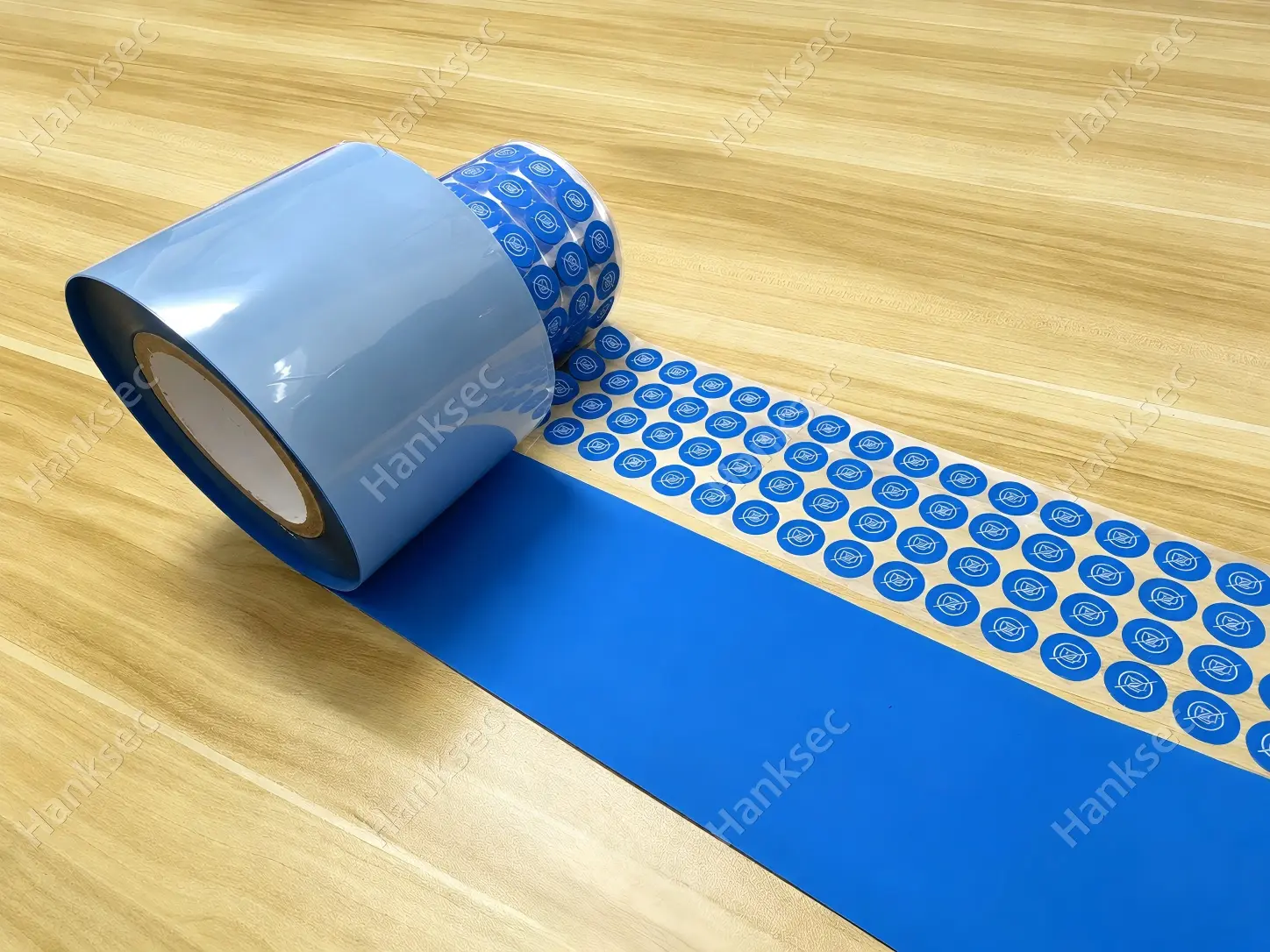
Roll or Sheet Packing
Roll packing is suitable for fast application in high-volume reception areas. Sheet packing may be preferred for manual inspection kits, security offices, or small-batch visitor control.
How to Use No Photography Phone Camera Stickers from Entry to Exit
A good product must be matched with a clear process. The following workflow can help organizations build a consistent no-photography enforcement procedure.
1: Visitor Check-In
At reception, security staff confirm whether the visitor is entering a restricted area. The visitor is informed of the no-photography policy and the temporary camera sealing process.
2: Device Identification
Staff identify all devices with cameras, such as mobile phones, tablets, laptops, external webcams, smart glasses, or testing devices. For high-security sites, multiple devices may be recorded.
3: Surface Cleaning
The lens or application surface should be clean, dry, and free of dust, oil, or moisture. A dry microfiber cloth is usually enough for basic cleaning. Strong solvents should be avoided unless approved by the device owner and facility policy.
4: Label Application
Der Aufkleber „Fotografieren mit dem Handy verboten“ wird über der Kameralinse oder dem Kameramodul angebracht. Das Personal sollte ihn leicht andrücken und sicherstellen, dass er vollständig anliegt. Bei Handys mit mehreren Kameras muss jede Kamera separat abgedeckt werden. Bei modernen Geräten mit mehreren Sensoren sollte das Sicherheitspersonal im Voraus eine genehmigte Anbringungsmethode festlegen. Der Aufkleber muss die Kameralinse abdecken und gleichzeitig andere Sensoren, Blitzkomponenten oder Gerätefunktionen freihalten, es sei denn, die Hausordnung schreibt deren Abdeckung ausdrücklich vor.
5: Serial Number Logging
If the label includes a serial number, QR code, or barcode, the code is recorded in the visitor system or paper log. The record should include the visitor name, device type, entry time, and label number.
6: Internal Visual Inspection
During the visit, guards or floor staff can visually confirm that the label remains intact. Bright label colors, company logos, or warning text make inspection easier.
7: Exit Inspection
At exit, security staff check whether the label is intact and whether the serial number matches the entry record. If the label is intact, the visitor can remove it under supervision or staff can remove it according to policy.
8: Incident Handling
If a label shows VOID, OPENED, damage, replacement, mismatch, or missing condition, staff should follow the facility’s incident procedure. The process may include supervisor review, visitor interview, photo log, device policy review, or access report.
Procurement Checklist: What Buyers Should Prepare Before Requesting a Quote
To receive an accurate quote for no photography phone camera stickers, buyers should prepare clear information. This reduces back-and-forth communication and improves sample success.
| Quotation Item | Warum das wichtig ist |
| Application device | Phone, laptop, webcam, USB port, asset, equipment |
| Label size | Determines die-cutting, artwork layout, and material cost |
| Materialstruktur | Non-transfer, low-residue, partial-transfer, full-transfer |
| Surface type | Glass, plastic, metal, painted surface, coated surface |
| Residue requirement | Clean removal, low residue, strong tamper evidence |
| Printing color | Brand color, warning color, daily color |
| Logo and artwork | Needed for layout approval |
| Seriennummer | Needed for traceability and inspection |
| QR code or barcode | Needed for scan-based workflow |
| Packing method | Roll, sheet, small pack, inspection kit |
| Quantity | Affects printing method and unit price |
| Sample testing | Required for real surface validation |
| Delivery country | Needed for freight and customs planning |
For electronic device applications, sample testing is essential. Different phones, laptop frames, screen bezels, camera glass, and protective coatings may behave differently. Adhesive performance can also change with temperature, humidity, application pressure, and time.
Material Performance Factors Buyers Should Evaluate
Die Leistungsfähigkeit von Kameraetiketten hängt von der Wechselwirkung zwischen Obermaterial, Sicherheitsschichten, Klebstoff, Beschichtung und der endgültigen Geräteoberfläche ab. UnsereLeitfaden für Sicherheitsetikettenmaterialsysteme erklärt, wie diese Schichten in manipulationssicheren Konstruktionen zusammenwirken.
Optical Blocking Performance
The label must physically cover the required camera area. For special devices, buyers should test whether any camera angle, ultra-wide lens, or sensor remains exposed.
Adhesion Stability
The sticker should remain attached during normal visitor movement, pocket storage, hand contact, and temporary handling.
Clean Removal
For personal devices, the label should remove cleanly or with minimal residue. Non-transfer or low-residue structures are usually preferred.
Sichtbarkeit der Manipulationssicherung
The VOID or tamper message should be obvious enough for security staff to identify quickly.
Print Durability
Logo, warning text, serial number, and QR code should remain readable during the visit.
Surface Compatibility
Labels should be tested on actual target surfaces, including phone glass, camera lens cover, laptop plastic, painted metal, and anodized aluminum.
Temperature and Humidity Resistance
Factories, warehouses, outdoor areas, and tropical climates may require stronger materials or adhesive systems.
Why HANKSEC Recommends Sample Testing Before Mass Production
Aufkleber für Handykameras sind nicht sehr anwendungsspezifisch. Derselbe Aufkleber kann sich auf Kameraglas, beschichtetem Kunststoff, eloxiertem Aluminium, lackierten Oberflächen, Schutzfolien oder gewölbten Kamerainseln unterschiedlich verhalten.
Vor der Massenproduktion empfiehlt Hanksec, repräsentative Geräte zu testen, um die optische Blockierung, die Haftstabilität, das Verhalten bei der sauberen Entfernung, die Klarheit der VOID-Nachricht, die Etikettengröße und -positionierung, die Haltbarkeit des Drucks, die Lesbarkeit von QR- oder Barcodes und das endgültige Erscheinungsbild nach der Entfernung zu bestätigen.
Ein freigegebenes Muster sollte dann als Referenz für die endgültige Produktionsspezifikation aufbewahrt werden.
Sample testing helps confirm:
- Whether the label fully covers the camera
- Whether the sticker stays attached during handling
- Whether removal is clean enough
- Whether the VOID effect is visible
- Whether the size fits the device
- Whether printed text remains readable
- Whether serial numbers scan properly
- Whether the label meets internal security procedures
For this reason, professional buyers should test samples on real devices before confirming mass production.
Internal Security Policy: How Camera Blocking Labels Fit into a Larger System
No photography phone camera stickers should be treated as one layer of a broader information security and physical security program.
A strong program may include:
- Visitor registration
- NDA signing
- Restricted area signs
- Escorted access
- Device camera sealing
- USB port sealing
- Badge control
- CCTV monitoring
- Security training
- Exit inspection
- Incident reporting
- Audit logs
The U.S. Federal Trade Commission’s business security guidance emphasizes that protecting information can involve physical security, electronic security, training, and contractor practices. ISO/IEC 27001 also promotes a systematic risk management approach to information security. In practice, camera blocking VOID security labels support the physical and procedural side of that system.
Camera Blocking Labels and Trade Secret Protection
For manufacturers, one of the biggest risks of unauthorized photography is the exposure of trade secrets. Trade secrets may include formulas, designs, production methods, process settings, customer lists, supplier data, testing results, and confidential engineering information.
WIPO-Leitfaden zu Geschäftsgeheimnissen Es wird erläutert, dass geschützte vertrauliche Informationen im Allgemeinen einen kommerziellen Wert besitzen, da sie geheim sind, nur einem begrenzten Personenkreis bekannt sind und der Inhaber angemessene Maßnahmen zum Schutz ihrer Geheimhaltung ergreift. Physische Zugangskontrollen, Vertraulichkeitsverfahren und andere Sicherheitsvorkehrungen können Teil dieser umfassenderen Schutzstrategie sein. Ein Besucherverbot, unterstützt durch manipulationssichere Aufkleber an den Kameras, kann verdeutlichen, dass das Unternehmen den physischen Schutz ernst nimmt.
This is especially important for OEM and ODM factories. Many customers share product drawings, prototypes, packaging designs, confidential materials, and production instructions with manufacturing partners. A visible camera control process can help strengthen trust during customer visits.
Auswahlmatrix für verschiedene Sicherheitsszenarien
| Scenario | Recommended Label Type | Reason |
| Visitor phone camera control | Non-transfer VOID camera label | Clean surface and visible tamper evidence |
| Laptop webcam sealing | Low-residue tamper evident label | Temporary use and easy inspection |
| USB port security | Partial-transfer or non-transfer VOID label | Shows access attempt |
| Company-owned IT assets | Serialized VOID security label | Supports asset tracking |
| Equipment panels | Destructible or partial-transfer label | Stronger anti-opening evidence |
| High-security labs | Custom logo + serial number + daily color | Reduces substitution risk |
| Private showroom | No photography warning label | Professional visitor control |
| Printing factory | Camera and USB port labels | Protects artwork, plates, and codes |
Common Mistakes When Buying No Photography Phone Camera Stickers
1: Choosing Ordinary Stickers Instead of Tamper Evident Labels
A normal sticker may block the camera, but it does not prove whether the visitor removed it during the visit.
2: Using Strong Residue Labels on Personal Phones
If the adhesive is too aggressive, it may leave residue or create complaints. For visitor devices, low-residue or non-transfer options are usually safer.
3: Forgetting Front Cameras
Many security teams only cover rear cameras, but front cameras may still capture images or video.
4: Ignoring Multi-Lens Phones
Modern phones may have multiple rear lenses. Each lens must be controlled.
5: No Serial Number Control
Without serial numbers, it is harder to prevent sticker replacement or confirm which label was issued to which visitor.
6: No Sample Testing
Surface compatibility should always be tested before mass production.
7: No Exit Inspection
If staff do not check labels at exit, the label becomes only a visual warning rather than an auditable control.
FAQs: No Photography Phone Camera Stickers
What are no photography phone camera stickers?
No photography phone camera stickers are tamper evident labels applied over smartphone cameras to prevent unauthorized photography in restricted areas. If removed, they show visible tamper evidence such as VOID, OPENED, or a custom warning message.
How are phone camera stickers different from ordinary camera cover stickers?
Ordinary camera cover stickers only block the camera. Tamper evident phone camera stickers block the camera and show visible evidence if someone removes or replaces the label.
Do camera blocking VOID security labels damage phones?
Kein Klebeetikett sollte als universell für alle Oberflächen von Mobiltelefonen geeignet angesehen werden. Für temporäre Anwendungen auf elektronischen Geräten können abriebfeste oder rückstandsarme Konstruktionen entwickelt werden. Die Leistungsfähigkeit hängt jedoch vom Klebstoff, der Anwendungsdauer, der Temperatur, der Schutzbeschichtung, der Glas- oder Kunststoffoberfläche und der Entfernungsmethode ab. Vor einer großflächigen Anwendung werden Stichproben an repräsentativen Geräten empfohlen.
Can these labels be used on iPhone and Android cameras?
Yes. They can be designed for different phone models, including iPhone and Android devices. Multi-camera phones may require multiple stickers or a custom die-cut shape.
What is the best VOID type for phone camera stickers?
For visitor phones and personal devices, non-transfer VOID labels or low-residue tamper evident camera stickers are usually preferred because they reduce residue on the device surface while still showing tamper evidence.
Can we add serial numbers or QR codes?
Yes. Serial numbers, QR codes, barcodes, Data Matrix codes, date codes, and visitor tracking codes can be added for audit and inspection workflows.
What sizes are common for phone camera stickers?
Common sizes include 8 × 8 mm, 10 × 10 mm, 12 × 10 mm, 20 × 10 mm, and 30 × 10 mm. The correct size depends on the camera module, device design, and whether warning text or serial numbers are required.
Are no photography phone camera stickers waterproof?
PET-based security labels can offer good moisture resistance, but waterproof performance depends on the exact material, printing method, adhesive, and application surface.
Fertigungskapazität von HANKSEC
HANKSEC Wir sind spezialisiert auf manipulationssichere Sicherheitsmaterialien und maßgeschneiderte Sicherheitsetiketten für Käufer, Verarbeiter, Hersteller und Markenschutzprojekte. Für Aufkleber, die das Fotografieren mit dem Handy verhindern, und VOID-Sicherheitsetiketten, die Kameras blockieren, unterstützen wir Projekte von der Materialauswahl über den individuellen Druck bis hin zur Serienproduktion. Käufer, die sich für nicht-, teilweise oder vollständig übertragbare Konstruktionen interessieren, können sich auch bei Hanksec informieren. manipulationssichere VOID-Etikettenmaterialien vor der Auswahl des endgültigen Kamera-Etiketten-Formats.
Our capabilities include:
- Non-transfer VOID camera labels
- Low-residue tamper evident phone camera stickers
- Custom no photography warning labels
- Webcam security labels
- USB port security labels
- Serialized visitor device control labels
- Custom logo and QR code printing
- Roll or sheet packing
- OEM and ODM security label production
- Sample testing support before bulk orders
Bei Projekten zur Sicherheit elektronischer Geräte bewertet Hanksec das gesamte Etikettensystem und nicht nur das gedruckte Erscheinungsbild. Die Projektfreigabe kann die Überprüfung der optischen Blockierung, Haftungs- und Ablösetests, die Verständlichkeit der VOID-Meldung, die Stanzgenauigkeit, die Haltbarkeit des Drucks, die Lesbarkeit von Seriennummern oder QR-Codes sowie die Chargenkonsistenz umfassen.
Bei kundenspezifischen Kamera-Etiketten-Projekten können freigegebene Muster als Produktionsreferenzen verwendet werden, um Größe, Öffnungsverhalten, Klebeleistung und aufgedruckte Kennzeichnung vor der Massenproduktion zu bestätigen.
Secure Restricted Areas with HANKSEC No Photography Phone Camera Stickers
Unauthorized photography can expose prototypes, production methods, technical layouts, customer artwork, trade secrets, and confidential business information. No photography phone camera stickers provide a practical and visible control method for restricted areas without forcing every visitor to surrender their phone.
If you are developing a no-photography policy for factories, laboratories, data centers, R&D centers, showrooms, or confidential production sites, HANKSEC can help you create customized camera blocking VOID security labels based on your device type, inspection workflow, logo, size, color, serial number system, and residue requirement.
Contact HANKSEC to request free samples, technical datasheets, artwork support, or OEM/ODM pricing for no photography phone camera stickers, tamper evident camera stickers, webcam security labels, and USB port security labels.