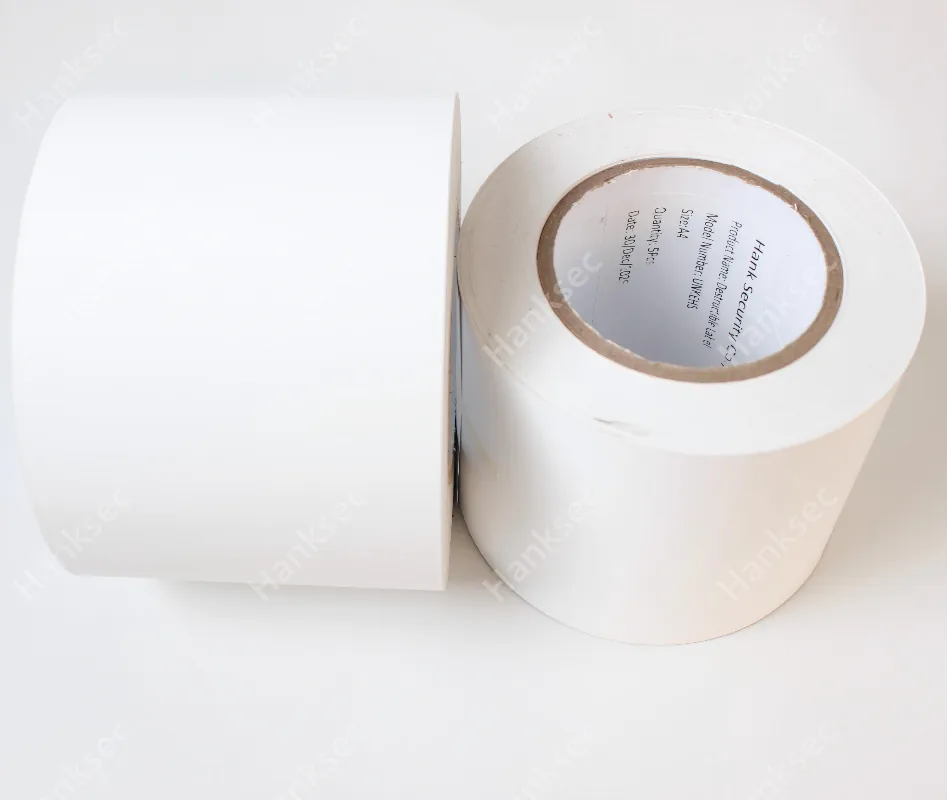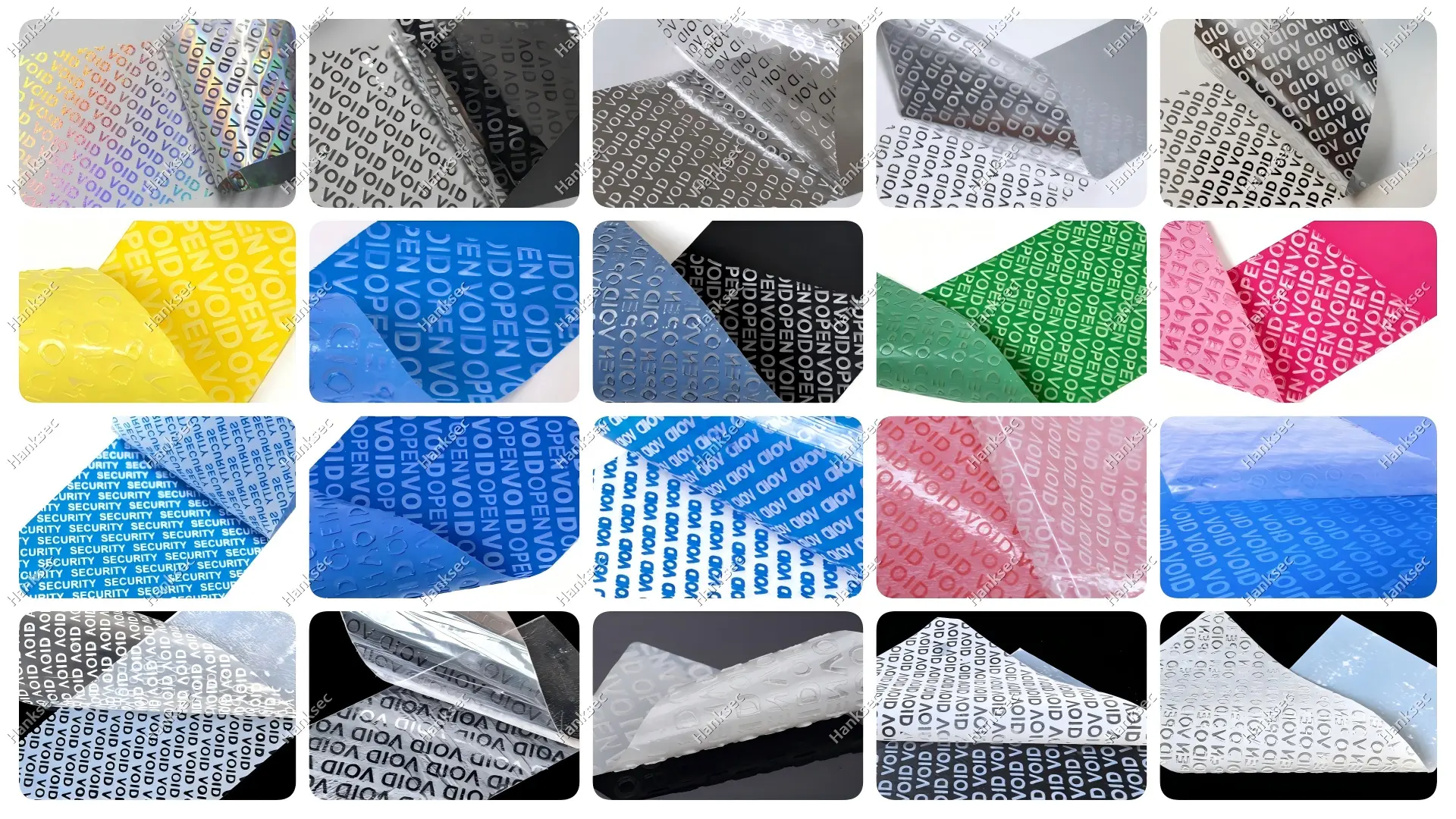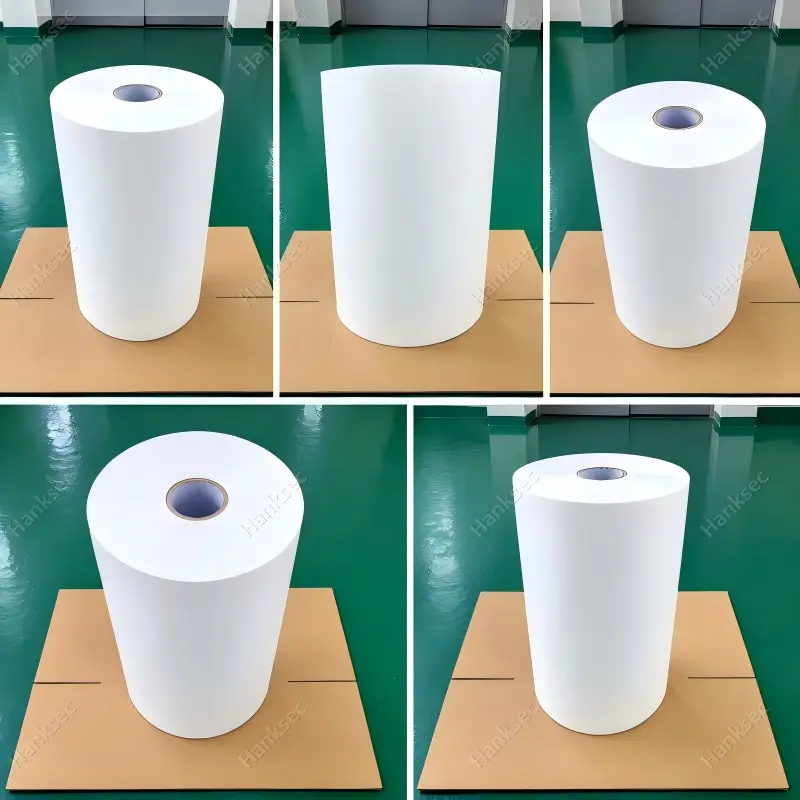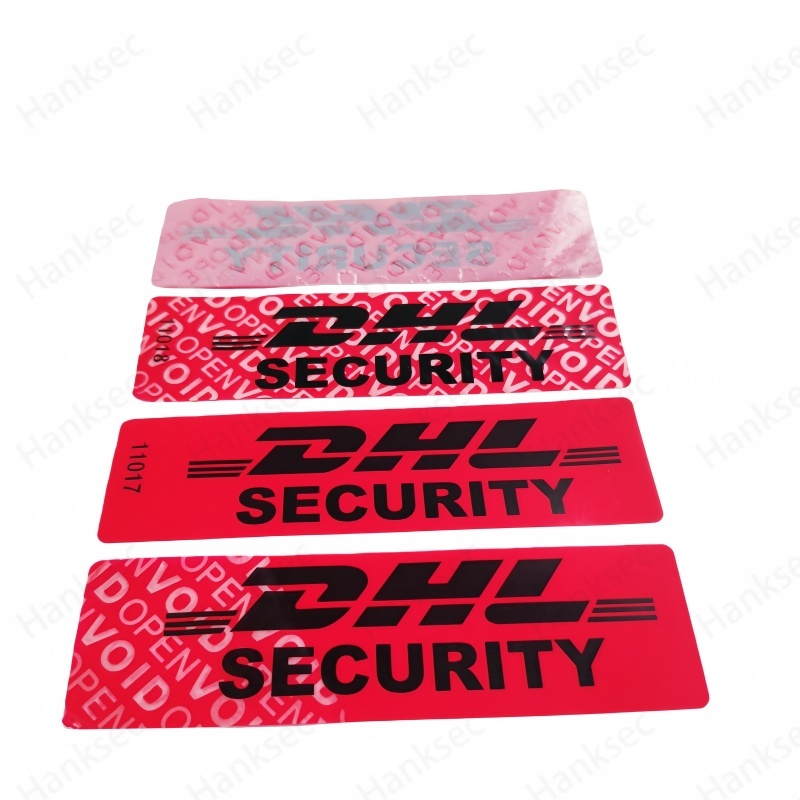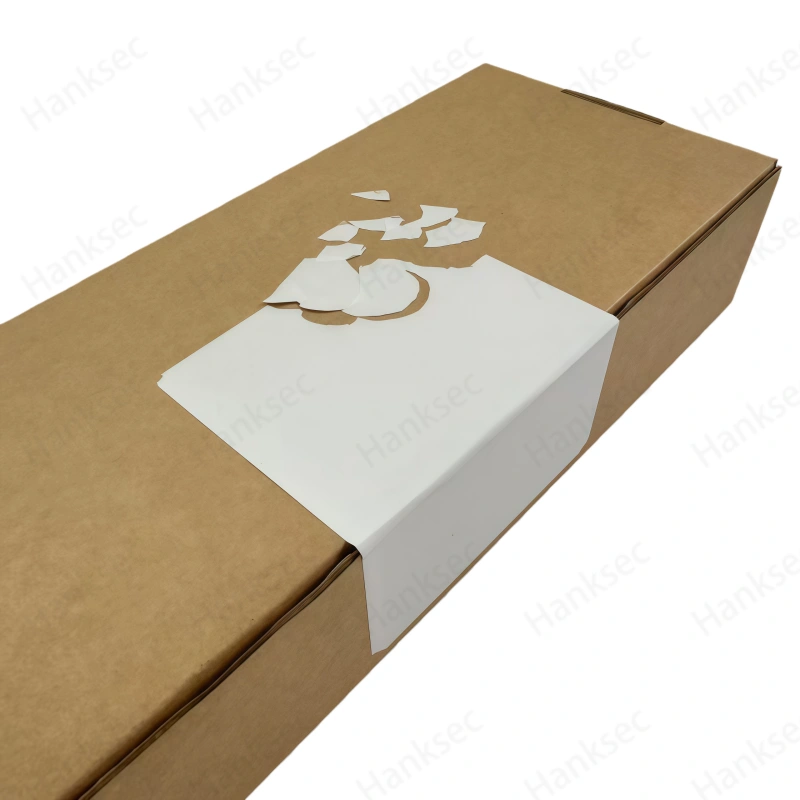
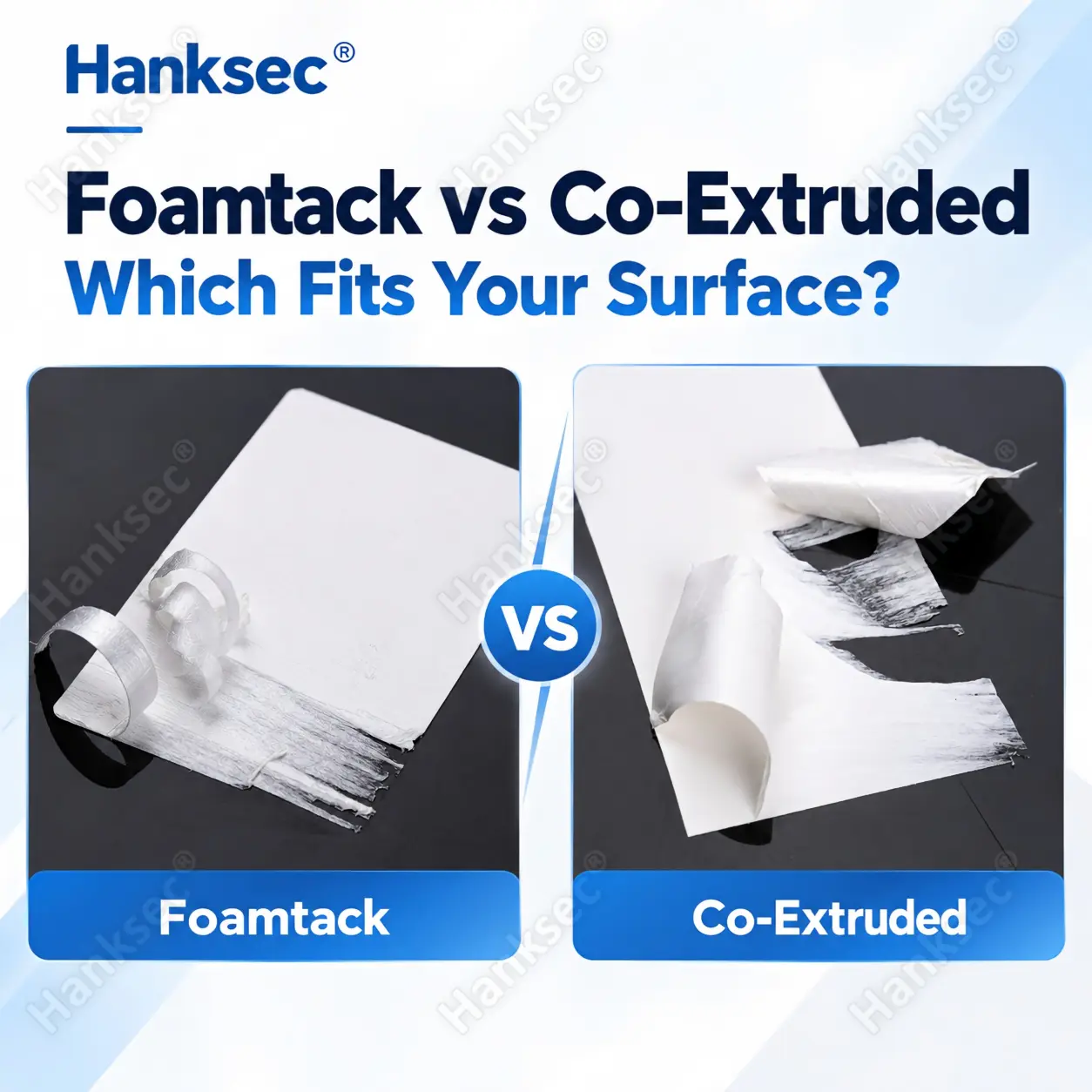
Risposta rapida: Foamtack vs co-extruded destructible labels is mainly a choice between surface conformity E controlled film handling. Foamtack constructions are useful when a rough or textured surface makes intimate contact difficult. Co-extruded destructible films are often a practical starting point for larger labels, stable converting and automatic application. Neither is automatically more secure: the adhesive must bond well enough for the finished label to break when removal is attempted.
Foamtack vs Co-Extruded Destructible Labels: Quick Comparison
| Punto di selezione | Foamtack Destructible Material | Co-Extruded Destructible Film |
|---|---|---|
| Main design priority | Surface contact on uneven substrates | Balance of breakage and handling strength |
| Construction direction | Foam-based/conformable layer with destructible function | Engineered multi-layer film with adjustable destructibility |
| Typical starting surfaces | Textured plastic, slightly uneven panels, rough cartons | Smooth or moderately curved housings, flat equipment panels |
| Converting priority | Check compression, cutting depth and edge stability | Check fragmentation grade, matrix stripping and dispensing |
| Main risk to investigate | Incomplete adhesion despite apparent contact | Film lifts intact or breaks during converting |
| Formato di fornitura | Jumbo rolls or slit rolls for converters | Jumbo rolls or slit rolls for converters |
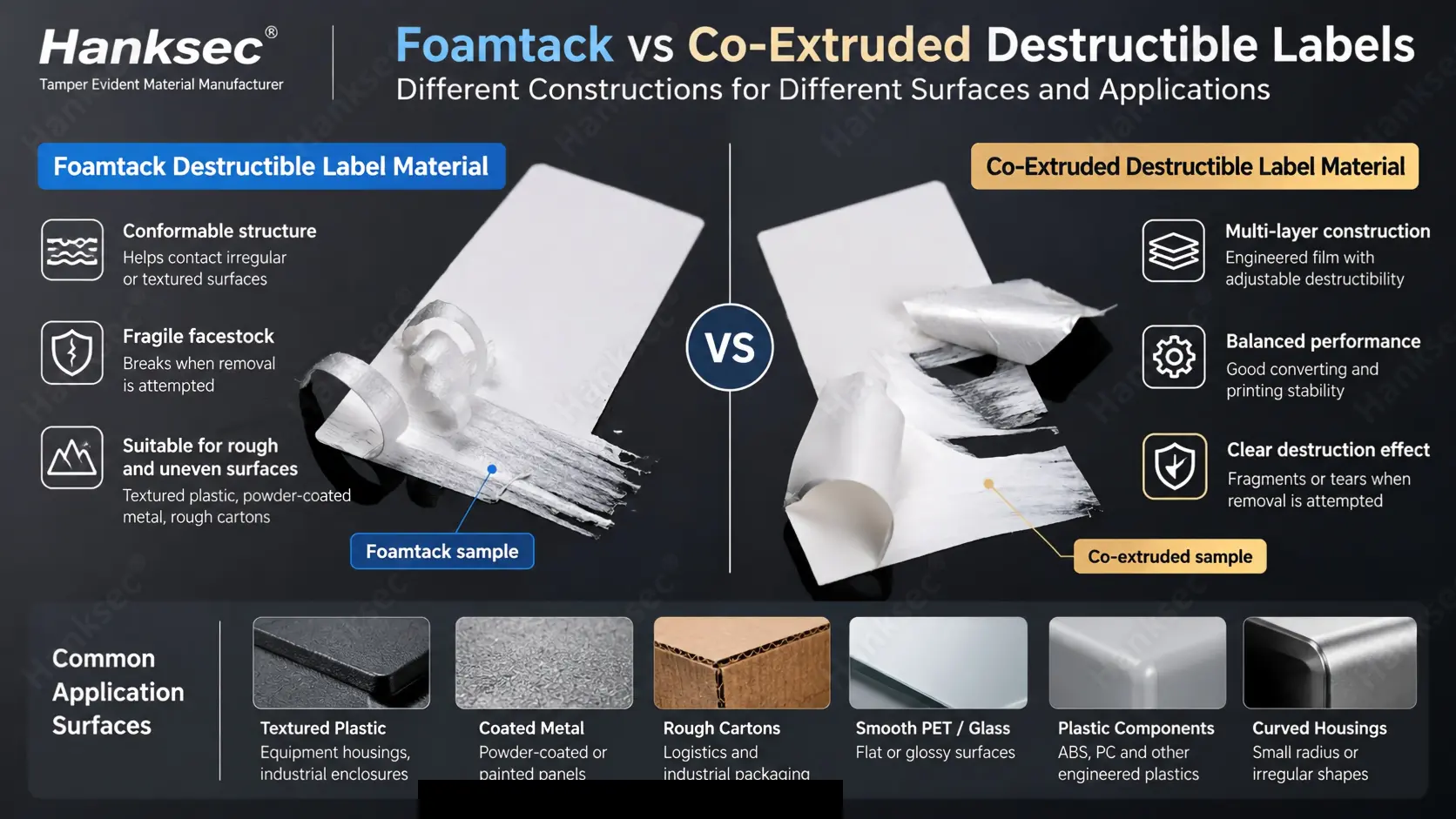
Selection rule: Start with the real surface, then confirm the required breakage effect, label size and converting method. The table describes material directions, not guaranteed performance on every substrate.
How Foamtack Destructible Material Works on Rough Surfaces
A thin, relatively stiff label may bridge over fine surface texture instead of making full adhesive contact. This can become a problem on molded plastic, powder-coated metal or uneven packaging.
Hanksec Foamtack Destructible Label Material uses a foam-based construction intended to improve contact with such irregularities. Its fragile functional material is designed to show visible damage when removal is attempted.
This does non mean foam automatically solves every adhesion problem. A low-surface-energy PP or PE housing, silicone contamination or an oily panel may still need a different adhesive system or surface preparation. Final approval must use the actual substrate.
Best starting applications: textured equipment housings, irregular industrial packaging and selected component-security seals.
Why Choose Co-Extruded Destructible Film?
A co-extruded destructible film uses an engineered multi-layer construction to adjust breakage behavior while maintaining enough handling stability for downstream production.
Hanksec Co-Extruded Destructible Label Material is positioned for equipment labels, asset identification, electronics warranty seals and projects where printing, die cutting and automatic dispensing matter.
Compared with very fragile single-layer films, a suitable co-extruded grade may offer a wider processing window. However, the finished label must still show the agreed physical damage after an attempted removal. A material that converts cleanly but peels off intact is not a successful security solution.
Best starting applications: larger flat labels, machinery identification, production-line security labels and automated labeling projects.
Which Material Fits Your Application Surface?
Textured ABS or coated metal: Trial Foamtack when thin-film contact is incomplete. Compare edge lifting and removal damage after a consistent dwell period.
Smooth PET, glass or painted panels: A co-extruded grade may be an efficient first trial, particularly for medium or larger labels. Confirm the required fracture behavior on the specific finish.
PP or PE plastic: Do not select by foam thickness alone. Verify adhesive compatibility with the actual low-surface-energy substrate for either construction.
Curved or small housings: Evaluate the label’s bending stress, corner lifting and premature cracking. Neither construction is universally best for tight radii.
Rough cartons: Consider the texture and whether paper-fiber tearing is acceptable. Test whether the label destroys as specified rather than detaching with surface fibers.
The useful question is not “Which label is stronger?” but “Which complete construction fails visibly in the intended way on this actual surface?”
Printing and Die Cutting: What Converters Should Check
For B2B converters, a successful material must survive production before it is expected to break during tampering.
Foamtack: A thicker conformable construction can change cutting depth, edge compression, label feeding and liner separation. Check print quality, matrix stripping and finished-label flatness.
Co-extruded film: Match destructibility grade to label size and speed. Check web tension, die pressure, matrix breaks and whether the film cracks before application.
For both materials, verify printing-ink or ribbon compatibility, barcode readability, release force and roll consistency. Hanksec’s Destructible Label Material Rolls Guide explains how brittleness grade and converter requirements affect material selection.
How to Test Before Bulk Production
A simple side-by-side trial should use the same actual substrate and realistic label dimensions.
- Applicare entrambe le configurazioni candidate con pressione, preparazione della superficie e temperatura registrate.
- Per consentire il confronto, è importante mantenere costanti il tempo di posa, l'angolo di distacco e la velocità di rimozione.
- Ispezionare il sollevamento dei bordi, il contatto adesivo e il modello finale di frattura o distacco.
- Eseguire test su campioni convertiti, non solo su quelli non convertiti, dopo la stampa, la fustellatura e la rimozione della matrice.
- Ripetere la procedura dopo un'adeguata conservazione o esposizione a temperature diverse e documentare i risultati.
I dati di adesione-peeling sono utili, ma da soli non dimostrano le prestazioni distruttibili. Metodo di adesione a strappo ASTM D3330/D3330M descrive i test adesivi, mentre Guida all'applicazione del vinile distruttibile di 3M Sottolinea inoltre l'importanza di un'adesione adeguata e di test preliminari sulla superficie di applicazione.
Per controlli di qualità più ampi, vedere il Security Label Material Quality Control Guide.
Cosa dovrebbero dire gli acquirenti a un produttore di materiali?
Per confrontare efficacemente Foamtack e il materiale coestruso, inviate le seguenti informazioni: superficie di applicazione e rivestimento, fotografie della sua texture, comportamento di rottura richiesto, dimensioni dell'etichetta finita, metodo di stampa, attrezzatura di conversione, ambiente di utilizzo e specifiche richieste per rotoli jumbo o rotoli tagliati.
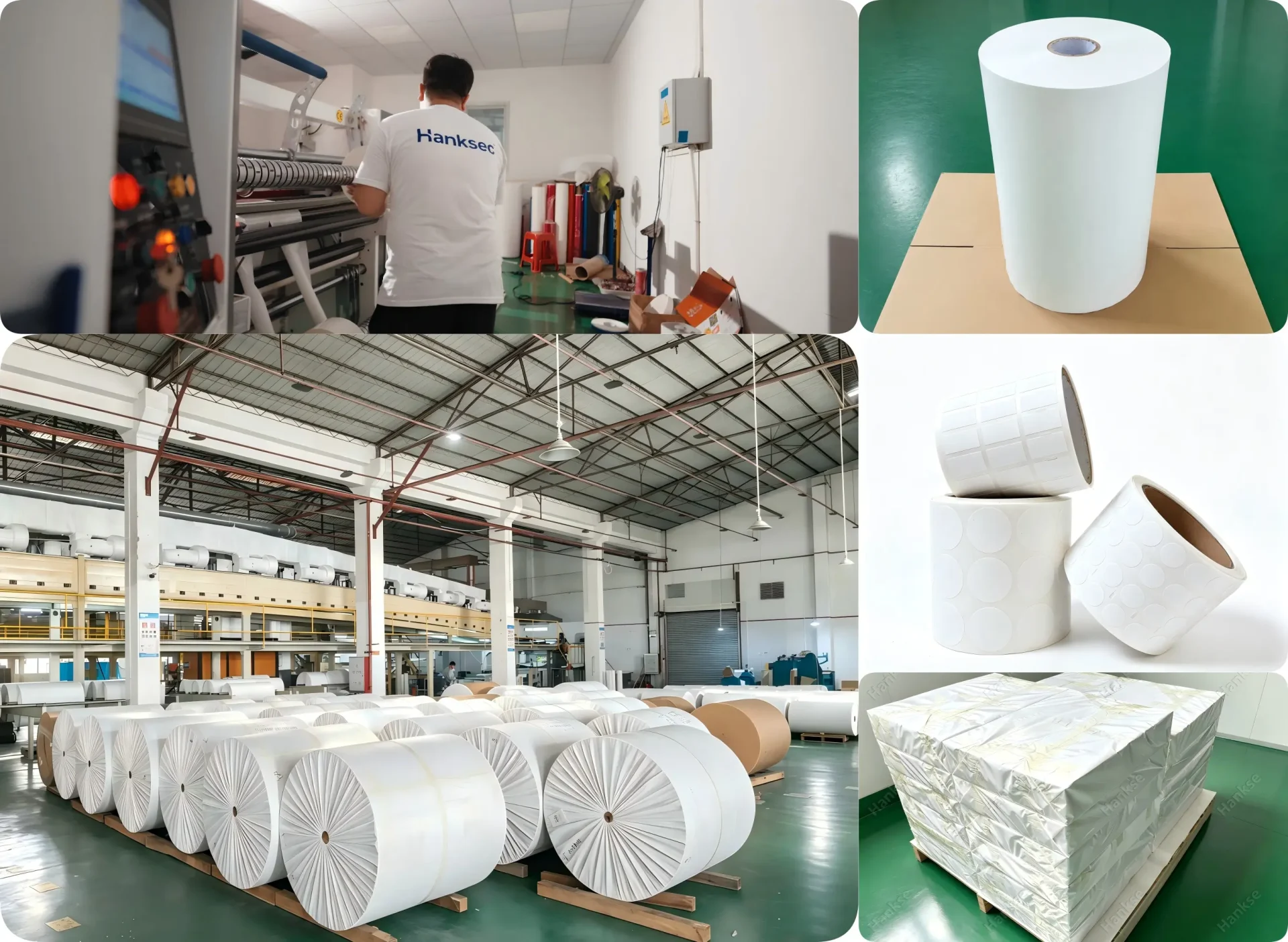
Hanksec può esaminare questi requisiti e raccomandare delle configurazioni campione che i trasformatori possano valutare prima della produzione. Le specifiche finali relative ad adesivo, rivestimento, spessore e resistenza alla distruzione devono essere verificate in base ai requisiti di progetto, anziché essere dedotte da un nome generico del materiale.
Frequently Asked Questions
Il Foamtack è sempre più efficace sulla plastica ruvida?
No. La sua struttura conformabile può favorire il contatto con la superficie, ma la bassa energia superficiale, la contaminazione e la chimica dell'adesivo possono comunque impedire l'adesione necessaria. Provate con la plastica vera.
La pellicola distruttibile coestrusa è più facile da fustellare?
Una qualità di stampa opportunamente selezionata può garantire una migliore maneggevolezza rispetto a una pellicola ultra-fragile. Il risultato dipende dallo spessore, dalla fragilità, dalla geometria dell'etichetta, dal liner e dalle impostazioni della macchina da stampa.
È possibile fornire entrambi i materiali in rotoli?
Sì. Hanksec offre opzioni di Foamtack e materiale coestruso per rotoli jumbo o rotoli tagliati pronti per la lavorazione; le specifiche vengono concordate per ogni singolo progetto.
Perché un'etichetta distruttibile si stacca intatta?
L'adesione tra l'adesivo e il substrato potrebbe essere più debole della forza necessaria per rompere l'etichetta. Verificare la contaminazione della superficie, la pressione di applicazione, il tempo di posa, la scelta dell'adesivo e il grado di rottura effettivo.
Need Help Selecting Foamtack or Co-Extruded Material?
Hanksec® produce materiali per etichette antimanomissione destinati a convertitori di etichette, tipografie di sicurezza e distributori di materiali. Condividi il tuo substrato, l'effetto di compattazione richiesto, il metodo di stampa e le specifiche del rotolo. Il nostro team tecnico potrà consigliarti configurazioni di campioni adatte per prove di applicazione e conversione.
RICHIEDI CAMPIONI DI MATERIALE DISTRUTTIVO →
Hanksec® | Produttore di materiali per etichette di sicurezza antimanomissione · Rotoli jumbo · Rotoli tagliati · Soluzioni di materiali personalizzate