VOID TYPE
Full, Partial or Non-Transfer?
Choose according to where the visible evidence should appear after removal — on the substrate, on both surfaces or mainly on the removed label.
Practical answers for label converters, security printers, packaging manufacturers, distributors and OEM buyers selecting tamper-evident VOID, destructible and specialty security materials. Start with the application, then qualify the complete material construction before bulk production.
Browse by material system, tamper response, printing, converting, qualification and application to quickly find the technical information relevant to your project.
Security material selection is rarely solved by one specification. These quick answers establish the main decision logic before you go deeper into adhesive, printing, converting and qualification.
Choose according to where the visible evidence should appear after removal — on the substrate, on both surfaces or mainly on the removed label.
There is no universal “best” adhesive. Start with the real substrate, surface condition, environment and required tamper response.
Print compatibility depends on the printable topcoat plus the actual ink, toner or ribbon system and downstream converting conditions.
No. Production qualification should also consider the actual substrate, dwell time, printing, die cutting, release behavior and service environment.
A security label material is a pressure-sensitive material construction engineered to create visible evidence when removal, opening or manipulation is attempted. Depending on the construction, it may reveal a hidden VOID or OPENED message, transfer part of a security layer to the substrate, fracture during removal, or create another irreversible visual change.
For B2B sourcing, evaluate the complete system: facestock + functional security layer + printable surface + pressure-sensitive adhesive + release liner. See How Security Label Material Systems Work.
Tamper-evident means the construction is designed to make interference visible after it occurs. “Tamper-proof” is widely used commercially, but a pressure-sensitive seal should not be treated as making access physically impossible under every condition.
For specification, define the evidence needed after removal: transferred message, label-side VOID effect, facestock destruction, carton-fiber tear or another permanent change.
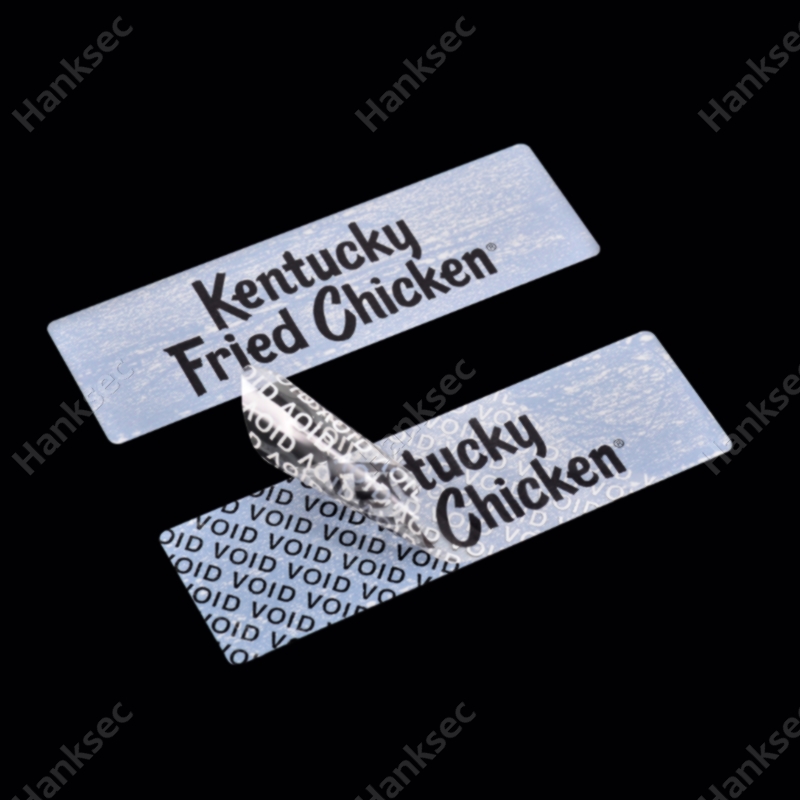
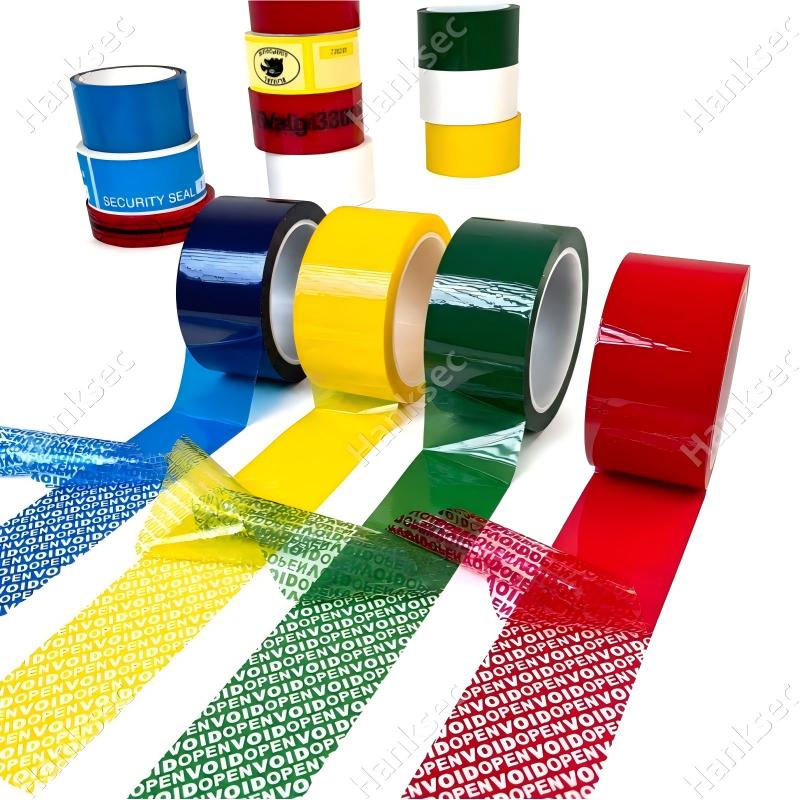
VOID material uses controlled separation between functional layers. When removal is attempted, the construction separates in a designed way and reveals a hidden pattern such as VOID, OPENED, VOIDOPEN, SECURITY, a logo or custom text.
The message may remain mainly on the substrate, mainly on the removed label, or be divided between both surfaces. See What Is VOID Label Material? and the Full / Partial / Non-Transfer comparison.
VOID label material is converter-ready stock supplied as jumbo rolls, slit rolls, sheets or other material formats for printing and die cutting. A finished VOID label has already been converted to final size and may include printing, variable data, serial numbers or die-cut shapes.
Converters should define roll width, liner, core, printing method and downstream process. See the VOID Label Material Rolls Guide.
VOID constructions create tamper evidence mainly through controlled layer separation or transfer. Destructible materials create evidence mainly through facestock fracture, making clean, intact removal difficult.
Use VOID when a readable hidden message or controlled transfer effect is important. Consider destructible material when breakage of the label itself is the primary anti-removal mechanism. See Destructible Label Materials and the Converter Selection Guide.
Start with the required inspection result. Full-transfer is a starting direction when strong visible evidence on the applied surface is required. Partial-transfer divides the evidence between the removed label and substrate. Non-transfer keeps the hidden message mainly within the removed label while minimizing obvious transferred evidence on the protected surface.
These are selection directions, not universal guarantees. Final residue and message clarity depend on adhesive, substrate, dwell time and environment. Compare the constructions on VOID Label Material Types.
Not necessarily. “Non-transfer” describes the intended behavior of the security layer; it should not be interpreted as a universal guarantee of zero adhesive residue on every surface.
Actual residue can change with surface chemistry, coating, application pressure, dwell time, temperature and ageing. For sensitive or reusable surfaces, test the selected construction on the actual product. See the Non-Transfer VOID Buyer’s Guide.
Yes. Suitable constructions can use standard or customized hidden messages such as VOID, OPENED, VOIDOPEN, SECURITY, a company name, logo, warning text or repeating pattern.
Custom patterns may require artwork preparation, gravure-cylinder or tooling setup and a project-specific MOQ. Standard stock patterns are usually more suitable when fast sampling and flexible quantities are priorities.
No. A material that activates correctly on glass or PET may behave differently on PP, PE, HDPE, coated cartons, painted metal or textured plastics. Adhesive wet-out, coating strength and surface energy all influence the final result.
Start with the actual substrate and required tamper response, then qualify samples. See the Tamper Evident Label Adhesive Guide.
A properly selected VOID construction is designed so removal produces an irreversible visual change. The original condition should not be restored simply by pressing the label back into place.
For critical projects, evaluate removal and reapplication attempts during sample qualification rather than relying only on a hand-peel demonstration.
The adhesive must wet out and bond to the real substrate strongly enough to activate the intended security response. Two surfaces that look similar may behave differently because of surface energy, varnish, paint, texture, contamination, plasticizers or release agents.
This is why Hanksec recommends identifying the exact substrate before selecting the adhesive. See the Adhesive & Substrate Selection Guide.
Depending on adhesive and construction, applications may include glass, PET, ABS, PC, PP, PE, HDPE, painted or unpainted metal, coated paperboard, corrugated carton, acrylic, electronics housings and industrial components.
A material family should not be assumed to work equally well on all these surfaces. Sample qualification on the real substrate remains the preferred approach.
PP, PE and HDPE are commonly treated as lower-surface-energy plastics. Standard pressure-sensitive adhesives may not wet out these surfaces as effectively as higher-energy substrates such as glass, PET or clean metal.
The final choice should consider the exact molded or packaging surface, not only the polymer name. Check initial tack, developed adhesion, edge lifting and final tamper activation on the actual part.
Yes, but roughness and texture reduce the true contact area between adhesive and substrate. Some applications may require a different adhesive chemistry, coat weight or more conformable material construction.
For rough cartons, textured plastics, powder-coated metal or slightly contaminated industrial surfaces, evaluate application pressure, dwell time, edge lifting and final tamper response before bulk approval.
Provide the substrate material, surface finish, coating or paint, application temperature, service temperature, humidity or chemical exposure, required tamper response, residue requirement, label size and expected dwell time.
If possible, send a real substrate sample. A physical sample is often more useful than trying to select an adhesive from a generic material name alone.
Many security label materials can be supplied with a printable surface, primer or topcoat. Compatibility depends on the exact ink, toner or ribbon system and printing platform.
A material can produce the correct VOID effect and still fail printing requirements if the surface chemistry is mismatched. See the Printable Security Label Materials Guide.
Depending on surface treatment and product construction, projects may be evaluated for UV flexographic, screen, offset, thermal-transfer, selected digital, pigment inkjet and other printing systems.
“Digital printable” or “inkjet printable” should not be treated as universal specifications. Confirm the actual printer, ink or toner, drying or curing conditions and downstream converting process.
Yes, when the printable surface is compatible with the selected ribbon and printer settings. Qualification should include ribbon transfer, print density, scratch or rub resistance and barcode or QR readability.
The printable topcoat must also remain compatible with the security-layer behavior and downstream die cutting.
Yes, suitable materials can carry barcodes, QR codes, serial numbers, variable text, logos and tracking information. The printing and verification method depends on whether the converter prints in-house or Hanksec supplies a converted format.
For barcode or QR applications, check scan readability after printing, handling and any required environmental exposure.
Printing is only one part of the production system. Die cutting, matrix stripping, slitting, rewinding and dispensing can introduce additional mechanical stress.
Final qualification should confirm that print adhesion and readability remain acceptable and that the intended VOID or destructible response still works after converting. See the Security Label Material Quality Control Guide.
Often they do. A standard PET or security surface that works well with UV or flexographic ink may not provide suitable drying, dot definition or rub resistance with pigment inkjet.
For Epson ColorWorks and similar systems, review the Inkjet Printable Label Materials Guide and qualify the exact printer and ink set.
Yes. Depending on product construction and project requirement, security label materials can be supplied as jumbo/master rolls, slit rolls, sheets or converted formats.
Converters should specify web width, roll length, core size, winding direction and release-liner requirement. See the Jumbo & Slit Roll Selection Guide.
Provide the printing process, required security construction, application substrate, web width, roll length, core size, winding direction, release liner, die-cutting method, approximate label geometry and estimated volume.
This helps separate material selection from machine-fit issues and reduces the risk of approving a small sample that does not run correctly on the production line.
The release liner protects the adhesive before application and also affects release force, die cutting, matrix stripping, rewinding, web handling, dispensing and roll stability.
Changing liner type can change converting behavior even when facestock and adhesive remain the same. See Glassine vs PET Release Liner.
Glassine is widely used for conventional label converting and can provide a practical balance of cost and processing performance. PET liner offers higher dimensional stability and tensile strength and may be useful for demanding high-speed converting or dispensing.
Neither is automatically better. Liner selection should be driven by the complete laminate, die-cutting method, web tension, dispensing geometry and machine conditions.
Release force is the force required to separate the pressure-sensitive laminate from its release liner under defined test conditions. Stable release behavior supports matrix stripping, dispensing and consistent web handling.
Release force should be evaluated together with the adhesive and liner rather than as an isolated number.
Possible causes include incorrect die depth, fragile facestock, excessive web tension, narrow matrix, sharp label corners, adhesive flow, unstable release force or a liner that is not suitable for the process.
Security and destructible materials can have a narrower converting window than ordinary label stock. See the Destructible Material Converter Guide and Quality Control Guide.
Destructibility is influenced by facestock formulation, film thickness, elongation and brittleness, adhesive bond strength, application substrate, temperature, dwell time and label geometry.
The most fragile material is not automatically the best choice: extreme brittleness can create printing, die-cutting or matrix-stripping problems. Compare easy, medium and hard directions in the Destructible Label Material Rolls Guide.
They can be, but small labels place greater demands on die-cutting accuracy, corner geometry, matrix stripping and dispensing. A very fragile facestock may provide strong anti-removal behavior while reducing converting stability.
Sample rolls should be evaluated at the intended label size and production speed.
Yes. A holographic optical layer can be combined with a VOID, partial-transfer, non-transfer or destructible construction depending on the project. Holographic appearance provides visible authentication, while the underlying security structure provides removal evidence.
See the Hologram Labels Selection Guide.
No. A holographic effect is an optical authentication feature; it does not automatically create tamper evidence. For removal evidence, the hologram must be combined with a VOID, destructible or other engineered tamper-response construction.
Paper VOID materials use a paper-based facestock together with a controlled security and adhesive system. They are often considered for fiber-based cartons and paper packaging where buyers want the security label to integrate more naturally with the package construction.
See Paper VOID Labels: Materials, Transfer Types and Applications.
Yes. High-temperature projects may use polyimide or application-specific PET constructions depending on the thermal profile, adhesive requirement and printing system.
The facestock temperature alone is not a finished-label rating. Confirm peak temperature, exposure time, repeated thermal cycles, substrate and print durability. See High-Temperature Polyimide Label Material.
Water-contact indicator material is designed to create a visible response after contact with a defined liquid or moisture condition. It can be used for electronics, warranty inspection and liquid-exposure verification.
Selection should consider target liquid, humidity environment, laminated or unlaminated construction, adhesive, application location and converting format. See the Water Contact Indicator Buyer’s Guide.
Five core areas are especially useful for converter-oriented security materials: peel adhesion, release force, die cutting & matrix stripping, tamper-response verification, and printing / barcode / rub testing.
Additional checks may be needed for temperature, ageing, chemical exposure or application-specific risks. See the Security Label Material Quality Control Guide and Hanksec Quality Assurance page.
No. A hand-peel demonstration is useful for initial screening, but it does not represent production printing, die cutting, matrix stripping, web handling, automatic dispensing, longer dwell time or the full service environment.
Bulk approval should use representative production and end-use conditions wherever practical.
Pressure-sensitive adhesive bonding can develop after application. A label peeled immediately may behave differently after several hours or days.
When comparing materials, keep application pressure, temperature and dwell time consistent so the tamper response is being compared under equivalent conditions.
Laboratory panels cannot reproduce every varnish, paint, molded plastic, roughness, contamination or curvature found in production. These factors can change adhesion, residue behavior and VOID activation.
Actual-substrate testing is one of the most important steps before bulk production, particularly for sensitive surfaces or low-surface-energy plastics.
No. Peel adhesion measures one aspect of adhesive performance under defined conditions. Tamper evidence also depends on the facestock, functional security layer, transfer mechanism, substrate and removal behavior.
The goal is a controlled system that produces the required security response — not simply the highest possible peel value.
Hanksec’s manufacturing workflow includes security-layer production, coating, metallizing where required, printable-surface treatment, adhesive coating, release-liner lamination, slitting and quality inspection. The relevant controls depend on the material construction.
For a manufacturing overview, see Manufacturing Capabilities.
Depending on the product family, customization can include VOID / OPENED message, logo or pattern, transfer behavior, facestock, color, thickness, holographic effect, printable topcoat, adhesive system, release liner, web width, roll length, core size and winding direction.
See the Hanksec Product & Material Overview for the broader range.
For selected projects, the adhesive direction can be matched to the intended substrate, surface condition and environment. Unusual plastics, sensitive surfaces, high/low temperature or special residue requirements should begin with application details and sample testing.
Selected constructions can be supplied in different facestock thicknesses or project-specific structures. Thickness should not be changed independently because it can affect stiffness, die cutting, matrix stripping, rewinding, dispensing and tamper response.
Yes. Sample evaluation is strongly recommended for technical security-material projects. Standard material samples can be used for initial screening, while custom constructions may require artwork, tooling, plate/cylinder setup or sample charges depending on the project.
Use the Contact Hanksec page to send the substrate, printing method and required tamper response with your sample request.
There is no single MOQ for every security material. MOQ depends on whether the material is stock or custom, the roll format, hidden message, color, coating, adhesive, liner, holographic feature and manufacturing setup.
Standard stock constructions generally allow more flexible quantities than fully customized materials. Send the required specification first so MOQ can be quoted against the actual production route.
For the fastest technical quotation, provide: application substrate, required tamper response, printing method, material or roll format, web width, roll length, core size, winding direction, liner preference, color, custom message and estimated quantity.
Photos or a physical sample of the application surface are also useful.
No. Hanksec’s core positioning is as a security label material manufacturer and tamper-evident solution provider, supplying converter-ready materials as well as selected converted formats.
Label converters and printers can source jumbo or slit rolls for in-house printing and die cutting. End users with a finished-label requirement can confirm the required converting scope with the sales team.
Yes, tamper-verification materials can be used as one component of pharmaceutical and healthcare packaging systems for medicine cartons, bottles, vials, medical-device packaging and related applications.
A label by itself does not make the complete package compliant. The package design, substrate, application method and target-market requirements must be assessed together. See Pharmaceutical VOID Materials Guide.
Common starting directions include non-transfer or partial-transfer VOID when residue control matters, full-transfer VOID when stronger surface evidence is preferred, and destructible material when intact label removal should be difficult.
Final choice depends on device surface, service-access point, label size and inspection method. See Security Labels: Types, Materials & Selection.
For cartons, parcels and shipping packaging, buyers may consider security packing tape, carton-sealing tamper labels or full/partial-transfer VOID constructions depending on the opening path and residue requirement.
See Tamper Evident Security Packaging Tapes and the Security Packing Tape range.
Security bag tape is designed around flexible bag films and the bag-manufacturing process. Adhesive compatibility with HDPE, LDPE, co-extruded or laminated bag films can be very different from adhesion to corrugated carton.
Bag tape may also incorporate additional tamper-response features depending on security level. See the Security Bag Tape Selection Guide and Bag Tape Types.
An evidence or security bag is appropriate when the complete pouch must provide controlled one-time closure, identification and chain-of-custody support for documents, cash, evidence or sensitive contents.
See the Tamper Evident Security Bags Guide for bag structures, applications and selection criteria.
No pressure-sensitive seal should be treated as a physical lock. Its primary purpose is to make unauthorized opening, removal or manipulation more visible and harder to conceal.
For higher-risk systems, combine tamper evidence with appropriate packaging design, traceability, inspection procedures and other physical or digital controls.
Start with the Security Labels Selection Guide to define required tamper response, application substrate, residue requirement, printing method and supply format.
Then use the Hanksec Knowledge Center for deeper guides on adhesives, release liners, printing, roll formats, destructible materials and quality testing.
Define the application first: substrate, tamper-response objective, printing method, converting process, service environment and supply format. Suitable constructions can then be shortlisted for sample evaluation.
This application-first approach is designed to avoid choosing a material only from color, VOID pattern or a generic adhesive specification.
Send application photos, substrate type, surface coating or finish, current material if available, required security effect, printing method, final label size, die-cutting or converting process, roll specification, temperature range and estimated quantity.
If a material is failing in production, also provide photos or video of the failure and describe when it occurs.
Use Manufacturing Capabilities to review the production workflow and Quality Assurance to review material input control, functional testing and pre-production qualification.
Use the Product & Material Overview for product families and the Security Label Materials Knowledge Center for technical and buyer guides.
For company background, production history and factory information, see About Hanksec.
Use these guides when you need a complete selection framework, converter specification or testing method rather than a short answer.
Facestock, security layer, adhesive, printable surface and liner as one complete construction.
Read Technical GuideStructure, transfer types, applications, customization and converter supply formats.
Explore VOID MaterialsPP, PE, HDPE, PET, glass, coated carton and real-substrate qualification.
Read Adhesive GuideUV flexo, thermal transfer, digital, inkjet, topcoats and printing qualification.
Read Printing GuideRoll width, core, winding direction, release liner and converter-ready specifications.
Read Roll GuidePeel adhesion, release force, die cutting, VOID response and print/rub testing.
Read QC GuideIf you did not find the answer you need, send us your application details. For projects involving a specific substrate, tamper response, printing process, service temperature, converting requirement or roll specification, Hanksec can help evaluate the material direction before sampling or bulk production.