STEP 01
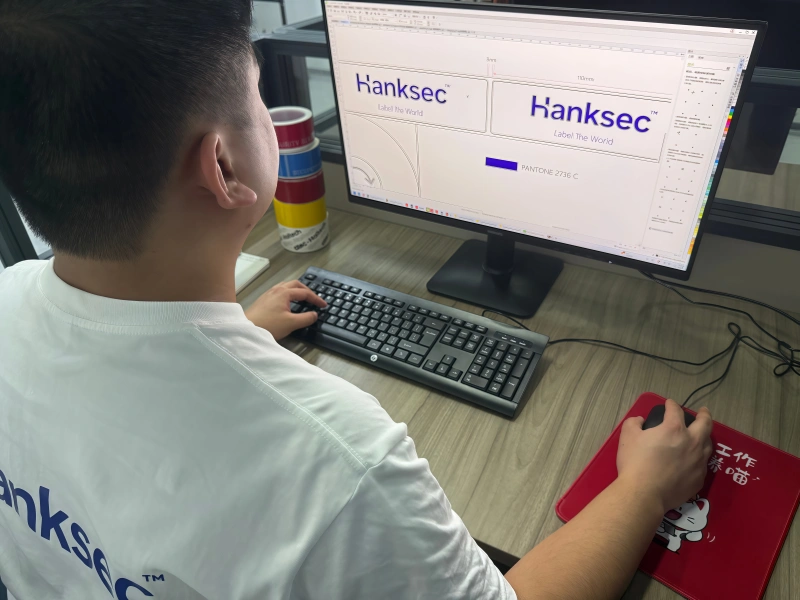
Artwork Preflight & Production Setup
Customer artwork and security-message layouts are checked for dimensions, registration, repeat consistency and production-ready file integrity before cylinder preparation.
Tamper-evident material systems engineered from functional film construction to converter-ready roll.
Hanksec manufactures tamper-evident security label materials as an integrated construction — combining the printable topcoat, PET facestock, tamper-evident functional layer, pressure-sensitive adhesive and release liner. Material performance depends on these components working together through printing, converting and end use.
From artwork preflight and gravure cylinder preparation through surface treatment, security coating, metallization, printable top coating, adhesive lamination, in-process quality checks and final slitting / rewinding, Hanksec controls the manufacturing stages that determine tamper response, printability and roll consistency.
Organized gravure cylinders support custom VOID messages, security-pattern transfer and repeat production. Tooling is identified and managed for consistent pattern registration across approved material specifications and repeat orders.
Customer artwork and security-message layouts are checked for dimensions, registration, repeat consistency and production-ready file integrity before cylinder preparation.
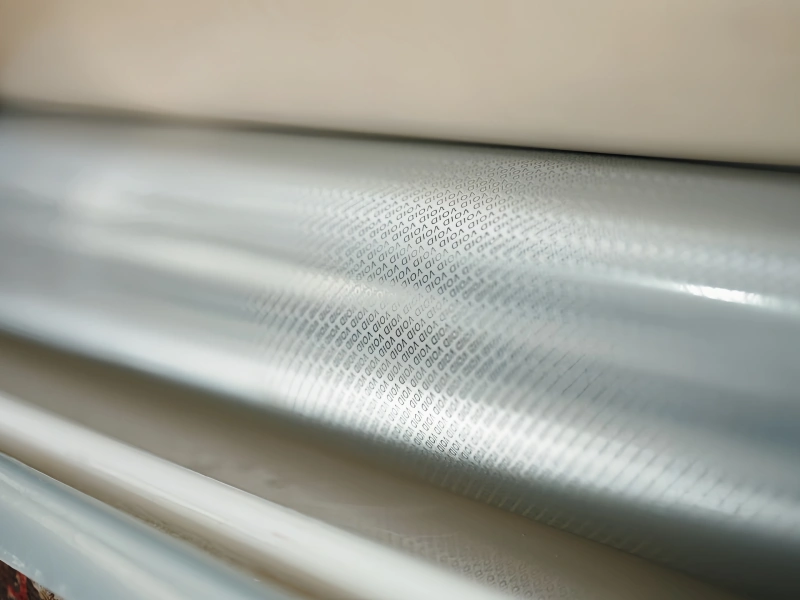
Engraved gravure cylinders define the required security pattern or custom VOID message and support repeatable pattern transfer during printing and coating.
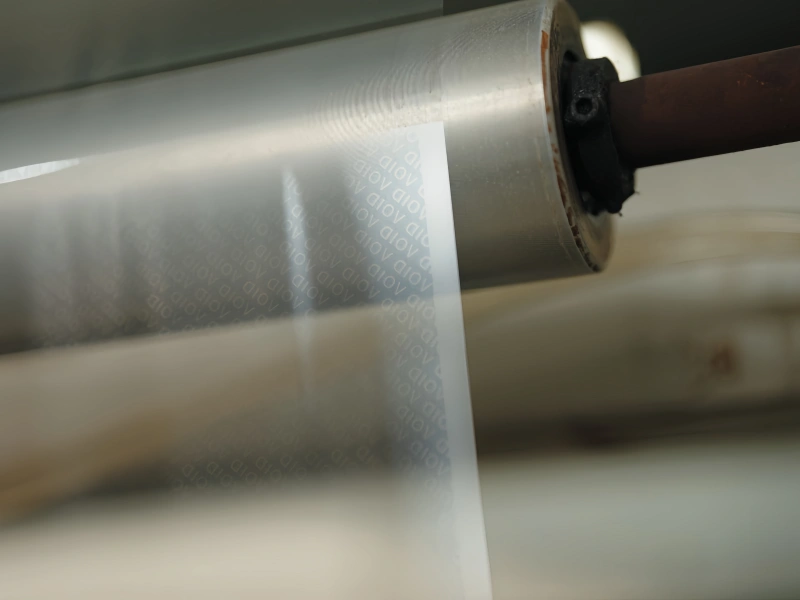
PET surface energy is treated where required to improve wetting and anchorage, followed by controlled printing of the security pattern or custom message for the downstream construction.
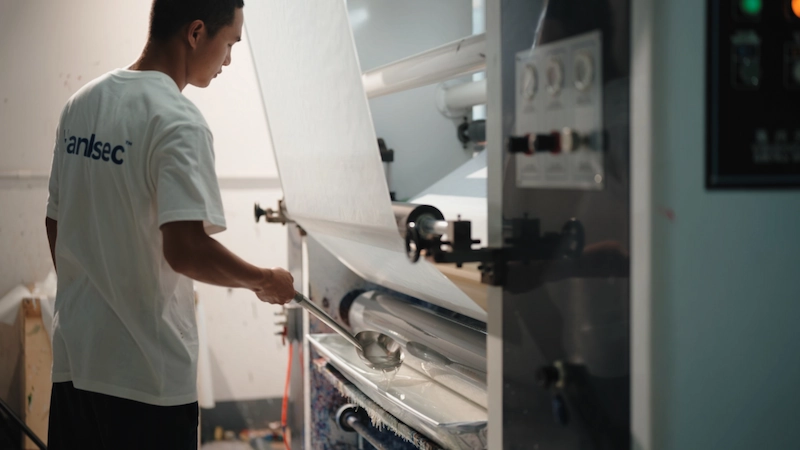
Functional coating layers are applied to create the engineered separation and transfer behavior required for full-transfer, partial-transfer or non-transfer tamper evidence.
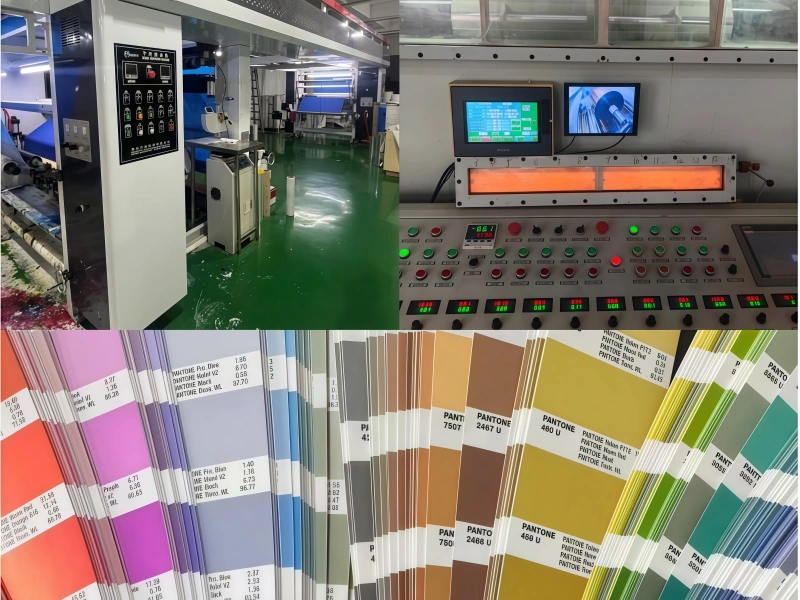
Color layers and aluminum metallization are controlled for appearance, opacity and message contrast according to the required material construction and end-use specification.

Print-receptive topcoats are selected or adjusted to support ink / ribbon anchorage and downstream printing performance for the specified printing process.
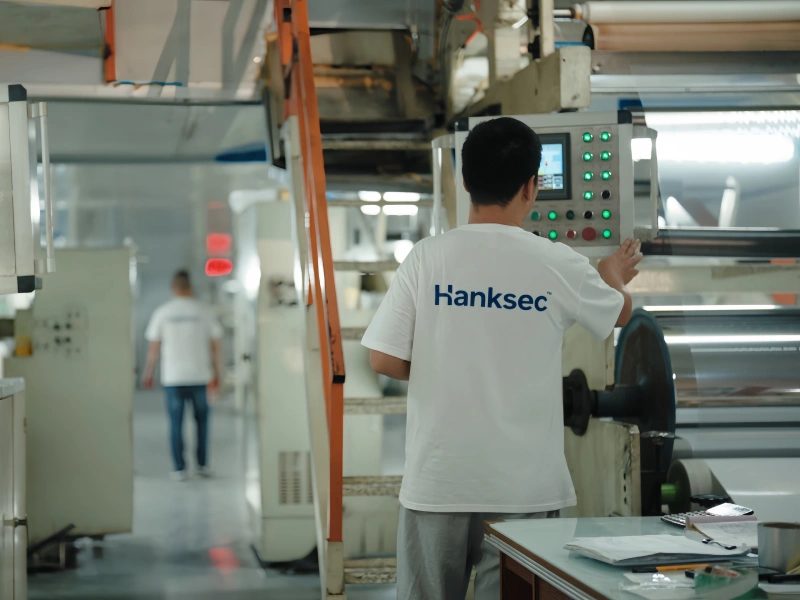
Acrylic pressure-sensitive adhesive is coated and laminated with the selected release liner. The adhesive / liner combination is matched to substrate, service conditions and converting requirements.
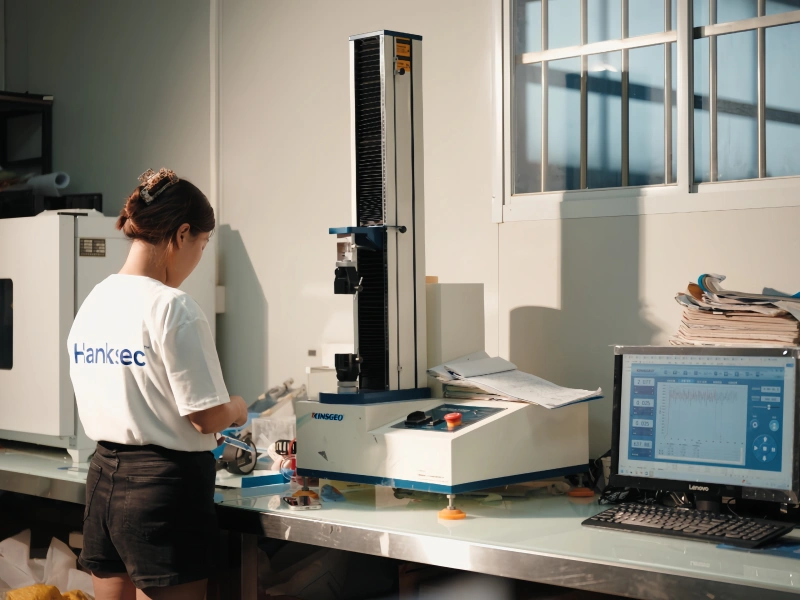
Key characteristics are monitored during and after production, including registration, appearance, adhesion, release behavior, tamper response and printing / converting performance as applicable.
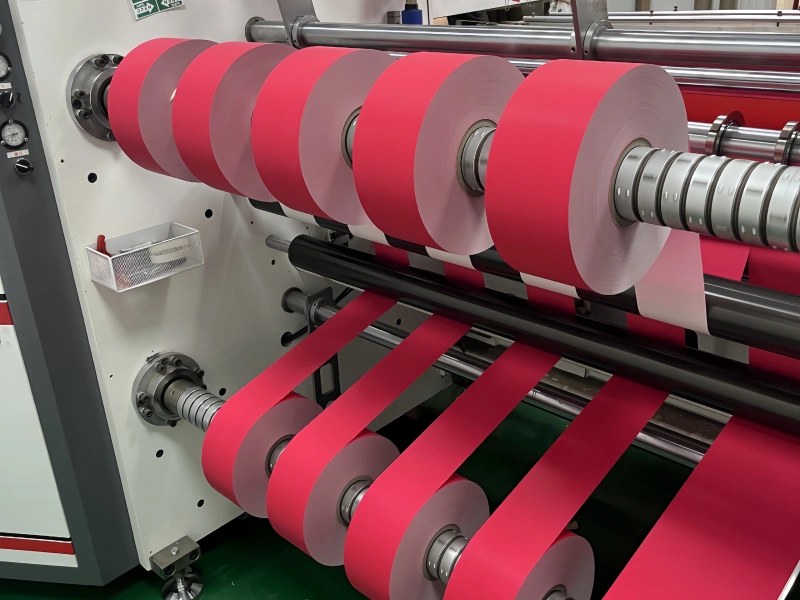
Finished master rolls are slit and rewound to the required width, core and roll format while controlling edge quality, winding quality and roll consistency for downstream converting.
Security performance depends on the interaction of the printable topcoat, PET facestock, tamper-evident functional layer, pressure-sensitive adhesive and release liner. Changing one component can change the behavior of the complete construction.
Topcoat, facestock, security layer, adhesive and liner influence one another during printing, converting and end use. Qualification should therefore evaluate the complete construction.
How Security Label Material Systems WorkMaterial construction and roll format can be configured around the customer's printing, converting and end-use requirements. Technical qualification should be based on the actual substrate, print process, required tamper response and roll-handling conditions — not a generic specification.
Production control is completed by material-performance verification. Depending on the application, Hanksec evaluates adhesion, release behavior, die-cutting / matrix-stripping performance, tamper response and print durability before bulk approval or repeat production.
Application substrate.
Printing process.
Required tamper response.
Roll format & release liner.
Share your converting conditions so Hanksec can recommend and qualify the appropriate material construction.