Quick Answer: Tamper evident technology works by creating a visible or verifiable change when a protected label, tape or package is opened or manipulated. Four common material-based mechanisms are controlled VOID-layer separation, destructible material fracture, security-cut tear evidence and responsive security indicators. Each creates a different response, so the correct technology depends on the interference that must be detected.
Not all tamper-evident materials work in the same way. A VOID label reveals a hidden message, a destructible label breaks apart, and a security tape with engineered cuts may tear at predetermined locations during a removal attempt. Some specialized indicators also respond to defined heat, liquid or other exposure conditions.
For label converters, packaging manufacturers and technical buyers, the important question is not simply whether a material is called tamper evident. It is what changes during the specified interference attempt, where the evidence appears and whether that response is repeatable.
How Does Tamper Evident Technology Create Visible Evidence?
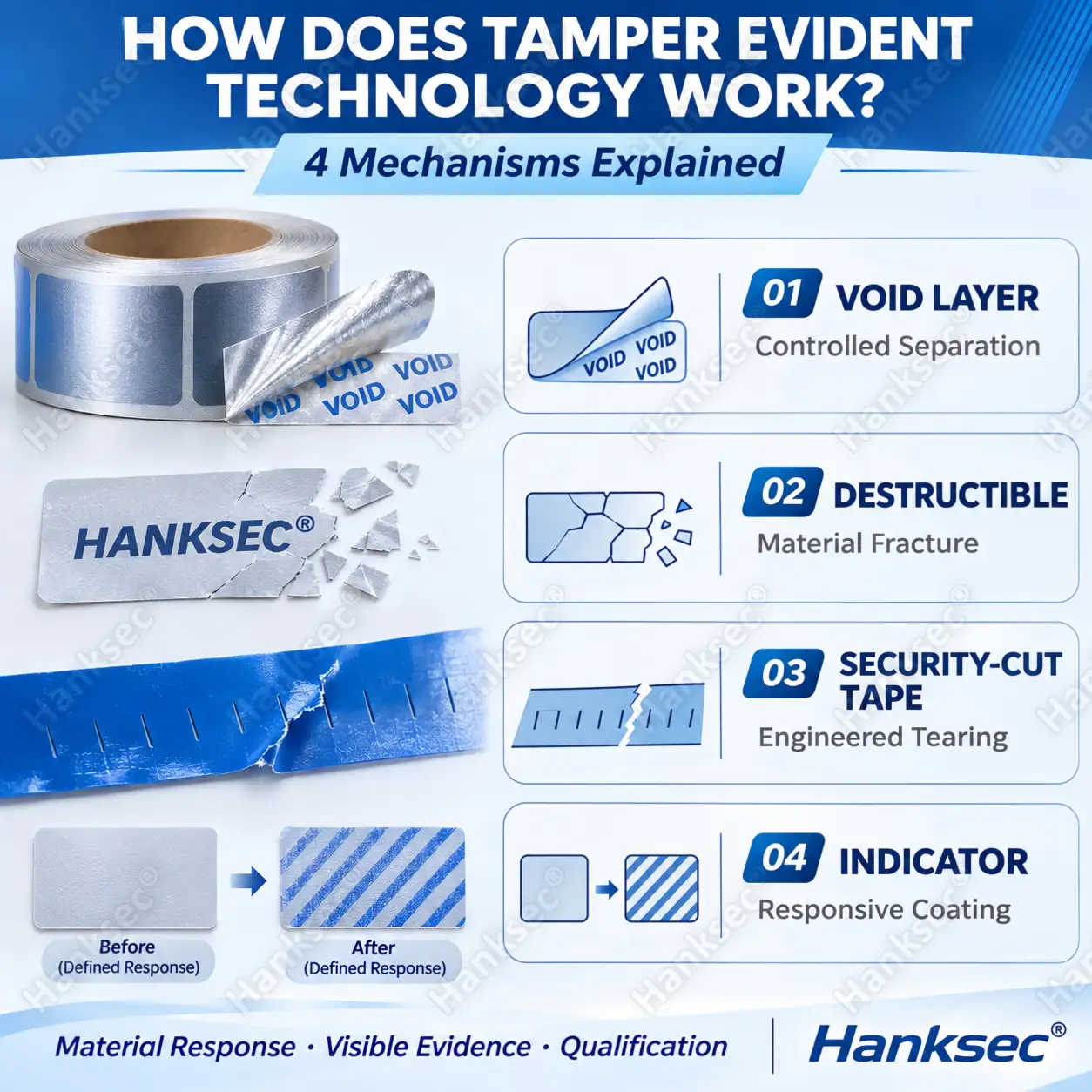
Most physical tamper-evident systems rely on a deliberately engineered change in the material or closure. The following table compares four mechanisms relevant to security labels, adhesive tapes and specialized packaging materials.
| Mechanism | How It Responds | Typical Evidence |
|---|---|---|
| 01 VOID Layer Separation | Controlled separation of functional security layers during peeling. | VOID, OPENED or a customized hidden message. |
| 02 Material Fracture | Fragile facestock tears, cracks or fragments when removal is attempted. | Broken pieces, cracks or irreversible label damage. |
| 03 Security-Cut Tear Evidence | Engineered cuts or weakened areas promote localized tearing during specified removal attempts. | Torn tape, split edges or permanent damage near security cuts. |
| 04 Responsive Indicator | A designed coating reacts to specified heat, liquid or other exposure conditions. | Color or pattern change indicating defined exposure. |
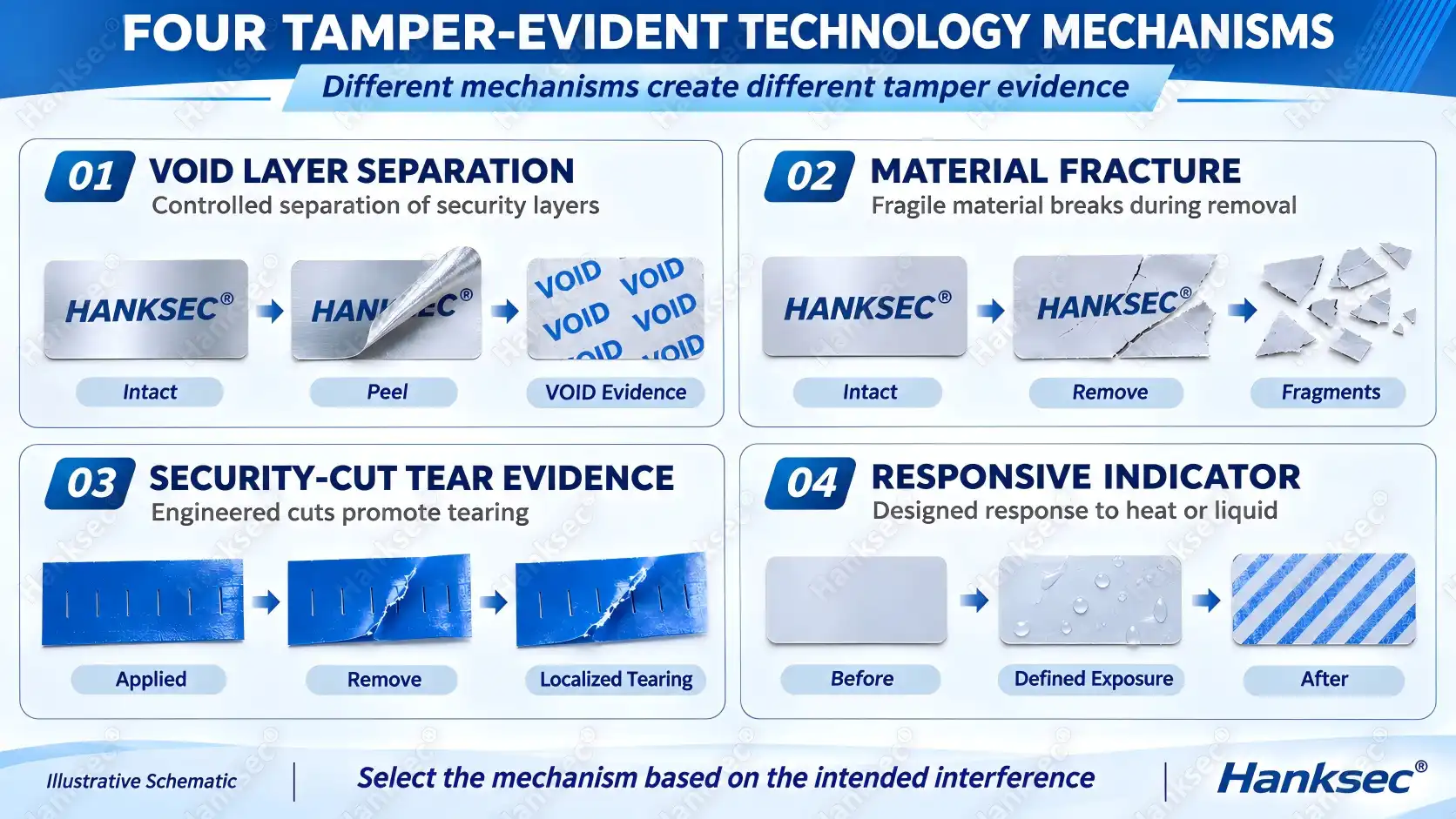
These mechanisms are not always mutually exclusive. A finished security package can combine a VOID adhesive construction, engineered security cuts, serial identification and a separate temperature-sensitive indicator. However, every additional feature must be evaluated for compatibility with the complete material and packaging construction.
Technical distinction: VOID separation, material fracture and security-cut tearing are intended to produce physical evidence during specified opening or removal attempts. Responsive indicators detect defined exposure conditions, which do not necessarily prove that opening has occurred.
1. How Does VOID Tamper-Evident Technology Work?
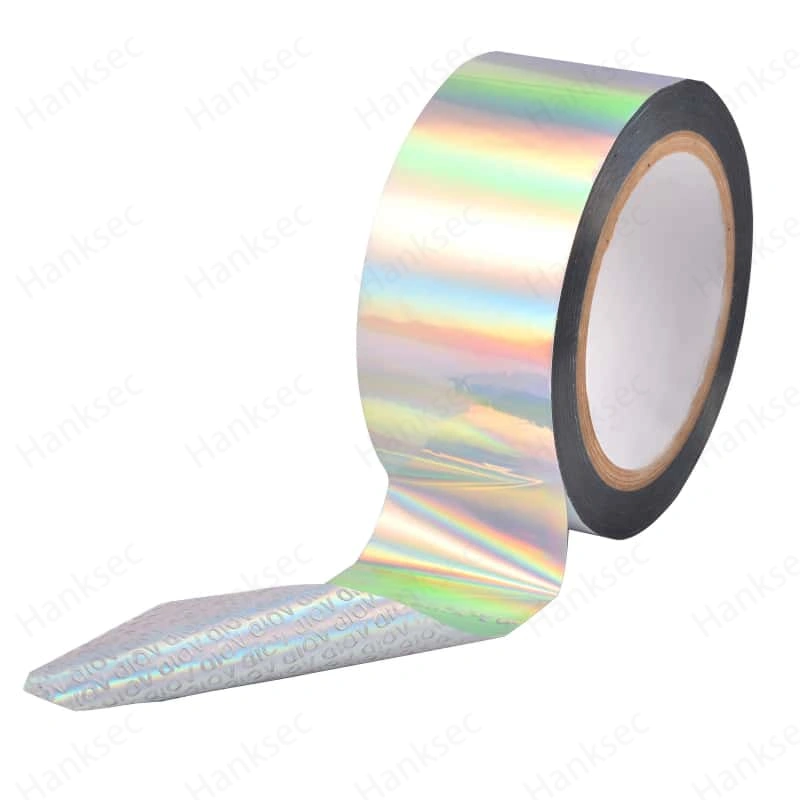
VOID technology uses controlled separation between functional layers. When a label or tape is removed, the separation changes the appearance of the construction and reveals a previously hidden security message.
Depending on the design, the response can be:
- Full transfer: The intended security image or residue appears mainly on the application surface.
- Partial transfer: Security evidence is visible on both the removed material and application surface.
- Non-transfer: The security message appears mainly in the removed film, with reduced transfer to the substrate.
The exact appearance depends on the functional coating, release characteristics, adhesive and application surface.
For example, 3M’s VOID polyester label material is designed to reveal a VOID message in its facestock during attempted removal. This demonstrates why the location and appearance of security evidence depend on the particular material construction.
A reliable VOID response also requires a suitable adhesive bond. If the adhesive releases from the substrate before the intended security layer separates, the label may peel away without producing the expected message.
For a detailed explanation of transfer types, see Hanksec’s What Is VOID Label Material?.
2. How Do Destructible Security Labels Work?
Destructible materials use a different security principle. Rather than relying primarily on a hidden message, the facestock is designed to fracture, tear or fragment when removal is attempted.
The objective is to make the original label difficult to remove intact and reuse on another product.
Possible removal effects include small broken fragments, cracks through the facestock or uneven material tearing.
Destructible does not describe one specific polymer. Different fragile films, vinyl, paper and specialty constructions can create the required physical damage.
However, a destructible label may still peel away intact if the adhesive does not bond sufficiently to the actual substrate. This is why the label’s fracture behavior and adhesive performance must be tested together.
The facestock must also remain sufficiently stable for printing, die cutting, matrix stripping and dispensing before the label is applied. A material that breaks too easily during conversion can create unnecessary production waste.
See Meaning of Destructible Material for the distinction between destructibility as a material behavior and specific destructible label products.
3. How Do Security Cuts Create Tamper Evidence in Adhesive Tapes?
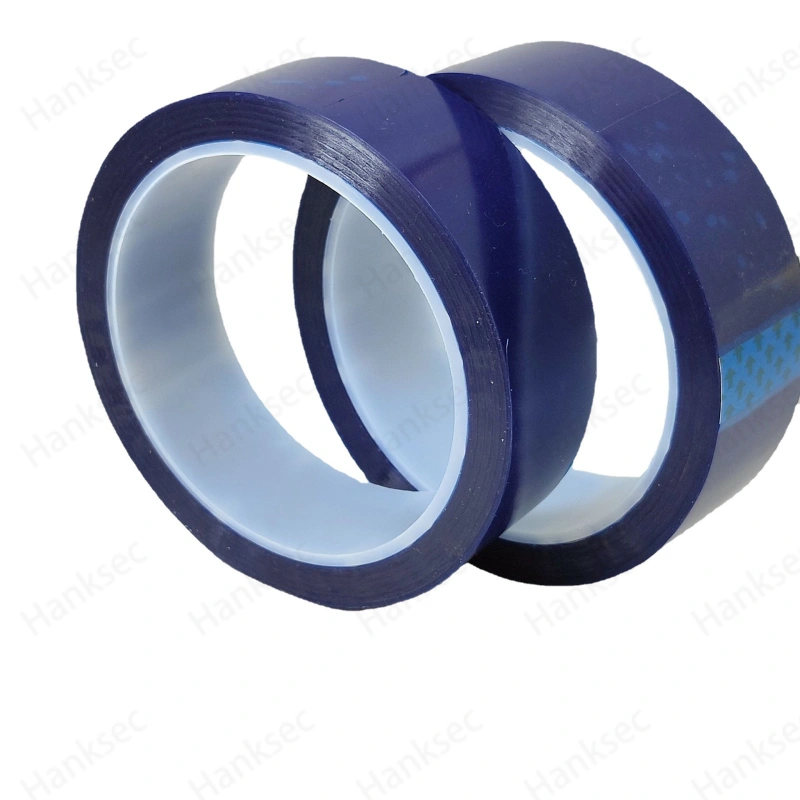
Some tamper-evident adhesive tapes incorporate engineered security cuts, slits or deliberately weakened areas to promote tearing when a specified removal attempt occurs.
Unlike a destructible facestock, which relies mainly on the fragility of the material itself, a security-cut construction uses localized mechanical features to influence where tearing can begin or develop.
When the tape is bonded to a suitable surface and removal stress is applied, the engineered cuts can concentrate stress at selected locations. Depending on the construction, this may cause the film to split, tear or suffer irreversible damage.
Typical security-cut designs may include:
- Edge security cuts: Localized cuts intended to promote tearing from the tape edge.
- Security slits: Small designed openings that can affect how removal stress spreads through the film.
- Custom tear patterns: Project-specific cutting arrangements developed around the required closure design.
Security cuts do not guarantee that every removal attempt will tear the tape. The actual response depends on the film strength, cut geometry, adhesive bond, application substrate and direction of removal.
Security cuts can also be combined with a VOID construction. In that case, the finished closure may provide both a visible security message and localized physical damage, provided that the combined structure has been qualified.
For security bag applications, the cut design must remain compatible with the bag film, closure structure and manufacturing process. See Hanksec’s Tamper Evident Security Bag Tape Selection Guide for more information about security functions and finished-bag compatibility.
4. How Do Heat- and Liquid-Responsive Security Indicators Work?
Specialized security coatings can be designed to change appearance after exposure to a defined temperature, liquid or other environmental condition.
Depending on the formulation, a thermal indicator may change color after specified heat exposure, while a liquid-sensitive security feature may become visibly disturbed after contact with a specified liquid.
These features can help detect selected manipulation methods, including attempts involving heat or liquids.
However, a responsive indicator and an opening-evidence mechanism do not provide the same information.
Important: An environmental indicator does not automatically prove that a package was opened. A color or pattern change may show that the material experienced a specified exposure condition. The cause and implications of that exposure require further inspection.
Not all security indicators are irreversible, and not all formulations respond to the same exposure level. The required response should be defined and verified for the selected material construction.
For projects using multiple security features, the indicator coating, adhesive, printing system and finished-package construction should be qualified together.
Which Tamper-Evident Technology Should Manufacturers Choose?
The right starting point is the required security evidence, not the appearance of the material before use.
For label converters and packaging manufacturers, it is useful to define the intended interference method and the expected visible response before selecting a material.
| Required Result | Technology to Evaluate |
|---|---|
| Readable VOID or OPENED warning after removal | VOID security label or tape |
| Label should break instead of being removed intact | Destructible label material |
| Tape should show localized tearing during specified removal attempts | Security tape with engineered security cuts |
| Specified heat or liquid exposure should be detectable | Qualified responsive security indicator |
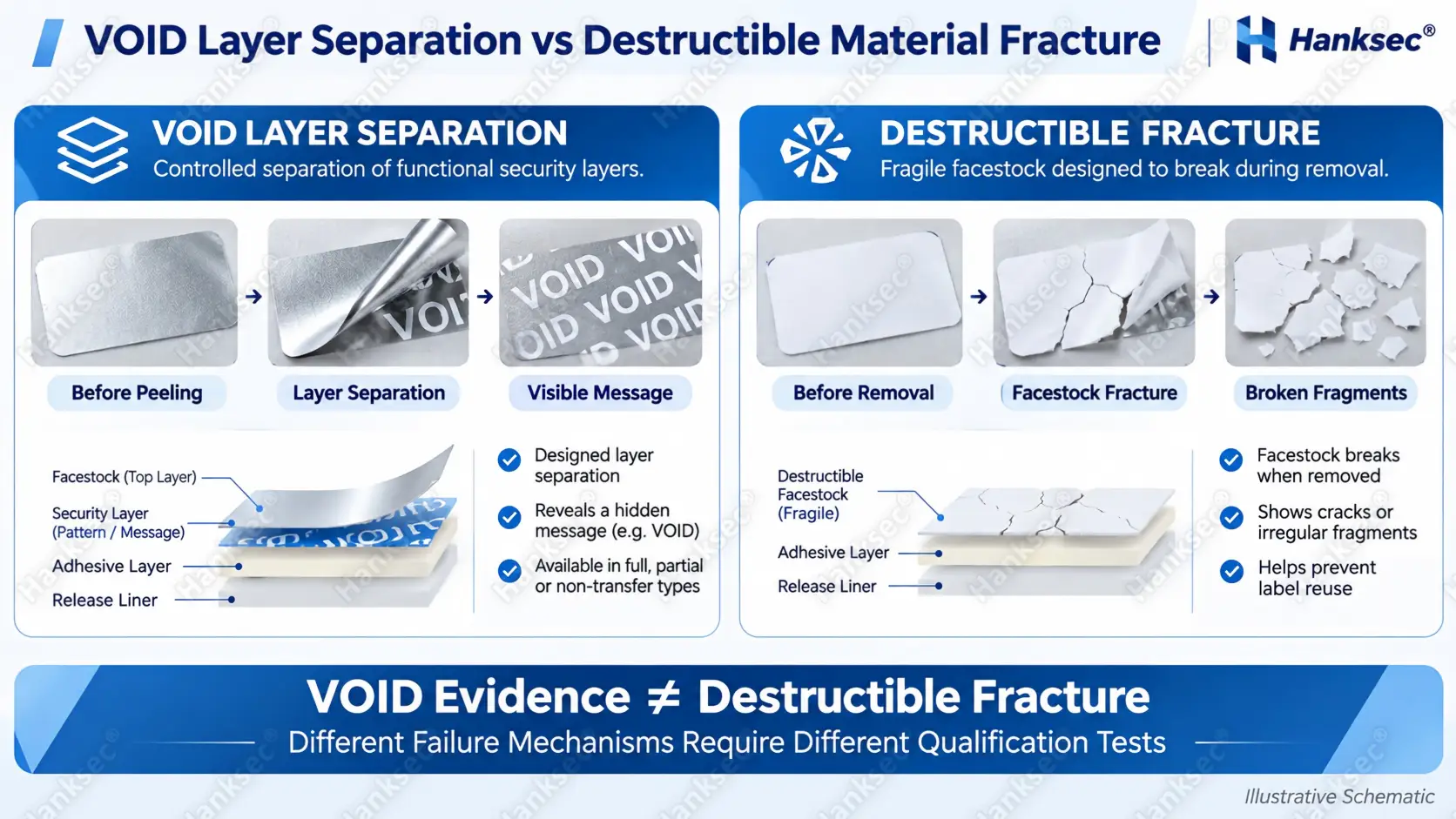
These technologies may be used separately or combined according to the approved application. However, a more complex security construction is not automatically more effective if the adhesive, substrate or converting conditions are unsuitable.
Serialization, barcodes, holograms and authentication features may provide additional identification or anti-counterfeiting functions. These should not be confused with the physical mechanisms that reveal an opening attempt.
How Should Tamper-Evident Technology Be Tested?
For material manufacturers and label converters, reliable tamper evidence depends on more than a successful demonstration on one sample.
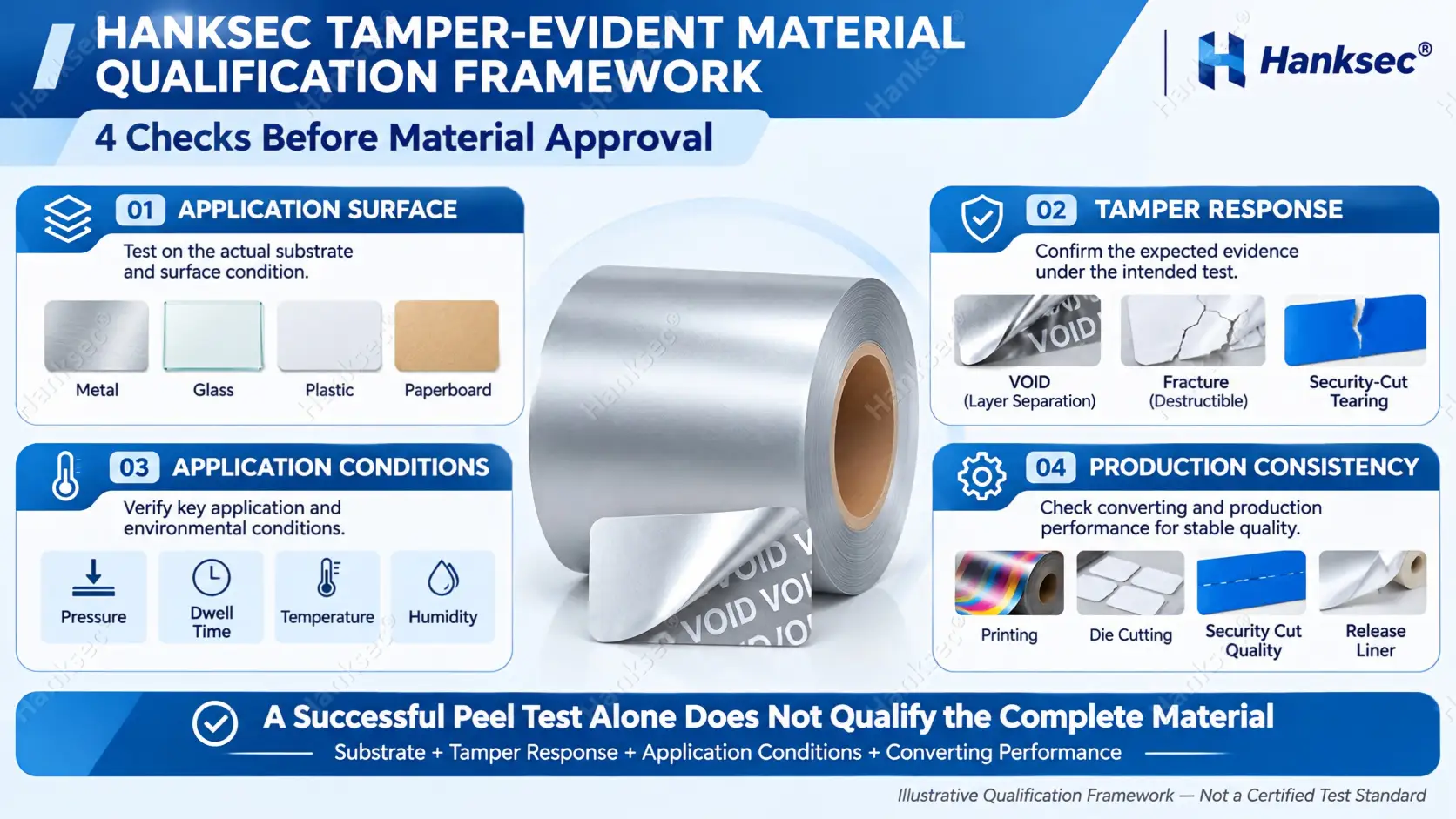
Hanksec recommends evaluating four areas before approving a material construction:
- Application surface: Test on the actual glass, metal, plastic, paperboard or other intended substrate. Surface energy, coatings and contamination can affect performance.
- Defined tamper response: Confirm where the VOID message, facestock fracture, security-cut tearing or other specified evidence should appear after the intended test.
- Application and environmental conditions: Record application pressure, dwell time and relevant temperature or humidity conditions. For responsive indicators, define the exposure condition and expected result.
- Production consistency: Check printing, die cutting, security-cut quality, matrix stripping, release-liner behavior and finished-label or tape performance where applicable.
Laboratory peel adhesion and physical opening tests answer different questions. A material may show strong bonding but still produce an incomplete VOID message. Another may display a clear security response but be unsuitable for high-speed converting.
For security-cut tape, inspection should include the geometry and consistency of the cuts, whether the film remains stable during production and whether the intended tearing behavior occurs on the actual application surface.
For a combined security construction, the complete material system should be qualified rather than assuming that each individual feature will perform identically after integration.
For detailed converter testing procedures, review Hanksec’s Security Label Material Quality Control Guide, which covers peel adhesion, release force, VOID response, printing and converting performance.
Does Tamper-Evident Technology Guarantee Packaging Security?
No. Tamper-evident technology is designed to make specified interference easier to detect. It cannot guarantee that every form of unauthorized access will be prevented or discovered.
Likewise, a serial number or hologram does not independently prove that a package has remained unopened.
For regulated applications, suitability must be evaluated against the relevant packaging requirements.
For example, 21 CFR 211.132 describes tamper-evident packaging requirements for specified over-the-counter drug products, while ISO 21976:2018 addresses tamper verification features for medicinal product packaging.
Neither reference means that every VOID label, security-cut tape or responsive material automatically complies with those requirements.
The finished packaging system must be evaluated against its intended use, applicable requirements and defined inspection procedure.
Frequently Asked Questions
What is tamper evident technology?
It is a material or packaging technology designed to create visible or verifiable evidence when a protected label, closure or package has been opened or manipulated under specified conditions.
Is VOID technology the same as destructible technology?
No. VOID technology relies mainly on controlled separation of functional security layers, while destructible technology relies mainly on physical fracture or tearing of the facestock.
How do security cuts work in tamper-evident tape?
Engineered cuts or weakened areas can concentrate removal stress and promote localized tearing. The actual result depends on the tape construction, cut geometry, adhesive bond and application surface.
Does a tamper-evident label always leave adhesive residue?
No. The visible response depends on whether the construction is full-transfer, partial-transfer or non-transfer. Some materials reveal the security message mainly on the removed film.
Can heat-sensitive security ink detect package opening?
It can indicate defined heat exposure, which may be relevant to certain manipulation attempts. However, heat exposure alone does not prove unauthorized opening.
Can tamper-evident materials be customized for converters?
Yes. Depending on the material system, available options may include security messages, facestock, adhesives, security cuts, printable coatings, release liners, roll dimensions and compatible converting formats.
Send Hanksec your substrate, required tamper response, printing method and converting conditions. Our technical team can help compare VOID materials, destructible constructions, security-cut tape options and compatible responsive features before sample qualification.
Hanksec® | VOID Materials · Destructible Materials · Security Tape · Security Printing & Converting · OEM/ODM