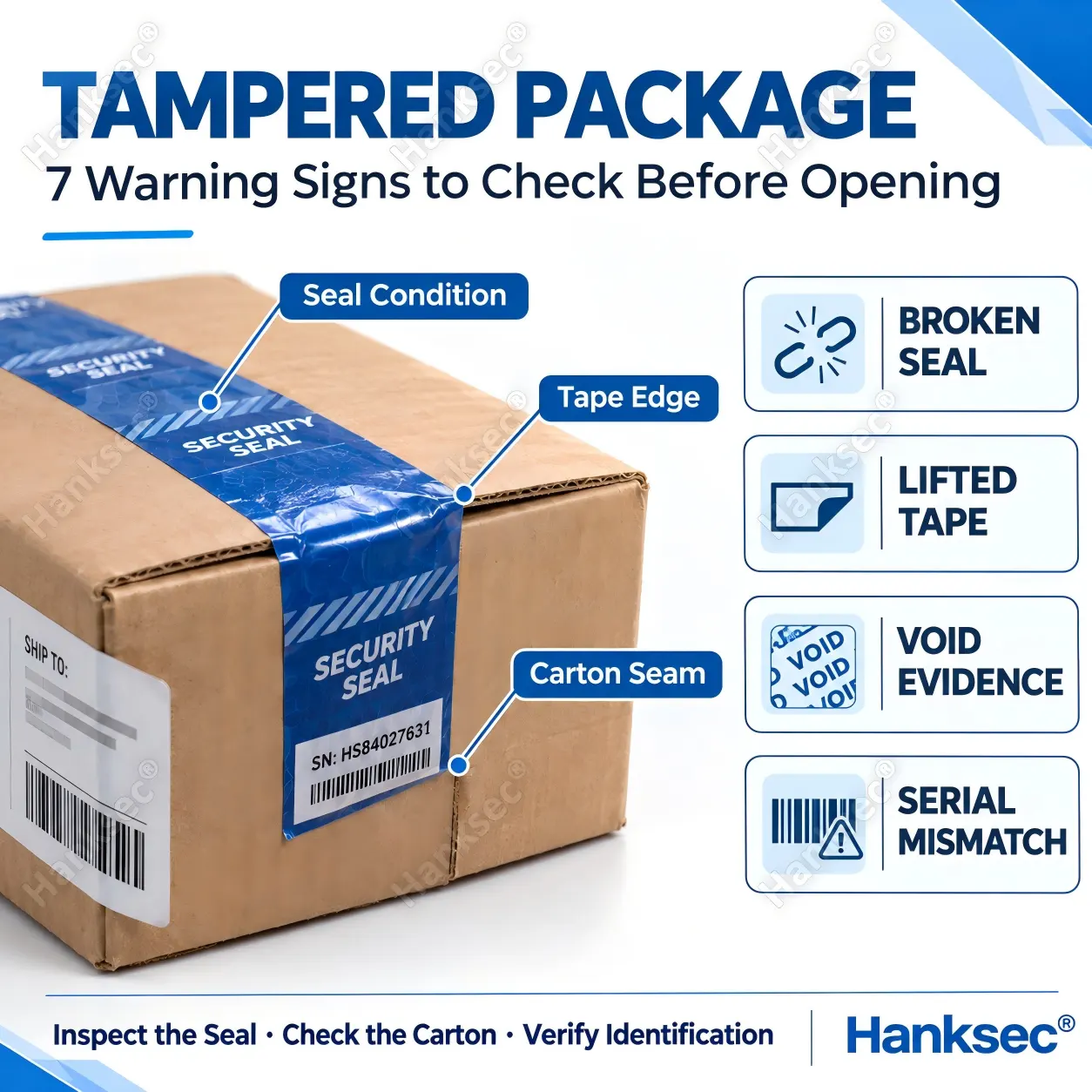
Quick Answer: A tampered package may show a broken security seal, lifted or replaced tape, an activated VOID or OPENED message, cuts near a carton seam, unusual adhesive residue, mismatched identification numbers or signs of resealing. Inspect the original closure and compare it with shipping records before opening. However, a damaged box is not automatically proof of intentional tampering.
Shipping cartons can be damaged during handling, storage and transportation. The challenge for warehouse receiving teams, logistics operators and packaging buyers is distinguishing an actual opening attempt from ordinary transit damage or poor adhesive performance.
The most useful inspection considers three things together: the condition of the seal, the condition of the package and the identification record. No single visual clue can establish exactly when or why interference occurred.
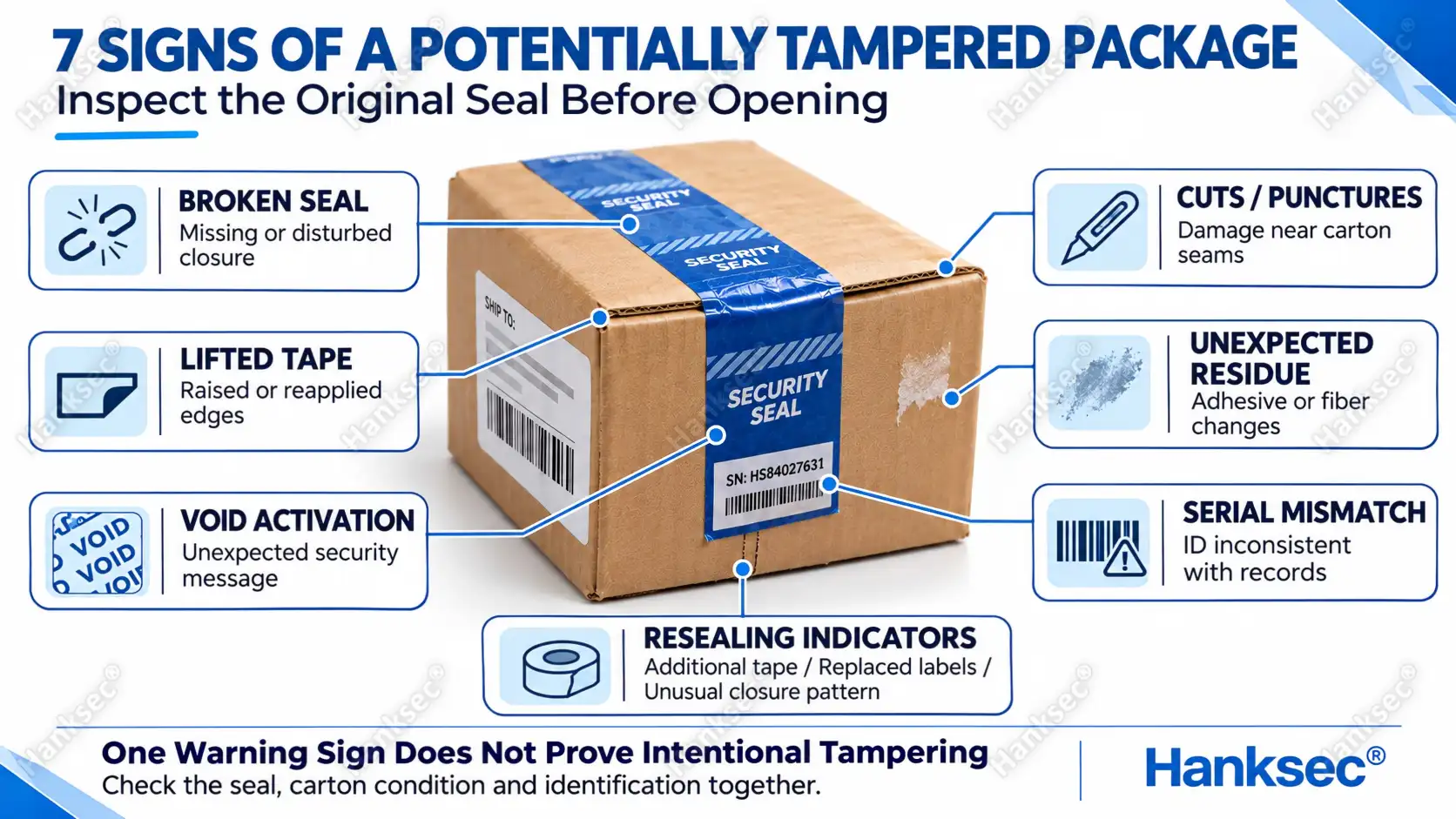
What Are the 7 Signs of a Tampered Package?
Start with the original carton closure, then inspect the surrounding board, labels and identification features. The following signs deserve closer attention before a shipment is accepted or opened.
| No. | Warning Sign | What to Inspect |
|---|---|---|
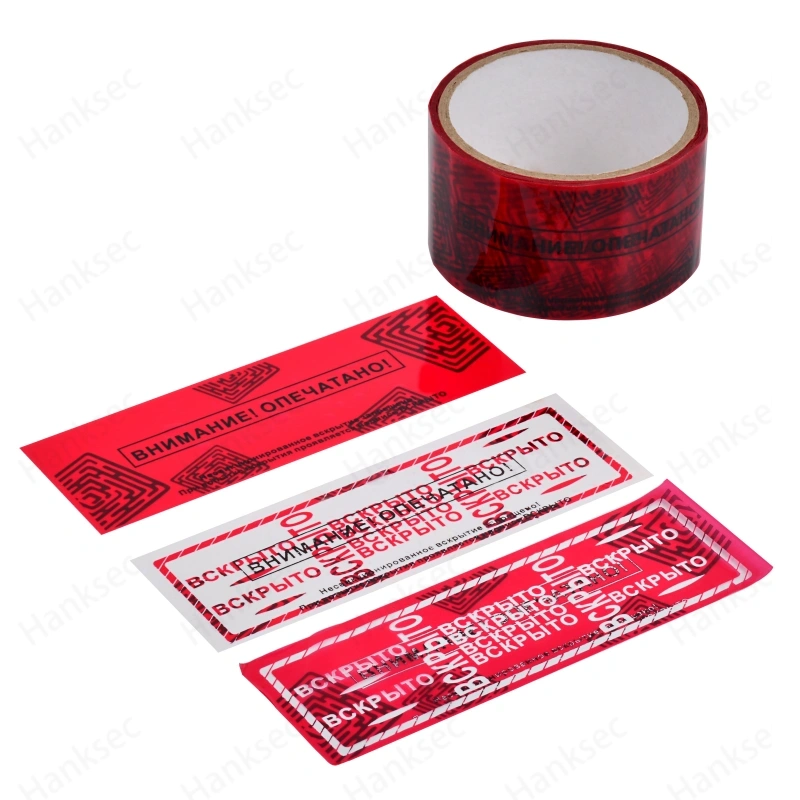
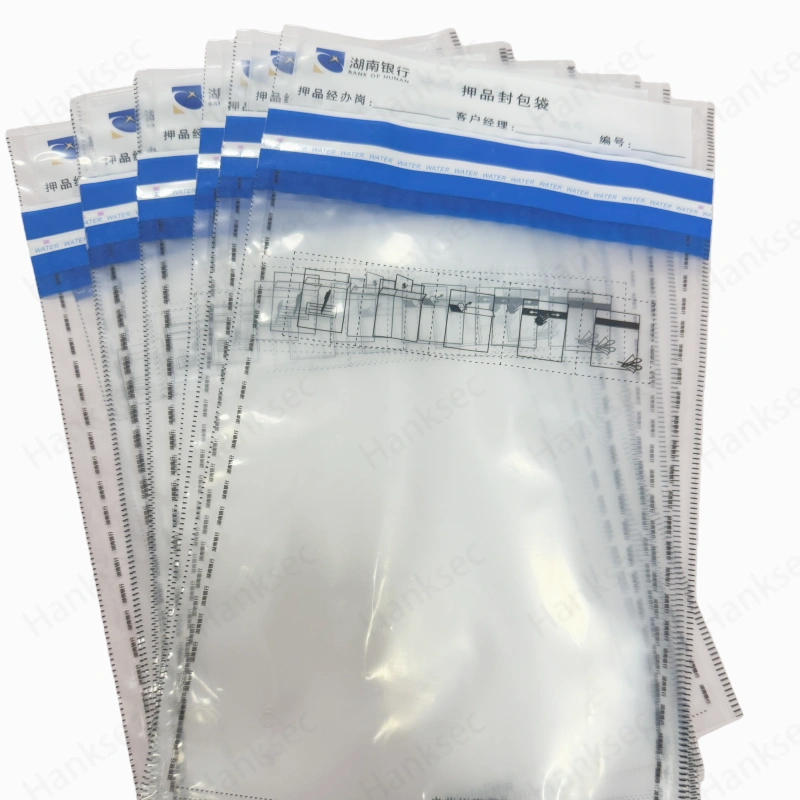
| 01 | Broken or Missing Seal | Cut, missing or visibly disturbed security tape or closure. |
| 02 | Lifted or Reapplied Tape | Raised edges, unusual wrinkles, repositioned tape or inconsistent alignment. |
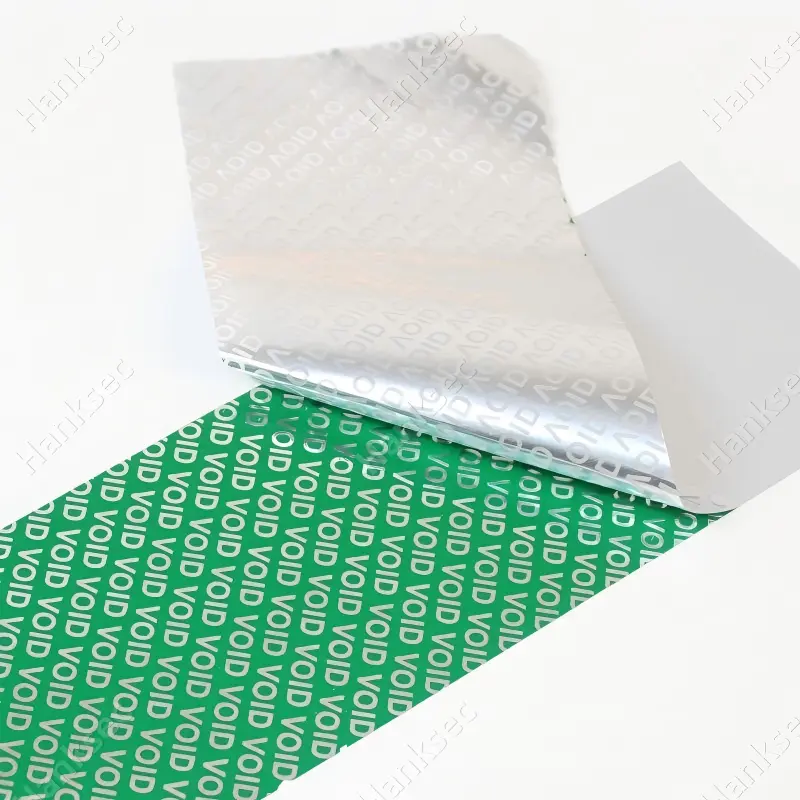
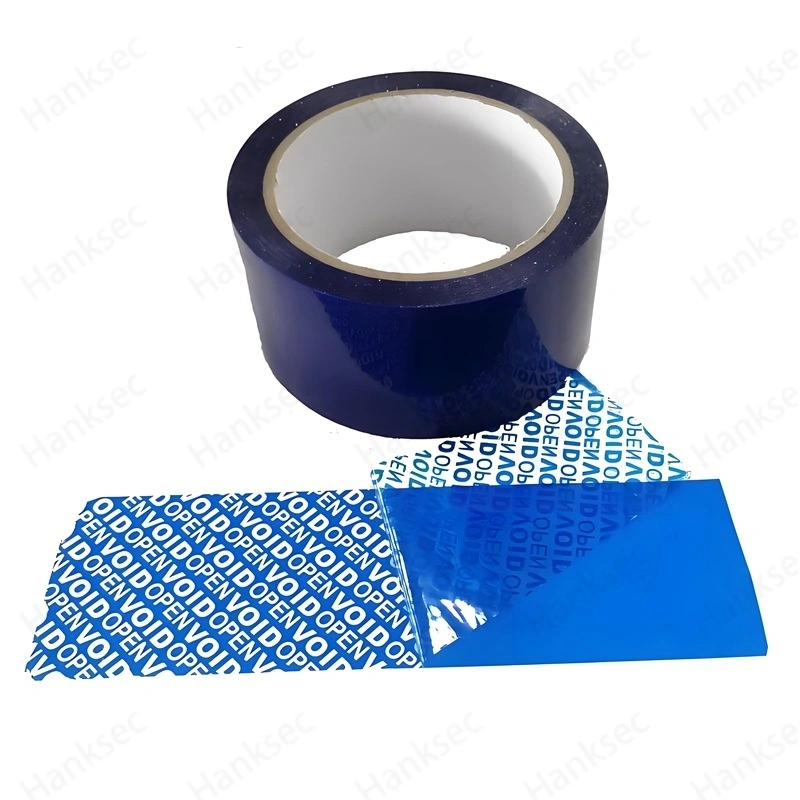
| 03 | Activated VOID Evidence | VOID, OPENED or a custom security message visible where it should remain concealed. |
| 04 | Cuts or Punctures | Unexplained cuts, holes or open gaps near the carton seams and flaps. |
| 05 | Unexpected Residue | Adhesive transfer, torn board fibers or unusual marks around the closure. |
| 06 | Identification Mismatch | Seal serial number, barcode or package identity inconsistent with dispatch records. |
| 07 | Signs of Resealing | Additional tape over the original closure, mismatched tape or unexpected replacement labels. |
Important: A VOID message must be interpreted according to the original tape construction. Full-transfer tape may leave a message on the package, partial-transfer tape may show evidence on both surfaces, and non-transfer tape may reveal the message mainly within the removed film.
Therefore, the absence of obvious adhesive residue does not necessarily mean a package has remained unopened. For more information about these constructions, see Hanksec’s Tamper Evident Security Packaging Tapes Selection Guide.
How Can You Tell Package Tampering From Shipping Damage?
A crushed corner, loose tape edge or torn carton surface is not automatically evidence of deliberate opening. Transportation impacts, moisture, weak adhesion and inadequate application pressure can produce similar appearances.
Compare the location and pattern of damage with the original packaging reference, rather than relying on one mark.
| Observation | Possible Tampering | Other Possible Cause | Recommended Check |
|---|---|---|---|
| Lifted Tape Edge | Removal or resealing attempt | Poor adhesive wet-out, dust or cold application | Check adjacent bonding and approved seal samples |
| Damaged Carton Fibers | Tape forcibly removed | Abrasion or transport impact | Check whether damage follows the closure line |
| VOID Pattern Visible | Security layer activated by opening | Unintended activation during handling or application | Compare against the specified tamper response |
| Crushed Box Corner | Possible access through damaged packaging | Compression during transport or stacking | Inspect nearby seams, cuts and closure integrity |
| Additional Tape | Original closure concealed by resealing | Authorized carrier repair or repacking | Review shipment and handling records |
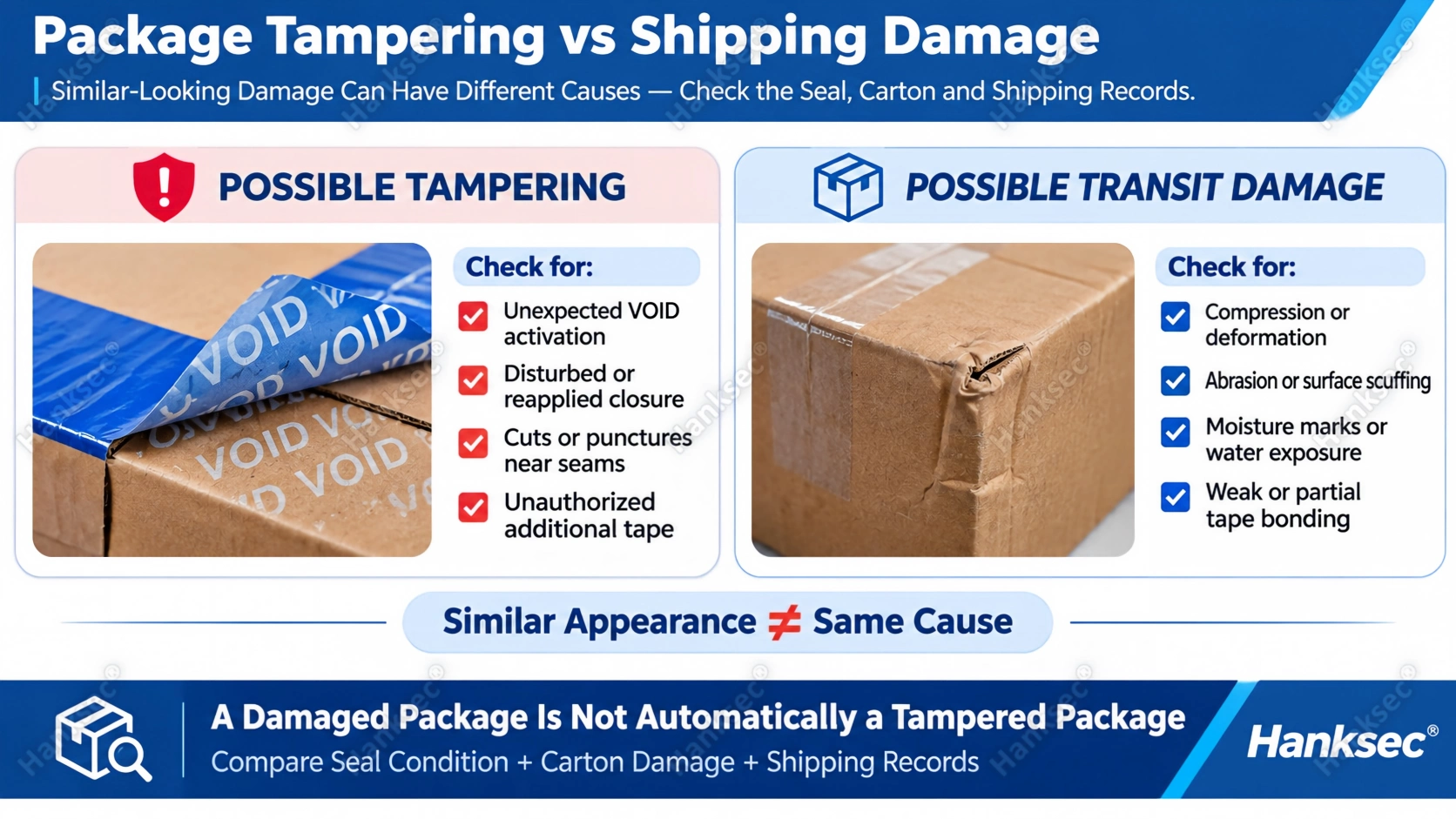
Inspection principle: A damaged package should be investigated, not automatically classified as a tampered package. Even a matching seal number or intact exterior cannot independently guarantee that the contents are unchanged.
For a broader logistics perspective, DHL’s shipping-damage guidance emphasizes inspection upon receipt, photographs and accurate damage documentation.
What Should You Do If a Package Looks Tampered With?
For a suspicious but otherwise safe shipment, receiving teams should follow their organization’s incident-handling procedure before changing the package condition.
- Stop and assess. Do not immediately peel the seal or remove additional tape. If there are unknown substances, leaks, suspicious odors or another safety concern, do not open or further handle the package; follow site safety procedures and contact the appropriate personnel.
- Document the condition. Photograph the complete package, original seal, seams, labels, serial numbers and any suspicious area. Record the delivery time and shipment reference.
- Record and report the discrepancy. Notify the carrier, sender or responsible receiving manager. Follow the applicable delivery acceptance and claim procedures rather than assuming one rule applies to every carrier.
- Preserve the package. Keep the original packaging and avoid unauthorized resealing. Where appropriate, isolate the shipment for controlled inspection and record subsequent handling.
These steps are consistent with the importance of inspecting incoming packages and documenting suspected tampering. For example, the FDA’s food security guidance discusses checking for damaged, resealed or compromised tamper-evident packaging in applicable food-handling operations. These recommendations should not be mistaken for universal legal requirements for all parcels.
Why Can an Untouched Security Seal Look Damaged?
A security seal can develop suspicious-looking defects without deliberate opening. This is particularly relevant when pressure-sensitive security tape is used on difficult packaging surfaces.
Common contributing factors include:
- Dusty corrugated board: Surface dust may interfere with adhesive contact.
- Coated or varnished cartons: Coatings may change bonding and VOID transfer behavior.
- Low application temperature: The adhesive may not wet out sufficiently during sealing.
- Condensation or humidity: Moisture may affect bonding or the package surface.
- Insufficient pressure or dwell: Poor initial contact may cause lifting before the intended bond develops.
These are possible material or application failures, not proof that tampering did not occur. Both packaging qualification and receiving inspection are necessary.
Hanksec Package Seal Inspection Method: 5 Checks Before Opening
For cartons and parcels using tamper-evident adhesive closures, Hanksec recommends a five-point visual inspection framework. It is intended as a practical screening checklist, not a certified test standard or a method that independently proves deliberate interference.
| Check | Inspection Area | Question to Answer |
|---|---|---|
| 01 | Seal Condition | Is the original closure visibly intact? |
| 02 | Edge Integrity | Are there lifted, cut or unusually reapplied edges? |
| 03 | Tamper Response | Does the visible VOID or transfer condition match the expected unopened state? |
| 04 | Identification | Do the available serial numbers or codes match the records? |
| 05 | Package Condition | Are tears, punctures or deformations consistent with the handling record? |
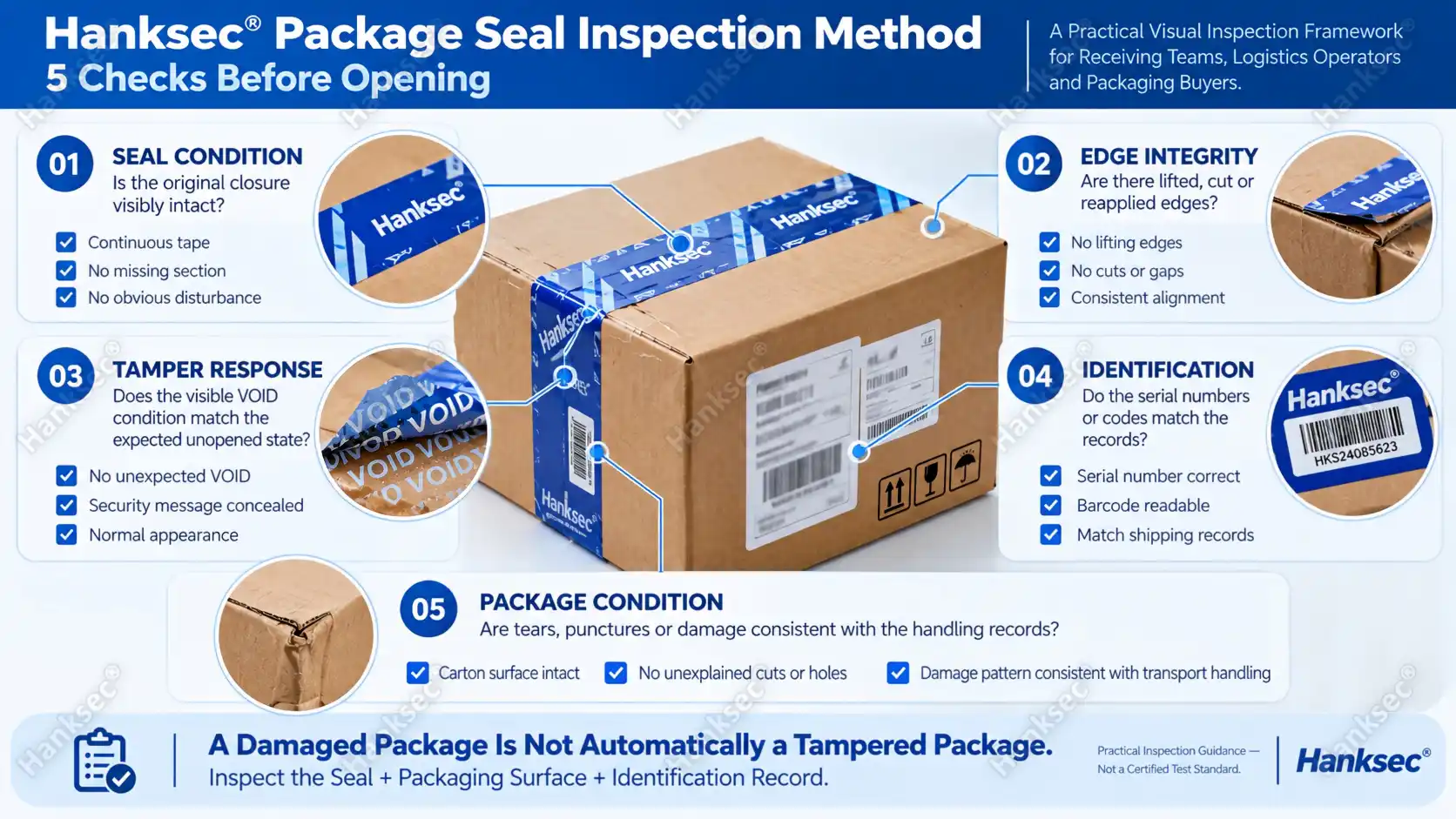
A damaged package is not automatically a tampered package. Inspect the seal, packaging surface and identification record together.
How Should Security Tape Be Qualified to Reduce False Tamper Alarms?
Receiving inspection is more reliable when the original packaging system has already been tested under representative conditions. For security tape manufacturers and packaging converters, qualification should include the actual carton surface, adhesive system and expected opening response.
Useful checks include peel adhesion, edge lifting after dwell, VOID message clarity, residue behavior, printing durability and performance after relevant temperature or humidity exposure. Tamper-response tests should be performed on dedicated samples, not by peeling finished customer shipments during routine receiving inspection.
Hanksec’s Quality Assurance process focuses on material consistency and actual-substrate qualification. For carton-specific material selection, see Security Tape for Boxes: How to Choose Tamper-Evident VOID Tape.
Frequently Asked Questions
Can a tampered package look completely normal?
Yes. A package may show little obvious exterior damage, particularly when it uses ordinary packing tape. Tamper-evident closures and identification records can improve detection, but neither guarantees that every opening attempt will be detected.
Does a broken seal always mean someone deliberately opened the package?
No. Rough handling, incorrect application or material failure can damage a seal. The condition must be assessed alongside the carton, the expected security response and shipment records.
Does VOID tape always leave residue on the carton?
No. Full-transfer, partial-transfer and non-transfer constructions produce different opening effects. The correct inspection method depends on the tape selected and the approved reference sample.
Should I open a suspicious package immediately?
Not before documenting its condition and checking the appropriate receiving procedure. If the package presents a potential safety hazard, avoid opening or further handling it and notify the responsible safety or security personnel.
Send Hanksec your carton surface, sealing method, expected tamper response and application conditions. We can help compare VOID transfer constructions, adhesive compatibility and sample qualification requirements before bulk approval.
Hanksec® | Tamper-Evident Security Tape · VOID Materials · Packaging Security · OEM/ODM