Electronics & Warranty Protection
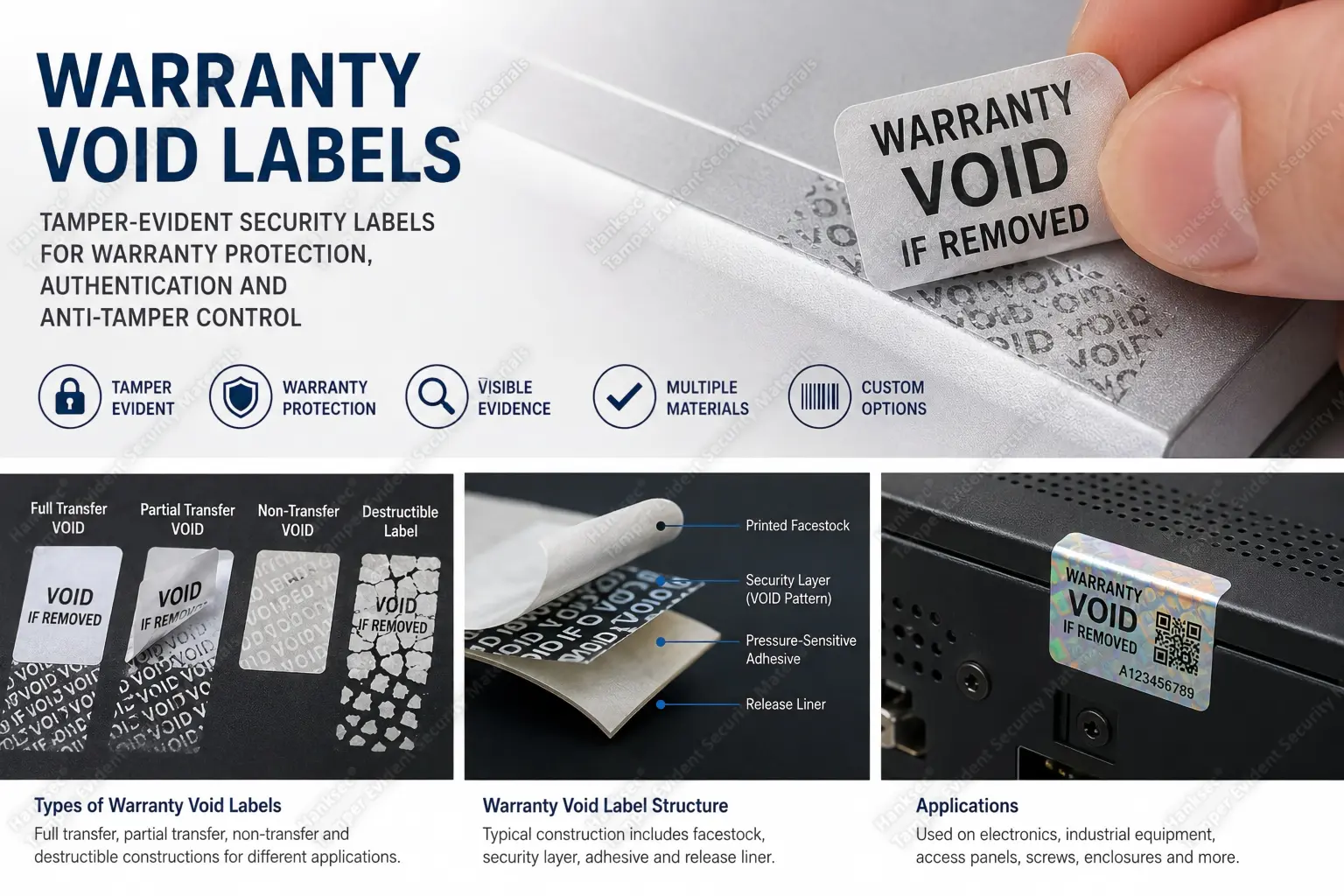
Warranty control, service-access protection and visible tamper evidence on electronics, device housings and selected component surfaces.
The correct security label material construction depends on the actual substrate, required tamper response, printing method, converting process, service environment and supply format. Hanksec supports material selection, specification development and sample qualification before bulk production.
Security label materials should not be selected by appearance or product name alone. Substrate chemistry and surface condition, tamper-response requirement, printing process, converting setup and service environment can change the required facestock, functional security layer, adhesive, printable topcoat and release liner.
Technical support should connect the customer's actual application to a defined material construction. Hanksec uses project inputs, material matching and representative sample evaluation to reduce uncertainty before bulk or repeat production.
The table below shows practical starting directions. Final material selection still requires confirmation on the actual application surface and production process.
The security function, protected surface and production workflow change by industry. Hanksec uses the application as the starting point rather than applying one standard material to every project.
Warranty control, service-access protection and visible tamper evidence on electronics, device housings and selected component surfaces.
Tamper-verification materials for medicine cartons, bottles, vials, medical-device packaging and other healthcare packaging applications.
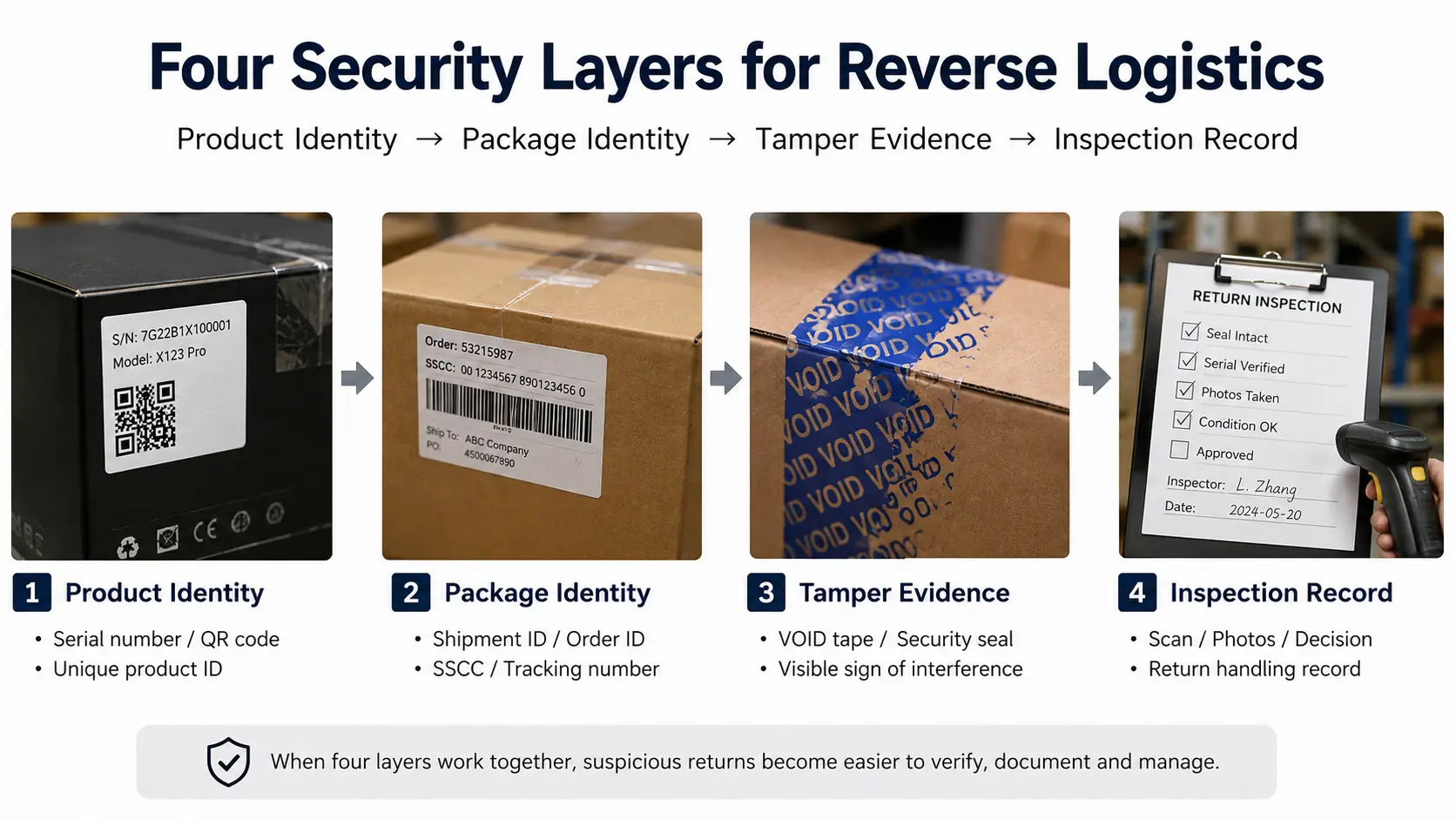
Package-opening evidence, return inspection and product-level security for parcels, high-value goods and reverse logistics.
Carton sealing, shipping protection and visible evidence of opening or resealing during storage, transport and delivery.
Visible opening evidence and protected closures for documents, evidence handling and controlled-access applications, with sequential identification where required.
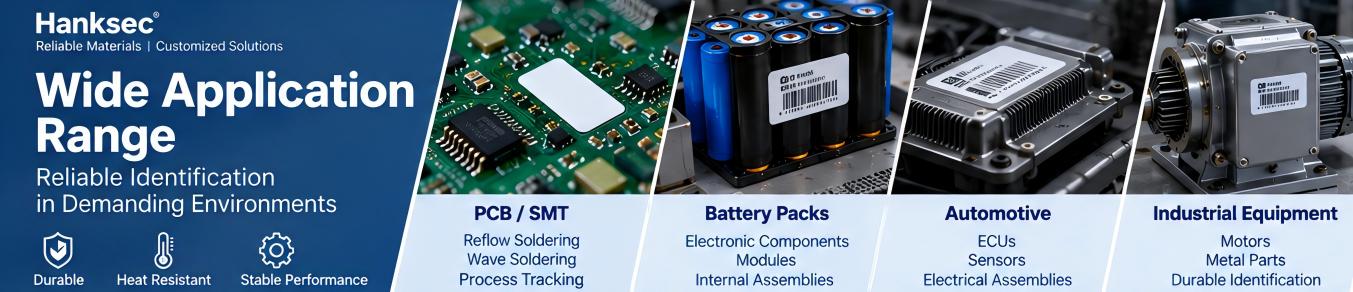
High-temperature and durable identification materials for PCB, electronic components, process tracking and demanding industrial environments.
Customization should support the final application — not simply change appearance. Hanksec can define project specifications around tamper response, printable surface, adhesive system, release liner and roll-converting requirements.
Technical support continues beyond choosing a product family. Printing, converting and application conditions can determine whether the selected construction works reliably in production.
Compare VOID, destructible, functional and specialty constructions according to substrate, residue target and security requirement.
View Security Label Selection Guide →Evaluate print-receptive surface, ink, toner or ribbon anchorage, drying or curing, barcode / QR readability and rub or scratch resistance.
View Printing Compatibility Guide →Review die-cutting depth, matrix stripping, liner release force, web handling, rewinding, roll stability and dispensing requirements.
Browse Converting Technical Resources →Confirm peel adhesion, release behavior, tamper response, printability and converting performance using the actual substrate and representative production conditions.
Explore Quality Assurance →A hand-peel demonstration alone is not sufficient for production approval. Final qualification should consider the actual substrate, dwell time, printing system, die cutting and matrix stripping, web handling, environmental exposure and the required tamper response.
Share the substrate, required tamper response, printing method, converting process, service conditions, roll specification and estimated quantity. Hanksec can recommend a suitable material construction for sample qualification.