
Destructible Label Materials

Commercial Material Range
Destructible Label Materials for Converters & Security Printers
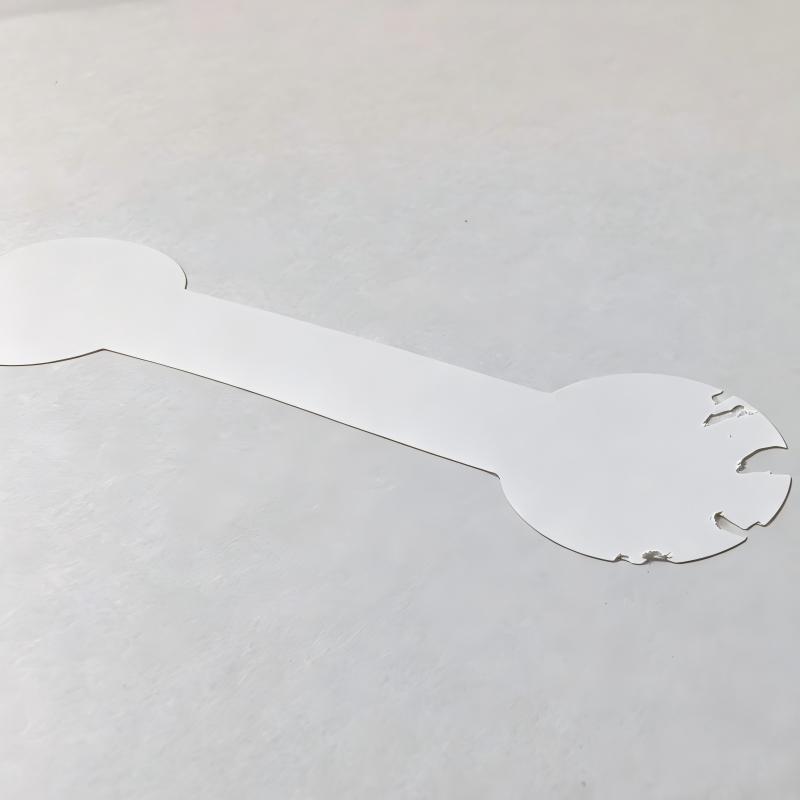
Destructible label materials use a fragile facestock construction designed to fracture, tear or fragment when removal is attempted. The required breakage behavior must be balanced with printing, die cutting, matrix stripping, dispensing and final application performance.
For B2B qualification, buyers should define the breakage level, facestock construction, adhesive, release liner, print process, final label size, application substrate and supply format before approving production material.
Compare Easy / Medium / Hard Grades
→
Jumbo & Slit Roll Supply
→
Explore Material Types & Structures
→
Adhesive & Substrate Qualification
→
Need the technical fundamentals first? Read the
Destructible Label Materials Guide
for breakage mechanisms, grades and selection logic.
Step 1 — Define the Breakage Requirement
Choose the Required Destructibility Level
Destructibility is not simply “high” or “low.” The correct grade must provide the required anti-removal response while remaining stable enough for the intended printing and converting process.
ULTRA / EASY BREAKAGE
Maximum Fragmentation
Selected when aggressive fracture and difficult one-piece removal are the main priorities.
- Suitable for small warranty, electronics and asset-security labels.
- Requires careful die-cutting, matrix stripping and web-tension control.
- Final breakage should be tested after application to the actual substrate.
MEDIUM BREAKAGE
Balanced Security & Converting
Provides a practical balance between visible fragmentation and production stability.
- Useful for general security labels and broader converting programs.
- Often easier to print, die cut and strip than ultra-fragile grades.
- Still requires qualification of adhesive bond and final fracture behavior.
HARD / MORE STABLE
Improved Handling for Production
Used where larger labels, automated handling or more demanding converting conditions require greater facestock stability.
- May support larger formats and more stable production handling.
- Can be evaluated for co-extruded or project-specific constructions.
- Security performance must still be confirmed on the final substrate.
Grade terminology: On this page, ultra / easy, medium and hard / more stable are practical Hanksec selection descriptors. Do not assume they correspond to an external grading standard; final fracture behavior should be qualified on the actual substrate and through the intended converting process.
Step 2 — Select the Material Construction
Destructible Material Types for Different Security Programs
After the required breakage level is defined, the next step is to select the facestock and security construction that fits appearance, printing, substrate and application requirements.
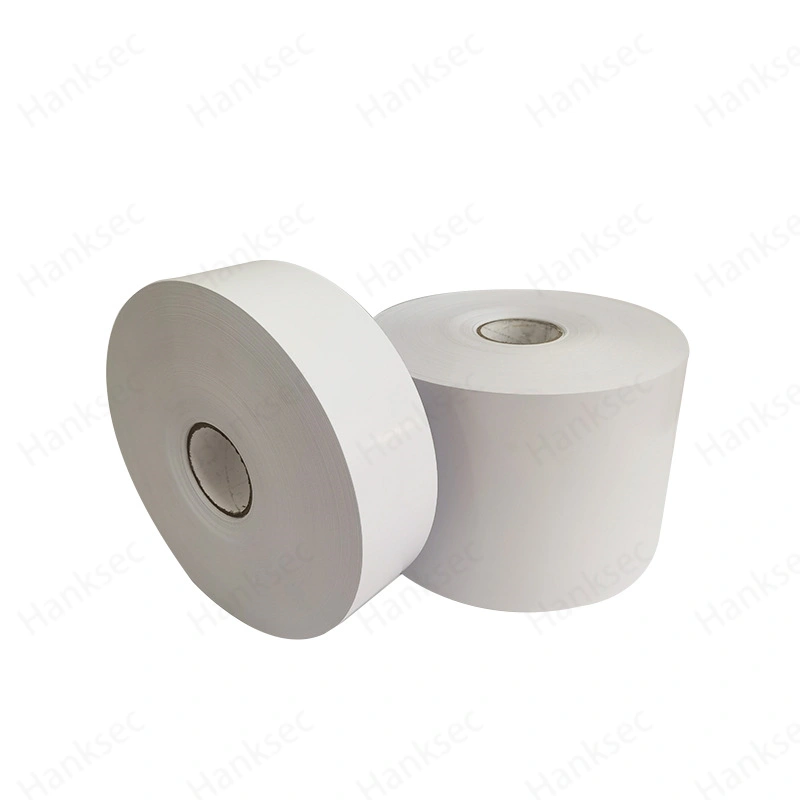
White / Graded Destructible
Core destructible materials with project-specific easy, medium or more stable breakage behavior.
Explore grades →
Transparent Destructible
Clear or colored transparent constructions for security applications where the underlying surface remains visible.
Explore transparent materials →
Fiber Destructible
Fiber-containing constructions designed to create visible damage and tearing when removal is attempted.
Explore fiber materials →
Foamtack Destructible
Thicker foam-based security constructions for projects requiring a different tactile structure or surface interaction.
Explore foamtack materials →
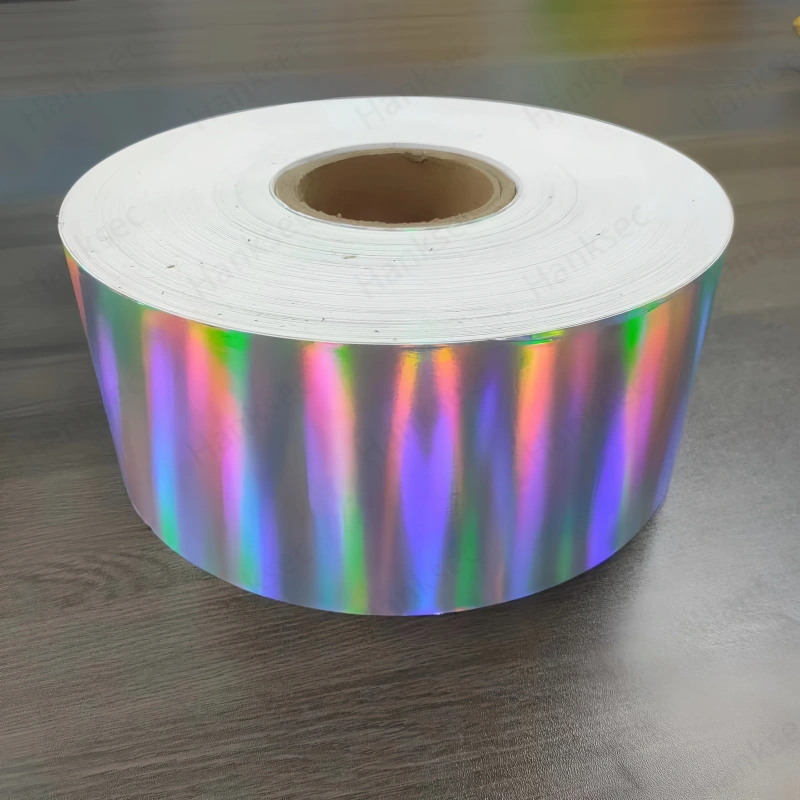
Holographic Destructible
Combines optical appearance with a destructible facestock response for layered visual and physical security.
Explore holographic materials →
Multi-Layer / Hybrid
Project-specific constructions that combine multiple material or tamper-evident functions for specialized programs.
Explore multi-layer materials →
Step 3 — Match Adhesive & Application Surface
Substrate and Adhesive Qualification
| Application Surface | Material / Adhesive Consideration | What Must Be Qualified |
|---|---|---|
| PP / PE / HDPE | Low-surface-energy plastics may require a substrate-matched pressure-sensitive adhesive. | Wet-out, edge lift, dwell time and final destructibility. |
| PET / ABS / PC | Evaluate bond strength together with surface texture, additives and cosmetic requirements. | Adhesion, residue, fracture pattern and long-term stability. |
| Glass / Painted Metal | Adhesive selection should reflect surface finish, cleaning chemistry and service environment. | Initial tack, dwell, removal response and visible damage pattern. |
| Coated Paperboard / Cartons | The coating, varnish or printed surface can change both adhesive bond and destructive response. | Fiber tear, label fracture, ink/varnish interaction and edge lift. |
A destructible material should not be approved only from a generic laboratory panel. The actual application surface should be included in qualification because surface energy, coating, texture, temperature and dwell can change the final breakage behavior.
Step 4 — Confirm Printing & Converting
Converter-Ready Destructible Label Materials
Printing Compatibility
Printable destructible materials should be qualified with the intended ink, toner or ribbon system. The facestock surface and any topcoat must support the required print anchorage without compromising the final destructibility.
Die Cutting & Matrix Stripping
Very fragile facestocks can crack during die cutting, matrix stripping, slitting or rewinding if the material grade and converting settings are not matched. Label geometry and matrix width also affect production stability.
Release Liner Selection
Glassine, PET, kraft or other project-specific liners can influence die cutting, stripping, dispensing and web handling. Liner selection should be evaluated together with the facestock and adhesive system.
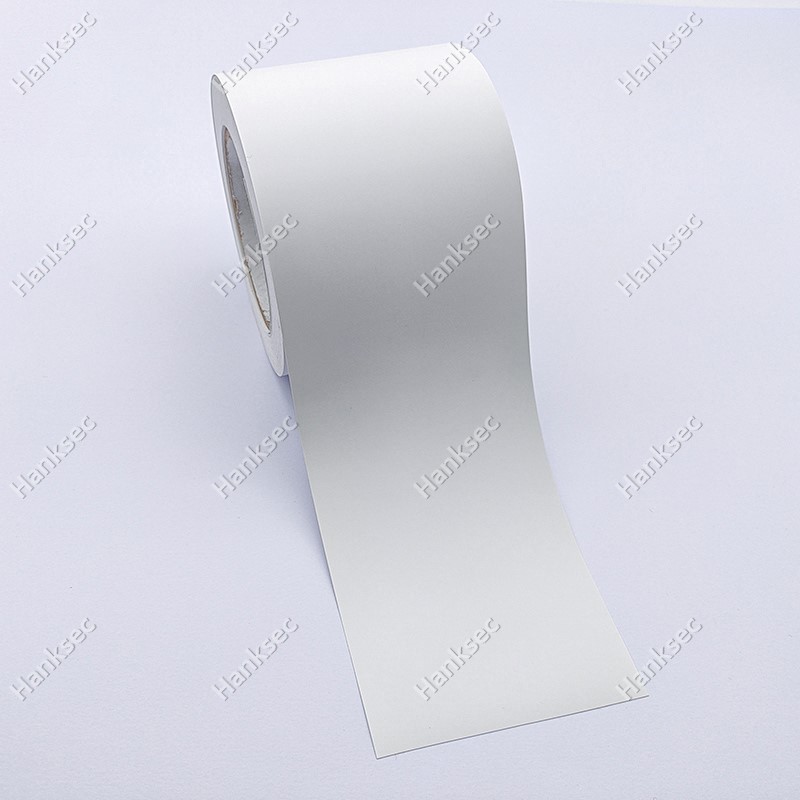
Jumbo & Slit Roll Supply
For converter projects, define roll width, core, winding direction, roll diameter, print process, final label size and expected converting method before production.
Before requesting samples: provide the application substrate, required destructibility, printing method, final label size, roll width, liner preference, winding requirement and estimated quantity. This helps match security performance with real production conditions.
Browse Destructible Label Materials

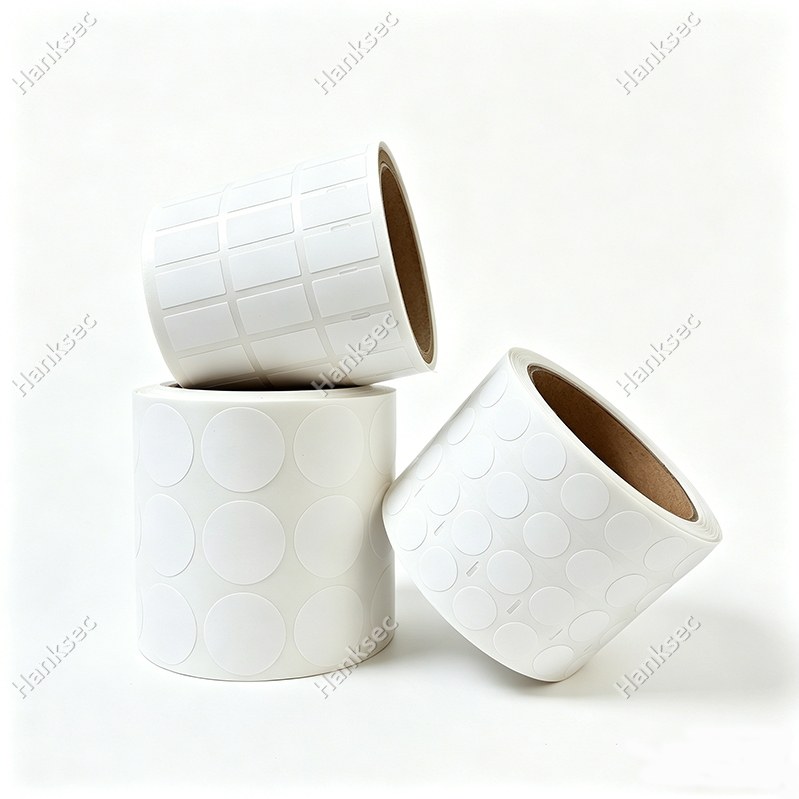
Sample Qualification & Technical Support
Request Destructible Material Samples & Technical Recommendation
For faster material selection, send Hanksec the application substrate, required breakage level, printing method, final label size, roll width, service environment, estimated quantity and preferred supply format.
Sample rolls for qualification
Breakage-grade recommendation
Printing & converting review
TDS / technical details where available