Author: Hanksec Technical Team
Tamper Evident Materials | Double-Sided VOID Material | Security Bag Tape | Structure & Application Explanation
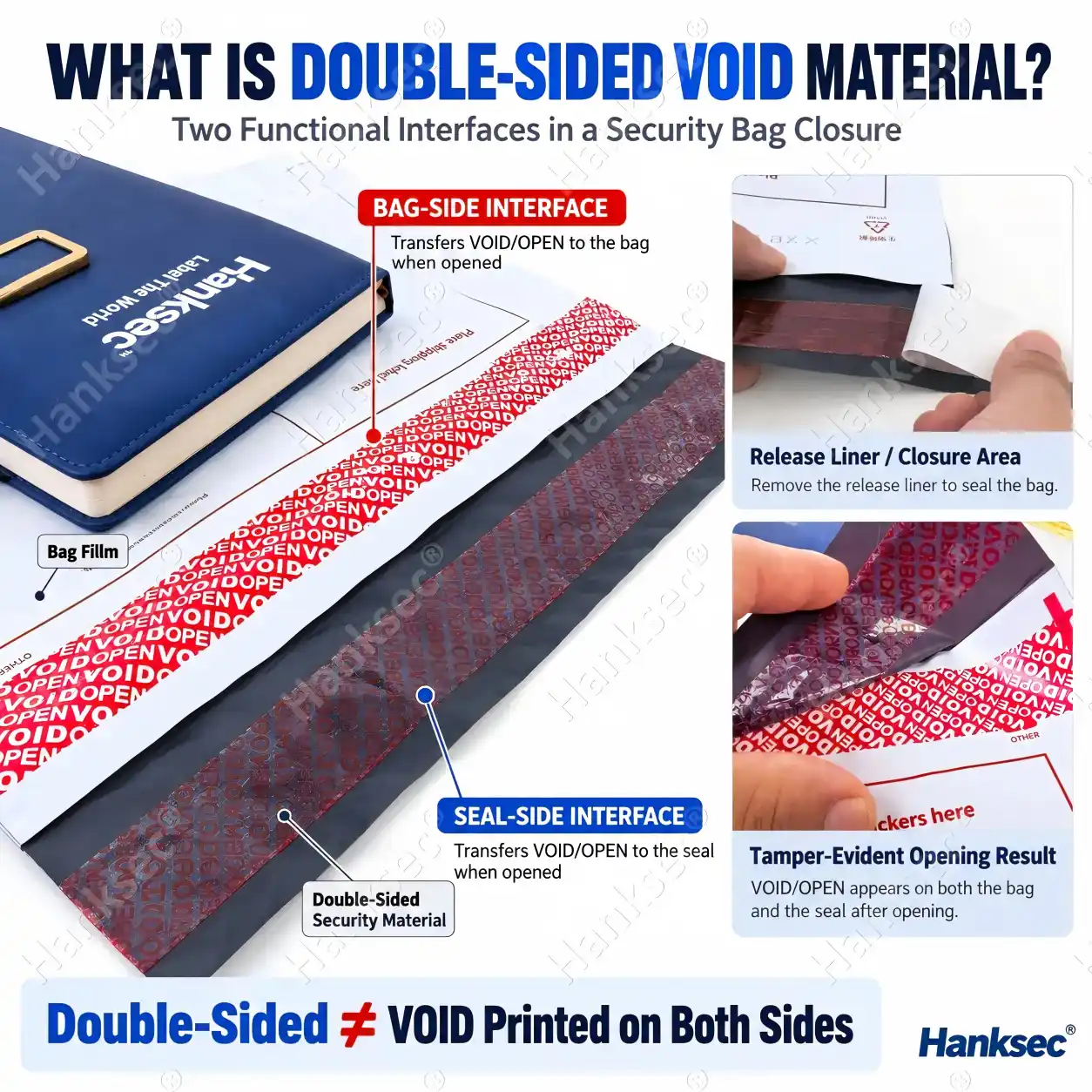
Quick Answer: Double-sided VOID material is a tamper-evident roll material designed with two functional bonding or sealing interfaces, commonly for integration into security bags, courier bags, cash bags, evidence bags and confidential envelopes. “Double-sided” does not simply mean that VOID text is printed on both sides. It means the material construction has to perform across two sides of the sealing system: one side may be integrated or bonded to the bag structure, while the other side participates in the final closure. When the approved seal is opened, the security construction is designed to reveal a VOID, OPENED or other irreversible tamper indication.
Depending on the supplier and application, similar constructions may also be described as double-sided VOID security tape, double-sided tamper-evident tape or security bag sealing tape. The exact layer structure can vary, so the finished application should always be confirmed from the actual material specification and sample test.
What Does “Double-Sided” Mean in VOID Material?
The most important point is that double-sided does not mean “VOID appears on both faces.”
It refers to the functional construction of the material.
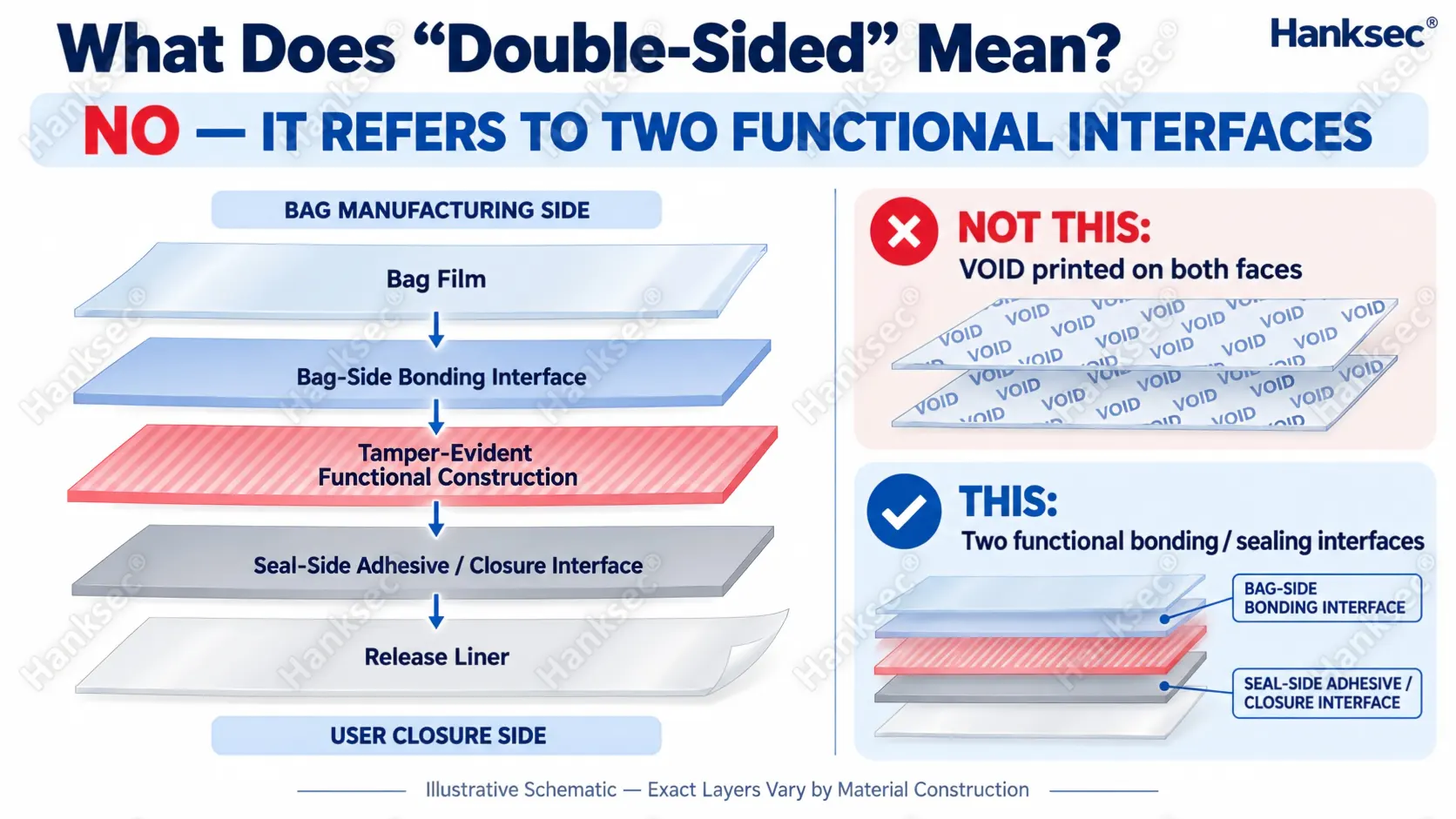
A conventional VOID label material is normally converted into a label and then bonded to one application surface. Its main functional relationship is:
VOID Label → Adhesive → Product / Package Surface
A double-sided VOID material is usually developed for a closure system where the material must interact with more than one interface.
A simplified security-bag structure may look like:
Bag Film → Bonding Interface → Security Material Construction → Seal-Side Adhesive / Closure Interface → Release Liner Before Use
This is a simplified functional schematic. The exact layers, coatings, liners and tamper-evident interfaces can vary by product construction.
This distinction matters because the finished security result depends on more than the hidden VOID message. The material must also remain compatible with the bag film, liner, manufacturing process and final opening behavior.
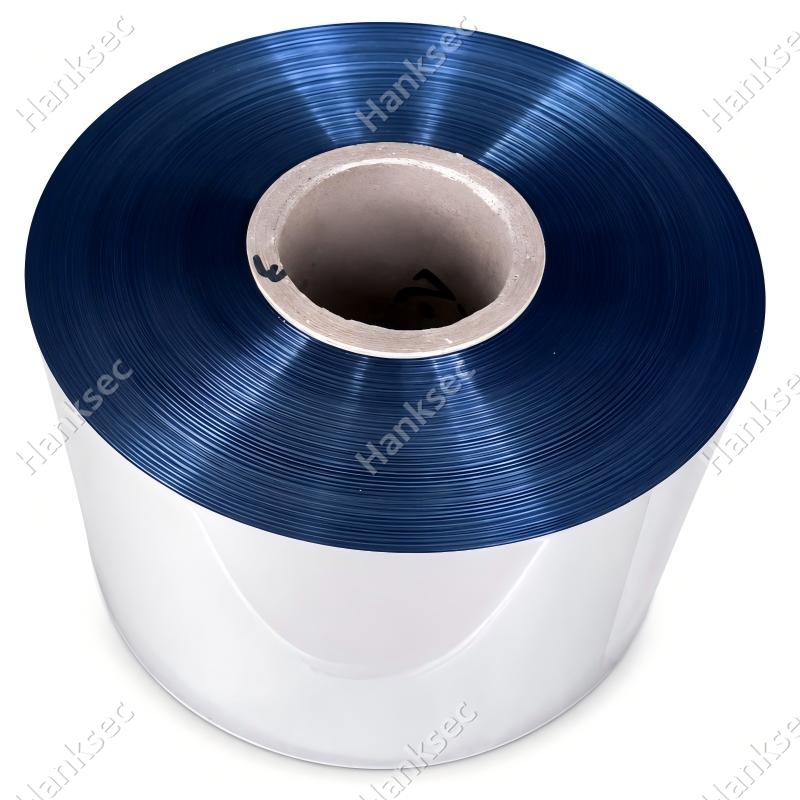
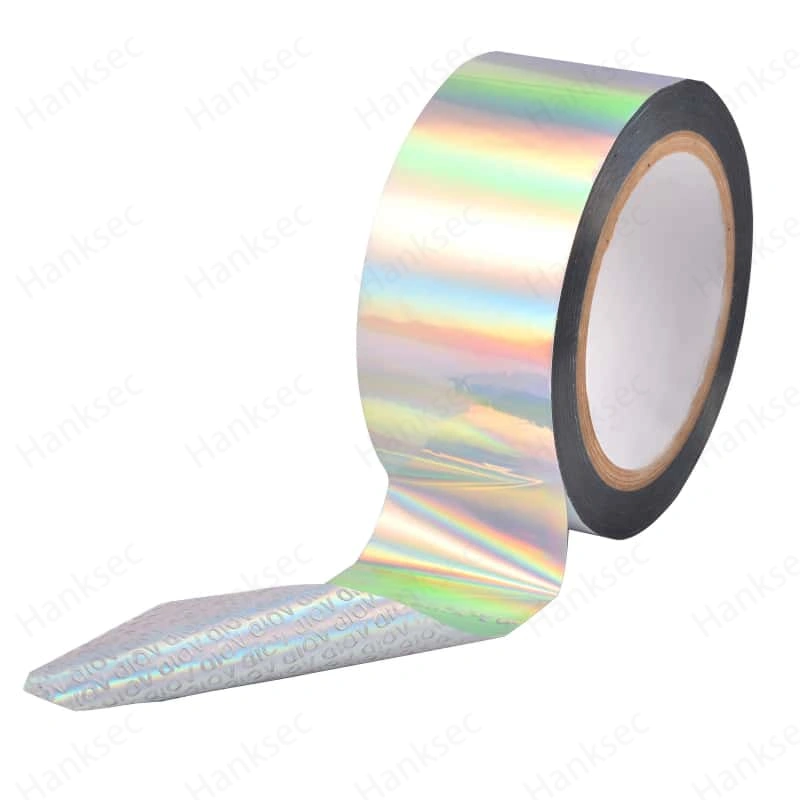
For buyers evaluating an actual production material, see the Hanksec Double-Sided VOID Security Tape Material for Security Bags, developed for security-bag manufacturers and packaging converters requiring bag-side integration and a final seal-side closure interface.
How Does Double-Sided VOID Material Work in a Security Bag?
A security bag closure is a system rather than a single adhesive layer.
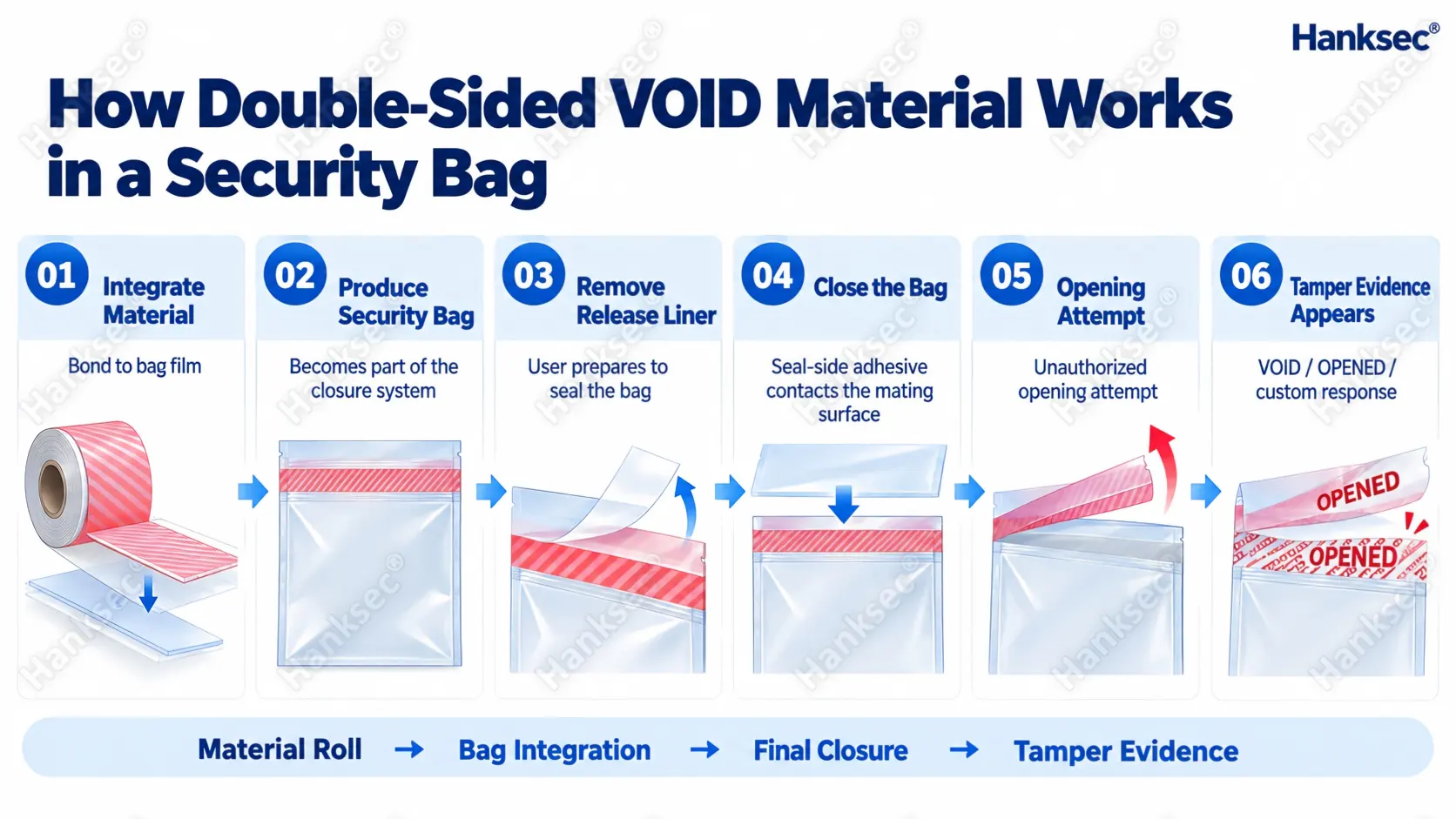
During manufacturing, one functional side of the security material is typically integrated with or bonded into the bag closure structure. A release liner can protect the sealing side until the user closes the finished bag.
The typical use sequence is:
Integrate Material → Produce Bag → Remove Liner → Close Bag → Adhesive Bonds → Unauthorized Opening Attempt → Tamper Evidence Appears
When the closure is opened, the designed security interface separates in a controlled way.
Depending on the construction, the result can include:
- VOID;
- VOIDOPEN;
- OPENED;
- custom hidden wording;
- partial adhesive transfer;
- full transfer;
- a changed security pattern;
- or another defined tamper indication.
The important point is that the tamper response comes from the complete security construction, not simply from printing the word VOID onto adhesive tape.
For a broader explanation of complete security-bag closure systems, see the Hanksec Security Bag Tape for Bag Manufacturers Guide.
Double-Sided VOID Material vs Standard VOID Label Material
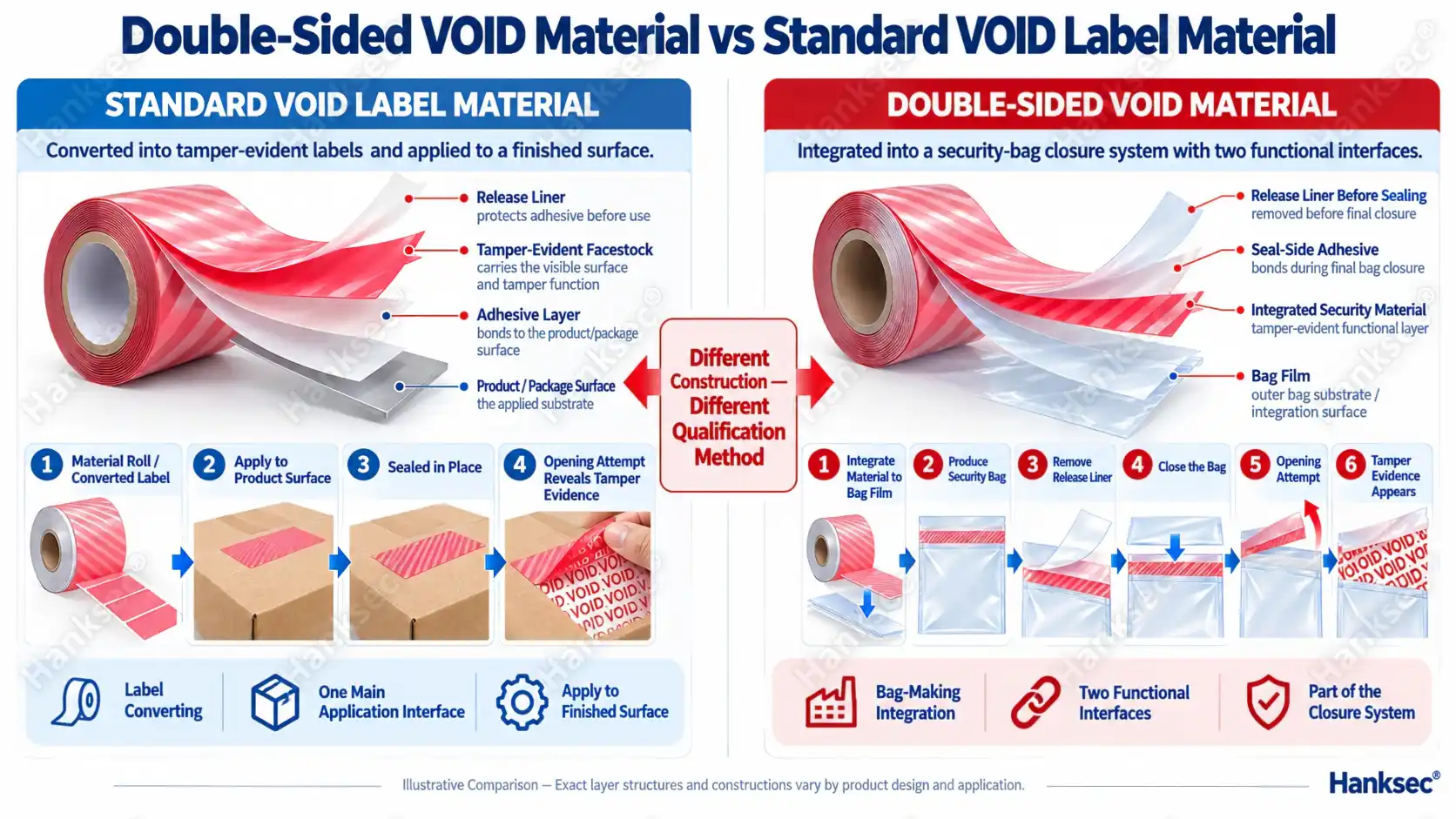
| Item | Standard VOID Label Material | Double-Sided VOID Material |
|---|---|---|
| Typical Role | Converted into tamper-evident labels or seals | Integrated into a security-bag or envelope closure system |
| Main Interfaces | Label adhesive to application surface | Bag-side integration plus final sealing / closure interface |
| Release Liner | Depends on finished label construction | Often important to protect the closure adhesive before final sealing |
| Production Focus | Printing, die cutting, matrix stripping and label dispensing | Slitting, laminating / integration, liner behavior, alignment and bag-making compatibility |
| Final Test | Apply converted label to the real substrate and check tamper response | Test the completed bag closure after the material has been integrated into the finished bag |
This is why replacing a standard VOID label material with a double-sided construction is not simply a matter of adding another adhesive coating.
The complete sealing system must be designed around the finished application.
Why Is Double-Sided VOID Material Commonly Used for Security Bags?
Security bags create a different manufacturing problem from ordinary cartons or boxes.
With ordinary security packaging tape, the finished tape is often applied directly to the outside of a carton, parcel or envelope.
With a security bag, the tamper-evident material can become part of the bag itself during manufacturing.
This makes double-sided constructions useful where the manufacturer needs to combine:
- integration with PE or PP bag film;
- a protected sealing adhesive before use;
- repeatable liner removal;
- clear final closure;
- and irreversible tamper evidence after opening.
For this type of application, Hanksec supplies Double-Sided VOID Security Tape Material for security-bag manufacturing and converting projects. The material is intended to be evaluated as part of the complete bag closure rather than only as an unused tape roll.
Related tamper-evident tape constructions can also be found in the Hanksec Security Packing Tapes range.
The exact construction still needs to be selected according to the actual bag film, closure design and production method.
Why Does the Bag Film Matter?
Many security bags use polyethylene or polypropylene-based films.
These surfaces cannot automatically be treated like glass, metal or PET.
3M’s surface-energy guidance identifies polyethylene and polypropylene as low-surface-energy plastics, which can be more difficult for adhesives to wet out and bond to than higher-surface-energy materials.
This means that saying:
“Our bag is PE.”
may still be insufficient for final material approval.
The result can also be affected by:
- HDPE vs LDPE;
- co-extruded film construction;
- surface treatment;
- printing or coating;
- film additives;
- surface contamination;
- application pressure;
- and dwell time.
For more detail on substrate surface energy and adhesive wet-out, see the Tamper Evident Label Adhesive Guide.
Does Double-Sided Mean Both Sides Must Show VOID?
No.
This is one of the easiest misunderstandings to make.
“Double-sided” describes the functional adhesive or sealing arrangement. It does not require both exposed faces of the material to display identical VOID graphics.
Depending on the construction, one side may primarily serve the bag-manufacturing or bonding function while another side participates in final closure and tamper activation.
The hidden security message, residue location and separation behavior depend on the approved product design.
Therefore, a buyer should confirm:
- where the material is integrated into the bag;
- which liner is removed by the final user;
- where the VOID or OPENED evidence should appear;
- whether residue should remain on the bag, tape or both;
- and what the finished closure should look like after an opening attempt.
How Should Double-Sided VOID Material Be Tested?
The unused roll is not the final security product.
A useful qualification process should reproduce the finished security-bag construction.
A practical sequence is:
Material Roll → Slitting / Converting → Integration With Bag Film → Finished Bag → Liner Removal → Bag Closure → Dwell → Opening Test → Inspect Tamper Evidence
Important checks can include:
- bonding to the actual bag film;
- liner release behavior;
- material flatness and curl;
- alignment during bag production;
- seal-side adhesion;
- clarity of the VOID / OPENED message;
- residue behavior;
- and repeatability between samples.
ASTM D3330/D3330M includes methods for measuring peel adhesion of pressure-sensitive tapes, including double-coated tape and release-liner force. These measurements can be useful for quality control, but peel data alone should not be treated as proof of final tamper-evident performance.
For a tamper-evident bag project, laboratory adhesion testing should therefore be combined with testing on the actual film and finished closure.
The broader Hanksec material qualification workflow is described in the Security Label Material Quality Control Guide.
Frequently Asked Questions
Is double-sided VOID material the same as double-sided adhesive tape?
No. Ordinary double-sided adhesive tape is primarily designed to bond two surfaces. Double-sided VOID material additionally contains a tamper-evident security construction designed to create visible evidence when the approved closure is opened or manipulated.
Is double-sided VOID material only used for security bags?
Security bags are one of the main applications, but similar constructions can also be developed for tamper-evident envelopes and other closure systems. Final suitability depends on the actual packaging design.
Can double-sided VOID material work on both PE and PP?
It can be developed for PE- and PP-based applications, but the same adhesive construction should not automatically be assumed to perform identically on every film. The actual production film should be tested before bulk approval.
Can the hidden message be customized?
Depending on the selected construction, hidden messages such as VOID, VOIDOPEN, OPENED or customer-specific text and graphics can be customized. The required effect should be confirmed during material development and sampling.
Can the material be supplied in jumbo rolls?
Converter-oriented projects can use jumbo or slit-roll formats depending on production requirements. Roll width, liner, winding direction, printing and downstream bag-making requirements should be confirmed before production.
Should I test the tape roll or the finished security bag?
Both can be useful, but the finished security bag is the more important functional test. A material can look acceptable as an unused roll but behave differently after slitting, integration, liner removal and bonding to the actual bag film.
Need to Evaluate Double-Sided VOID Material for a Security Bag?
Hanksec® supplies tamper-evident security materials for security bag factories, packaging converters and OEM projects. If you already know the required application, review our Double-Sided VOID Security Tape Material, or share your bag film, required tamper response, tape width, liner requirement, roll format and bag-making process for sample evaluation.
REQUEST DOUBLE-SIDED VOID MATERIAL TESTING →
Hanksec® | Double-Sided VOID Material · Security Bag Tape · Jumbo Rolls · Slit Rolls · OEM/ODM Security Materials