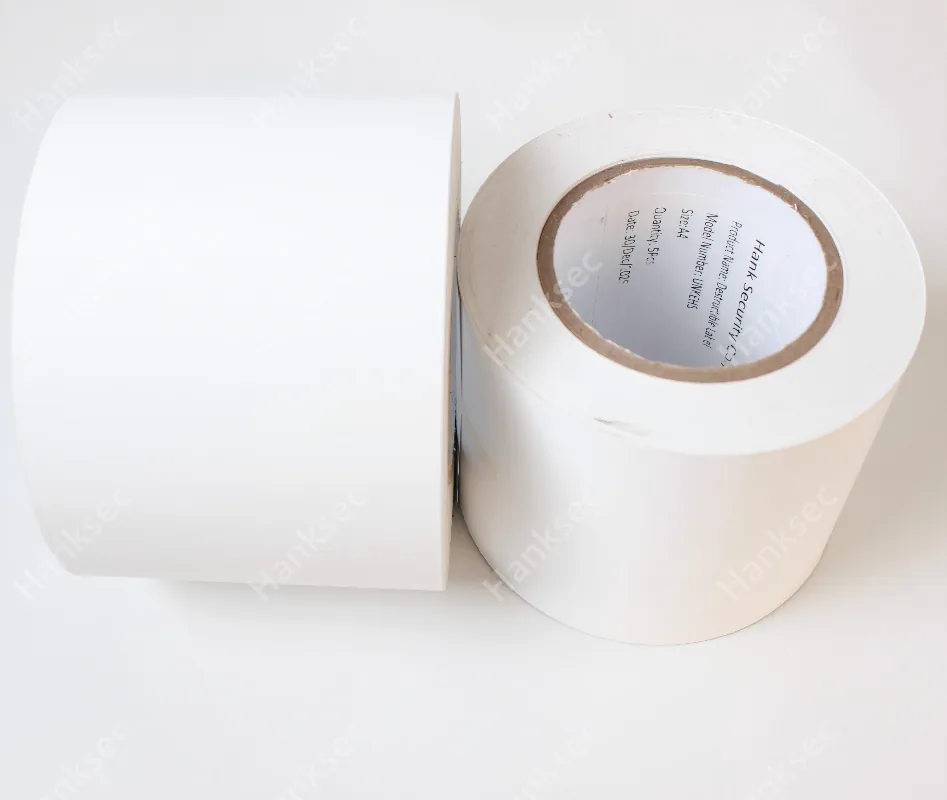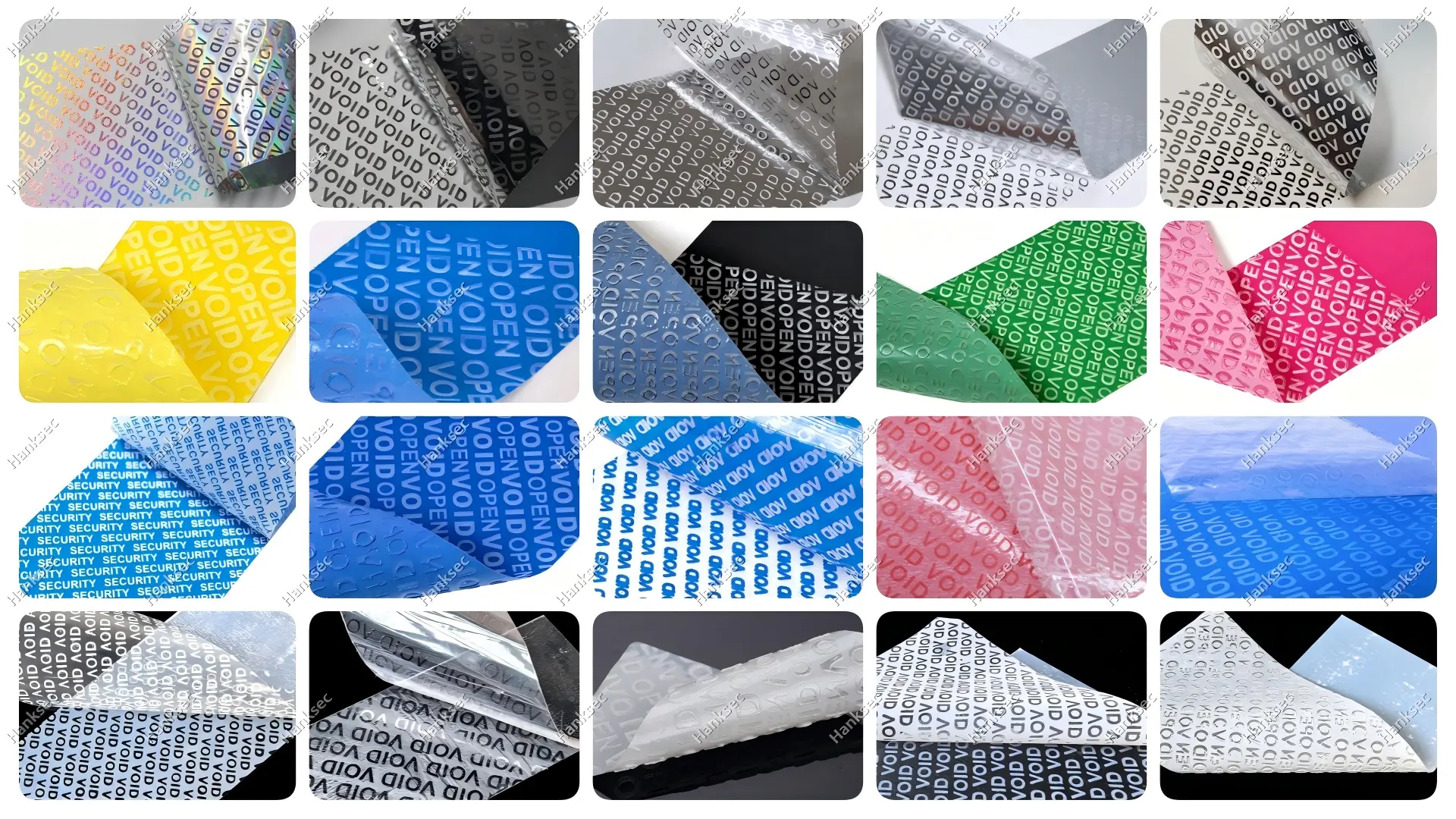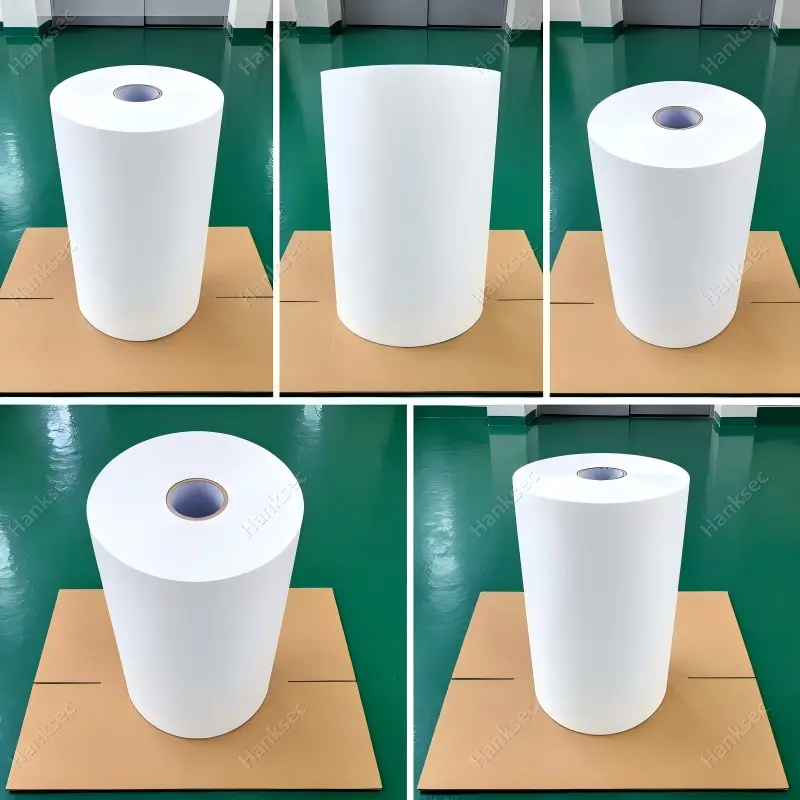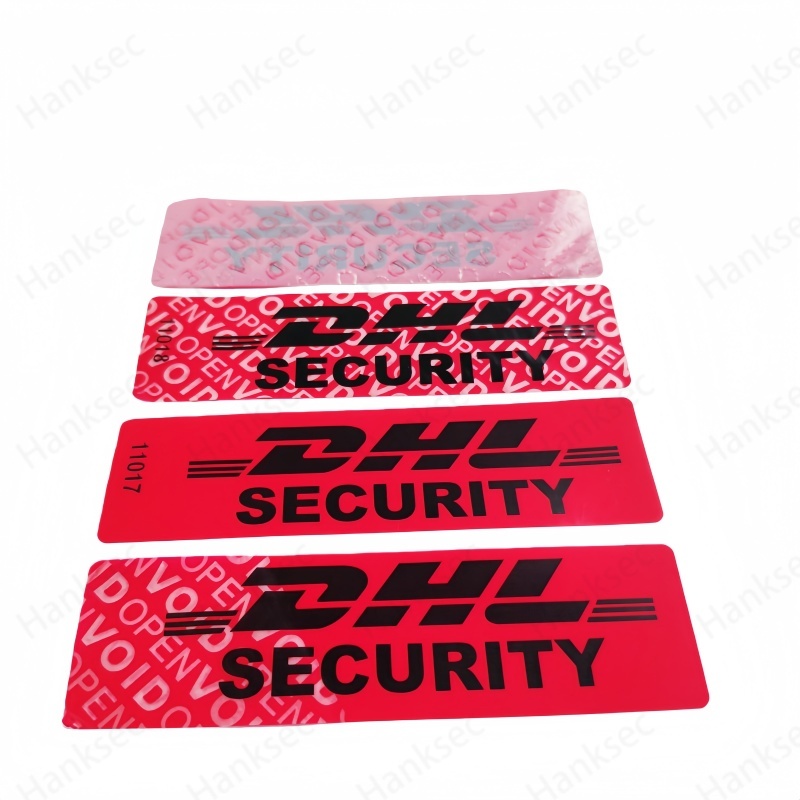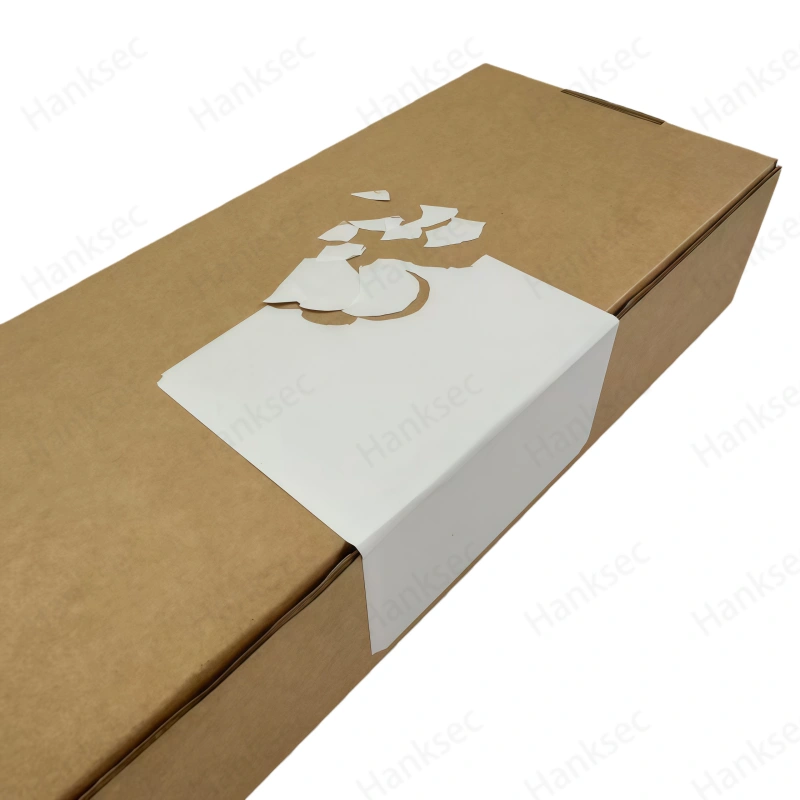
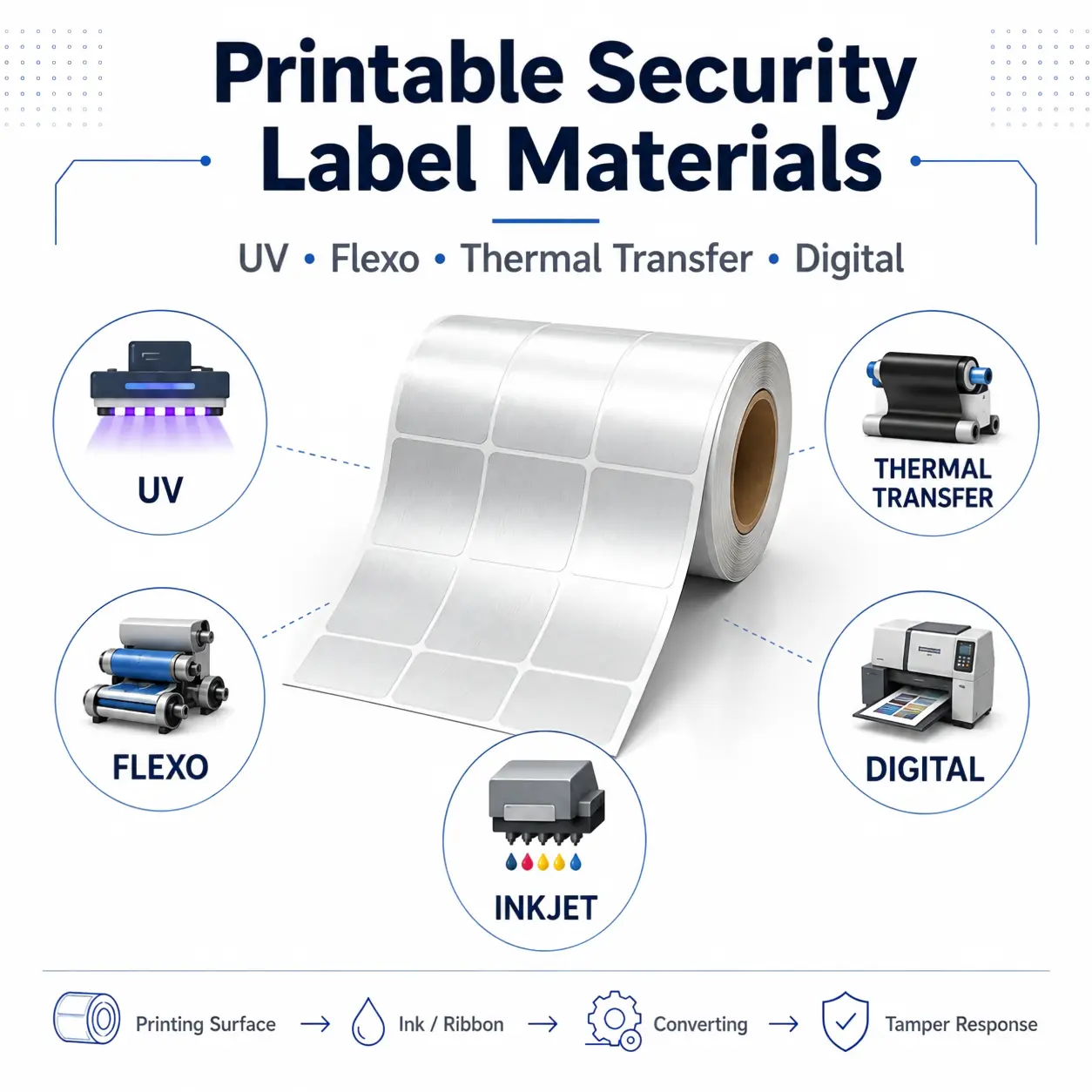
Printable security label materials must satisfy two different requirements at the same time: the surface must accept the selected ink, toner or ribbon system, while the internal security construction must still create the intended VOID, transfer or destructible response.
A material that performs well with UV ink may not provide the same print quality with flexographic ink, thermal-transfer ribbon, pigment inkjet or another digital printing process. Surface chemistry, top coating, curing conditions and downstream converting can all influence the final result.
For label converters and security printers, the correct purchasing question is therefore not simply “Is this material printable?” The more useful question is:
“Is this security material compatible with our printing process, ink or ribbon system, die-cutting process and final tamper-evident requirement?”
Quick answer: printing compatibility should be evaluated together with the printable surface, security construction, ink or ribbon system, converting process and final application. A material that prints successfully is not automatically a production-ready tamper-evident label material.
Printable Security Label Materials: Quick Printing Compatibility Matrix
| Printing Method | Main Surface Requirement | Main Production Risk | Buyer Should Test |
|---|---|---|---|
| UV Printing | Surface compatible with UV ink and curing process | Weak ink anchorage, incomplete curing or poor rub resistance | Ink adhesion, curing, rub resistance and post-print converting |
| Flexographic Printing | Compatible surface treatment or top coating | Poor ink anchorage, uneven coverage or ink/coating mismatch | Print density, adhesion, rub resistance and die-cut stability |
| Thermal Transfer | Ribbon-compatible printable surface | Weak ribbon transfer, scratching or barcode failure | Ribbon compatibility, print density, scratch resistance and scanning |
| Digital Printing | Printing-platform-specific compatibility | Toner or ink adhesion problems | Print adhesion, variable-data quality and converting stability |
| Pigment Inkjet | Ink-receptive surface or suitable coating | Smearing, slow drying or low rub resistance | Drying, ink adhesion, rub resistance and image quality |
| Screen Printing | Compatible surface and ink system | Poor adhesion, excessive ink build or incomplete curing | Ink adhesion, curing and abrasion resistance |
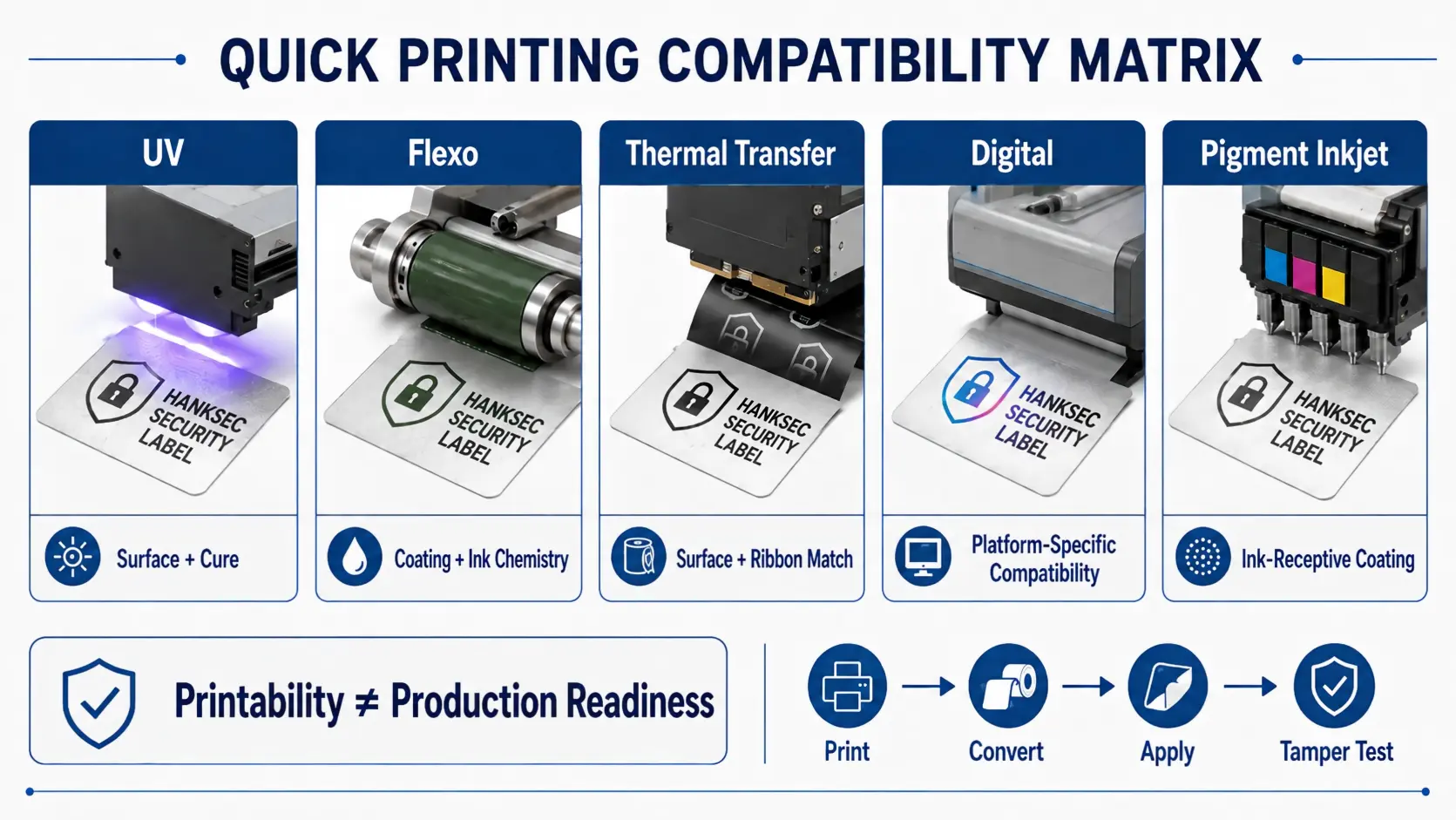
Fast selection rule: identify the printing process first, then qualify the security material using the actual ink, ribbon, press and downstream converting conditions intended for production.
Why Security Label Materials Can Be More Difficult to Print Than Ordinary Label Stock
Ordinary pressure-sensitive label stock is often evaluated mainly according to the facestock, adhesive, liner and printing surface.
Security label materials can contain additional functional layers. Depending on the construction, these may include:
- printable top coating;
- PET or other facestock;
- metallized or colored layer;
- holographic layer;
- hidden VOID or OPENED security layer;
- release or separation layer;
- pressure-sensitive adhesive;
- release liner.
These layers are designed primarily to create a controlled tamper response.
For example, a full-transfer VOID material must separate in a way that transfers security evidence to the substrate. A non-transfer material must activate its hidden security message without producing the same transferred pattern. A destructible material must fracture rather than peel away intact.
For a broader explanation of how these functional layers work together, see Hanksec’s Security Label Material Systems guide.
A security material may produce excellent tamper evidence but still show poor ink anchorage if the printing surface is not matched to the selected printing technology.
The opposite is also possible: a surface may print very well, but the complete construction may fail during die cutting, matrix stripping or final tamper testing.
Top Coating Is Often the First Printing Decision
The printing surface is one of the first specifications that should be confirmed when selecting printable security label materials.
Depending on the material and application, the printing surface may use:
- an untreated surface;
- a surface-treated film;
- a primer;
- a general print-receptive top coating;
- a printing-process-specific coating;
- an inkjet-receptive coating.
These are not automatically interchangeable.
A coating designed to improve pigment inkjet reception may behave differently under UV ink, thermal-transfer ribbon or another digital process. Similarly, a material that works well with one flexographic ink system should not automatically be assumed to provide the same result with another ink chemistry.
Industry material suppliers also use dedicated film top coatings to improve ink anchorage across specific printing technologies. For additional technical background, see Avery Dennison’s film top-coating guidance.
The purpose of a top coating is not simply to make the surface “more printable.” It must provide the required balance between:
- ink anchorage;
- drying or curing;
- rub resistance;
- scratch resistance;
- image quality;
- barcode readability;
- downstream converting;
- security-layer stability.
The complete system should therefore be qualified rather than approving the material only from a short printing test.
UV Printing on Security Label Materials
UV printing is widely used by label converters because it can provide fast curing, strong color density and efficient roll-to-roll production.
However, successful UV printing on a security material depends on the relationship between the ink chemistry, printable surface and curing conditions.
A converter should confirm:
- UV ink system;
- press configuration;
- curing technology;
- printing speed;
- surface coating;
- ink coverage;
- post-print die cutting;
- final tamper response.
Poor ink anchorage can appear as scratching, flaking or ink removal during handling. Incomplete curing can also create problems during rewinding, die cutting or later application.
As a first-party application example, Hanksec has documented UV inkjet printing on specially coated destructible security materials, with qualification focused on ink adhesion, scratch resistance, curing quality and preservation of the fragile tamper-evident response. See Hanksec’s UV inkjet destructible material test on LinkedIn.Technical distinction: UV-curable inkjet and aqueous/pigment inkjet are different printing systems. A surface qualified for one process should not automatically be assumed to work with the other.
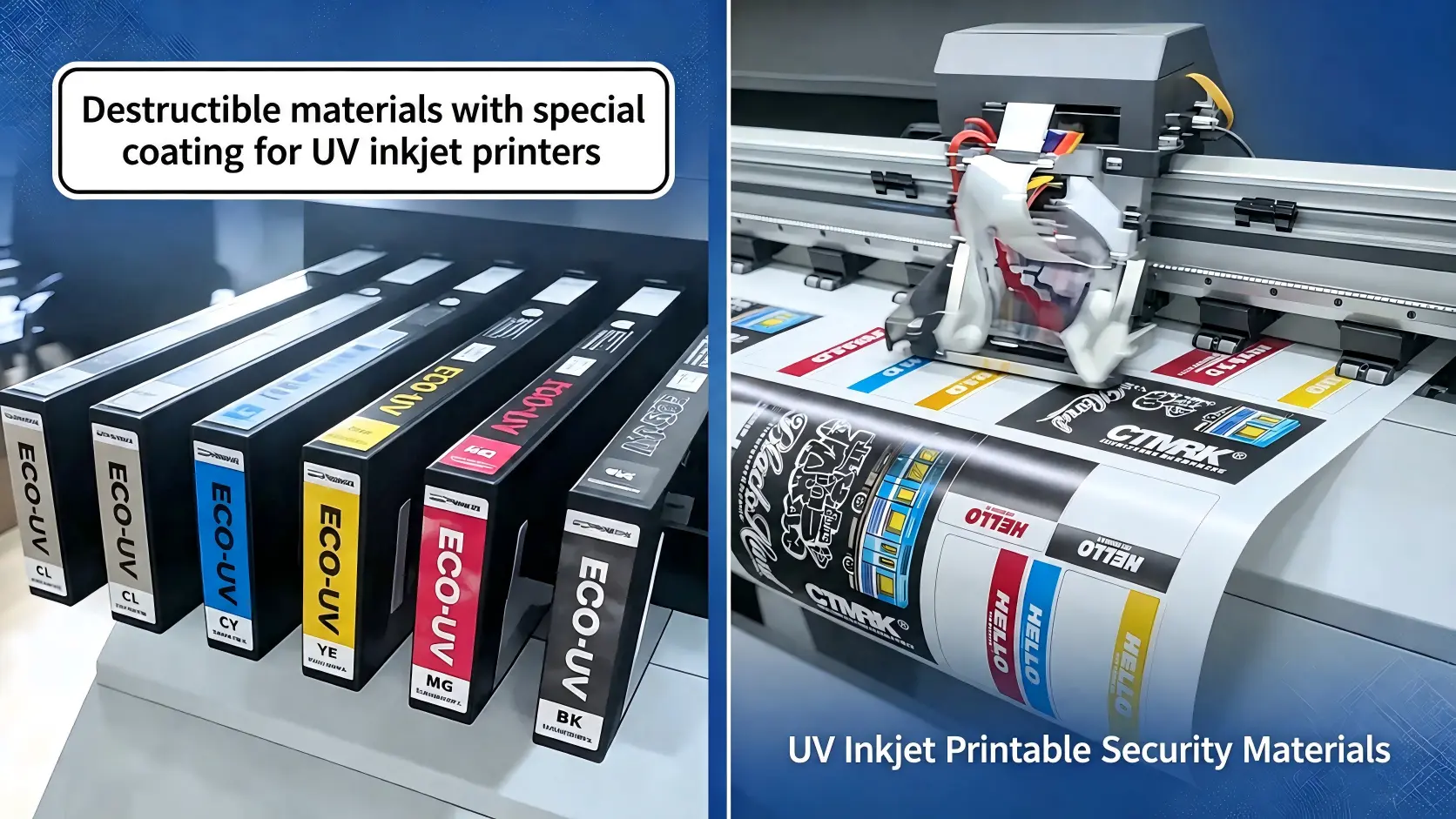
On metallized, silver or holographic security materials, the underlying optical surface may also influence the final printed appearance.
For this reason, print quality should be evaluated using the real artwork and representative production conditions whenever possible.
The qualification should not stop immediately after printing. The printed material should also pass the intended converting process and final tamper test.
Flexographic Printing on Security Label Materials
Flexographic printing is commonly used for roll-to-roll label production and can be suitable for many security label materials.
However, “flexo printable” is not a complete material specification.
Water-based, solvent-based and UV flexographic systems can interact differently with the same printable surface.
Important variables can include:
- ink chemistry;
- printable surface treatment;
- top coating;
- ink laydown;
- drying or curing;
- press speed;
- overprinting;
- final rub resistance.
If the ink does not anchor correctly to the surface, printed information may rub off even when the underlying security material itself performs correctly.
Converters should therefore test representative artwork rather than only printing a small solid-color patch.
Where the finished security label includes logos, fine text, QR codes or variable identification, print definition and abrasion resistance should be evaluated together.
After printing, the material should also be checked through die cutting, matrix stripping, slitting and rewinding.
Thermal Transfer Printing: Material and Ribbon Must Be Matched
Thermal-transfer printing introduces another important variable: the thermal-transfer ribbon.
A material may technically accept thermal-transfer printing but still perform poorly if the selected ribbon is not compatible with the printable surface.
Common ribbon directions include:
- wax;
- wax/resin;
- resin.
There is no single ribbon type that is automatically best for every security material. The correct combination depends on the printable surface, required durability, printer settings and final application.
Zebra’s thermal-transfer guidance similarly emphasizes matching ribbon formulation to the media and application requirements. Buyers can review Zebra thermal-transfer ribbon guidance for additional background.
For thermal-transfer security labels, buyers should evaluate:
| Test Area | Why It Matters |
|---|---|
| Ribbon Transfer | Confirms whether the printed image transfers evenly |
| Print Density | Important for text, serial numbers and barcode quality |
| Scratch Resistance | Helps determine whether variable information survives handling |
| Rub Resistance | Evaluates durability during transport and use |
| Barcode Scanning | Confirms machine-readable information remains reliable |
| QR Readability | Important for authentication and digital identification |
| Heat Exposure | May matter for applications exposed to elevated temperature |
| Final Tamper Test | Confirms printing has not changed the intended security response |
Thermal transfer is especially relevant where converters or end users need to add:
- serial numbers;
- barcodes;
- QR codes;
- batch information;
- asset numbers;
- variable authentication data.
For these applications, print durability and security performance should be treated as one qualification process.
“Digital Printable” Is Not One Universal Specification
The term digital printing can describe very different printing technologies.
Depending on the converter, digital production may involve:
- dry toner;
- liquid toner;
- digital UV;
- pigment inkjet;
- other proprietary printing platforms.
For this reason, a supplier statement such as “digital printable” should not be treated as sufficient technical approval.
The buyer should provide the actual press model or printing technology whenever possible.
A security material qualified for one digital process may require a different primer, top coating or surface treatment for another system.
Potential issues include:
- weak toner anchorage;
- poor ink adhesion;
- incomplete drying;
- surface cracking;
- image scratching;
- coating incompatibility;
- changes during die cutting or matrix stripping.
Qualification should therefore use the same printing platform and representative production settings intended for the final job.
Pigment Inkjet Printing Often Requires a Dedicated Surface
Pigment inkjet printing deserves special attention because the printing surface can strongly influence drying, dot definition, ink adhesion and rub resistance.
A standard PET or security surface that performs well with UV or flexographic ink may not automatically be suitable for pigment inkjet.
Depending on the printing system, an engineered ink-receptive coating may be required.
Converters using Epson ColorWorks or other pigment-inkjet platforms can review Hanksec’s Inkjet Printable Label Materials Guide for a more detailed discussion of coating, ink adhesion, drying and real material testing.
For this guide, the important selection point is simple: inkjet compatibility should be confirmed independently rather than assuming that a generally printable security material is automatically suitable for pigment inkjet.
Printing Cannot Be Qualified Separately from Tamper Performance
A security material should not be approved only because the printed image looks good.
Printing and converting can change the behavior of the complete security construction.
A practical qualification sequence is:
Print → Dry or Cure → Rub / Scratch Test → Die Cut → Matrix Strip → Slit / Rewind → Apply to Actual Substrate → Allow Representative Dwell → Perform Final Tamper Test
This sequence is important because failures can appear at different stages.
- Ink may pass initial visual inspection but fail during rubbing.
- A fragile material may print correctly but fracture during matrix stripping.
- A VOID construction may print correctly but produce inconsistent activation after converting.
- A barcode may look acceptable but fail scanning.
- A printed top coating may change after environmental exposure.
The final approval should therefore be based on the complete production workflow rather than a single printing step.
VOID Label Materials: Main Printing Qualification Points
VOID security materials usually require a stable printable surface while maintaining the internal separation mechanism that creates the hidden security message.
Printing qualification should consider:
- surface coating;
- ink anchorage;
- metallized or colored appearance;
- holographic surface where applicable;
- curing or drying;
- die-cut stability;
- VOID activation;
- full-transfer, partial-transfer or non-transfer behavior;
- adhesive and substrate interaction.
Converters comparing transfer types, roll formats and converter specifications can review Hanksec’s VOID Label Material Rolls Selection Guide.
Buyers still selecting the basic security construction can also compare Hanksec’s Tamper Evident VOID Label Materials range.
The printing system should not interfere with the controlled separation of the security structure.
Destructible Materials: Printing Stability Is Only Part of the Challenge
Destructible security materials create a different production challenge.
The facestock is intentionally engineered to break, tear or fragment during removal.
This means the converter must balance:
- printability;
- web handling;
- die-cutting pressure;
- matrix stripping;
- rewinding tension;
- final destructibility.
A very fragile construction may create excellent anti-removal performance but require more careful press and converting conditions.
A more stable construction may be easier to print and convert but must still provide the required fragmentation after application.
For converters comparing easy, medium and hard breakage levels, Hanksec’s Destructible Label Material Rolls Selection Guide provides more detailed material-selection guidance.
What Should Label Converters Provide Before Requesting Samples?
The more information provided before sampling, the more useful the material evaluation will be.
| Information Required | Example |
|---|---|
| Printing Process | UV / Flexo / Thermal Transfer / Digital / Inkjet |
| Press or Printer | Machine model or printing platform |
| Ink or Ribbon | UV ink / Flexo ink / Wax-resin ribbon / Pigment ink |
| Security Material | VOID / Destructible / Holographic |
| Surface Appearance | White / Silver / Transparent / Holographic |
| Final Label Size | Converted dimensions |
| Converting Process | Die cutting / Slitting / Rewinding |
| Application Substrate | PP / PET / Glass / Metal / Carton |
| Variable Printing | Barcode / QR / Serial Number |
| Estimated Quantity | Sample / Trial / Bulk Production |
Where possible, the buyer should also provide a representative printed sample, ink information, ribbon information or actual application substrate.
This reduces the risk of approving a material based only on general descriptions.
Recommended Pre-Production Printing Qualification
Before bulk production, printable security label materials should be evaluated for the complete combination of printing, converting and security performance.
Recommended checks include:
- ink or toner anchorage;
- drying or curing;
- color density;
- fine-text definition;
- rub resistance;
- scratch resistance;
- barcode readability;
- QR-code scanning;
- thermal-transfer ribbon compatibility where applicable;
- die-cutting stability;
- matrix stripping;
- web handling;
- slitting and rewinding;
- liner release;
- VOID activation;
- transferred security evidence where applicable;
- destructible response where applicable;
- final application performance.
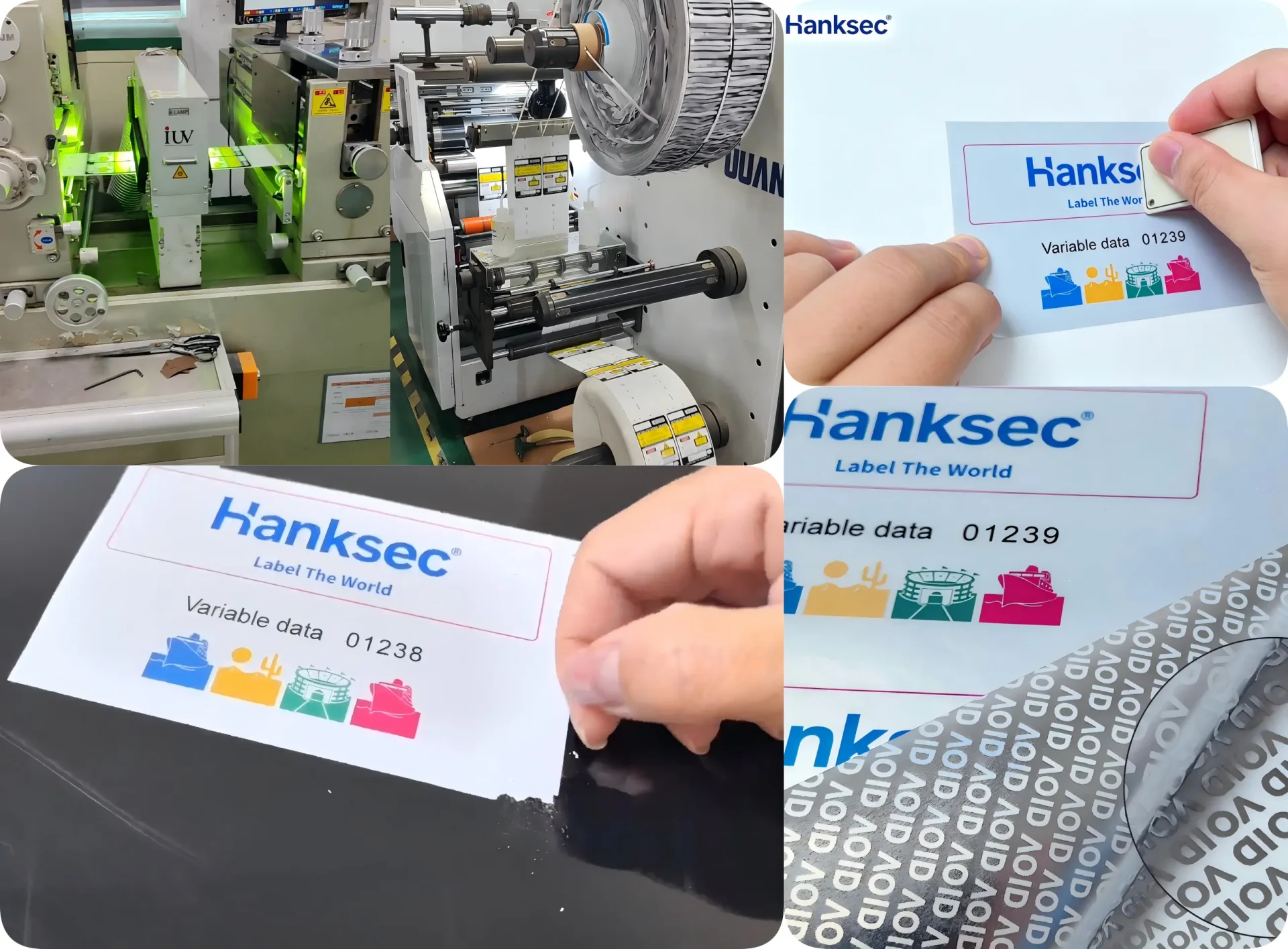
The FINAT Technical Handbook provides industry test-method references for self-adhesive label materials, including areas relevant to print, UV drying and material qualification.
Final approval should be based on:
printing surface + ink or ribbon + security construction + converting process + application substrate
rather than on the facestock alone.
Technical FAQ
Can the same security label material be used for UV and flexographic printing?
Not automatically. UV and flexographic printing can use different ink chemistries and curing or drying conditions. A material that performs well with one printing system should be qualified separately before being approved for another process.
Why does ink rub off a PET security label?
Poor ink anchorage can result from a mismatch between the PET surface, coating and selected ink system. Surface treatment, top coating, curing or drying conditions and ink chemistry should be evaluated together.
Do thermal-transfer security labels require a special surface coating?
It depends on the material and ribbon system. The printable surface must be compatible with the selected thermal-transfer ribbon and printer settings. Ribbon transfer, scratch resistance and barcode or QR readability should be tested before production.
Can VOID label materials be printed with digital printing systems?
Yes, suitable VOID materials can be evaluated for digital printing, but compatibility depends on the specific printing platform, printable surface and ink or toner system. “Digital printable” should not be treated as a universal specification.
Why should printed security materials be tested again after die cutting?
Printing is only one part of the production process. Die cutting, matrix stripping, slitting and rewinding can place additional stress on the facestock and security layers. Final testing confirms that the printed material still provides the required VOID or destructible response after converting.
Request Printable Security Material Samples & Compatibility Testing
Send Hanksec the printing process, press or printer model, ink or ribbon system, required security construction, final label size, converting process, application substrate and estimated quantity.
Hanksec can evaluate suitable printable security label materials for printing, converting and final tamper-response testing before bulk production.