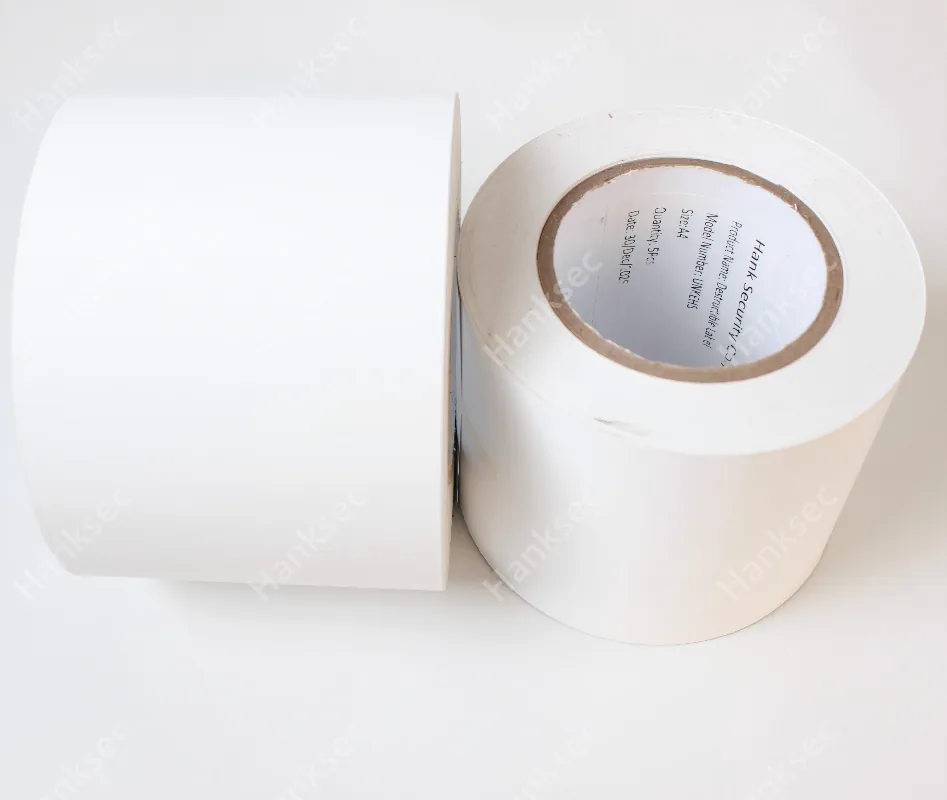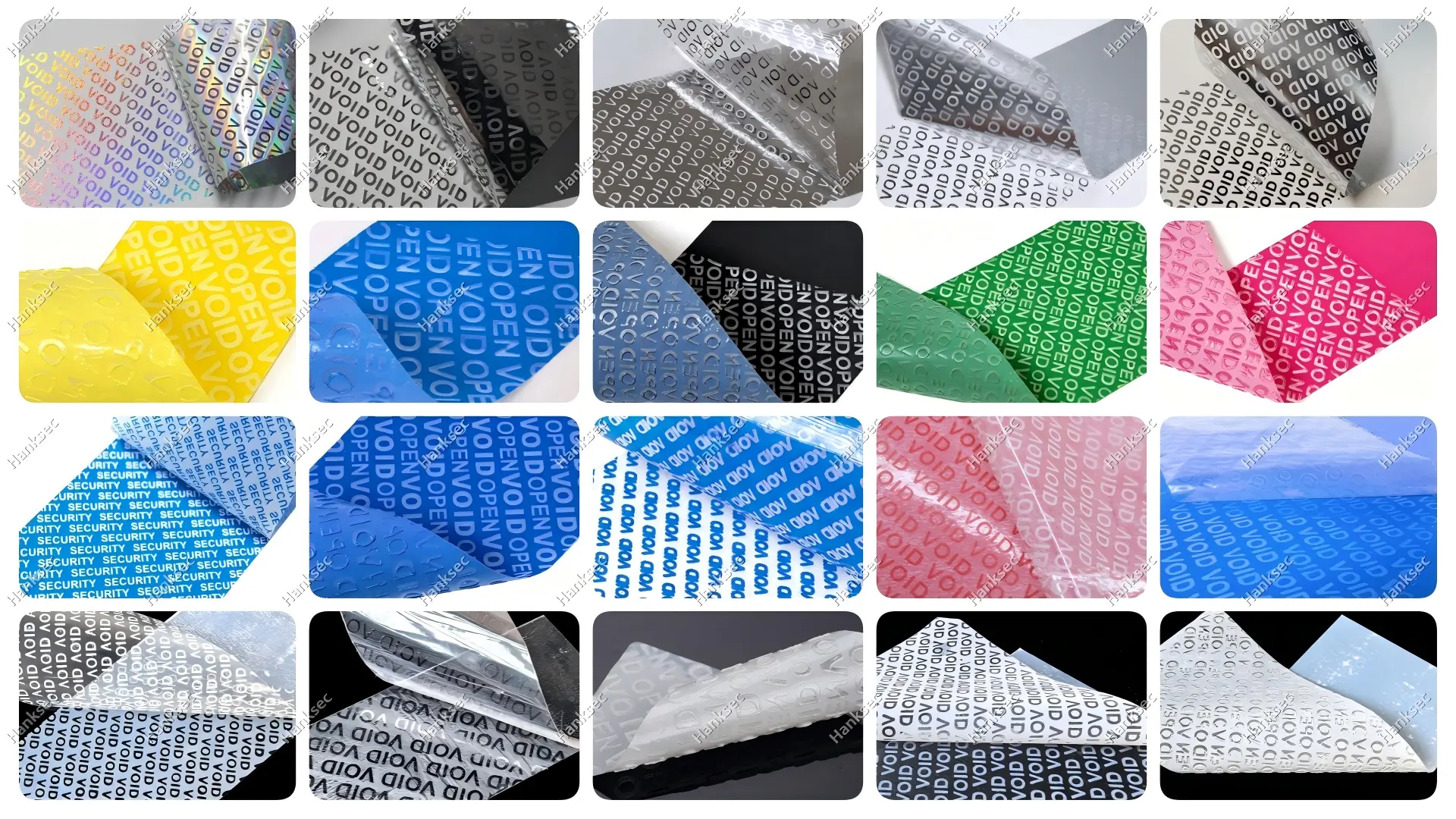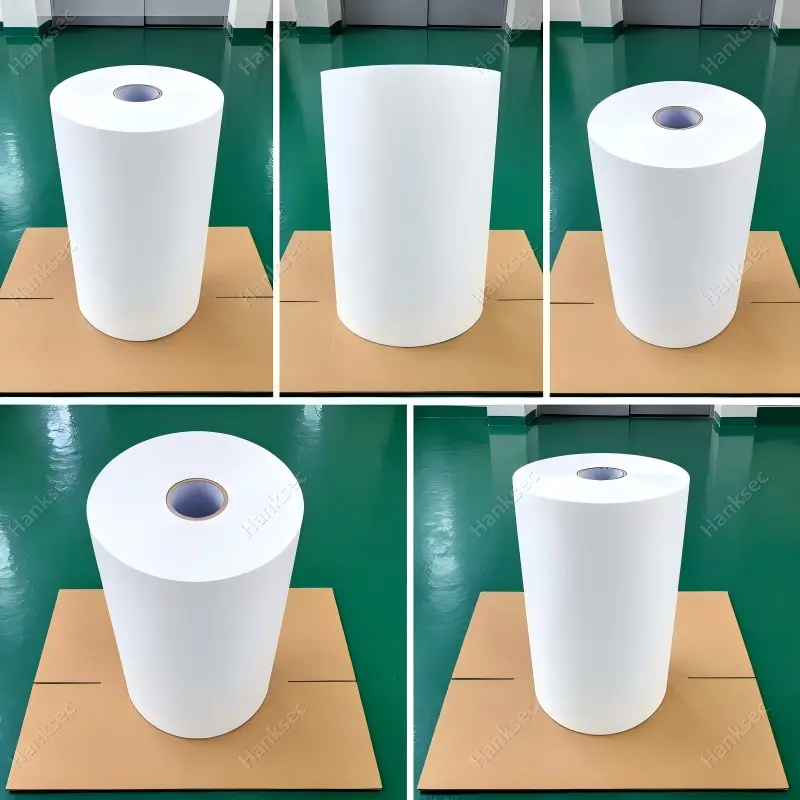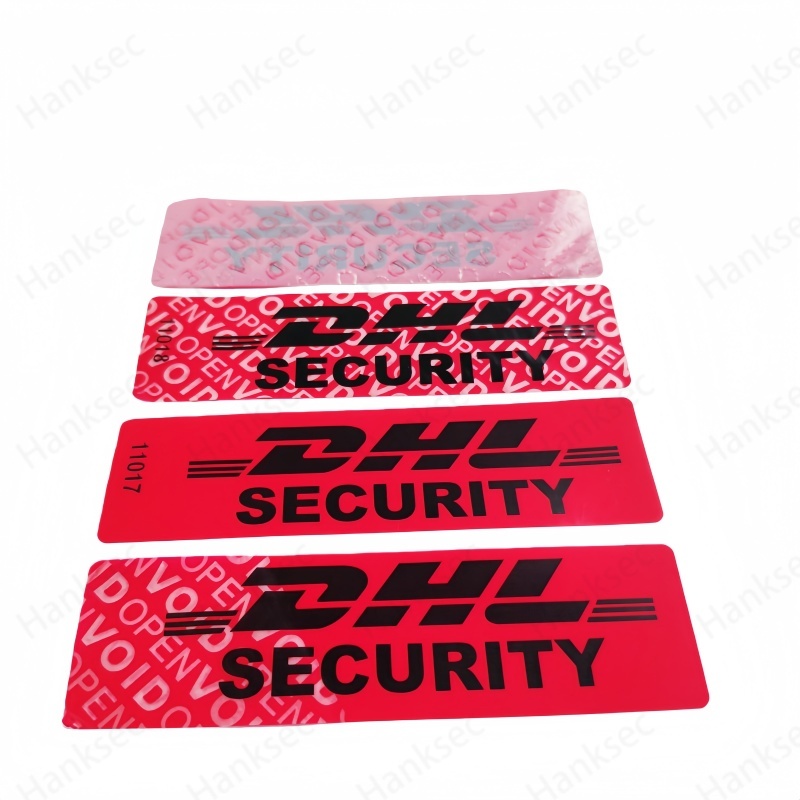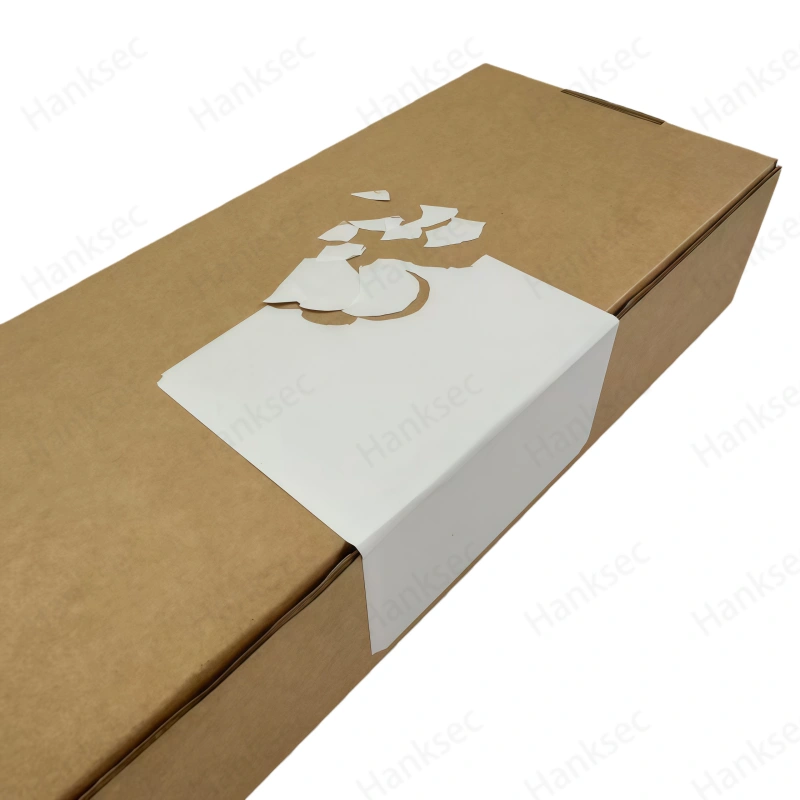
Quick Answer: What Is an Anti Heat Tamper Evident Sticker?
An anti heat tamper evident sticker is a high-security label designed to reveal tampering even when heat is used during removal attempts. Unlike standard security labels, it combines heat-resistant adhesive systems, controlled VOID transfer layers and optional smart features to maintain visible evidence after thermal attacks.
Heat gun tamper label removal is one of the most common ways attackers try to defeat Warranty Stickers, Void Labels and Tamper Labels. Regular materials often fail because standard tamper evident label heat resistance is designed around normal handling, not focused hot air above 150°C. An anti heat tamper evident sticker uses high temperature resistant security label material, controlled VOID transfer and optional Heat-tampering smart labels to reveal damage even after hot-air-gun attacks.
Heat-Assisted Tampering Reveals a Challenge for Traditional Security Labels
Heat-assisted tampering has become a growing concern for brands using traditional Warranty Stickers, Void Labels and Tamper Labels. When exposed to concentrated heat, some standard security labels may experience changes in adhesive behavior, film flexibility or internal layer separation, which can reduce the clarity of tamper evidence.
For high-value products and warranty-controlled applications, the key challenge is not preventing all removal attempts, but ensuring that any unauthorized attempt leaves a visible and irreversible indication. This article explains why traditional tamper evident labels may become vulnerable under thermal stress and how Hanksec Technologies develops anti heat tamper evident sticker materials designed to maintain clear security evidence during heat-related tampering attempts.
Public removal content shows why regular Warranty Stickers and Void Labels may not be enough for high-risk applications. For brand owners, the key issue is not how to remove a label, but how to make heat tampering visible and irreversible.
Why Heat Resistance Matters in Tamper Evident Security Solutions
A security label is not simply a sticker. It is a controlled evidence system.
In real applications, a tamper evident label must do more than bond to a surface. It must show visible, irreversible evidence when someone tries to remove, lift, reapply, replace or bypass it. This is why Void Labels, Warranty Stickers, Tamper Labels and Wording VOID security materials are widely used in electronics, logistics, cosmetics, pharmaceuticals, warehouse control, document sealing, luxury packaging and after-sales warranty protection.
However, many standard tamper evident labels are designed for normal indoor conditions. They perform well during transportation, daily handling and normal peeling attempts. The problem begins when someone uses focused hot air. A heat gun can soften adhesives, relax film layers and weaken the release balance that makes the VOID message appear. Some commercial heat guns are capable of producing temperatures far above the 150°C level discussed in security-label testing; one DeWalt heat gun manual notes temperatures above 990°F / 532°C, and Wagner documentation warns that some heat guns may reach as high as 1200°F.
For this reason, tamper evident label heat resistance has become a serious topic for brand owners and label converters. A regular tamper evident sticker may pass basic peel tests, but it may not survive a hot-air-gun attack. A true anti heat tamper evident sticker must be engineered so that heat does not help the attacker remove the label cleanly. Instead, heat must trigger or preserve visible evidence.
What Is an Anti Heat Tamper Evident Sticker?
An anti heat tamper evident sticker is a security label designed to resist or expose heat-assisted removal attempts. It is used when a regular Void Label or Warranty Sticker may be vulnerable to hot air, heat guns, hair dryers, warm plates or other artificial heating methods.
The purpose is not to make the label impossible to remove. In security packaging, “tamper evident” means the attempt must leave clear evidence. Regulatory and packaging guidance often focuses on this principle: the feature should remain intact during normal handling, but unauthorized opening should leave visible evidence. FDA rules for tamper-evident packaging state that the tamper-evident feature should remain intact during normal manufacture, distribution and retail display. ISO tamper-verification guidance also emphasizes visible, irreversible damage or change to the package, label or tape when tampering occurs.
An heat-resistant tamper-evident label improves this evidence function under thermal attack. It may use:
- Heat-resistant adhesive systems
- Controlled release layers
- High temperature resistant security label material
- Irreversible thermochromic ink
- Heat-tampering smart labels
- Multi-layer Tamper Proof Solutions
In other words, the anti heat tamper evident sticker is not a single product. It is a material system. The correct design depends on the surface, application temperature, packaging material, customer requirement, printing process and required tamper evidence level.
How Heat Guns Defeat Regular Security Labels
Heat gun tamper label removal usually targets the adhesive layer and the internal release balance of the label. For security reasons, this article does not provide operational removal instructions. Instead, it explains the material failure mechanism so that brand owners, packaging engineers and label converters can choose the correct Tamper Evident Security Solutions.
Most Void Labels and Tamper Labels use pressure-sensitive adhesive. Pressure-sensitive adhesives are designed to bond by pressure, surface contact and wet-out. Adhesive bond strength can change with time, pressure and temperature; 3M technical guidance explains that firm pressure and moderate heat can improve adhesive contact with a substrate, while other 3M data sheets show that some adhesive systems are only intended for defined short-term or long-term temperature ranges.
This is exactly where the risk appears. A standard security label may be balanced for room-temperature removal. When hot air is applied, the adhesive can soften, the film can become more flexible, and the hidden VOID release layer may fail to split in the intended way. If the adhesive becomes too soft before the VOID layer activates, the attacker may reduce the visible tamper evidence.
This is why tamper evident label heat resistance must be tested as a complete structure, not only as an adhesive value. A label may have good peel adhesion at room temperature but still fail under hot-air-gun testing. Peel adhesion standards such as ASTM D3330/D3330M are useful for comparing pressure-sensitive tape adhesion uniformity, but heat tampering requires additional real-use simulation because the attacker is not performing a standard peel test.
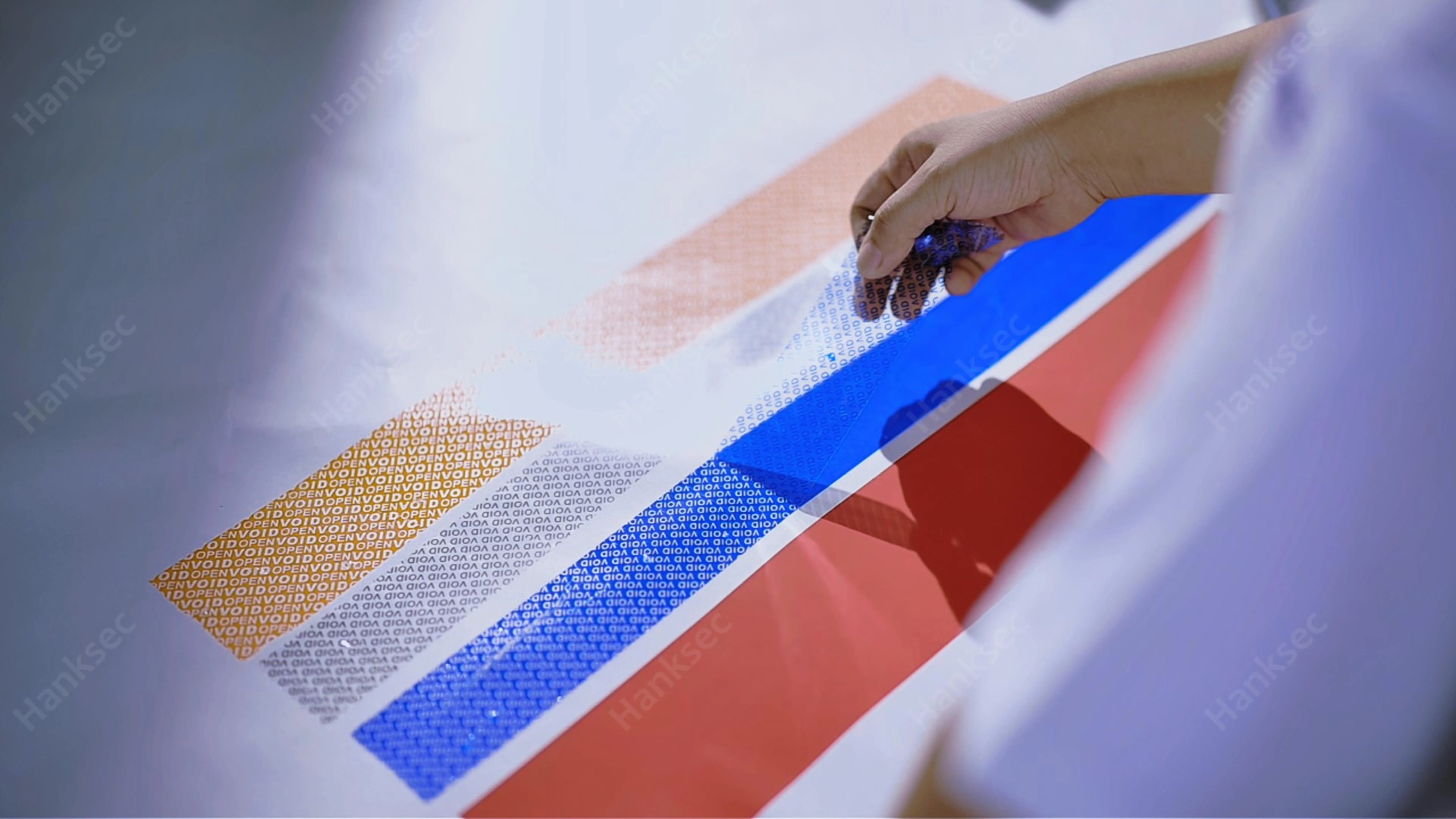
Why Regular Tamper Evident Labels Fail Under Hot Air
A regular tamper evident label may fail under heat for several reasons.
1. The standard process is designed for normal temperature use
Many regular security labels are designed for normal packaging, warehouse and indoor conditions. In our standard material experience, common regular processes generally work within a practical range of around 60–80°C. This is enough for many logistics seals, carton labels, document labels, cosmetic box seals and ordinary Warranty Stickers.
But a heat gun attack is different. A focused hot-air stream can easily exceed 150°C at the label surface. Once the temperature moves beyond the design range, the regular VOID balance may become unstable.
2. Adhesive softening can reduce clean VOID transfer
For a VOID label to work, the internal layers must split in a controlled way. The hidden Wording VOID message should appear on the surface, on the label, or both. When the adhesive softens too much, the adhesive may release before the VOID structure breaks correctly.
This is why a regular tamper evident sticker may look secure during normal peeling but fail during heat gun tamper label removal.
3. The film becomes more flexible
PET, PP or other film face materials can become more flexible when heated. Flexibility itself is not always bad, but during removal it can reduce the stress concentration needed to trigger a clear VOID pattern. A high temperature resistant security label material must keep the whole system balanced under hot air.
4. The release layer may not respond correctly
VOID technology depends on a controlled release layer. If heat changes the release layer too much, the label may peel in a different mode. Instead of leaving a strong VOID mark, it may leave a weak, unclear or incomplete message.
5. The attacker does not need full success
For brand protection, the attacker does not always need perfect removal. Sometimes they only need to lift one edge, open a package, replace a component, remove a warranty seal or reclose a product with reduced evidence. This is why Heat-resistance Security Labels are important for high-risk products.
How Hanksec Technologies Prevents Heat Gun Tamper Label Removal
Hanksec Anti Heat Tamper Evident Sticker Test Above 150°C
Hanksec Technologies focuses on making heat tampering visible, not invisible.
The core idea is simple: even when a hot-air gun is used above 150°C, the label should still reveal the Wording VOID message clearly. The attacker should not be able to use heat as a shortcut to remove the label without evidence.
The Hanksec Solution: Make Heat Tampering Visible
In Hanksec hot-air-gun testing, the upgraded anti heat tamper evident sticker material is designed to keep the Wording VOID message visible even after heat exposure above 150°C. This means heat does not help the attacker hide tampering. Instead, the label continues to provide visible, irreversible tamper evidence.
Our anti heat tamper evident sticker solution uses a special material structure to keep the VOID evidence active under hot-air-gun conditions. Instead of relying only on ordinary adhesive strength, the structure is engineered around the relationship between face film, adhesive, release layer and VOID message layer.
A good anti heat tamper evident sticker should achieve four results:
First, it should maintain bonding performance during normal application.
Second, it should prevent clean removal during heat attack.
Third, it should keep the VOID transfer visible when heated.
Fourth, it should match the customer’s surface, printing method, die-cutting process and end-use environment.
This is why Hanksec does not treat Heat-resistance Security Labels as standard commodity stickers. We treat them as Tamper Evident Security Solutions. Each application may require a different structure, adhesive, release balance, Wording VOID design and testing method.
Send Hanksec a sample of your package surface or current label. Our team can compare regular, full-transfer, partial-transfer and non-transfer heat-resistant structures before mass production.
Request a Heat-Tampering Test Sample
Real Application Case: Heat-Resistant VOID Label for Electronics Warranty Protection
A consumer electronics manufacturer experienced warranty fraud because standard security stickers could lose visible evidence after heat exposure.
The project required:
Application:
ABS plastic housing
Challenge:
Prevent heat-assisted label removal while keeping the surface clean.
Solution:
Hanksec developed a non-transfer heat-resistant VOID label structure with optimized adhesive balance and controlled release technology.
Test Result:
After hot-air exposure 150°C, the label showed irreversible VOID evidence and could not be restored to its original condition.
Final Application:
Warranty sealing, repair inspection and after-sales control.
Why the Hanksec Special Process Works Above 150°C
The special Hanksec anti heat tamper evident sticker process is designed to protect the VOID evidence function under higher temperature stress.
In a regular label, hot air may weaken the adhesive or release system before the VOID wording activates. In a Hanksec Hot-air-gun Solution, the structure is adjusted so that the VOID evidence still appears when the label is attacked with hot air above 150°C.
This does not mean all materials are the same. Different surfaces require different material choices. Glass, coated cartons, matte cartons, painted metal, plastic housings, PET bottles, ABS shells, PE surfaces and powder-coated surfaces all behave differently. Adhesive suppliers often classify label adhesives by substrate, temperature range and chemical resistance; for example, Avery Dennison technical guides distinguish removable solutions with service temperatures around 70–80°C from solvent acrylic adhesive systems designed for stronger heat and chemical resistance.
For this reason, a high temperature resistant security label material must be matched to the real package surface. The correct question is not only “Can the label resist heat?” The better question is:
Can this label still leave clear tamper evidence on my actual product surface after hot-air-gun testing?
That is where Hanksec Technologies adds value. We help customers test the material under realistic conditions and adjust the structure when needed.
Hanksec Internal Heat-Tampering Test
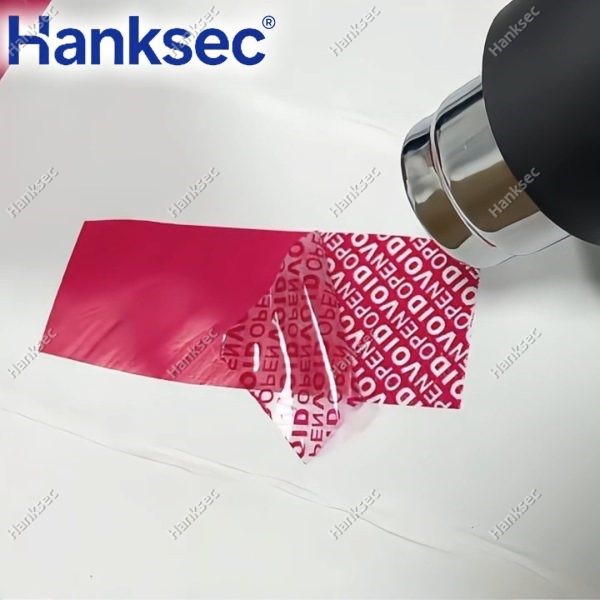
Tested material: Heat-resistant full-transfer VOID material
Applied surface: Coated carton / ABS plastic / glass
Heat exposure: 150°C
Evaluation points:
• Was the VOID message still visible?
• Could the label be removed in one piece?
• Could the label be reapplied?
• Was the tampering evidence irreversible?
Note: Final performance varies by surface, dwell time, heating distance and application conditions.
Four Types of Anti Heat Tamper Evident Sticker Solutions
Anti heat tamper evident sticker materials can be made in four main types: full transfer, partial transfer, non-transfer and bespoke type.
| Type | How It Works | Best For | Heat Tampering Evidence | Typical Keywords |
|---|---|---|---|---|
| Full Transfer VOID | The VOID message transfers completely to the application surface after removal. | Cartons, warranty seals, electronics, logistics packaging, evidence boxes | Strong surface evidence, clear Wording VOID left behind | full transfer Void Labels, anti heat tamper evident sticker, Tamper Labels |
| Partial Transfer VOID | Part of the VOID message transfers to the surface while part remains on the label. | Brand packaging, cosmetic boxes, electronics, controlled-access packaging | Balanced evidence on both label and surface | partial transfer Tamper Labels, Heat-resistance Security Labels |
| Non-Transfer VOID | The VOID message appears mainly on the label face, with little or no residue on the surface. | Clean surfaces, rental equipment, camera lens seals, premium devices | Visible label damage without dirty surface residue | non-transfer Void Labels, Warranty Stickers |
| Bespoke Type | Custom Wording VOID, logo VOID, hidden text, QR, serial number, color, hologram or thermochromic feature. | Brand protection, OEM/ODM projects, high-risk supply chain packaging | Customized evidence behavior based on risk level | Wording VOID, Heat-tampering smart labels, Tamper Proof Solutions |
This classification helps buyers choose the correct anti heat tamper evident sticker instead of buying a regular tamper label and hoping it works.
Full Transfer Anti Heat VOID Labels
Full transfer Void Labels are often the first choice when visible surface evidence is required. When the label is removed, the hidden Wording VOID message transfers to the package surface.
For heat gun tamper label removal risk, full transfer can be highly effective because the goal is to leave a strong warning mark even after hot air exposure. This is suitable for:
- Electronics warranty control
- After-sales repair seals
- Logistics cartons
- High-value spare parts
- Medical device packaging
- Security bags and evidence packaging
- Branded product boxes
- Asset control labels
If the buyer wants the clearest evidence after tampering, full transfer anti-heat VOID label material is usually the most direct solution.
Partial Transfer Anti Heat Tamper Labels
Partial transfer Tamper Labels are useful when both the label and the product surface need to show evidence.
After removal, part of the VOID message remains on the substrate, and part remains on the label. This creates double evidence. It also gives the brand owner or warehouse team a stronger visual signal that the seal was disturbed.
Partial transfer thermal tamper-evident sticker materials are often used for mid- to high-security packaging where the surface can accept some residue but the label itself must also show damage.
This type is suitable for:
- Consumer electronics packaging
- Cosmetics and skincare boxes
- Medical equipment packaging
- E-commerce high-value parcels
- Spare-part authentication
- Logistics control seals
For buyers who want both appearance and strong evidence, partial transfer can be a good balance.
Non-Transfer Anti Heat Warranty Stickers
Non-transfer Void Labels are used when the customer wants visible tamper evidence without leaving adhesive residue or VOID marks on the product surface.
This is important for high-value devices, camera lenses, display screens, smooth plastics, premium metal surfaces and rental equipment. A non-transfer security label for heat attacks can show the Wording VOID message on the label after removal while keeping the product surface clean.
However, non-transfer materials must be tested carefully under heat gun tamper label removal conditions. Because the evidence remains mainly on the label, the material must still prevent clean reapplication. Hanksec can adjust the structure to make the label visibly damaged after hot-air-gun attempts.
Common applications include:
- Warranty Stickers for electronics
- Camera lens security labels
- IT asset control seals
- Device inspection labels
- Clean-surface packaging
- Premium product seals
Bespoke Heat-tampering Smart Labels
For high-risk projects, a standard VOID message may not be enough. Bespoke Heat-tampering smart labels can combine several security features:
- Custom Wording VOID
- Brand logo VOID
- Hidden OPENED message
- Serial number
- QR code
- Barcode
- UV ink
- Holographic layer
- Thermochromic ink
- Destructible face material
- High temperature resistant adhesive
- Multi-layer tamper evidence
This is especially useful when counterfeiters know how common Void Labels work. A bespoke anti heat tamper evident sticker makes the security response harder to copy because the evidence pattern, material structure and printing features can be customized.
This method is often better handled at the printing end. The reason is cost and production flexibility.
If Hanksec treats the entire material roll with thermochromic ink at the material-production stage, the whole batch becomes a custom treated material. This can be expensive and less flexible, especially when customers only need heat indication on certain printed areas. But if a printing factory applies irreversible thermochromic ink during label printing, they can print the heat-sensitive warning mark only where needed.
For many label converters, the best solution is a combination:
- Hanksec supplies anti heat tamper evident sticker base material
- The printing factory adds irreversible thermochromic ink
- The final label shows VOID evidence plus heat exposure evidence
This creates a stronger Heat-tampering smart label.
When Should You Choose an Anti Heat Tamper Evident Sticker?
Not every product needs anti heat tamper evident sticker material. But if the product is high value, warranty-sensitive, easy to resell, easy to refill or exposed to counterfeit risk, heat resistance becomes important.
You should consider Heat-resistance Security Labels when:
1. Your regular Void Labels can be removed by hot air
If your existing label passes normal peel testing but fails in a heat gun test, you should upgrade. This is the most direct reason to choose hot-air-gun-resistant VOID material.
2. Your product has warranty abuse risk
Warranty Stickers are often attacked because users want to open, repair, replace or modify a product and still claim warranty service. Anti heat Warranty Stickers help service teams identify unauthorized opening.
3. Your packaging must show irreversible evidence
Products in electronics, medical, cosmetics, logistics and premium retail often require clear evidence after opening. If heat can remove the label without a mark, the whole security system becomes weak.
4. Your customer has already reported label bypass
Many buyers do not request anti heat tamper evident sticker material until a problem happens. If customers, distributors or after-sales teams report clean removal, unclear VOID marks or suspicious reapplication, the material should be reviewed.
5. Your products are sold through complex supply chains
The longer the supply chain, the higher the risk of tampering, replacement, refilling or unauthorized inspection. Tamper Evident Security Solutions are especially important when products pass through many hands before reaching the end user.
6. Your label is applied to difficult surfaces
Smooth plastic, coated paper, low-energy plastic, matte varnish, textured carton, metal and painted surfaces all affect bonding. Heat can make these differences more obvious. Anti heat tamper evident sticker material should be tested on the real surface, not only on standard stainless steel or glass.
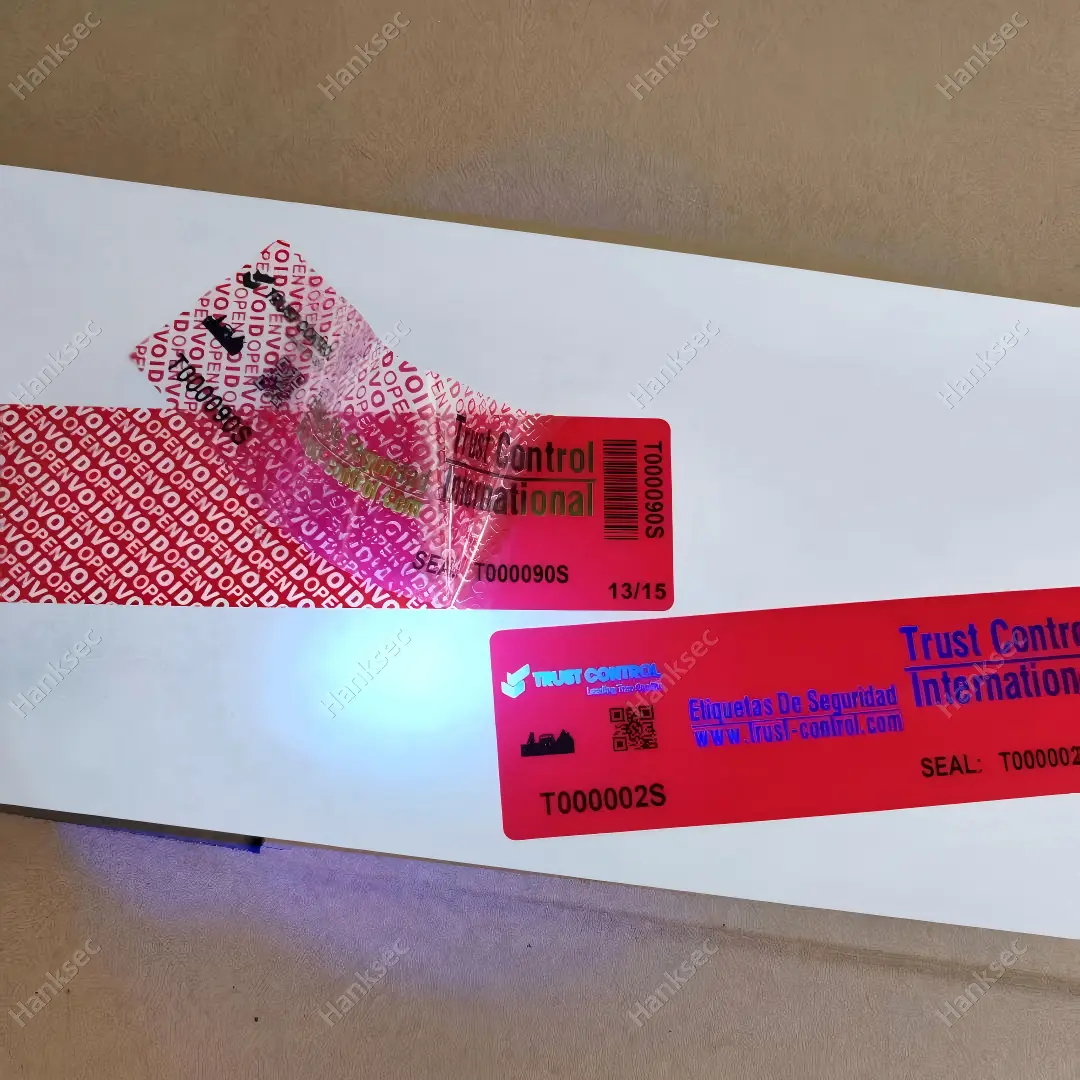
Regular Tamper Evident Sticker vs Anti Heat Tamper Evident Sticker
| Comparison Point | Regular Tamper Evident Sticker | Anti Heat Tamper Evident Sticker |
|---|---|---|
| Main Purpose | Show tampering under normal peeling | Show tampering under normal peeling and hot-air-gun attack |
| Typical Temperature Design | Often suitable for normal handling and moderate heat | Designed for higher heat challenge, including 150°C+ hot-air-gun tests |
| VOID Performance Under Heat | May become weak, unclear or fail to transfer | Designed to keep Wording VOID visible after heat attack |
| Adhesive System | Standard pressure-sensitive adhesive | Heat-resistant or specially balanced adhesive system |
| Release Layer | Standard VOID release balance | Adjusted release balance for heat-tampering evidence |
| Suitable Products | General packaging, low-risk labels | Warranty Stickers, electronics, medical, logistics, high-value goods |
| Surface Requirement | Basic surface compatibility | Real-surface testing strongly recommended |
| Security Level | Standard tamper evidence | Advanced Tamper Proof Solutions |
| Optional Smart Feature | Usually none | Thermochromic ink, UV ink, QR, serial code, custom VOID |
| Best Buyer | General packaging user | Brand owner, label converter, security packaging buyer |
This comparison explains why price alone should not decide the label material. A regular tamper evident label may be cheaper, but if it fails under heat gun tamper label removal, it can create warranty loss, brand risk and customer disputes.
Why Tamper Evident Label Heat Resistance Should Be Tested as a System
Many buyers ask for a “high temperature resistant security label material” as if temperature resistance is one number. In real production, it is more complex.
A security label includes:
- Face film
- Top coating
- Printing ink
- Release layer
- VOID message layer
- Adhesive
- Release liner
- Die-cutting design
- Application pressure
- Surface energy of the product
- Dwell time before testing
- Environmental aging
- Actual attack method
Changing one layer can affect the whole result. For example, increasing adhesive strength may improve bonding, but it may also change how the VOID message transfers. Making the film thicker may improve handling, but it may reduce the stress needed for the VOID split. Adding thermochromic ink may improve heat evidence, but it also needs printing compatibility and curing control.
This is why professional Tamper Evident Security Solutions require testing, not guessing.
Suggested Testing Method for Hot-air-gun Solutions
For buyers, the best test is a realistic application test.
A practical testing process can include:
- Apply the anti heat tamper evident sticker to the real product surface.
- Use normal production pressure and normal labeling method.
- Allow proper dwell time before testing.
- Test normal peel removal.
- Test hot-air-gun exposure above the required temperature, such as 150°C+.
- Check whether the Wording VOID message remains clear.
- Check whether the label can be reapplied.
- Check whether adhesive residue, film distortion or ink change meets your requirement.
- Compare full transfer, partial transfer and non-transfer versions.
- Confirm the final structure before mass production.
For internal QC, peel adhesion standards can still help compare pressure-sensitive materials, but they should not replace hot-air-gun simulation. ASTM D3330 is useful because it provides a recognized method for measuring peel adhesion uniformity of pressure-sensitive tapes, while real heat-tampering testing shows whether the security function still works under attack.
Applications of Anti Heat Tamper Evident Sticker Materials
Electronics Warranty Stickers
Electronics are one of the strongest application areas. Warranty Stickers are used on phones, tablets, laptops, chargers, routers, repair parts, gaming devices, industrial control units and consumer electronics. Unauthorized opening can lead to warranty fraud, component replacement or safety issues.
Anti heat tamper evident sticker material helps service teams identify whether the device was opened, even if someone tried heat gun tamper label removal.
Logistics and E-commerce Security Labels
High-value parcels can be opened, inspected, replaced and reclosed during transportation. Standard Tamper Labels may be enough for low-risk parcels, but higher-risk logistics applications need stronger Tamper Proof Solutions.
Full transfer or partial transfer anti heat Void Labels can leave clear evidence on cartons, envelopes, plastic boxes and courier packaging.
Cosmetics and Luxury Packaging
Cosmetics, skincare, perfume and luxury goods face refilling and counterfeit risks. A cleanly removed seal can allow fake or refilled products to enter the market. Heat-resistance Security Labels can help brands protect product integrity without making the packaging look industrial.
Bespoke Wording VOID and brand logo VOID designs are especially useful in this category.
Medical and Healthcare Packaging
Medical packaging often requires clear opening evidence. In healthcare, the goal is not only brand protection but also user safety and trust. Tamper-evident packaging is widely used because unauthorized opening must be visible. FDA and ISO guidance show the importance of tamper-evident features remaining intact during normal handling and showing irreversible change after tampering.
Industrial Spare Parts
Automotive parts, machinery parts, electrical components and maintenance kits are often counterfeited or replaced. Anti heat Tamper Labels can help protect distributors and end users from unauthorized part replacement.
Security Bags and Evidence Packaging
Security bags, evidence bags and chain-of-custody packaging rely on tamper evidence. CISA chain-of-custody guidance mentions tamper-evident seals and serialized equipment in controlled processes, and evidence-packaging references emphasize sealing evidence with tamper-proof tapes or strips.
For security bag tapes and evidence seals, hot-air-gun resistance can be an important additional layer.
How to Choose the Right Anti Heat Tamper Evident Sticker
Choosing the right anti heat tamper evident sticker depends on your application.
Use this simple guide:
| Buyer Requirement | Recommended Solution |
|---|---|
| Strongest visible surface evidence | Full transfer anti heat VOID label |
| Evidence on both label and surface | Partial transfer anti heat tamper label |
| Clean surface after removal | Non-transfer anti heat Warranty Sticker |
| Brand logo or custom message | Bespoke Wording VOID material |
| Heat exposure must be recorded | Add irreversible thermochromic ink |
| High-risk counterfeit product | Combine VOID + QR + serial code + smart ink |
| Printing factory handles final label printing | Hanksec base material + printer-side thermochromic ink |
| Customer wants OEM/ODM security design | Custom Hanksec Technologies solution |
The most important step is sample testing. A material that works on glass may behave differently on coated paper. A label that works on PET may behave differently on PE or textured carton. A professional material supplier should help buyers test the real surface and real use condition.
Why Choose Hanksec Technologies?
Hanksec Technologies provides factory-level Tamper Evident Security Solutions for B2B customers, label converters, printing factories, packaging suppliers and brand protection projects.
1. We understand the full material structure
A security label is not just adhesive. It is a multi-layer system. Hanksec works from film, coating, VOID layer, adhesive, liner and finished label design. This allows us to adjust the structure based on the customer’s real problem.
2. We solve hot-air-gun failure problems
Many customers come to Hanksec after discovering that regular Void Labels can be removed with heat. Our anti heat tamper evident sticker solution is designed for this exact problem. The goal is to keep the Wording VOID evidence visible even above 150°C hot-air-gun testing.
3. We support full transfer, partial transfer, non-transfer and bespoke types
Different customers need different evidence behavior. Hanksec can provide full transfer, partial transfer, non-transfer and bespoke Heat-resistance Security Labels based on application needs.
4. We support custom Wording VOID
Customers can choose standard VOID, OPENED, STOP, custom brand name, logo VOID, hidden text or other Wording VOID patterns. Custom Wording VOID makes the label harder to copy and easier to identify.
5. We support printing factories and label converters
For thermochromic ink solutions, we usually recommend printing-end processing when only certain areas need heat indication. This helps reduce cost and gives printers more flexibility.
6. We provide OEM/ODM Tamper Proof Solutions
Hanksec Technologies can support OEM/ODM projects for label converters, packaging suppliers and brand owners. From material testing to sample development and mass production, the goal is to create a security label that works in real use, not only in theory.
FAQs About Anti Heat Tamper Evident Sticker Materials
1. What is an anti heat tamper evident sticker?
An anti heat tamper evident sticker is a security label designed to reveal tampering even when someone uses hot air or a heat gun to remove it. It can use high temperature resistant security label material, controlled VOID transfer, special adhesive, Wording VOID design and optional thermochromic ink.
2. Why do regular Void Labels fail under a heat gun?
Regular Void Labels may fail because hot air can soften adhesive, increase film flexibility and disturb the release balance that creates the VOID message. If the material is only designed for normal temperature use, heat gun tamper label removal may reduce or weaken the visible tamper evidence.
3. What temperature can regular tamper evident labels usually withstand?
In many standard applications, regular tamper evident label materials are designed around normal handling and moderate heat. In our practical material experience, many common processes are usually suitable around 60–80°C. For hot-air-gun attack above 150°C, a special anti heat tamper evident sticker structure is recommended.
4. Can Hanksec anti heat tamper evident sticker work above 150°C?
Yes. Hanksec Technologies can provide a special Hot-air-gun Solution designed so that the Wording VOID message still appears clearly even when the label is attacked with hot air above 150°C. The final result should always be confirmed by testing on the customer’s real surface.
5. What is the difference between full transfer, partial transfer and non-transfer VOID?
Full transfer leaves the VOID message mainly on the product surface. Partial transfer leaves evidence on both the product surface and the label. Non-transfer shows the VOID message mainly on the label without leaving strong residue on the surface. All three types can be developed as anti heat tamper evident sticker materials.
6. What is Wording VOID?
Wording VOID means the hidden tamper message inside the label. It can be standard “VOID,” “OPENED,” “STOP,” a brand name, logo, serial text or custom warning message. Custom Wording VOID helps make Tamper Labels more brand-specific and harder to copy.
7. Can anti heat tamper evident sticker material be printed?
Yes. Many anti heat Void Labels and Warranty Stickers can be printed with logos, text, barcodes, QR codes, serial numbers and warning messages. Printing compatibility depends on the face material, top coating, ink system and printing method.
8. Should thermochromic ink be added by Hanksec or by the printing factory?
If the whole material roll needs heat indication, Hanksec can discuss material-side treatment. But in many cases, it is more economical for the printing factory to apply irreversible thermochromic ink only on selected label areas. This is why printer-side thermochromic ink is often recommended.
9. Are Heat-tampering smart labels more expensive than regular Tamper Labels?
Usually yes, because they require special material design, testing and sometimes smart ink or custom VOID features. But the cost is often lower than the loss caused by warranty fraud, counterfeit replacement, product refilling or supply-chain tampering.
10. How can buyers test anti heat tamper evident sticker material?
Buyers should apply samples to the real product surface, allow normal dwell time, test normal peeling, then test hot-air-gun exposure above the required temperature. The key is to check whether the VOID evidence remains clear and whether the label can be reapplied without visible damage.
Related Hanksec Tamper Evident Security Materials
- VOID Label Material Types – Compare full transfer, partial transfer and non-transfer VOID materials.
- Partial Transfer VOID Material – Suitable for packaging that needs visible tamper evidence on both label and surface.
- Total Transfer Security Label Material – Designed for strong surface Wording VOID evidence after removal.
- Destructible Film – Another tamper proof solution for warranty protection and anti-counterfeit applications.
- destructible label materials
- security bags
Conclusion: Heat Should Expose Tampering, Not Hide It
Heat gun tamper label removal is a real challenge for Warranty Stickers, Void Labels, Tamper Labels and many standard Tamper Proof Solutions. A regular label may work in normal peeling tests but fail when exposed to focused hot air above 150°C.
That is why anti heat tamper evident sticker material is important.
A good Heat-resistance Security Label does not simply “resist heat.” It keeps the evidence function alive. It ensures that the Wording VOID message remains visible, the label cannot be removed cleanly, and the brand owner can still identify tampering after a hot-air-gun attack.
Hanksec Technologies provides Tamper Evident Security Solutions for customers who need stronger protection against heat, peeling, warranty fraud, counterfeit replacement and supply-chain tampering. Whether the project requires full transfer VOID, partial transfer VOID, non-transfer VOID or a bespoke Heat-tampering smart label with thermochromic ink, the goal is the same:
Make tampering visible.
Make evidence irreversible.
Make security work in the real world.
Call to Action:
If your current security label can be removed by hot air, Hanksec Technologies can help test and develop an anti heat tamper evident sticker solution for your real product surface, packaging material and security requirement.
Written by: Jimmy, Security Label Material Specialist
Technical review: Hanksec R&D and Material Testing Team
Experience: 15+ years in tamper-evident security films, VOID materials and finished security labels.
Last updated: July 2026