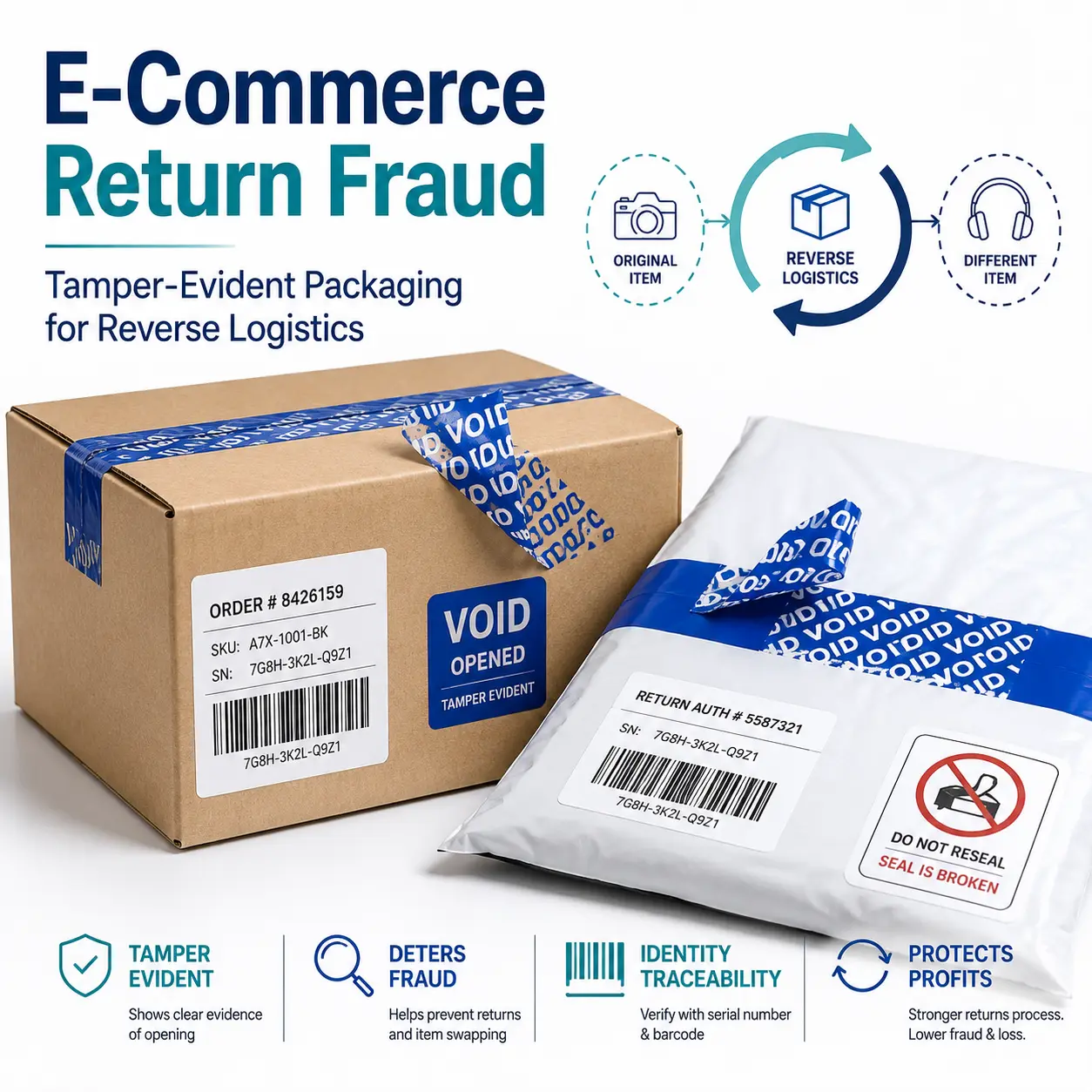
Ecommerce return fraud is not only a refund-policy problem. For high-value and easily substituted products, it can also become a product-identity, packaging-security and reverse-logistics problem.
When an online order comes back to a retailer, warehouse, distributor or fulfillment center, the receiving team may need to answer several different questions:
Is this the same product that was originally shipped?
Is this the same package?
Was the carton, mailer or security closure opened?
Was the original product substituted, partially removed or replaced?
Does the returned serial number still correspond to the physical item inside?
Digital serialization can help answer some of these questions, but it cannot automatically show whether a physical package has been opened, resealed or manipulated after shipment.
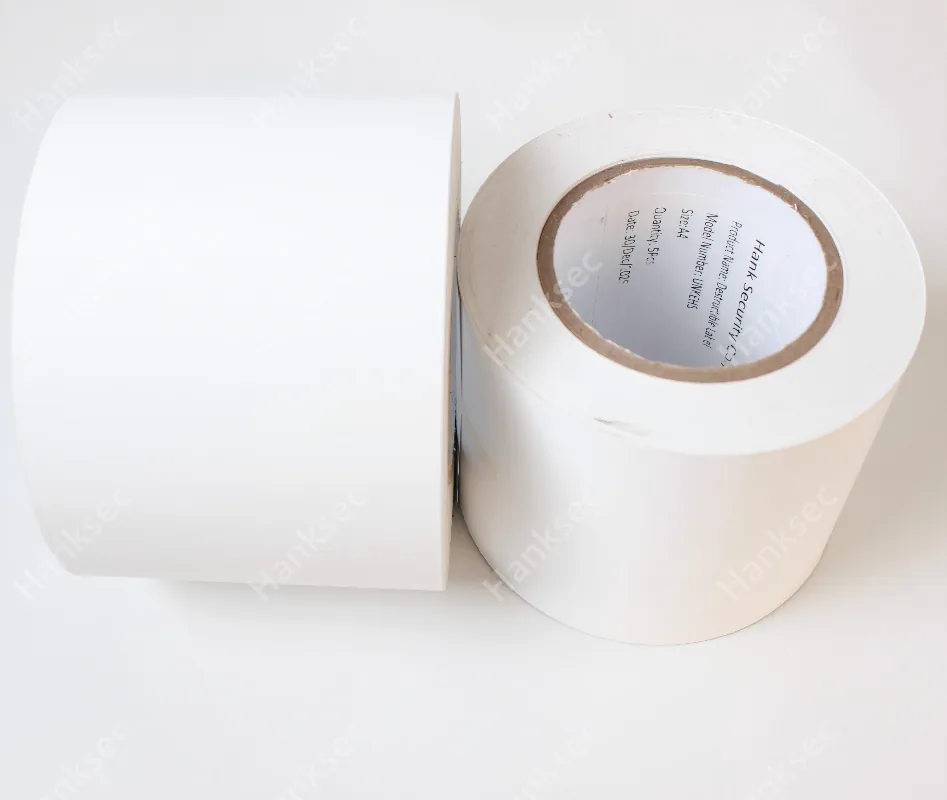
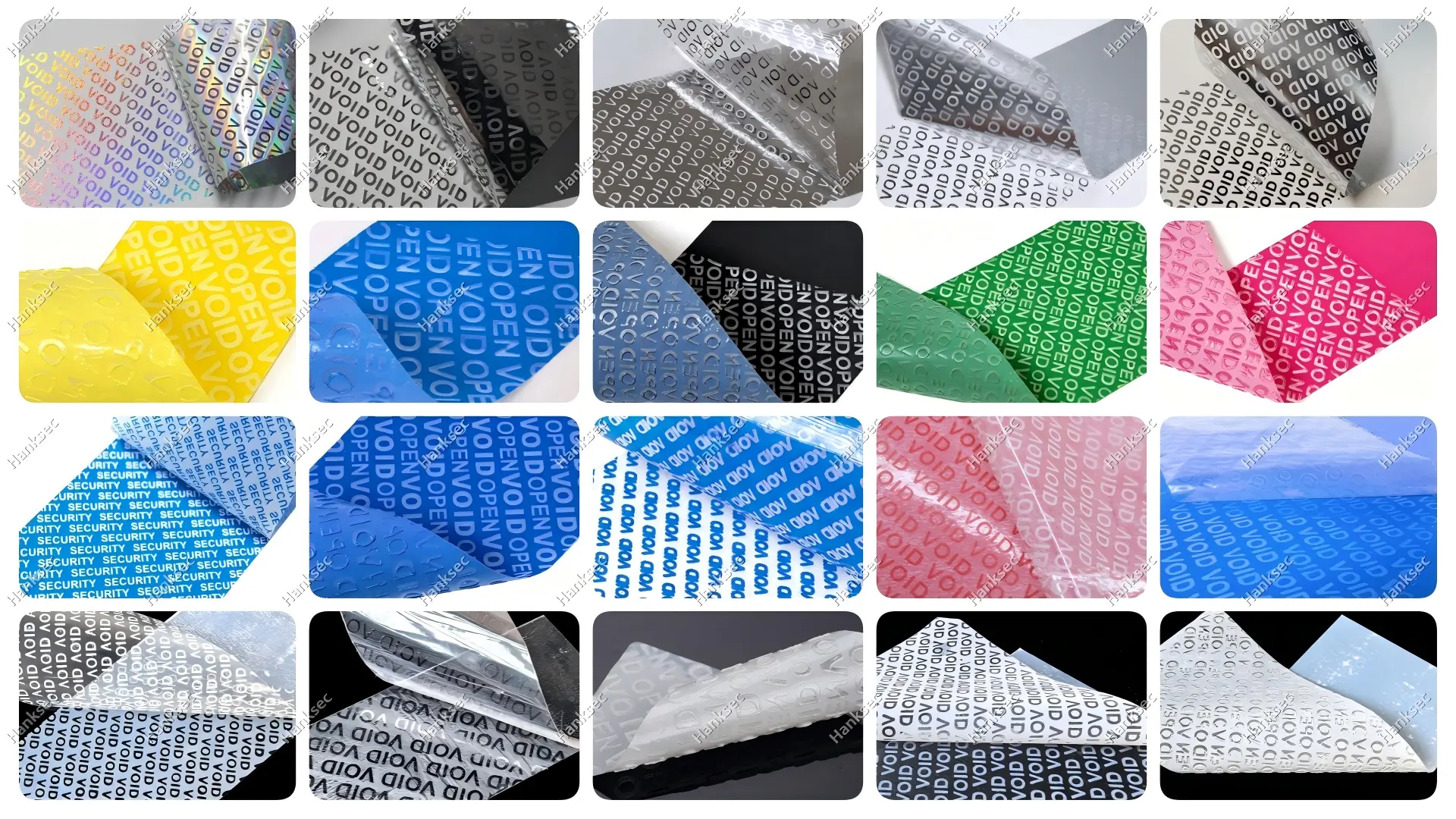
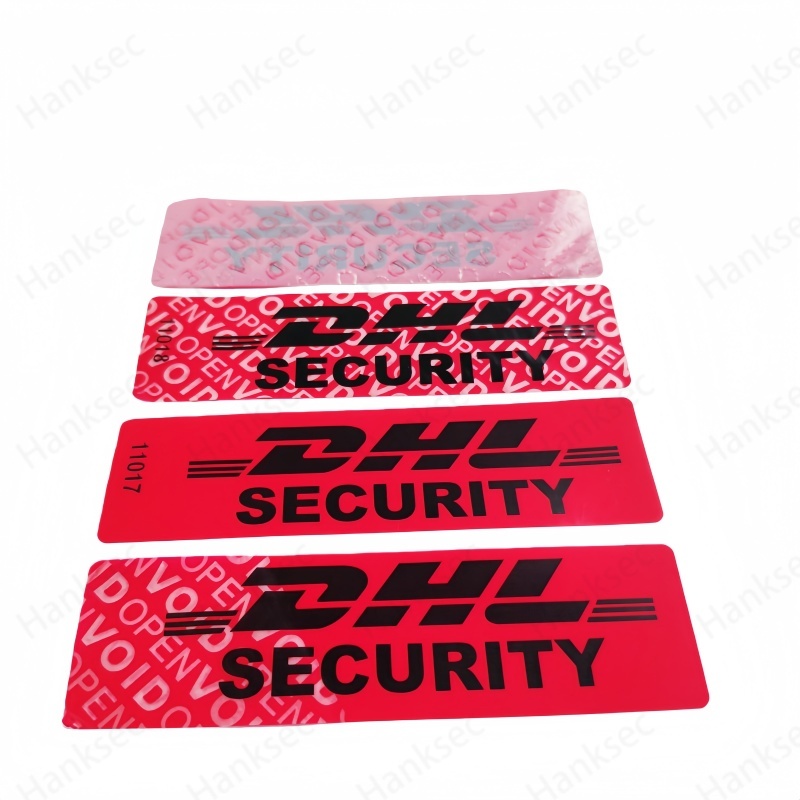
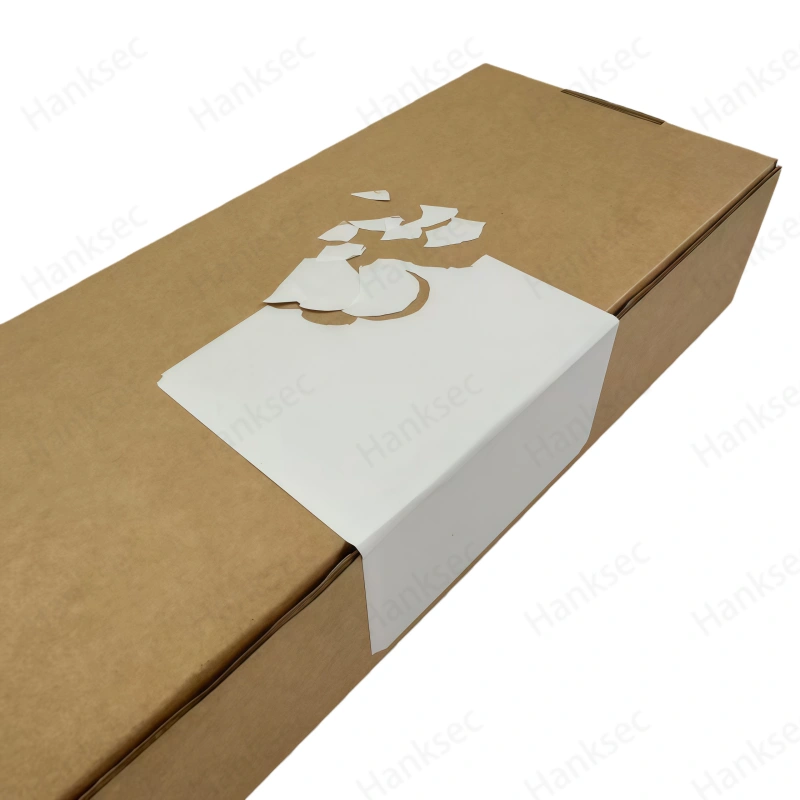
Tamper-evident packaging adds a separate physical evidence layer. VOID security tape, destructible security labels, serialized closure seals and tamper-evident security bags can create visible changes when a protected opening point is disturbed.
The objective is not to claim that a security label can eliminate e-commerce return fraud.
A more realistic approach is to make product identity, package integrity, digital records and return inspection work together as a layered security system.
Quick Answer
Tamper-evident packaging can help reduce uncertainty during e-commerce return inspection by creating visible evidence when a carton, mailer, product seal or protected closure has been opened or removed.
It can be particularly useful where the return risk includes:
- product substitution;
- empty-box or partial-content returns;
- counterfeit replacement products;
- transferred product identifiers;
- resealed cartons;
- missing accessories;
- high-value electronics;
- cosmetics and premium goods;
- controlled spare parts and components.
However, tamper evidence should not be treated as proof of who opened the package, exactly when it was opened or whether the product inside is authentic.
For higher-risk e-commerce products, a stronger system combines:
product serialization + package identification + physical tamper evidence + return inspection records.
Why E-Commerce Return Fraud Has Become a Packaging Problem
Returns are a normal part of modern e-commerce.
The scale, however, is significant.
The National Retail Federation’s 2025 Retail Returns Landscape projected approximately USD 849.9 billion in total retail returns for 2025. The research also estimated that 19.3% of online sales would be returned and that approximately 9% of all returns were fraudulent. NRF additionally reported practices including empty-box or “box of rocks” returns and decoy returns involving counterfeit items.
This does not mean that every high-return product requires sophisticated tamper-evident packaging.
It does mean that brands selling expensive, easily substituted or fraud-sensitive products should consider what evidence will still be available when an item comes back.
Traditional outbound packaging is normally designed around questions such as:
- Will the product survive transportation?
- Is the package efficient to pack?
- Is the shipping cost acceptable?
- Can the carton run through automated fulfillment?
Reverse logistics introduces another set of questions:
- Was the designated opening point disturbed?
- Is the returned item the same physical product?
- Has a genuine package been reused for another item?
- Has a genuine serial identifier been transferred?
- Is the returned package still in the condition expected by the seller?
- Does the security closure correspond to the outbound record?
That is why ecommerce return fraud prevention should not be considered only a customer-service or payment problem.
For higher-risk products, package construction can become part of the evidence available to the returns team.
Where Packaging Fits in an E-Commerce Return Fraud Prevention System
Tamper-evident packaging should be considered one control within a broader return-fraud prevention system.
| Control | Main Purpose | What It Can Help Establish |
|---|---|---|
| Return Policy | Defines acceptable return conditions | Whether the return meets policy requirements |
| Product Serialization | Gives the item a unique identity | Whether the expected individual product was returned |
| Parcel / Order ID | Identifies the shipment | Whether the return corresponds to the original transaction |
| Outbound Weight / Photo | Creates a shipment baseline | What was packed before dispatch |
| Tamper-Evident Seal | Creates physical opening evidence | Whether the designated closure appears disturbed |
| Return Inspection | Evaluates physical condition | Whether product, package and seal match expectations |
| Exception Review | Investigates abnormal returns | Whether further fraud investigation is required |
This distinction matters because packaging should not be expected to solve problems that belong to identity verification, payment systems, warehouse controls or fraud investigation.
Its job is narrower:
to make physical package manipulation more visible and more difficult to reverse without evidence.
The Most Common E-Commerce Return Fraud Scenarios
Not all return fraud works in the same way.
One security technology therefore cannot solve every type of abuse.
| Return Scenario | What May Happen | Digital Identity Status | Additional Evidence Needed |
|---|---|---|---|
| Empty-Box Return | Product is removed before the parcel is returned | Product serial may still exist in the system | Package-opening evidence |
| Product Substitution | Original item is replaced with a cheaper, used or different product | Original order identity may remain valid | Product-level ID + closure evidence |
| Counterfeit Decoy Return | Counterfeit product replaces the genuine item | Genuine code may be copied or reused | Authentication + anti-transfer control |
| Missing Accessories | Main product is returned but components are removed | Main serial may remain valid | Controlled internal or external closure |
| Resealed Package | Original carton is opened and later closed again | Parcel identity remains unchanged | Irreversible opening evidence |
| Security Label Transfer | Genuine identifier is moved to another object | Code itself may remain genuine | Destructible or anti-transfer label |
| Wrong-Item Return | Different SKU or older model is returned | Return request may still reference original order | Product verification |
| Used-Item Substitution | Used or damaged unit replaces the shipped unit | Model may appear correct | Serial verification + physical inspection |
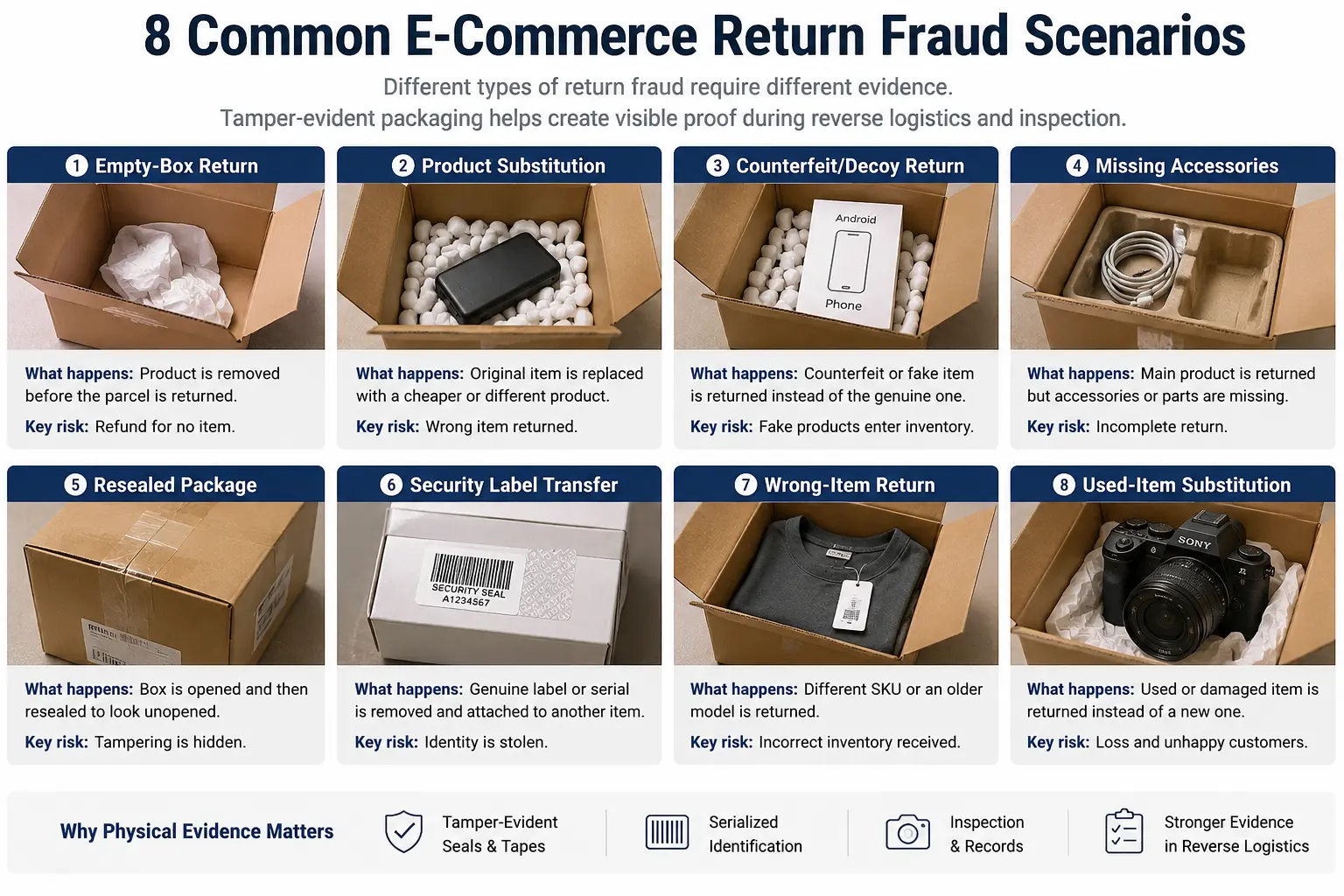
The important point is that return fraud packaging should be designed around the specific risk scenario.
A VOID tape cannot detect a copied barcode.
A serial number cannot automatically reveal that a carton has been opened.
A holographic image cannot prove that a security label remained attached to the original product.
A strong adhesive cannot authenticate the product inside.
Different controls solve different problems.
Why Serialization Alone Cannot Prove the Condition of a Return
Serialization gives an individual product, package or logistics unit a unique identity.
That can be extremely valuable for inventory control, product authentication, traceability and return inspection.
A retailer may have records such as:
Product Serial: A1234567
Order: 42518
Parcel ID: P876231
Warehouse: WH03
Outbound Scan: Completed
Delivery: Confirmed
But consider what happens next.
A genuine serialized electronic product is packed into a genuine shipping carton.
The customer receives it.
The package is opened.
The genuine product is removed.
Another product is placed inside.
The carton is closed again.
The return is initiated.
The parcel ID and original order number may still be completely valid.
The identification system has not necessarily failed.
What changed was the physical condition of the package and its contents.
Serialization primarily helps answer:
Which object is this supposed to be?
Tamper evidence helps answer another question:
Has the designated physical closure been disturbed?
For a broader explanation of how digital identity and physical packaging security should work together, see our Anti-Counterfeit Packaging for E-Commerce guide.
What Tamper-Evident Packaging Can — and Cannot — Prove
One of the biggest mistakes in security packaging is overstating what a label or security tape can prove.
Tamper-Evident Packaging Can Help Show
Depending on the construction, it can provide evidence that:
- a protected closure has been opened;
- VOID or OPENED residue has been triggered;
- a label has fractured during removal;
- a security seal has been peeled;
- a carton surface has been damaged;
- a security label has been transferred;
- a designated opening path has been disturbed;
- a numbered seal no longer matches the outbound record.
These observations can help a returns team decide whether additional inspection is required.
Tamper-Evident Packaging Cannot Automatically Prove
It cannot automatically establish:
- who opened the package;
- exactly when the package was opened;
- whether fraud occurred;
- whether the product itself is authentic;
- whether the customer caused the damage;
- whether a courier, warehouse employee or another party opened the package;
- whether a functional defect existed before opening.
A tamper-evident security label should therefore be treated as an evidence-generating control, not a complete fraud-investigation system.
For high-risk return processes, physical evidence should be combined with product identity, warehouse records, return authorization and inspection procedures.
Four Security Layers for Reverse Logistics
A practical reverse logistics security system can separate four different functions.
| Security Layer | Typical Technology | Main Question |
|---|---|---|
| Product Identity | Serial number, QR code, Data Matrix, unique product ID | Is this the same product? |
| Package Identity | Parcel barcode, order ID, SSCC | Is this the same shipping unit? |
| Physical Tamper Evidence | VOID tape, destructible seal, tamper-evident bag | Has the closure visibly changed? |
| Event / Inspection Record | Warehouse scan, photo, EPCIS event, return record | What happened during the process? |
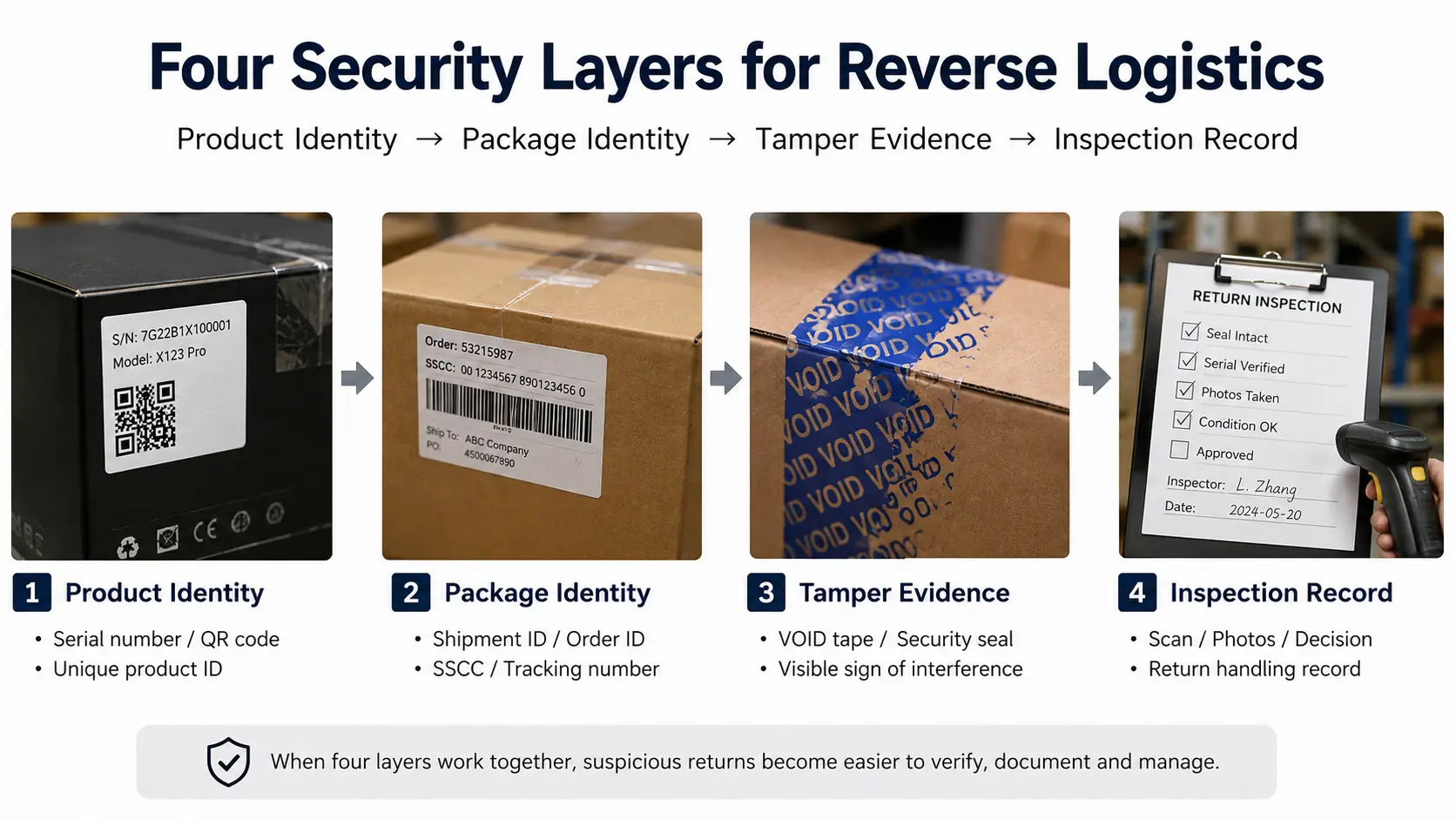
GS1 EPCIS is designed for sharing visibility data about real-world events involving products and other assets. GS1 describes EPCIS data in terms including what, when, where, why and how, helping supply-chain participants understand status, movement and chain-of-custody information.
Physical tamper evidence adds another type of information.
A simplified workflow can look like this:
Product Serial
↓
Parcel ID
↓
Security Seal ID
↓
Outbound Scan
↓
Delivery
↓
Return Request
↓
Seal Inspection
↓
Product Serial Verification
↓
Return Decision
The more expensive or fraud-sensitive the product, the more valuable this relationship can become.
To see why these four layers matter in practice, consider a reported RTX 5070 Ti retail-package incident in which a sealed box was opened and found not to contain the expected graphics card. According to the published report, it was not possible to determine where in the supply chain the substitution occurred. The case therefore illustrates a broader reverse-logistics lesson: package appearance alone is not always enough to confirm product identity. In higher-risk return environments, product identity, package identity, tamper evidence and inspection records should work together as a layered control system.
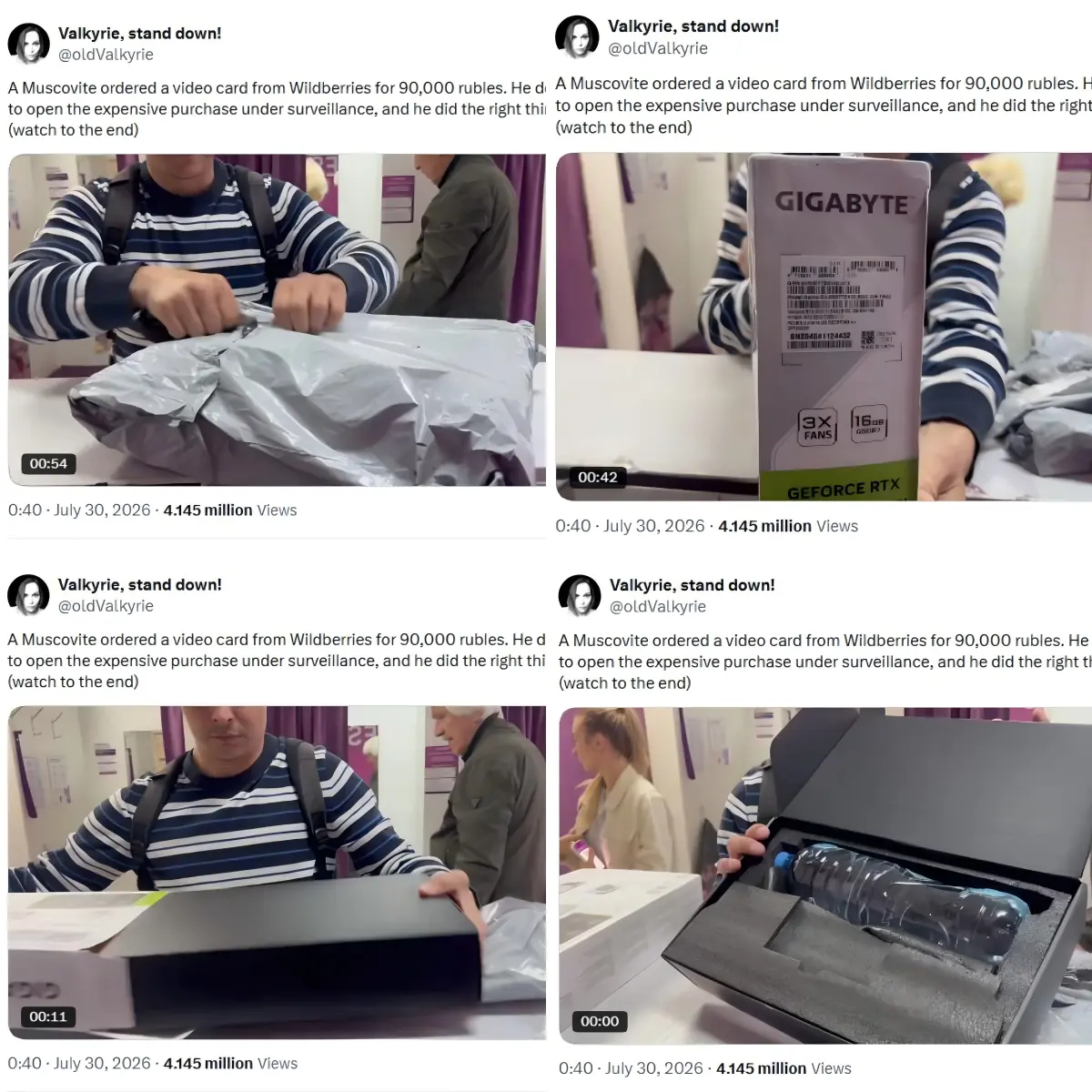
Cases like this show why reverse-logistics security should not rely on only one checkpoint. A serial number can help identify the expected product. A parcel or order ID can identify the shipment. Tamper-evident packaging can help show whether the protected opening path has been disturbed. Inspection records and return-handling data then provide the operational evidence needed to review what actually happened. When these layers are combined, suspicious returns become easier to document, investigate and escalate for exception handling.
For applications that combine QR-based product information, digital identity and physical security features, see our Digital Product Passport Security Labels guide.
Which Tamper-Evident Technologies Work Best for E-Commerce Returns?
There is no universal “best” tamper-evident label for every return process.
Material selection depends on:
- package surface;
- product value;
- return policy;
- acceptable residue;
- required evidence;
- environment;
- application method.
Buyers who need a deeper explanation of VOID layer construction, transfer behavior and material selection can first review our VOID Label Material Guide
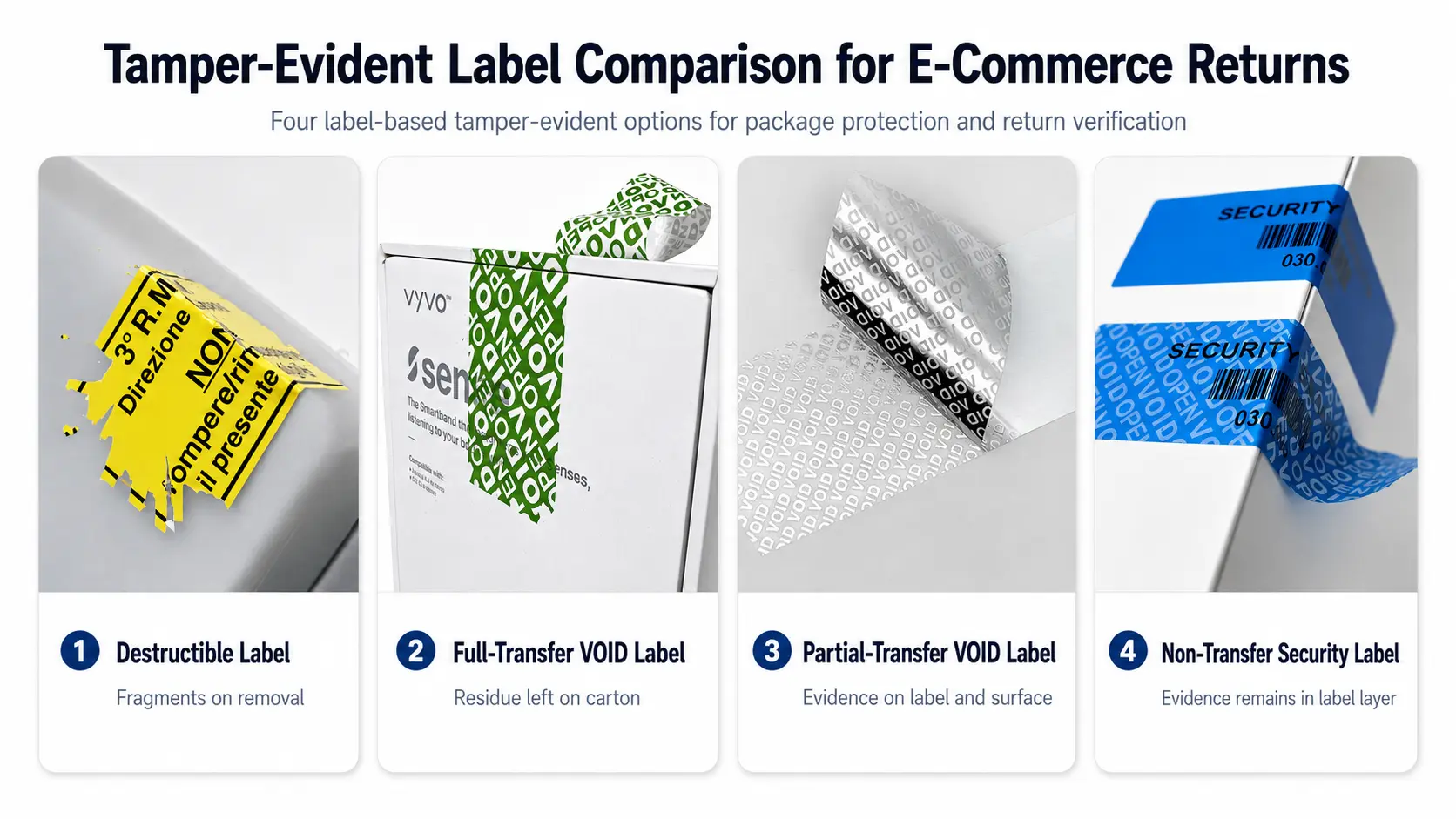
Full-Transfer VOID Security Tape
Full-transfer VOID constructions leave strong visible residue on the protected surface after removal.
They can be useful when:
- permanent evidence on the carton is desirable;
- package appearance after opening is not important;
- high visibility is more important than clean removal;
- high-value shipping cartons require obvious opening evidence.
For return inspection, full-transfer VOID can make it easier for employees to see that the protected closure was previously opened.
The disadvantage is that the underlying package may remain permanently marked.
Partial-Transfer VOID Security Tape
Partial-transfer designs divide the tamper evidence between the tape and the protected package.
This structure can be appropriate when brands want:
- evidence on both surfaces;
- less aggressive residue than some full-transfer systems;
- customized security tape;
- serialized printing;
- custom VOID text.
Partial-transfer materials require careful substrate testing because the balance between adhesive strength and release-layer activation affects the final VOID appearance.
Non-Transfer VOID Security Labels
Non-transfer constructions reveal most of the security evidence within the removed film or label while leaving relatively little residue on the protected object.
They may be useful for:
- premium retail boxes;
- electronics packaging;
- reusable cases;
- equipment surfaces;
- applications where strong residue would damage appearance.
However, the return-inspection team needs to understand where the security evidence is supposed to appear.
If employees expect permanent residue on a carton but the selected system is intentionally non-transfer, inspection procedures may become inconsistent.
Buyers comparing full-transfer, partial-transfer and non-transfer constructions can review Hanksec’s Tamper Evident VOID Label Materials for available material structures and sample-testing options.
Destructible Security Labels
Destructible materials are designed to break, fracture or fragment during attempted removal.
They are particularly relevant where the security label itself should be difficult to transfer intact.
Typical applications include:
- warranty points;
- device housings;
- electronics;
- accessories;
- component identification;
- product-level serialization.
A destructible construction can reduce the possibility that a genuine product identifier is removed cleanly and attached to another object.
For a deeper explanation of fracture behavior, material construction and anti-transfer applications, see our Destructible Labels & Materials.
Serialized Security Seals
A generic VOID seal may tell the inspector:
The closure appears opened.
A serialized security seal can additionally answer:
Which specific security seal was used?
A security seal can incorporate:
- sequential numbers;
- barcodes;
- QR codes;
- product references;
- order references;
- custom logos;
- hidden VOID messages.
During outbound packing, the security-seal number can be recorded.
During a return, the receiving team can compare:
expected seal number → returned seal number → tamper status
This does not make fraud impossible.
It makes the return-inspection process more auditable.
Tamper-Evident Security Bags
In some applications, protecting only one carton seam is not enough.
Small electronics, documents, accessories, parts and other controlled goods may benefit from a security bag in which the entire enclosure becomes part of the security system.
A tamper-evident security bag can be useful when:
- the item is relatively small;
- the package itself requires unique numbering;
- an integrated security closure is preferred;
- several loose components need to remain together;
- the return should remain contained until inspection.
Product Substitution Is Different From Package Opening
Product substitution deserves special attention because it is one of the easiest risks to misunderstand.
Suppose a customer orders:
Product A
The seller ships:
Product A + genuine carton + valid serial
The package is opened and Product A is replaced with:
Product B
The original carton may still exist.
The original shipping label may still exist.
The original order may still exist.
If only the carton identity is checked, the returned package may initially appear legitimate.
This is why higher-risk products can require both:
Package-Level Security
VOID security tape or another security closure protects the package opening point.
Product-Level Security
A destructible or anti-transfer serialized label helps associate identity with the individual product.
Digital-Level Security
The product’s serial number, QR code or Data Matrix is recorded.
Inspection-Level Security
Return staff compare the physical product, security label and system record.
The questions:
Was the package opened?
and
Is this still the same product?
are not the same question.
How to Design a Return-Secure E-Commerce Package
A useful design process starts with the actual return threat rather than simply selecting the strongest adhesive.
Step 1 — Identify the Real Opening Path
Determine exactly how the package is normally opened.
Examples include:
- carton top flap;
- side seam;
- courier-bag closure;
- zipper;
- product box;
- plastic clamshell;
- warranty-access point.
A VOID label placed on a decorative area provides little protection if the package can be opened somewhere else without disturbing it.
Step 2 — Identify What Could Be Substituted
Determine whether the risk concerns:
- the whole product;
- an accessory;
- a battery;
- a cartridge;
- a spare part;
- the retail carton;
- the security label itself.
This determines whether package-level protection is sufficient or product-level security is also required.
Step 3 — Define the Evidence You Want
Before selecting a material, decide what the inspector should see.
Possible requirements include:
- permanent VOID residue;
- evidence on both surfaces;
- clean package with evidence in the removed film;
- fractured label;
- fiber tear;
- unique seal number;
- irreversible color change;
- QR or barcode mismatch.
This is more useful than simply asking:
“Which VOID tape is strongest?”
Step 4 — Decide Whether Residue Is Acceptable
Disposable corrugated cartons and premium electronics boxes may require completely different transfer behaviors.
For disposable cartons:
strong residue may be acceptable.
For reusable cases or premium retail packaging:
non-transfer or lower-residue construction may be preferred.
Step 5 — Determine Whether Serialization Is Needed
Not every package needs a unique security-seal number.
Serialization becomes more valuable when:
- product value is high;
- return disputes are expensive;
- seal identity must be recorded;
- products are already serialized;
- warehouse processes support scanning;
- the brand needs an auditable record.
Step 6 — Match the Adhesive to the Actual Surface
The same VOID construction can behave differently on different materials.
Do not assume that a system proven on one carton will perform identically on another.
Step 7 — Test the Complete Outbound-to-Return Cycle
Do not approve the security material only because it performs well during an immediate peel test.
The complete package should be evaluated through the expected shipment, storage, opening and return cycle.
Why the Same Security Tape Behaves Differently on Different Return Packages
Pressure-sensitive adhesive performance is influenced by the surface it contacts.
Important variables can include:
- surface energy;
- recycled fiber content;
- varnish;
- printing coating;
- dust;
- roughness;
- curvature;
- plastic chemistry;
- moisture;
- condensation;
- application pressure;
- dwell time;
- temperature.
Recycled Corrugated Carton
Higher recycled-fiber content may create a rougher or dustier surface.
Potential failures include:
- weak initial tack;
- edge lifting;
- adhesive bonding mainly to loose fibers;
- inconsistent VOID activation.
Varnished Printed Carton
A visually premium coating can reduce interaction with some pressure-sensitive adhesives.
Potential failures include:
- cleaner-than-expected removal;
- delayed edge lifting;
- incomplete transfer;
- inconsistent VOID appearance.
PE / PP Courier Mailer
Low-surface-energy plastics can require different adhesive chemistry.
Potential failures include:
- poor wet-out;
- lifting during transport;
- weak low-temperature performance.
For PE, PP, HDPE or LDPE courier bags, a bag-specific tamper proof bag sealing film may be more appropriate than a carton-oriented security tape.
PET or Smooth Plastic Packaging
Smooth surfaces can provide more uniform contact, but coatings, contamination and surface treatments still matter.
Important considerations include:
- residue appearance;
- cosmetic damage;
- transfer behavior;
- adhesive strength.
That is why tamper-evident packaging for returns should be tested on the actual final package construction, not only on a generic laboratory surface.
Testing Tamper-Evident Return Packaging Before Bulk Production
Testing should reproduce the actual shipping and return environment as closely as practical.
| Test Area | What to Evaluate | Failure to Watch For |
|---|---|---|
| Initial Adhesion | Bond immediately after application | Seal lifts during packing |
| Dwell Adhesion | Performance after 24–72 hours | Adhesion changes after storage |
| Normal Opening | Expected customer opening | Poor or incomplete tamper evidence |
| Slow Peel | Controlled removal attempt | Seal removes too cleanly |
| Edge Lifting | Manipulation from corners | Security layer can be bypassed |
| Reapplication | Attempt to replace removed seal | Removed seal appears original |
| Temperature | Hot warehouse / cold transport | Adhesive softening or lifting |
| Humidity | Moist logistics environment | Edge failure |
| Carton Variation | Different board or varnish batches | Inconsistent performance |
| Serialization | Barcode and number readability | Smearing or unreadable code |
| Automatic Application | Dispensing and roll unwind | Liner breakage or misalignment |
| Return Simulation | Open, handle, reseal and inspect | Evidence unclear to return staff |
Temperature testing becomes especially important where elevated heat may soften the adhesive or interfere with VOID activation. For higher-risk applications, see our Heat-Resistant Tamper-Evident VOID Solutions Guide.
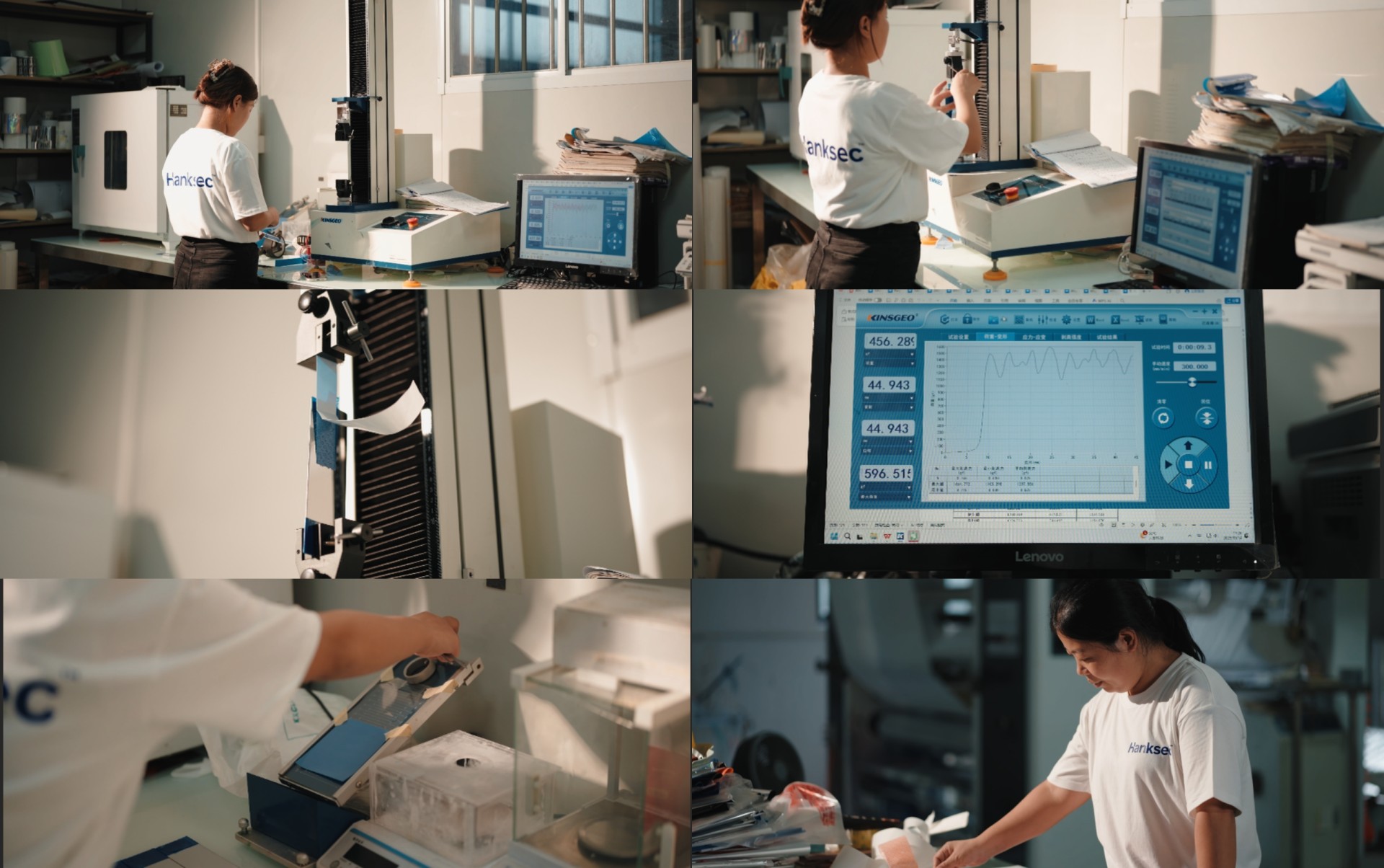
Laboratory peel testing can provide useful comparative data.
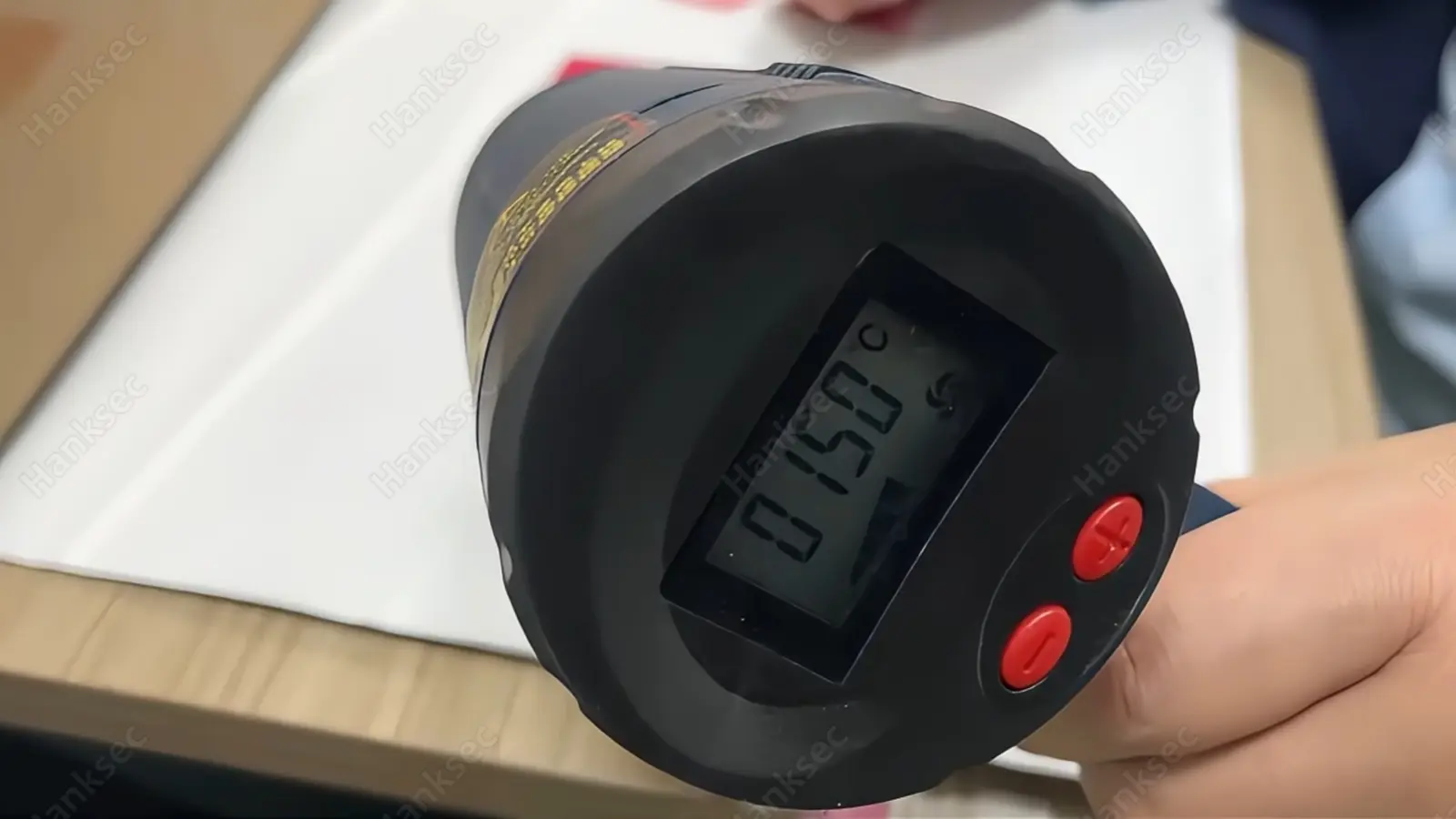
The active ASTM D3330/D3330M-04(2025) standard covers peel-adhesion measurement of pressure-sensitive tape and describes these methods as useful tools for quality assurance. ASTM also notes limitations in applying peel-test data to every functional design situation.
That distinction is important for tamper-evident packaging.
A good laboratory peel value does not automatically mean:
good VOID performance on a recycled carton.
Final approval should therefore consider the complete combination:
carton + coating + adhesive + VOID construction + application method + environment.
A Practical Outbound-to-Return Test Cycle
Instead of evaluating only the moment when security tape is first applied, higher-risk projects can use a complete test sequence.
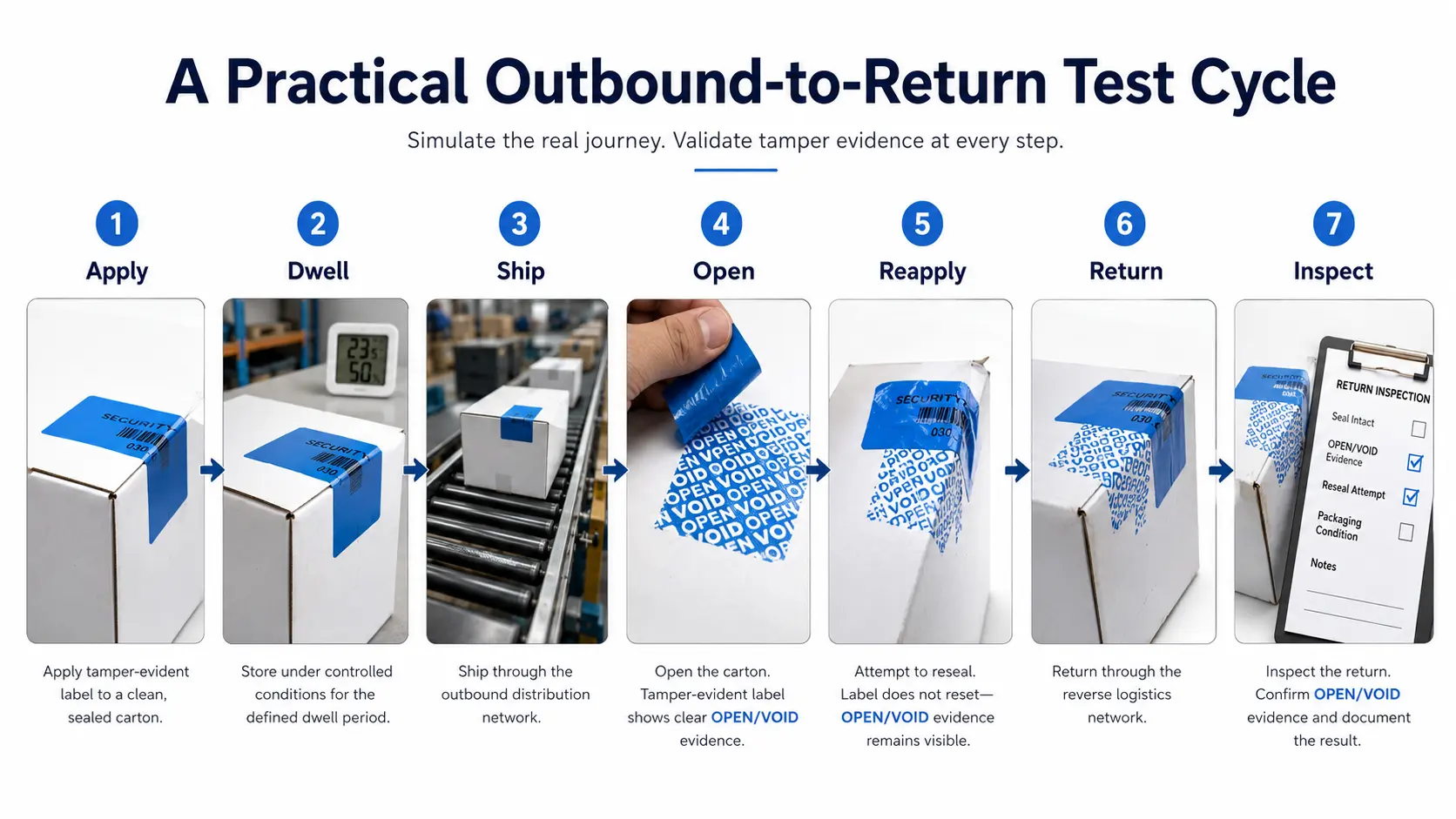
1. Apply the Final Security Construction
Use the actual carton, mailer, bag or product surface.
2. Allow Realistic Dwell Time
Evaluate immediate performance and performance after storage.
3. Simulate Fulfillment
Include normal handling, packing pressure and automated dispensing where applicable.
4. Simulate Transportation
Expose the package to expected hot, cold or humid conditions where relevant.
5. Open the Package Normally
Record the expected tamper response.
6. Attempt Controlled Removal
Evaluate slow peeling, edge lifting and other realistic manipulation methods.
7. Attempt Reapplication
Determine whether the removed security seal can convincingly appear original again.
8. Simulate a Return
Repack the item and present it to someone who did not perform the original test.
9. Perform Inspection
Ask:
Can the inspector clearly identify what happened?
If technically trained laboratory staff can identify the VOID effect but normal warehouse employees cannot, the system may still fail operationally.
A Practical Return Inspection Workflow
Packaging technology needs to be supported by an inspection procedure.
For higher-risk products, a return workflow may follow these steps.
Step 1 — Verify the Return
Scan or confirm the parcel ID and return authorization.
Step 2 — Verify Product Identity
Check the expected SKU, model and serial number.
Step 3 — Verify the Security Seal
Check the expected security-seal number where serialized closures are used.
Step 4 — Inspect Tamper Evidence
Look for:
- VOID residue;
- broken seal;
- destroyed film;
- lifted edges;
- unusual adhesive;
- replacement labels;
- inconsistent numbering.
Step 5 — Inspect Product-Level Identification
Compare:
SKU → model → serial → security label
Step 6 — Check Accessories
Confirm that controlled accessories and components are present.
Step 7 — Record Abnormal Conditions
Photograph unusual conditions where required by company procedure.
Step 8 — Route the Return
The return can then proceed to:
Normal inspection
or
Manual fraud / exception review
The objective is not to make every return difficult.
It is to identify which returns need additional attention.
When Is Tamper-Evident Packaging Worth the Cost?
Not every e-commerce product requires advanced security packaging.
A low-cost commodity with little substitution value may not justify serialized VOID labels and additional inspection.
Security should be proportional to risk.
| Product Type | Typical Risk | Possible Security Direction |
|---|---|---|
| Low-Cost Commodity | Low | Standard packaging |
| General Consumer Goods | Low–Medium | Basic carton seal |
| Cosmetics | Medium | Tamper-evident product or carton seal |
| Electronics | Medium–High | VOID closure + serial verification |
| Premium Accessories | Medium–High | Product-level destructible label |
| Spare Parts | High when easily substituted | Serialized product + package security |
| Luxury Goods | High | Serialized closure + product authentication |
| High-Value Components | High | Multi-layer package and product controls |
Note: These risk levels are illustrative examples rather than fixed industry classifications. Actual return risk depends on product value, fraud history, sales channel, return policy, package construction and inspection procedures.
A better purchasing question is not simply:
How much does the security tape cost?
It is:
How much does an unresolved fraudulent return cost?
Consider:
- product value;
- manual inspection labor;
- customer dispute cost;
- replacement cost;
- counterfeit contamination;
- returned-inventory inspection;
- resale restrictions;
- brand reputation.
Where these costs are significant, an appropriately designed physical security layer may become economically reasonable.
Common Mistakes in E-Commerce Return Fraud Prevention
Mistake 1 — Assuming Serialization Solves Everything
Serialization supports identity and traceability.
It does not automatically prove package integrity.
Mistake 2 — Using a VOID Label Without Testing the Carton
A security material that performs well on PET may behave differently on recycled corrugated board.
Mistake 3 — Protecting the Wrong Opening Point
A security seal needs to interrupt the actual access path.
Mistake 4 — Using Generic Security Labels for High-Risk Products
If the same generic label can easily be obtained elsewhere, replacement may be easier.
Custom graphics, controlled designs and serialization can increase substitution difficulty.
Mistake 5 — Confusing Holographic Appearance With Tamper Performance
A visually sophisticated hologram can still peel cleanly if the adhesive, coating and release structure are poorly matched.
Security construction comes before decoration.
Mistake 6 — Ignoring Return Inspection Procedures
A strong VOID response has limited operational value if warehouse employees do not know what normal and abnormal results should look like.
Mistake 7 — Protecting Only the Shipping Carton
For substitution-sensitive products, the product itself may also require serialization, destructible identification or another product-level control.
What Buyers Should Provide Before Requesting Return-Packaging Samples
A security-material manufacturer can make a much better recommendation when the real application is clearly defined.
| Project Information | Example | Why It Matters |
|---|---|---|
| Product Type | Electronics, cosmetics, spare parts | Defines security risk |
| Product Value | Low, medium, high | Helps determine security level |
| Package Type | Carton, mailer, bag, case | Determines construction |
| Surface | Kraft, coated board, PE, PP, PET | Determines adhesive direction |
| Opening Path | Top flap, side seam, bag closure | Determines seal placement |
| Return Risk | Substitution, resealing, missing parts | Determines security approach |
| Residue Requirement | Strong residue or clean surface | Determines VOID transfer type |
| Serialization | None, number, QR, barcode | Determines printing requirements |
| Environment | Heat, cold, humidity | Determines material stability |
| Application | Manual or automatic | Determines converting specification |
| Quantity | Sample, pilot, mass production | Determines production approach |
A request such as:
“We need security tape for an e-commerce carton.”
is usually not enough.
A better request is:
“We ship high-value electronics in varnished corrugated cartons. We need evidence if the top flap is opened, want sequential numbering, require automatic dispensing and need the tape to remain stable during summer warehouse storage.”
That information allows the material system to be engineered around the actual application risk.
Where a Tamper-Evident Material Manufacturer Adds Value
A security material is not only a printed film.
Performance depends on the interaction between:
facestock + release layer + hidden VOID system + printing + adhesive + liner + substrate + converting + environment.
For e-commerce return applications, a manufacturer should help answer:
- Which VOID transfer structure fits the package?
- Is permanent residue acceptable?
- Which adhesive works on the actual carton?
- Does recycled board require a different construction?
- Should the seal be product-level or carton-level?
- Does the project require serialization?
- Can the material run through automatic dispensing equipment?
- Will the VOID effect remain stable during expected storage and transportation conditions?
- Can the seal be removed and convincingly reapplied?
- How should the returned package be inspected?
Hanksec develops full-transfer, partial-transfer and non-transfer VOID materials, destructible security materials, security tapes and customized tamper-evident constructions for different package surfaces and application conditions.
Buyers comparing finished security-tape constructions can also review Hanksec’s Security Packing Tapes.
The objective should not be to specify the most complicated security label.
It should be to select the simplest material system that reliably creates the evidence required by the real application.
Conclusion: Return Security Needs Identity, Physical Evidence and Procedure
E-commerce return fraud cannot be solved by packaging alone.
But packaging can provide information that digital identity alone does not provide.
A serial number can identify a product.
A parcel barcode can identify a shipping unit.
A warehouse scan can record an event.
A tamper-evident security seal can help indicate whether a designated closure has been disturbed.
A destructible product label can make clean transfer more difficult.
A return-inspection procedure can bring these signals together.
For lower-risk products, ordinary packaging and standard return verification may be completely sufficient.
For higher-risk products—especially electronics, premium goods, components, cosmetics and easily substituted items—a layered approach may provide stronger evidence:
product identity + package identity + physical tamper evidence + return inspection.
The goal is not to add security features everywhere.
The goal is to make sure each control answers the problem it was designed to answer.
Test Your E-Commerce Return Packaging Before Bulk Production
Planning an e-commerce or reverse-logistics security project?
Send Hanksec your:
- package material;
- surface type;
- opening position;
- required VOID or destruction effect;
- serialization requirements;
- storage and transportation environment;
- application method.
Our team can evaluate adhesive compatibility, VOID transfer behavior, security-label construction and application requirements before bulk production.
REQUEST RETURN-PACKAGING TESTING
FAQ: E-Commerce Return Fraud and Tamper-Evident Packaging
What is e-commerce return fraud?
E-commerce return fraud occurs when a return process is intentionally manipulated for financial or product gain. Examples can include returning a different item, substituting a counterfeit or used product, returning an empty package, removing accessories or attempting to reseal packaging so that an opened product appears untouched.
Can tamper-evident packaging prevent return fraud?
Tamper-evident packaging cannot prevent every form of return fraud. Its primary role is to create visible physical evidence when a protected closure, label or package has been opened or removed. It is most effective when combined with product identity, serialization and return inspection.
How can a retailer detect product substitution?
Product substitution is easier to detect when product-level identity is compared with package-level security. A retailer may verify the product serial number, inspect a destructible or anti-transfer product label, check the carton security seal and compare this information with the original outbound record.
Is serialization enough for returned products?
Not always. Serialization can identify an individual product or package and support traceability, but it does not automatically show whether the physical package was opened after shipment. Higher-risk return processes may benefit from combining serialization with tamper-evident packaging.
What is the best tamper-evident seal for return packaging?
There is no single best construction. Full-transfer VOID is suitable where permanent package residue is desirable, partial-transfer provides evidence on both surfaces, non-transfer can protect premium surfaces, and destructible labels are useful where the security label itself should be difficult to remove intact. Testing on the actual package is recommended.
Can VOID security tape be reapplied after opening?
A properly engineered VOID security tape is intended to create irreversible or clearly visible evidence during removal. Actual resistance to reapplication depends on the film, release structure, adhesive, package surface, temperature and removal method. Reapplication testing should therefore be included before bulk production.
Should the product and shipping carton use separate security labels?
For high-risk substitution-sensitive goods, separate controls may be useful. The shipping carton can provide package-opening evidence while a product-level serialized or destructible label helps verify the identity and condition of the item inside.
Why should tamper-evident packaging be tested before bulk production?
Carton coatings, recycled fibers, plastics, surface energy, temperature, humidity and application pressure can significantly change adhesive and VOID performance. Testing the final package construction helps identify edge lifting, poor adhesion, incomplete VOID activation, printing problems and possible reapplication weaknesses before mass production.