In 2026, the best tamper-evident VOID materials for pharmaceutical packaging are:
- Full-transfer or partial-transfer PET VOID materials for medicine cartons requiring strong, permanent opening evidence.
- Non-transfer PET VOID materials for glass vials, reusable containers and surfaces where visible adhesive residue should be minimized.
- Paper-based or fiber-tear VOID materials for dry paperboard cartons where paper compatibility and visible fiber destruction are priorities.
- Low-temperature PET VOID systems for refrigerated and frozen pharmaceutical packaging.
Optional features such as customized hidden messages, GS1 DataMatrix codes, UV printing and irreversible temperature-sensitive inks can strengthen authentication. However, the correct material must still be selected according to the actual substrate, application temperature, storage conditions and packaging-line process.Buyers who are unfamiliar with the basic structure can first read our guide to how VOID label materials work .
Table of Contents
TogglePharmaceutical Packaging Requirements in 2026
Pharmaceutical tamper evidence must provide a recognizable indication when a package has been opened or altered.
ISO 21976:2018 provides requirements and guidance for applying, using and checking tamper-verification features on medicinal-product packaging. It does not prescribe one specific film or adhesive; manufacturers must select and qualify an appropriate packaging system.
In the European Union, medicinal products subject to the safety-feature requirements use both a unique identifier and an anti-tampering device on their outer packaging.
In the United States, FDA 21 CFR 211.132 requires tamper-evident packaging for most over-the-counter human drug products. The feature must provide visible evidence when breached and must be identified on the package.
The U.S. DSCSA separately establishes electronic, package-level identification and tracing for certain prescription drugs. A serialized code supports traceability, while a VOID label provides physical evidence of opening; the two functions should not be treated as interchangeable.
Best Tamper-Evident VOID Materials for Pharmaceutical Packaging
1. Full-Transfer and Partial-Transfer PET VOID Materials
Best for pharmaceutical cartons
PET VOID material is usually the strongest starting point for coated medicine cartons, prescription-product boxes, OTC cartons and pharmaceutical transport packaging.
Among tamper-evident VOID materials for pharmaceutical packaging, PET systems offer a practical balance of dimensional stability, printability and visible opening evidence.
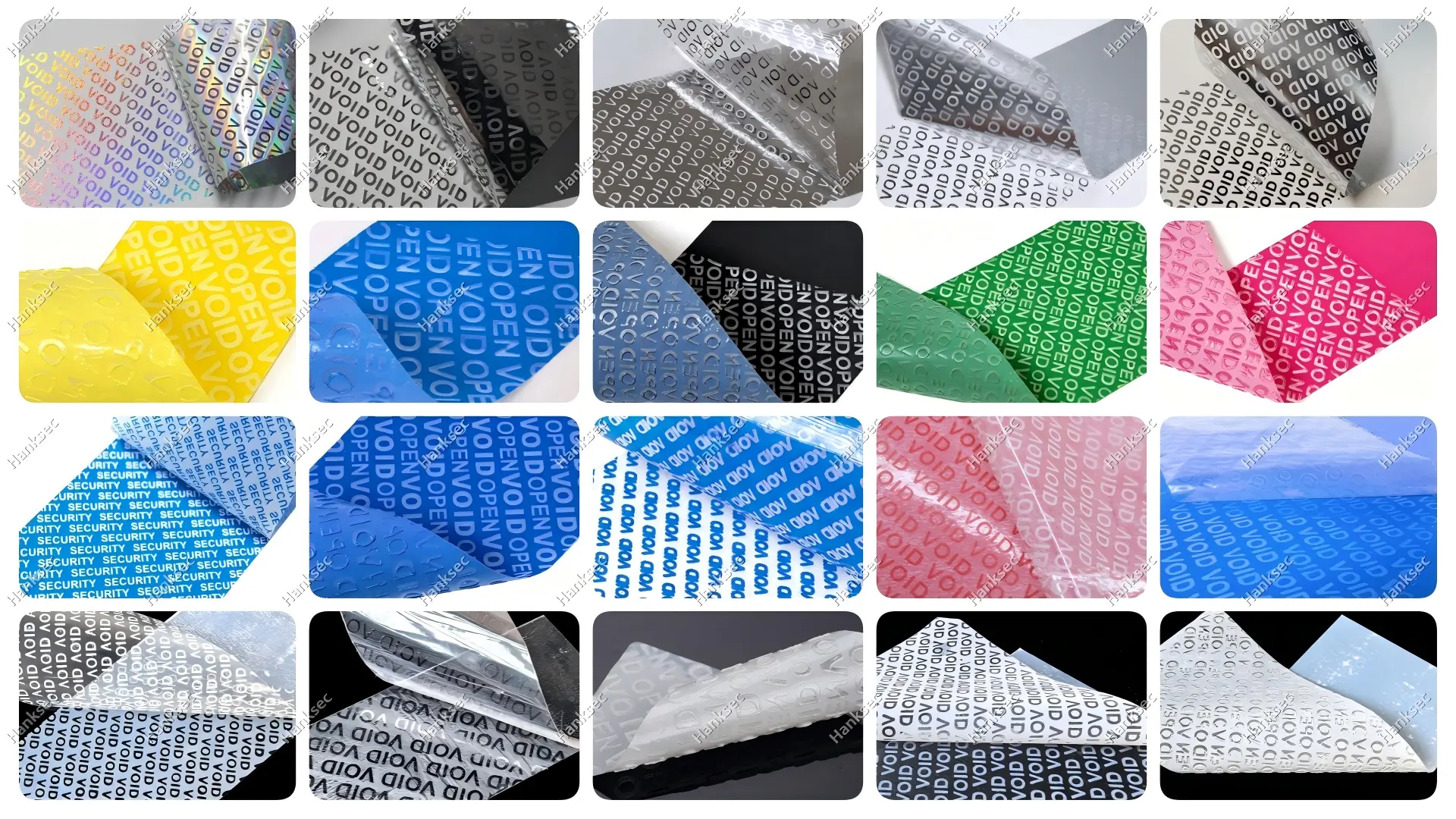
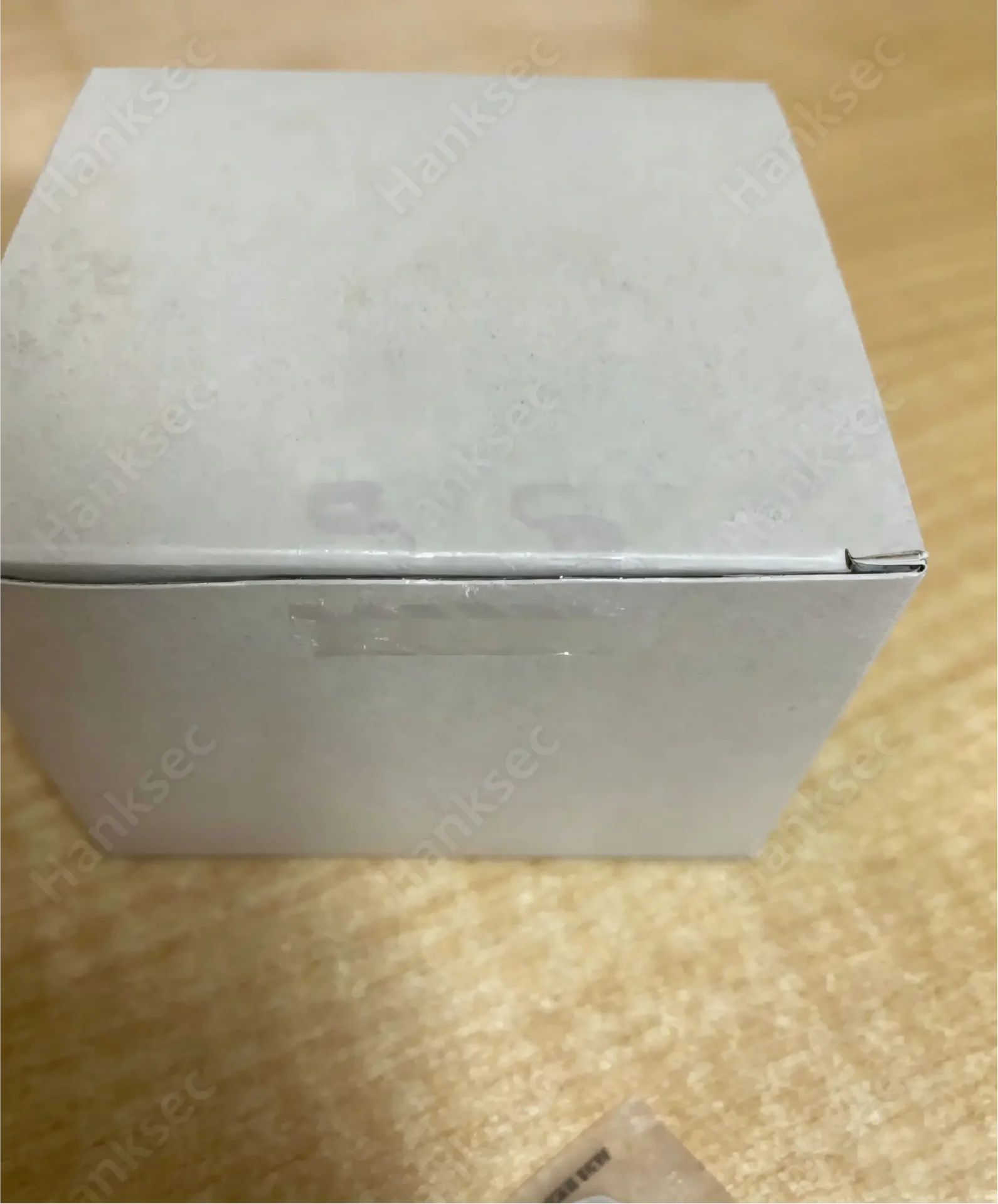
With full-transfer VOID material, most of the hidden pattern remains on the package after removal. It provides highly visible evidence but also leaves more residue.
With partial-transfer VOID material, the hidden message divides between the removed label and the package surface. This provides visible evidence while maintaining a cleaner carton appearance.Hanksec supplies full-transfer, partial-transfer and non-transfer VOID label materials for different residue and surface requirements.
- Strong and recognizable opening evidence
- Good dimensional stability
- Suitable for variable data and security printing
- Compatible with custom VOID text or logos
- Available in white, silver, transparent and holographic finishes
- Suitable for manual and automatic label application
Main limitation
Performance depends heavily on the carton varnish, coating and adhesive system. A label that works on one paperboard carton may lift prematurely or fail to activate on another.
For pharmaceutical folding cartons, partial-transfer PET is often the best general-purpose starting point, while full-transfer PET is more suitable when maximum residue is required.
2. Non-Transfer PET VOID Materials
Best for clean or sensitive surfaces
Non-transfer VOID material reveals the hidden warning mainly within the label construction and leaves little or no visible residue on the applied surface, depending on the adhesive and substrate.These tamper-evident VOID materials for pharmaceutical packaging are especially useful when glass, equipment or reusable surfaces should remain relatively clean.
It may be suitable for:
- Glass medicine bottles
- Vials
- Reusable laboratory containers
- Medical equipment
- Diagnostic devices
- Premium healthcare packaging
Main advantages
- Cleaner appearance after removal
- Reduced visible adhesive residue
- Transparent versions preserve product visibility
- Suitable for reusable or high-value surfaces
Main limitation
Because most evidence remains on the removed label, the tampering may be less obvious after the label has been discarded. For retail cartons that must visibly show opening, a partial-transfer or full-transfer structure is usually stronger.
Labels applied directly to vials, syringes or other primary packaging also require careful material compatibility and supplier-quality evaluation. ISO 15378:2017 addresses quality-management and GMP-related requirements for the manufacture and supply of primary packaging materials for medicinal products.
3. Paper-Based and Fiber-Tear VOID Materials
Best for paperboard secondary packaging
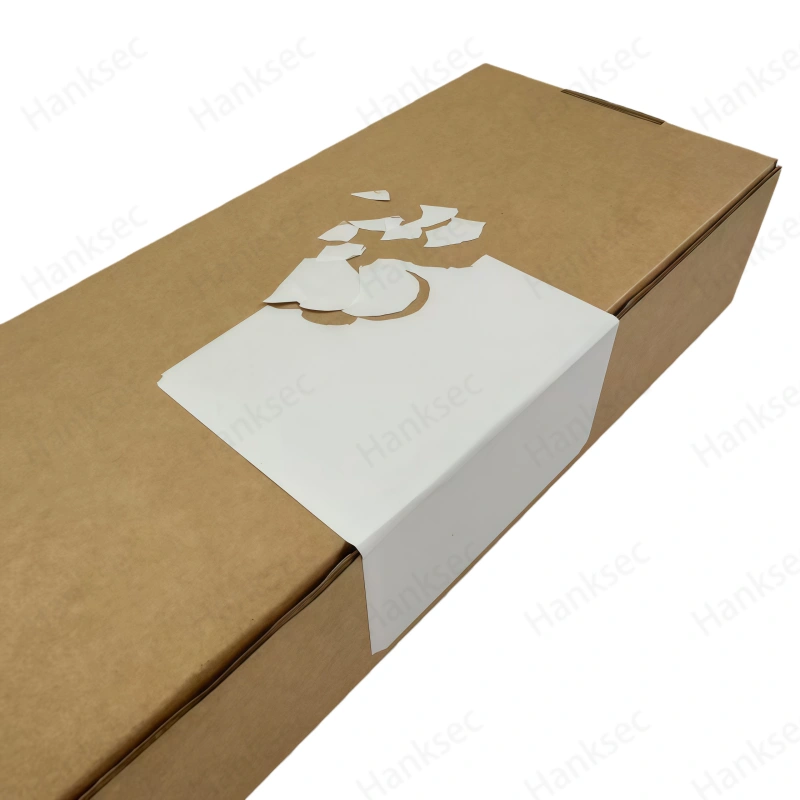
Paper-based VOID materials combine a fragile paper face with an engineered adhesive or separation layer.Paper-based tamper-evident VOID materials for pharmaceutical packaging are primarily intended for compatible paperboard cartons and secondary packaging.
During removal, the material may:
- Tear into pieces
- Pull fibers from the carton
- Reveal a VOID or OPENED message
- Produce both physical and visual evidence
These structures are suitable for folding cartons, kraft pharmaceutical packaging, sample envelopes and selected e-commerce medicine boxes.For a deeper explanation of paper face stocks, transfer behavior and carton applications, read our complete paper VOID label guide .
Main advantages
- Natural visual compatibility with paper cartons
- Visible fiber destruction
- Suitable for conventional printing
- Reduced use of plastic face film
- Customizable hidden messages and colors
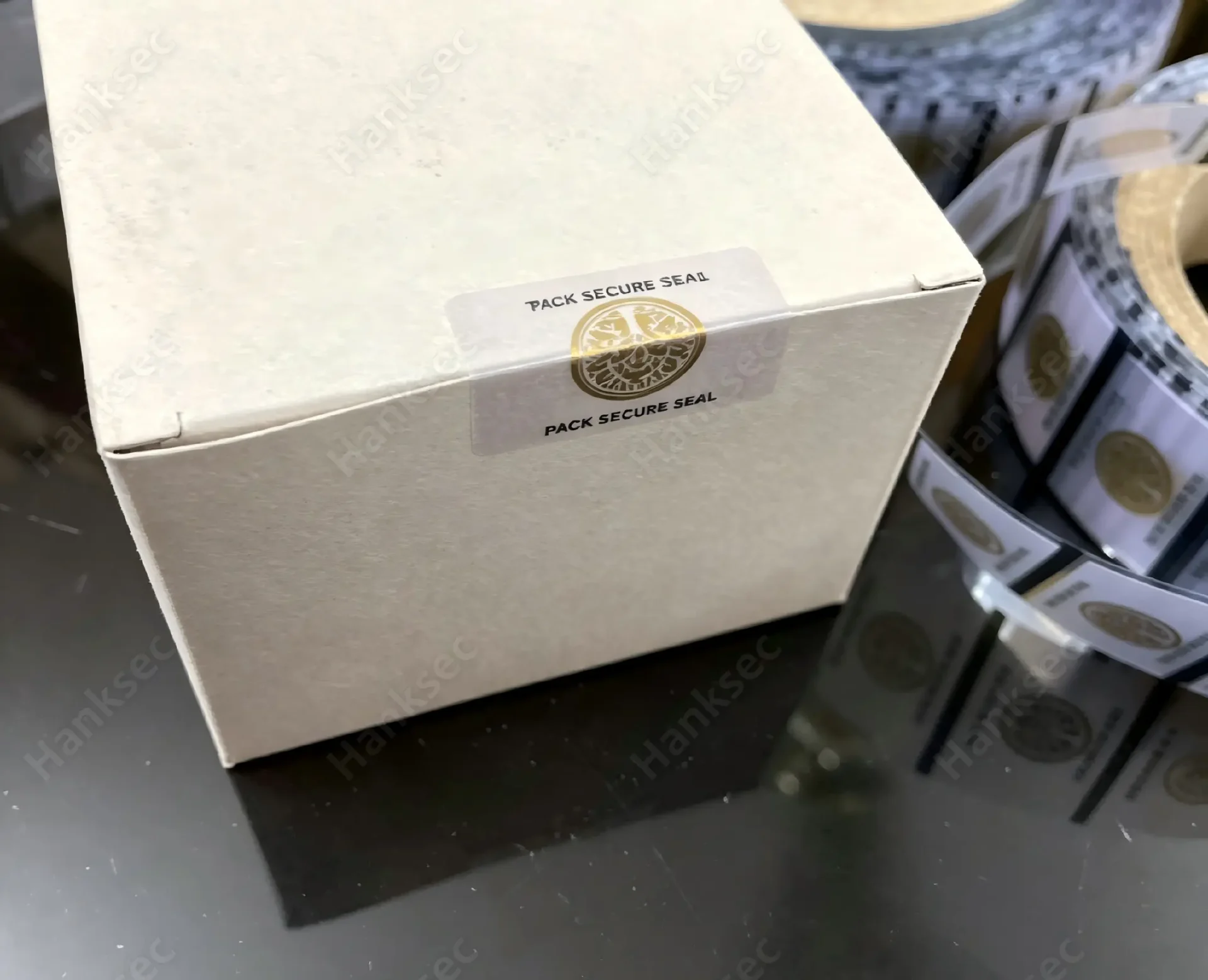
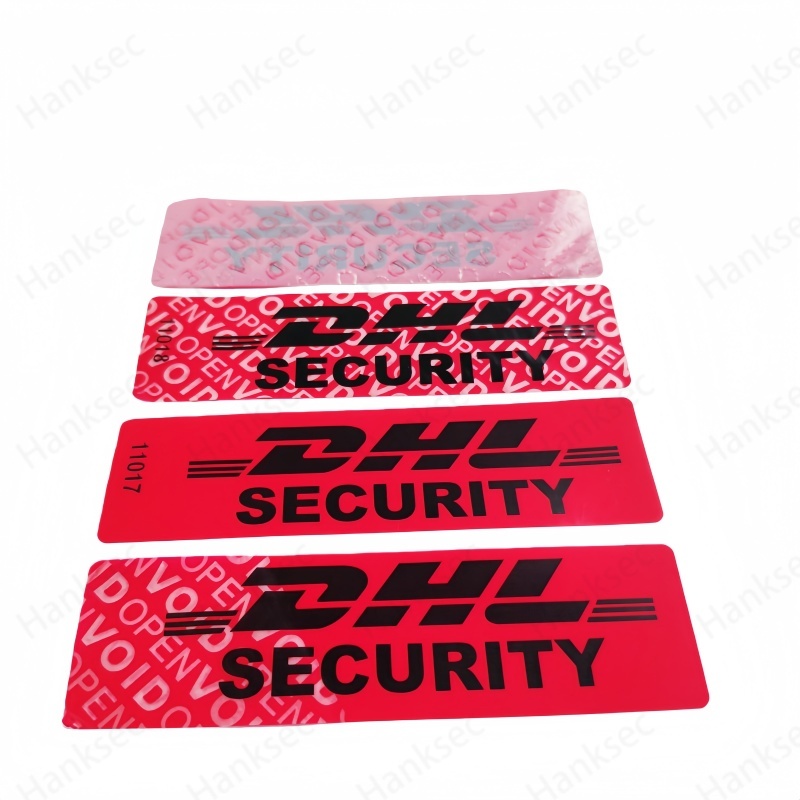
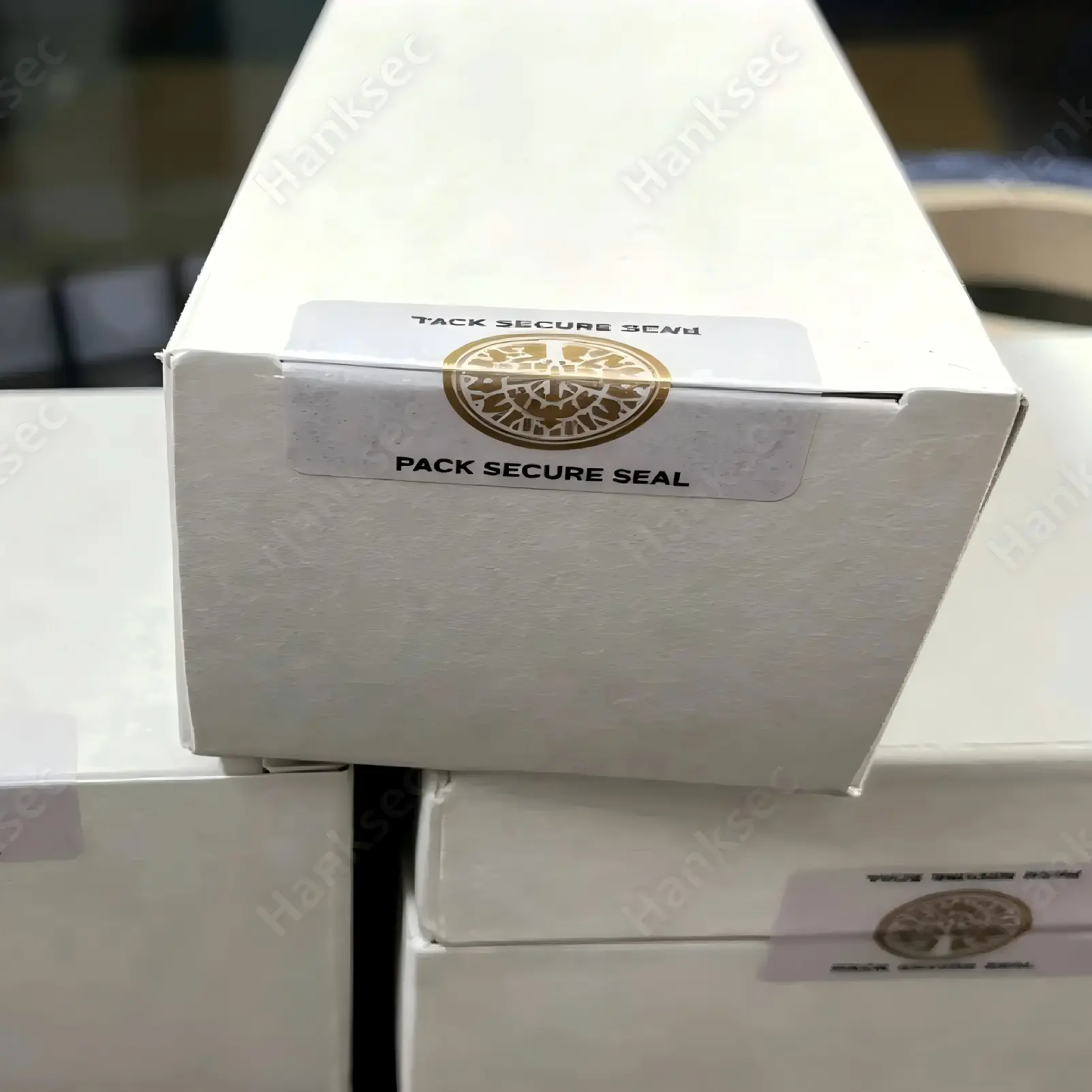
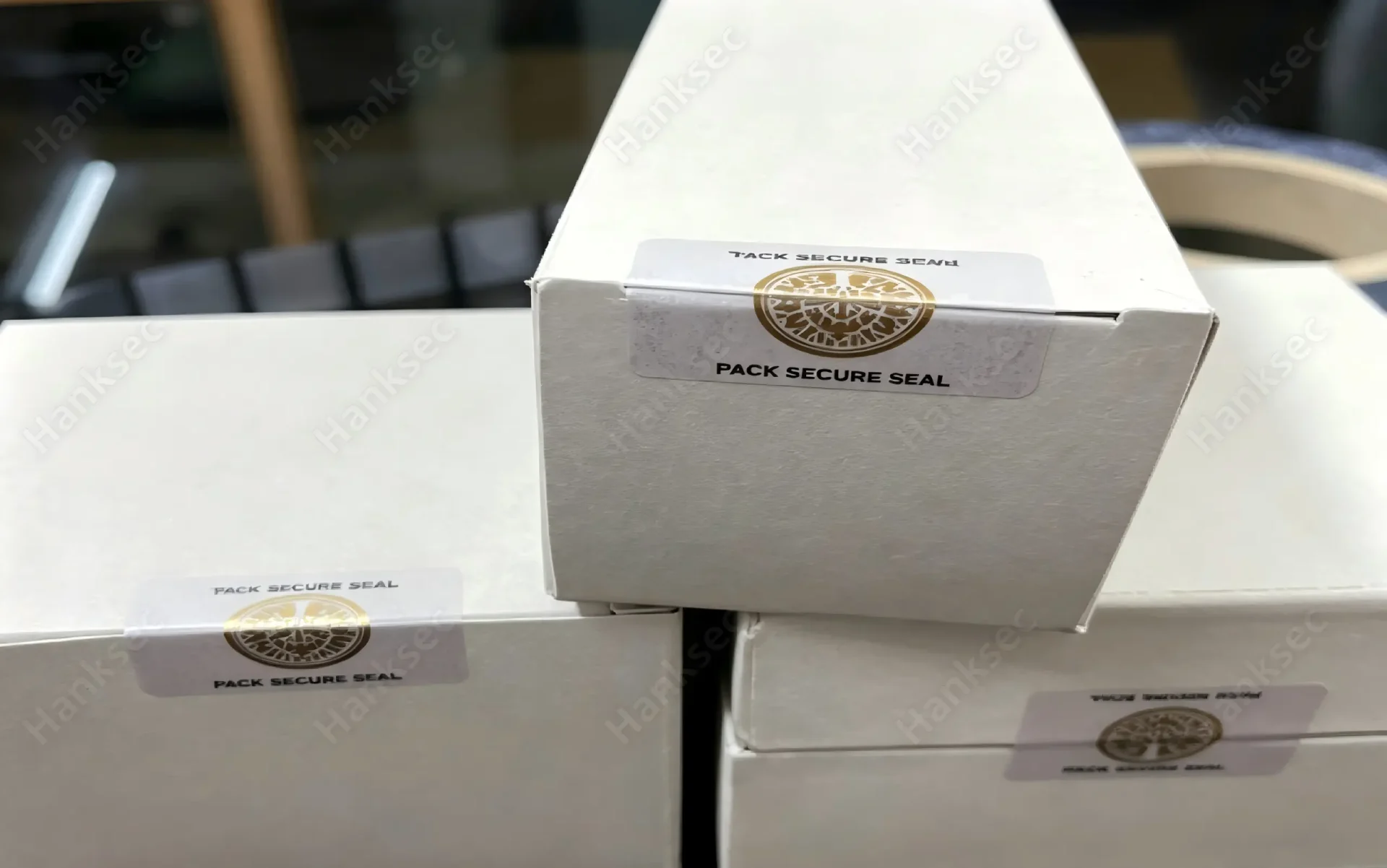
Custom printing allows PET VOID seals to combine tamper evidence with brand graphics, warning text and security symbols.
Main limitations
Paper materials generally require more careful evaluation in environments involving moisture, condensation, abrasion or chemical cleaning.
A paper face does not automatically make the complete label recyclable or PPWR-compliant. Adhesive chemistry, coatings, release layers, printing inks and liners must also be considered.
The EU Packaging and Packaging Waste Regulation applies from 12 August 2026 and increases the importance of packaging recyclability and material documentation, but compliance must be assessed for the complete packaging construction.
4. Low-Temperature PET VOID Materials
Best for refrigerated and frozen medicines
Cold-chain packaging creates special adhesion problems because low temperatures and condensation can prevent the adhesive from wetting the package surface correctly.Low-temperature tamper-evident VOID materials for pharmaceutical packaging must be qualified for the actual application, storage and transportation temperatures.
A suitable cold-chain VOID system may include:
- Moisture-resistant PET face film
- Low-temperature acrylic adhesive
- Stable VOID separation layer
- Moisture-resistant printing
- A liner suitable for automatic dispensing
The following temperatures must be considered separately:
- Application temperature
- Storage temperature
- Service temperature
- Transportation temperature
A label may survive frozen storage but still require application at room temperature. Conversely, a package labeled while already cold or wet may require a different adhesive.
For products stored at very low or cryogenic temperatures, only use constructions supported by supplier technical data and package-specific testing. Standard PET VOID material should not automatically be described as suitable for -80°C or liquid-nitrogen conditions.
Material Comparison
| Material system | Best application | Tamper indication | Main consideration |
|---|---|---|---|
| Full-transfer PET VOID | High-security cartons | Strong residue on package | May damage or mark the surface |
| Partial-transfer PET VOID | Branded medicine cartons | Evidence on label and package | Requires correct layer balance |
| Non-transfer PET VOID | Glass and reusable containers | Evidence mainly on label | Less visible after label disposal |
| Paper or fiber-tear VOID | Paperboard cartons | Fiber tearing and/or VOID message | Moisture and recycling evaluation |
| Low-temperature PET VOID | Refrigerated or frozen packaging | VOID evidence under validated conditions | Application temperature and condensation |
Why Pharmaceutical VOID Labels Fail
Carton coating incompatibility
UV varnish, aqueous coatings and anti-scratch finishes may reduce adhesive bonding.
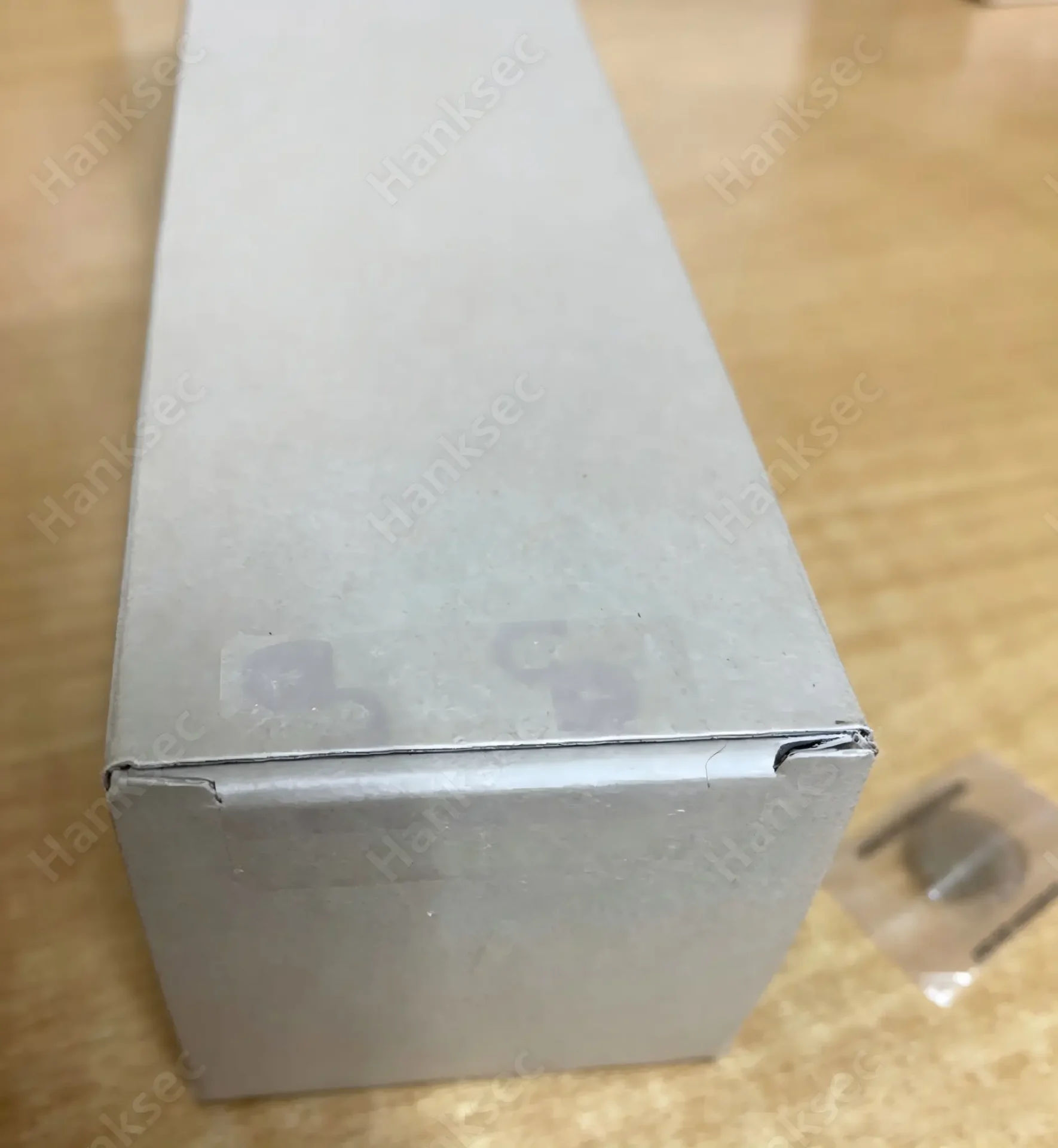
Recommended approach: Test on the actual production carton and consider a varnish-free application area when necessary.
Low-surface-energy plastic
PP and HDPE medicine bottles can be more difficult to bond than glass or coated paperboard.
Recommended approach: Use an adhesive developed for low-surface-energy plastics and test it on the exact bottle resin and surface texture.
Condensation
Water or frost can create a barrier between the adhesive and the package.
Recommended approach: Define whether the label will be applied before refrigeration, after refrigeration or directly onto a cold surface.
Excessive destructibility
Highly fragile material may break during printing, die-cutting, matrix stripping or automatic dispensing.
Recommended approach: Balance tamper performance with converting and application stability.
How to Test Pharmaceutical VOID Materials
Reliable qualification of tamper-evident VOID materials for pharmaceutical packaging requires testing on the actual package rather than on a generic laboratory surface alone.
1. Use the actual packaging surface
Test the exact carton, glass vial, bottle, cap, coating and plastic resin intended for production.
2. Record application conditions
Document surface temperature, humidity, application pressure, label orientation and dwell time.
3. Measure peel adhesion
ASTM D3330 can be used to compare the peel adhesion of pressure-sensitive materials at defined angles and on specified surfaces. However, peel strength alone does not prove that a VOID message will activate correctly.
4. Perform functional tamper tests
Test:
- Slow and fast peeling
- Different removal angles
- Reapplication attempts
- Heat and cold exposure
- Moisture and condensation
- Cutting and resealing
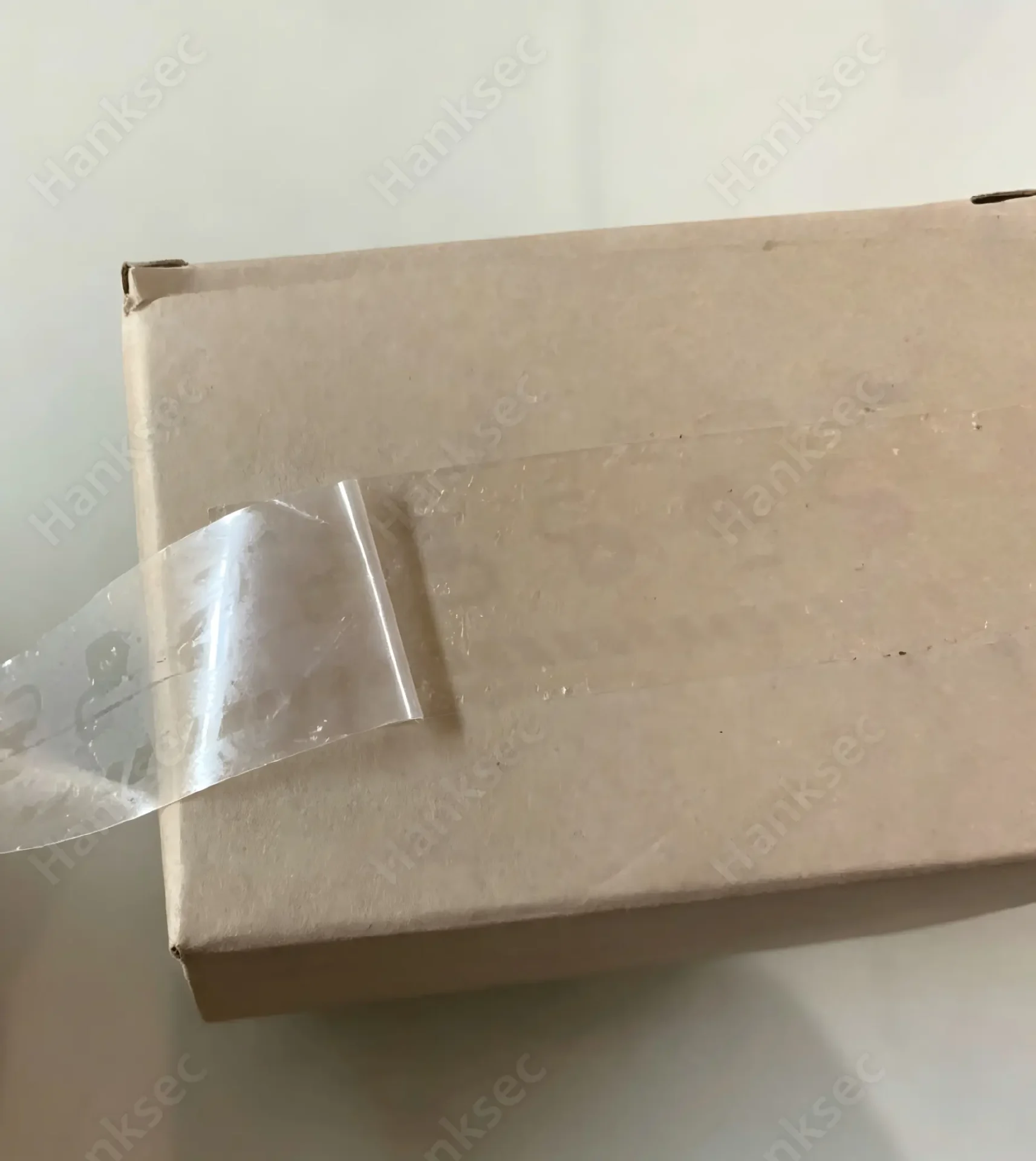
Peel testing verifies whether the VOID message activates correctly and whether the removed label can be reapplied.
5. Run packaging-line trials
Confirm printing, die-cutting, liner release, matrix stripping and automatic dispensing performance before mass production.
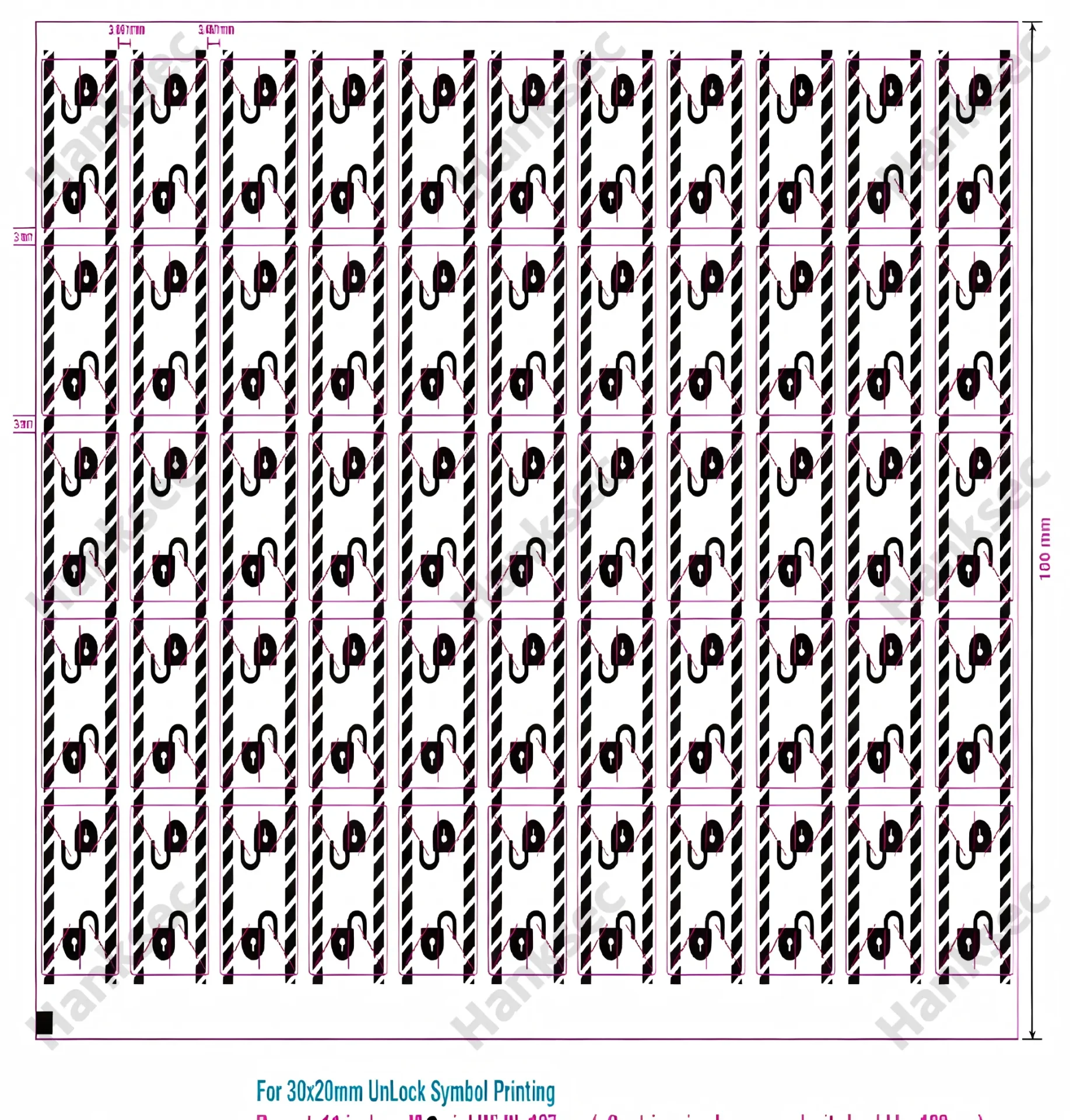
Customers can also compare the available VOID label material types and transfer options before requesting sample testing.
Adding Digital and Covert Security
VOID material can be combined with:
- Customized hidden messages
- Serial numbers
- GS1 DataMatrix codes
- UV-responsive printing
- Microtext
- Holographic effects
- Irreversible temperature-sensitive indicators
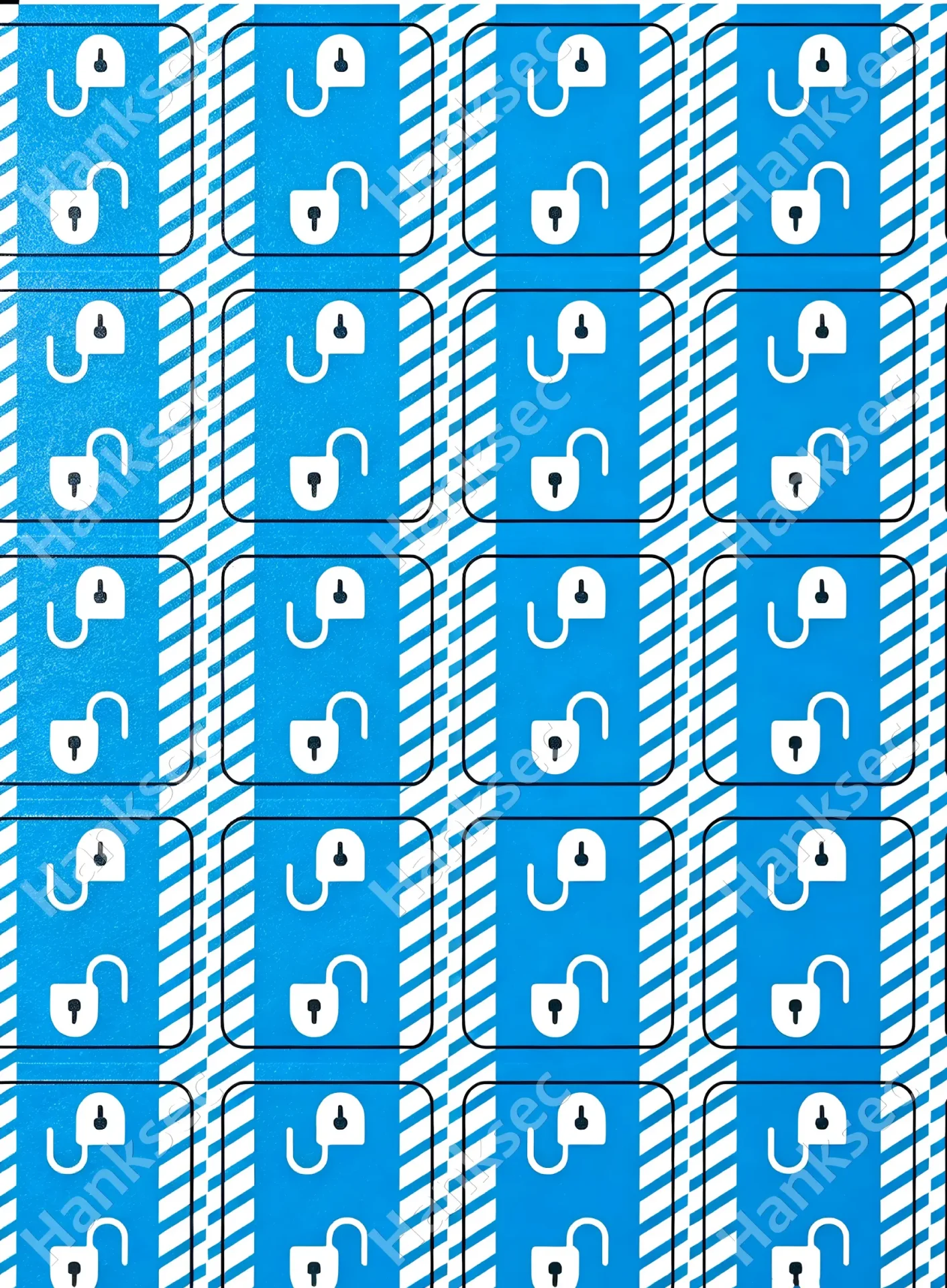
Custom lock symbols can be printed on tamper-evident labels together with warning text, serial numbers, QR codes or other security information.
For healthcare product identification and traceability, GS1 recommends the GS1 DataMatrix as the 2D data carrier. The code may contain information such as the product identifier, batch or lot number, expiry date and serial number.
The DataMatrix supports identification and traceability, while the VOID layer provides physical tamper evidence.
How to Select the Right Material
Selecting tamper-evident VOID materials for pharmaceutical packaging should begin with the package substrate, required residue level and environmental conditions.
Choose the material according to five questions:
- Is the package made from coated paperboard, glass, PP, PE or another plastic?
- Should the package retain visible residue after opening?
- Will the product encounter refrigeration, freezing or condensation?
- Will the label be printed and applied automatically?
- Does the project require serialized or covert security features?
For most pharmaceutical cartons, begin testing with partial-transfer PET VOID. Move to full transfer when stronger residue is required, non-transfer when the surface must remain cleaner, and paper-based material when paper compatibility is a priority.Final selection of tamper-evident VOID materials should always be based on testing with the actual package, adhesive conditions and production process.
FAQ
What is the best VOID material for medicine cartons?
Partial-transfer PET VOID is often the most balanced option because it provides evidence on both the label and carton while producing less residue than many full-transfer structures.
Are VOID labels legally required for all pharmaceutical products?
No single requirement applies to every pharmaceutical product worldwide. The applicable rules depend on the country, product category and packaging level. For example, U.S. 21 CFR 211.132 primarily concerns OTC human drug products.
Can non-transfer VOID labels be used on glass vials?
Yes, provided the adhesive, curvature, labeling area, storage conditions and compatibility requirements have been validated on the actual vial.
Are paper VOID labels automatically recyclable?
No. Recyclability depends on the complete construction, including the paper face, adhesive, coating, security layer, ink and release liner.
Can standard VOID labels be used at −80°C?
They should not be assumed suitable. Use a specifically qualified low-temperature construction and verify it under the actual application, storage and thawing cycle.
Can VOID labels include pharmaceutical serialization codes?
Yes. Variable information such as GS1 DataMatrix codes, batch numbers and serial numbers can be printed on suitable VOID materials, provided print quality and scanning performance are validated.
Conclusion
The best tamper-evident VOID materials for pharmaceutical packaging in 2026 depend on the package rather than on one universal material.
Partial-transfer and full-transfer PET VOID materials are generally the strongest starting points for pharmaceutical cartons. Non-transfer PET is suitable for clean or reusable surfaces. Paper and fiber-tear materials work well on selected paperboard packaging, while low-temperature PET systems are needed for refrigerated or frozen applications.
The final material should be confirmed through substrate testing, environmental aging, functional tamper testing and packaging-line trials.
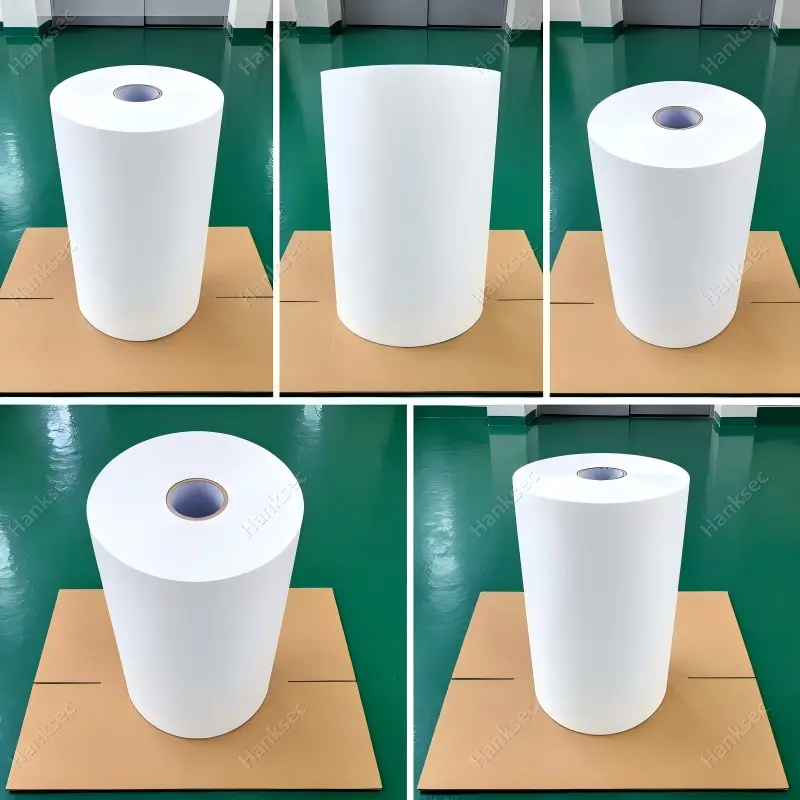
Hanksec supplies full-transfer, partial-transfer, non-transfer, paper-based and customized VOID material systems in jumbo rolls, slit rolls, sheets and finished-label formats for pharmaceutical packaging converters and brand owners.Request Pharmaceutical VOID Material Samples