Quick Answer:
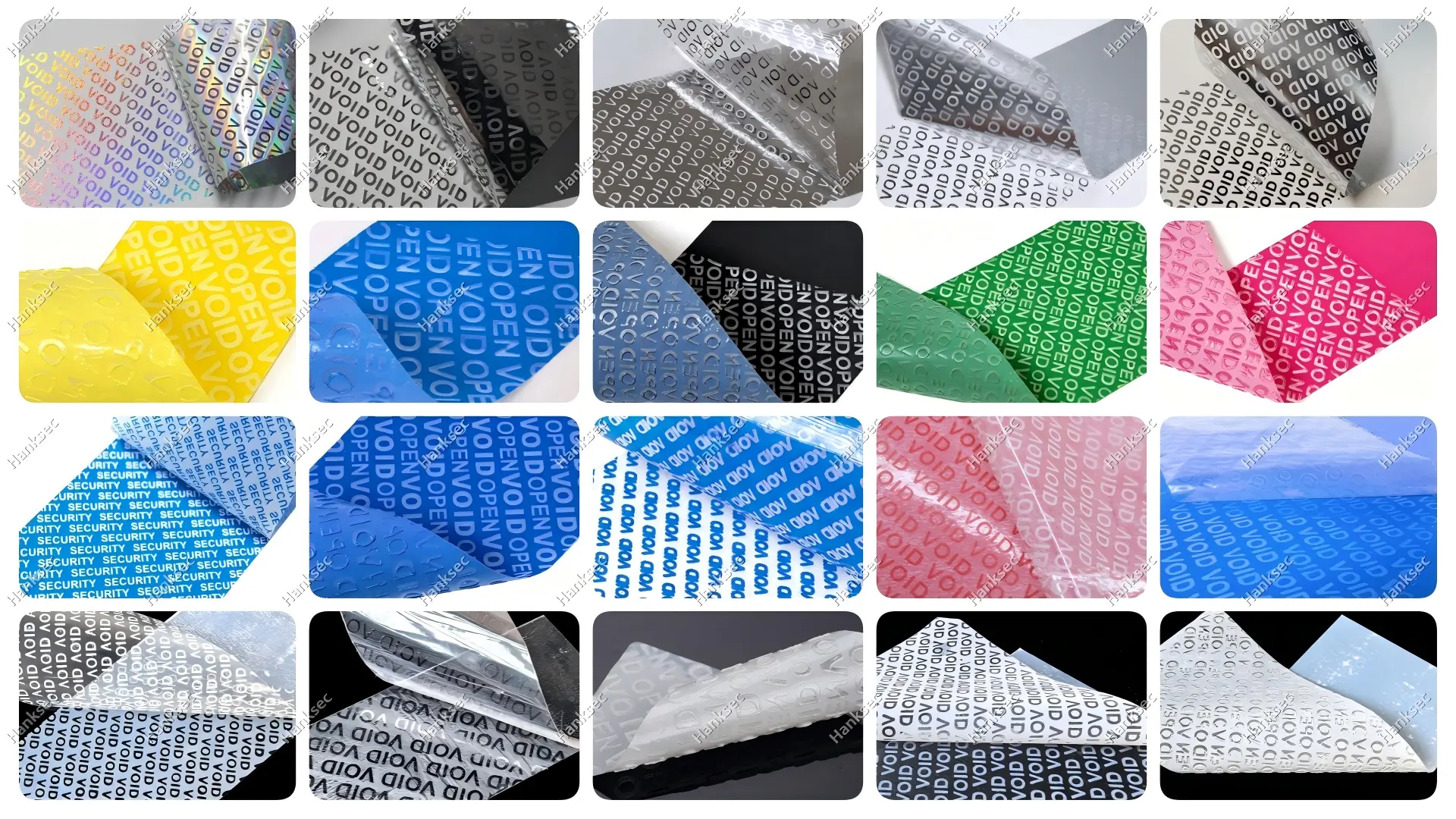
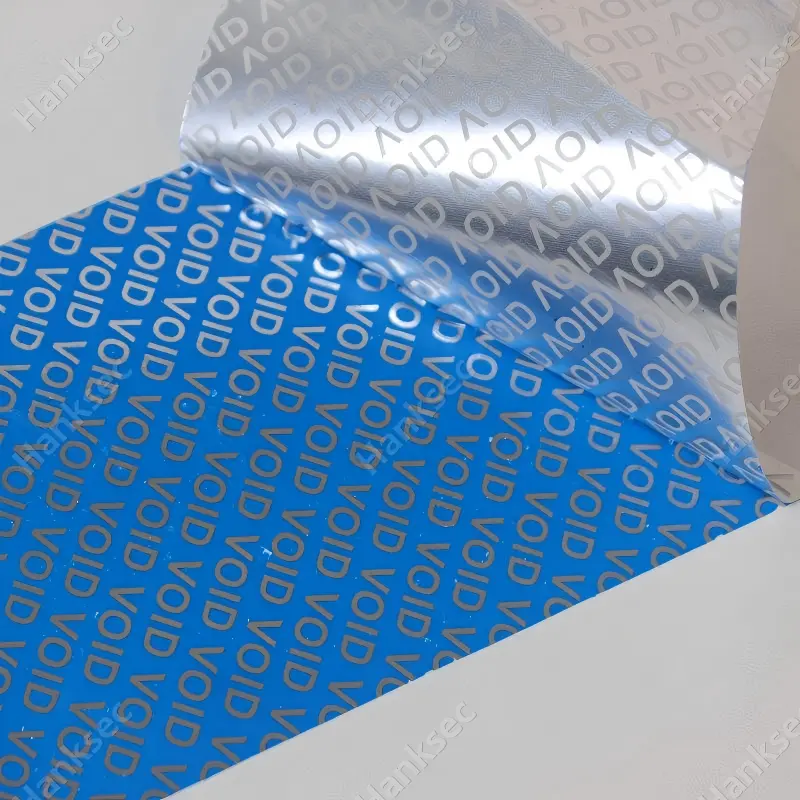
What is VOID label material? It is a tamper-evident pressure-sensitive security material engineered to create an irreversible visual change when removal is attempted. Depending on the construction, a hidden message such as VOID, OPENED or a custom pattern may transfer to the application surface, appear on the removed label, or be split between both.
The security effect is created by the interaction of the face material, printable or functional coating, security release/separation layer, pressure-sensitive adhesive and release liner. The correct construction depends on the required transfer type, application substrate, residue requirement, printing process, converting method and service environment.
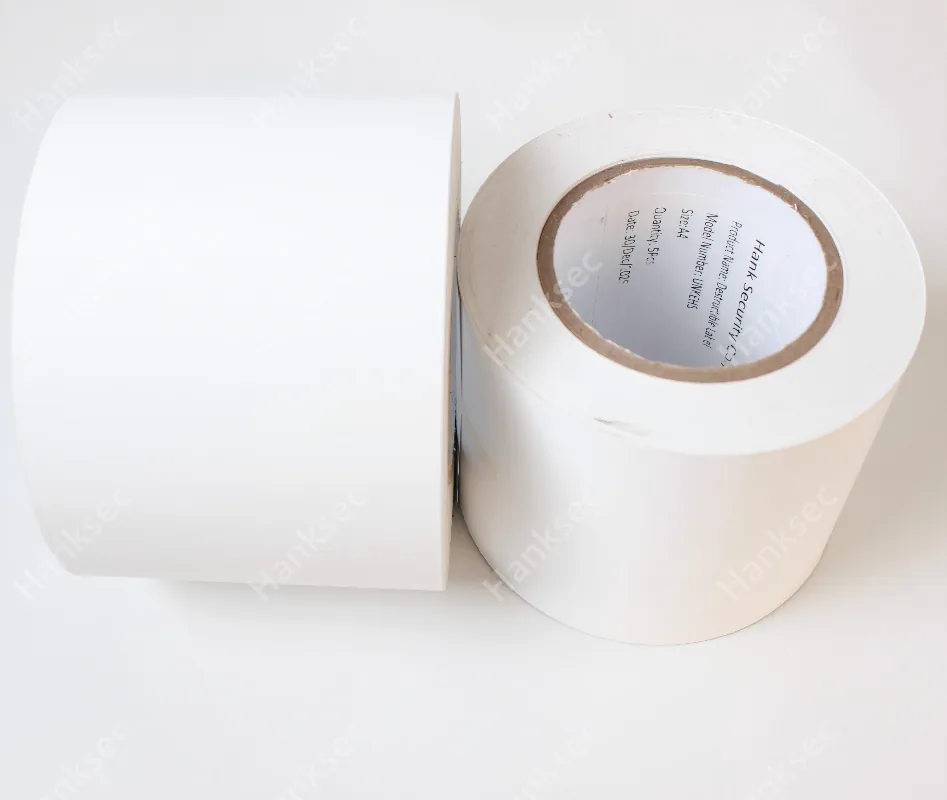
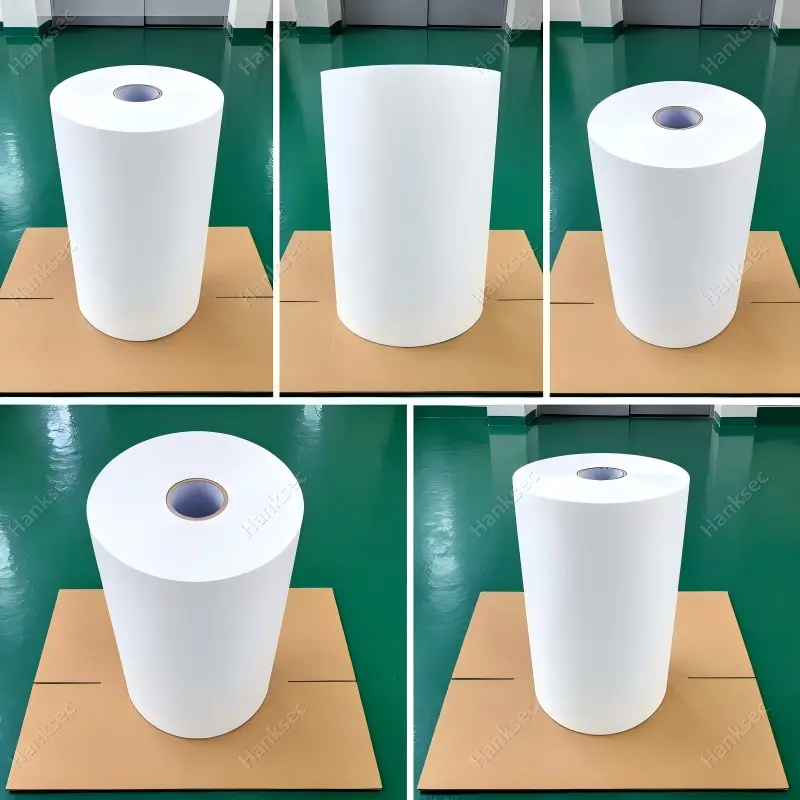
Hanksec supplies VOID label materials for label converters, security printers, packaging manufacturers, material distributors and OEM applications in jumbo rolls, slit rolls, sheets and finished-label formats. Before bulk production, the complete material construction should be qualified on the actual application surface and, where possible, the intended printing and converting process.
What Makes VOID Label Material Tamper-Evident?
Ordinary pressure-sensitive labels are primarily designed to remain attached and carry printed information. VOID label material adds a controlled security mechanism: when removal stress reaches the internal security layers, the construction separates in a predetermined way and reveals visible evidence of tampering.
This controlled separation is often described as controlled delamination. Instead of allowing the complete label to lift cleanly, the material is engineered so that selected layers separate and expose a hidden security message or residue pattern.
The exact response depends on the selected VOID construction. Some materials leave strong evidence on the application surface, some divide the evidence between the label and substrate, and some reveal the hidden message mainly on the removed film while keeping the application surface relatively clean.
Because the tamper response depends on the complete system, VOID label material should not be evaluated only by film color, thickness or adhesive strength. Facestock, release behavior, adhesive, substrate and environmental conditions must work together.
How Is VOID Label Material Constructed?
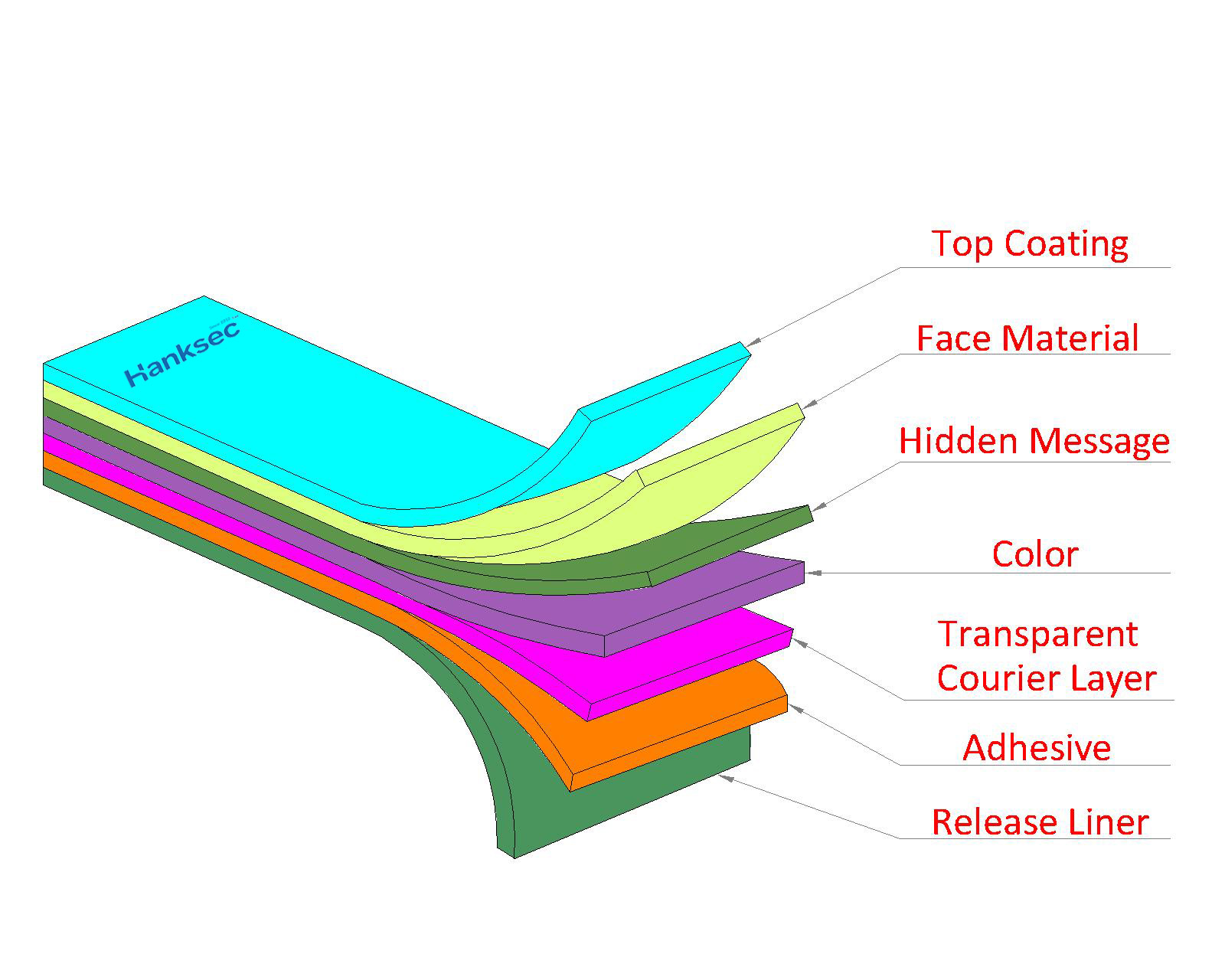
A typical VOID label material is a multilayer pressure-sensitive construction. The exact layer sequence can vary by product, but most systems contain the following functional elements.
Face Film or Printable Facestock
PET is commonly used when dimensional stability, durability and converting performance are important. Selected constructions may also use BOPP, paper or other printable substrates depending on the required security effect and packaging application.
The face surface may require corona treatment, primer or a dedicated printable top coating according to the selected printing process. A surface that performs well with one ink or toner system should not automatically be assumed to work with another.
Security and Release Layers
The internal security layer controls where and how the material separates during removal. It may contain a hidden VOID, OPENED, SECURITY, custom logo or other tamper-evident pattern.
The release or separation design is one of the main differences between full-transfer, partial-transfer and non-transfer materials. Registration, coating consistency and separation balance must remain stable so that the hidden message activates clearly and repeatedly.
Pressure-Sensitive Adhesive
The adhesive anchors the material to the application surface and helps trigger the intended tamper response. Adhesive selection must be matched to the actual substrate because PP, PE, HDPE, PET, glass, coated cartons, painted metal and textured surfaces can produce very different bonding behavior.
Using the strongest possible adhesive is not always the correct solution. The goal is to create the required controlled failure mechanism: sufficient bonding to activate the VOID effect without creating unintended residue, coating damage or application problems.
Release Liner
The release liner protects the adhesive before application and also affects die-cutting, matrix stripping, dispensing, slitting and rewinding. Glassine, kraft and PET liners may be considered depending on the material construction and converter equipment.
How Does VOID Label Material Work?
VOID label material works by controlling the relationship between adhesive bonding and internal layer separation. During removal, peeling force is transferred through the face film into the security construction. Once the designed separation point is reached, the hidden message becomes visible.
A simplified removal sequence is:
- The pressure-sensitive adhesive develops sufficient bonding to the application surface.
- Peeling force is applied to the edge of the label.
- Stress reaches the internal security or release layer.
- The security construction separates according to its designed transfer behavior.
- A hidden VOID, OPENED or customized pattern becomes visible on the substrate, the removed label or both.
- The original appearance cannot be restored without visible evidence of removal.
The clarity of the security message depends on more than the internal pattern. Adhesive wet-out, substrate surface energy, surface texture, dwell time, temperature and removal angle can all influence the final appearance.
Full, Partial and Non-Transfer VOID Materials: Quick Overview
The three main VOID transfer behaviors are full transfer, partial transfer and non-transfer. This page provides only the functional overview; buyers comparing the three constructions in detail can review Hanksec’s VOID Label Material Types comparison.
| VOID Type | What Happens During Removal | Residue / Evidence on Surface | Typical Selection Direction |
|---|---|---|---|
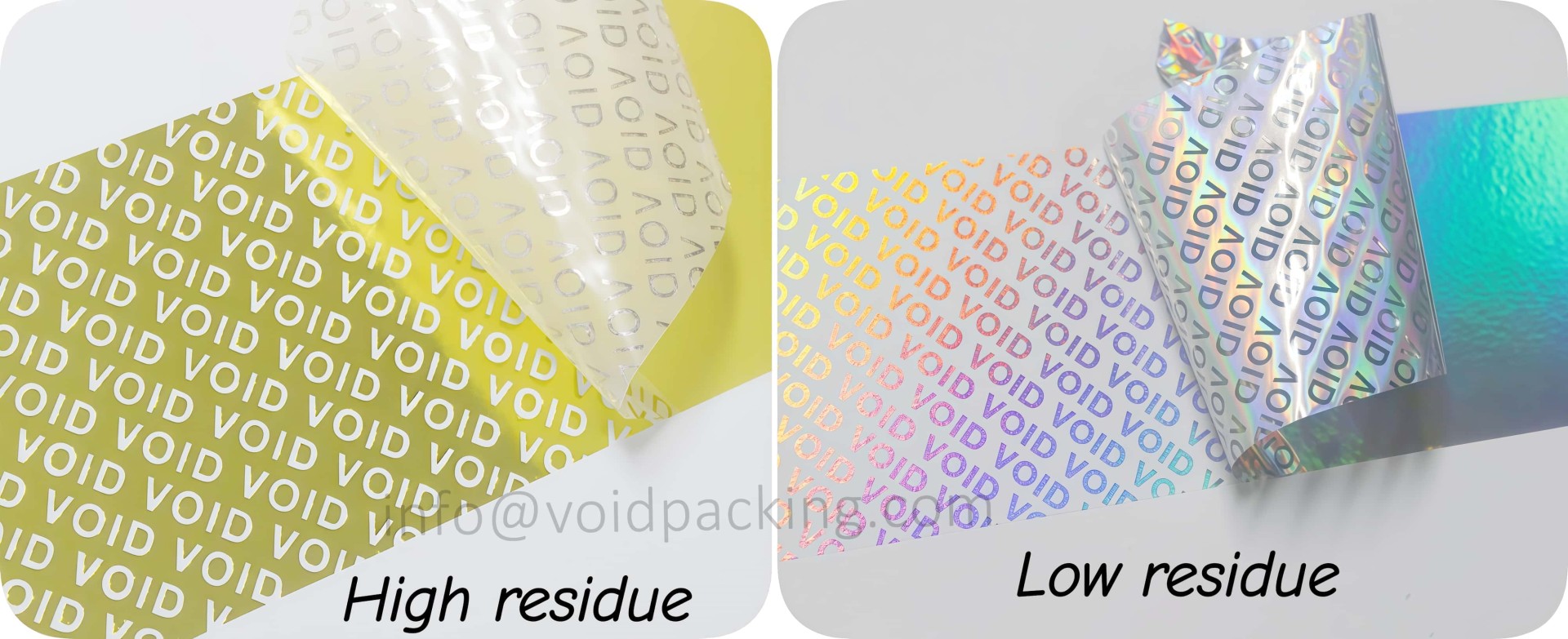
| Full Transfer VOID | The security message and transfer layer are designed to remain strongly visible on the application surface. | High / visible | High-visibility tamper evidence, warranty sealing, cartons, electronics and security packaging |
| Partial Transfer VOID | The tamper evidence is divided between the removed label and the application surface. | Partial | Applications requiring visible evidence with a more balanced surface appearance |
| Non-Transfer VOID | The hidden message appears mainly on the removed film while the application surface remains relatively clean. | Low or no obvious transferred pattern, depending on construction | Electronics, glass, reusable items and clean-surface applications |
These descriptions are selection directions rather than universal performance guarantees. The actual residue and message clarity should be confirmed on the real application substrate because surface material, coating, texture and adhesive interaction can change the result.
How to Select the Right VOID Label Material
The correct VOID material is not selected by security pattern alone. Buyers should evaluate the required tamper effect together with substrate, adhesive, printing, converting and environmental conditions.
1. Define the Required Tamper Evidence
Start by deciding where the evidence should appear after removal. If permanent visible evidence on the application surface is the priority, full transfer may be appropriate. If evidence on both sides is preferred, partial transfer may be considered. If the surface should remain relatively clean, non-transfer is usually the starting direction.
2. Identify the Actual Application Surface
The same VOID material can behave differently on PP, PE, HDPE, PET, glass, coated cartons, painted metal or textured plastic. Low-surface-energy plastics may require a different adhesive construction from smooth glass or metal.
For a deeper substrate and adhesive comparison, see the Tamper Evident Label Adhesive Guide.
3. Confirm Printing Requirements
Converters should identify the actual printing platform before approving material. UV flexographic, screen, thermal-transfer, digital and pigment-inkjet printing can require different surface treatments, primers or printable coatings.
A material being physically printable does not prove that it is production-ready. Ink or toner anchorage, curing or drying, scratch resistance, barcode readability and final tamper response should be checked together. Buyers can review Hanksec’s Printable Security Label Materials Guide for more detailed printing qualification.
4. Consider the Converting Process
Die-cutting, matrix stripping, slitting, rewinding and automatic dispensing can place mechanical stress on the multilayer security construction. The converter should confirm roll width, liner, core, winding direction, roll length and any equipment-specific requirements before mass production.
For roll-format selection, see the VOID Label Material Rolls: Jumbo & Slit Roll Guide.
5. Evaluate the Service Environment
Temperature, humidity, condensation, cleaning chemicals, outdoor exposure and storage conditions can influence both adhesive bonding and VOID activation. Environmental limits should be confirmed for the selected material construction rather than treated as one universal specification for all VOID products.
Quick Selection Matrix
| Buyer Requirement | Starting Material Direction | What Must Still Be Tested |
|---|---|---|
| Strong permanent evidence on carton or package | Full transfer | Adhesion, residue clarity, carton coating and fiber interaction |
| Evidence on label and application surface | Partial transfer | Pattern balance and surface appearance |
| Clean surface after removal | Non-transfer | VOID activation on film and actual residue level |
| PP / PE / HDPE application | Project-specific adhesive direction | Wet-out, dwell adhesion, edge lifting and tamper response |
| Digital or inkjet printing | Printable / coated surface | Ink or toner anchorage, drying, rub resistance and security response |
| Converter requires in-house slitting and die-cutting | Jumbo or slit roll material | Roll specification, liner release, die cutting and matrix stripping |
Printing and Converting Compatibility
VOID security materials contain functional layers that ordinary labels do not. This means printing and converting must be qualified without damaging the security mechanism.
Depending on the product construction, Hanksec can prepare VOID materials for processes including:
- UV and flexographic printing
- Screen printing
- Thermal-transfer printing
- Offset and rotary printing
- Selected digital printing systems
- Selected inkjet systems with an appropriate printable coating
Production qualification should consider the complete workflow rather than print quality alone. Recommended checks include:
- Ink or toner anchorage
- Drying or curing
- Rub and scratch resistance
- Fine-text and variable-data readability
- Die-cutting stability
- Matrix stripping
- Slitting and rewinding
- Release-liner behavior
- Final VOID activation after converting
For HP Indigo, Domino, Xeikon, UV inkjet or other digital platforms, the exact surface treatment should be confirmed against the real ink, toner or primer system rather than assuming that one “digital printable” coating is universal.
VOID Label Material Manufacturing Process
Professional VOID label material is produced through a controlled multilayer coating and converting process. The exact process varies by material type, but a typical production route can include:
- Base material preparation: PET, BOPP, paper or another selected facestock is prepared according to durability, printing and security requirements.
- Surface treatment or printable coating: corona treatment, primer or a top coating may be applied where required for printing compatibility.
- Color, metallization or optical layer: selected products may use metallic, colored or holographic effects.
- Security pattern and release-layer formation: the hidden VOID, OPENED, logo or customized separation pattern is created.
- Adhesive coating: the pressure-sensitive adhesive is selected and coated according to substrate and required transfer behavior.
- Liner lamination and stabilization: the adhesive is protected with the selected release liner and the construction is stabilized.
- Slitting, sheeting or rewinding: master material is converted to the required supply format.
- Quality inspection and application testing: the finished construction is checked for printing, converting and tamper-evident performance.
Not every product uses every step above. For example, paper-based or holographic constructions may require different surface, optical or lamination processes.
Factory Quality Control and Application Validation
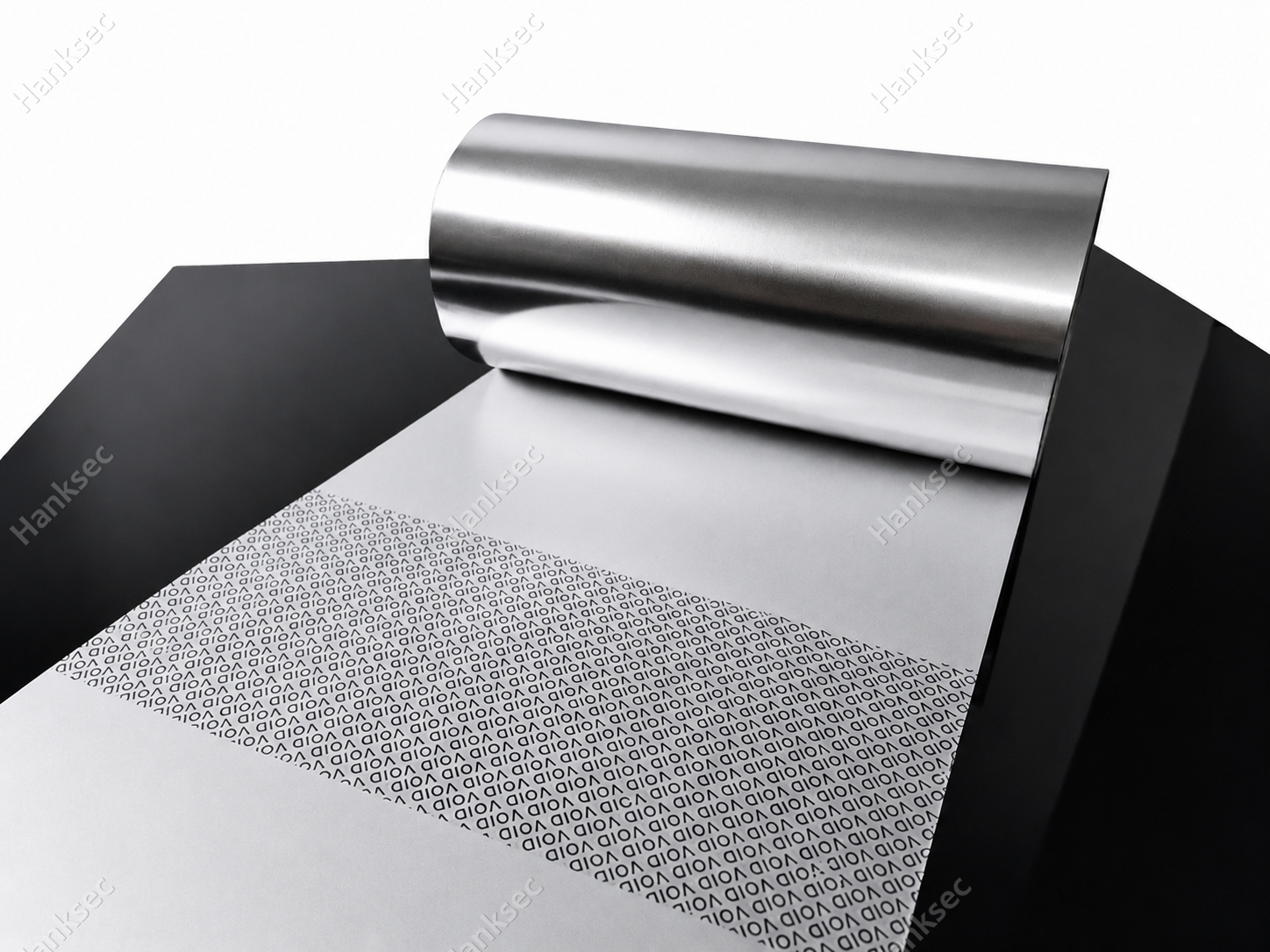
VOID material quality cannot be confirmed by appearance alone. A silver or colored film may look correct before application but still fail if the adhesive, security layer or printable surface is not matched to the final use.
A practical qualification program may include:
- Facestock thickness and visual inspection
- Security-pattern registration and message clarity
- Adhesive coating consistency
- Initial tack and peel-adhesion evaluation
- Transfer / residue behavior on representative substrates
- Non-transfer surface-cleanliness evaluation where required
- Printing compatibility and ink anchorage
- Die-cutting, matrix-stripping and slitting trials
- Release-liner and dispensing behavior
- Temperature, humidity or ageing evaluation when required by the application
For pressure-sensitive adhesive peel evaluation, methods such as ASTM D3330/D3330M may be referenced where appropriate. A peel test is useful for controlled quality evaluation, but it should not be treated as a complete security-label approval because final VOID performance also depends on the substrate, security layer, dwell condition and removal behavior.
Where possible, Hanksec recommends testing on the customer’s real substrate before bulk production. This is especially important for low-surface-energy plastics, coated cartons, powder-coated metal, textured housings and other surfaces where standard laboratory panels may not reproduce the actual application.
Customization and Supply Formats
VOID label material can be customized at both material-system and finished-label levels. The appropriate customization depends on whether the buyer is a label converter, security printer, distributor, OEM manufacturer or end user.
Material Construction Options
- Full-transfer, partial-transfer and non-transfer constructions
- PET, BOPP, paper and selected specialty facestocks
- Common PET thickness options such as 25, 36 and 50 μm for selected constructions, or project-specific alternatives
- Standard or project-specific pressure-sensitive adhesive systems
- Glassine, kraft or PET release liners depending on converting requirements
- Printable coatings or surface treatments according to printing technology
Visual and Security Options
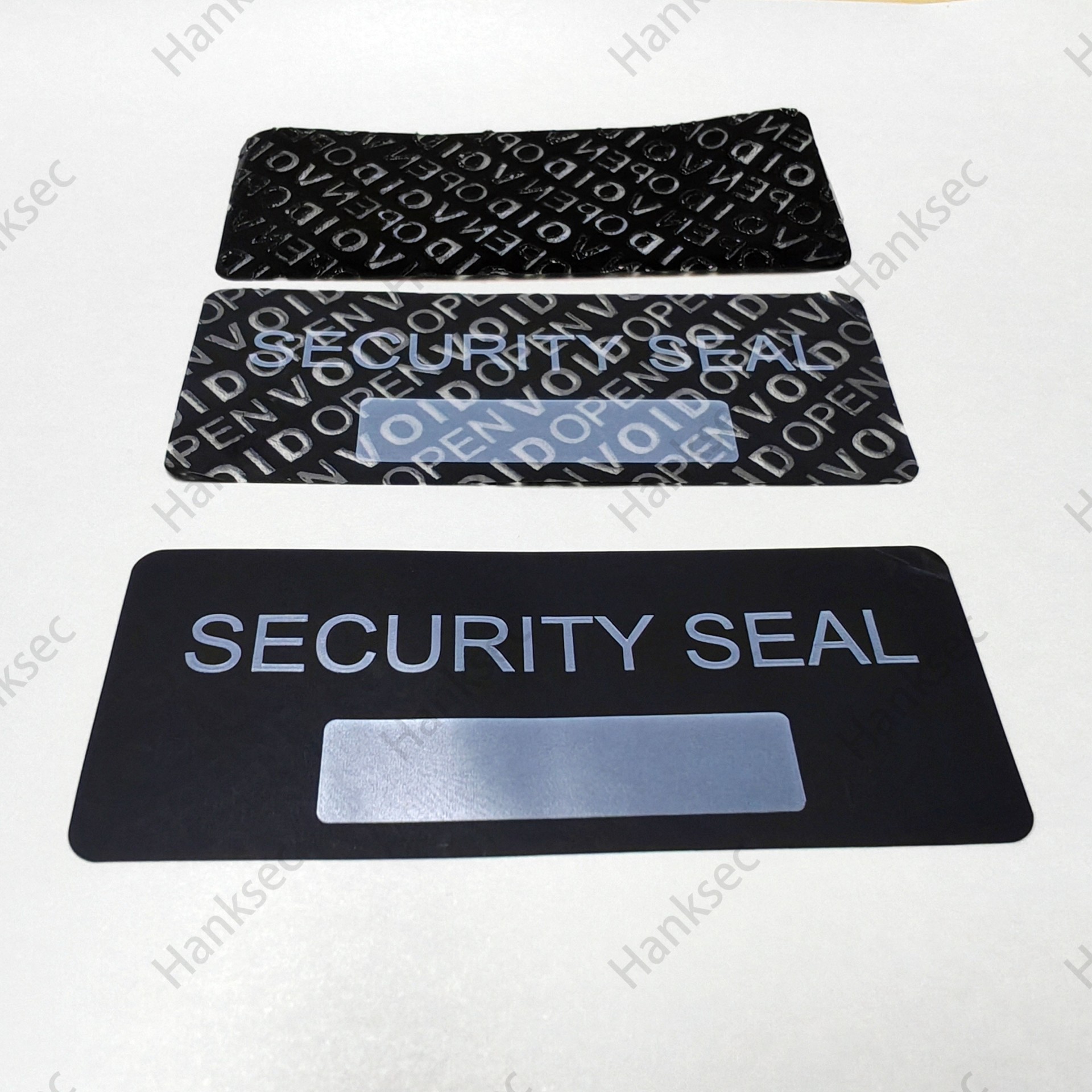
- VOID, VOIDOPEN, OPENED, SECURITY or customized hidden text
- Custom logo or security pattern
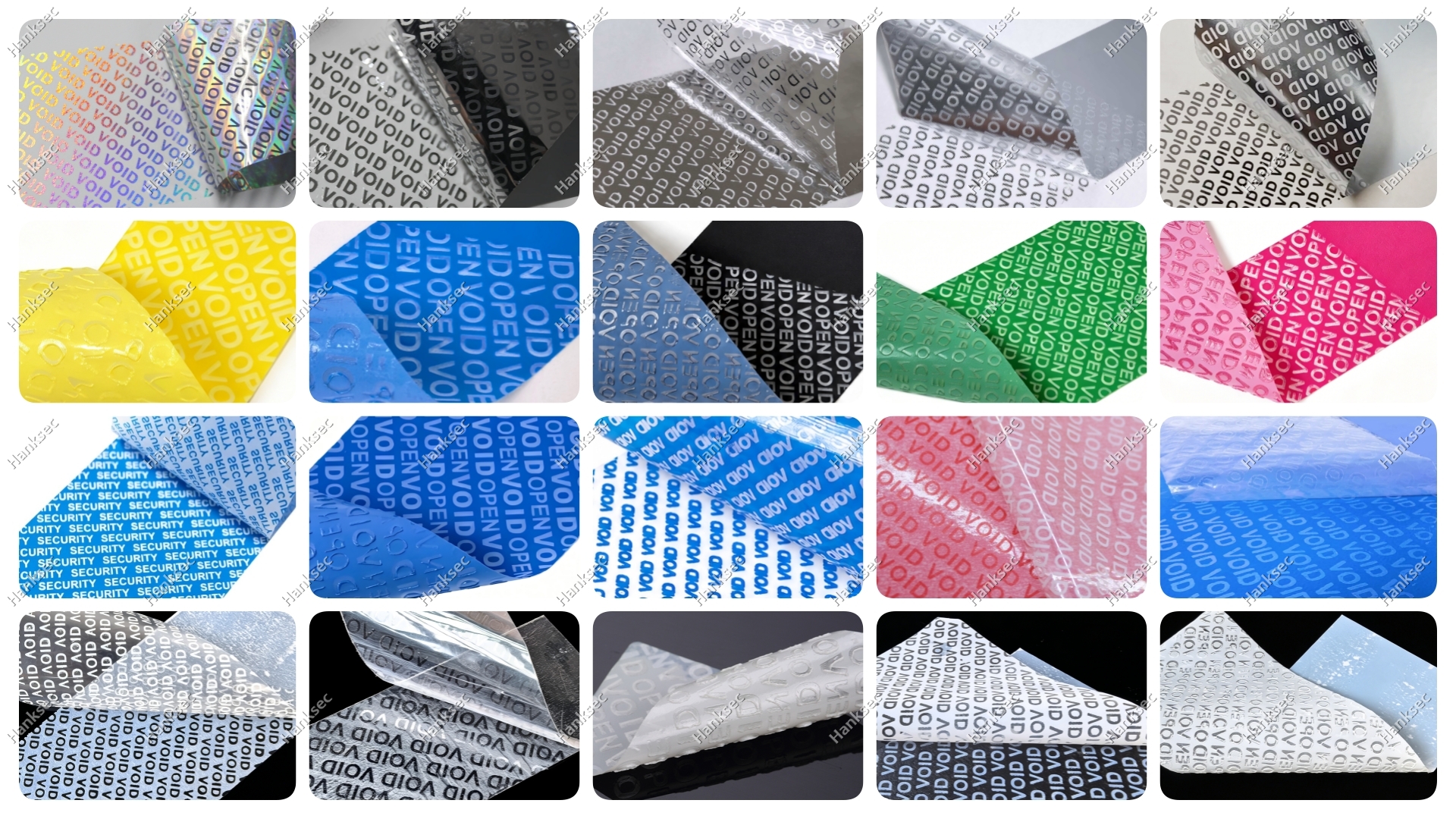
- Silver, gold, blue, red, black, white, yellow, green, orange, transparent and Pantone-matched color directions
- Gloss, matte, metallic or holographic appearance depending on construction
- UV, holographic or other functional authentication features where required
Supply Formats
- Jumbo / master rolls
- Slit rolls
- Sheets
- Custom roll widths and lengths
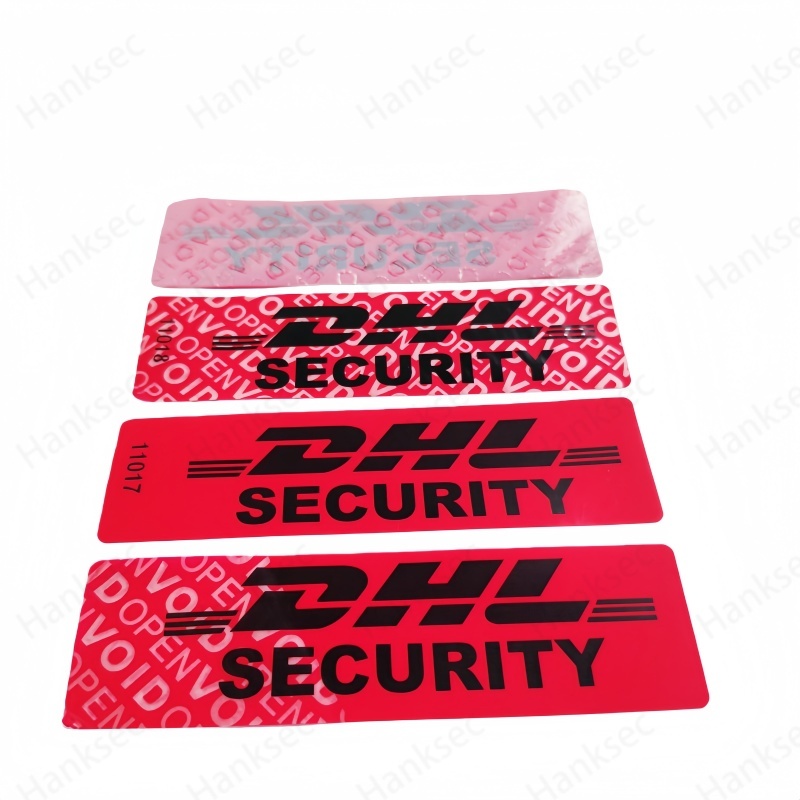
- Finished die-cut labels
- Custom printed labels with serial numbers, QR codes, barcodes or variable data
Where Are VOID Label Materials Used?
VOID materials are used when a buyer needs visible evidence that a label, seal or protected access point has been disturbed. Typical application directions include:
| Application | Security Objective | Typical Material Direction |
|---|---|---|
| Electronics and warranty protection | Detect unauthorized opening, repair or component access | Non-transfer, partial or full transfer depending on residue requirement |
| Logistics and shipping cartons | Show package opening or resealing attempts | Full or partial transfer |
| Retail and premium packaging | Brand protection and visible tamper evidence | Partial, non-transfer, holographic or custom VOID |
| Reusable containers and equipment | Detect access while keeping the surface relatively clean | Non-transfer |
| Documents, assets and equipment | Prevent label transfer or unauthorized removal | Full, partial or non-transfer according to inspection method |
| Medical or regulated packaging projects | Provide visible evidence of label removal as one component of the packaging security system | Project-specific construction requiring application validation |
For regulated packaging, a VOID label is only one component of the complete packaging system. Suitability and regulatory compliance should be assessed against the specific product, package design and applicable market requirements.
VOID Label Material vs Finished VOID Labels
This distinction is important for B2B sourcing because “VOID label” can refer either to the security material itself or to a completely converted label.
| Item | VOID Label Material | Finished VOID Label |
|---|---|---|
| Supply form | Jumbo roll, slit roll, sheet or blank converter-ready stock | Printed and die-cut label in final dimensions |
| Main buyer | Label converters, printers, material distributors and OEM production partners | Brands, factories and end users requiring application-ready labels |
| Buyer controls | Printing, die cutting, slitting, variable data and downstream converting | Mainly final application and label management |
| Information required | Printer, ink system, roll width, liner, core, converting process and final substrate | Label size, artwork, quantity, serial data, application surface and packaging requirement |
Hanksec supplies both material and converted formats, but this page is primarily a technical guide to VOID label material systems. Buyers mainly comparing Full, Partial and Non-Transfer product options should use the dedicated VOID Material Types page.
VOID Label Material vs Destructible Label Material
VOID and destructible materials create tamper evidence through different mechanisms.
- VOID material: relies mainly on controlled separation between functional layers to reveal a hidden message or transfer pattern.
- Destructible material: uses a fragile face construction that tears or fractures during removal.
VOID material is generally preferred when the buyer wants a readable tamper message such as VOID or OPENED. Destructible material is preferred when physical fragmentation of the label itself is the main security objective.
For a more detailed explanation of fragile security constructions, see the Destructible Label Materials Guide.
Why Buyers Work With Hanksec for VOID Label Materials
Hanksec focuses on security label materials rather than treating VOID film as an ordinary adhesive stock. Material selection is evaluated as a complete system that includes security-layer behavior, adhesive bonding, printable surface, release liner, converting stability and final application performance.
Support can include:
- Material selection for full, partial or non-transfer requirements
- Substrate and adhesive compatibility evaluation
- Printable surface and coating selection
- Jumbo-roll and slit-roll supply for converters
- Custom security messages, colors and functional options
- Sample preparation and pre-production qualification
- Finished-label converting where required
Frequently Asked Questions
What is VOID label material made of?
VOID label material is a multilayer pressure-sensitive construction. Depending on the product, it may include PET, BOPP, paper or another facestock together with printable or functional coatings, a security/release layer, pressure-sensitive adhesive and release liner.
How does VOID label material work?
It works through controlled internal separation. When removal is attempted, the security construction delaminates in a designed way and reveals a hidden VOID, OPENED or customized pattern on the application surface, the removed label or both.
What are the three main VOID transfer types?
The main types are full transfer, partial transfer and non-transfer. Full transfer leaves strong visible evidence on the application surface, partial transfer divides the evidence between the label and surface, and non-transfer reveals the message mainly on the removed film while keeping the application surface relatively clean.
Can VOID label material be customized?
Yes. Depending on the construction, buyers can specify security message, color, facestock, thickness, adhesive, release liner, printable surface, roll format and additional features such as holographic or UV security effects.
Can the same VOID adhesive be used on PP, glass and cartons?
Not necessarily. PP, glass and coated cartons have different surface energy, texture and coating characteristics. Adhesive selection and final VOID activation should be tested on the real application surface.
Can VOID label material be printed with digital printing systems?
Yes, suitable materials can be prepared for selected digital systems, but printing compatibility depends on the exact surface treatment, ink or toner, curing or drying conditions and downstream converting process. “Digital printable” should not be treated as a universal specification.
What is the difference between VOID label material and a finished VOID label?
VOID label material is the converter-ready security substrate supplied in rolls or sheets. A finished VOID label has already been printed, die-cut and converted to the required final size or roll configuration.
Should VOID material be tested before bulk production?
Yes. Pre-production testing should use the real application substrate and, where possible, the actual printing and converting workflow. Buyers should confirm adhesion, VOID activation, residue behavior, printability, die-cutting, liner release and any required environmental performance.
What information should a buyer provide when requesting a sample?
Provide the application substrate, required transfer type, desired residue behavior, printing process, roll or label size, converting method, operating environment and estimated quantity. A representative substrate sample can improve material-selection accuracy for difficult surfaces.
Request VOID Material Testing & Technical Recommendation
Reliable VOID performance depends on the interaction of the face material, security layers, adhesive, release liner, application surface and converting process. A construction that works well on one carton, plastic or printing system should not automatically be approved for another.
For a faster technical recommendation, send Hanksec your application substrate, required transfer behavior, residue requirement, printing method, roll width or label size, converting process and expected service environment.
Hanksec can recommend a suitable VOID material direction and prepare samples for substrate, printing and tamper-response qualification before bulk production.