Quick Answer:
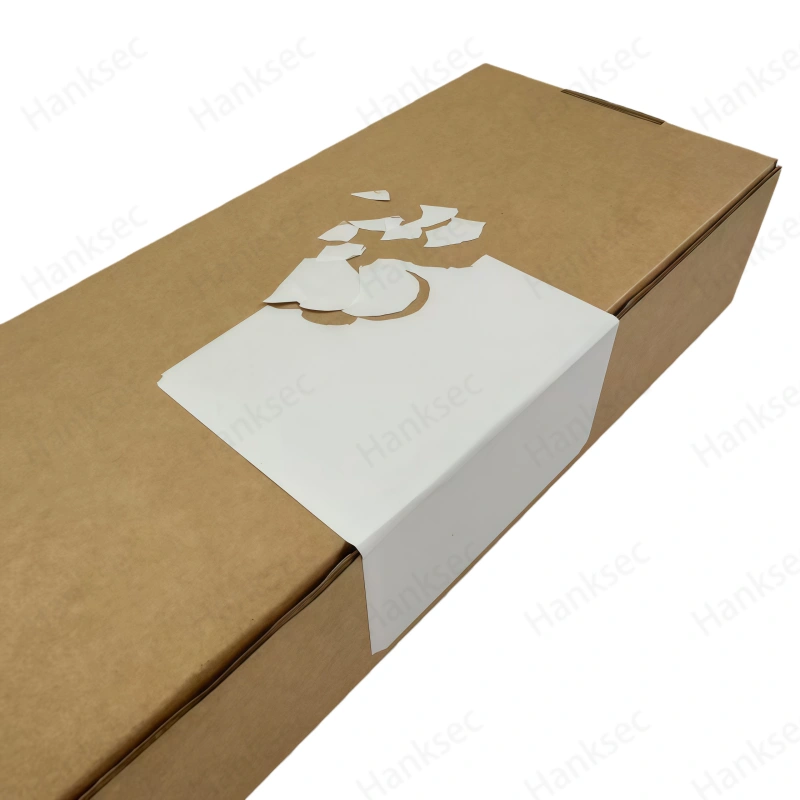
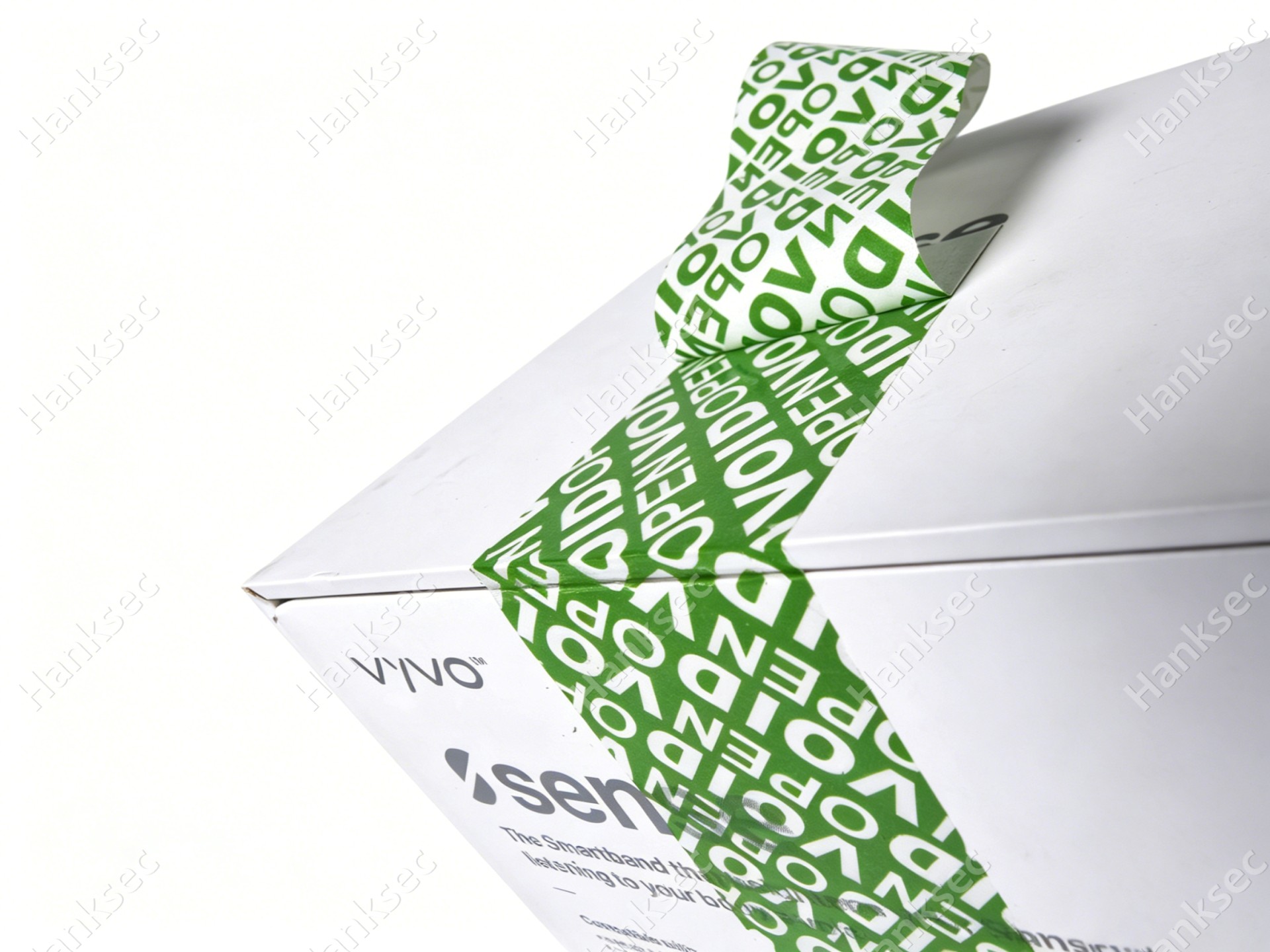
Paper VOID labels are tamper-evident security labels that combine a paper face material with a controlled security layer and pressure-sensitive adhesive system. When removal is attempted, the construction is designed to create irreversible evidence such as a VOID / OPENED message, transferred residue, split evidence between the label and package, or visible paper damage.
They are commonly considered for cartons, paperboard boxes, kraft mailers, document seals and other fiber-based packaging where buyers want visible tamper evidence with a paper-like appearance. However, a paper face does not automatically make the complete label recyclable, biodegradable or suitable for every paper recycling stream. Adhesive, functional coatings, release liner, printing and the final package construction must also be evaluated.
For label converters, security printers and packaging buyers, the most important selection factors are the required tamper effect, application substrate, paper surface, adhesive system, printing and converting process, environmental exposure and final inspection method. Sample qualification on the real package should be completed before bulk production.
What Are Paper VOID Labels?
Paper VOID labels are a category of pressure-sensitive tamper-evident labels in which the visible face is paper-based rather than a conventional PET security film. The paper face can be coated, uncoated, kraft-style or another project-specific paper, while the security response is created by the internal functional layers and adhesive system.
The term paper VOID label should not be used as if it describes one universal construction. In practice, several designs may fall under this name:
- A paper-faced label with a controlled VOID / OPENED transfer layer.
- A paper security label that combines message transfer with visible face-stock tearing.
- A paper-faced construction designed for full-, partial- or non-transfer evidence.
- A hybrid paper security label with additional printable, protective or authentication layers.
The important distinction is that the tamper response is engineered. Ordinary paper stickers may tear when removed, but they do not necessarily reveal a controlled, repeatable security message. Paper VOID labels are designed so that removal activates a predetermined visual change.
Paper VOID Labels vs Ordinary Paper Stickers
A normal paper sticker is usually specified for identification, decoration or information. Its construction may be simple: paper facestock, adhesive and release liner. If someone removes it, the label may lift cleanly, tear randomly or leave adhesive, but those effects are not necessarily designed as a security feature.
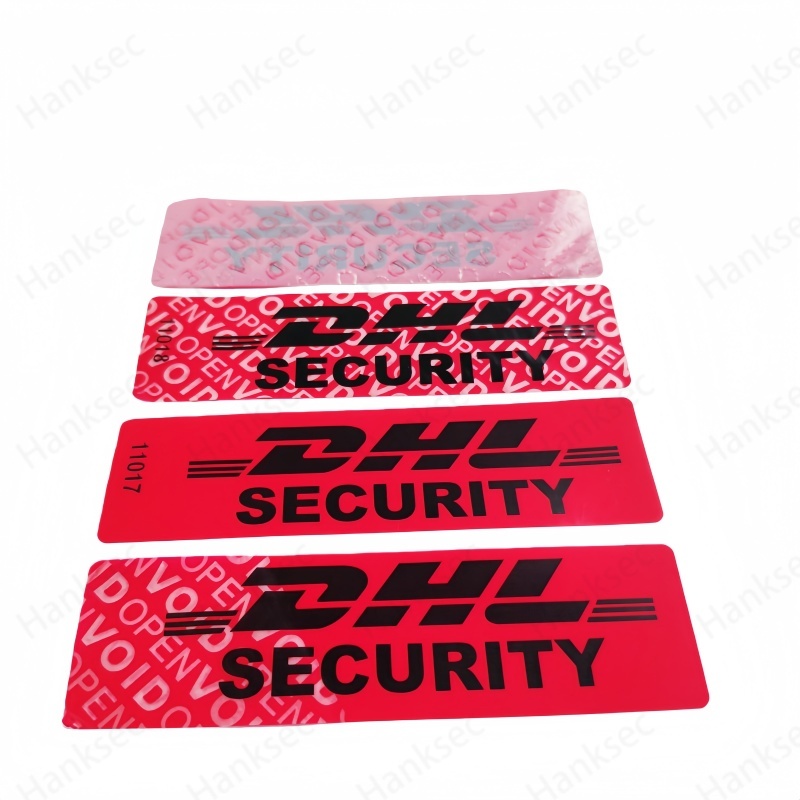
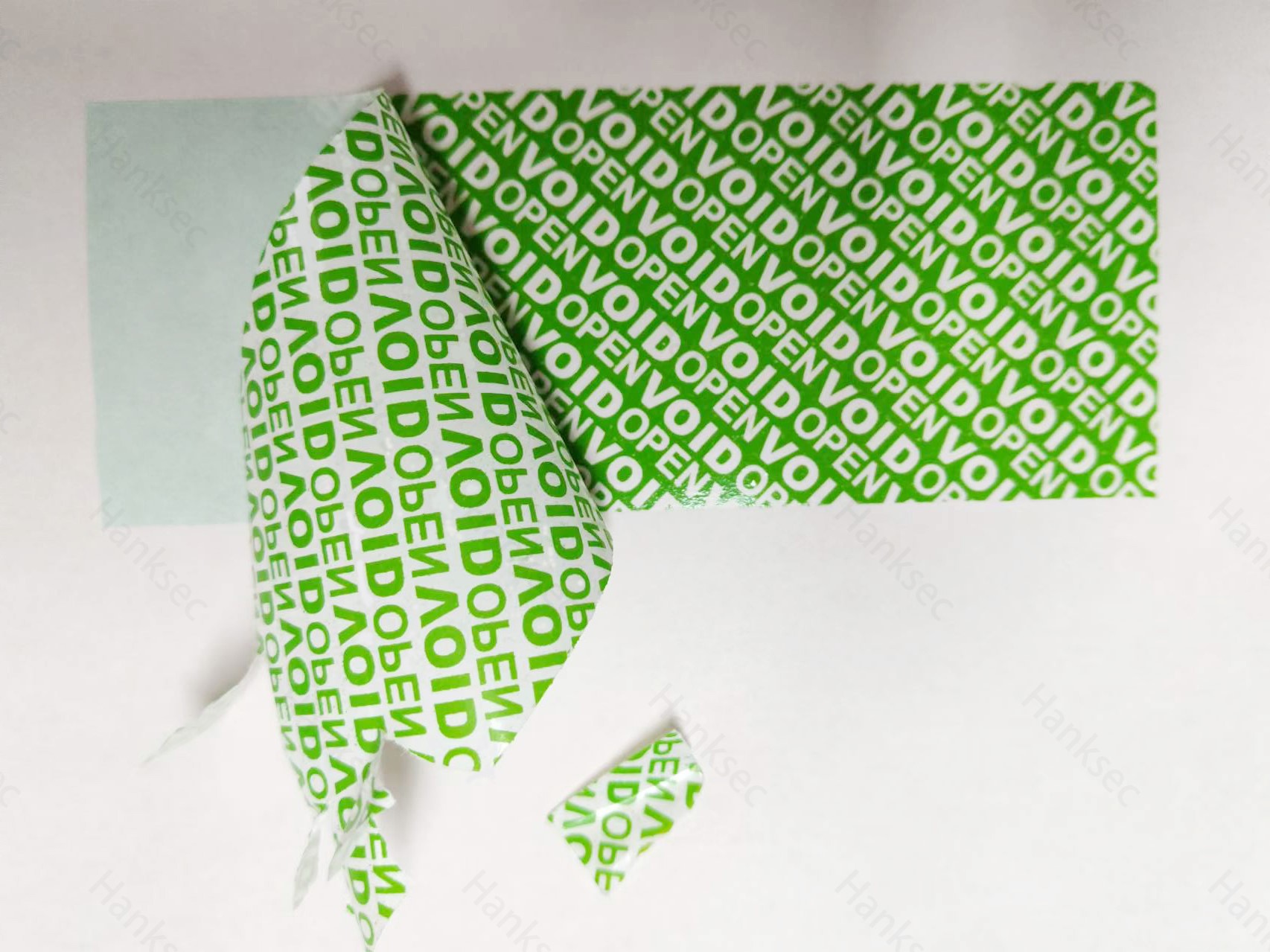
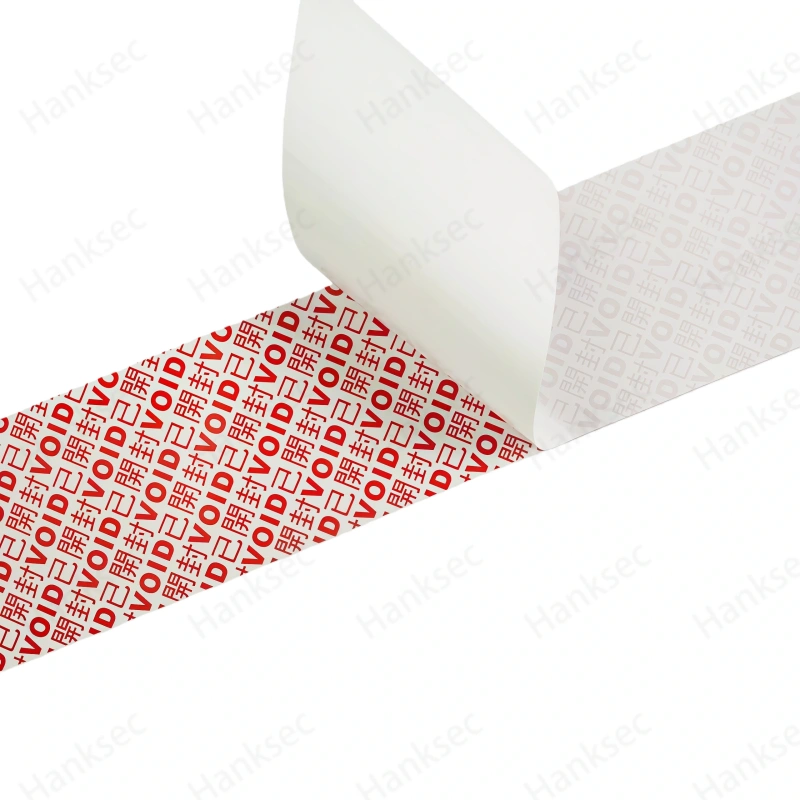
A paper VOID label adds a controlled tamper-evident mechanism. Depending on the design, removal can expose a hidden message, transfer part of the security layer to the package, divide evidence between the label and package, or combine VOID evidence with paper-fiber damage.
| Feature | Ordinary Paper Sticker | Paper VOID Label |
|---|---|---|
| Primary purpose | Identification, branding or information | Tamper evidence plus identification or branding |
| Hidden security message | Normally no | VOID, OPENED or custom pattern depending on construction |
| Removal behavior | May lift, tear or leave adhesive unpredictably | Designed to create a controlled visible response |
| Material qualification | Mainly print and adhesion performance | Print, adhesion, converting and tamper response must work together |
How Paper VOID Labels Are Constructed
A typical paper VOID label is a multilayer pressure-sensitive material system. The exact stack varies by product, but the following functional elements are commonly involved.
Paper Facestock
The paper face provides the visible printable surface and influences stiffness, tear behavior, moisture sensitivity, dimensional stability and converting performance. Coated paper can provide a smoother printing surface, while uncoated or kraft-style papers may better match natural-looking cartons and mailers.
Paper grammage, caliper, surface treatment and internal strength can change how the label behaves during die cutting, matrix stripping, application and removal. These variables should be selected together with the intended security mechanism rather than independently.
Printable or Protective Surface
Depending on the printing method, the face may require a primer, printable coating or protective varnish. Flexographic, UV, digital, thermal-transfer and inkjet processes do not all require the same surface chemistry, so printing compatibility should be confirmed with the actual ink or toner system.
Security Release / Transfer Layer
This is the functional layer that controls where the hidden VOID, OPENED or customized pattern appears during removal. The balance between this layer, the face material and the adhesive determines whether evidence is mainly transferred to the package, divided between both sides or retained primarily on the removed label.
Pressure-Sensitive Adhesive
The adhesive anchors the label to the package and helps activate the intended security response. Coated paperboard, uncoated kraft, recycled corrugate, laminated cartons and plastic-coated papers can behave very differently, so one adhesive should not be assumed to work equally well on every package.
Release Liner
Glassine, kraft paper and film liners may be used depending on die cutting, matrix stripping, dispensing and roll-converting requirements. The liner is removed before application, so its waste stream is separate from the final package; converters should still consider liner handling and recovery where this matters to their operation.
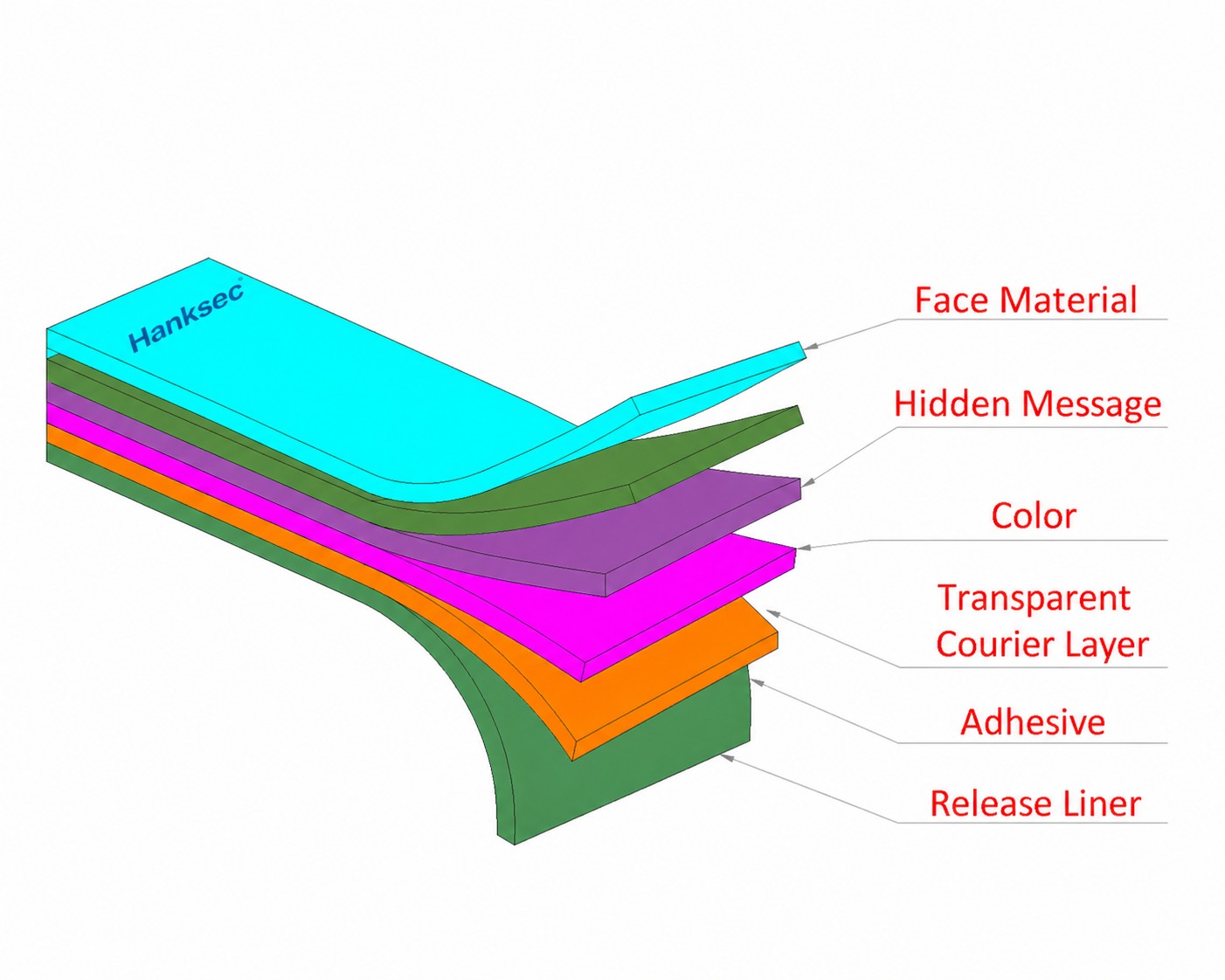
For a deeper explanation of how facestock, functional coatings, adhesive and liner work together, see the Security Label Material Systems Guide.
Paper Face Options
The paper face is one part of the complete security system, but it has a major influence on printing, appearance and converting.
Coated Paper
Coated paper is a common starting point for retail cartons, cosmetic packaging and printed boxes where buyers want a smoother face and more controlled print appearance. The coating can also change adhesive interaction if the label is applied to a coated paperboard package, so the label face and the package surface should not be confused.
Uncoated or Kraft-Style Paper
Uncoated and kraft-style papers are often selected when the label should visually match natural, recycled or kraft packaging. Their more porous and fibrous surface can affect print density, moisture response and die-cutting behavior compared with a smooth coated paper.
Specialty Paper
Project-specific papers may be used where the buyer needs a different texture, color, tear behavior, print surface or sourcing requirement. Any specialty paper should be qualified as part of the finished security construction because changing the face material can alter both converting and tamper response.
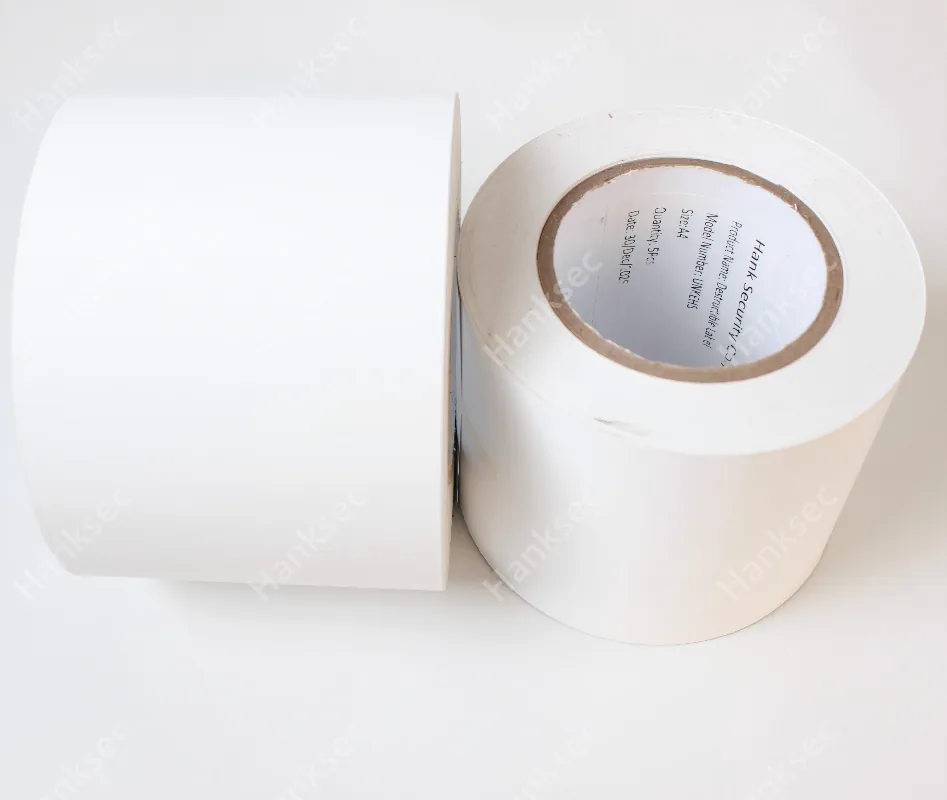
Buyers sourcing roll material rather than finished labels can review Hanksec’s Paper Tamper Evident Label Material page for commercial supply formats and customization options.
How Do Paper VOID Labels Work?
Paper VOID labels work by controlling where the material system separates when peeling force is applied. After application, the adhesive develops contact with the package surface. When someone attempts to remove the label, stress passes through the paper face into the internal security construction.
A simplified sequence is:
- The label is applied to the package with adequate pressure.
- The adhesive develops contact with the real substrate over the required dwell period.
- A removal attempt creates peel stress at the label edge.
- The stress reaches the engineered security layer or designed failure plane.
- The hidden message, transfer pattern or combined paper-damage response becomes visible.
- The original unopened appearance cannot be restored without detectable evidence.
The exact response depends on the construction. A paper face may tear during removal, but paper tearing alone is not the same mechanism as VOID transfer. In a well-designed paper VOID system, the security layer and adhesive response should be specified deliberately rather than relying on random tearing.
Full, Partial and Non-Transfer Paper VOID Effects
The three common VOID transfer behaviors describe where the evidence appears after removal. They should not be treated as a simple low-to-high security ranking.
| Transfer Type | Typical Removal Response | Evidence on Package | Typical Selection Direction |
|---|---|---|---|
| Full Transfer | The security message or transfer layer remains strongly visible on the package. | High / obvious | When immediate visual inspection of the package surface is important |
| Partial Transfer | The tamper evidence is divided between the removed label and the package. | Partial / split evidence | When buyers want visible evidence on both sides |
| Non-Transfer | The hidden message appears mainly on the removed label. | Low or limited transferred evidence, depending on construction | When the package surface should remain relatively clean |
A full-transfer construction can provide very obvious evidence on a carton, but it is not automatically the correct option for every high-security application. The correct transfer behavior depends on inspection method, authorized opening, package appearance and residue tolerance.
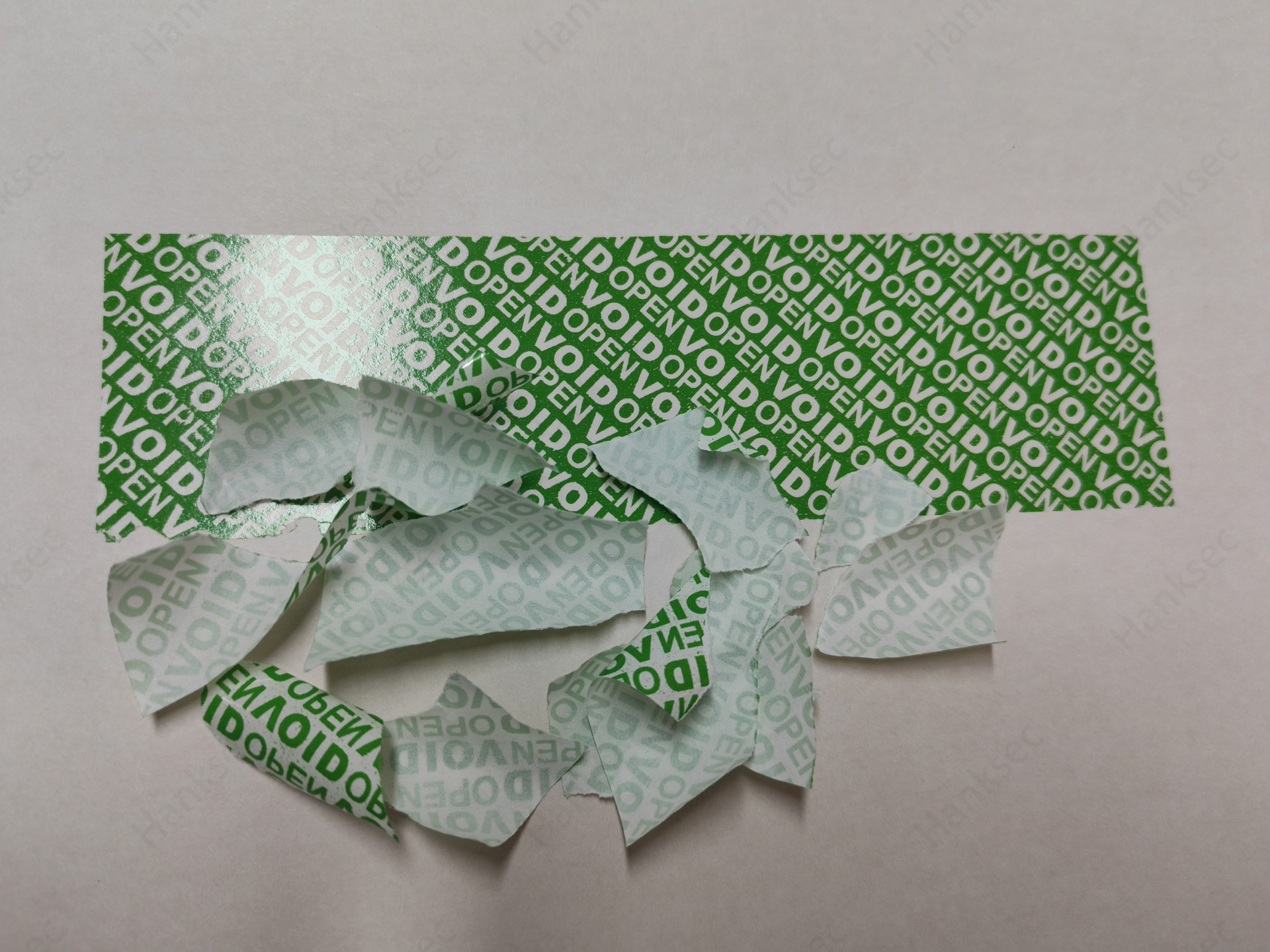
For a general explanation of Full, Partial and Non-Transfer mechanisms across VOID materials, see What Is VOID Label Material?.
Paper VOID vs Fiber-Tear Destructible Paper
Paper VOID labels and destructible paper labels can both show tampering, but they should not be treated as identical technologies.
- Paper VOID label: relies on a controlled security layer, transfer pattern or hidden message. The paper face may also tear, but the readable VOID / OPENED response is a designed part of the construction.
- Fiber-tear / destructible paper label: relies primarily on the face material or package fibers tearing so that the label cannot be removed intact.
Some projects intentionally combine these mechanisms. For example, the buyer may want a readable VOID message plus face-stock tearing. In other applications, clean readable transfer is more important than fragmentation.
For fragile-face constructions where breakage is the primary security mechanism, see the Destructible Label Materials Guide.
Substrate & Adhesive Compatibility
The package surface is one of the most important variables in paper VOID performance. A label that works well on one carton can fail on another because paperboard coating, recycled content, roughness, dust, varnish and humidity all affect adhesive contact.
Coated Paperboard
Smooth coated cartons can support clean application, but the coating chemistry may reduce adhesive wet-out or become the weakest layer during removal. Testing should determine whether the intended VOID effect activates before the carton coating itself fails.
Uncoated Kraft
Kraft and other porous paperboards can absorb part of the adhesive and may have higher surface roughness. The adhesive must develop enough contact across the actual surface while still allowing the designed security layer to activate during removal.
Recycled Corrugated Board
Recycled corrugate can vary significantly in fiber quality, dust level, porosity and surface consistency. This is one of the clearest cases where testing only on a standard laboratory panel is not enough.
Varnished or Laminated Cartons
Gloss varnish, UV coatings and film laminations change the surface from what buyers may casually call “paper.” Adhesive selection should therefore be based on the real top surface rather than the underlying carton material.
Peel-adhesion methods such as ASTM D3330/D3330M can support controlled quality evaluation for pressure-sensitive tapes and related constructions. However, peel value alone does not prove that a paper VOID label is suitable; the final transfer effect, paper damage, print quality and package interaction must also be checked.
For a deeper substrate-focused discussion, see the Tamper Evident Label Adhesive Guide.
Printing & Converting Compatibility for Label Converters
For converters and security printers, paper VOID material must survive printing and converting without damaging the tamper-evident construction. Paper can also react more strongly than PET to moisture and process conditions, so production stability should be checked before scale-up.
Printing
Depending on the selected face and coating, paper VOID materials may be prepared for processes such as flexographic, UV, offset, thermal-transfer, digital or inkjet printing. Compatibility should be confirmed for the real ink, toner or primer system rather than inferred from the word “paper.”
Useful checks include ink anchorage, drying or curing, rub resistance, barcode readability, small-text definition and any effect of heavy ink coverage on label stiffness or tamper response.
Die Cutting and Matrix Stripping
Die depth, paper strength, adhesive flow and liner release can influence clean matrix stripping. If the face is too weak for the chosen die geometry, edges may tear prematurely. If the liner release is poorly matched, labels can lift during stripping or dispensing.
Liner and Dispensing
Glassine, kraft or PET liners may be selected according to die cutting, release-force requirements and automatic application. Liner choice should be treated as part of the converter specification, not as an afterthought.
Humidity and Conditioning
Paper can absorb and release moisture, which may cause curl, dimensional movement or changes in converting behavior. Storage and conditioning requirements should therefore be confirmed for the selected facestock and production environment.
For a detailed comparison of liner behavior, see the Label Release Liner Guide: Glassine vs PET. For print-surface qualification, see Printable Security Label Materials.
Where Paper VOID Labels Work Best
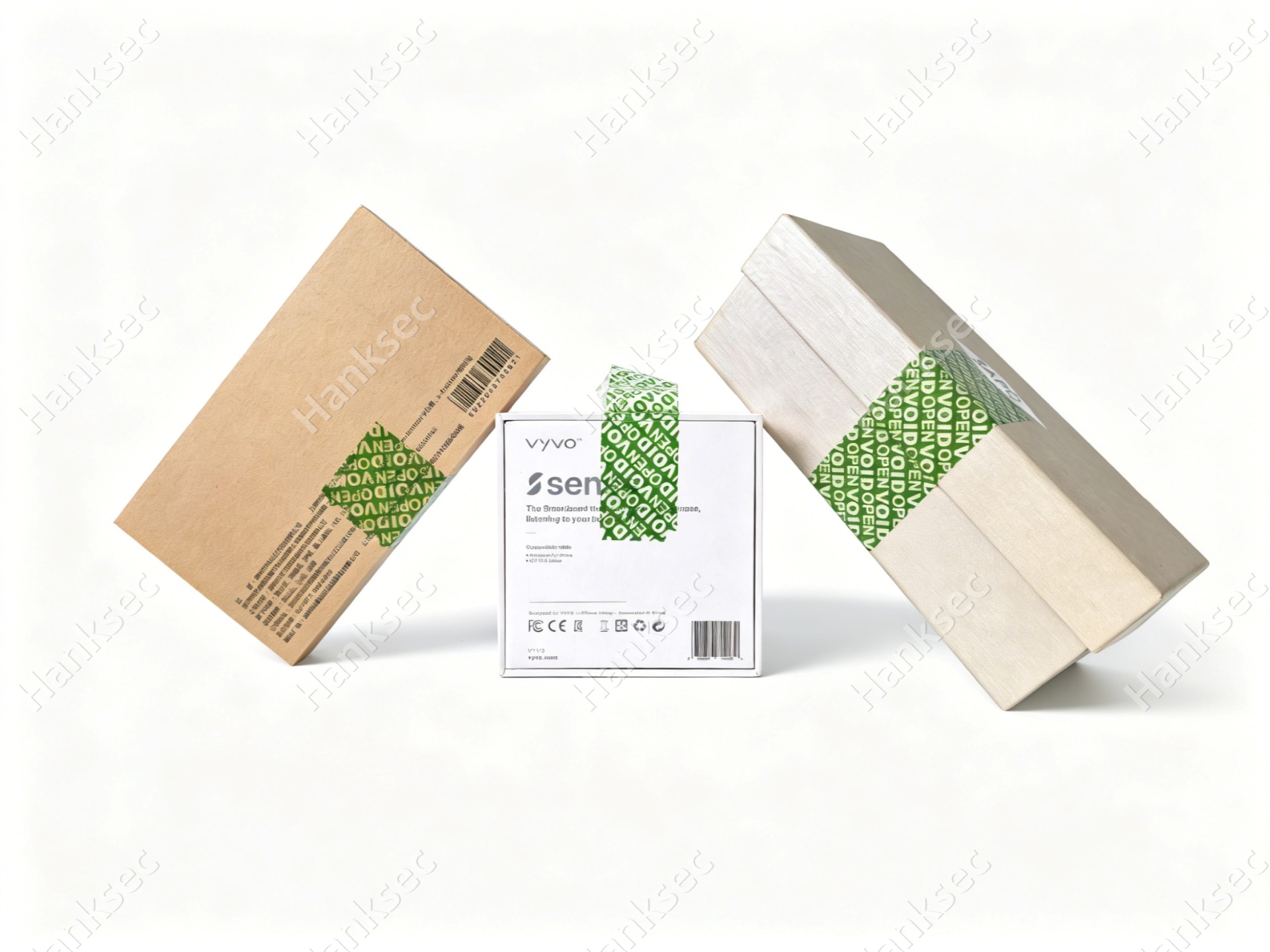
Paper VOID labels are generally strongest where the package is paper-based, the environment is reasonably controlled and the buyer wants the security label to visually integrate with the package.
| Application | Typical Package | Why Paper VOID May Fit |
|---|---|---|
| E-commerce | Kraft mailers, shipping cartons, return boxes | Visible opening evidence with a paper-like appearance |
| Retail & Cosmetics | Printed cartons and sleeves | Security seal can visually match paperboard packaging |
| Documents & Certificates | Paper envelopes, folders, document packs | Paper face suits document handling and can carry serial data |
| Electronics Secondary Packaging | Retail boxes and accessory cartons | Shows carton opening while the product itself may use a different security label |
| Pharmaceutical Secondary Packaging | Folding cartons | May provide a visible tamper-verification feature when validated as part of the package system |
| Food / Delivery Secondary Packaging | Selected paper bags, boxes and sleeves | Can provide visible closure evidence where material and food-contact requirements are separately addressed |
Pharmaceutical Packaging Note
For medicinal-product packaging, a paper VOID label should be treated as one component of the complete tamper-verification system. ISO 21976:2018 specifies requirements and guidance for tamper-verification features for medicinal-product packaging and remains current after its 2024 review. It includes sealing labels and tapes among the categories considered.
For certain over-the-counter drug products in the United States, the FDA tamper-resistant packaging requirements also address tamper resistance at the complete-package level. A specific paper VOID label should not be described as automatically compliant simply because it shows opening evidence.
Where Paper VOID Labels May Not Be the Best Fit
Paper is not automatically the correct facestock for every security application. PET or another durable construction may be a better starting point when the service environment is demanding.
- Persistent moisture or outdoor exposure: water, condensation and weathering can reduce paper-face durability.
- Cold-chain or freezer applications: condensation and low-temperature adhesive behavior require dedicated qualification.
- High abrasion: rough handling can damage a paper face before any tampering occurs.
- Long-term dimensional stability: PET may be preferred where humidity variation and tight registration are critical.
- Metal, glass or plastic substrates: paper can still be used with the right adhesive in some projects, but PET may provide better durability and dimensional stability depending on the application.
The goal is not to force paper into every sustainability-focused project. Material selection should balance tamper evidence, package compatibility, converting stability, durability and environmental requirements.
Paper VOID Labels vs PET VOID Labels
| Selection Factor | Paper VOID Labels | PET VOID Labels |
|---|---|---|
| Face material | Paper-based | Polyester film |
| Typical appearance | Paper-like; can visually match cartons and kraft packaging | Film-like; available in metallic, transparent, colored and holographic constructions |
| Moisture resistance | Construction-dependent; generally more moisture-sensitive | Generally stronger film durability |
| Dimensional stability | More influenced by humidity and paper conditioning | Usually more stable |
| Paper-package material compatibility | Can align the visible facestock more closely with fiber-based packaging | Adds a plastic film component to paper-based packaging |
| Printing and converting | Good print potential; paper strength, moisture and liner release require control | Requires appropriate surface treatment / primer for the printing system |
| Best starting direction | Paper cartons, mailers, document seals and controlled environments | Moisture, abrasion, outdoor exposure, durable assets and demanding environments |
Neither material is universally “better.” A paper-faced system may be a better fit for a paper carton, while PET may be the technically safer choice for a wet, cold or highly abrasive environment.
Recyclability & Sustainability: What Buyers Should Verify
A paper facestock can reduce reliance on a visible plastic face film and may improve material compatibility with fiber-based packaging, but that does not make the complete security label automatically recyclable, biodegradable, compostable or “100% eco-friendly.”
Buyers should review the complete construction:
- Paper facestock and any sourcing requirements
- Printable coating or varnish
- Functional VOID / transfer layer
- Pressure-sensitive adhesive
- Any film or metallized components
- Release liner and its separate end-of-life route
- Final label area relative to the package
- Local collection, sorting and recycling conditions
This complete-system view is also consistent with the direction of the EU Packaging and Packaging Waste Regulation, Regulation (EU) 2025/40, which establishes packaging recyclability requirements and a design-for-recycling approach. It does not mean that a particular paper VOID label automatically makes a package compliant.
For marketing claims, use construction-specific evidence. Phrases such as “paper-faced,” “reduced plastic face film” or “designed for better material compatibility with paper packaging” are safer than universal claims such as “fully recyclable” unless the complete package-and-label system has been evaluated.
How to Select the Right Paper VOID Label
A practical selection process should start with the package and tamper-inspection requirement, then work backward to the paper, adhesive, transfer layer, printing and converting specification.
1. Define the Package Surface
Identify coated paperboard, kraft, recycled corrugate, varnished carton, film-laminated paper or another exact surface. “Cardboard” alone is not enough information for adhesive selection.
2. Define the Required Tamper Evidence
Decide whether inspection requires strong evidence on the package, evidence on both label and package, a relatively clean package surface, paper tearing, or a combination of these effects.
3. Map the Environment
Document application temperature, storage temperature, humidity, condensation risk, transportation route, abrasion and expected service life.
4. Confirm Printing & Converting
Specify printing platform, ink or toner system, die-cutting method, roll width, core, liner preference, matrix-stripping needs and automatic dispensing requirements.
5. Test on the Real Package
Apply samples to the actual production package and allow the adhesive to develop according to the selected construction and test plan. Do not use a universal “24-hour” rule for every adhesive system. Evaluate the label after the required dwell periods and environmental conditioning for the project.
Buyer Qualification Matrix
| Buyer Requirement | Starting Direction | What Must Still Be Tested |
|---|---|---|
| Strong visible evidence on carton | Full-transfer paper VOID | Transfer clarity, carton coating and adhesive interaction |
| Evidence on both sides | Partial-transfer paper VOID | Message balance and package appearance |
| Cleaner package surface | Non-transfer paper VOID | Message activation and actual residue level |
| Recycled corrugated | Paper construction with substrate-matched adhesive | Dust, porosity, roughness, edge lifting and fiber behavior |
| Digital printing / variable data | Printable coated paper security material | Ink or toner anchorage, barcode readability and rub resistance |
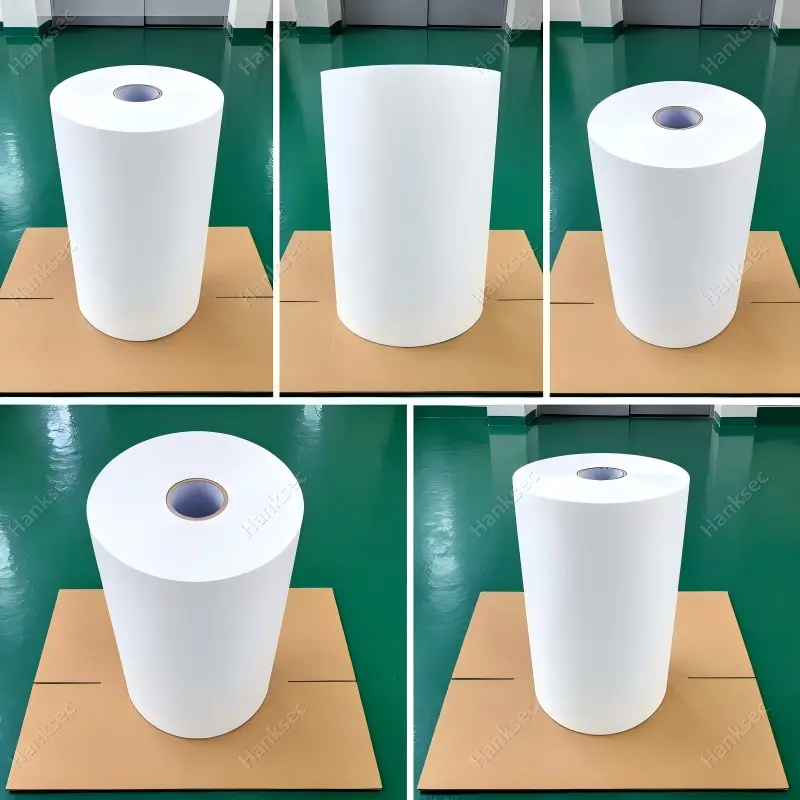
| Converter roll supply | Jumbo / slit roll material | Die cutting, matrix stripping, liner release and roll specification |
| High humidity / cold chain | Evaluate PET or special paper construction | Condensation, low-temperature adhesion and face durability |
Customization & Supply Formats
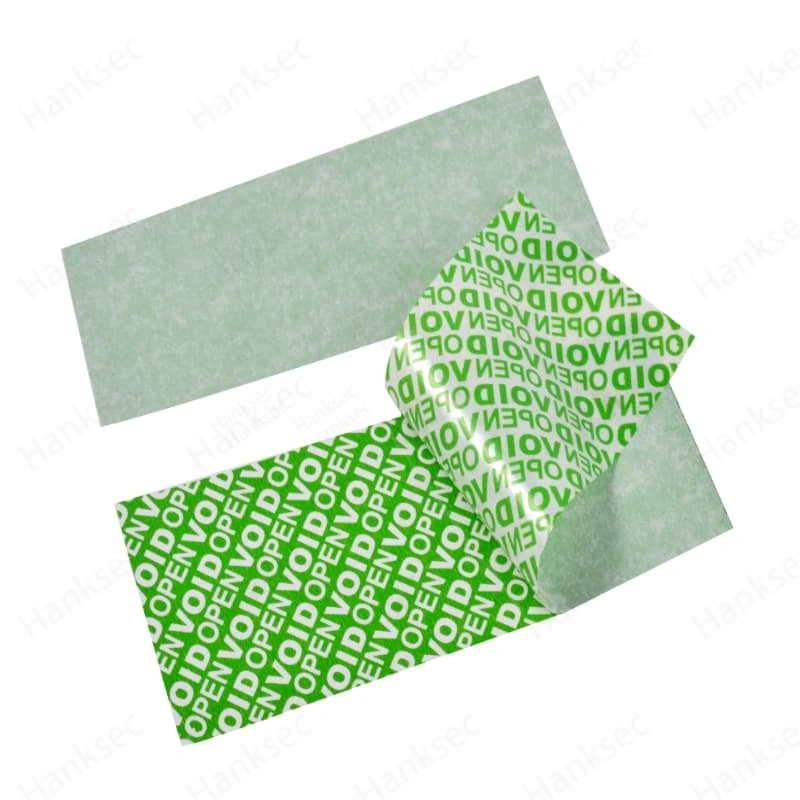
Paper VOID constructions can be customized for material converters as well as finished-label buyers. Available options depend on the specific construction and production route.
- Full-, partial- and non-transfer security behavior
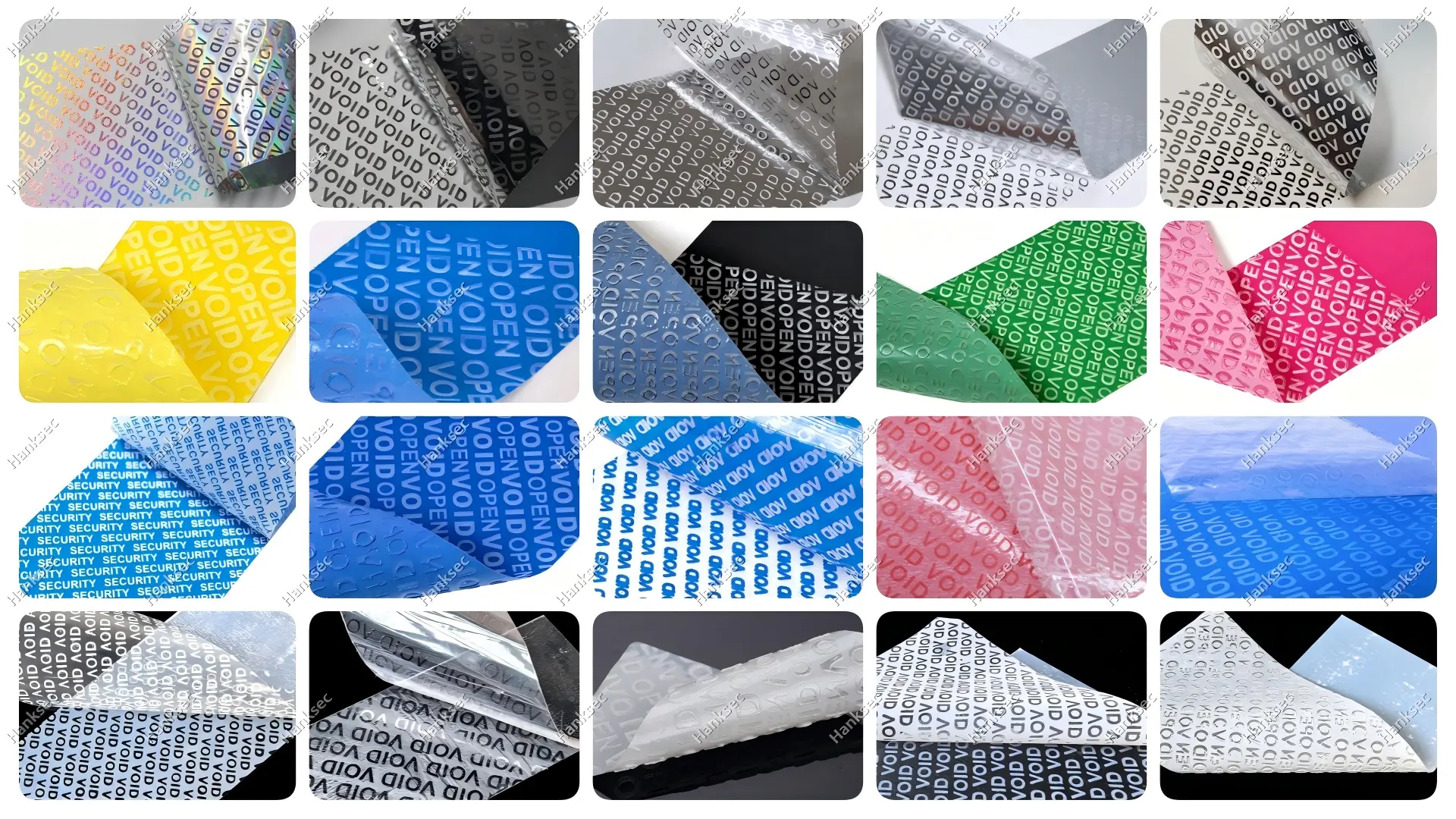
- VOID, OPENED, VOIDOPEN, SECURITY or custom hidden message
- Custom logo or security pattern
- Coated, uncoated, kraft-style or project-specific paper face
- Project-specific adhesive system
- Glassine, kraft or PET liner according to converting needs
- Printable surface treatment for the selected printing process
- Custom colors where technically suitable
- Serial numbers, barcodes, QR codes and variable data on finished labels
- Jumbo rolls, slit rolls, sheets or converted labels
Custom security features should be qualified together. For example, heavy ink coverage, varnish, perforation or variable-data printing can affect stiffness, converting or final tamper response.
Manufacturing & Quality Control
Paper VOID labels are not simply ordinary paper stickers with a security word printed on them. Consistent performance requires control of the complete material system.
A typical manufacturing route may include:
- Paper facestock selection and conditioning
- Surface treatment or printable coating where required
- Security release / transfer-layer formation
- Hidden VOID, OPENED or customized pattern creation
- Pressure-sensitive adhesive coating or lamination
- Release-liner lamination
- Material stabilization
- Slitting, sheeting or finished-label converting
- Application and tamper-response inspection
Useful quality-control checkpoints include:
- Paper caliper, appearance and moisture condition
- Security-pattern registration and message clarity
- Coating and adhesive consistency
- Peel and tack evaluation where appropriate
- Transfer behavior on representative cartons
- Printing and rub resistance
- Die-cutting and matrix-stripping trials
- Liner release and dispensing behavior
- Humidity or temperature evaluation where required
- Batch comparison against an approved reference sample
For difficult surfaces or converter workflows, Hanksec recommends qualification on the customer’s real packaging material and production process before mass production.
Hanksec Technical Support for Paper VOID Projects
Hanksec develops tamper-evident security materials from material construction through finished labels. For paper VOID projects, the objective is to match paper facestock, security-layer behavior, adhesive, liner, printing and converting requirements rather than supplying a one-size-fits-all paper sticker.
Technical support can include:
- Paper face and tamper-effect selection
- Substrate and adhesive evaluation
- Converter roll specification
- Printable-surface selection
- Custom VOID / OPENED pattern development
- Sample preparation for actual-package testing
- OEM / ODM material development
- Finished-label converting when required
For buyers mainly comparing commercial material specifications, roll supply and customization options, use the dedicated Paper Tamper Evident Label Material product page. This guide is intended to explain the technology, selection logic and qualification process.
Frequently Asked Questions
What are paper VOID labels?
Paper VOID labels are tamper-evident labels that use a paper face together with a controlled security layer and pressure-sensitive adhesive. Removal is designed to create irreversible evidence such as VOID / OPENED transfer, split evidence or visible paper damage.
How do paper VOID labels differ from destructible paper labels?
Paper VOID labels rely on a controlled hidden-message or transfer mechanism. Destructible paper labels rely primarily on the face material tearing or fragmenting. Some security constructions combine both mechanisms.
Are paper VOID labels recyclable?
A paper face may improve material compatibility with paper-based packaging, but recyclability depends on the complete construction and the recycling system. Adhesive, coatings, functional layers, ink and package design should be evaluated before making recyclability claims.
Which transfer type should I choose?
Choose according to where the tamper evidence should appear. Full transfer emphasizes evidence on the package, partial transfer divides evidence between both sides, and non-transfer keeps the package relatively cleaner while showing the message mainly on the removed label.
Can paper VOID labels be used on recycled corrugated boxes?
Yes, but recycled corrugated can vary in porosity, dust, surface strength and roughness. Adhesive and transfer performance should be tested on the actual box before bulk production.
Are paper VOID labels better than PET VOID labels?
Not universally. Paper is often a good fit for paper-based packaging and controlled environments. PET generally offers stronger moisture resistance and dimensional stability for demanding environments. The application should determine the material.
Can paper VOID materials be supplied for converters?
Yes. Depending on the project, Hanksec can supply jumbo rolls, slit rolls, sheets or other converter-ready formats and can coordinate paper face, liner, adhesive, printing surface and transfer behavior with the downstream converting process.
How long should paper VOID labels dwell before testing?
There is no single dwell time that applies to every adhesive and substrate. The test plan should follow the selected construction, package surface and required application conditions, with performance checked at the relevant dwell intervals.
What information should buyers provide for sample selection?
Provide the exact packaging substrate, required tamper effect, residue preference, printing process, converting method, label or roll size, storage environment and estimated quantity. For difficult cartons, a representative package sample is especially useful.
Request Paper VOID Material Testing & Technical Recommendation
Reliable paper VOID performance depends on the interaction of the paper face, security layers, adhesive, liner, package surface and converting process. A construction that works well on one carton should not automatically be approved for another.
For a faster recommendation, send Hanksec your package substrate, required transfer behavior, residue requirement, printing method, label or roll size, converting process and service environment.
Hanksec can recommend a suitable paper VOID construction and prepare samples for adhesion, printing, converting and tamper-response qualification before bulk production.
REQUEST PAPER VOID MATERIAL SAMPLE & TECHNICAL RECOMMENDATION