Digital Product Passport Security Labels: Why a QR Code Alone Is Not Enough
Quick Answer
Regulatory status last reviewed: 17 August 2026.
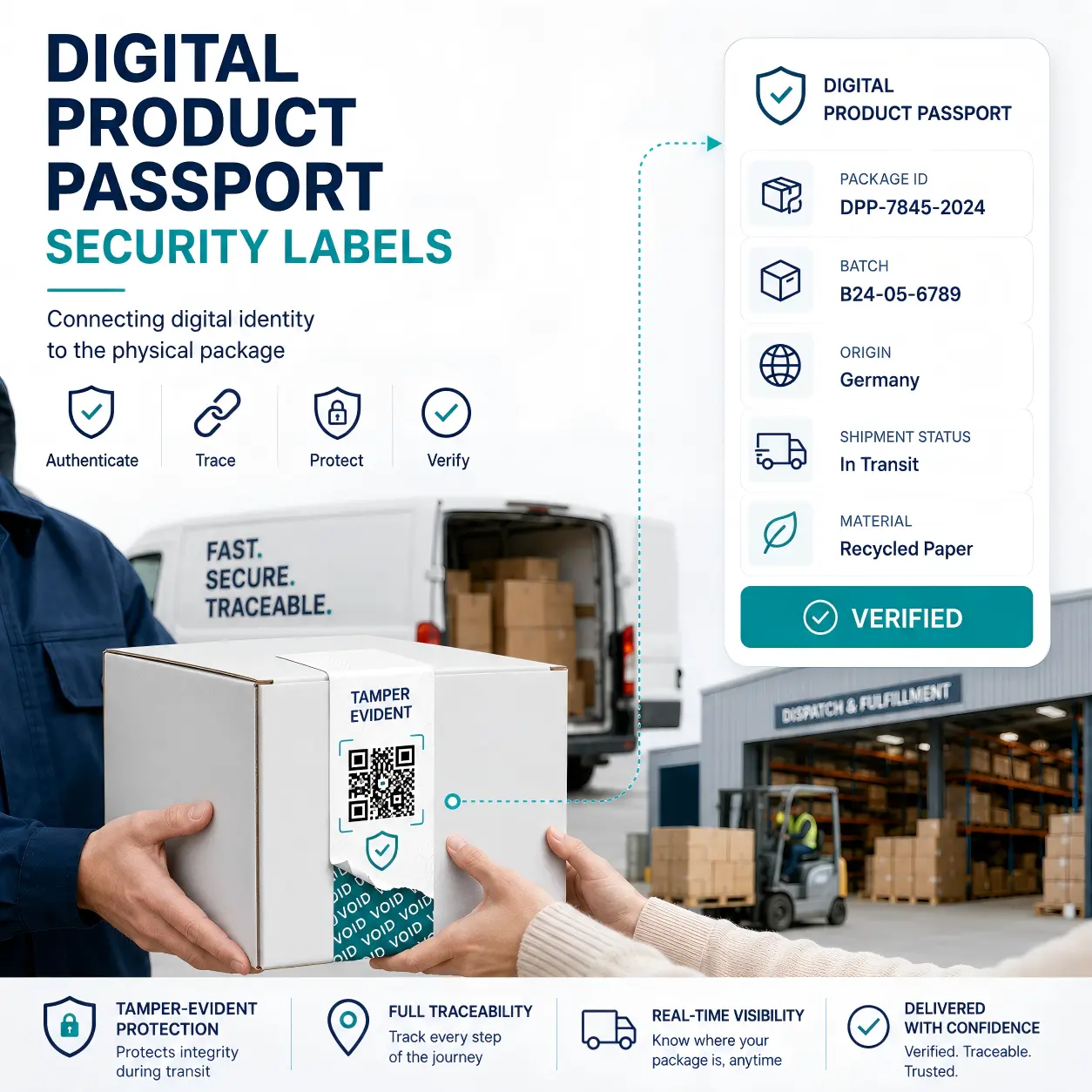
Digital Product Passport security labels are physical label constructions designed to connect a product to its digital identity while adding durability, tamper evidence or resistance to unauthorized label transfer. Under Regulation (EU) 2024/1781, a DPP must be connected through a data carrier to a persistent unique product identifier, while the applicable product-specific rules determine where that carrier is positioned.
A QR code can provide access to valid digital information, but the code alone does not prove that the physical carrier has remained attached to the original product. For products exposed to counterfeiting, component substitution, unauthorized refurbishment or label transfer, brands may therefore need to consider both digital identity security and physical identity binding.
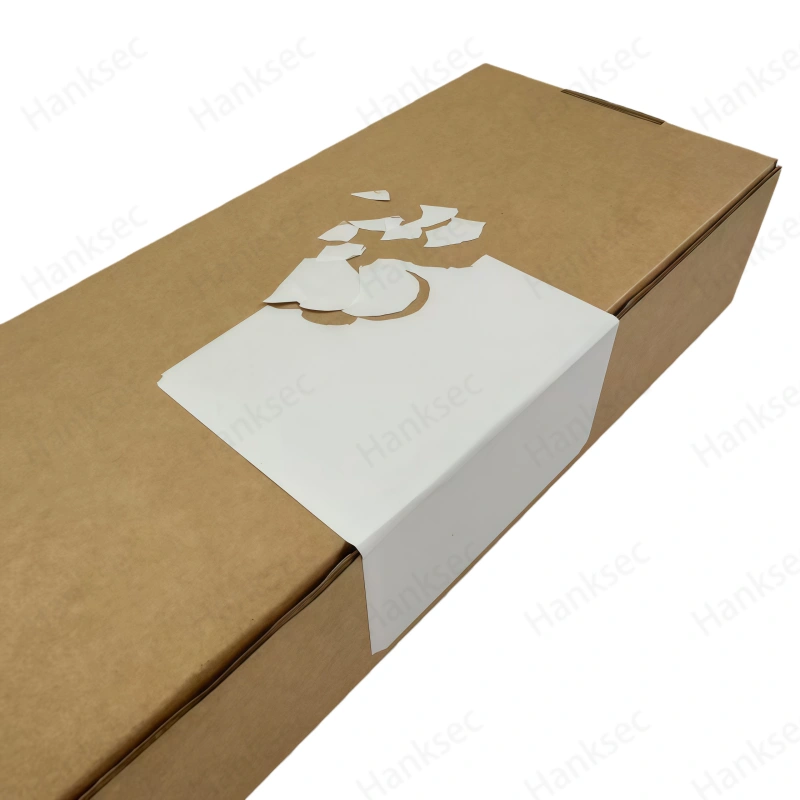
Tamper-evident VOID materials, destructible labels, secure adhesives and controlled label constructions can strengthen that physical connection. They do not replace the DPP Registry, DPP software or digital authentication systems; they protect the physical interface through which the product identity is accessed.
Important terminology note: “Digital Product Passport security label” is an engineering and application term, not a separate compliance category defined by the ESPR.
DPP 2026–2027 Implementation Timeline: Registry Live, Batteries Next
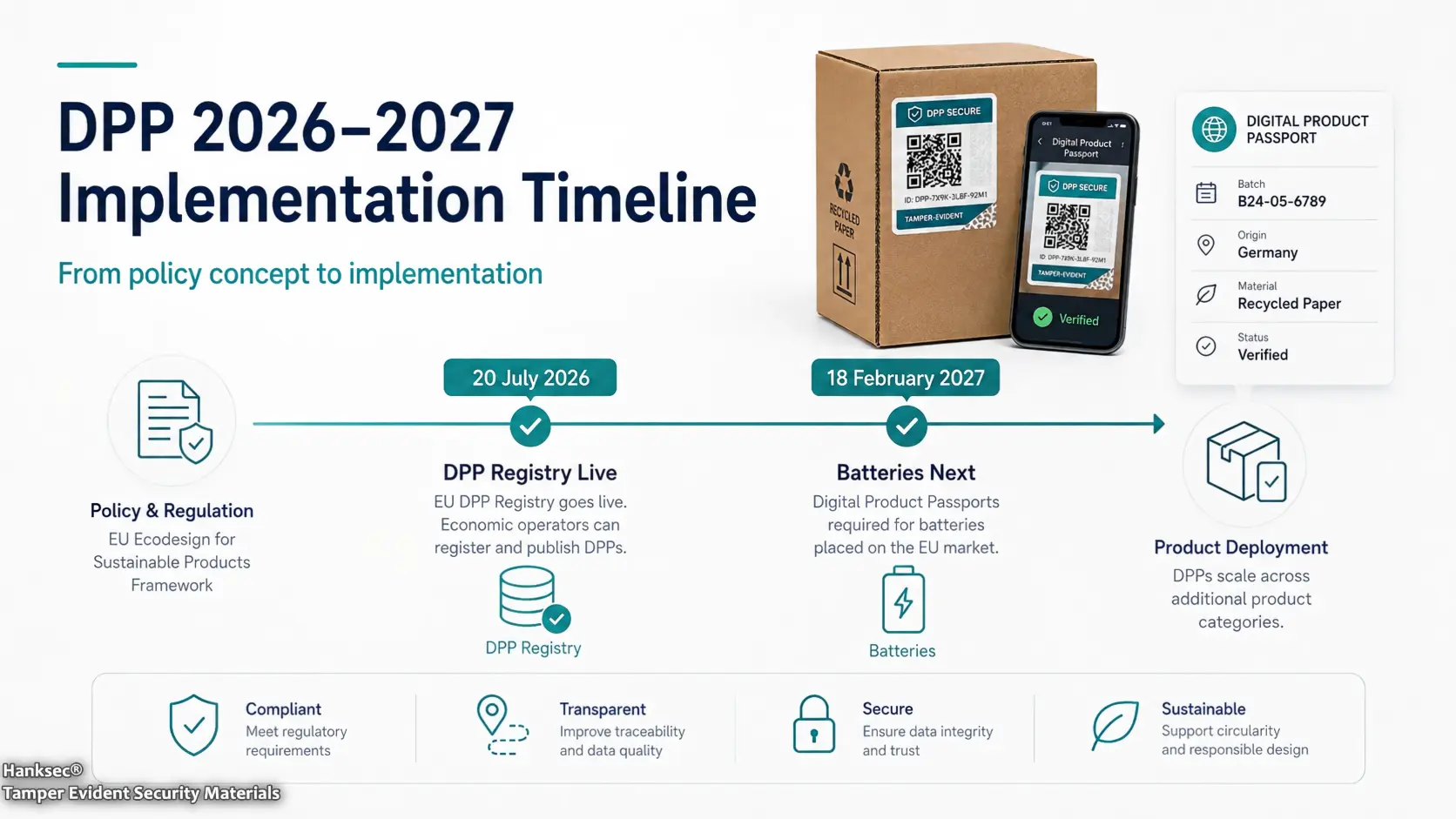
The Digital Product Passport is no longer only an EU policy concept. On 20 July 2026, the European Commission announced that the DPP Registry was operational. The Registry provides EU-level infrastructure for registering product identifiers and required metadata, while the broader DPP architecture remains decentralised, with product data managed by economic operators or DPP service providers.
The Commission’s Digital Product Passport guidance describes a system in which required product information is created, registered and made accessible through a physical data carrier such as a QR code. The same guidance identifies batteries as the first major product category approaching a mandatory DPP deadline.
For relevant EV, light-transport and industrial battery categories, the Commission currently identifies 18 February 2027 as the key battery-passport date. See the Commission’s battery DPP implementation page.
For label converters and security-material manufacturers, this creates a new engineering question:
How do we keep the digital identity reliably connected to the physical product throughout its required lifecycle?
| Milestone | Current Status | Relevance to Label Converters |
|---|---|---|
| DPP Registry | Operational since 20 July 2026 | Economic operators can now register DPP identifiers and required metadata |
| ESPR Product-Specific Rules | Implemented progressively through delegated acts | Carrier position, data requirements and identification level can vary by product group |
| Battery Passport | Mandatory from 18 February 2027 for applicable battery categories | Durable identifiers, long-life adhesion and machine-readable carriers require qualification |
| Industry Material Preparation | Can begin before individual customer specifications are final | Converters can qualify printable facestocks, adhesives, VOID materials and variable-data processes |
Note: “Industry Material Preparation” is an engineering recommendation for converters and material suppliers, not an official EU regulatory milestone.Label converters should use this period to qualify durable printable materials, QR-compatible coatings, destructible constructions, VOID structures, difficult-surface adhesives, long-life label systems and variable-data converting.
What Does EU Law Actually Require from the Physical Data Carrier?
The legal foundation matters because there is already considerable marketing around “DPP-compliant labels.” The Ecodesign for Sustainable Products Regulation (EU) 2024/1781 establishes the Digital Product Passport framework.
Under the ESPR framework, DPP information is linked to a persistent unique product identifier through a data carrier. Product-specific delegated acts can define whether that carrier is placed on the product, packaging or accompanying documentation, and can specify whether identification operates at model, batch or item level.
Under Article 11 of the ESPR, data authentication, reliability and integrity must be ensured, and the Digital Product Passport must remain available for the period specified in the applicable delegated act. For long-life products, the physical data carrier should therefore be engineered for corresponding readability, adhesion and environmental durability.
Important distinction: the ESPR does not generally require every DPP to use a VOID or destructible security label. The exact carrier requirements depend on the applicable product-specific rules. Tamper-evident materials should therefore be presented as a physical-security and risk-management option, not as a universal legal DPP requirement.
The Weakest Point May Not Be the Database – It May Be the Label
A DPP architecture can include sophisticated databases, APIs, digital identifiers, access controls and data-governance rules. But the final connection to the product may still depend on a pressure-sensitive label.
Consider an expensive industrial component carrying a unique QR code. The digital record may correctly identify the manufacturer, production batch, material composition, repair information, lifecycle history and recycling instructions. But what happens if someone carefully removes that genuine QR label from Product A and attaches it to Product B?
The database may still be correct. The code may still be genuine. The physical association is now wrong.
This is the difference between digital identity security and physical identity binding. A secure DPP strategy needs to understand both.
Why a QR Code Alone Is Not Enough: Four DPP Security Failure Modes
| Threat | What Actually Fails | Example | Primary Countermeasure | Role of Security Label |
|---|---|---|---|---|
| QR Code Cloning | Digital identity | A legitimate QR code is copied and printed elsewhere | Serialization, duplicate-scan detection, authentication systems, digital analytics | Limited — stronger adhesive does not prevent code copying |
| Genuine Label Transfer | Physical identity binding | A genuine DPP label is removed from Product A and attached to Product B | VOID, destructible construction, security cuts, high-bond adhesive | High — removal can create visible or irreversible evidence |
| Product Opening | Closure integrity | The identifier remains intact while the product housing is opened or components are replaced | Bridge seal, closure label, destructible service seal or security tape | Requires a separate closure-security function |
| Carrier Durability Failure | Lifecycle identification | QR becomes unreadable because of UV, abrasion, chemicals, moisture or lifting | Durable facestock, print system, adhesive and environmental qualification | High — physical construction must survive the intended lifecycle |
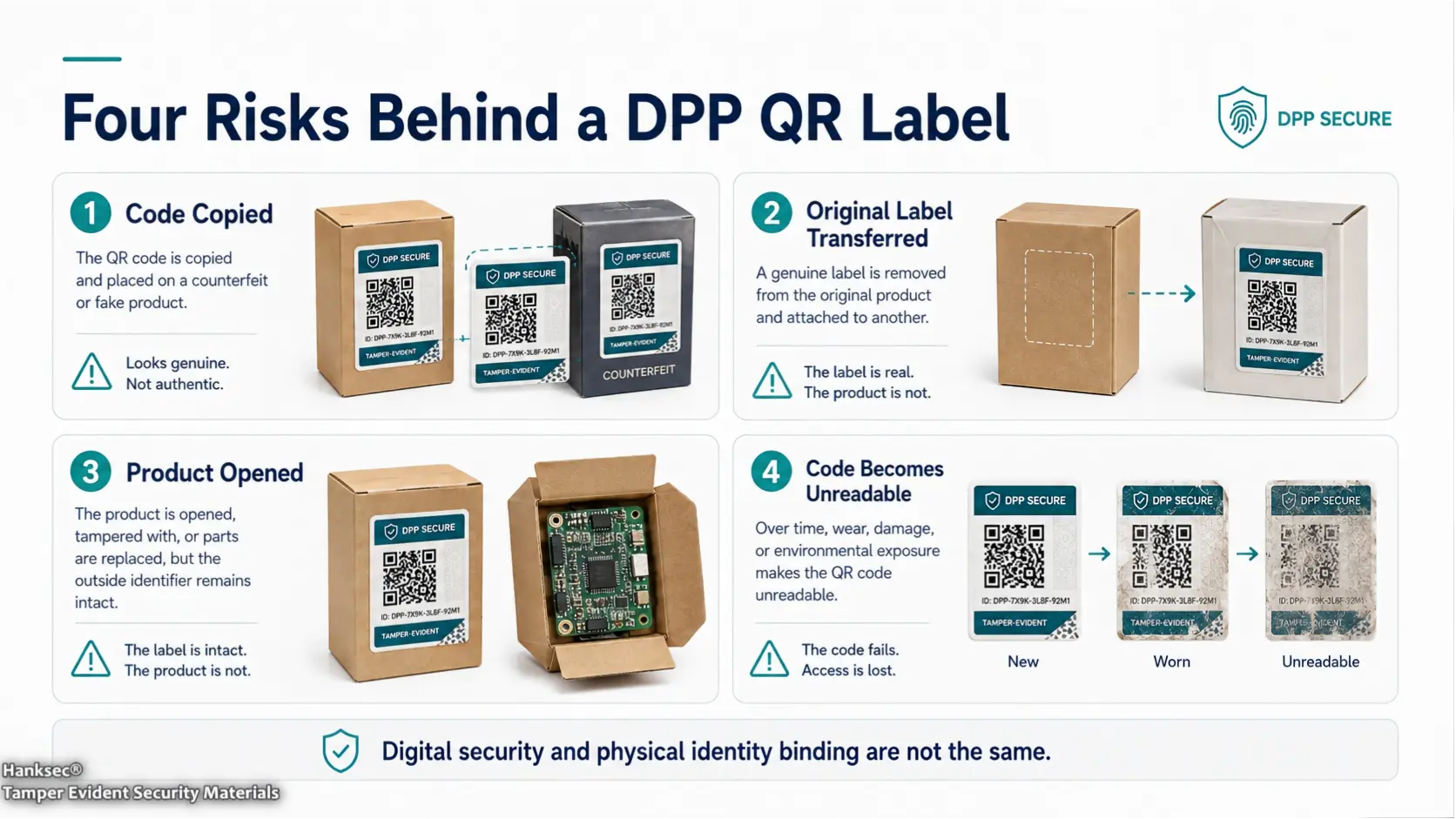
These four failure modes should not be treated as one “QR security” problem. Digital cloning, physical label transfer, package opening and carrier durability require different controls. A well-designed DPP security architecture assigns a specific countermeasure to each risk.
This is where tamper-evident VOID label material becomes relevant.
Why Tamper Evidence Can Strengthen the Physical DPP Link
The role of a security label is not to make a QR code impossible to copy. Its role can be to make physical transfer or unauthorized intervention visible.
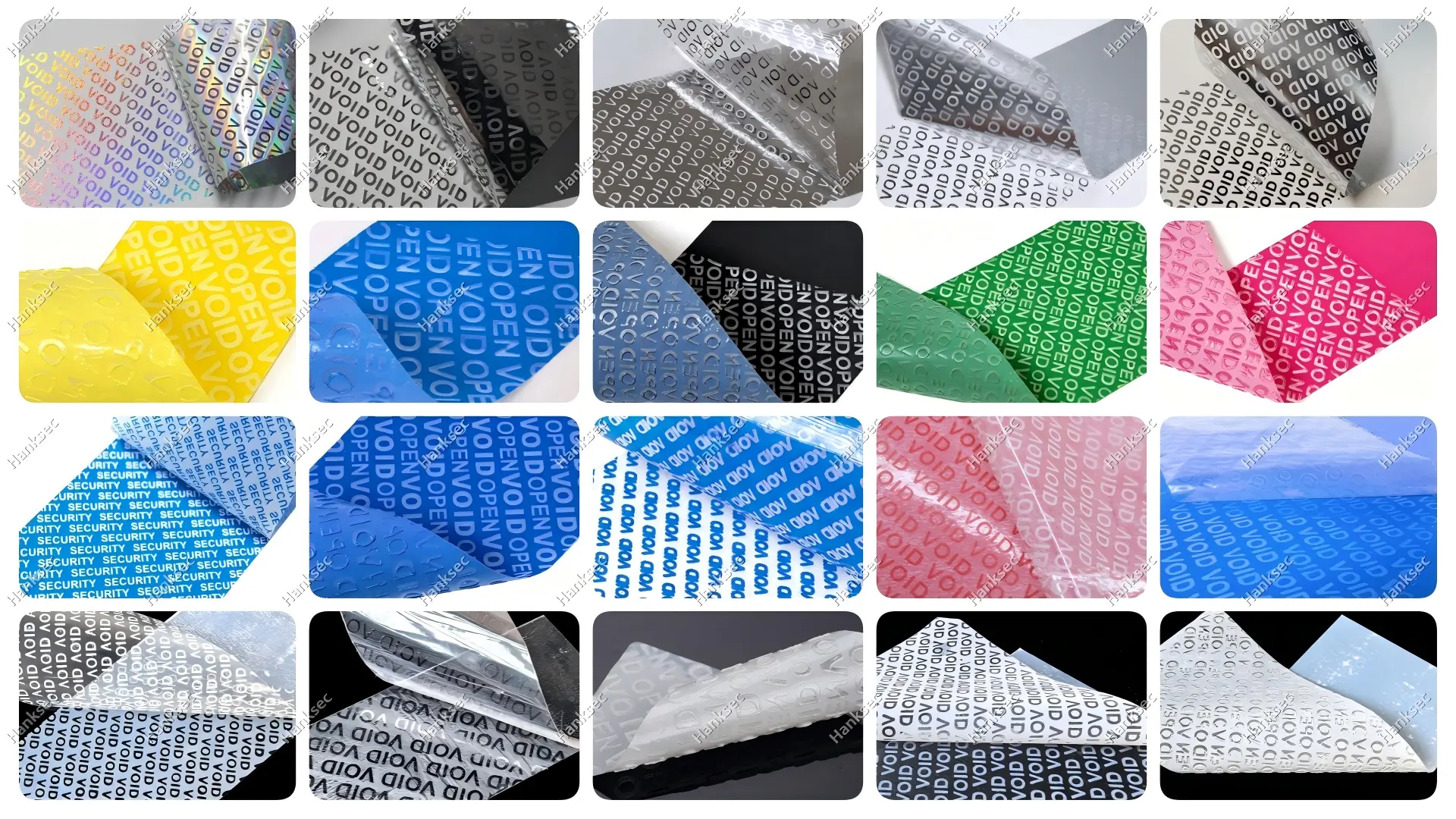
A security label material system can combine printable facestock, a security/release layer, hidden VOID message, adhesive system, release liner and optional holographic or covert features.
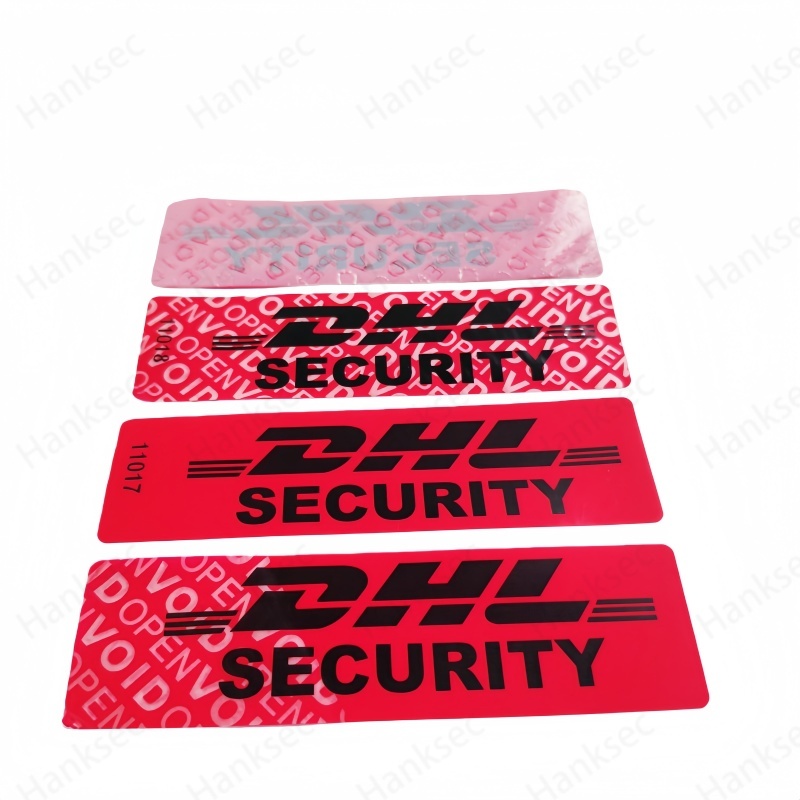
When someone attempts to remove the construction, the system changes irreversibly. That change may appear as VOID/OPENED residue, physical fragmentation, fiber tear, or damage to the identity carrier itself.
The QR says which product this should be. The security material helps indicate whether someone tried to separate that identity from the original product.
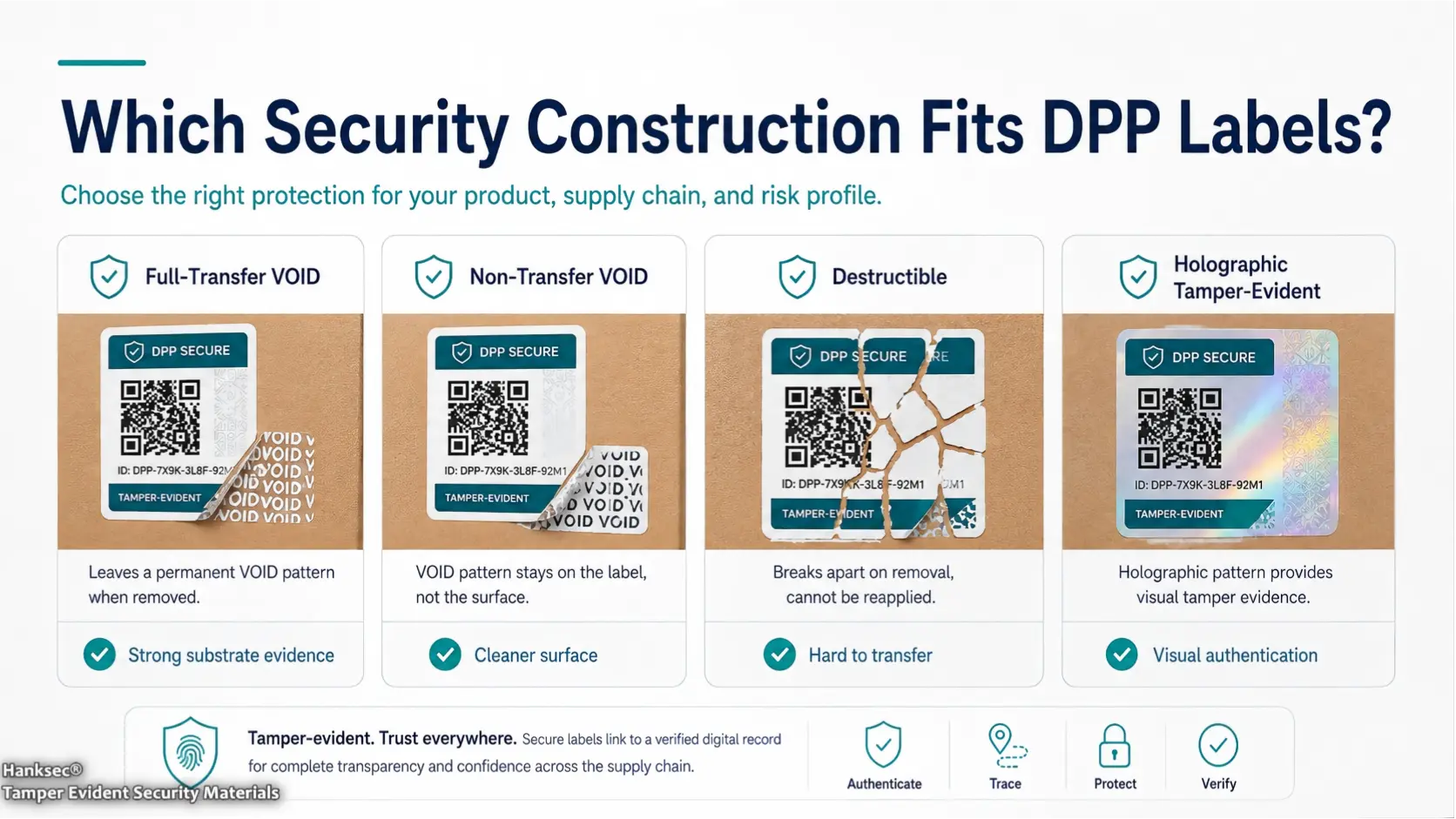
Which Security Label Construction Works Best for DPP Applications?
There is no universal answer. The correct choice depends on substrate, expected lifecycle, appearance, residue requirements and what evidence the brand wants to create.
| Construction | Removal Evidence | Residue on Product | Typical Transfer Resistance | Typical DPP Application | Main Limitation |
|---|---|---|---|---|---|
| Full-Transfer VOID | Strong VOID/OPENED evidence remains on substrate | High | High | Industrial assets, cartons, equipment housings | Residue may be unacceptable on premium surfaces |
| Partial-Transfer VOID | Evidence appears on both label and substrate | Medium | High | Electronics, serialized components, controlled assets | Residue level must be matched to surface requirements |
| Non-Transfer VOID | Security message appears mainly within removed label | Low | Medium–High | Premium equipment, clean surfaces, service labels | Requires careful validation to ensure transfer attempts remain obvious |
| Destructible Material | Label fractures or tears during removal | Low–Variable | High | Electronics, tools, components and compact serialized labels | Converting and matrix stripping can be more demanding |
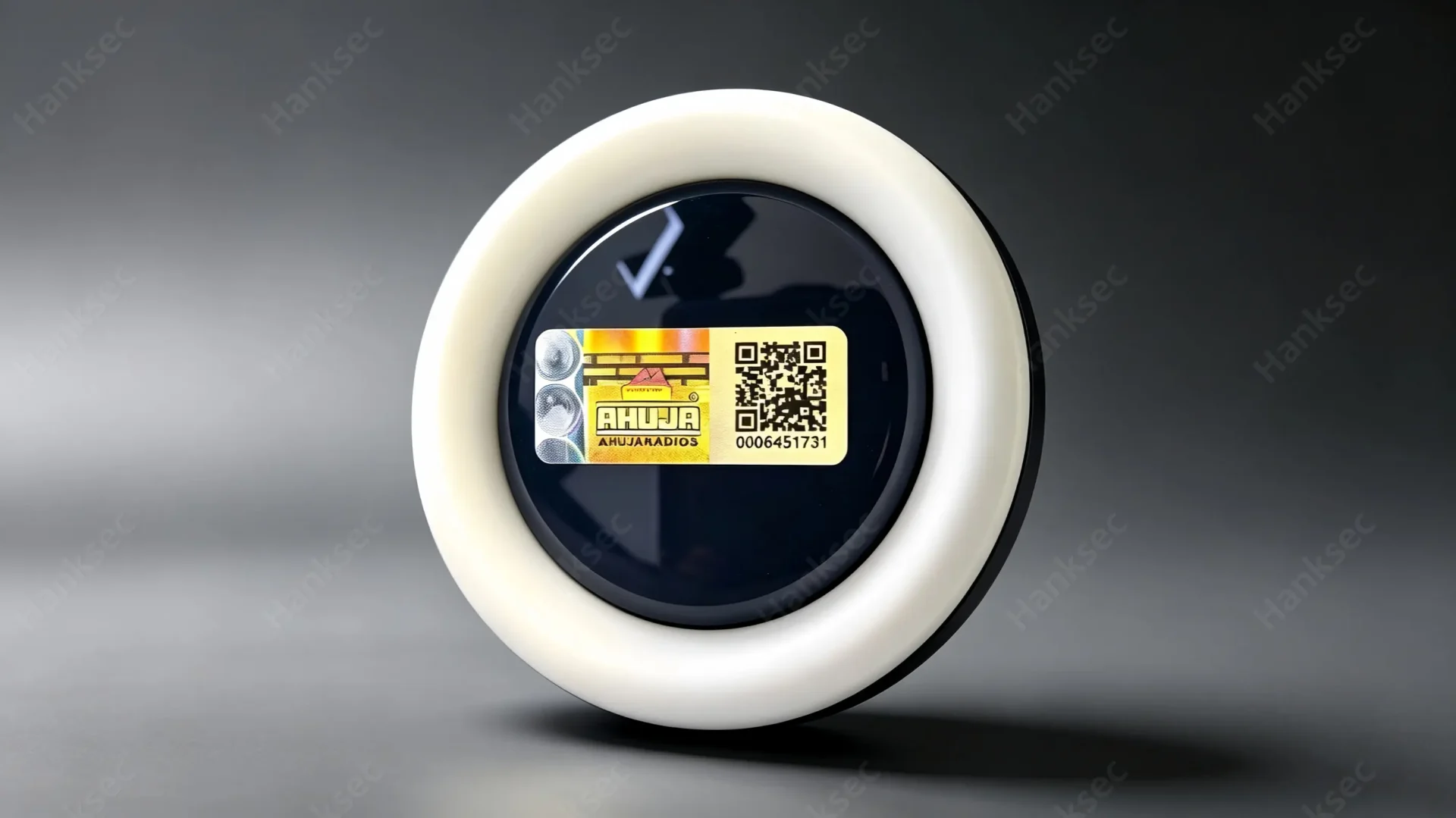
| Holographic Tamper-Evident Material | Optical authentication plus tamper response | Depends on construction | High | Premium goods, brand authentication and high-value components | Optical surface must not reduce QR readability |
The correct DPP label material should be selected according to the threat model rather than appearance alone. Substrate, expected service life, residue tolerance, converting process, printing technology and required tamper response should be defined before final material approval.
For a deeper explanation of the three VOID transfer behaviors, see our full-transfer, partial-transfer and non-transfer VOID guide.
For material-level selection, see our destructible label material guide.
Adhesive Selection May Decide Whether the Physical Identity Survives
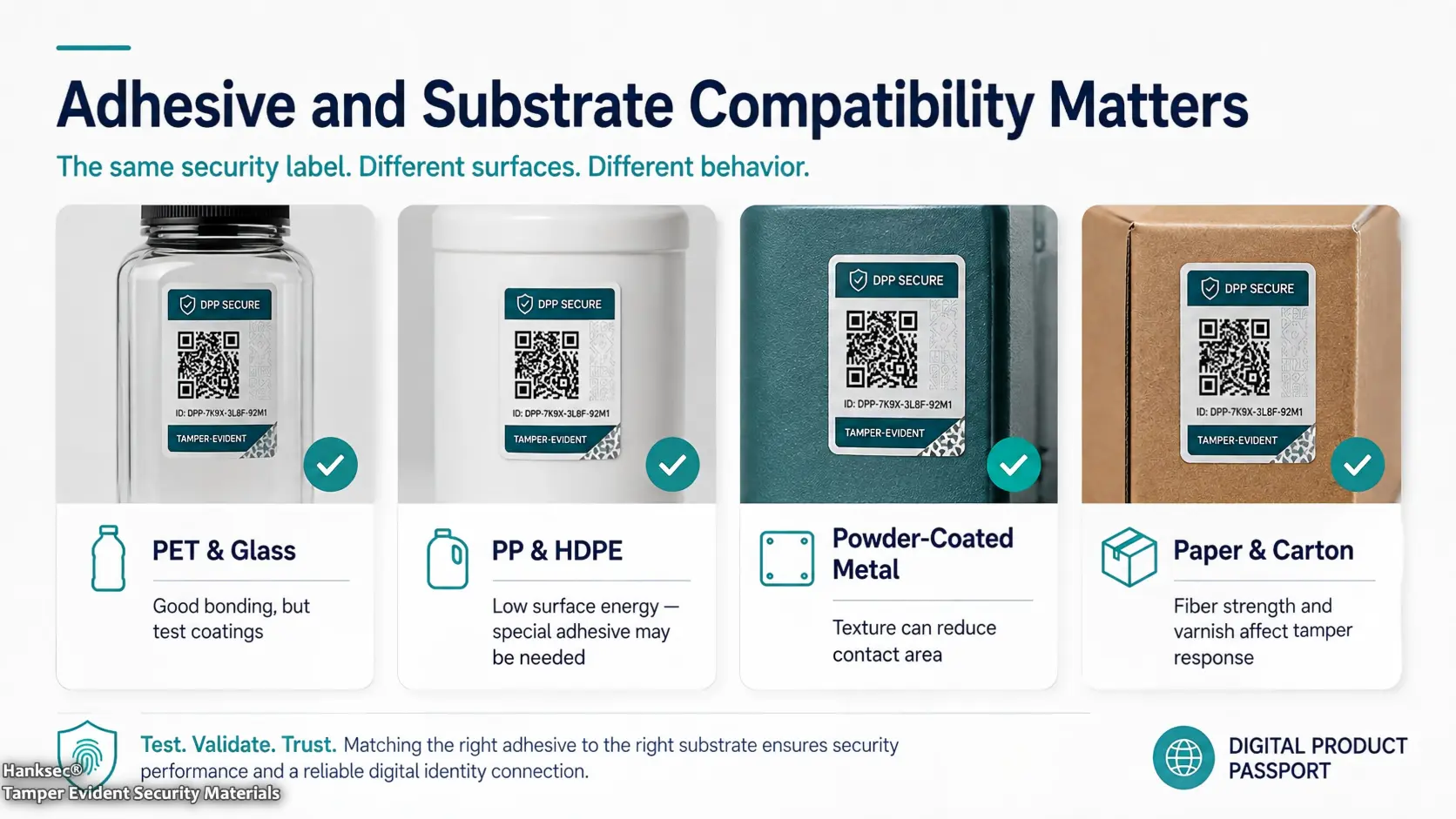
Security labels often attract attention because of their visible VOID effect, but long-term DPP reliability may depend just as much on the adhesive. A label can have perfect QR printing and sophisticated digital architecture but still fail if it lifts from PP, curls on powder-coated metal, loses bond after condensation or cannot wet out a rough surface.
| Product Surface | Typical Adhesion Risk | What Should Be Evaluated | Recommended Validation |
|---|---|---|---|
| PET / Glass | Coatings, contamination, curvature and condensation | Initial tack, dwell adhesion, edge lift and removal behavior | Test on actual coated or curved surface |
| PP / HDPE | Low surface energy | Adhesive wet-out, edge anchorage and long-term bond | Use representative molded parts, not generic test panels |
| Powder-Coated / Textured Metal | Reduced effective contact area | Adhesive thickness, conformability and edge lifting | Test on the actual powder-coat texture and finish |
| Paper / Carton | Fiber strength, varnish, dust and recycled content | Bond strength, fiber tear, VOID response and residue | Evaluate the finished carton after normal production and storage |
“Permanent adhesive” is not a sufficient DPP material specification.
DPP Security and Packaging Recyclability: Where PPWR Considerations May Intersect
Digital traceability does not exist separately from sustainable packaging. A DPP carrier may itself be a packaging component, which means brands can face two simultaneous questions: will the data carrier survive and remain securely associated with the product, and will the label construction unnecessarily interfere with the package’s intended recycling or reuse system?
This connects directly with Hanksec’s PPWR 2026 and Tamper-Evident Labels guide.
A large security label on a recyclable container may offer excellent durability, but a smaller closure seal could provide the same tamper evidence with less material. A reusable transport container may need a permanent product identity plus a separately replaceable tamper seal.
An intelligent DPP strategy can separate persistent identity from sacrificial opening evidence.
For fiber-based packaging, paper-faced security constructions may also be considered where the brand wants closer alignment between the label face material and the paper packaging system. The complete adhesive, coating and liner construction should still be evaluated before making recyclability claims.
QR Code Readability and Data Density Are Engineering Requirements
A DPP label only works if the carrier remains readable. Typical problems include insufficient contrast, ink spreading, small module size, damaged quiet zones, reflective backgrounds, abrasion, chemical smearing and poor ink anchorage.
The GS1 Digital Link standard provides a standardized method for connecting GS1 identification keys with online information and services. GS1 also maintains DPP-specific implementation guidance and standards-development work to support interoperable identification under the ESPR.
Standards-compliant data structure and good print quality are different matters. A converter still needs to qualify the printer, ribbon or ink, facestock coating, print resolution, varnish or lamination, scanner performance and code dimensions.
QR verification should therefore take place after environmental conditioning, not only immediately after printing.
More Data in a Code Is Not Always Better
It is tempting to encode as much information as possible directly into a QR code, but dense carriers can become harder to print and scan reliably, particularly on small labels or difficult surfaces.
For material engineers, the practical lesson is simple: do not evaluate only whether a QR code exists. Evaluate whether it remains machine-readable under real production and service conditions.
This is especially important for small component labels, curved bottles, batteries, tools, electronic devices and furniture components.
NFC and RFID Do Not Eliminate the Physical-Security Problem
Some products may use NFC or RFID instead of, or alongside, QR codes. These technologies can provide contactless reading, automation and more sophisticated digital interaction, but digital sophistication does not eliminate physical attachment.
An NFC tag still needs to remain associated with the correct product. An RFID inlay still has a physical location. If the tag can be removed and reused without evidence, the same identity-binding issue can appear.
Possible designs include destructible antenna structures, tamper loops, VOID constructions, frangible carriers or closure integration. The technology should follow the risk model.
The future DPP carrier is not only a printed code. It is a physical-digital interface.
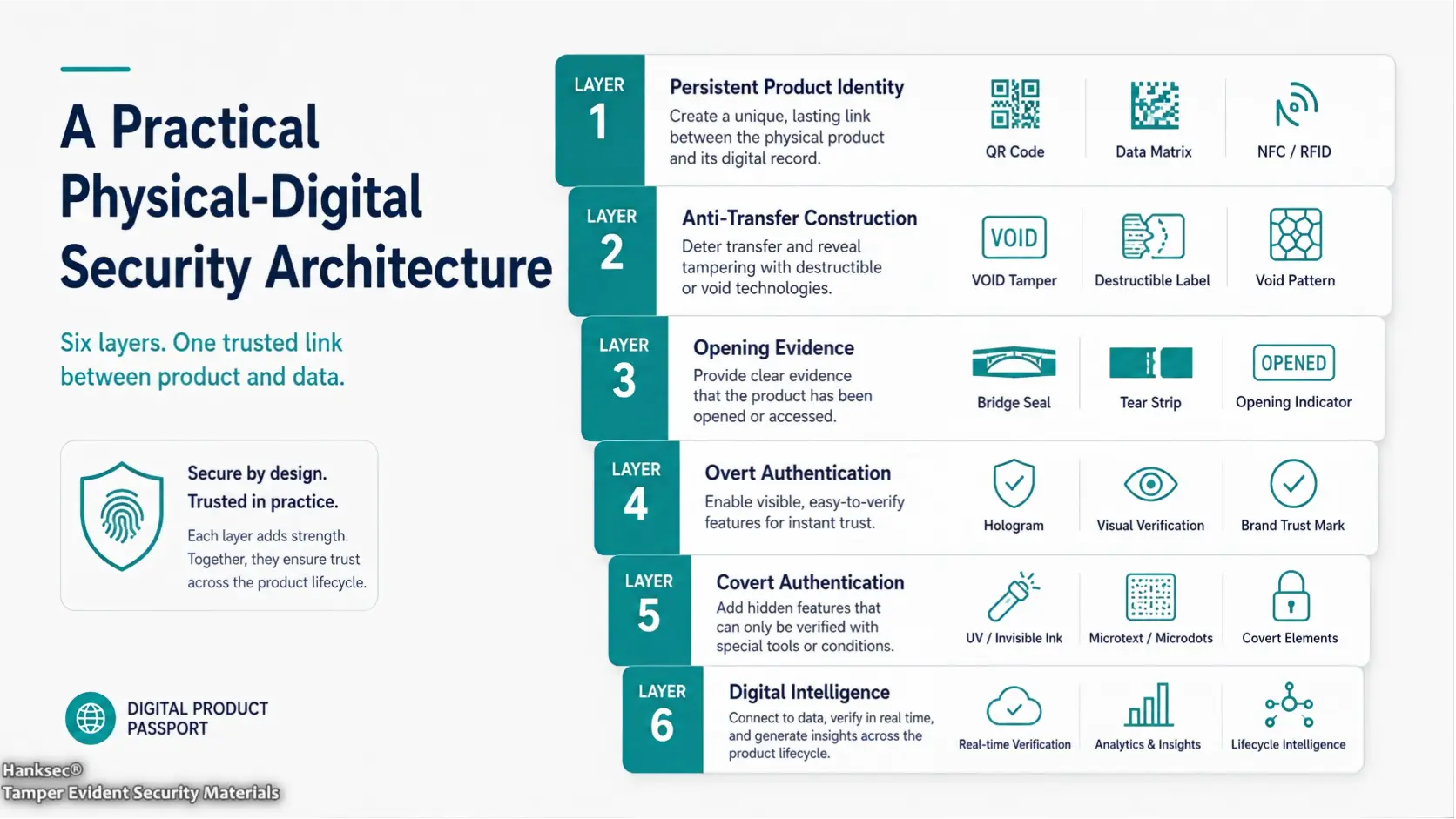
A Practical Physical-Security Architecture for DPP Products
| Security Layer | Typical Technology | Main Purpose | What It Does Not Solve |
|---|---|---|---|
| Persistent Product Identity | QR, Data Matrix, NFC, RFID | Connect product to digital passport | Does not prove the carrier was never transferred |
| Anti-Transfer Construction | VOID, destructible material | Makes label removal or reuse visible or difficult | Does not stop digital code cloning |
| Opening Evidence | Bridge seal, closure label, security tape | Indicates whether housing, carton or service area was opened | Does not authenticate the product by itself |
| Overt Authentication | Hologram or visible security feature | Supports fast visual verification | May still be copied at lower quality |
| Covert Authentication | UV or restricted inspection feature | Supports controlled expert verification | Requires inspection tools or trained personnel |
| Digital Intelligence | Serialization, duplicate-scan analytics, lifecycle records | Detects digital anomalies and identity misuse | Does not physically secure the label attachment |
The correct number of layers depends on product value, counterfeiting risk, lifecycle, repair model, packaging and verification process. More security features do not automatically mean better security. Every layer should solve a defined problem.
For carton, housing and closure applications, see our tamper evident security packaging tape guide.
The Label Must Survive Converting Before It Can Protect Anything
| Converting Step | What Must Be Verified | Typical Failure |
|---|---|---|
| Printing | QR, serial number and variable data consistency | Poor contrast, unreadable code or ink adhesion failure |
| Die Cutting | Clean cutting without liner damage | Broken labels, damaged liner or inconsistent dispensing |
| Matrix Stripping | Fragile material survives waste removal | Destructible material breaks during converting |
| Roll Tension | Material remains dimensionally stable | Stretching, registration shift or distorted QR code |
| Liner Release | Consistent release during dispensing | Double feeds, missed labels or application interruptions |
| Surface Coating | Primer/topcoat supports intended ink system | Smearing, poor ink anchorage or weak barcode quality |
| Variable Data Verification | Individual code printed and checked at line speed | Duplicate, missing or unreadable identities |
A security material that works perfectly by hand but performs poorly on a converting line is not a viable industrial DPP solution.
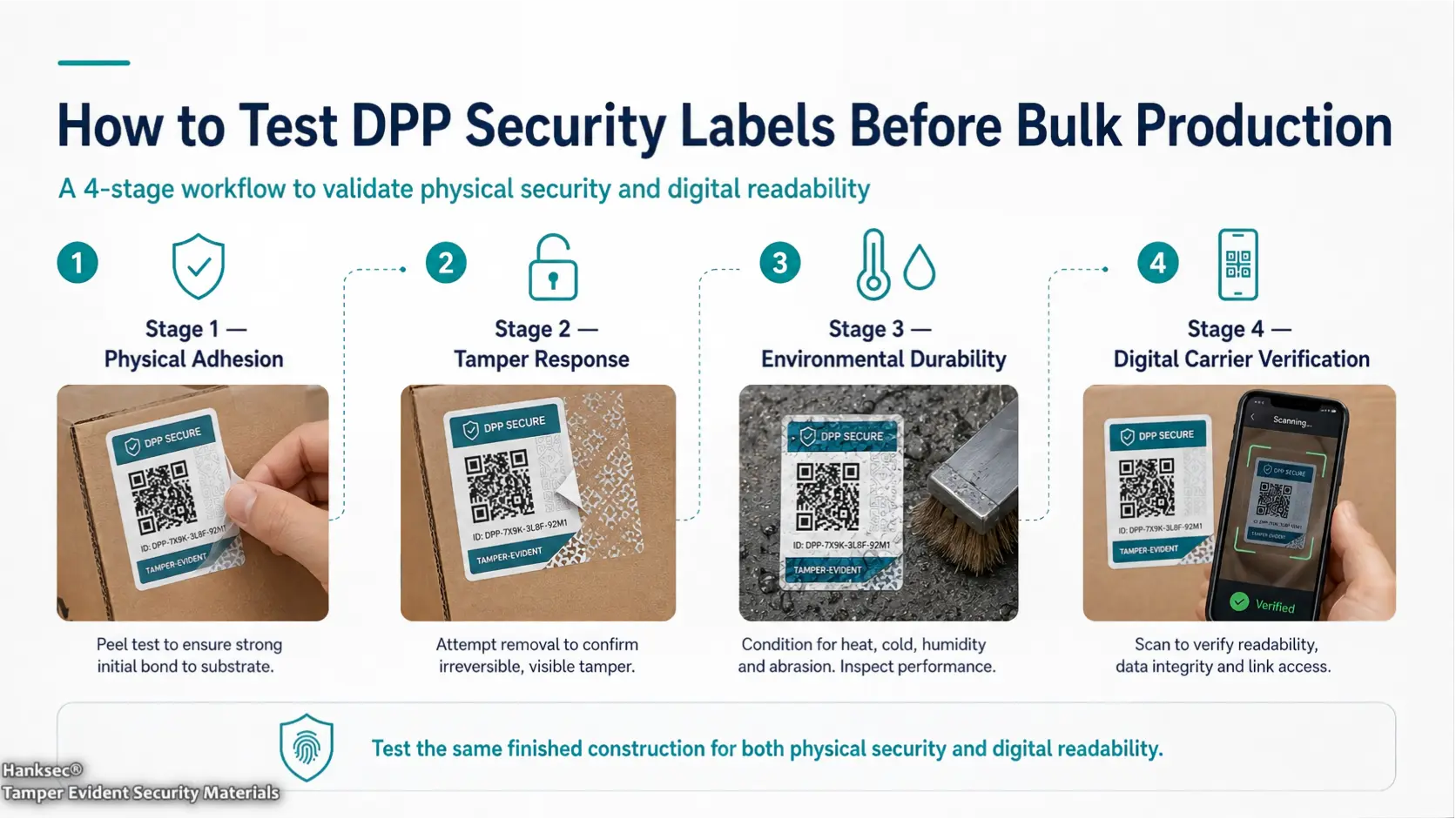
How Should DPP Security Labels Be Tested Before Bulk Production?
| Test Stage | What to Test | Key Observations | Approval Goal |
|---|---|---|---|
| Physical Adhesion | Initial tack, 24-hour bond, 72-hour bond, edge lift, curvature | Lifting, poor wet-out, movement or adhesive failure | Stable attachment to real product substrate |
| Tamper Response | Normal peel, slow peel, edge attack, relevant heat/cold attack | VOID clarity, residue, fracture and reapplication possibility | Repeatable and irreversible tamper evidence |
| Environmental Durability | Heat, cold, humidity, condensation, abrasion and chemicals | Adhesion loss, fading, code damage or material deformation | Carrier remains functional through expected exposure |
| Digital Carrier Verification | Scan speed, contrast, serial accuracy, database response | Scan failures, damaged codes, identity mismatch | Machine-readable identity remains usable after conditioning |
Physical security testing and digital verification should be performed on the same finished construction.

What Buyers Should Send Their Security-Material Supplier
| Project Information | Example | Why It Matters |
|---|---|---|
| Product Substrate | PET, PP, HDPE, metal, paper, glass | Determines adhesive and tamper-response requirements |
| Surface Condition | Smooth, textured, curved, painted, powder-coated | Changes adhesive contact and edge-lift risk |
| Expected Lifecycle | Months or years | Determines durability requirements |
| Environment | Indoor, outdoor, heat, cold, humidity, chemicals | Determines facestock, coating and adhesive selection |
| Identity Technology | QR, Data Matrix, NFC, RFID | Influences carrier construction and converting |
| Printing Technology | Digital, thermal transfer, UV, flexographic | Determines topcoat and print compatibility |
| Tamper Evidence | Full transfer, partial transfer, non-transfer, destructible | Defines required physical security response |
| Residue Requirement | Strong, controlled or clean surface | Determines transfer architecture |
| Converting Format | Jumbo roll, slit roll, sheet, finished label | Determines liner, winding and converting design |
Those specifications allow a material manufacturer to solve the real problem rather than simply quote a generic security film.
Avoid the Phrase “DPP-Compliant Security Label” Without Context
This deserves the same caution as “PPWR-compliant label.” The ESPR establishes the DPP framework, but detailed requirements can vary by product group and delegated act, including which data carrier is used, where it is positioned and whether identification applies at model, batch or item level.
For that reason, a raw VOID material or QR label should not automatically be marketed as “EU DPP Certified” or “100% DPP Compliant” unless the specific applicable requirements and certification basis actually support that statement.
More credible wording includes:
- Security label materials suitable for DPP-oriented identification projects.
- Tamper-evident material options for physical DPP data carriers.
- Security constructions designed to support durable, anti-transfer product identification.
Precise language supports trust and avoids overstating what one physical label can legally prove.
Where a Security-Material Manufacturer Adds Value in DPP Projects
Software providers can build the DPP platform. Identifier providers can create digital identities. Label converters can print the variable data. But somebody still needs to engineer the physical material underneath that identity.
Hanksec manufactures tamper-evident VOID label materials and develops material structures around facestock, transfer behaviour, destructibility, adhesive strength, hidden message, liner, printable coatings, holographic effects and converting formats.
A useful development workflow is:
Product Surface → Security Threat → Expected Lifecycle → Data Carrier → Candidate Material → Substrate Test → Converting Test → Final Production
That is the point where physical security becomes part of digital traceability.
Conclusion: A Digital Identity Is Only Useful While It Stays Connected to the Right Product
Digital Product Passports are fundamentally information systems, but every DPP eventually needs a trustworthy connection to the physical world.
A QR code can provide convenient access to data. Serialization can distinguish individual products. A registry can improve traceability. A database can maintain lifecycle information. None of those functions automatically proves that the physical identifier was never transferred, replaced or separated from the original product.
That is why Digital Product Passport security labels should be designed around two questions:
Can the identifier survive for as long as required?
Can attempts to remove or transfer it create useful evidence?
For low-risk products, a conventional durable label may be sufficient. For higher-risk products, tamper-evident VOID, destructible materials, secure adhesives, holographic authentication or separate closure seals may provide useful additional protection.
The correct solution is not “the strongest label.” It is the construction that keeps physical identity, digital identity and the product lifecycle reliably connected.
FAQ: Digital Product Passport Security Labels
What is a Digital Product Passport security label?
A Digital Product Passport security label is a physical label or data-carrier construction that connects a product to digital passport information while adding features intended to support durable identification, tamper evidence or resistance to unauthorized transfer. The exact DPP requirements depend on the applicable EU product rules.
Does the EU require every DPP QR code to use a tamper-evident label?
No. Regulation (EU) 2024/1781 establishes the DPP framework and data-carrier requirements, but it does not generally mandate VOID or destructible labels for every product. Product-specific delegated acts determine more detailed requirements.
Why is a normal QR sticker sometimes not enough?
A normal QR label may successfully link users to digital information but may not reveal whether somebody removed the original label and transferred it to another product. Products with higher counterfeiting, substitution or refurbishment risk may benefit from an anti-transfer or tamper-evident construction.
Can a QR code be printed on VOID label material?
Yes, provided the facestock coating, printing technology, QR dimensions, contrast and environmental durability are suitable. QR readability should be verified after printing and after relevant environmental testing.
Is a destructible label better than a VOID label for DPP applications?
Not universally. Destructible labels create physical fragmentation, while VOID materials create a controlled hidden-message response. The best construction depends on the substrate, label dimensions, service environment, residue requirements and desired evidence.
Can non-transfer VOID be used for Digital Product Passport labels?
Potentially, yes. Non-transfer VOID can be useful where the underlying surface should remain clean while an attempted label removal still produces visible evidence in the label construction. Actual substrate testing is recommended before final selection.
Can holographic security be combined with a DPP QR code?
Yes. Holographic visual authentication and printed QR or serialized identity can be combined on suitable security-label constructions. The optical surface must be designed so it does not interfere with QR readability.
How long should a DPP label last?
The required period depends on applicable product-specific rules and the expected product lifecycle. Long-life products may require a durable carrier that remains readable and securely attached for years.
What information should I send before requesting DPP label material?
Provide the product substrate, surface condition, expected service life, QR or other data-carrier type, printing method, label dimensions, environment, residue preference and required tamper behaviour. Actual product samples are preferable for material qualification.
Can Hanksec supply finished DPP software or DPP registration services?
Hanksec focuses on physical security materials and label constructions rather than replacing the DPP Registry or specialist DPP software platforms. Hanksec can support material selection, VOID/destructible structures, adhesive adjustment, QR-printing compatibility and sample testing for suitable physical data-carrier projects.
Project inquiry: Contact Hanksec for material recommendation or sample testing