Tamper Evident VOID Label Materials

Commercial Material Range
VOID Label Materials for Converters, Security Printers & OEM Programs
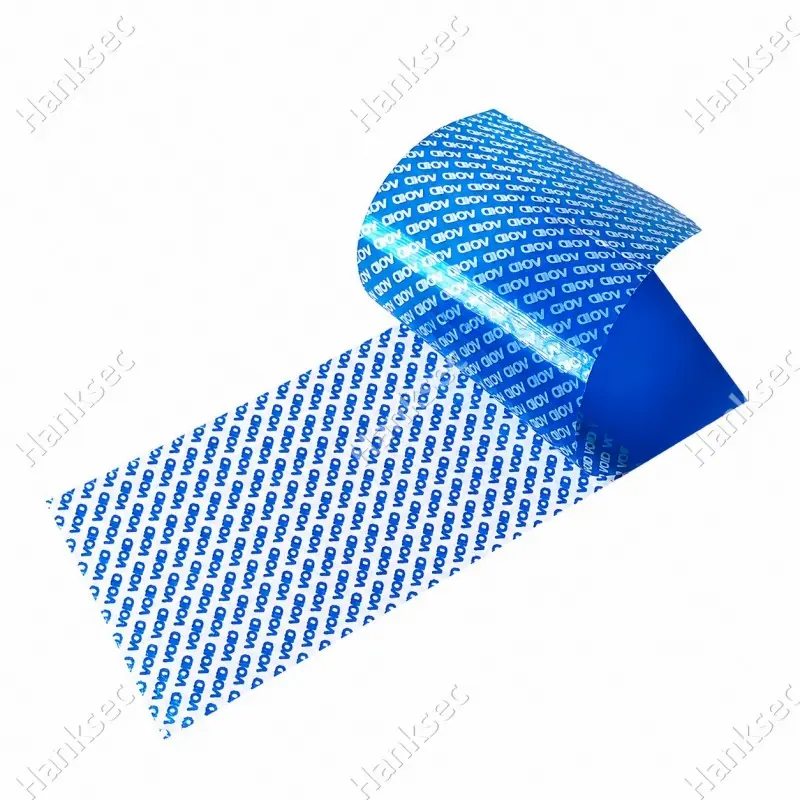
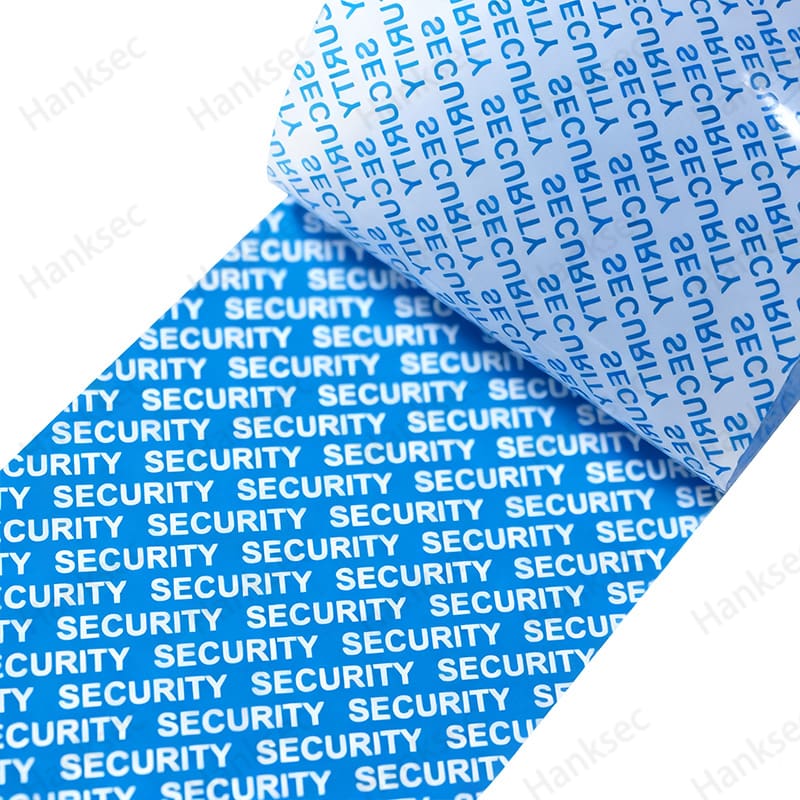
Tamper evident VOID label materials are engineered pressure-sensitive constructions that create visible evidence when a label is lifted or removed. Depending on the construction, the hidden VOID, OPENED or custom message can transfer to the application surface, appear within the removed label, or show in both locations.
For B2B qualification, the transfer effect is only one part of the selection. Buyers should also define the facestock, adhesive system, release liner, printing process, die-cutting requirements, application substrate and supply format before approving production material.
Compare Full / Partial / Non-Transfer
→
Explore PET / Paper / Holographic Options
→
Jumbo & Slit Roll Supply
→
Custom VOID / OPENED Patterns
→
Need the technical fundamentals first? Read
What Is VOID Label Material?
for structure, transfer mechanisms and selection logic.
Step 1 — Select the Tamper Response
Full-Transfer, Partial-Transfer or Non-Transfer VOID Material?
The correct transfer type depends on where the customer wants the tamper evidence to remain and how much visible residue is acceptable on the actual application surface.
FULL TRANSFER
Strong Surface Evidence
Designed so the hidden security pattern transfers primarily to the application surface after removal, creating a clear visual indication that the seal has been disturbed.
- Useful where visible evidence on the substrate is the priority.
- Common for packaging, asset control, logistics and access seals.
- Final transfer clarity depends on adhesive, surface and dwell conditions.
PARTIAL TRANSFER
Evidence on Label and Surface
Designed to split the security response between the removed label and the application surface, allowing inspection of both sides after a removal attempt.
- Balanced visual evidence for many security-label programs.
- Suitable for warranty, electronics, assets and branded packaging.
- Residue and image definition should be qualified on the actual substrate.
NON-TRANSFER
Cleaner Application Surface
Designed so the security message appears mainly within the removed label while leaving little or no visible transfer on compatible surfaces, depending on the adhesive system and application conditions.
- Useful for electronics, glass, metal and cosmetic surfaces.
- Often selected where cleanup or appearance matters.
- Always test for residue, adhesion and tamper activation on the real surface.
Step 2 — Define the Material Construction
What VOID Material Buyers Should Specify
Two VOID materials can show a similar removal message but behave very differently in printing, converting and final use. A production specification should therefore describe the complete pressure-sensitive construction rather than only the word “VOID”.
FacestockPET, paper, holographic or another project-specific face material.
Transfer TypeFull-transfer, partial-transfer or non-transfer tamper response.
AdhesiveMatched to surface energy, texture, temperature and residue requirement.
Release LinerGlassine, PET or another liner selected for converting and dispensing.
Printable SurfaceTopcoat or surface treatment matched to the intended print process.
Security MessageVOID, OPENED, custom logo, text or project-specific hidden pattern.
Supply FormatJumbo roll, slit roll, sheet or finished converted labels.
QualificationAdhesion, VOID activation, release force, printing and die-cutting trials.
Step 3 — Match the Real Application Surface
Substrate and Adhesive Selection
| Application Surface | Useful Starting Direction | What Must Be Qualified |
|---|---|---|
| PP / PE / HDPE | VOID construction with substrate-matched pressure-sensitive adhesive | Low surface energy, wet-out, edge lift and dwell time |
| PET / ABS / PC | Full, partial or non-transfer depending on residue requirement | Texture, molded additives, coatings and cosmetic appearance |
| Glass | Non-transfer or controlled-residue construction when cleanliness matters | Visible residue, condensation, cleaning chemistry and removal response |
| Painted / Powder-Coated Metal | PET VOID or project-specific high-adhesion construction | Coating integrity, roughness, temperature and adhesive contact |
| Coated Paperboard / Cartons | Full or partial transfer for visible package-opening evidence | Varnish, ink layer, fiber tear and transfer clarity |
Do not approve a VOID material only on stainless-steel or generic laboratory panels. The actual customer substrate should be included in sample qualification because surface energy, coatings, texture and dwell can change both adhesion and the final tamper response.
Step 4 — Confirm Printing & Converting
Converter-Ready VOID Label Materials
Printing Compatibility
Printable VOID materials may require a suitable topcoat or surface treatment for UV flexographic, screen, thermal-transfer, digital or other printing systems. Ink, toner or ribbon anchorage should be tested using the intended production process.
Die Cutting & Matrix Stripping
Facestock thickness, adhesive flow, release liner, die depth and label geometry all affect matrix stripping and dispensing. Small labels, sharp corners and security-layer constructions should be qualified under real converting conditions.
Supply formats: depending on the project, Hanksec can support converter-ready jumbo rolls, slit rolls, sheets or finished converted labels. For roll projects, send the required web width, core, winding direction, roll diameter, print process and die-cutting method together with the application substrate.
Optional Security & Material Functions
Holographic, UV, Paper and Custom VOID Constructions
Holographic & Optical Functions
Holographic PET can combine visual authentication with an engineered VOID response. Stock holographic effects and custom optical origination should be treated as different levels of customization.
UV / Covert Features
UV-responsive printing or project-specific covert marks can be added where a controlled inspection method is required. These features supplement the physical tamper response rather than replace it.
Paper-Based VOID Materials
Paper facestocks can be used where the package, printing process or material-selection strategy requires a paper-based construction. The complete label system still needs adhesive, liner and substrate qualification.
Custom Hidden Message & Branding
VOID, OPENED, custom text, logos and other hidden patterns can be developed for specific security programs. Printing, optical effects and tamper-response customization should be specified separately.
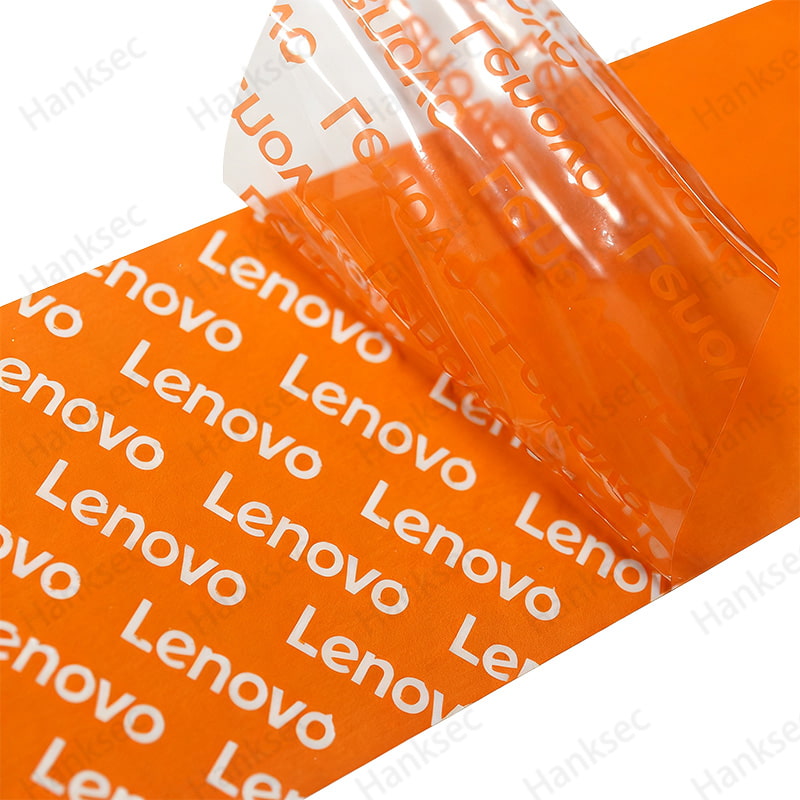
Use the product grid below to browse available VOID constructions. For a faster technical recommendation, send the application surface, required transfer effect, print process, label size, service environment and preferred supply format.
Browse Tamper Evident VOID Label Materials





Sample Qualification & Technical Support
Request VOID Material Samples & Technical Recommendation
For faster material selection, send Hanksec the application substrate, required full / partial / non-transfer response, printing method, label or roll dimensions, service temperature, estimated quantity and preferred supply format.
Sample rolls for qualification
Adhesive / substrate discussion
Printing & converting review
TDS / technical details where available