Quick Answer:
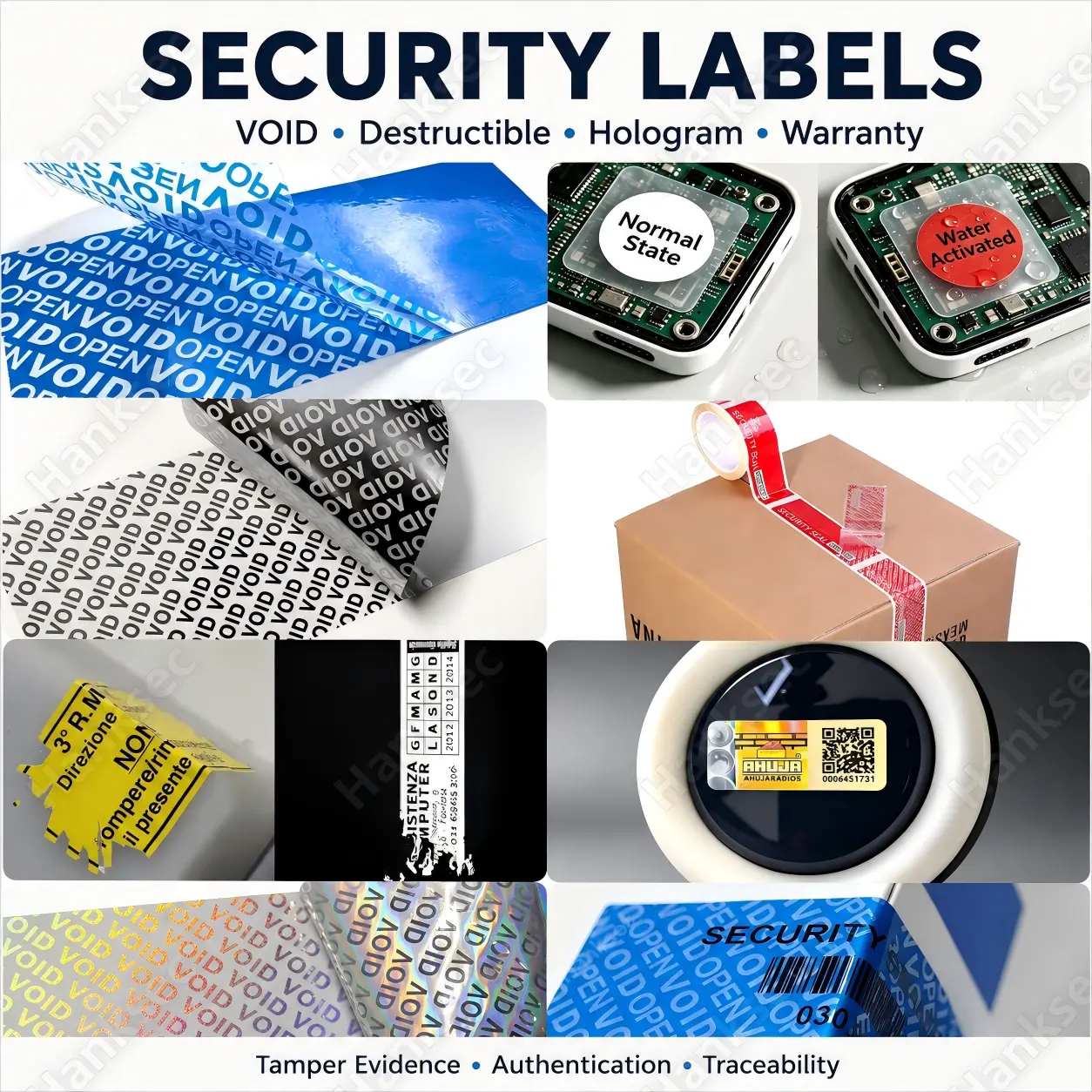
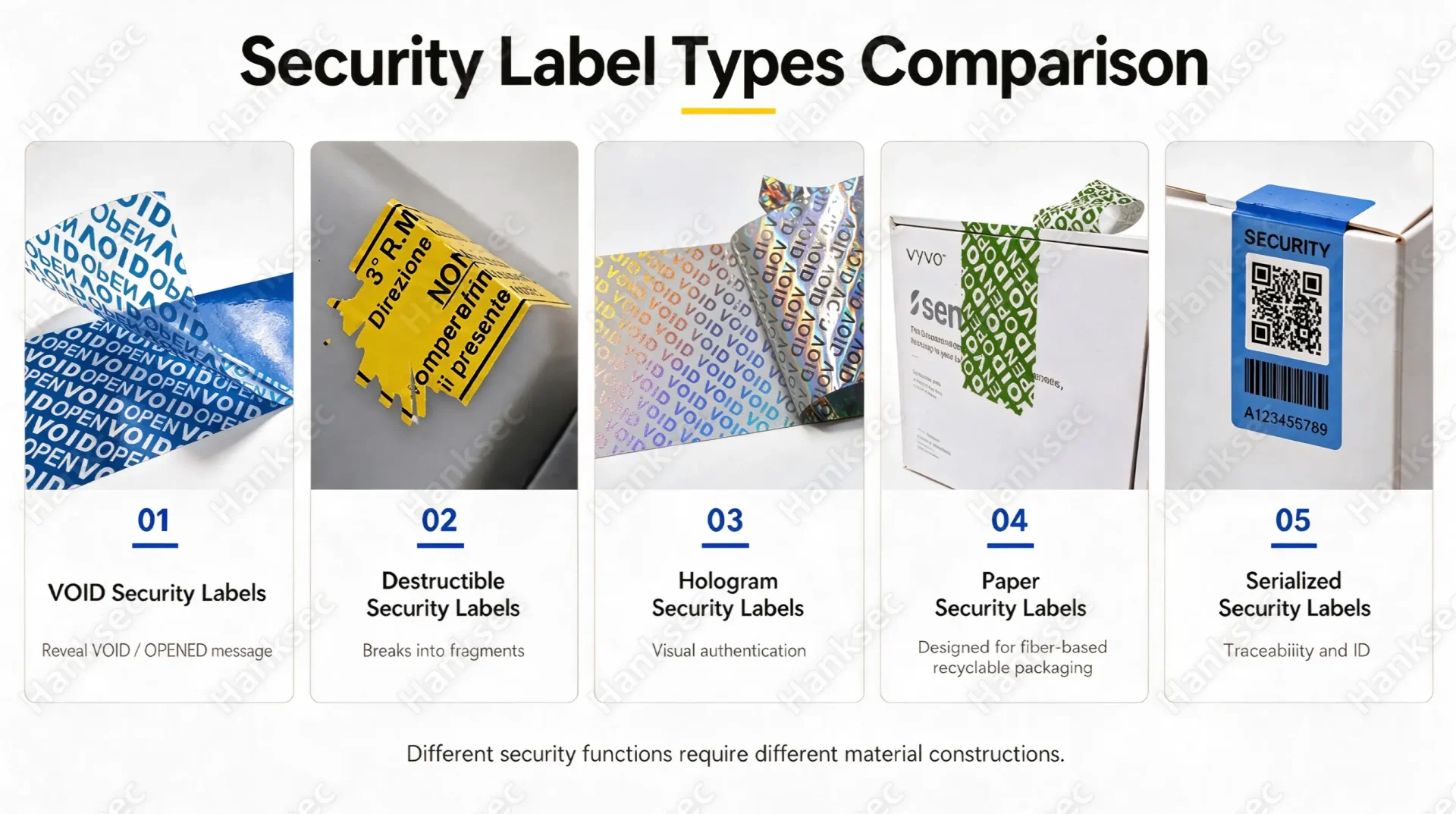
The main types of tamper-evident security labels are VOID transfer labels, destructible labels, holographic tamper-evident labels, paper-based security labels, and hybrid or serialized security labels. The correct type depends on what evidence should appear after removal, the application surface, whether residue is acceptable, the service environment, the printing process, and how the material will be converted or applied.
For B2B buyers, label converters, security printers and packaging engineers, the most useful starting point is not “Which label looks the most secure?” It is: What should happen when someone tries to remove or manipulate the label? Once that response is defined, the facestock, security layer, pressure-sensitive adhesive, release liner, print surface and supply format can be selected around the actual application.
| Security Label Type | Primary Tamper Response | Typical Starting Application | Key Selection Question |
|---|---|---|---|
| VOID transfer label | Hidden VOID / OPENED message appears after removal | Electronics, packaging, warranty seals, assets | Should evidence remain on the surface, label, or both? |
| Destructible label | Facestock fractures or fragments during removal | Warranty seals, electronics, asset protection | Will the adhesive bond exceed the facestock strength? |
| Holographic tamper-evident label | Optical authentication plus optional VOID or destructible response | Brand protection, authentication, premium packaging | Is authentication required in addition to tamper evidence? |
| Paper-based security label | VOID transfer, delamination, fiber tear or combined response | Cartons, kraft mailers, document seals | Does the paper construction match the package and environment? |
| Hybrid / serialized security label | Physical tamper evidence plus unique identification | Traceability, controlled assets, high-value products | How will serial data, barcode or QR identification be verified? |
What Are Tamper-Evident Security Labels?
Tamper-evident security labels are pressure-sensitive labels engineered to make unauthorized removal, opening, substitution or manipulation visibly detectable. Depending on the construction, a removal attempt may reveal a hidden message, transfer part of the security layer to the application surface, break the facestock into fragments, distort a holographic layer, or combine physical evidence with serialized identification.
The label should be treated as a material system, not only as a printed sticker. Performance comes from the interaction of the facestock, internal security layer, adhesive, release liner, print coating, application substrate and service conditions. A material that performs correctly on a coated carton may behave differently on polypropylene, glass, painted metal or a textured plastic housing.
For a deeper explanation of the full material stack, see Hanksec’s Security Label Material Systems Guide.
Five Main Types of Tamper-Evident Security Labels
There is no single security-label construction that is best for every application. The five groups below describe the most useful starting categories for material selection. Some projects combine more than one mechanism.
1. VOID Transfer Security Labels
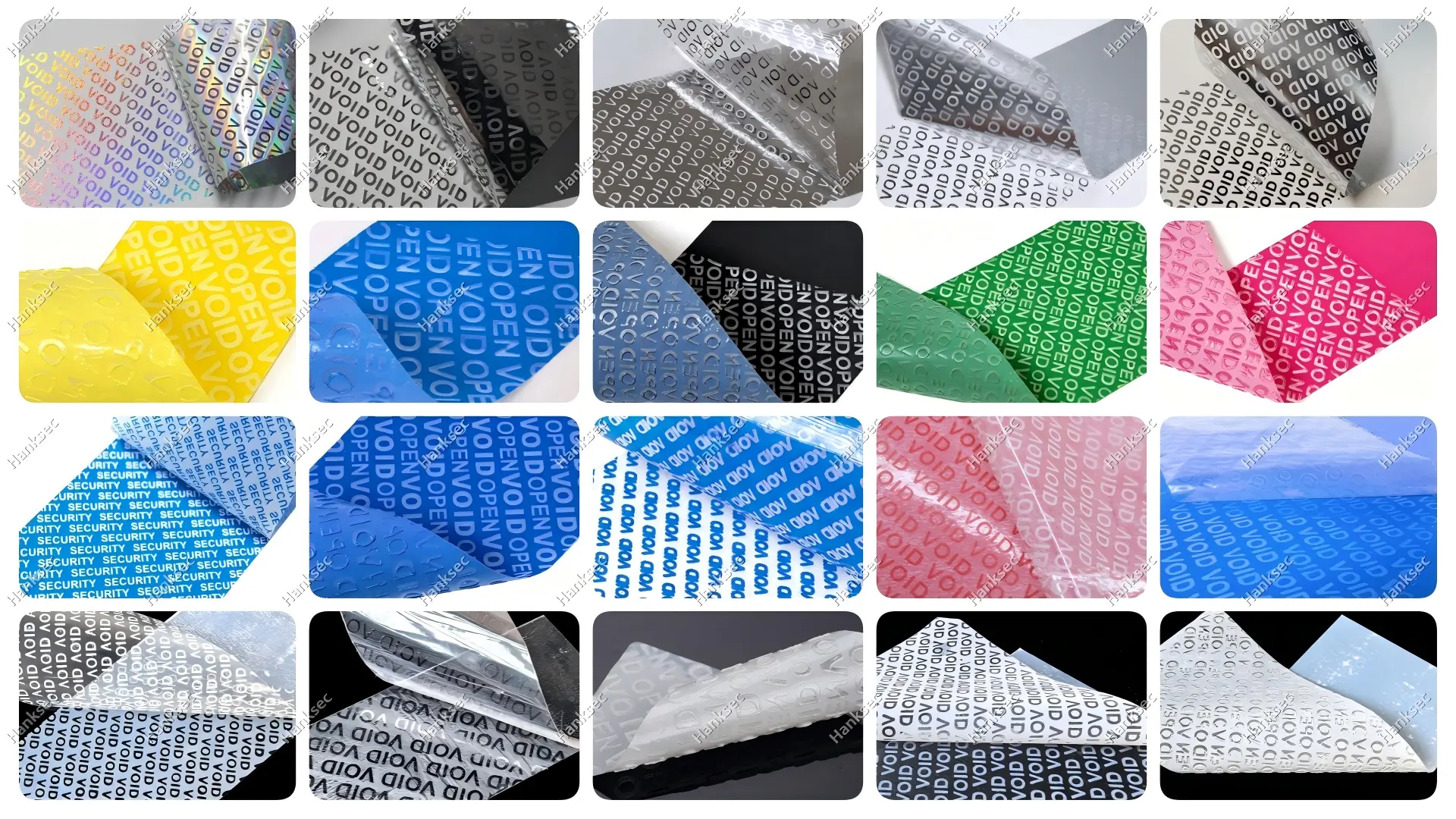
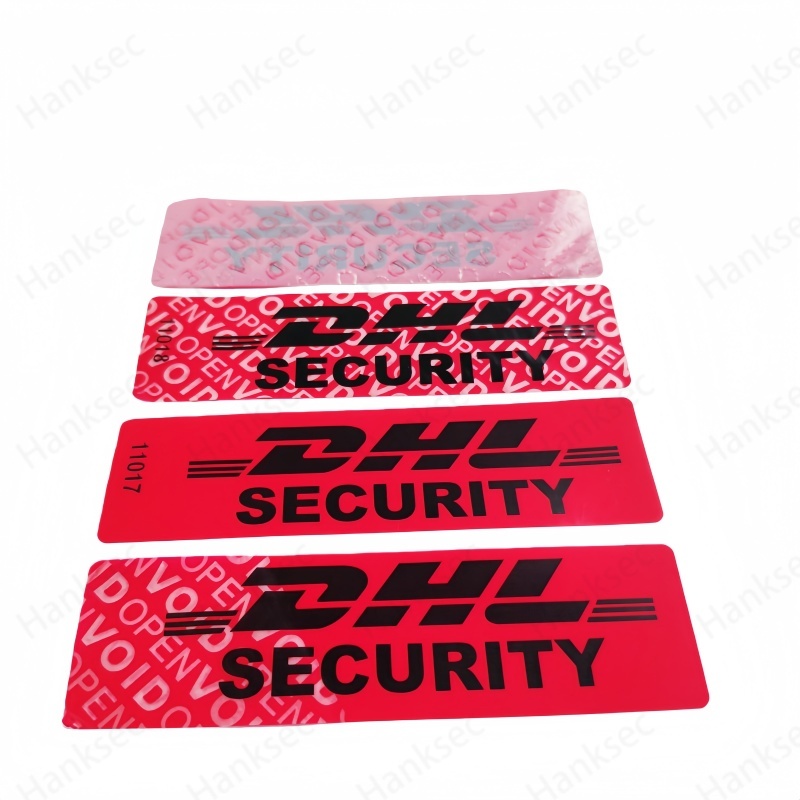
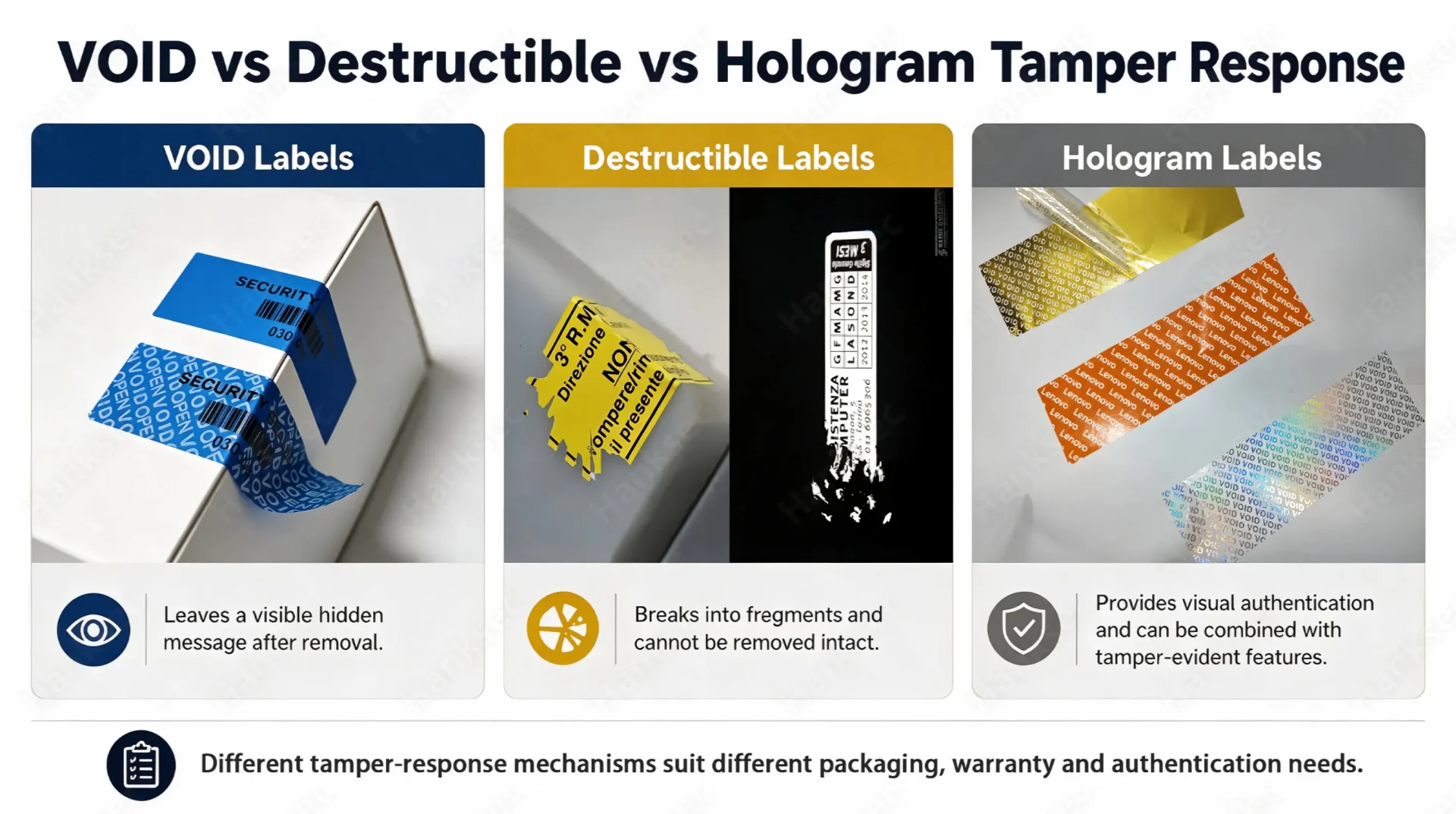
VOID security labels use a controlled separation or release structure that reveals a hidden message such as VOID, OPENED, SECURITY or a custom pattern when someone attempts removal. They are one of the most common tamper-evident constructions because the response is easy to inspect visually.
Within this group, transfer behavior is usually divided into three directions:
- Full transfer: most or all of the security pattern remains on the applied surface after removal.
- Partial transfer: visible evidence is divided between the removed label and the application surface.
- Non-transfer: the hidden pattern appears mainly within the removed label, leaving the application surface cleaner or with limited residue depending on the construction.
These are not three “security levels.” They describe where the evidence appears. Full transfer may be useful when receiving personnel need an obvious message on a carton. Non-transfer may be preferred on electronics, premium housings or reusable equipment where heavy residue is undesirable.
For the detailed mechanism and transfer comparison, use What Is VOID Label Material? and the Tamper Evident VOID Label Materials category.
2. Destructible Security Labels
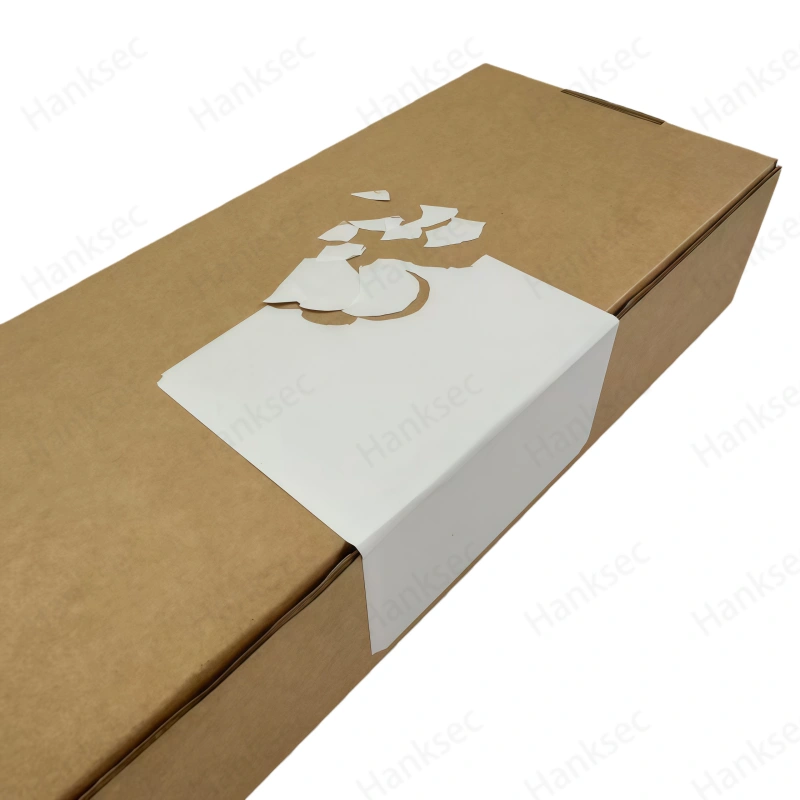
Destructible labels are engineered so the facestock fractures, tears or fragments when removal is attempted. Instead of relying primarily on a transferred message, the construction makes intact removal difficult because the adhesive bond is designed to exceed the cohesive strength of the fragile face material under the intended conditions.
This mechanism is commonly used for warranty seals, electronics, calibration labels, asset protection and applications where reuse of the original label should be visibly difficult.
The key design challenge is balance. A very fragile facestock with an adhesive that does not develop enough bond on the real substrate may lift as one piece instead of breaking. A construction that is too fragile for the converter’s die-cut geometry may also create matrix-stripping or handling problems before the label ever reaches the customer.
For breakage grades, converting behavior and material selection, see the Destructible Label Materials Guide.
3. Holographic Tamper-Evident Security Labels
Holographic security labels add an overt optical authentication feature. A holographic image changes appearance as the viewing angle changes and can support fast visual inspection. However, a hologram by itself should not automatically be described as tamper evidence.
When both authentication and removal evidence are required, the holographic surface can be combined with a VOID transfer construction, destructible base material, custom security pattern, serialized data or other overt and covert features.
This makes holographic constructions useful for brand protection, premium products, certificates, electronics packaging and applications where the buyer wants both “Is this label authentic?” and “Has this label been removed?” answered by the same security system.
For the authentication side of the decision, see Hologram Labels: Types, Security Features & How to Choose.
4. Paper-Based Security Labels
Paper-based tamper-evident labels are often considered for paperboard cartons, kraft mailers, envelopes, document packs and other fiber-based packaging. Depending on the material design, tamper evidence may come from a VOID transfer layer, paper delamination, fiber tear, destructible behavior or a combination of these mechanisms.
Paper does not automatically mean recyclable, biodegradable or suitable for every paper recycling stream. The complete construction—including adhesive, coating, security layer, printing and liner—should be reviewed before environmental claims are made.
Paper also reacts differently from PET to humidity, moisture and dimensional change. Buyers should evaluate the service environment and converter conditions instead of selecting paper only because the final package is made from carton or kraft board.
For a dedicated technical comparison, see the Paper VOID Labels Guide.
5. Hybrid and Serialized Security Labels
Hybrid security labels combine physical tamper evidence with another security or identification function. Common combinations include VOID plus holographic authentication, destructible material plus a serial number, or a tamper-evident base material printed with a barcode or QR code.
Serialization does not replace physical tamper evidence, and physical tamper evidence does not create item-level traceability by itself. The two functions solve different problems. When they are combined correctly, the label can show that access occurred while the unique identifier supports product, asset or batch verification.
Where standardized barcode structures are required, buyers can reference GS1 barcode standards for identification and data-carrier requirements.
Tamper-Evident vs Tamper-Resistant vs “Tamper-Proof” Labels
These terms are often mixed together in purchasing searches, but they should be separated in a technical specification.
- Tamper-evident: designed to create visible or verifiable evidence when removal or manipulation is attempted.
- Tamper-resistant: designed to make unauthorized access or manipulation more difficult.
- Tamper-proof: commonly used as a commercial phrase, but it can imply that tampering is impossible. No pressure-sensitive label should be assumed to be unbeatable under every attack method and environment.
For procurement and qualification, the better question is not “Is this tamper proof?” but “What evidence should remain after the specific removal attempt we are trying to detect?”
How Security Label Materials Create Tamper Evidence
The visible response comes from controlled interaction between several layers. A simplified pressure-sensitive security-label construction can include the following elements.
Facestock
The facestock provides the printable or visible face of the label. PET, destructible films, paper and holographic films each have different tensile strength, dimensional stability, moisture resistance and converting behavior.
Security / Release Layer
VOID and related constructions use a controlled internal layer that determines where the hidden message or pattern appears during removal. Destructible materials use a different failure mechanism: the face itself fractures before clean removal can occur.
Pressure-Sensitive Adhesive
The adhesive must bond to the real substrate strongly enough for the intended security response to activate. Surface chemistry, roughness, coatings, contamination, temperature and dwell all influence the result. Low-surface-energy plastics such as PP and PE can require a different adhesive direction from glass, painted metal or coated paperboard.
Release Liner
Glassine, kraft or PET liners may be selected according to die cutting, matrix stripping, dispensing, web stability and release-force requirements. The liner is part of the converter specification even though it is removed before final application.
Printable Surface
UV flexographic, thermal-transfer, digital, screen and inkjet systems do not all require the same surface chemistry. A material should be approved for the actual ink, toner or ribbon system as well as the final security response.
How to Choose the Right Tamper-Evident Security Label Type
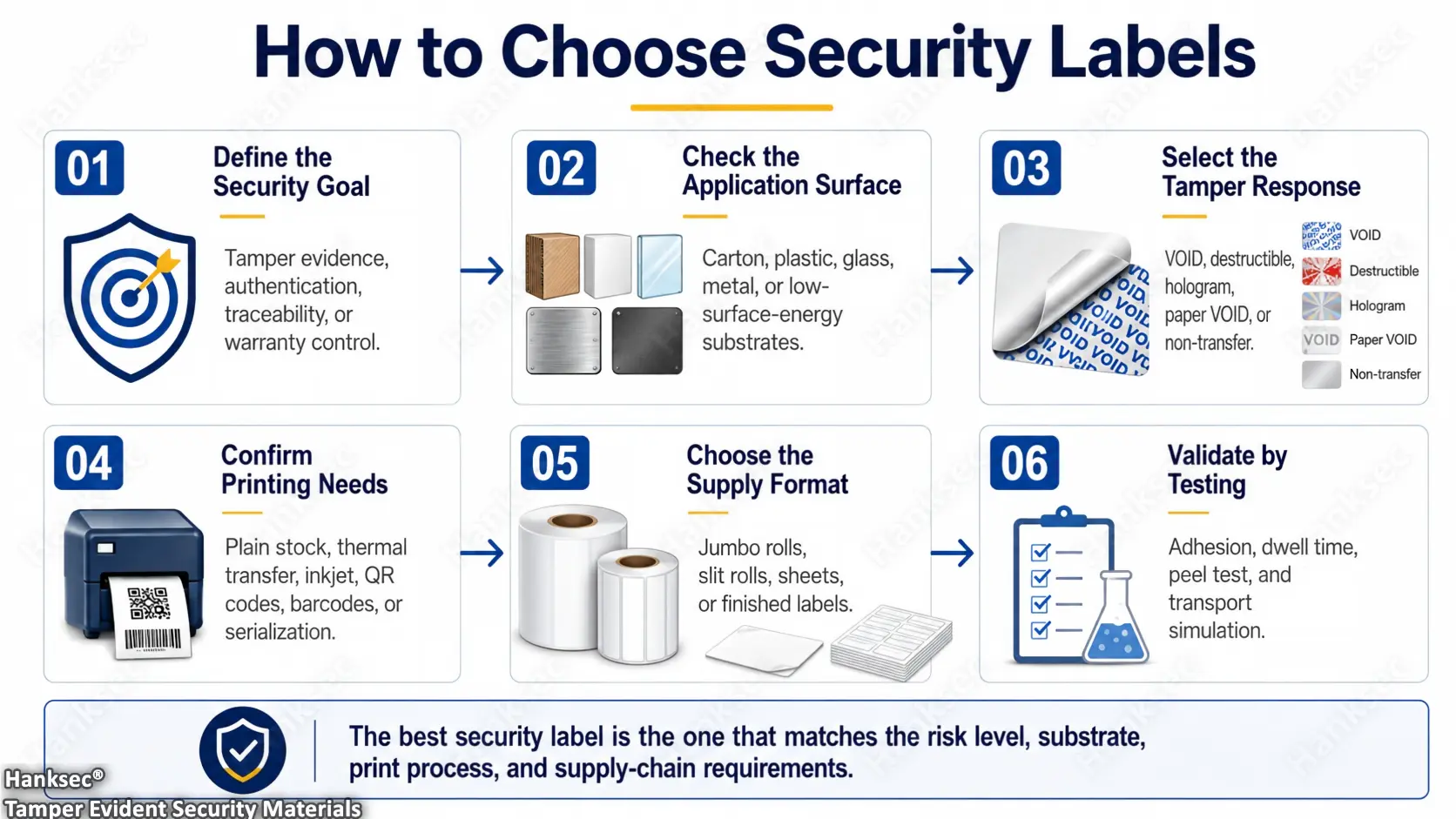
Strong selection starts with the application requirement, not the catalog name. The following sequence reduces the risk of choosing a material that looks correct on paper but fails during converting or on the customer’s real surface.
Step 1: Define the Evidence You Need
Decide what the inspector should see after tampering. Do you need a permanent VOID message on the package, evidence on both sides, a cleaner surface, physical fragmentation, optical authentication, or a combination?
Step 2: Identify the Exact Application Surface
“Plastic” or “cardboard” is not specific enough. PP, PE, ABS, PC, PET, coated paperboard, recycled corrugate, glass and painted metal can present different adhesion conditions. Coatings, texture, mold release, dust and curvature also matter.
Step 3: Define the Residue Requirement
Residue can be desirable or undesirable depending on the application. A logistics carton may benefit from obvious transferred evidence. A smartphone, camera lens area, reusable tote or premium device surface may require a cleaner removal profile.
Step 4: Map the Service Environment
Document application temperature, service temperature, humidity, condensation, abrasion, chemicals, UV exposure and expected service life. A construction that works in an indoor office may not be suitable for cold-chain, outdoor or high-temperature service.
Step 5: Confirm Printing and Converting
For converters, define print method, ink or ribbon system, die-cutting method, matrix stripping, roll width, roll length, core, winding direction, liner and automatic-dispensing requirements before approving the material.
Step 6: Test on the Real Product or Package
Security behavior should be checked on the real application surface after the relevant dwell and environmental conditions. A standard laboratory panel can support controlled comparison, but it cannot replace application-specific qualification.
Tamper-Evident Security Label Selection by Surface
| Application Surface | Useful Starting Direction | Main Risk to Check | Qualification Focus |
|---|---|---|---|
| PP / PE / HDPE | VOID or destructible construction with substrate-matched adhesive | Low surface energy and weak adhesive wet-out | Edge lift, dwell, final VOID or fracture response |
| ABS / PC / rigid plastic | VOID, non-transfer or destructible depending on residue requirement | Additives, texture and surface finish | Adhesion, residue, cosmetic impact |
| Glass | VOID or non-transfer depending on clean-surface requirement | Condensation, cleaning agents, residue visibility | Bond development and removal evidence |
| Painted / powder-coated metal | PET VOID or destructible construction | Coating adhesion may become the weakest layer | Surface damage, residue and tamper response |
| Coated paperboard | Paper VOID or PET VOID | Varnish / coating interaction | Transfer clarity and coating damage |
| Recycled corrugated | Paper or film construction with adhesive matched to rough surface | Dust, porosity, roughness and variable fibers | Edge lift and repeatability across boxes |
| Documents / envelopes | Paper VOID, destructible paper or serialized seal | Random tearing vs controlled security evidence | Readable tamper response and print quality |
For detailed substrate and adhesive qualification, use Hanksec’s Tamper Evident Label Adhesive Guide.
Choosing Security Labels by Application
Electronics and Warranty Protection
Electronics often require a balance between visible tamper evidence and surface protection. Non-transfer VOID materials can be considered where heavy residue is undesirable. Destructible labels are useful where intact label removal should be difficult. Holographic features may be added when product authentication is also required.
Testing should use the actual housing material because painted metal, ABS, PC, glass and coated plastics can respond differently to the same adhesive.
Packaging and Logistics
Cartons, mailers and shipping packs usually benefit from fast visual inspection. Full-transfer or partial-transfer VOID labels may be useful where transferred evidence is acceptable. Paper-based tamper-evident constructions may be considered for fiber-based packaging when appearance and material compatibility are part of the project.
For carton closure over larger seams, a tamper-evident security tape may be more appropriate than a small label. The security device should match the package geometry and inspection process.
Industrial Assets and Equipment
Industrial applications may add abrasion, chemicals, outdoor exposure, heat, irregular surfaces or long service life. A durable PET-based construction may be a better starting point than a fragile paper face, while high-temperature applications may require a dedicated heat-resistant film and adhesive system.
Brand Authentication
If the main problem is counterfeiting rather than unauthorized opening, a basic VOID message may not be enough. Holographic features, covert marks, serial numbers and digital verification can be layered with physical tamper evidence so the label supports both authentication and access control.
Pharmaceutical Secondary Packaging
For medicinal-product packaging, the label is only one component of the complete tamper-verification system. ISO 21976:2018 provides requirements and guidance for tamper-verification features on medicinal-product packaging. A specific label should not be described as automatically compliant without validating the complete package, use conditions and applicable market requirements.
What Label Converters and Security Printers Should Specify
A finished-label buyer may focus on size, color and visible effect. A converter or security printer needs a more complete material specification because the material has to survive printing and converting before it can deliver the final tamper response.
| Specification Area | Questions to Confirm |
|---|---|
| Facestock | PET, paper, destructible film, holographic film or hybrid construction? |
| Security mechanism | Full transfer, partial transfer, non-transfer, destructible or combined? |
| Adhesive | What exact substrate, temperature, surface energy and residue requirement? |
| Release liner | Glassine, kraft or PET? What release behavior is needed for converting and dispensing? |
| Printing | UV flexo, screen, thermal transfer, digital, inkjet or another process? |
| Converting | Die geometry, matrix stripping, slitting, rewinding and small-label handling? |
| Supply format | Jumbo roll, slit roll, sheet or finished label? |
| Quality approval | What substrate, dwell, environmental conditioning and tamper response define acceptance? |
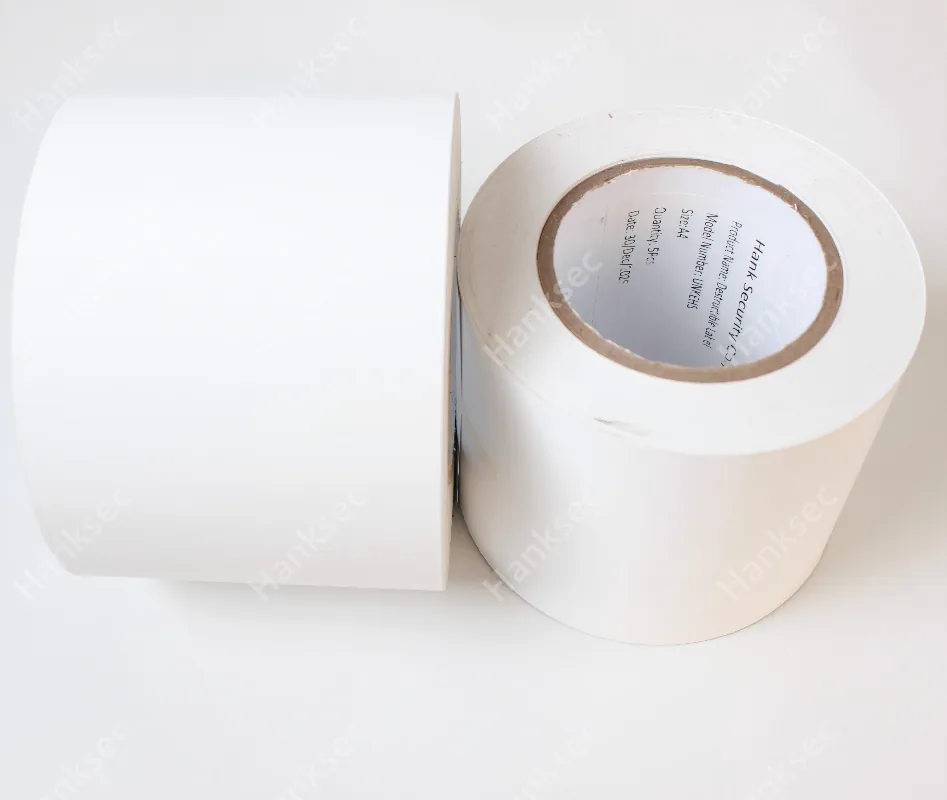
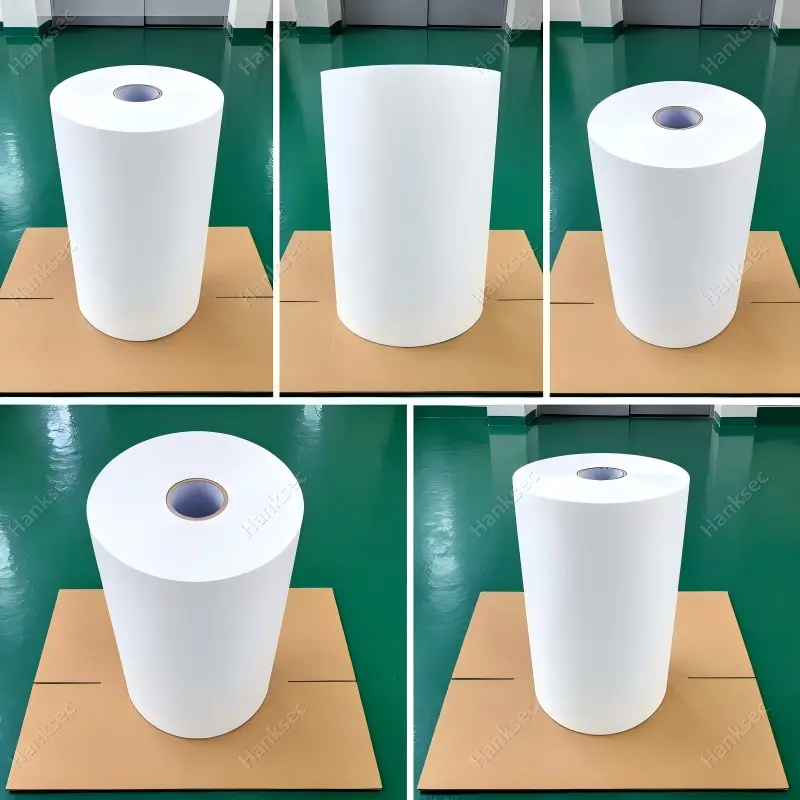
For print-process compatibility, see the Printable Security Label Materials Guide. For jumbo and slit-roll purchasing variables, see VOID Label Material Rolls for Label Converters.
How to Qualify a Security Label Before Bulk Production
Material qualification should reproduce the customer’s real application as closely as practical. Approval should not rely only on how strongly a sample feels when peeled by hand.
A useful qualification sequence includes:
- Confirm the approved application substrate and surface condition.
- Apply samples using controlled pressure and the intended application method.
- Allow the selected adhesive system to develop according to the project test plan.
- Evaluate the required VOID, transfer, fracture or other tamper response.
- Check residue and cosmetic impact on the product or package.
- Condition samples for relevant heat, cold, humidity, moisture or chemical exposure.
- Verify printing, barcode readability and rub resistance where applicable.
- Run die-cutting, matrix-stripping and dispensing trials for converter-supplied material.
- Compare production samples against the approved reference construction.
ASTM D3330/D3330M-04(2025) provides methods for measuring peel adhesion of pressure-sensitive tapes and can support controlled quality evaluation where appropriate. Peel force alone does not prove security-label suitability, so the final tamper response on the intended substrate must also be assessed.
For a complete QC workflow, use Hanksec’s Security Label Material Quality Control Guide.
Common Security Label Selection Mistakes
Many field failures begin before production. The following mistakes are more important than minor differences in appearance.
- Choosing by label name only: “VOID label” does not specify transfer behavior, adhesive, facestock or substrate compatibility.
- Assuming the strongest adhesive is always best: excessive bond can damage coatings or create unacceptable residue, while the security mechanism still may not activate correctly.
- Testing on stainless steel instead of the real product: controlled panels are useful for comparison, but they do not reproduce every plastic, coating or carton.
- Treating holographic appearance as tamper evidence: optical authentication and removal evidence are separate functions unless the construction combines them.
- Ignoring converting: a fragile or high-tack material that cannot die cut, matrix strip or dispense reliably is not a successful converter solution.
- Approving print quality but not the final security response: attractive printing does not confirm that the label will VOID, transfer or fracture correctly.
- Using “tamper-proof” as an engineering specification: define the actual evidence and attack condition instead.
How Hanksec Supports Security Label Material Selection
Hanksec develops tamper-evident security materials from film and functional security layers through adhesive, liner, printable treatment, slitting and finished-label converting. For converters and industrial buyers, the objective is to match the construction to the real substrate and production process rather than offer one universal sticker for every application.
Project support can include facestock selection, transfer behavior, adhesive matching, release-liner options, printable surface treatment, custom hidden messages, roll widths, slit-roll supply, sample qualification and OEM / ODM material development.
Where the project is still at the selection stage, send the exact application surface, required tamper evidence, residue preference, printing method, converting process, label or roll size, environment and estimated volume. This information makes sample selection significantly more useful than choosing from appearance alone.
Frequently Asked Questions
What are the main types of tamper-evident security labels?
The main types are VOID transfer labels, destructible labels, holographic tamper-evident labels, paper-based security labels and hybrid or serialized security labels. Full-, partial- and non-transfer are common VOID subtypes describing where the security evidence appears after removal.
What is the difference between a VOID label and a destructible label?
A VOID label relies mainly on a controlled transfer or separation mechanism that reveals a hidden message. A destructible label relies mainly on a fragile facestock that fractures or fragments during removal. Some constructions combine both mechanisms.
Which security label is best for electronics?
There is no universal best type. Non-transfer VOID labels can be useful where the device surface should stay relatively clean, while destructible labels can be useful where intact removal should be difficult. The final choice depends on the housing material, residue tolerance and service environment.
Do tamper-evident security labels always leave residue?
No. Full-transfer and partial-transfer constructions intentionally create evidence on the application surface. Non-transfer designs are intended to keep the surface cleaner while showing the security response mainly on the removed label. Actual residue should still be tested on the real surface.
Can security labels be printed with barcodes, QR codes and serial numbers?
Yes, depending on the printable surface and production method. Physical tamper evidence can be combined with serial numbers, barcodes, QR codes, logos and other variable data for identification or traceability.
What type works on PP or PE plastic?
PP and PE are low-surface-energy plastics, so adhesive selection is critical. VOID or destructible constructions can be used when paired with a suitable adhesive system, but samples should be tested on the actual molded or film surface before approval.
Should a security label be tested before bulk production?
Yes. Sample qualification should confirm adhesion, the intended tamper response, residue, environmental resistance, printing and converting behavior on the real substrate and under relevant service conditions.
Are hologram labels automatically tamper evident?
No. A holographic image provides visible authentication, but tamper evidence requires a construction that also creates a removal response such as VOID transfer, delamination or destructible behavior.
Can Hanksec supply material rolls instead of finished labels?
Yes. Depending on the project, Hanksec can supply converter-ready jumbo rolls, slit rolls, sheets or finished converted labels with project-specific facestock, adhesive, liner, printable treatment and security construction.
Request Security Label Material Samples & Technical Recommendation
The right tamper-evident label type depends on the complete system: security mechanism, facestock, adhesive, application surface, printing, converting and final service environment.
For a faster recommendation, send Hanksec your application substrate, required tamper response, residue requirement, printing method, converting process, roll or label dimensions, service environment and estimated quantity.
Hanksec can recommend a starting construction and prepare samples for adhesion, printing, converting and tamper-response qualification before bulk production.
REQUEST SECURITY LABEL MATERIAL SAMPLES & TECHNICAL RECOMMENDATION