Fiber Tear Security Label Material for Visible Anti-Removal Evidence
Fiber Tear Security Label Material is a destructible anti-tamper label material designed to create visible fiber-like tearing evidence when removal is attempted. It is suitable for warranty seals, document protection, certificates, inspection labels, asset labels, and OEM security label projects.
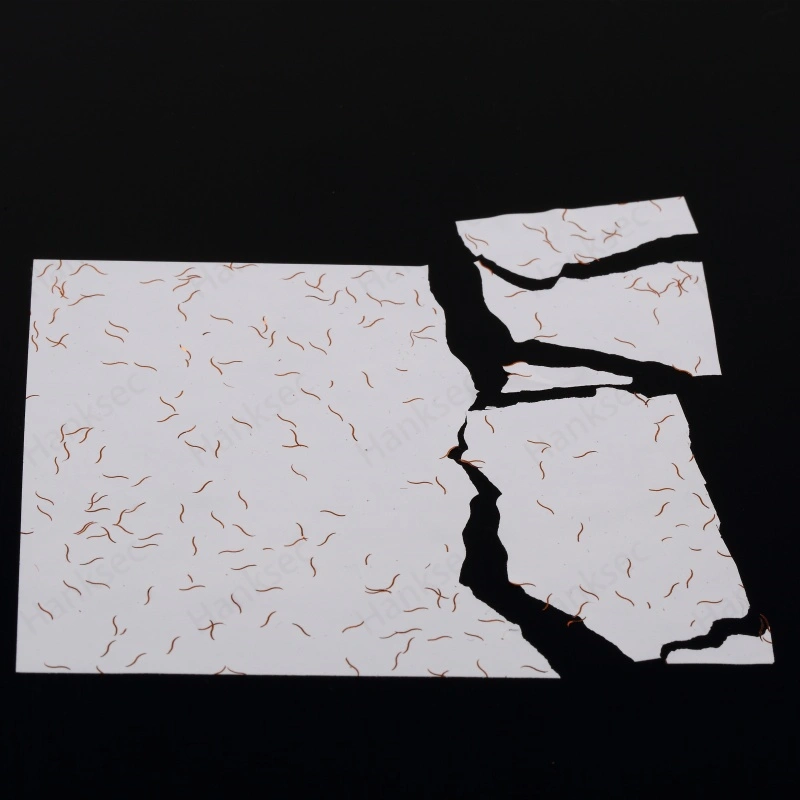
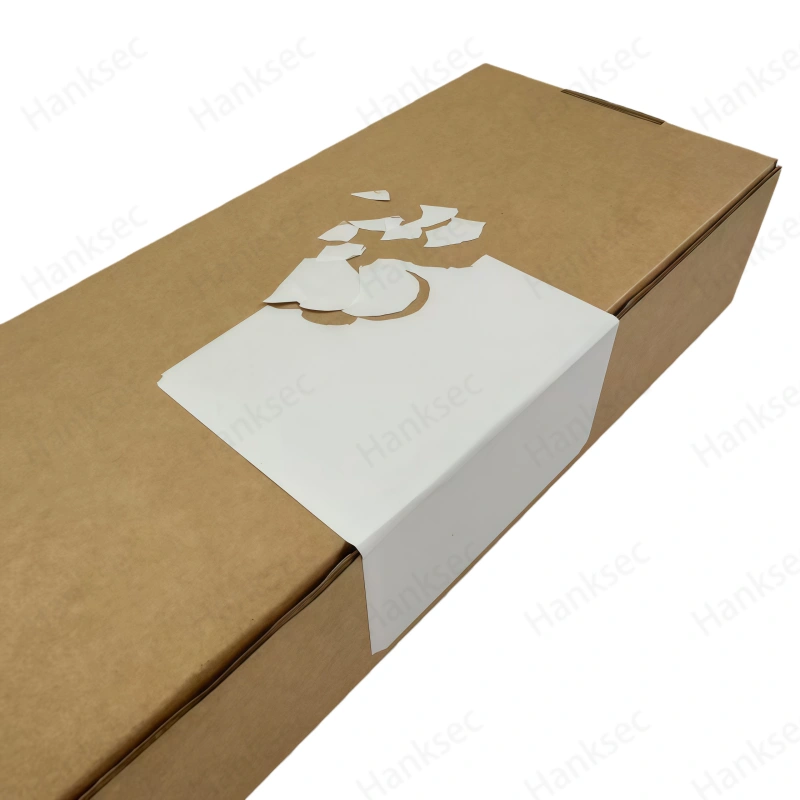
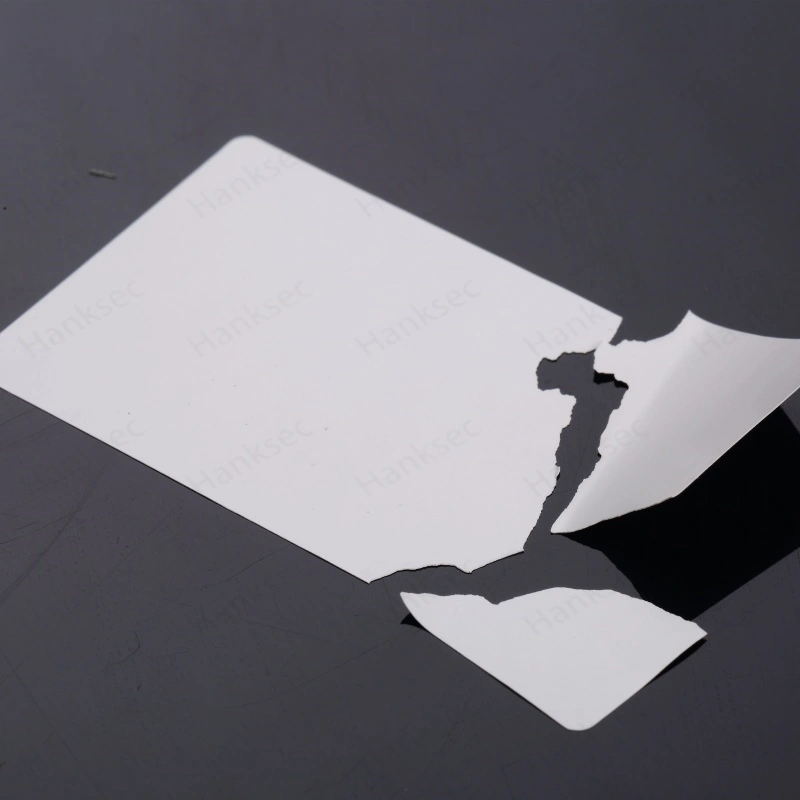
Unlike ordinary PET or PP labels that may peel away cleanly, fiber tear security label material breaks and tears during removal. Once the label is damaged, it becomes difficult to restore, reuse, or reapply, helping inspectors identify unauthorized opening, replacement, or tampering.
This material is suitable for industrial packaging, plastic housings, painted metal, equipment labels, rough cartons, textured surfaces, logistics packaging, and OEM anti-tamper label projects. Compared with standard thin destructible films, foam based security label material provides better contact performance on surfaces that are not perfectly flat.
This fiber-type destruction effect is useful for certificates, document seals, warranty labels, equipment labels, inspection stickers, asset labels, security packaging, and anti-counterfeit applications where customers need visible proof of removal or replacement attempts.
How Fiber Tear Security Label Material Works
Fiber type destructible label material works through controlled internal failure. After the label is applied to the surface, the adhesive bond becomes stronger than the fragile face material. When someone tries to remove it, the label face tears into visible fiber-like pieces instead of coming off in one complete layer.
This physical tearing effect makes the label difficult to reuse, repair, or reapply. Once the material is damaged, inspectors can quickly identify whether a document, package, asset tag, warranty seal, or certificate label has been disturbed.
Why Choose Fiber Tear Security Label Material?
Fiber-type destructible labels are suitable when customers need a more paper-like tearing effect rather than a standard plastic-fragment break. The damaged edge and fiber-like appearance make the tamper evidence easier to notice on document paper, certificates, cartons, light-colored packaging, and inspection labels.
Compared with standard destructible vinyl, fiber type materials can create a more natural torn-fiber appearance. Compared with VOID transfer labels, they rely mainly on physical destruction instead of hidden message transfer, making them suitable for applications where direct material damage is preferred.
Key Features of Fiber Tear Security Label Material
- Fiber-like tearing effect after removal attempt
- Breaks into visible fragments instead of peeling cleanly
- Helps prevent label reuse, document replacement, and warranty fraud
- Suitable for certificates, documents, warranty labels, asset tags, and security seals
- Custom logo, serial number, QR code, barcode, warning text, and die-cut shape available
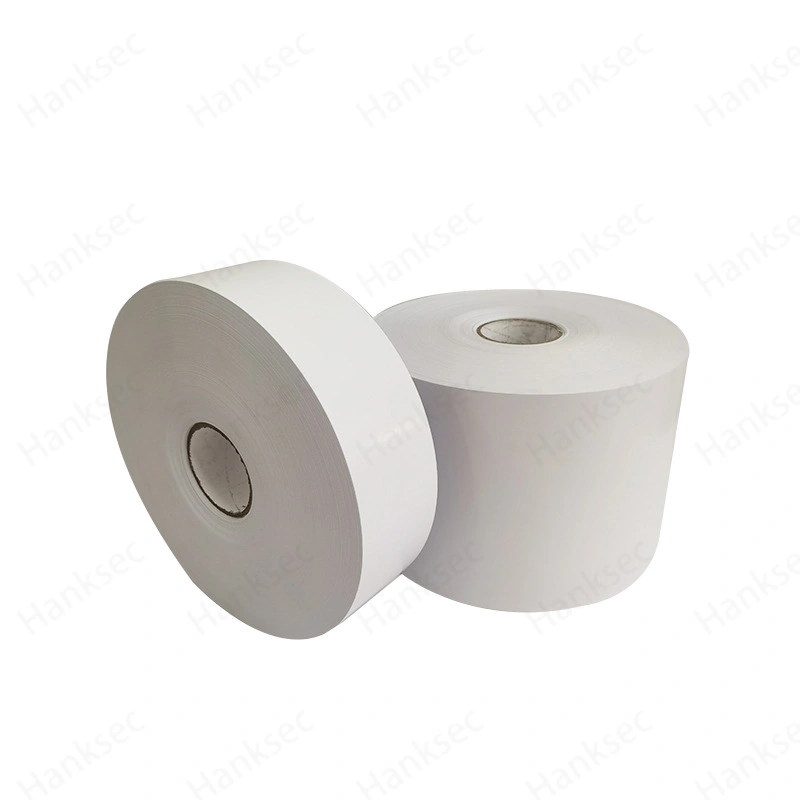
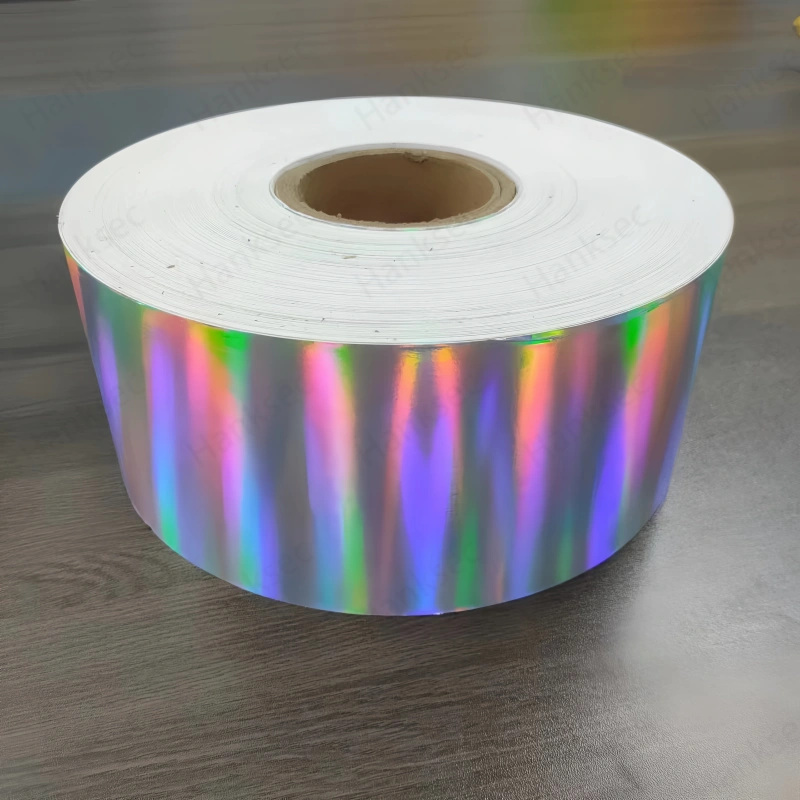
- Can be supplied as jumbo rolls, slit rolls, sheets, or finished custom labels
- OEM and ODM support for label converters, printers, distributors, and brand owners
Recommended Applications for Fiber Tear Security Label Material
Fiber Type Destructible Label Material is commonly used for certificate labels, document security seals, electronics warranty labels, inspection labels, asset labels, equipment seals, retail authentication labels, document folders, packaging seals, and anti-counterfeit product identification.
For documents and certificates, the fiber-type tearing effect can help protect authenticity without relying only on printed information. For warranty and asset labels, it helps service teams identify whether a label has been removed, replaced, or manipulated during use.
Fiber Type vs Ultra Destructible Vinyl
Ultra destructible vinyl is usually selected when customers need extremely small fragments and strong anti-removal performance. Fiber type destructible material is more suitable when customers want a visible torn-fiber effect, especially for paper-based, certificate-based, or document-related applications.
If the application requires a small security seal on electronics or equipment, ultra destructible vinyl may be more suitable. If the application requires visible tearing evidence on a document, carton, certificate, or flat paperboard surface, fiber type destructible label material can provide a more suitable visual effect.
Printing and Converting Compatibility
Fiber type destructible label material can support custom printing such as company logos, serial numbers, QR codes, barcodes, warning text, inspection marks, and security patterns. Because the face material is fragile, printing pressure, die-cutting depth, liner release force, and matrix stripping speed should be tested before mass production.
For label converters and printing factories, the main processing points include edge stability, tearing control, adhesive bonding, print durability, barcode readability, and label dispensing performance. Hanksec can provide sample testing support according to the customer’s converting process and final application surface.
Surface Compatibility and Testing
Before bulk production, customers should test the material on the real application surface. Document paper, coated paperboard, laminated cartons, plastic cases, painted metal, glass, certificate paper, and textured packaging may show different bonding and tearing performance.
Surface dust, oil, coating treatment, application pressure, temperature, humidity, and adhesive curing time can affect the final destructible result. For certificate or document security applications, customers should also check print readability, barcode scanning, adhesive transfer, and final appearance after application.
Related Hanksec Destructible and Security Label Materials
Customers can also explore related Hanksec materials, including destructible label materials, VOID label materials, tamper evident security tapes, non-transfer VOID security tapes, and tamper evident security products.
Testing and Security Printing References
For fiber type destructible label materials, customers often evaluate peel adhesion, tearing behavior, adhesive bonding, print durability, barcode readability, and security printing control. Useful external references include ASTM D3330 peel adhesion testing, FINAT self-adhesive label industry resources, and ISO 14298 security printing management.
How to Choose the Right Destructible Label Material
| Destructible Level |
Best Choice For |
Main Advantage |
| Easy Destructible |
Highest security and anti-removal protection |
Breaks into very small pieces immediately |
| Medium Destructible |
General security labels and packaging labels |
Good balance between security and production stability |
| Hard Destructible |
Large labels, equipment labels, automatic labeling |
Easier handling, printing, die-cutting, and application |
Three Destructible Label Material Options for Different Security Needs
Specification
|
Facestock |
Self-developed Destructible Film |
|
Facestock Thickness |
50 - 110 Microns or Custom |
|
Color |
Matt White or Custom |
|
Adhesive |
Pressure Sensitive Acrylic or Custom |
|
Color Finish |
Matt |
|
Destructible Degree |
Easy/Medium/Hard |
|
MOQ |
530mm*500m or Custom |
|
Liner |
60/80g Glassine Paper Or Kraft Paper |
|
Size Width |
100 / 200 / 300 / 530 / 1060mm or Custom |
|
Size Length |
400 / 500 / 1000 / 2000M or Custom |
|
Standard Core Size |
3 Inch or Custom |
|
Range of temperature |
-20°C - 80℃ |
|
Lead Time |
3-7 Days |
|
Shelf Life |
1 Year Under Normal Condition, Avoid Direct Sunlight And High Humidity |
|
Printing methods: |
Digital Printing, UV Printing, Silk Screen, Intaglio Printing, Rotary Printing, Offset Printing, Thermal Transfer Printing, Inkjet Printing, Etc. |
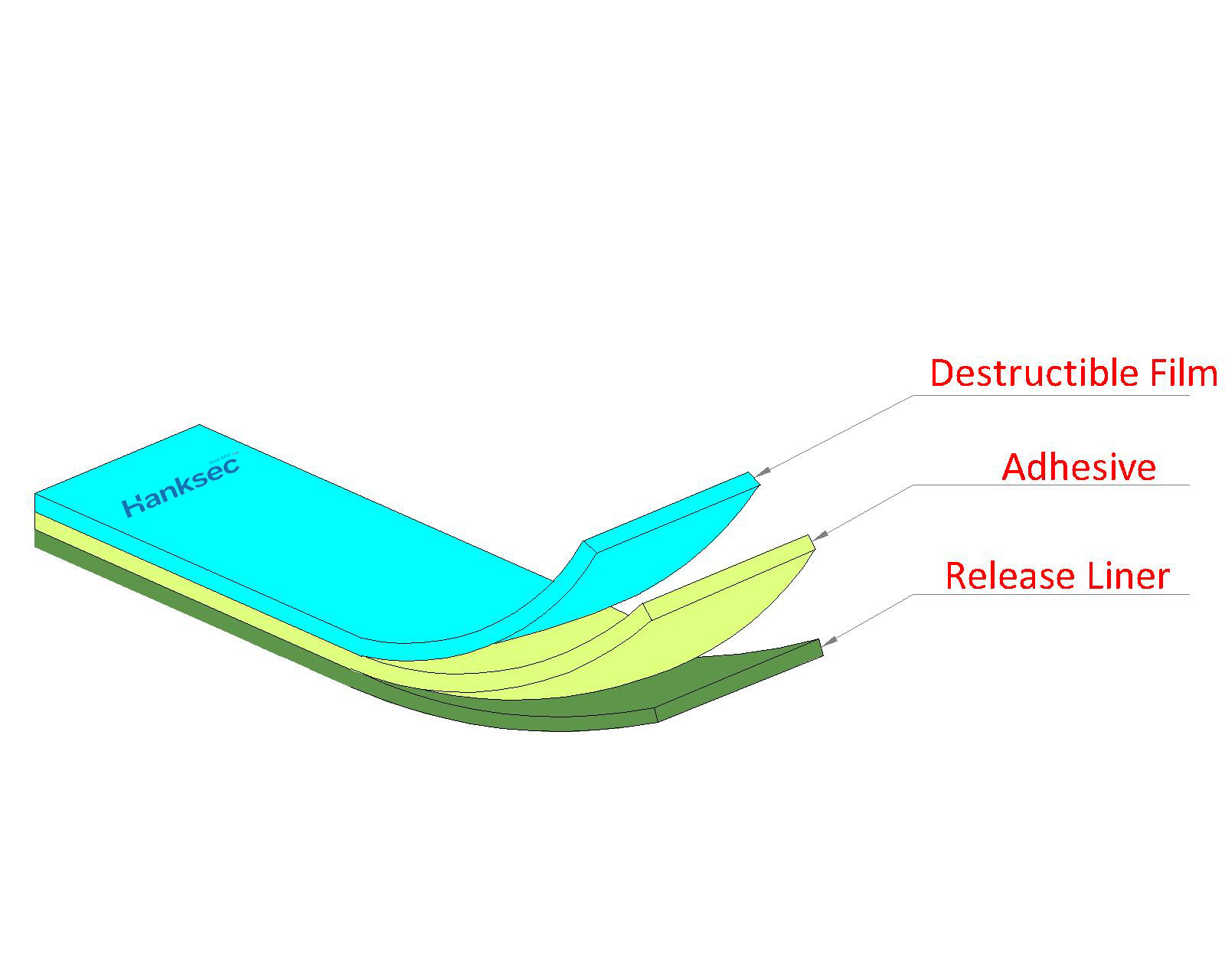
Product Structure