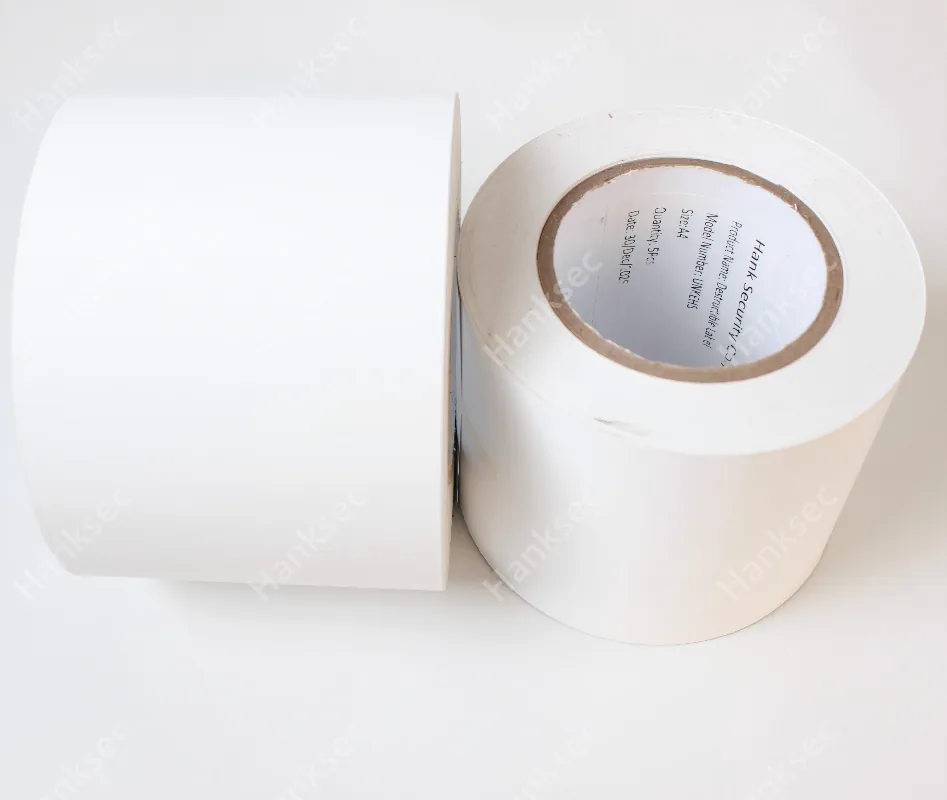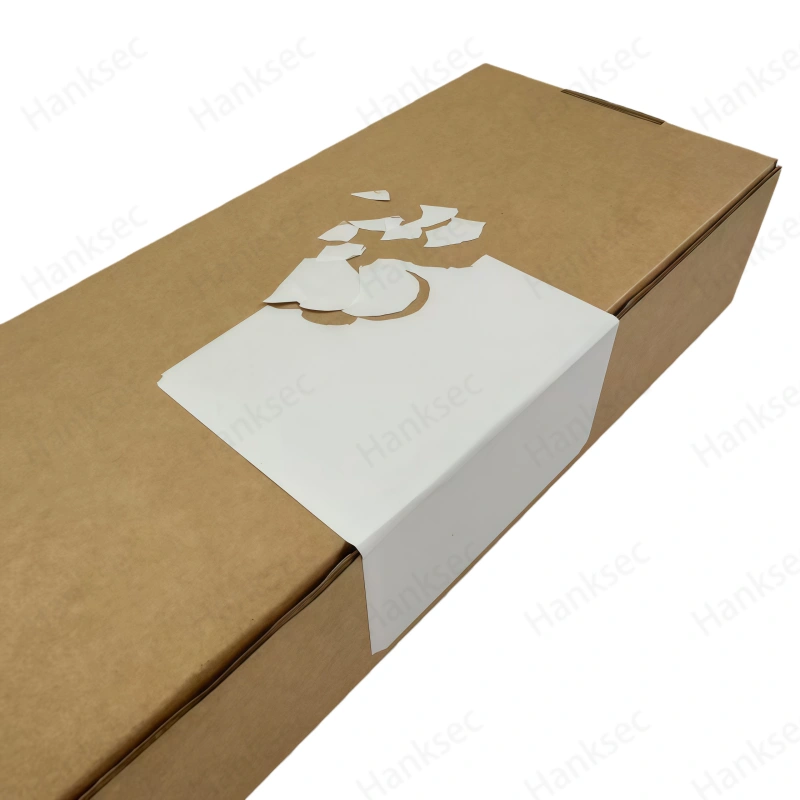
Buyers searching for holographic and security film materials often use very different descriptions for closely related constructions.
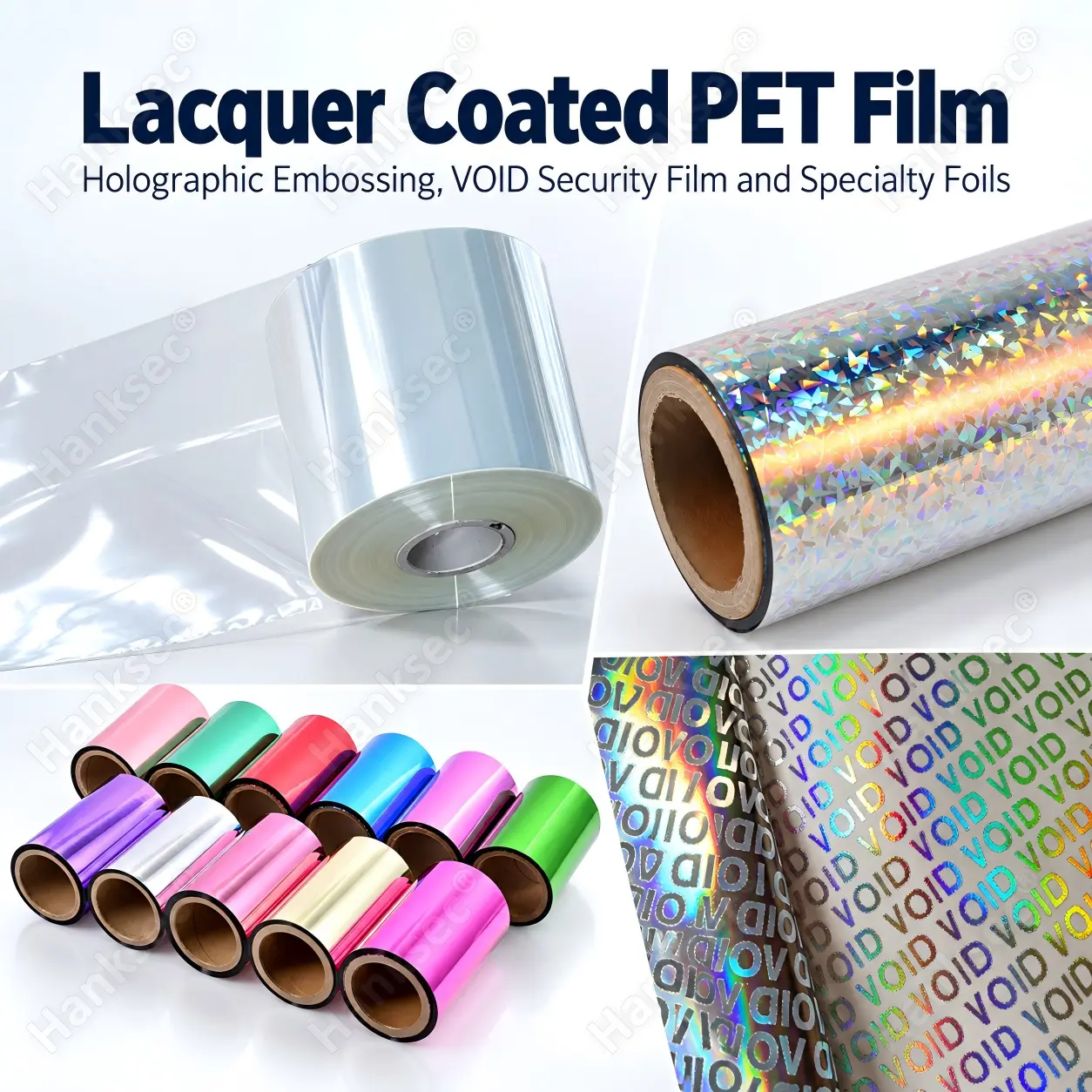
One buyer may request lacquer coated PET film for holographic embossing. Another may ask for selective release polyester film, holographic foil carrier film, metallic and specialty foils, or VOID security film.
A typical technical inquiry may even describe the requirement as:
Lacquer coated transparent polyester with selective release for holographic emboss
These descriptions are related, but they do not describe exactly the same product.
The key is to understand where the PET carrier, lacquer coating, release layer, holographic embossing, metallization and tamper-evident function sit within the complete material construction.
For converters and technical buyers, this distinction is important because a PET carrier designed for holographic embossing is not automatically a transfer foil, and a holographic foil is not automatically a VOID security film.
This guide explains how these material systems are connected and what should be specified before sample testing or bulk production.
How These PET Film and Security Foil Materials Are Related
The easiest way to understand these products is to separate the carrier function, optical function, transfer function and tamper-evident function.
| Material Description | What It Usually Refers To | Main Function |
|---|---|---|
| Lacquer-Coated Transparent Polyester | PET carrier coated with a functional lacquer | Supports embossing, coating or later transfer processing |
| Selective Release PET Film | PET film with a controlled release interface | Controls separation between the carrier and functional layers |
| Holographic Embossing Film | PET-based construction containing an embossable or embossed optical layer | Creates diffractive holographic patterns |
| Metallic and Specialty Foils | Transfer or coated foil systems with metallic, optical or functional effects | Decoration, authentication, security or functional transfer |
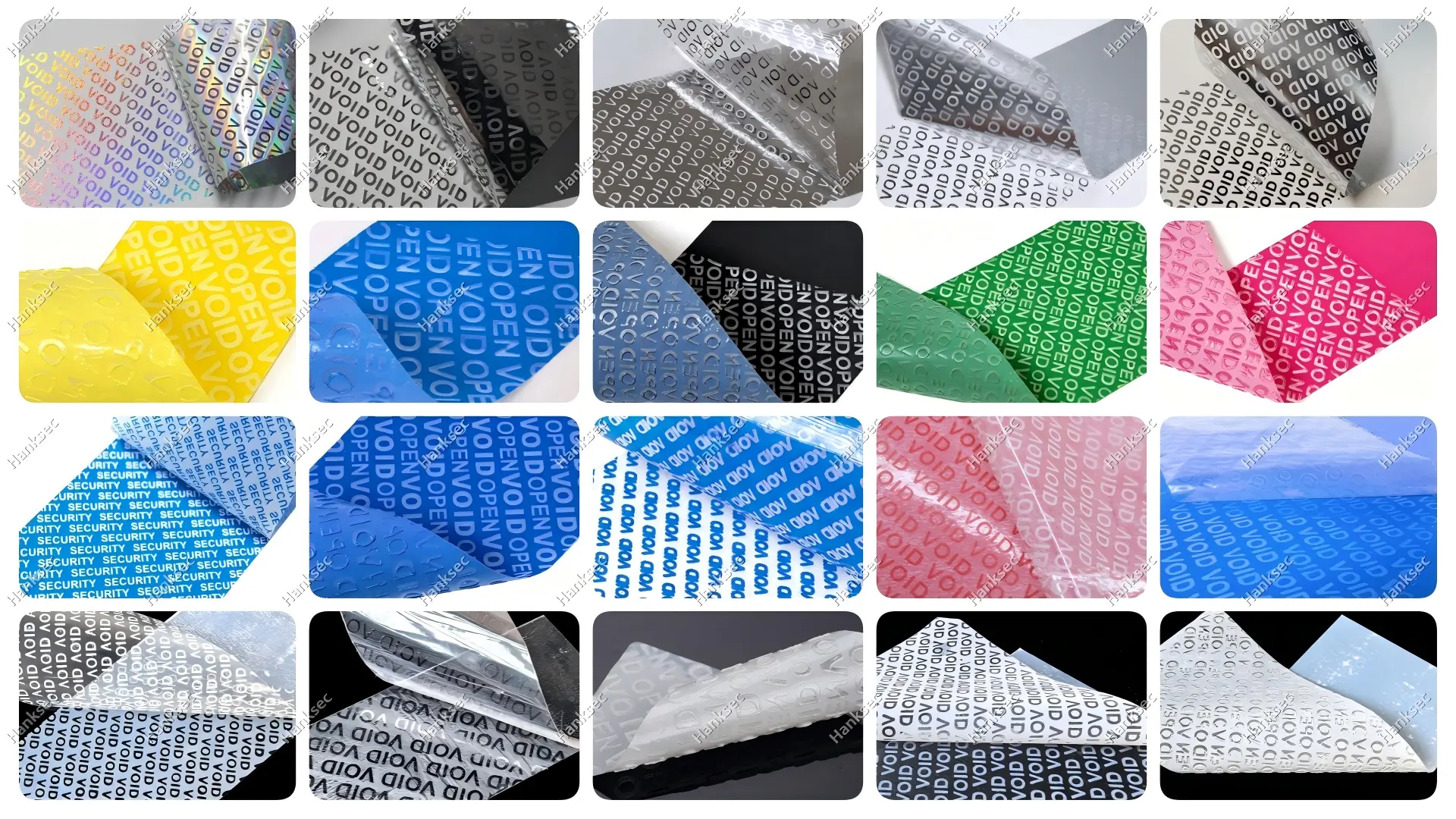
| VOID Security Film | PET-based tamper-evident security material | Creates visible evidence after removal or opening |
These material categories can overlap.
For example, a holographic security construction may use a PET carrier, embossing lacquer, metallized layer and controlled release system while also incorporating a VOID security mechanism.
However, each layer performs a different job.
What Is Lacquer-Coated PET Film for Holographic Embossing
Lacquer-coated PET film for holographic embossing normally uses transparent polyester film as the mechanical carrier and adds a coating designed to receive or support a holographic relief structure.
PET is useful as a carrier because it provides relatively stable web handling during coating, embossing, metallization, slitting and rewinding.
The lacquer layer performs a different function.
It provides the surface in which the holographic or diffractive microstructure can be formed.
A simplified construction may be described as:
- PET carrier film
- release or interface layer when required
- embossing lacquer
- holographic or diffractive relief pattern
- optional metallized layer
- optional protective, transfer or adhesive layers
Security-element manufacturing references also describe constructions in which an embossing lacquer is applied to a PET carrier, embossed with a holographic relief structure and then metallized.
Reference: holographic embossing and metallization structure
The final construction depends on whether the PET remains part of the finished product or acts only as a temporary carrier during transfer.
What Selective Release Means in a PET Carrier System
The term selective release is important, but buyers and suppliers do not always use it in exactly the same way.
In transfer-film applications, the release system controls how easily the functional coating separates from the PET carrier.
In some projects, selective release refers to controlled separation during transfer.
In some constructions, release chemistry or patterned coatings can be engineered so that only selected areas separate during transfer.
The exact release mechanism should therefore be confirmed with the supplier for the intended converting process.
For this reason, the term should not be accepted as a complete specification by itself.
The buyer should confirm what release behavior is actually required.
If the Release Is Too Tight
The functional layer may not separate cleanly from the PET carrier.
This can create incomplete transfer, missing areas or unstable processing.
If the Release Is Too Easy
The coating may separate too early during rewinding, slitting, storage or converting.
Fine graphics and controlled edges may also become more difficult to maintain.
Correct Release Balance
The release system should provide a stable processing window for the intended embossing, metallizing, transfer and converting conditions.
This is why PET thickness, lacquer chemistry and release behavior should be evaluated together rather than as independent specifications.
How Holographic Embossing Works on Coated PET
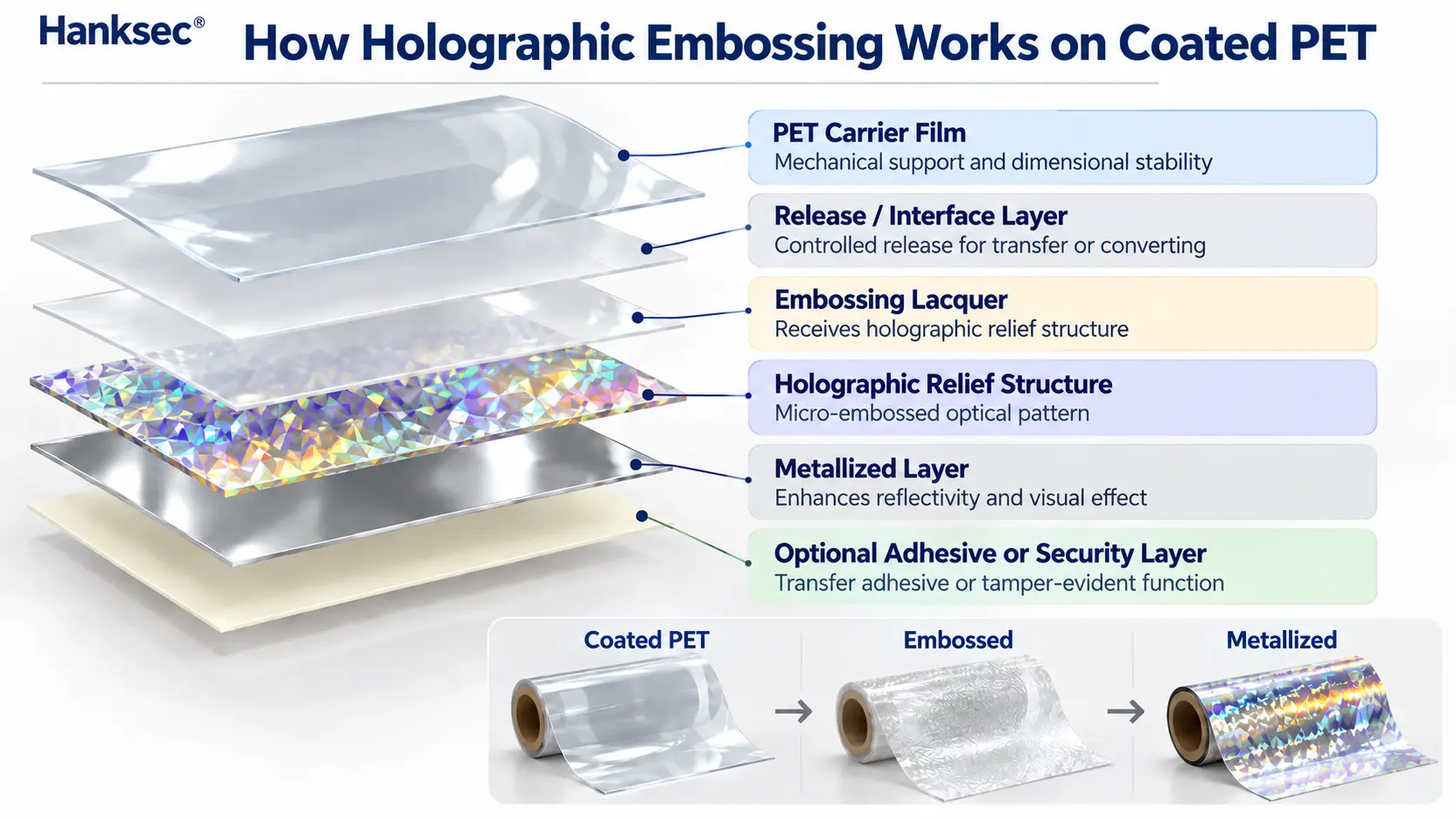
Holographic embossing creates microscopic surface relief patterns that interact with light.
The PET film provides the carrier stability, while the embossing lacquer receives the optical relief pattern.
A typical production sequence may include:
- Prepare the PET carrier film.
- Apply the functional lacquer or embossable coating.
- Create the holographic relief by embossing.
- Apply metallization when stronger reflectivity is required.
- Add protective, release, adhesive or security layers according to the final construction.
- Slit or rewind the material for downstream converting.
The holographic effect therefore comes primarily from the microstructured optical layer, not simply from the PET polymer itself.
Metallization can increase brightness and contrast, while transparent holographic constructions may be used when the underlying print or product must remain visible.
For PET-based holographic material options, see Hanksec’s Holographic PET Film.
Where Metallic and Specialty Foils Fit in the Material System
The term metallic and specialty foils covers a broad range of commercial foil constructions.
It may include standard metallic transfer foils, colored foils, holographic foils, transparent optical foils and security foils.
A typical transfer foil can contain several functional layers.
- PET carrier
- release layer
- color or lacquer layer
- metallic or optical layer
- adhesive or sizing layer
In a transfer-foil system, the PET carrier may only support production and transfer.
After transfer, the PET carrier can be removed while the decorative or functional layers remain on the final substrate.
This is different from many pressure-sensitive security label materials, where the PET film itself may remain part of the final applied label construction.
Industry descriptions of transfer foils similarly identify PET carrier, release, lacquer or color, metallization and adhesive as separate functional layers.
Reference: multilayer holographic transfer material structure
Metallic Foils
Metallic foils normally use a reflective metallic layer to create silver, gold or other metallic appearances.
Vacuum-deposited aluminum is commonly used in reflective transfer constructions.
The metallic layer may be combined with pigments, protective coatings or holographic structures depending on the required appearance.
Specialty Foils
Specialty foils can include more advanced optical or functional effects.
Examples may include:
- holographic foils
- transparent holographic foils
- security foils
- custom optical patterns
- colored metallic effects
- authentication elements
- tamper-evident constructions
Not every metallic or specialty foil is a security material.
A foil may provide a strong visual effect without providing any evidence of unauthorized removal.
This distinction becomes important when buyers compare decorative foil with actual security film.
How VOID Security Film Is Different
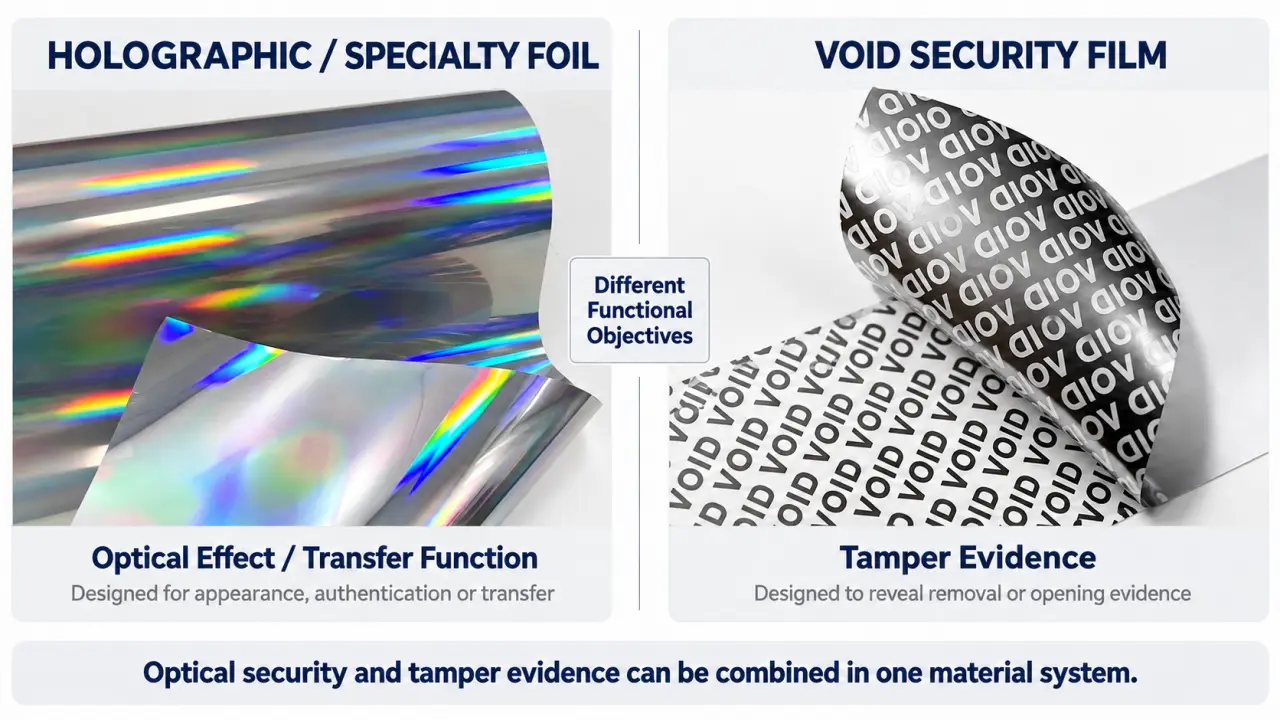
VOID security film is designed around a different functional objective.
Its main purpose is not simply to create metallic or holographic appearance.
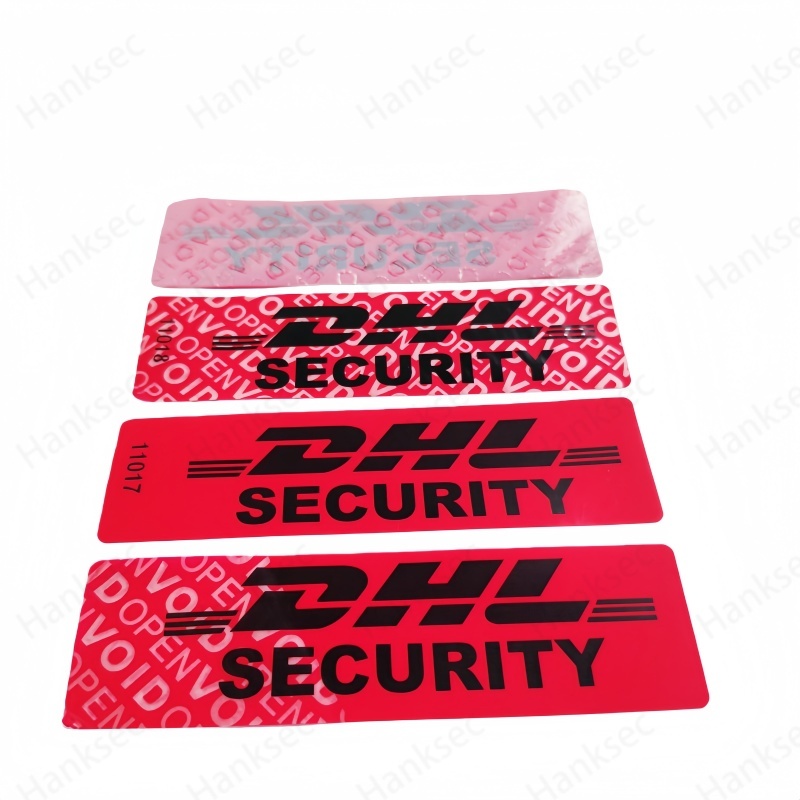
Its purpose is to create visible evidence when someone attempts to remove, lift or reuse the material.
A PET-based VOID construction may include:
- PET facestock
- security or separation layer
- hidden VOID, OPENED or customized message
- color or metallized layer
- pressure-sensitive adhesive
- release liner
Depending on the design, removal may create full-transfer, partial-transfer or non-transfer evidence.
For a deeper explanation of these security mechanisms, see Hanksec’s What Is VOID Label Material Guide.
Holographic Film and VOID Security Film Can Be Combined
Holographic optical features and VOID tamper evidence perform different functions.
The holographic layer provides an optical feature for visual recognition or authentication.
The VOID layer provides physical evidence that the material has been removed or disturbed.
Combining the two can create a material with both visual security and tamper evidence.
A simplified system may include:
- PET security facestock
- holographic optical layer
- hidden security message layer
- controlled transfer or separation structure
- pressure-sensitive adhesive
- release liner
This is different from an ordinary holographic film that provides only a visual optical effect.
Hanksec’s Holographic PET Security Label Material is an example of a PET-based material that combines holographic appearance with hidden VOIDOPEN tamper evidence.
PET Carrier Film and Finished Security Film Are Not the Same Product
This distinction is especially important during sourcing.
A buyer asking for PET carrier film may only need an upstream material for coating, embossing or metallization.
A buyer asking for VOID security film may need a complete pressure-sensitive construction that is ready for converting and application.
If printing is required, the printable surface or topcoat should be specified separately.
A buyer asking for metallic and specialty foils may instead need a transfer foil construction.
Before quoting or sampling, the supplier should therefore determine which stage of the material chain the buyer actually needs.
The practical flow can be simplified as:
PET carrier film → lacquer or release coating → holographic embossing → metallization or optical treatment → transfer or security function → converting → final application
Not every project uses every stage.
What Buyers Should Specify Before Ordering
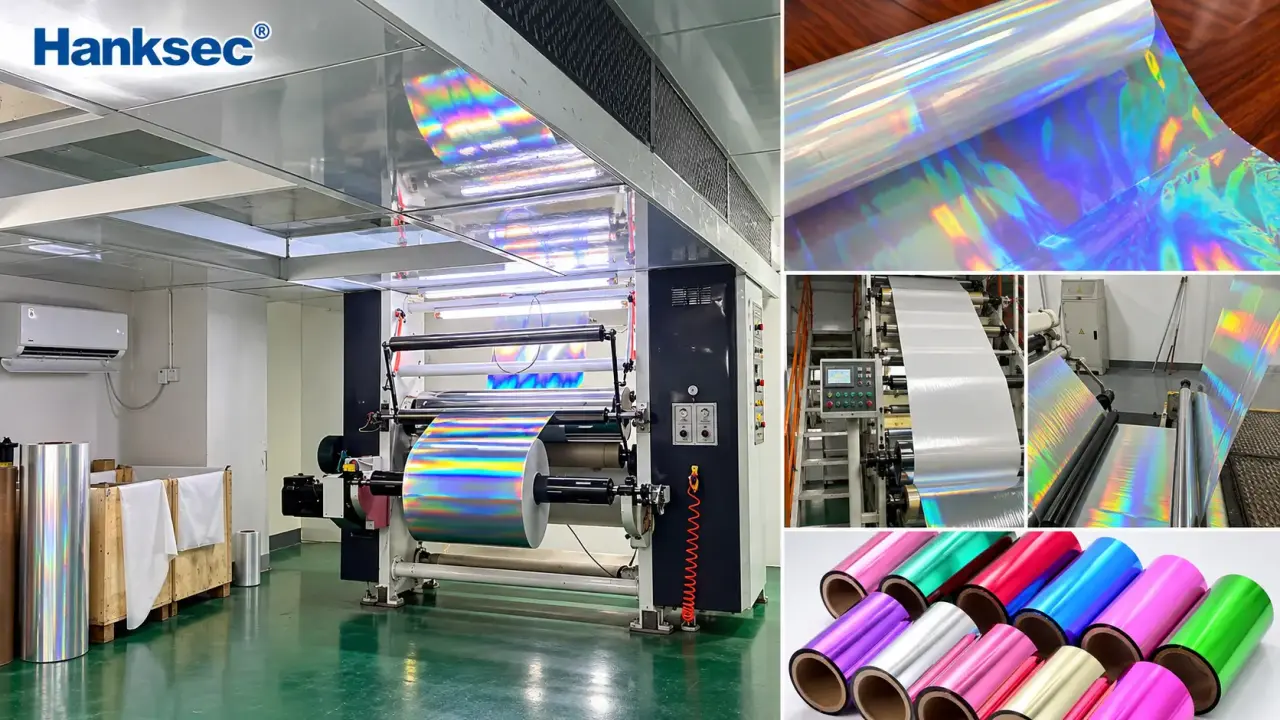
A technical description such as “holographic PET film” is often not enough for accurate material selection.
| Specification | What the Buyer Should Confirm |
|---|---|
| PET Carrier | Transparent, metallized or other appearance, plus required thickness |
| Lacquer | Embossable, printable, protective or project-specific function |
| Release System | Controlled release, selective transfer or other required separation behavior |
| Optical Effect | Plain, holographic, diffraction pattern or custom design |
| Metallization | Silver, gold, colored, transparent or other required optical effect |
| Security Function | No tamper response, VOID, OPENED, VOIDOPEN or customized message |
| Adhesive | Transfer adhesive, pressure-sensitive adhesive or project-specific system |
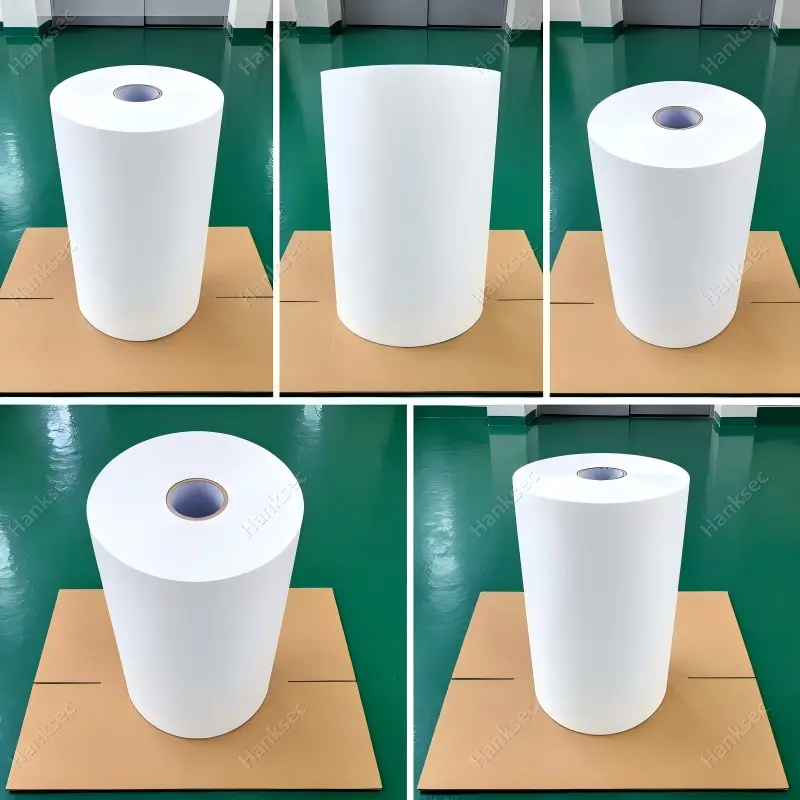
| Supply Format | Jumbo roll, slit roll, sheet or finished converted format |
| Downstream Process | Embossing, metallizing, printing, coating, lamination or label converting |
Providing these details helps avoid a common sourcing problem where two suppliers use the same product name for different material constructions.
What Should Be Tested Before Bulk Production
Sample testing should reflect the final manufacturing route.
For lacquer-coated and holographic PET materials, useful checks may include:
- coating uniformity
- embossing definition
- release behavior
- holographic image clarity
- metallization adhesion
- optical brightness
- slitting and rewinding stability
- printing compatibility where required
If the construction also includes a VOID security function, the qualification should additionally check:
- VOID or OPENED message clarity
- full-transfer, partial-transfer or non-transfer behavior
- adhesion on the real substrate
- dwell time before activation
- die cutting and matrix stripping
- final tamper response
For complete security-material testing methods, see Hanksec’s Security Label Material Quality Control Guide.
Common Sourcing Mistakes
Assuming Every Holographic PET Film Is a Transfer Foil
Some holographic PET films remain part of the finished laminate or label.
Other constructions use PET only as a temporary transfer carrier.
The buyer should confirm whether the PET remains in the final product.
Assuming Selective Release Means the Same Thing for Every Supplier
Release terminology can vary between coating, transfer and converting applications.
The required separation behavior should therefore be described by function rather than by one phrase alone.
Assuming Holographic Appearance Automatically Provides Tamper Evidence
A holographic optical effect can support authentication, but it does not automatically provide evidence of removal.
A VOID, destructible or other tamper-evident mechanism must be engineered separately when physical opening evidence is required.
Buying by Appearance Without Confirming the Downstream Process
A bright foil sample may look correct but still fail during embossing, printing, transfer, slitting or die cutting.
The complete converting process should be confirmed before bulk production.
FAQ About Lacquer-Coated PET Film and Security Foils
Is Lacquer-Coated Transparent Polyester the Same as Holographic PET Film
No.
Lacquer-coated transparent polyester describes a PET carrier with a functional coating.
It becomes holographic only when the required optical microstructure is created or added to the construction.
What Is Selective Release in Holographic Embossing Film
Selective release generally refers to controlled separation behavior between the PET carrier and the functional transfer layers.
The exact meaning should be confirmed with the supplier because different production systems may use the term differently.
Can PET Film Be Metallized After Holographic Embossing
Yes.
Many holographic constructions use an embossed lacquer layer followed by metallization to improve reflectivity and make the optical structure more visible.
Is VOID Security Film the Same as Holographic Film
No.
Holographic film mainly provides an optical effect.
VOID security film is engineered to create visible evidence after removal.
The two functions can be combined in one security material.
Are Metallic and Specialty Foils Always Security Materials
No.
Many metallic foils are used mainly for decoration or premium appearance.
A security foil requires additional authentication, controlled transfer or tamper-evident functions.
Can These Materials Be Supplied for Further Converting
Yes.
Depending on the project, PET security and holographic materials can be supplied in jumbo rolls, slit rolls or customized formats for coating, printing, laminating, die cutting and other converting processes.
Conclusion: Specify the Material Function Before Selecting the Film
Lacquer-coated PET film, selective release polyester, holographic embossing film, metallic and specialty foils, and VOID security film belong to the same broader material technology chain, but they should not be treated as interchangeable products.
PET may act as a mechanical carrier.
The lacquer may provide the embossable optical surface.
The release system controls separation.
Holographic embossing creates the diffractive optical structure.
Metallization can provide reflectivity.
VOID layers create visible tamper evidence.
For converters and technical buyers, the correct sourcing approach is therefore to define the required function at every stage of the material construction.
Hanksec supports PET-based security materials, holographic constructions, VOID security materials and converter-ready roll formats for security printers, label converters, distributors and OEM projects.
Projects can be evaluated according to PET carrier specification, release behavior, holographic effect, metallization, tamper response, adhesive system and downstream converting requirements.