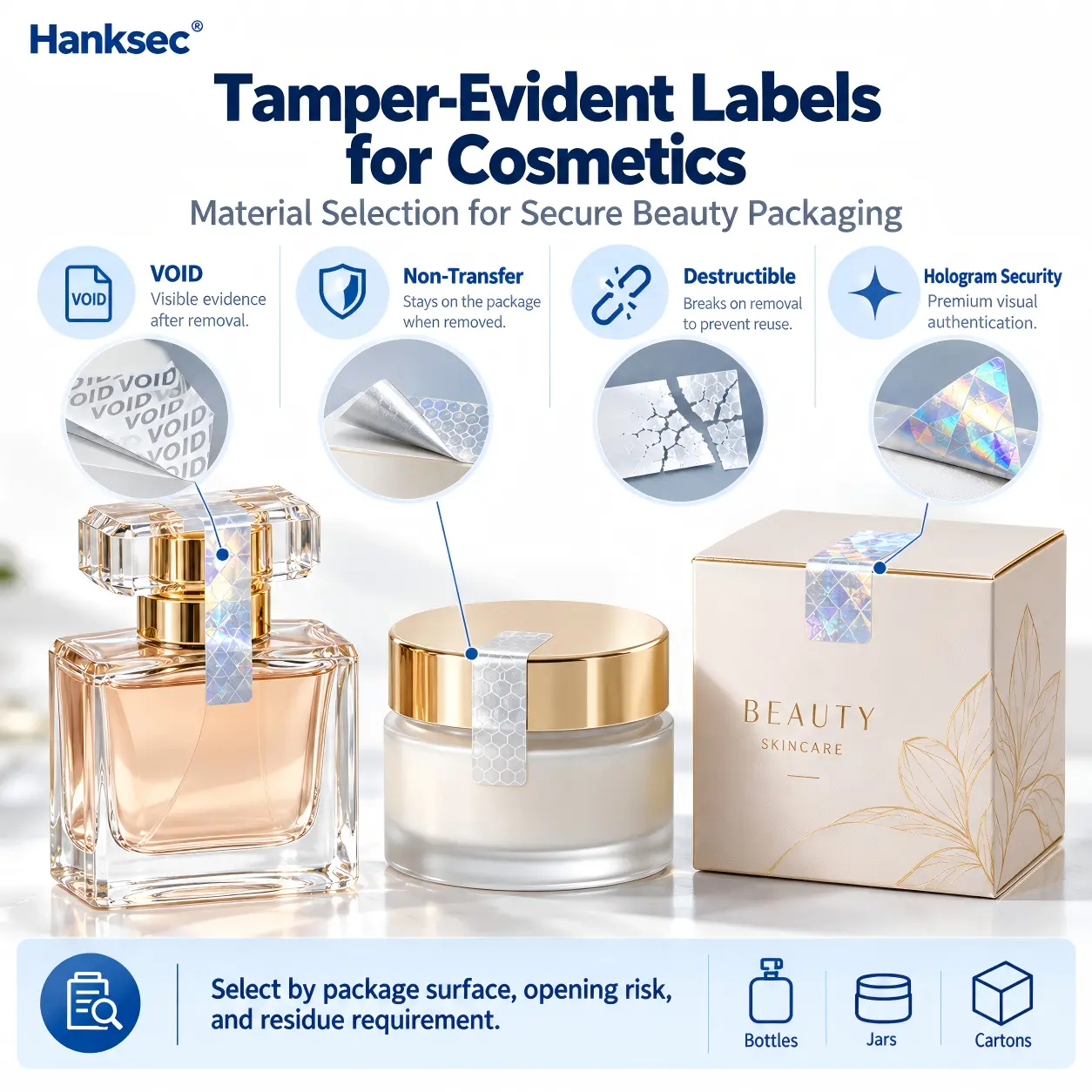
Tamper evident labels for cosmetics should do more than show that a seal has been removed. Cosmetic packaging combines security, surface compatibility and appearance requirements that do not always occur together in ordinary industrial labeling. A label may need to reveal unauthorized opening or product replacement while still fitting premium cartons, clear glass bottles, plastic jars, caps or decorative packaging without making the product look industrial.
For cosmetic brands, packaging manufacturers, security printers and label converters, the right solution therefore depends on more than choosing a VOID label or hologram.
The practical questions are:
Where will the security label be applied? What type of tampering should become visible? Should evidence remain on the package? And how much can the security feature change the appearance of the original cosmetic packaging?
This guide focuses specifically on those application decisions. It does not replace a general security-label comparison. Buyers who first need to understand VOID, destructible, holographic and other security-label families can use Hanksec’s Security Labels: Types, Materials, Applications & How to Choose.
Quick Answer: Which Tamper Evident Labels Are Suitable for Cosmetics?
There is no single best tamper-evident label for every cosmetic package. A practical starting point is to match the material construction to the package surface, opening risk and residue requirement.
| Cosmetic Packaging Requirement | Material Direction |
|---|---|
| Strong visible evidence left on an outer carton | Full-transfer or suitable partial-transfer VOID |
| Premium glass or decorative surface should remain relatively clean | Non-transfer VOID |
| Genuine label should be difficult to remove intact and transfer to another package without visible damage | Destructible security material |
| Visible authentication plus tamper evidence | Hologram VOID construction |
| Luxury packaging where coverage should remain discreet | Transparent or carefully matched security construction |
| PP / PE cap or low-surface-energy plastic | Substrate-matched adhesive + real-package testing |
| Serialized product identification | Printable security material + serial / QR / barcode workflow |
The key point is that material selection should begin with the cosmetic package and the threat—not with the appearance of the security label. Buyers can also review Hanksec’s VOID label material guide to understand different security constructions.
Why Cosmetic Packaging Needs a Different Tamper-Evident Label Strategy
Cosmetics combine several conditions that do not always occur together in industrial security-label applications.
A skincare jar, perfume bottle or luxury carton may need to:
- look premium on the shelf;
- show whether it has been opened;
- discourage unauthorized removal and transfer of the security seal;
- adhere to glass, PET, PP, PE or coated paperboard;
- survive frequent handling;
- remain visually acceptable around a small or curved closure;
- support logo, barcode or serial printing;
- run through die cutting, matrix stripping and dispensing reliably.
The wider cosmetic-label industry already treats moisture, oils, frequent handling, curved containers and squeezable packaging as important material-selection factors. UPM’s current cosmetics and personal-care guidance highlights wet, humid and oily environments, low-surface-energy packaging, curved containers and premium aesthetics as key label-material considerations. See UPM Cosmetic & Personal Care Label Materials.
Security labels add one more requirement:
The material must also create the intended security evidence when removal is attempted.
That means adhesion alone is not enough.
Start With the Cosmetic Packaging Risk
Before choosing a material, identify what the security label is expected to reveal.
Unauthorized Opening
A carton, jar, bottle or cap may be opened before sale, delivery or authorized use.
The objective is usually:
first-opening evidence.
A tamper-evident seal placed across the actual opening path can make that event visible.
Product Replacement or Refill
A genuine container may be reused or its contents substituted. In this case, the security system may need to protect a cap, neck, jar lid, carton closure or another access point.
The important question becomes whether the original package can be opened and convincingly resealed without leaving evidence.
Genuine Label Transfer
A genuine security label may be removed and transferred to another package, creating a risk of misleading reuse.
This risk favors constructions that make intact removal difficult, such as VOID response, destructible facestock or another irreversible separation structure.
Counterfeit Packaging
A counterfeiter may reproduce normal artwork and packaging. Tamper evidence alone does not authenticate a product.
For higher-risk brand-protection projects, tamper-evident materials may therefore be combined with custom holographic features, covert marks or serialization.
ISO 22383:2020 recommends selecting authentication elements after a counterfeiting risk assessment rather than assuming one technology solves every problem. See ISO 22383:2020.
For the broader brand-protection architecture, see Hanksec’s Anti Counterfeiting Labels: Brand Protection System Guide.
Tamper Evident Labels for Cosmetics by Packaging Format
The most useful way to select cosmetic security material is to start with the actual package.
1. Perfume Boxes and Fragrance Cartons
Perfume packaging often combines premium coated paperboard, metallic decoration, lamination, embossing, varnished surfaces and high visual expectations.
A strong industrial-looking seal may technically work while reducing shelf appeal.
Possible material directions include:
- Partial-transfer VOID when visible opening evidence is required but the buyer wants a more balanced residue pattern than a heavy full-transfer construction.
- Non-transfer VOID when the original decorative surface should remain relatively clean after removal.
- Hologram VOID when visible authentication and opening evidence are both required.
- Transparent tamper-evident material when the buyer wants to minimize interference with existing packaging graphics.
For premium perfume packaging, the desired visible result after tampering should be specified before the material is ordered.
2. Glass Perfume Bottles and Cosmetic Jars
Glass often provides a favorable bonding surface, but that does not mean every security label will perform correctly.
Important factors include:
- curved surfaces;
- small bonding area;
- decorative coatings or frosting;
- contamination from oils or handling;
- label size;
- dwell time;
- residue requirement.
For premium glass packaging, heavy adhesive residue may be undesirable. That makes non-transfer VOID material particularly relevant when buyers want visible tamper evidence on the removed security label while keeping the application surface relatively clean.
For the construction, specifications and qualification points, see Hanksec’s Non-Transfer VOID Label Material Buyer’s Guide.
However, non-transfer should not be specified automatically for every glass package. If the inspection procedure requires a strong permanent warning to remain on the bottle, partial- or full-transfer behavior may be more appropriate.
3. Skincare Jars and Cream Containers
Skincare jars create a different challenge. Possible application points include the lid-to-body area, outer carton closure, jar neck or cap edge.
The available security-label area can be small and curved. Buyers should therefore consider:
- label flexibility;
- adhesive wet-out;
- edge lifting;
- label dimensions;
- die-cut accuracy;
- application pressure.
A security label that performs correctly on a flat laboratory panel may lift when wrapped across a curved jar. The actual container should therefore be tested before bulk production.
4. PET Cosmetic Bottles
PET is widely used for personal-care and cosmetic packaging. Security applications may include bottle-to-cap seals, closure labels, serialized labels or outer-packaging seals.
PET often bonds more easily than PP or PE, but performance still depends on surface treatment, curvature, contamination, label size, adhesive and environmental conditions.
Buyers should qualify the complete construction rather than selecting an adhesive from a generic datasheet.
5. PP and PE Caps, Jars and Containers
Polypropylene and polyethylene need extra attention because they are low-surface-energy plastics.
Typical problems can include:
- weak initial wet-out;
- edge lifting;
- incomplete VOID activation;
- inconsistent destructible behavior.
A label may peel from the plastic before its internal security layer activates. In that case, the problem is not necessarily the VOID technology. It may be an adhesive-to-substrate compatibility problem.
Hanksec’s Tamper Evident Label Adhesive Guide: PP, PE, HDPE, PET, Glass & Carton Selection explains this in more detail.
For PP / PE cosmetic packaging, sample testing on the actual molded component is strongly recommended.
6. Cosmetic Cartons and Secondary Packaging
Cartons are often one of the most practical locations for visible tamper evidence because the security seal can bridge a flap or closure.
But coated cartons vary significantly. Possible surfaces include:
- uncoated paperboard;
- gloss coating;
- matte lamination;
- UV varnish;
- metallic coating;
- plastic lamination.
A strong adhesive may interact very differently with each surface.
The required security result also matters. Full transfer may be appropriate when strong residue is acceptable. Partial transfer can provide visible evidence with a more balanced appearance. Destructible material can be useful when intact removal and clean transfer of the label must be difficult.
The correct answer cannot be determined from the word “carton” alone.
Which Tamper-Evident Material Should Cosmetic Buyers Choose?
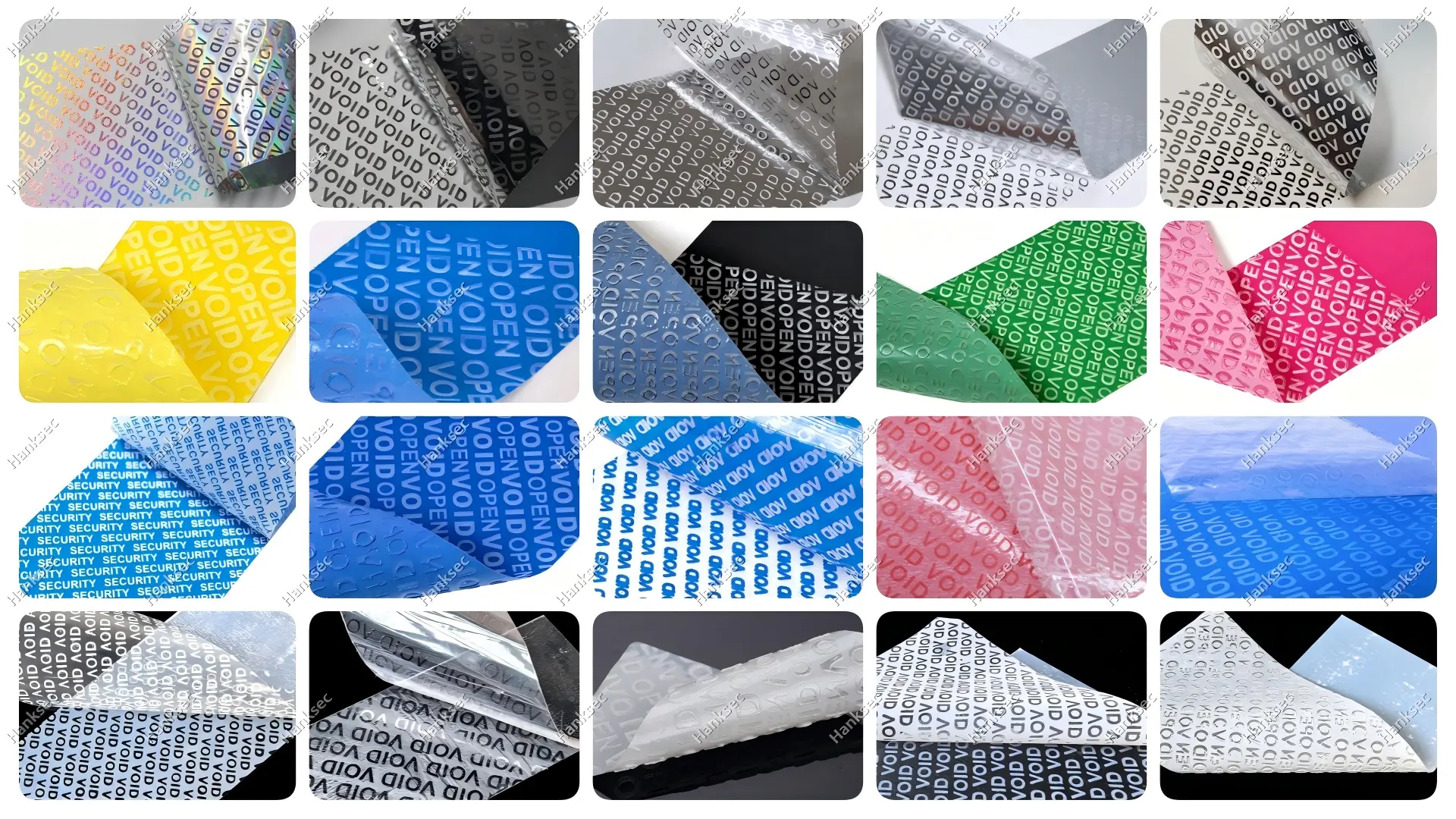
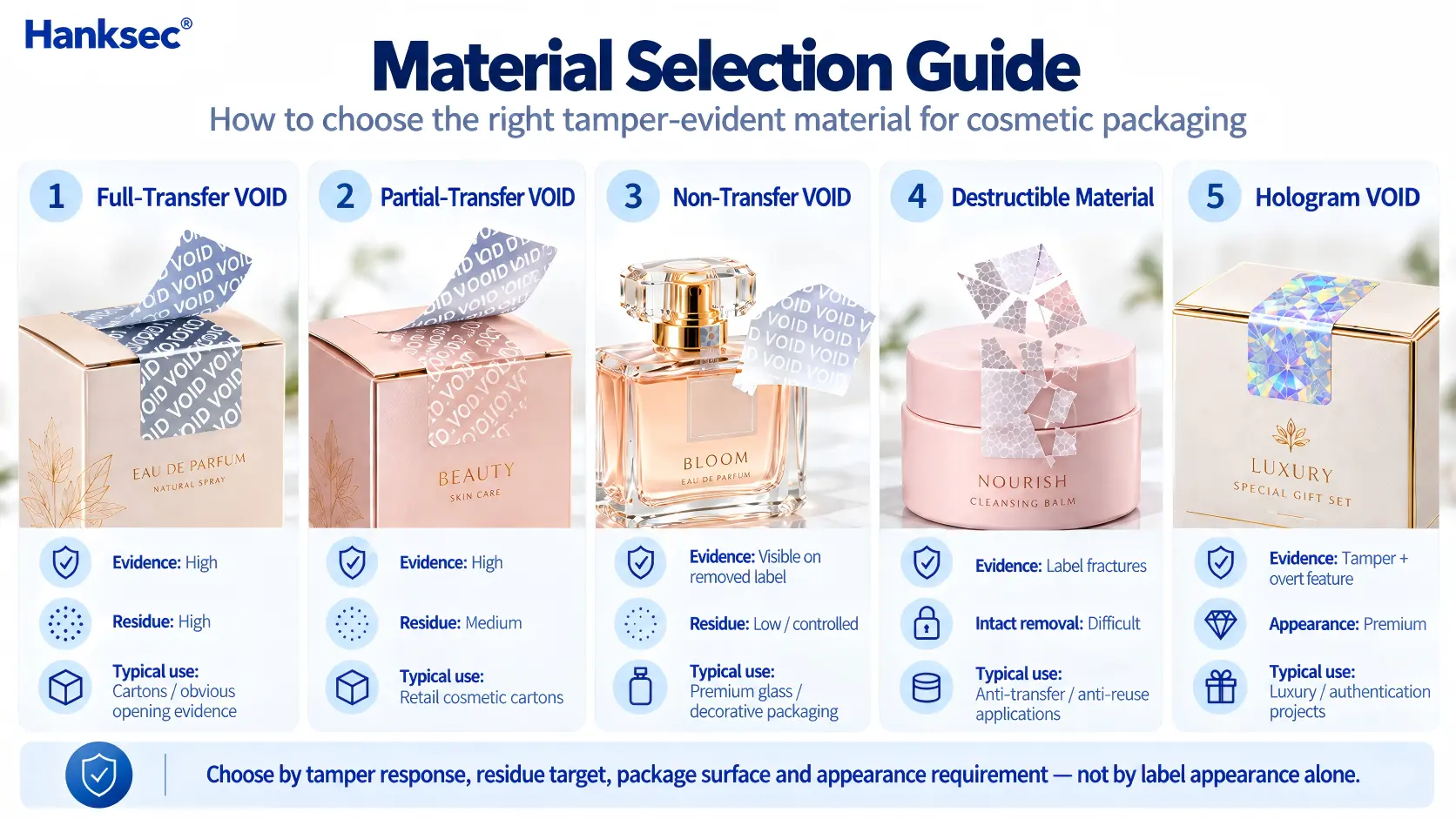
Full-Transfer VOID
A full-transfer construction leaves most or all of the hidden security message on the application surface after removal.
Useful when:
- very obvious opening evidence is required;
- residue on the carton or package is acceptable;
- the inspection process focuses on the applied surface.
Main consideration: it may be visually too aggressive for some premium cosmetic packages.
Partial-Transfer VOID
Partial-transfer materials divide the security response between the removed label and the package surface.
Useful when:
- opening evidence needs to be visible;
- the buyer wants a balance between residue and appearance;
- both the removed label and package should show evidence.
Partial transfer can be a useful middle ground for retail cartons and secondary packaging.
Non-Transfer VOID
Non-transfer VOID material displays the hidden message mainly on the removed label while aiming to keep the original surface relatively clean.
It is particularly relevant to premium cosmetic packaging, glass, luxury surfaces and decorative packs where heavy residue is undesirable.
Securikett also positions residue-free tamper-evident VOID seals specifically for cosmetics and luxury packaging, reflecting the importance of combining tamper evidence with premium appearance. See Securikett Tamper-Evident Seals.
But “non-transfer” does not mean “no test required.” Actual residue depends on adhesive, substrate, dwell time, environmental conditions and surface coating.
Destructible Security Labels
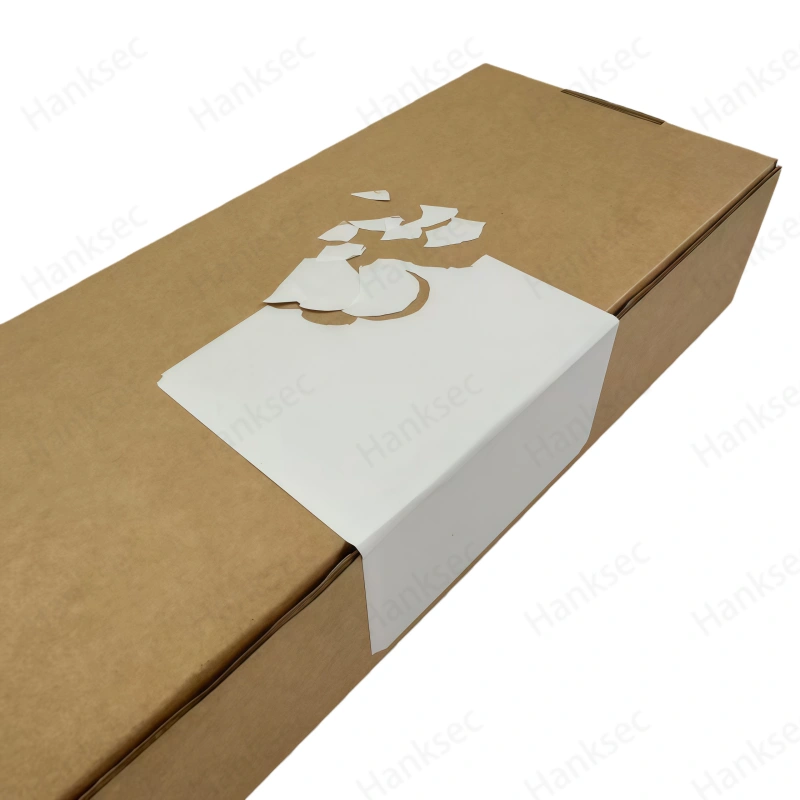
Destructible materials are designed to fracture during removal. Instead of revealing only a hidden message, the label itself becomes difficult to remove intact.
The security function comes from irreversible damage to the label structure during attempted removal.
Useful when:
- unauthorized label transfer is a major concern;
- the package allows permanent adhesive bonding;
- breakage is acceptable visually.
For material behavior, destructibility level and converter requirements, see Hanksec’s Destructible Label Material Rolls for Converters and learn more about destructible security label materials.
The goal is not to use the most fragile material possible. The material must still survive printing, die cutting, matrix stripping, dispensing and application.
Hologram VOID Labels
Cosmetics and luxury products often use holographic security because optical effects can fit naturally with premium packaging.
But there is an important distinction:
A holographic appearance is not automatically a complete authentication system.
A controlled custom holographic feature can support visible authentication. Adding a VOID or destructible construction can provide physical tamper evidence as well.
This makes hologram VOID material particularly relevant when the buyer wants:
premium appearance + authentication + opening evidence.
For a deeper comparison, see Hanksec’s Hologram Labels: Types, Security Features & How to Choose.
Premium Appearance Changes the Material Decision
Cosmetic security labels have one requirement that many industrial labels do not:
They must protect the package without making it look cheap.
A technically successful label can still fail commercially if it:
- covers important artwork;
- leaves excessive visible adhesive;
- uses an industrial-looking patch on minimalist packaging;
- lifts around a curved bottle;
- wrinkles on a small cap;
- clashes with the brand finish.
For premium cosmetics, the security-material discussion should therefore include:
- Color: transparent, silver, gold, holographic or brand-matched.
- Finish: gloss, matte or optical effect.
- Residue: full transfer, partial transfer or relatively clean removal.
- Size: small enough to integrate with the packaging but large enough for reliable bonding.
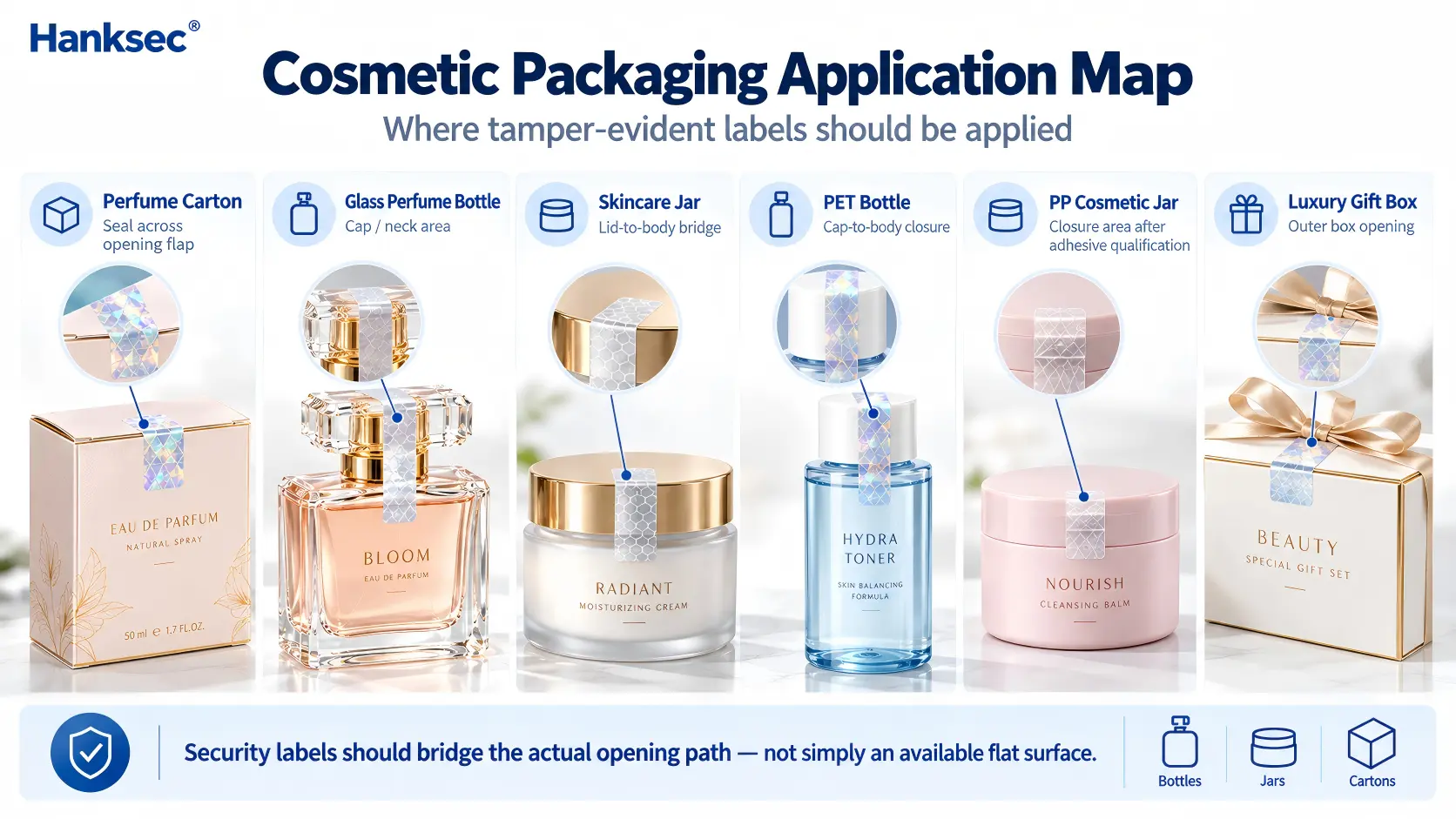
- Position: placed across the actual opening path rather than simply on an available flat area.
Security Function Should Determine Label Position
Where a cosmetic security label is applied can matter as much as what material is used.
| Packaging Format | Practical Security Location |
|---|---|
| Perfume carton | Across top or bottom opening flap |
| Glass perfume bottle | Cap / neck area where geometry allows |
| Skincare jar | Lid-to-body bridge |
| Cosmetic box | Main opening seam |
| PET bottle | Closure or cap-to-body area |
| PP jar | Lid / closure area after adhesive qualification |
| Gift set | Outer box opening |
| Refill packaging | Main opening or refill-access point |
A security seal placed on a decorative side panel may look attractive but provide little protection if the package can be opened somewhere else.
Adhesive Selection Is Critical for Cosmetic Security Labels
For tamper-evident applications, the adhesive must create enough bond to activate the security mechanism.
This is different from asking:
“Which adhesive is strongest?”
The correct question is:
Which adhesive construction produces the required security response on this cosmetic packaging surface?
For example:
- glass may bond relatively easily;
- PET may behave differently depending on coating and treatment;
- PP / PE require more careful adhesive matching;
- coated cartons depend heavily on varnish or laminate;
- textured or curved packs reduce effective contact area.
ASTM D6252/D6252M covers 90° peel adhesion testing of pressure-sensitive label stocks and allows representative application surfaces to be used in place of the standard stainless-steel panel when appropriate. See ASTM D6252/D6252M.
For cosmetic projects, the practical rule is simple:
test the real package whenever possible.
Moisture, Oil and Handling Can Change Performance
Cosmetic packaging may encounter bathroom humidity, water, skincare oils, creams, repeated consumer handling and temperature changes.
UPM’s current cosmetics guidance specifically highlights water, humidity, oils, frequent handling and curved or squeezable packaging as important label-material conditions. See the industry reference.
Security labels have to satisfy those same conditions while preserving their intended tamper response.
A label that stays attached but no longer creates the specified VOID or destructible response is not fully qualified.
Authentication and Tamper Evidence Are Not the Same Thing
This distinction is especially important for cosmetics.
| Security Function | Main Question |
|---|---|
| Holographic / overt authentication | Does this label show an approved visible security feature? |
| VOID tamper evidence | Has the security seal been removed? |
| Destructible / Transfer Resistance | Can this label be removed intact and transferred to another package? |
| Serial / QR / barcode | Which identified item is this? |
These functions can work together, but they should not be treated as interchangeable.
Higher-risk cosmetics can combine:
overt authentication + physical tamper evidence + unique identification
instead of expecting one feature to solve every risk.
How B2B Buyers Should Specify Tamper Evident Labels for Cosmetics
Do not request only:
“Please quote a cosmetic security sticker.”
Provide the application information needed to define the material system.
| Buyer Input | Examples |
|---|---|
| Cosmetic product | Perfume, skincare, serum, cream, makeup, haircare, personal care |
| Packaging format | Glass bottle, PET bottle, PP jar, PE container, coated carton, luxury gift box |
| Application location | Bottle cap, jar lid, box flap, neck, carton seam |
| Required tamper response | Full transfer, partial transfer, non-transfer, destructible, holographic + VOID |
| Residue target | Strong visible residue, balanced residue, relatively clean surface |
| Printing requirement | Logo, warning text, serial, QR, barcode, variable data |
| Converting requirement | Finished label size, jumbo/slit roll width, core, winding, die cutting, dispensing |
| Service environment | Humidity, water, oils, creams, temperature, storage and handling conditions |
For projects that need a construction recommendation from the application outward, use Hanksec’s Application Engineering & Technical Support workflow.
Material Selection Matrix for Cosmetic Packaging
| Cosmetic Application | Main Concern | Suggested Material Direction | Qualification Priority |
|---|---|---|---|
| Premium perfume carton | Opening + appearance | Partial / non-transfer or hologram VOID | Surface appearance + tamper effect |
| Glass perfume bottle | Opening + low residue | Non-transfer VOID | Curvature + residue |
| Skincare carton | Unauthorized opening | Full / partial transfer | Carton coating |
| Cream jar | Lid opening | Flexible VOID construction | Curve + edge lift |
| PP cosmetic jar | Adhesion + tamper evidence | Substrate-matched VOID | Adhesive compatibility |
| PET bottle | Closure protection | VOID / destructible depending design | Bond + label position |
| Luxury gift box | Opening + authentication | Hologram VOID | Appearance + custom feature |
| Brand authentication project | Counterfeit risk | Hologram / covert / serialized + tamper layer | Verification procedure |
This matrix is a starting direction, not a universal specification. The final construction should be confirmed on the actual package.
Common Cosmetic Security Label Selection Mistakes
Mistake 1: Choosing by Appearance Only
A holographic material may look attractive but fail to create useful opening evidence.
Mistake 2: Assuming Stronger Adhesive Is Always Better
Excessive bond may damage premium packaging or create unwanted residue.
Mistake 3: Testing on Stainless Steel Only
Standard panels are useful for comparison, but the final cosmetic container determines real application performance.
Mistake 4: Ignoring Curvature
A material that performs well flat may develop edge lift on a small jar, bottle neck or cap.
Mistake 5: Using Non-Transfer Without Confirming the Inspection Method
If evidence appears mainly on the removed label, the inspection procedure must define where the verifier should look.
Mistake 6: Treating a Generic Hologram as Complete Authentication
Optical decoration and controlled authentication are not automatically the same thing.
What Should Be Tested Before Bulk Production?
For cosmetics, the complete material construction should be qualified before scale-up.
Peel Adhesion
Does the material bond reliably to the real cosmetic package?
Tamper Response
Does removal produce the approved VOID, transfer or destructible response?
Residue
Does the remaining evidence match the cosmetic brand’s appearance requirement?
Curved-Surface Performance
Does the label remain flat without edge lifting?
Printing
Do logos, barcodes, serial numbers or variable data remain readable?
Die Cutting and Matrix Stripping
Can the converter manufacture small or irregular cosmetic security labels consistently?
Release and Dispensing
Can the finished labels release and feed reliably in production?
For the complete Hanksec testing workflow, see the Security Label Material Quality Control Guide and Quality Assurance.
Why Cosmetic Security Materials Should Be Qualified as a System
A tamper-evident cosmetic label is not simply:
PET + adhesive.
The construction may include:
printable surface + facestock + security layer + adhesive + release liner + printing + die cutting + cosmetic substrate.
Changing one component can change the final tamper response.
For example:
- stronger adhesive can increase transfer;
- a different carton coating can reduce bond;
- a different liner can change release behavior;
- different label dimensions can increase edge lift;
- a different printable topcoat can change converting performance.
That is why material approval should evaluate the complete system rather than one isolated specification.

Hanksec’s Manufacturing Capabilities and Quality Assurance pages explain the wider material-production and qualification framework.
How Hanksec Supports Cosmetic Security Label Projects
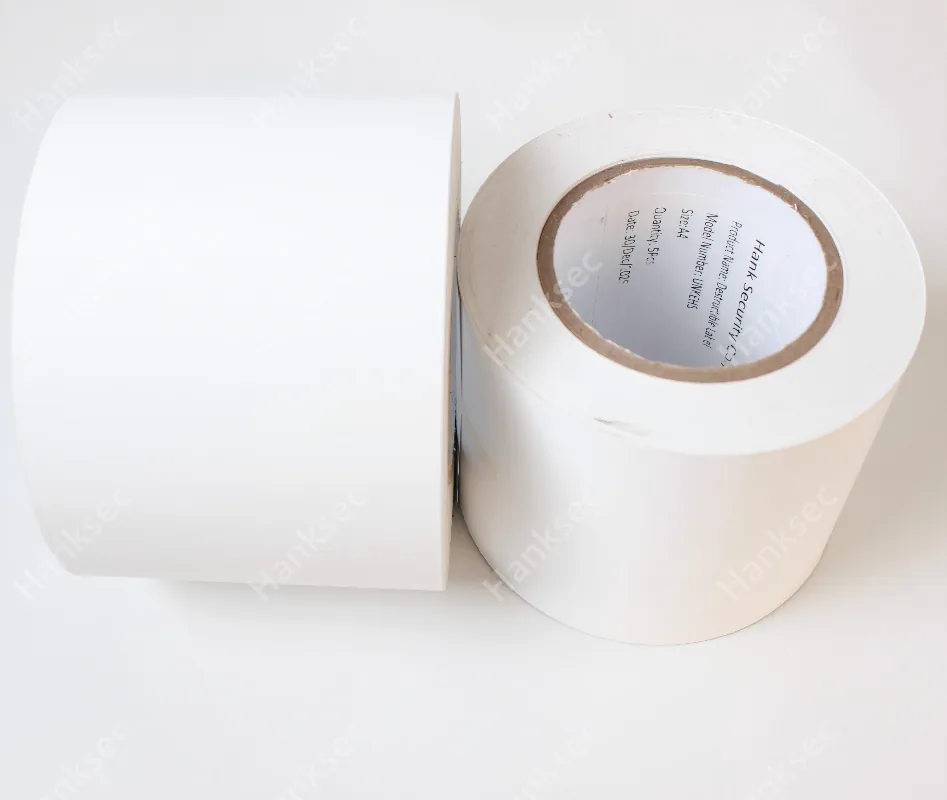
Hanksec supports B2B projects for label converters, security printers, packaging manufacturers, material distributors, cosmetic OEM / ODM projects and brand-protection programs.
Available material directions include:
- full-transfer VOID;
- partial-transfer VOID;
- non-transfer VOID;
- destructible security materials;
- holographic security materials;
- custom hidden messages;
- printable security surfaces;
- project-specific adhesive constructions;
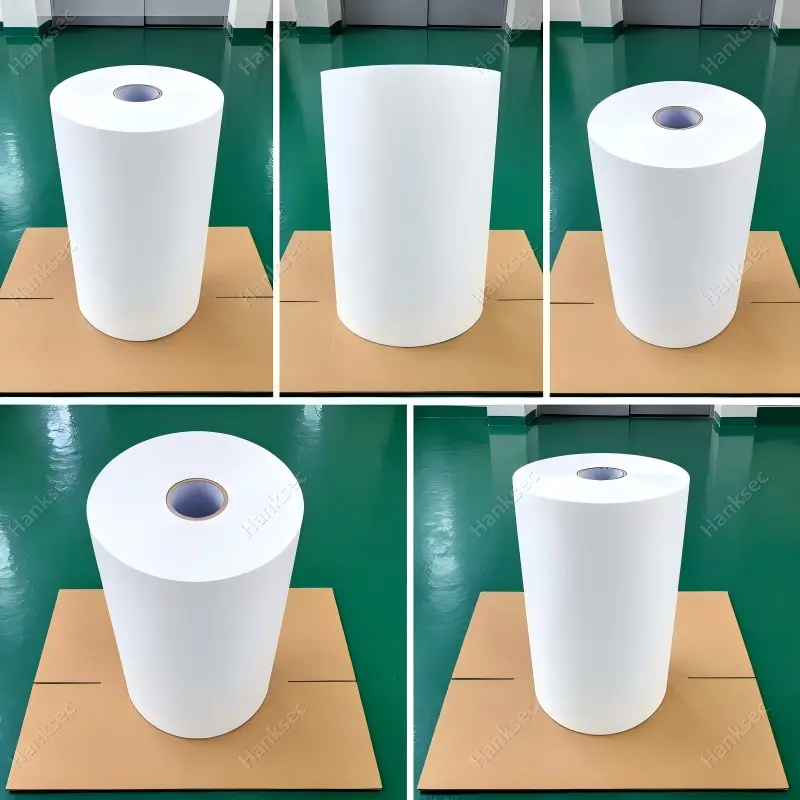
- jumbo rolls;
- slit rolls;
- converter-ready supply formats.
The recommended project workflow is:
cosmetic package → application surface → security risk → tamper response → residue target → material construction → converting trial → package test → bulk approval.
For unusual cosmetic surfaces, Hanksec’s Application Engineering & Technical Support process can begin with the actual substrate and intended security response rather than a generic material code.
FAQ: Tamper Evident Labels for Cosmetics
What are the best tamper evident labels for cosmetics?
There is no universal best material. Full-transfer VOID is useful when strong residue is required; non-transfer is useful when a premium surface should remain relatively clean; destructible material makes intact removal more difficult; and hologram VOID can combine visual authentication with tamper evidence.
What tamper-evident label works best on glass cosmetic bottles?
Glass often provides favorable bonding, but curvature, frosting, coatings and residue requirements still matter. Non-transfer VOID is frequently considered for premium glass when clean appearance matters, but the final construction should be tested on the actual bottle.
Can tamper evident labels be used on PP cosmetic jars?
Yes, but PP is a low-surface-energy plastic and needs careful adhesive selection. The label should be tested for bond, edge lift and correct tamper activation on the actual molded PP component.
What is the difference between full-transfer and non-transfer cosmetic security labels?
Full-transfer materials leave strong visible security evidence on the package surface. Non-transfer constructions show the security message mainly on the removed label and are often considered when the application surface should remain relatively clean.
Are hologram labels suitable for cosmetics?
Yes. Holographic materials are especially relevant to luxury and premium cosmetics because they can add an overt authentication feature. When combined with VOID or destructible technology, they can also provide physical tamper evidence.
Can the security label be transparent?
Yes, depending on the required construction. Transparent security materials can reduce interference with existing packaging graphics, although security-message visibility, printing and adhesive performance still need to be qualified.
Where should a tamper-evident label be placed on cosmetic packaging?
It should bridge the actual opening path—for example a carton flap, jar lid, bottle cap or closure seam. A label placed only for decoration may not provide meaningful opening evidence.
Should cosmetic security labels be tested before bulk production?
Yes. The material should be tested on the actual cosmetic package whenever possible. Adhesion, curvature, edge lift, residue, VOID response, printing and converting performance should be checked before scale-up.
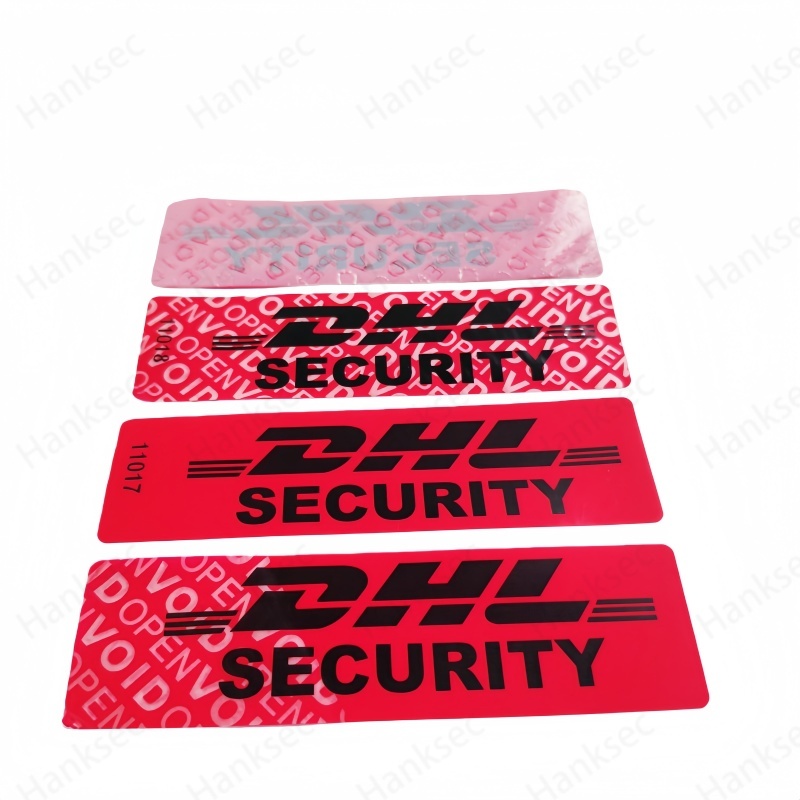
Can cosmetic security labels be customized with logos, serial numbers or special security features?
Yes. Cosmetic security labels can be customized with brand logos, variable data, QR codes, serial numbers, hidden messages, holographic features and different tamper-evident constructions depending on authentication and packaging requirements.
Can Hanksec supply cosmetic security label material in jumbo rolls?
Yes. Depending on the project, Hanksec can support converter-ready security materials in jumbo or slit-roll formats with project-specific security construction, adhesive, liner, printing surface and roll requirements.
Conclusion: Select Cosmetic Security Labels From the Package Outward
Tamper evident labels for cosmetics should be selected around the package, not around a product photograph or a generic security level.
The practical decision path is:
Packaging Format → Surface → Opening Risk → Residue Requirement → Tamper Response → Appearance → Converting → Qualification
For a perfume carton, appearance may make partial-transfer, non-transfer or holographic security attractive.
For PP jars, adhesive compatibility may be the first challenge.
For a skincare carton, obvious permanent opening evidence may be more important.
For higher-risk luxury brands, authentication and tamper evidence may need to work together.
Hanksec supports tamper-evident security label materials for cosmetic packaging projects, including converter-ready VOID, non-transfer, destructible and holographic constructions with application-specific material recommendations based on packaging surface, tamper risk and converting requirements.
Before bulk production, send the actual packaging substrate, application position, required tamper effect, residue target, printing method, label dimensions and roll specification for material recommendation and sample qualification.
Hanksec can provide material recommendations and samples based on your actual cosmetic packaging substrate.
REQUEST COSMETIC SECURITY MATERIAL SAMPLE & TECHNICAL REVIEW