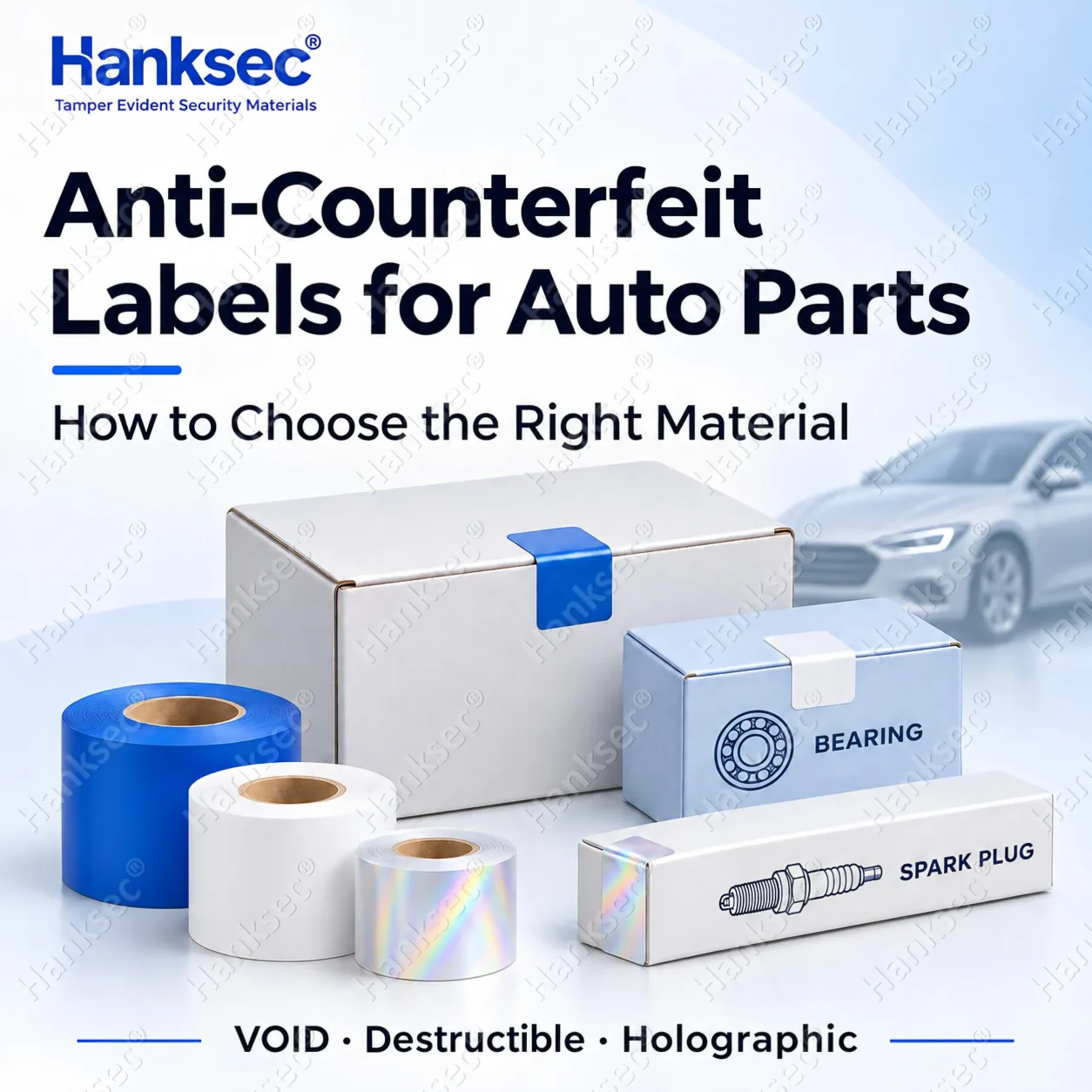
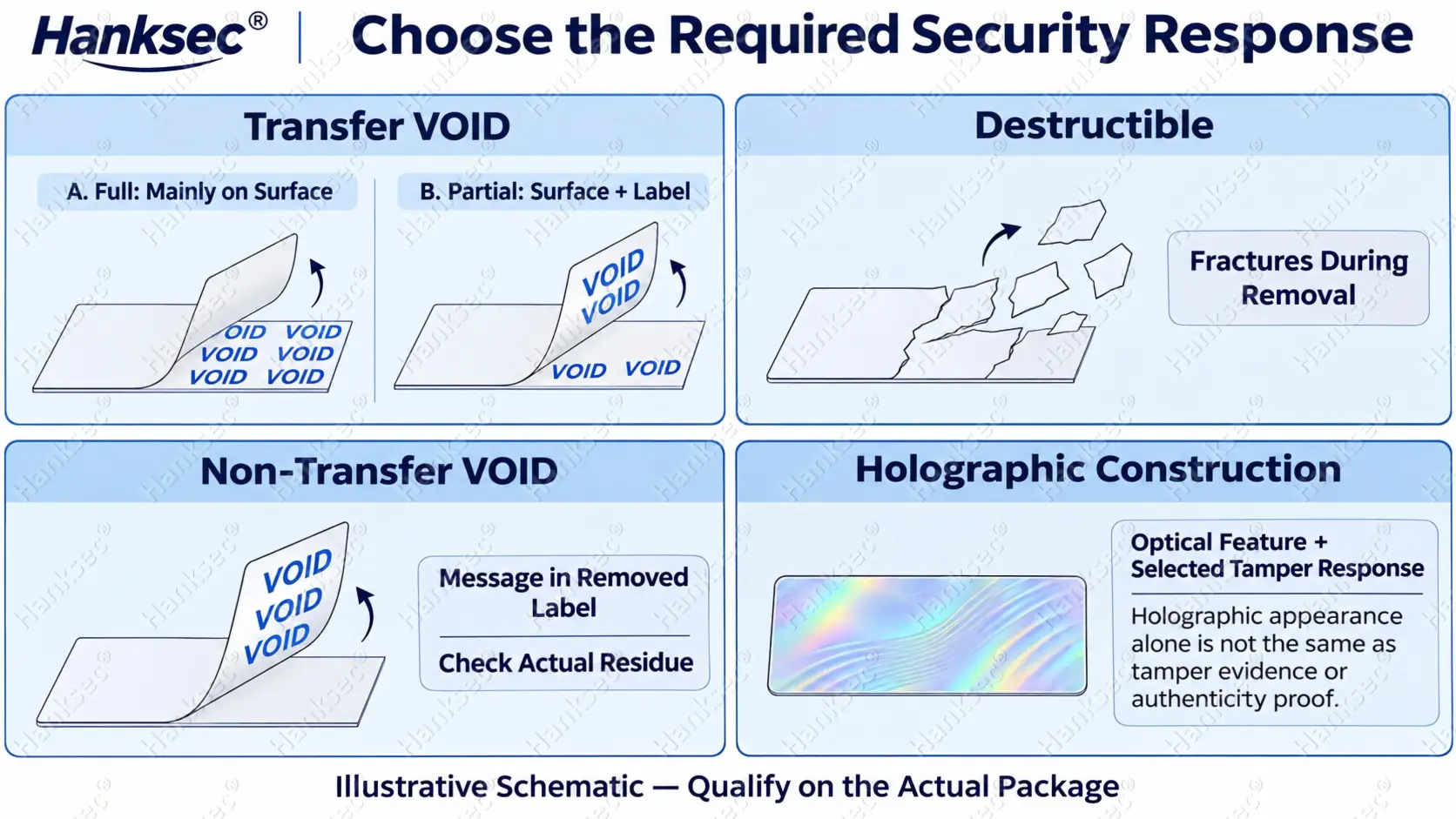
Quick Answer: Choose anti-counterfeit labels for auto parts by the application surface, the evidence required after removal and the printing process. Full- and partial-transfer VOID materials provide visible evidence on qualified package surfaces, while destructible materials are designed to fracture during removal. Non-transfer VOID retains the hidden security message mainly in the removed label; adhesive residue must still be checked on the actual surface. Holographic features and serialized codes can add verification layers, but the complete label must be tested on the actual package.
A seal on a spark plug carton has a different job from a label on a plastic sensor housing. For aftermarket brands, security printers and label converters, choosing the right material starts with that distinction.
Physical tamper-evident labels can support broader anti-counterfeit solutions for automotive aftermarket parts, especially when combined with controlled product identification and an appropriate verification process.
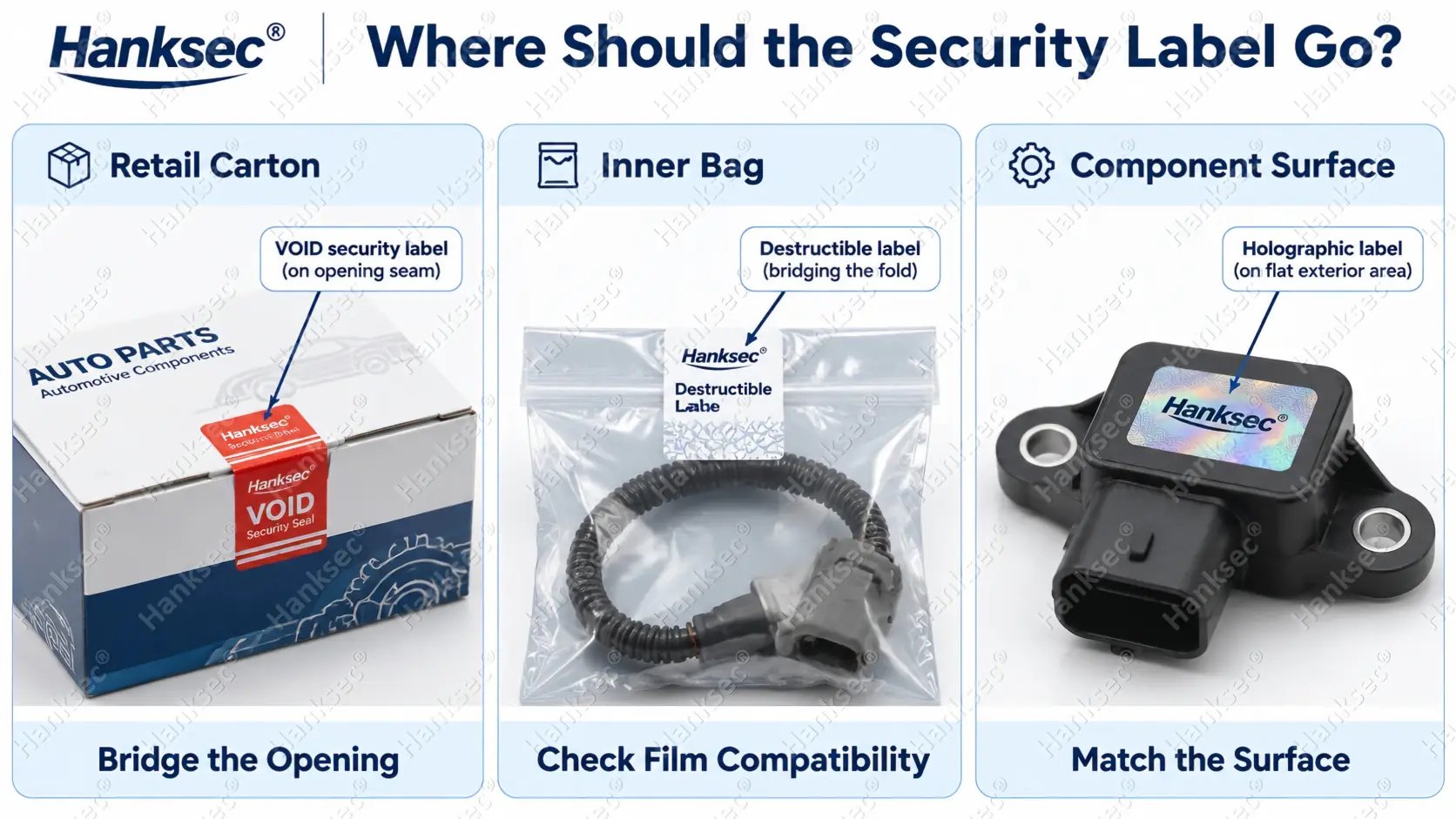
Where Should the Security Label Be Applied?
First decide whether you need evidence of package opening, resistance to label transfer, product authentication or a combination.
- Retail cartons: Position the seal across the opening seam. Check other access points; an intact label is not useful if the contents can be removed through another flap.
- Inner bags: Evaluate the actual film, including any anti-corrosion treatment. Flexing, wrinkles and limited adhesive contact can affect the security response.
- Component surfaces: Identify the plastic, paint or metal finish. A package-seal adhesive should not automatically be specified for a component exposed to heat, oil or cleaning chemicals.
For example, a bearing may arrive in a protective bag inside a printed carton. A carton seal documents interference with that closure; it does not establish the identity of the bearing inside.
Brand verification can combine several checks. Bosch KeySecure, for example, uses authenticity seals on selected packages and asks users to inspect holographic features and verify a security code.
Which Materials Work for Anti-Counterfeit Labels for Auto Parts?
Use the following comparison to shortlist sample constructions. The same material can behave differently on varnished paperboard, flexible film and molded plastic.
| Construction | Starting Application | What to Verify |
|---|---|---|
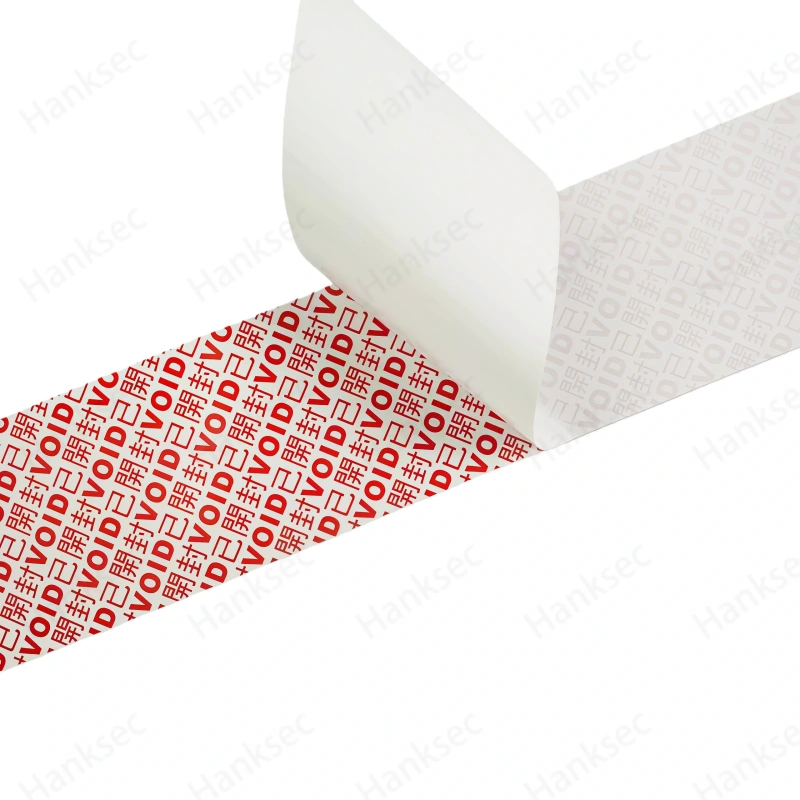
| Full-transfer VOID | Carton seals requiring visible security evidence primarily on the receiving surface. | Transfer clarity, adhesion and whether weak carton fibers or coatings lift first. |
| Partial-transfer VOID | Qualified carton or film seals requiring a split response on the label and substrate. | Legibility on both sides, adhesive contact and resistance to intact reapplication. |
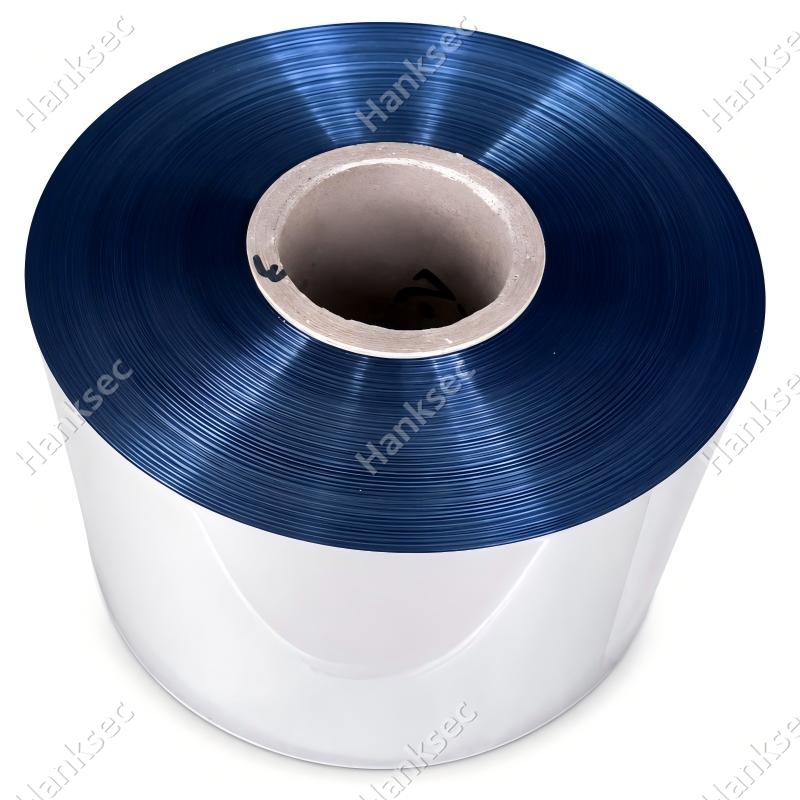
| Destructible material | Labels that should fracture during attempted removal. | Breakage after application and survival through printing, die cutting and dispensing. |
| Non-transfer VOID | Qualified surfaces where transferred VOID lettering is undesirable and the message should remain in the removed label. | Evidence on the label, actual removal cleanliness and how a missing seal is detected. |
| Holographic security construction | Brand-specific visual verification combined with a suitable label base. | Defined optical features and an engineered VOID or destructible response if removal evidence is required. |
Full-transfer constructions prioritize evidence on the receiving surface; partial-transfer constructions divide the response between label and surface. For non-transfer VOID, confirm actual adhesive residue and surface compatibility separately from the hidden-message response. Compare Hanksec’s VOID label material options against the inspection result your customer requires.
For fragile constructions, maximum brittleness is not always the best production choice. A material that breaks during matrix stripping may never reach the packaging line. Our destructible material selection guide explains this balance.
For projects combining optical brand identification with a designed opening response, compare Hanksec’s Holographic PET Security Label Material. Specify the holographic feature and the required VOID transfer behavior separately; visual shine alone does not prove authenticity.
Why Can the Same Label Fail on Different Auto Parts Packages?
The adhesive bonds to the outermost surface: varnish, laminate, paint or contamination. Two apparently similar cartons may therefore produce different results. On some surfaces, the adhesive releases before the intended VOID effect or facestock fracture develops.
For plastic packaging, identify the resin and surface treatment; PP and PE may need an adhesive selected for low surface energy. For protected metal parts, evaluate any oil or rust-preventive residue before proposing direct labeling. Avery Dennison’s automotive label adhesive guidance likewise identifies application location, substrate, temperature and chemical exposure as relevant selection factors.
A material approved on a clean test panel still needs approval on the customer’s production packaging.
What Should Buyers Test Before Approving the Material?
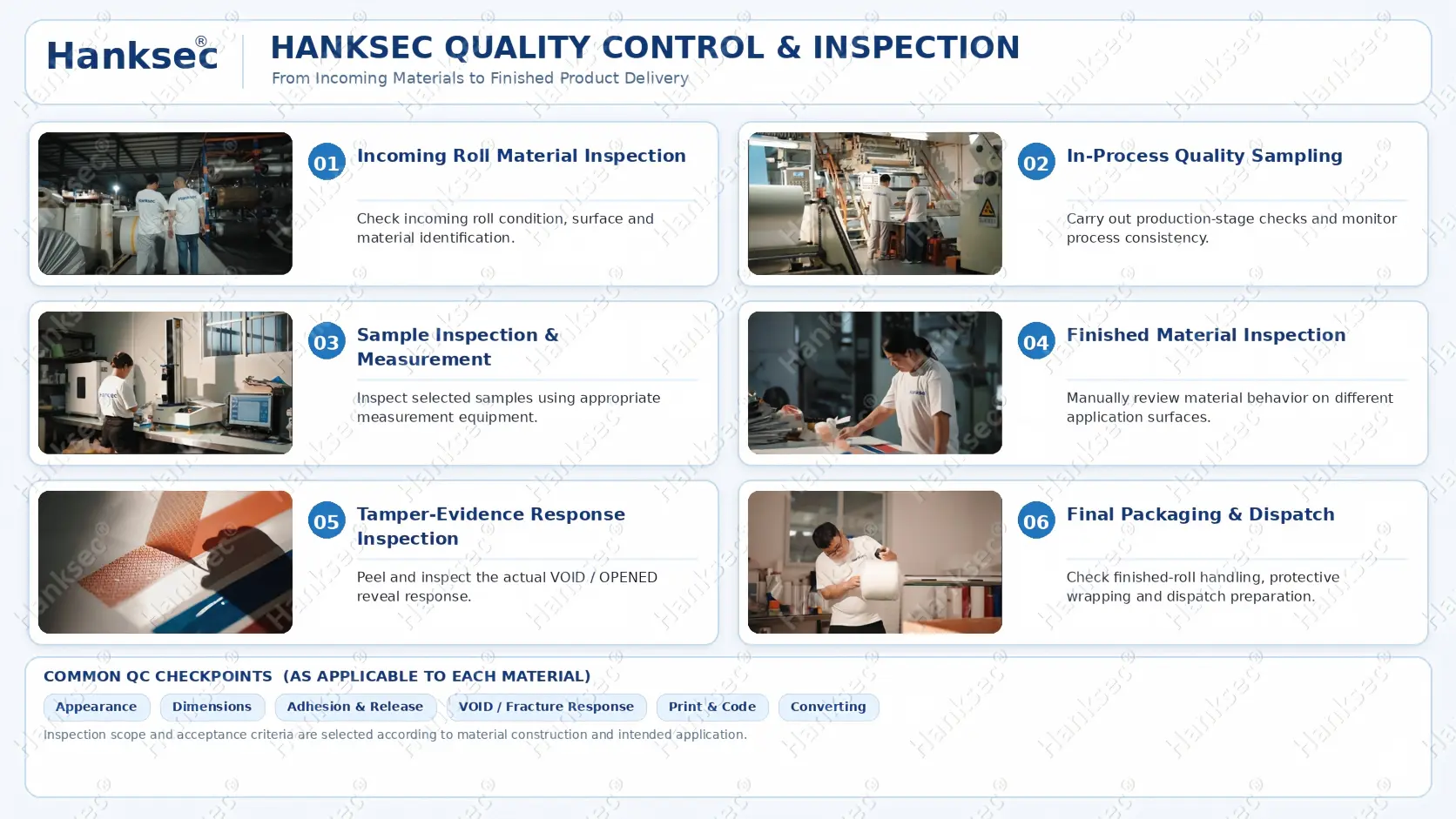
Hanksec recommends qualifying the finished printed label as well as the unprinted material. Agree on acceptance criteria before comparing suppliers.
1. Check the Real Surface and Closure
Use packaging from representative production batches. Record coatings, film type, label dimensions and placement. Confirm that the seal bridges the intended opening and remains in contact around folds or curves.
2. Check Adhesion at the Relevant Times
Test soon after application and after the agreed dwell period. Record application temperature, pressure and surface preparation. Include expected storage conditions and inspect for edge lifting, curling or adhesive release.
3. Check the Evidence After Opening
Inspect both the label and substrate after removal, opening and attempted reapplication. Record VOID clarity, fragmentation, coating lift and residue. Confirm that an operator can distinguish the disturbed package from an unopened reference.
4. Check Printing and Code Readability
Use the intended ink, ribbon or digital printing process. Check print anchorage, rub resistance and code readability after expected handling. Metallic or holographic areas need sufficient contrast and an appropriate quiet zone around the code.
5. Check Converting and Dispensing
Trial the material on the intended equipment. Examine liner release, die-cut depth, matrix stripping, rewinding and label dispensing. Retain approved samples and material-lot records for repeat orders.
For the broader production workflow, see Hanksec’s security label material quality control guide.
Should Auto Parts Security Labels Include QR Codes?
Serialized QR codes can connect individual packages to verification records, but the printed symbol can still be copied. Physical tamper evidence helps address label removal or package interference; digital verification must assess the identifier and its associated records.
Ask the verification provider to demonstrate copied-code handling and legitimate repeat scans. Keep that software assessment separate from material approval. See our explanation of QR code anti-counterfeiting label security checks.
What Should Converters Specify When Ordering Material Rolls?
For anti-counterfeit labels for auto parts, a useful quotation request includes more than a label photograph:
- Application: actual package samples, surface finish and seal position.
- Security response: transfer type, fragmentation requirement, acceptable residue and inspection method.
- Printing: process, ink or ribbon, artwork and variable-data requirements.
- Converting: label dimensions, material thickness, liner and dispensing equipment.
- Roll supply: usable width, length, core, maximum outside diameter and winding direction.
- Order planning: trial quantity, repeat volume, packaging variants and agreed acceptance criteria.
Converters can use our jumbo and slit roll selection guide to define the required supply format.
Frequently Asked Questions
Are holographic stickers enough to prove a spare part is genuine?
Not automatically. The inspection process must identify the authorized security features. A holographic appearance alone does not prove the origin of the part or reveal every packaging substitution.
Can one material work on cartons and plastic bags?
Possibly, but each surface needs qualification. Differences in coating, flexibility and adhesive contact can change both bonding and the tamper response.
Do automotive packaging labels need high-temperature ratings?
The rating should match the label’s actual application and service conditions. A retail carton seal and a permanent engine-compartment label require different evaluations.
Hanksec manufactures VOID, destructible and holographic security label materials for converters, security printers and OEM projects.
Send Hanksec your packaging samples, required tamper response, printing method and roll specifications. Our technical team can help evaluate suitable VOID, destructible or holographic security label materials for your converting and OEM project.
Hanksec® | Tamper-Evident Security Materials · VOID Materials · Destructible Labels · Holographic Materials · OEM/ODM