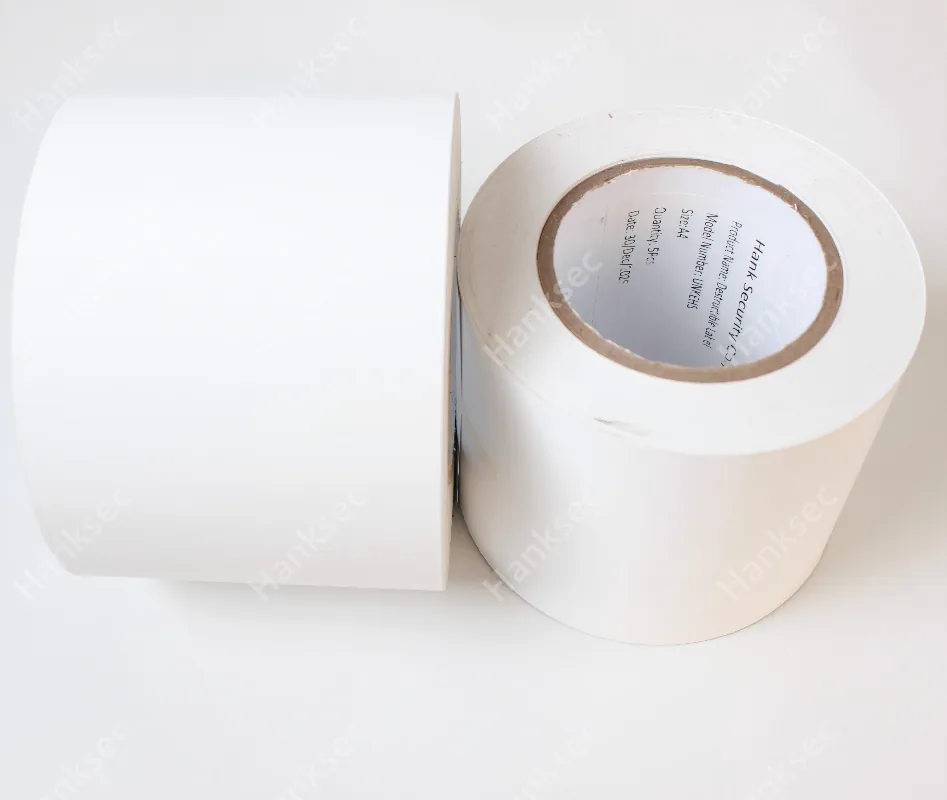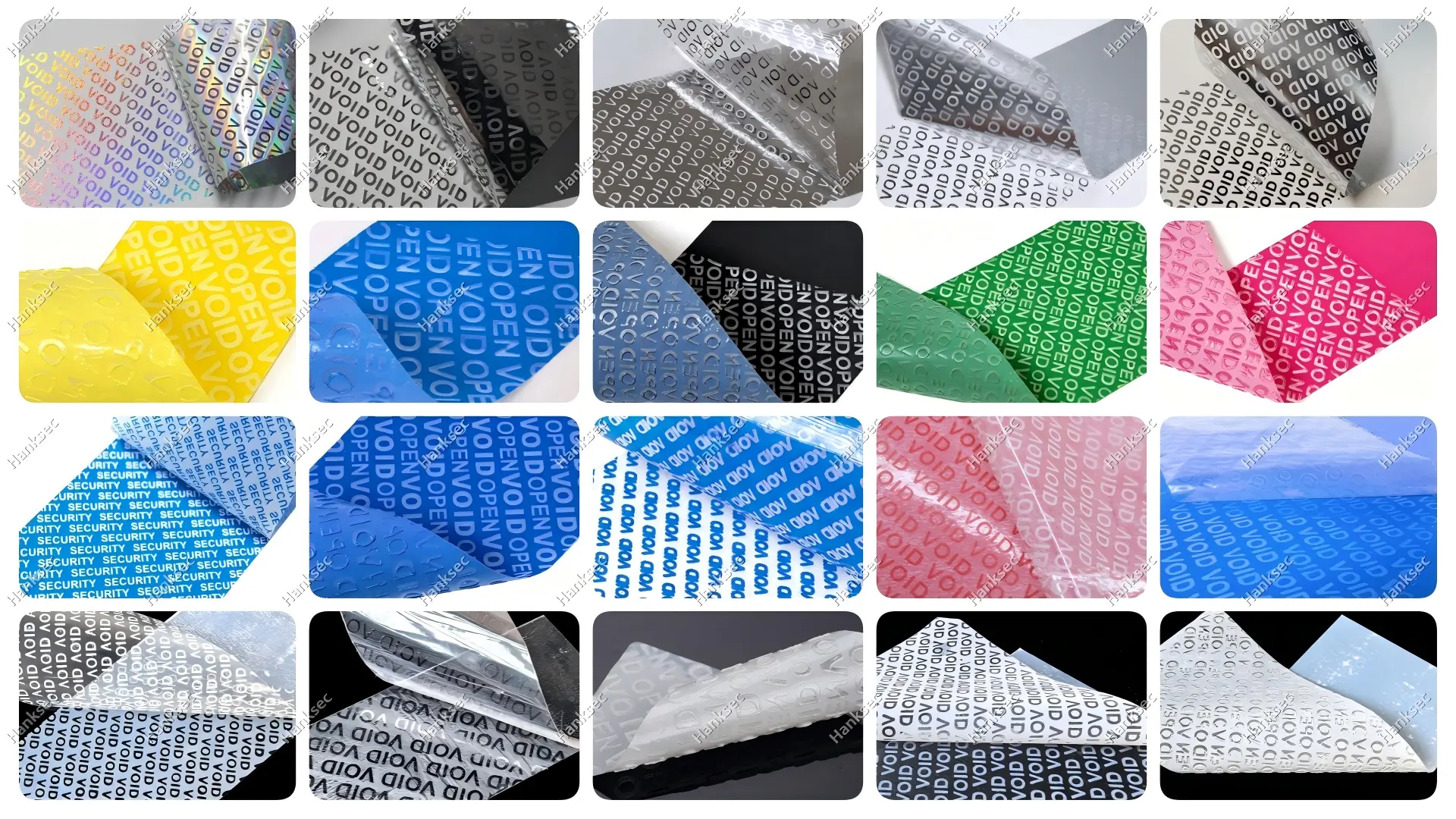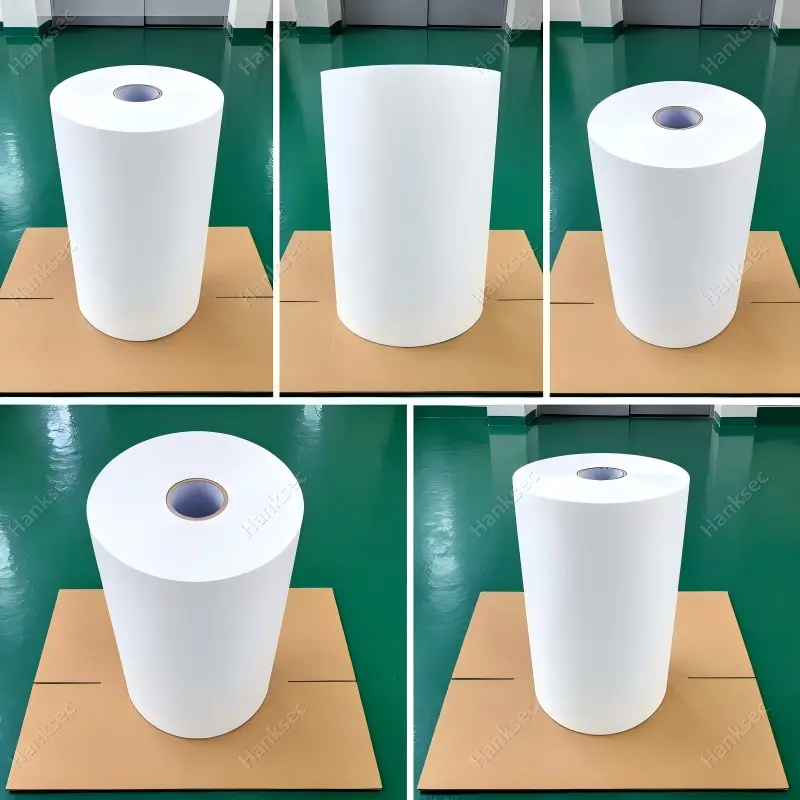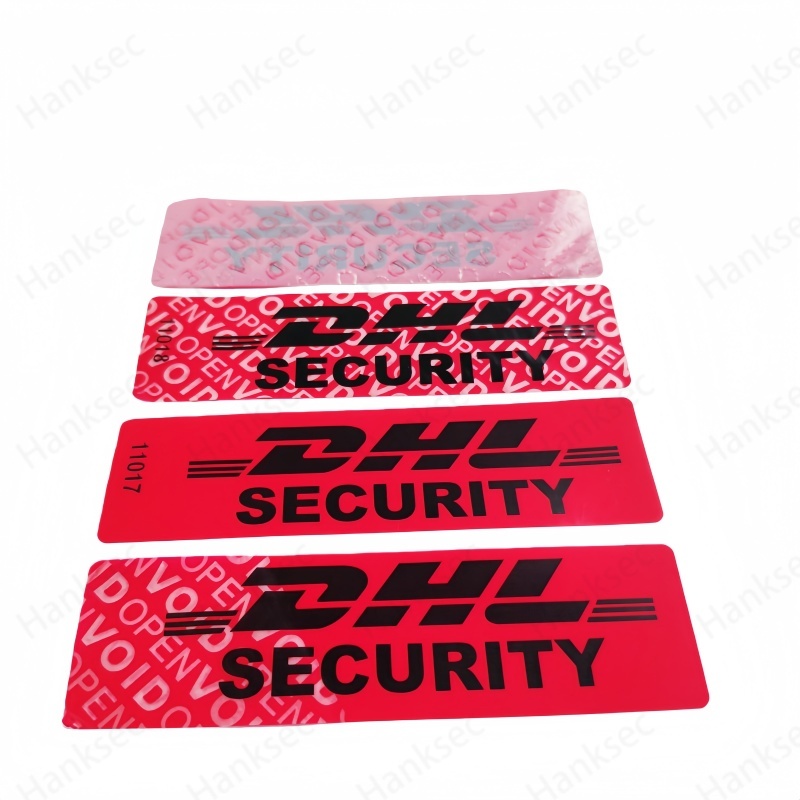
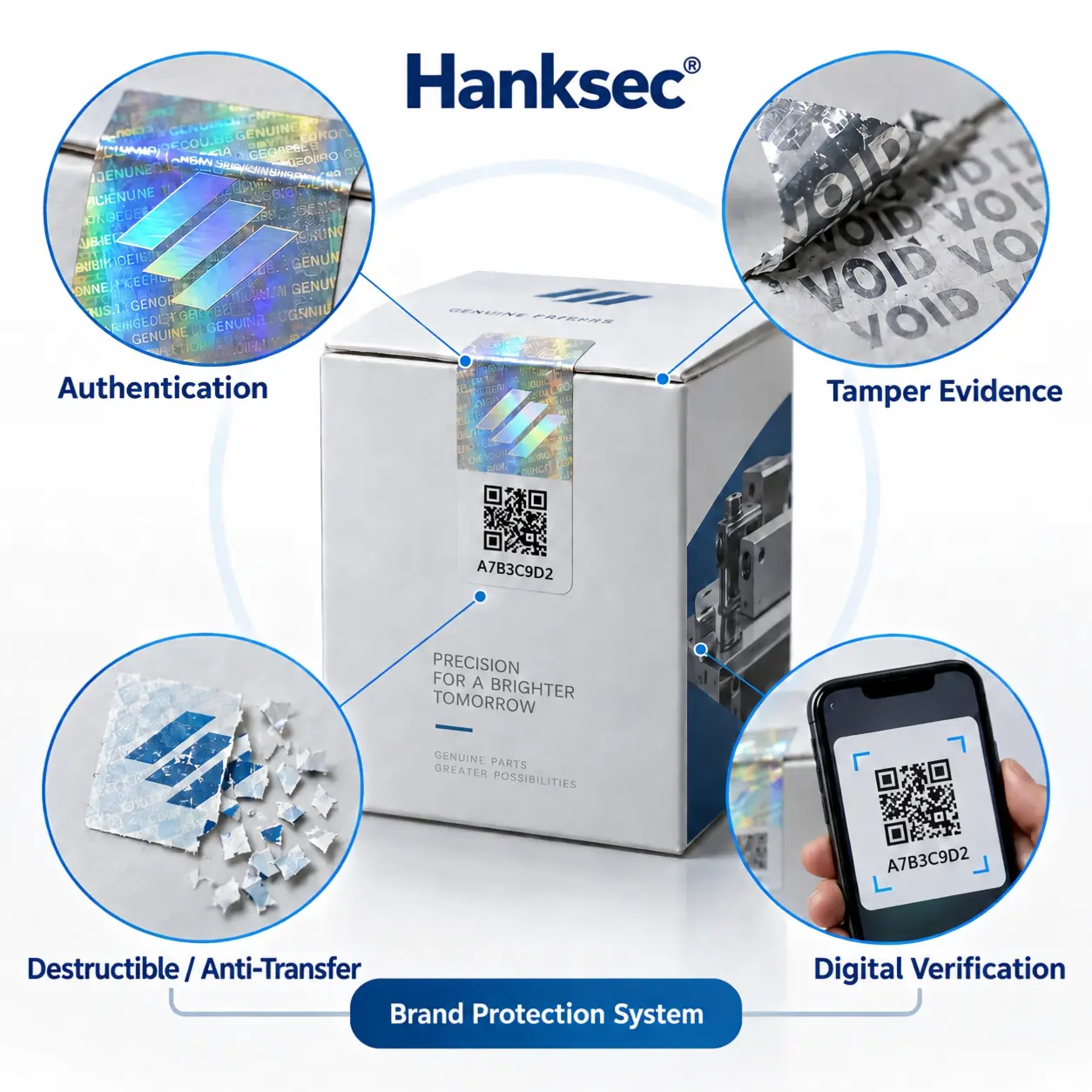
Anti counterfeiting labels are most effective when they are designed as part of a wider brand-protection system rather than selected as a stand-alone “security sticker.” The right label should answer a defined risk: is the problem product copying, label transfer, package opening, refilling, identifier cloning, unauthorized repair, diversion, or a combination of several threats?
For brand owners, packaging teams, security printers and industrial buyers, the correct starting point is therefore not “Which label looks the most secure?” It is:
What threat must be detected, who will verify the product, and what evidence should remain after an attack or unauthorized event?
This guide focuses on that higher-level decision. It explains how authentication, tamper evidence, anti-transfer protection, covert verification and digital identification work together in an anti-counterfeiting program. It does not repeat a full comparison of VOID, destructible, hologram, warranty and serialized label types. For detailed material selection, see Hanksec’s Security Labels: Types, Materials, Applications & How to Choose.
Quick Answer: What Are Anti Counterfeiting Labels?
Anti counterfeiting labels are physical or hybrid security labels used to support product authentication and brand protection. Depending on the risk model, they may help an authorized user identify an approved feature, detect label transfer, reveal package opening, verify a hidden mark, identify a specific item, or connect the physical product to a digital verification workflow.
One label feature does not prove everything. A VOID response can show that a protected area was opened, but it does not by itself prove product origin. A holographic feature can support visual authentication, but it does not automatically show whether the package remained sealed. A QR code can connect an item to digital information, but a code alone is not physical tamper evidence.
The strongest architecture therefore assigns a clear job to each security layer.
Why Brand Protection Should Start With the Threat, Not the Label Type
Counterfeit risk is broader than the simple production of a fake sticker. The OECD and EUIPO reported that counterfeit and pirated goods represented up to 2.3% of global trade in 2021, with e-commerce, small parcels and complex supply chains continuing to create enforcement challenges. See the OECD/EUIPO Mapping Global Trade in Fakes 2025.
For an individual brand, however, the most useful question is not the global size of the problem. It is the specific attack path that must become difficult to hide.
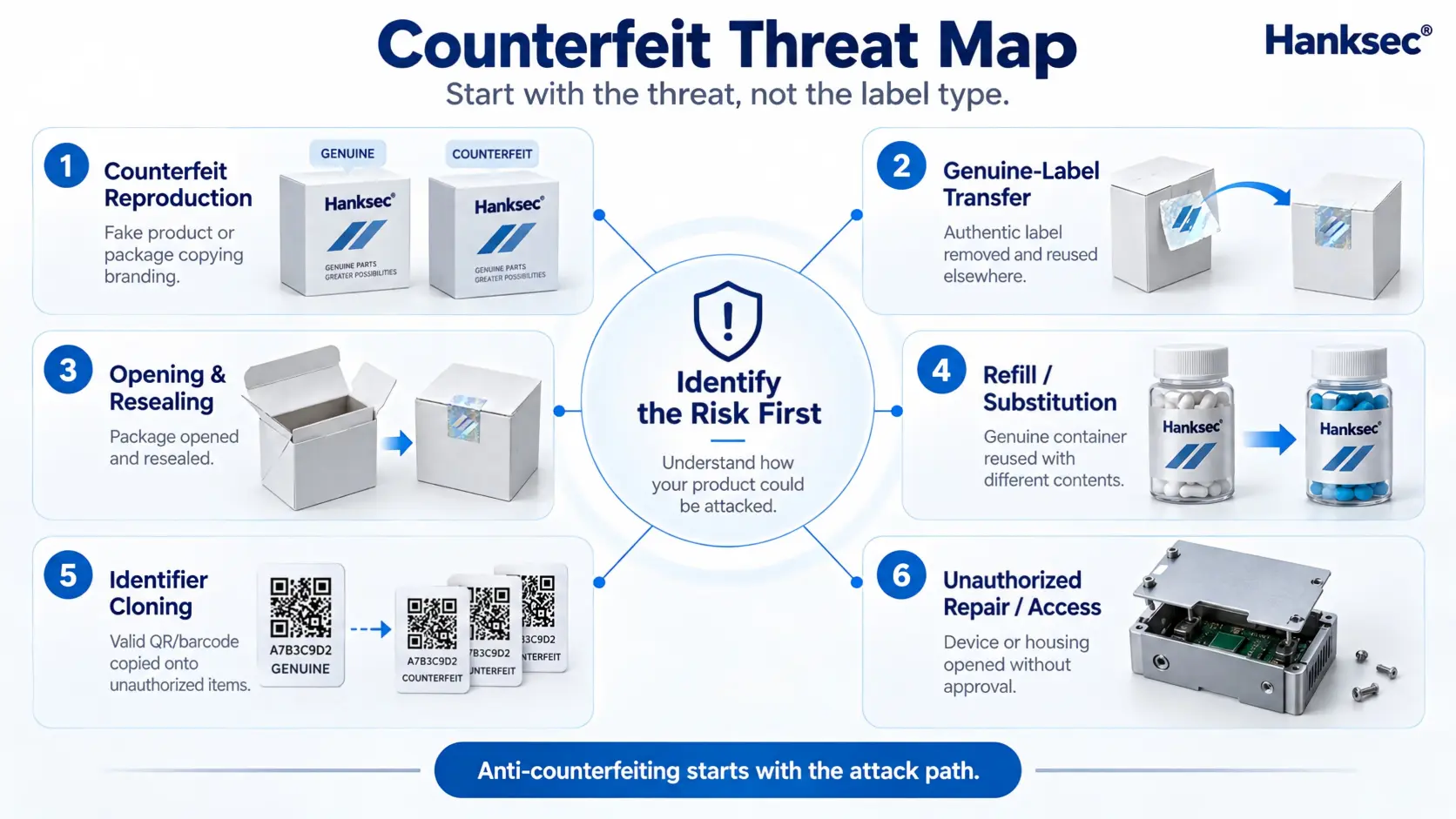
| Threat Scenario | What Happens | Security Objective |
|---|---|---|
| Counterfeit reproduction | A fake product or package copies normal branding and artwork | Provide an authentication feature that is controlled and recognizable |
| Genuine-label transfer | An authentic label is removed from a genuine item and reused elsewhere | Make intact removal or reuse visibly difficult |
| Opening and resealing | A genuine package is opened and later closed again | Create irreversible evidence at the protected closure |
| Refill or product substitution | A genuine container is reused with a different product or component | Link identity and tamper status to the original product or closure |
| Identifier cloning | A valid barcode or QR code is copied onto multiple unauthorized items | Use suitable uniqueness and a verification workflow capable of detecting abnormal use |
| Unauthorized repair or access | A protected device, housing or service point is opened without approval | Provide inspection evidence at the access point |
| Diversion / gray-market movement | Genuine goods move through unauthorized channels | Use identification and supply-chain controls in addition to physical security where required |
ISO 22383:2020 follows the same broad principle: authentication solutions should be selected after a counterfeiting risk assessment, with attention to the protected good, verifier and operating environment. See ISO 22383:2020.
Authentication, Tamper Evidence, Anti-Transfer and Traceability Are Different Functions
These terms are often grouped together, but they answer different questions. Keeping them separate helps buyers avoid expecting one feature to perform a job it was not designed to perform.
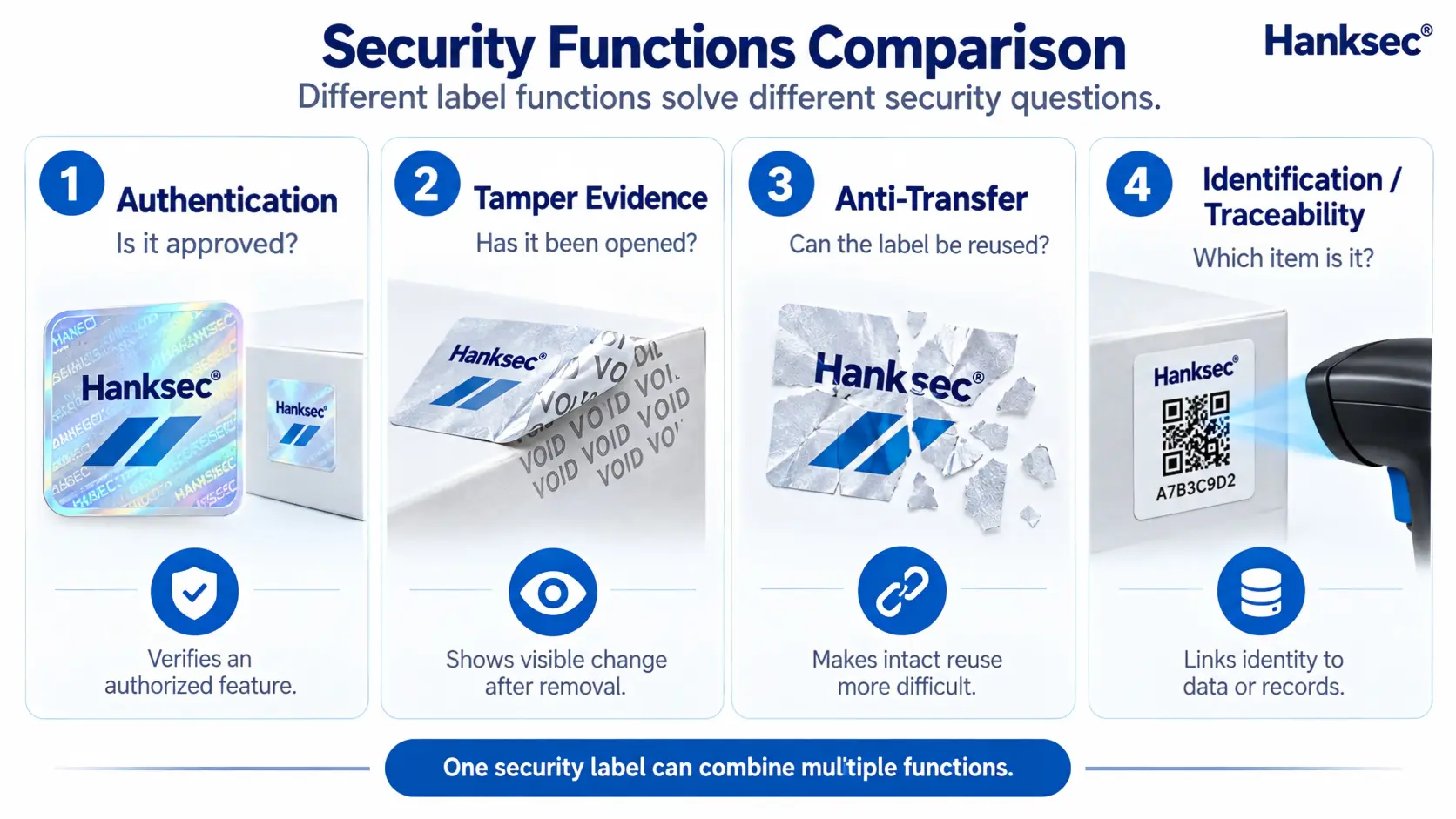
| Function | Main Question | Typical Role in the System |
|---|---|---|
| Authentication | Does this product or label show an approved security feature? | Helps distinguish an approved feature from a suspicious or unauthorized one |
| Tamper Evidence | Has the package, seal or access point been opened or removed? | Creates an irreversible physical change after manipulation |
| Anti-Transfer / Anti-Reuse | Can a genuine label be removed intact and convincingly reused? | Makes clean transfer more difficult through breakage or irreversible response |
| Identification | Which product, batch or item is this? | Assigns an identity through serials, barcodes, QR codes or standardized identifiers |
| Traceability | Where has this identified item moved or been recorded? | Depends on the data system and supply-chain process connected to the identifier |
Brand protection is the business objective. Authentication, tamper evidence, anti-transfer behavior and identification are separate technical functions that may be combined to support that objective.
Who Is Supposed to Verify the Label?
A security feature only has operational value if the intended verifier can recognize, inspect or scan it correctly. The same anti-counterfeiting label can therefore be designed very differently depending on who is expected to make the decision.
| Verifier | What They Need | Useful Security Direction |
|---|---|---|
| Consumer | Fast, understandable verification without specialist equipment | Clear overt feature, visible tamper evidence, or a well-designed digital check |
| Retailer / Distributor | Repeatable inspection across many units | Brand-specific visible feature, defined tamper response and item identity |
| Warehouse / Logistics Team | Quick exception detection | Closure tamper evidence plus shipment or item identification |
| Service Center | Evidence of unauthorized opening, repair or component access | VOID or destructible access seal plus serial or service record |
| Internal Inspector | Second-level verification not obvious to the public | Covert mark, controlled reference feature or database-supported check |
| Automated System | Machine-readable identity and data consistency | Barcode, QR, serial or other structured identifier linked to a defined back-end process |
A sophisticated feature that no one is trained to check is not automatically a strong security control.
How Anti Counterfeiting Labels Fit Into a Layered Brand Protection System
A layered system does not mean adding as many features as possible. It means combining only the functions required by the real threat.
Layer 1: Overt Authentication
Overt features are intended to be recognized without specialist equipment. A custom holographic or optical element can help distributors, retailers or consumers recognize an approved label.
The key word is custom. A generic rainbow holographic appearance may look secure but provides less reference value than a controlled brand-specific feature with a known design and inspection method.
For technical options, see Hanksec’s Hologram Labels: Types, Security Features & How to Choose.
Layer 2: Covert Verification
Covert features are designed for authorized users who know what to look for. UV-responsive text, hidden marks or other controlled inspection elements can provide a second verification layer behind the visible design.
The feature should always be specified together with the inspection method:
- who is allowed to check it;
- what equipment or light source is required;
- what the approved result should look like;
- what action follows a failed inspection.
A covert feature without a defined verification procedure can easily become decorative rather than operational.
Layer 3: Physical Tamper Evidence and Anti-Transfer Protection
Physical security answers a different question from visual authentication: has the label, closure or access point been disturbed?
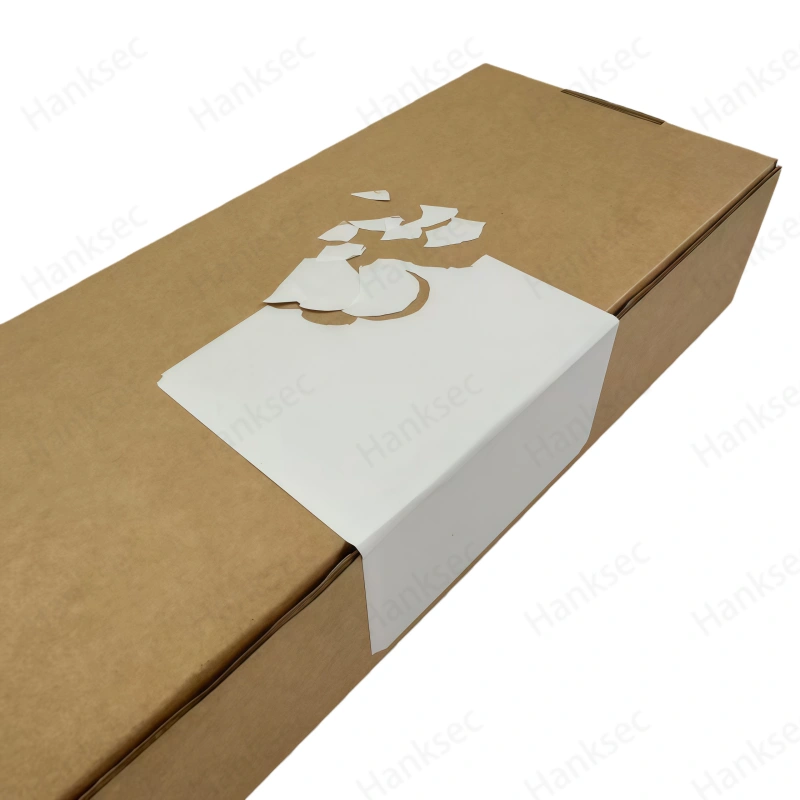
VOID constructions can create an irreversible hidden message after removal. Destructible facestocks can fracture so the original label cannot be removed intact as easily. These mechanisms are especially useful when opening, warranty access, label transfer or reuse is part of the threat model.
The EUIPO anti-counterfeiting technology guide lists VOID and ultra-destructible labels among mechanical security technologies and notes that labels can be combined with other technologies for enhanced security. See the EUIPO Labels Technology Guide.
Detailed material selection belongs in Hanksec’s Security Labels Guide. For full-, partial- and non-transfer structures, use the VOID Anti-Counterfeit Labels Guide.
Layer 4: Unique Identification and Digital Verification
Serial numbers, barcodes and QR codes can connect the physical item to digital records. But identification and authentication should not be treated as the same thing.
A repeated static QR code can link many products to the same webpage. That may be useful for instructions or marketing information, but it does not uniquely identify an individual item. A serialized identifier can support item-level identity, while the back-end verification workflow determines what happens when the identifier is checked repeatedly, appears in an unexpected market or is associated with conflicting records.
GS1 describes serialization as the process of identifying individual instances, and GS1 Digital Link provides a standardized method for representing GS1 identifiers in web addresses and connecting them to online information and services. See GS1 Digital Link.
For higher-risk applications, the digital layer is strongest when it complements rather than replaces physical evidence.
Why One Security Feature Is Often Not Enough
Many anti-counterfeiting failures begin when one feature is expected to solve several unrelated problems.
| Feature Used Alone | What It Can Help With | What It Does Not Solve by Itself |
|---|---|---|
| Holographic appearance | Visible recognition of an optical feature | Does not prove that the package was never opened |
| VOID response | Visible evidence after label removal | Does not establish the origin of the product inside |
| Destructible facestock | Makes intact label transfer more difficult | Does not stop a counterfeiter from producing a different replacement label |
| Static QR code | Links users to information | Does not provide unique item identity or physical tamper evidence |
| Unique serial / QR | Identifies an individual item when implemented correctly | Does not show whether the physical closure has been opened |
| Covert mark | Provides a hidden verification feature | Has little value if the verifier, inspection tool and reference are not controlled |
The better question is therefore not “Which feature is strongest?” but “Which combination answers the actual attack path?”
Example Brand Protection Architectures
The following examples are not security grades or universal standards. They illustrate how different functions may be combined according to the threat.
Example A: Package Opening Is the Main Risk
Threat: a genuine package may be opened and resealed during storage or delivery.
Possible architecture: tamper-evident VOID seal or security tape + shipment identification + defined receiving inspection.
The main value comes from physical opening evidence. A complex hologram may add little if authentication of the printed brand is not the primary problem.
Example B: Genuine Label Transfer Is the Main Risk
Threat: an authentic label may be removed from a genuine item and transferred to a counterfeit or unauthorized item.
Possible architecture: destructible or irreversible VOID construction + brand-specific visible feature + serial identification if item identity is required.
The physical material should make intact reuse difficult, while the authentication feature helps identify the approved label design.
Example C: Counterfeit Premium Packaging Is the Main Risk
Threat: counterfeiters can reproduce standard printed artwork convincingly.
Possible architecture: controlled custom optical feature + covert inspection mark + unique identity + optional tamper evidence where the package must also remain sealed.
Here the overt and covert layers support authentication, while the digital layer can support item-specific verification.
Example D: Electronics Warranty and Service Access
Threat: unauthorized opening, component replacement or warranty dispute.
Possible architecture: tamper-evident or destructible access seal + serial/device identity + service-center inspection procedure.
The label’s physical behavior matters more than decorative appearance. If a premium housing must remain clean, the residue requirement should be specified separately from the authentication requirement.
What Anti Counterfeiting Labels Cannot Do Alone
Anti-counterfeiting labels are one layer of a wider protection program. They should not be presented as a guarantee that counterfeit products can never enter the market.
A label alone cannot:
- replace supply-chain controls, distributor governance or enforcement;
- prove authenticity if the verification feature itself is uncontrolled;
- prevent code cloning unless the digital system is designed to detect or manage abnormal use;
- guarantee that the product inside a genuine package has never been substituted unless the protected closure and inspection process address that risk;
- replace applicable regulatory requirements for pharmaceutical, medical, food or other regulated products;
- perform reliably on every substrate without application testing.
This limitation is important because it changes how buyers should write a specification. The requirement should describe the security event and verification workflow, not simply request a “high-security sticker.”
How to Write an Anti-Counterfeiting Label Brief for Suppliers
A good B2B brief should allow the supplier to understand the threat before recommending a material.
| Information to Provide | What the Supplier Needs to Understand |
|---|---|
| Protected product or package | What item, closure, access point or container is being protected? |
| Main threat | Counterfeit reproduction, transfer, opening, refilling, substitution, code cloning, unauthorized repair or diversion? |
| Verifier | Consumer, retailer, distributor, warehouse, service center, inspector or automated system? |
| Required evidence | Visible opening evidence, physical breakage, authentication feature, hidden mark, unique identity or a combination? |
| Verification procedure | How will the authorized user decide whether the item should be accepted? |
| Application location | Where will the label be placed and what mechanical stress will it experience? |
| Application surface | Carton, PET, PP, PE, glass, metal, ABS, PC, coated surface or another substrate? |
| Residue requirement | Strong permanent evidence, controlled residue or relatively clean surface? |
| Digital requirement | Static information, batch identity, unique serial, QR, barcode or database-supported verification? |
| Production route | Who will print, die cut, serialize, slit, rewind and apply the label? |
| Volume and supply format | Jumbo roll, slit roll, sheet or finished label? |
Once the security architecture is clear, the project can move into material engineering. This is where facestock, adhesive, liner, print surface, roll format and converting conditions become important.
Hanksec’s Application Engineering & Technical Support process uses the actual application, substrate, printing method, converting route and required tamper response to support material selection.
From Brand Protection Architecture to Material Qualification
This article intentionally stops short of repeating the complete material-selection process covered elsewhere on the Hanksec website. Once the brand-protection architecture has been defined, the next stage is to qualify the physical label construction.
That qualification may include:
- adhesion on the real product or package surface;
- required VOID, destructible or anti-transfer response;
- printing and barcode durability;
- die cutting and matrix stripping;
- liner release and dispensing;
- roll format and winding requirements;
- application temperature and service environment;
- repeatable functional performance before bulk production.
For detailed technical selection, use these Hanksec resources:
- Security Labels Guide — compare material types, application surfaces and selection criteria.
- VOID Anti-Counterfeit Labels Guide — compare full-, partial- and non-transfer structures.
- Hologram Labels Guide — compare overt authentication and tamper-evident holographic options.
- Destructible Label Material Rolls — evaluate anti-transfer breakage and converter requirements.
- Security Label Material Quality Control Guide — review adhesion, release, converting and tamper-response testing.
How to Evaluate an Anti-Counterfeiting Label Supplier
For B2B sourcing, evaluate whether the supplier can translate the brand-protection requirement into a manufacturable material system.
- Can the supplier distinguish authentication from tamper evidence and identification?
- Does the supplier ask what threat the label must address before recommending a construction?
- Can the proposed physical response be tested on the actual substrate?
- Can brand-specific overt or covert features be controlled consistently?
- Can variable data or serialization requirements be integrated with the buyer’s own verification workflow?
- Can converter-ready roll width, liner, core, OD and winding direction be specified?
- Can printing, die cutting, matrix stripping, dispensing and final tamper response be qualified before bulk production?
- Can the supplier document manufacturing and quality-control capabilities rather than relying only on product photos?
Hanksec manufactures tamper-evident security materials as engineered multi-layer constructions and supports custom converting requirements for label converters, security printers, packaging manufacturers and OEM projects. Buyers can review Manufacturing Capabilities and Quality Assurance for the production and qualification framework.
FAQ: Anti Counterfeiting Labels
What are anti counterfeiting labels?
Anti counterfeiting labels are physical or hybrid security labels used within a brand-protection or authentication program. Depending on the design, they may provide authentication, tamper evidence, anti-transfer behavior, covert verification, unique identification or a combination of these functions.
What is the difference between an anti-counterfeit label and a security label?
A security label is a broad product category that can include VOID, destructible, holographic, warranty, serialized and other security constructions. An anti-counterfeiting label is defined more by its role in an authentication or brand-protection program. The same physical label may support both purposes, but the search and buying intent are different.
Does a VOID label prove that a product is authentic?
No. A VOID label primarily provides tamper evidence by changing irreversibly after removal. It can support authentication when combined with controlled brand features, covert marks or unique identification, but the VOID response alone does not establish product origin.
Is a hologram enough for anti-counterfeiting?
A controlled custom holographic feature can support overt authentication, but holographic appearance alone does not show whether the package was opened and does not automatically provide digital identity. Higher-risk applications may combine it with tamper evidence, covert verification or serialization.
Can a QR code alone prevent counterfeiting?
No. A QR code is a data carrier. A static code can link users to information, while a serialized code can support unique identification. Effective digital verification depends on the identifier design, back-end system and verification workflow, and it does not replace physical tamper evidence when package integrity also matters.
What is the difference between authentication and serialization?
Serialization assigns an identity to an individual item or label. Authentication determines whether the product or security feature should be accepted as genuine. Serialization can support authentication, but the verification logic still needs to be defined.
Should every anti-counterfeiting label use multiple security features?
No. The correct architecture depends on the threat. A single well-specified tamper-evident feature may be sufficient for some applications, while higher-risk products may justify overt, covert, physical and digital layers. Additional features should have a defined purpose rather than being added only to make the label look more complex.
What information should a buyer send before requesting samples?
Provide the protected product, main threat, verification user, required evidence, application surface, residue requirement, digital identification needs, printing or converting route, final supply format and estimated volume. This allows the supplier to recommend a system around the application instead of matching a generic product photo.
Build the Brand Protection System Around the Real Risk
Anti counterfeiting labels should be selected as security functions within a brand-protection system, not as decorative features.
A practical decision path is:
threat → verifier → security function → verification procedure → physical / digital architecture → material qualification → bulk approval.
For lower-risk projects, one well-defined physical security function may be sufficient. For higher-risk applications, combining overt authentication, covert verification, physical tamper evidence and unique identity may provide a more complete response.
Hanksec supports label converters, security printers, packaging manufacturers, distributors and OEM brand owners with tamper-evident security materials and customized label constructions. Share the protected product, threat scenario, application surface, verification requirement and supply format so the material system can be evaluated before bulk production.