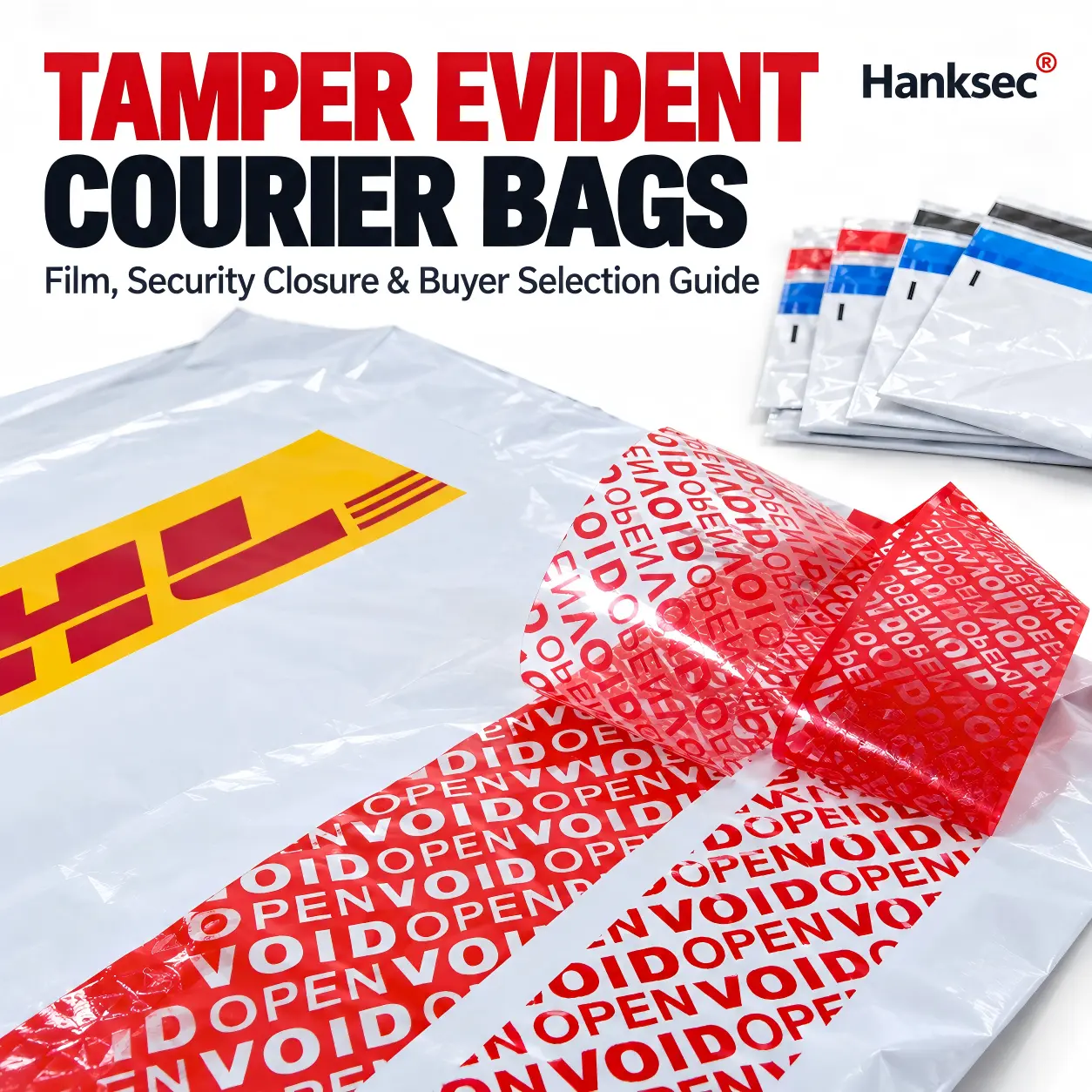
Tamper evident courier bags are used when a shipping bag needs to do more than contain a parcel. The bag should also provide visible evidence if the intended closure has been opened, peeled, resealed or otherwise manipulated during fulfillment, transport, delivery or return handling.
For e-commerce companies, logistics operators, distributors and packaging buyers, however, selecting a courier security bag is not simply a matter of choosing the thickest PE film or the strongest adhesive strip.
The finished result depends on a complete packaging system:
bag film + closure construction + tamper response + seams + identification + printing + application conditions + inspection process.
This guide explains how B2B buyers should specify tamper evident courier bags, including PE film structure, bag thickness, ordinary self-seal versus security closure, VOID / OPENED evidence, POD (Proof of Delivery) / document pockets, serialization, barcode or QR identification, application testing and the information a supplier needs before bulk production.
For broader evidence, banking and chain-of-custody applications, see Hanksec’s Tamper Evident Security Bags for Cash & Evidence. Security bag manufacturers that need closure material rather than a finished-bag buyer guide should use the Security Bag Tape for Bag Manufacturers guide.
Quick Answer: How Should Buyers Choose Tamper Evident Courier Bags?
A suitable courier security bag should be selected according to the shipment risk and the evidence required after an opening attempt.
| Buyer Question | Why It Matters | Typical Direction |
|---|---|---|
| What will the bag carry? | Weight, value, shape and sensitivity affect film and security requirements. | Documents, apparel, electronics, spare parts and high-value goods may require different constructions. |
| What bag film is required? | HDPE, LDPE and co-extruded PE can behave differently in stiffness, flexibility, impact, printing and closure bonding. | Approve the actual finished film structure rather than choosing by resin name alone. |
| What should happen if the closure is opened? | A strong permanent adhesive strip is not automatically a tamper-evident system. | Specify tearing, VOID / OPENED indication, transfer, color change or another defined security response. |
| Are additional attack indicators required? | Some higher-risk shipments may need evidence of heat, cold, water or solvent manipulation. | Select only the functions relevant to the realistic attack risk. |
| Does the bag need unique identification? | Package identity and tamper evidence solve different problems. | Add serial numbers, barcodes, QR codes or tear-off receipts when the bag must be linked to a transaction or inspection record. |
| Is a POD pocket required? | Shipping documents may need to remain visible without opening the main bag. | Specify pocket size and location separately from the security closure. |
| How will the bag be packed and handled? | Manual packing, automated packing, warehouse transfer and return logistics create different requirements. | Test the finished bag under representative packing, transport and inspection conditions. |
The key principle is:
Choose tamper evident courier bags by the evidence required after a realistic opening attempt—not by micron thickness, adhesive strength or a generic “tamper proof” claim alone.
Tamper Evident Courier Bags vs “Tamper Proof” Courier Bags
“Tamper proof courier bags” is a common commercial search term, but tamper evident courier bags is normally the more technically accurate description.
No flexible shipping bag should be treated as physically impossible to attack. Cutting, puncturing, tearing or attacking an unprotected seam may still be possible depending on the bag construction.
The practical security objective is different:
make unauthorized opening or manipulation difficult to conceal.
A well-specified courier security bag should therefore answer a clear inspection question:
What visible evidence should remain if someone opens or manipulates the intended closure?
| Event or Attack | Possible Evidence |
|---|---|
| Normal peeling | VOID / OPENED message, transfer pattern, residue change or irreversible closure damage |
| Attempted resealing | Distorted security layer, incomplete rebonding, visible message or changed surface |
| Heat-assisted opening | Temperature-related indication where that function is part of the selected construction |
| Cold-assisted opening | Cold-response evidence where the selected closure is designed for it |
| Water / solvent manipulation | Reactive indication or visible change where a functional layer is specified |
| Cutting or puncture | Physical damage to the film or seam; the closure alone cannot protect every possible access point |
This distinction matters because “strong adhesive” and “tamper evidence” are not the same function.
What Is the Difference Between a Standard Self-Seal Courier Bag and a True Tamper-Evident Courier Bag?
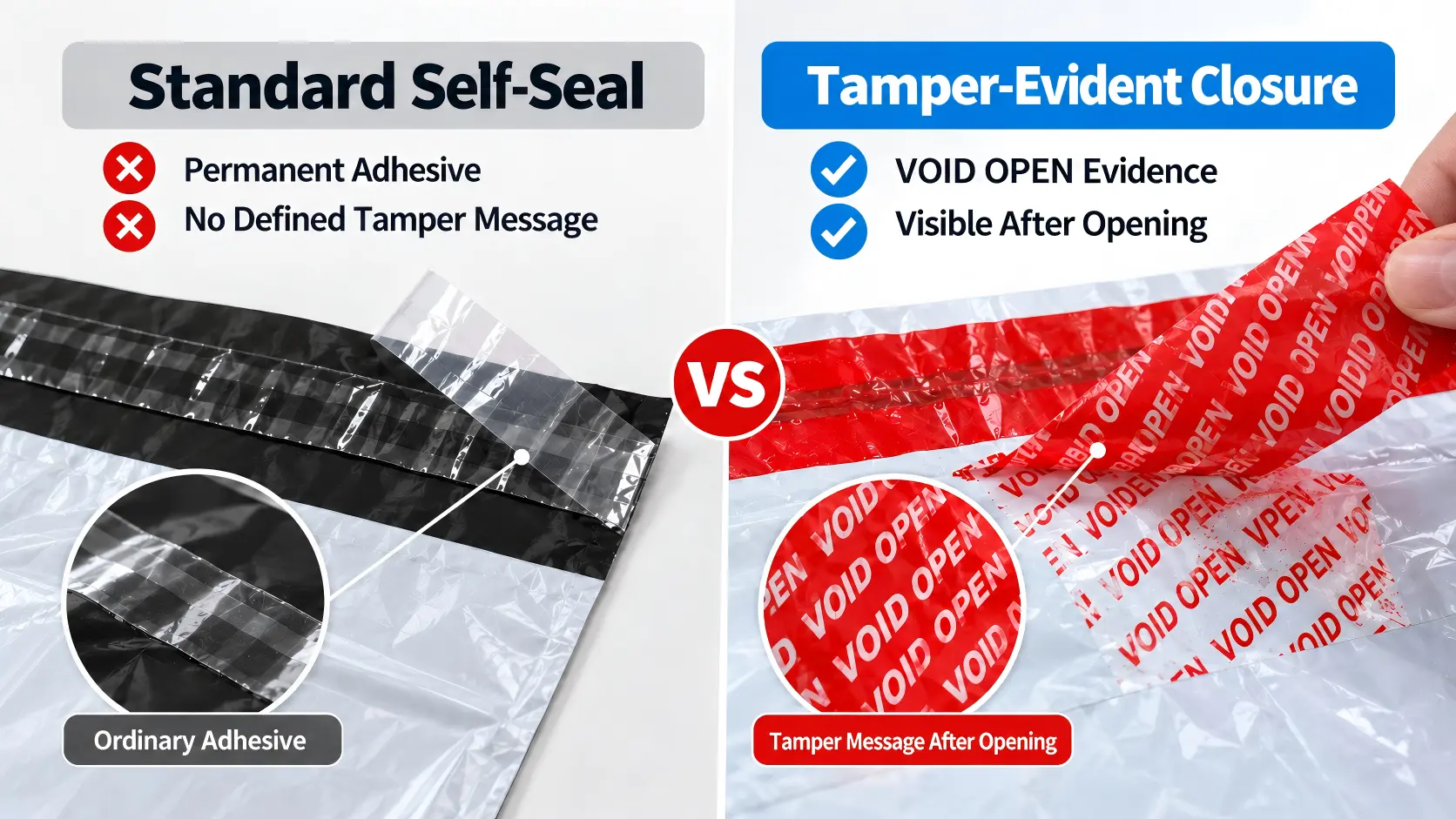
Standard Self-Seal Courier Bag
A normal poly mailer may use a permanent pressure-sensitive adhesive strip. After the flap is closed, reopening the bag may require tearing the film or pulling the adhesive apart.
For routine shipments, this may be sufficient.
However, the closure may not be engineered to create a defined and repeatable security message after manipulation. If the buyer requires a specific inspection response, “permanent adhesive” alone is not a complete security specification.
Tamper-Evident Security Closure
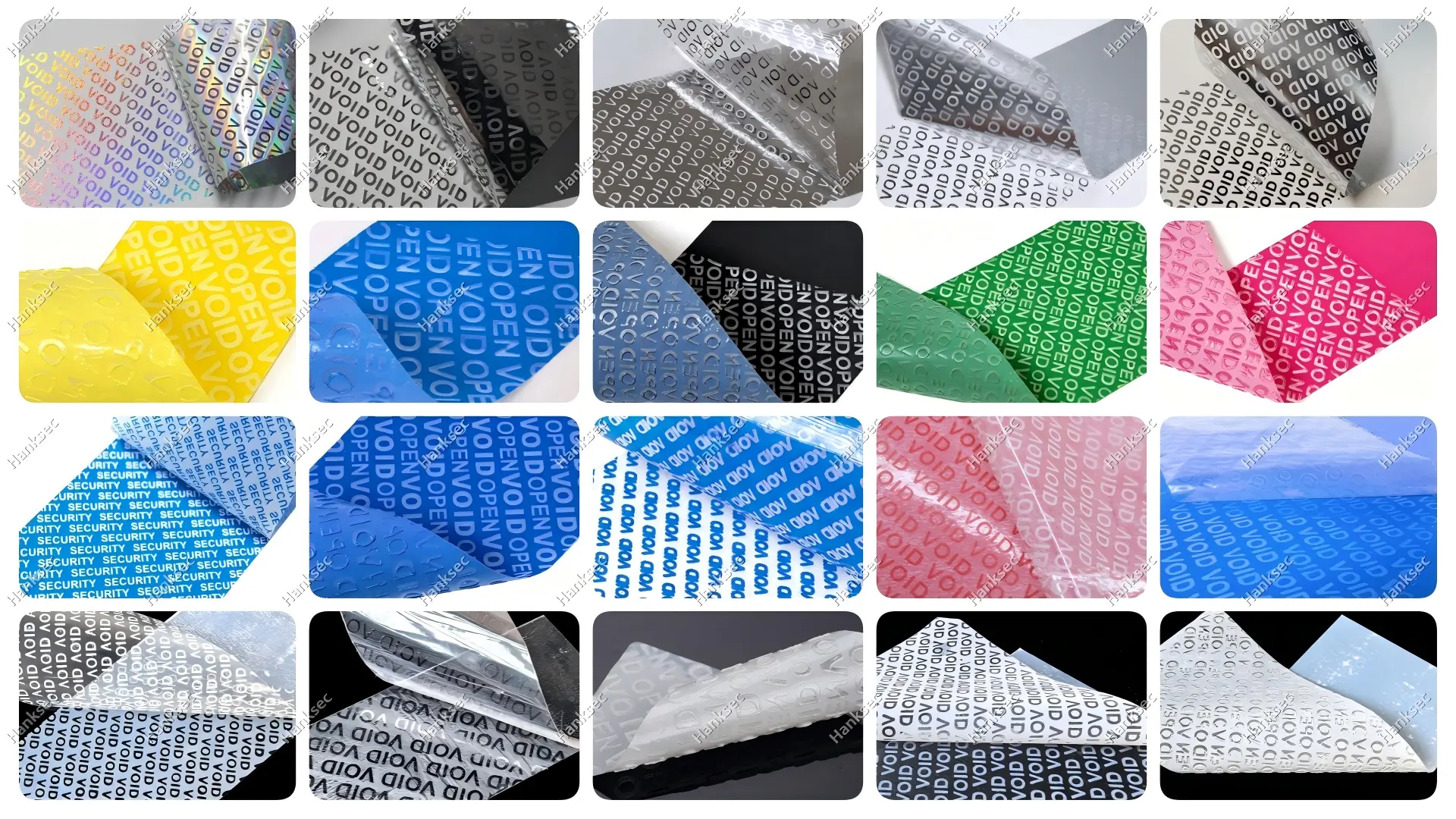
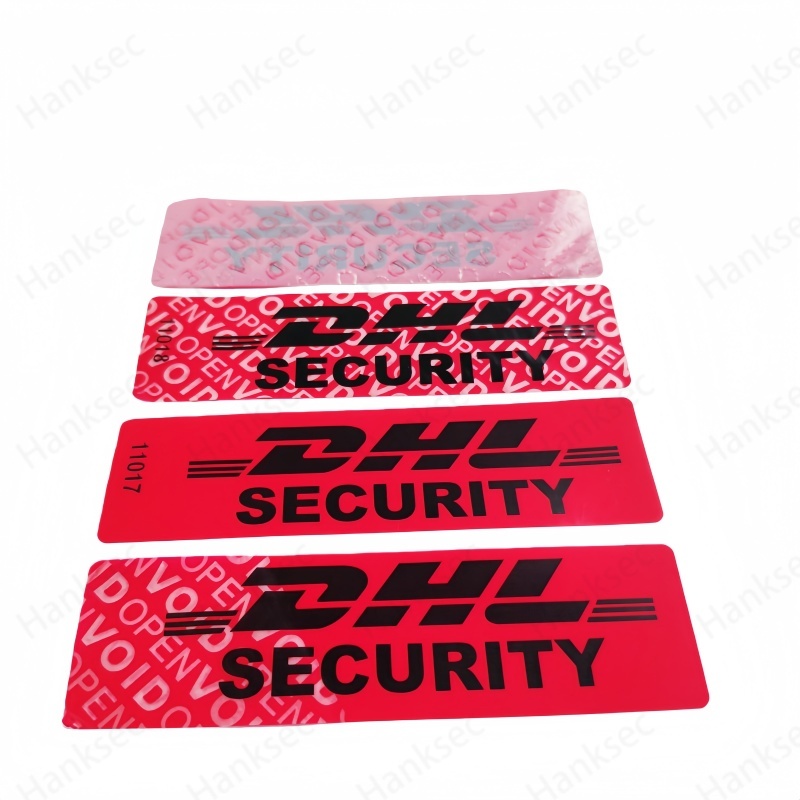
A security closure adds a functional evidence layer. Depending on the approved construction, removal can reveal:
- VOID;
- OPENED;
- custom warning text;
- transfer residue;
- pattern change;
- color change;
- temperature-related indication;
- liquid- or solvent-sensitive evidence;
- security cuts or irreversible material damage.
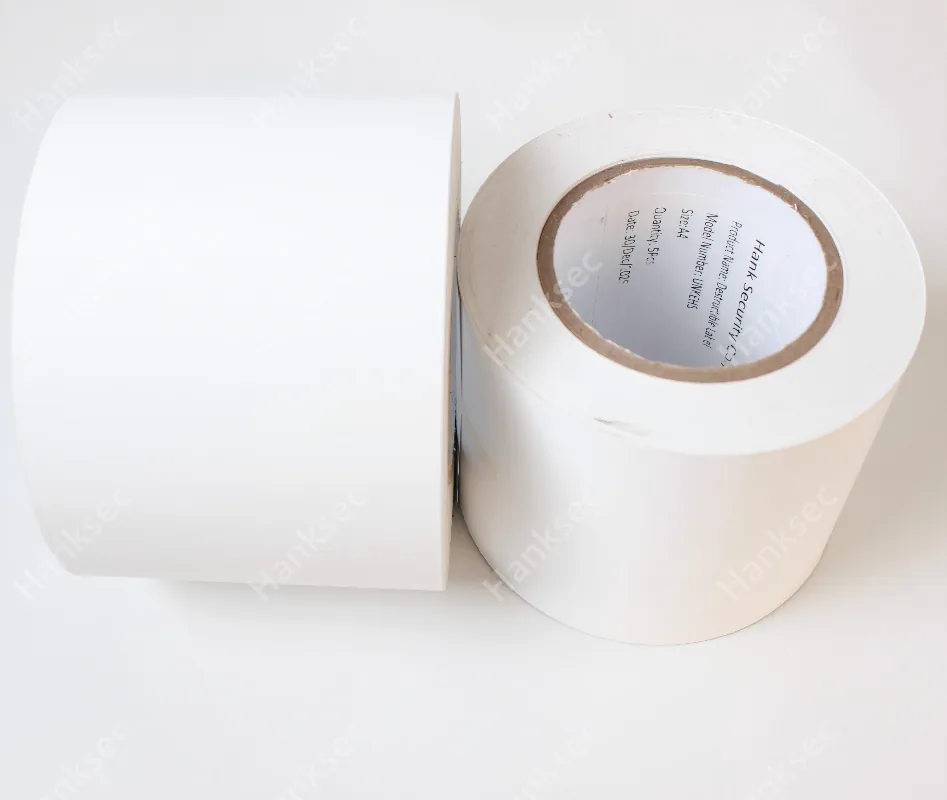
For buyers that manufacture their own courier or security bags, Hanksec’s Tamper Proof Bag Sealing Film is intended to be integrated into the bag closure system rather than used as a generic carton-sealing tape.
The Main Components of Tamper Evident Courier Bags
Professional tamper evident courier bags should be evaluated as complete packaging systems.
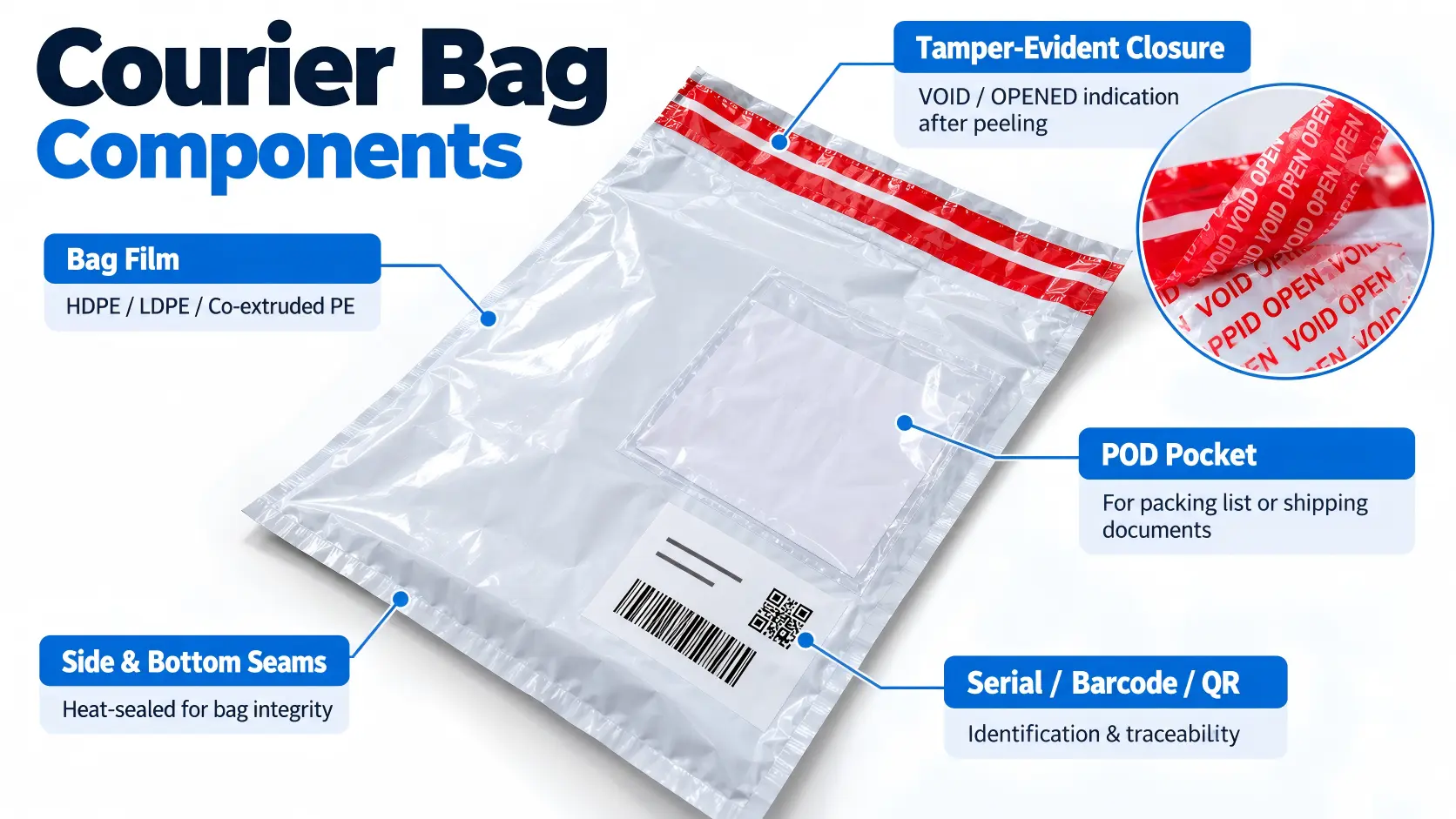
1. Bag Film
The film forms the mechanical enclosure. It affects flexibility, stiffness, opacity, puncture behavior, print appearance, packing feel and production handling.
2. Security Closure
The closure controls the intended access point. Its adhesive, security layer and release construction need to work with the actual outer surface of the bag film.
3. Side and Bottom Seams
A secure top closure provides limited value if the side or bottom seam can be opened or resealed without obvious damage. Seam quality is therefore part of the finished-bag security assessment.
4. Identification System
Serial numbers, barcodes and QR codes identify the physical bag or shipment. They do not automatically prove that the bag remained unopened.
5. Printing and Inspection Information
Custom printing can include logos, warning statements, handling instructions, writable fields and inspection guidance. These improve process clarity but should not be confused with the physical tamper mechanism.
6. POD / Document Pocket
A POD pocket can hold invoices, air waybills (AWBs) or other shipment documents. The buyer should specify whether the pocket is informational only or whether unauthorized access to the documents also needs to be controlled.
Which Film Is Suitable for Tamper Evident Courier Bags?
There is no single PE film that is automatically correct for every courier application.
LDPE Courier Bags
LDPE is commonly used where flexibility and soft handling are useful. Depending on resin grade, film thickness and construction, it can provide a conformable bag for general courier and e-commerce applications.
But “LDPE” is not a complete performance specification. Tensile behavior, puncture resistance, printability, surface treatment and closure bonding can still vary between film constructions.
HDPE Courier Bags
HDPE is often used where a stiffer or crisper bag feel is preferred. Depending on the formulation and gauge, it can provide useful strength at relatively low thickness.
For a security closure, however, the critical question is not simply whether the film is HDPE. The actual surface treatment, additives, printing and outer-layer condition can influence adhesive wet-out and tamper activation.
Co-Extruded PE Film
Co-extruded constructions allow different layers to perform different functions. Depending on the project, layers can be selected for opacity, sealing, stiffness, toughness, print appearance or other packaging requirements.
A white outer surface with a darker internal layer is common in courier packaging when content privacy and exterior printability are required, but opacity should be specified separately from the tamper-evident closure.
Laminated or Special Film Structures
Some higher-value or application-specific courier bags use laminated or multi-layer structures. These need physical closure testing because the adhesive bonds to the actual external surface, not to a generic material name on a datasheet.
Bag Thickness Matters, but Micron Is Not a Security Level
Courier-bag buyers often begin with film thickness.
Thickness is important, but it does not directly tell the buyer:
- how the film behaves under load;
- whether it is stiff or flexible;
- how it responds to impact or puncture;
- whether a corner of the packed product can damage the bag;
- whether side and bottom seams remain stable;
- whether the security closure bonds correctly;
- whether the film can be opened elsewhere without disturbing the intended closure.
ASTM D882-26 covers tensile properties of thin plastic sheeting and is useful for material characterization and quality-control comparisons. ASTM D1709-24 covers impact resistance of plastic film using a free-falling dart method.
These standards do not define whether a courier bag is “secure.” They evaluate specific film properties. Finished-bag security still depends on the complete bag, closure and handling system.
Why Bag Seams Matter as Much as the Top Closure
A common mistake is to focus entirely on the adhesive flap.
Courier bags normally also contain side and bottom seals produced during bag converting. If one of these seams is weak or inconsistent, the package may fail mechanically or provide an unintended access point.
ASTM F88/F88M-23 covers the measurement of seal strength in flexible barrier materials and can support process validation and consistency checks for flexible seals.
However, seal-strength data should not be mistaken for complete tamper-evident performance. A strong seam does not prove that the top security closure will create the intended VOID, OPENED or other tamper response.
For B2B qualification, both should be considered:
mechanical bag integrity + tamper-evident closure response.
How Should Buyers Select the Security Closure?
The security closure should be matched to the risk rather than selected by the highest available feature count.
| Security Requirement | Possible Direction | Typical Use |
|---|---|---|
| Basic visible opening evidence | VOID / OPENED or irreversible closure change | General e-commerce and courier shipments |
| Evidence after lower-temperature manipulation | Closure designed for the required cold-condition performance | Logistics exposed to colder environments |
| Heat-assisted opening is a concern | VOID plus temperature-related indication | Higher-risk courier or valuables transport |
| Multiple manipulation methods must be indicated | Combined heat / cold / water / solvent-sensitive functions where required | Controlled or higher-security logistics |
| Package identity must be recorded | Serial number, barcode, QR or tear-off receipt | E-commerce, warehouse transfer and controlled distribution |
Hanksec uses Level 1–6 terminology for different security-bag-tape configurations. This is useful for Hanksec project selection, but it should not be interpreted as a universal industry security standard. Buyers should verify the actual functions behind the selected configuration. See Hanksec Security Bag Tapes for the current configuration framework.
Do Tamper Evident Courier Bags Need Serial Numbers, Barcodes or QR Codes?
Not every courier bag needs variable identification.
But unique identification becomes useful when a physical bag must be linked to:
- an e-commerce order;
- a parcel record;
- a warehouse transfer;
- a return authorization;
- a high-value shipment;
- a receiving inspection;
- a chain of internal custody.
This creates an important distinction:
Tamper evidence answers: “Has the protected closure changed?”
Identification answers: “Which bag or shipment is this?”
They are complementary, but not interchangeable.
GS1 barcode standards are widely used to encode supply-chain identifiers and related data for electronic scanning. Where standardized package identification is required, the buyer should define the identifier, data structure, barcode type, print quality and scanning workflow before artwork approval.
A printed code that is never scanned or linked to an operational record provides limited traceability value.
What Is the Role of a POD Pocket?
Courier bags with POD pockets are common where delivery documents, invoices, labels or shipment instructions need to remain visible from outside the main package.
When specifying a POD pocket, buyers should confirm:
- document size;
- pocket dimensions;
- pocket position;
- transparent or printed construction;
- opening direction;
- whether documents must be accessible without opening the main bag;
- whether the pocket itself requires tamper evidence.
A POD pocket is a document-management feature. It does not automatically increase the security level of the main bag.
Tamper Evident Courier Bags by Application
| Application | Main Risk | Recommended Direction |
|---|---|---|
| Standard e-commerce orders | Unauthorized opening during transit | One-time closure or basic tamper-evident response depending on the shipment risk |
| Electronics and accessories | Opening, substitution or missing components | Tamper-evident closure + unique bag identification + receiving inspection |
| Spare parts | Part substitution or unauthorized access | Serialized courier bag with clear closure evidence |
| Confidential documents | Unauthorized document access | Opaque film + controlled closure + serial number or receipt where traceability is needed |
| Warehouse transfer | Opening between internal locations | Bag identity + tamper evidence + scan or transfer record |
| High-value goods | Opening, removal or replacement | Stronger bag construction + defined tamper response + serialization |
| Return-sensitive e-commerce | Resealing or product substitution | Courier-bag tamper evidence combined with product identity and return inspection |
For reverse-logistics applications where product substitution, resealing or fraudulent returns are part of the risk, see Hanksec’s E-Commerce Return Fraud: How Tamper-Evident Packaging Protects Reverse Logistics.
How Much Security Does an E-Commerce Courier Bag Really Need?
More security features do not automatically create a better bag.
A low-value apparel shipment may only require a reliable one-time closure and adequate film strength.
A higher-value shipment may justify:
- clear VOID / OPENED evidence;
- stronger side and bottom seams;
- unique serial identification;
- barcode or QR integration;
- receiving-side inspection;
- additional temperature or liquid indicators where the threat analysis justifies them.
The buyer should therefore avoid asking only:
“What is your highest security bag?”
A better request is:
“These are the shipment risks, the bag film, the handling conditions and the evidence our receiving team needs. Which construction should we test?”
Why Film Surface and Adhesive Compatibility Matter
A security closure only works when the adhesive and functional layers interact correctly with the actual bag surface.
PE-family films may differ in:
- resin formulation;
- surface treatment;
- slip additives;
- antistatic additives;
- printing treatment;
- co-extruded skin layer;
- surface contamination;
- storage and aging condition.
These variables can influence adhesive wet-out, bond development and final tamper response.
That is why a security closure that performs correctly on one HDPE or LDPE film may not behave identically on another bag described by the same generic resin name.
For difficult surfaces or custom projects, Hanksec’s Application Engineering & Technical Support process starts with the actual substrate, required security response and production conditions rather than with a generic adhesive recommendation.
How Should Tamper Evident Courier Bags Be Tested Before Bulk Production?
Finished-bag qualification should reproduce the real use condition as closely as practical.
| Test Area | What to Evaluate | Common Failure to Watch For |
|---|---|---|
| Bag dimensions | Finished size, usable internal size and flap geometry | Product does not fit or closure area is distorted |
| Film tensile behavior | Strength and elongation of the selected film construction | Unexpected stretching or tearing |
| Impact / puncture behavior | Film response to handling and concentrated loads | Damage around corners or rigid contents |
| Side / bottom seams | Seal consistency and failure mode | Opening or failure away from the intended closure |
| Closure adhesion | Initial and developed bond on the actual bag film | Edge lifting or premature separation |
| Tamper response | VOID, OPENED, transfer, color or other specified evidence | Weak, incomplete or inconsistent activation |
| Heat / cold / liquid response | Only where these functions are included in the approved construction | Functional layer does not provide the intended indication |
| Serial / barcode readability | Print legibility and scan reliability | Codes cannot be read or associated with records |
| Printing durability | Logo, instructions and variable data after handling | Smearing, rubbing or poor contrast |
| Packing and transport simulation | Real filling, storage, handling and delivery conditions | Bag or closure changes before any tampering occurs |
Laboratory data are useful, but they should not replace testing of the final package. Film tensile, impact and seam tests evaluate specific mechanical properties; the tamper-evident function still needs to be tested on the actual finished courier bag.
Hanksec’s Quality Assurance approach similarly emphasizes evaluating the material against the actual substrate and intended application before bulk approval.
A Practical Courier-Bag Qualification Workflow
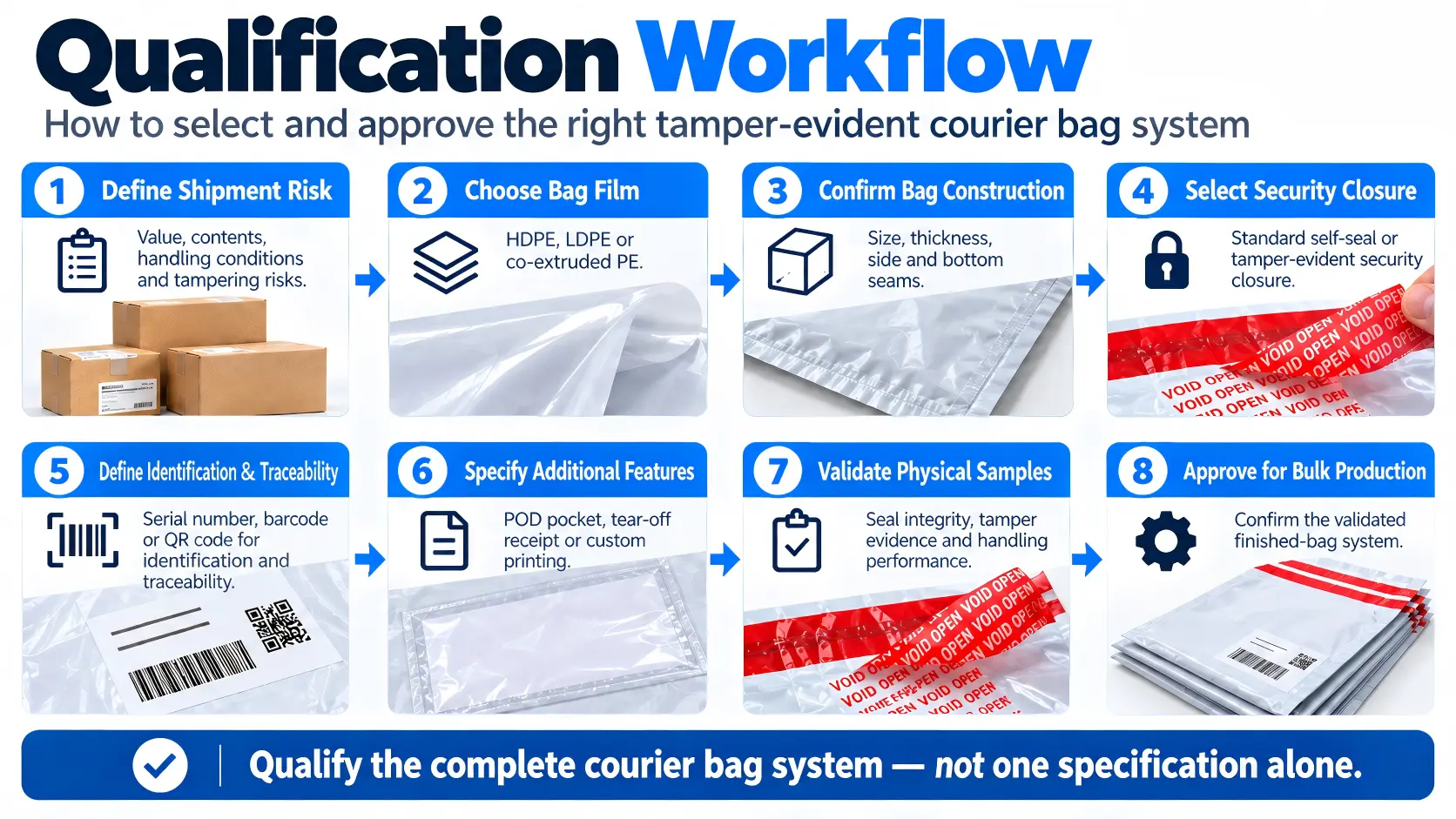
A B2B buyer can use the following sequence before approving tamper evident courier bags for production:
Step 1 — Define the Shipment
Identify contents, approximate weight, sharp or rigid edges, product value and whether the shipment is return-sensitive.
Step 2 — Confirm the Bag Construction
Define LDPE, HDPE, co-extruded or another film structure, opacity, print requirement, size and target thickness.
Step 3 — Define the Opening Evidence
Decide what the receiving team should see after peeling or manipulation: VOID, OPENED, transfer, material damage or another approved response.
Step 4 — Define Additional Security Functions
Add temperature, water, solvent or covert functions only when the actual risk justifies them.
Step 5 — Define Identification
Confirm whether the bag needs a serial number, barcode, QR code, order ID or tear-off receipt.
Step 6 — Produce Physical Samples
Do not approve the project from artwork and a datasheet alone.
Step 7 — Test the Actual Packing Process
Fill, seal, store, handle and inspect the bag under representative conditions.
Step 8 — Approve the Finished System
Approve film, dimensions, seams, closure response, printing, identification and appearance together.
Common Mistakes When Buying Tamper Evident Courier Bags
Mistake 1: Choosing by Micron Thickness Only
Thickness is one specification. It does not define film toughness, seam quality, closure compatibility or tamper response.
Mistake 2: Treating Any Strong Adhesive Strip as Tamper Evident
A permanent self-seal can be useful, but a true security closure should have an approved and repeatable response after manipulation.
Mistake 3: Selecting the Highest Security Level Without Defining the Threat
Extra functions add cost and complexity. The right construction is the one that addresses the realistic opening or attack risk.
Mistake 4: Ignoring Side and Bottom Seams
The intended top closure is not the only possible access point. Finished-bag integrity should be considered as a whole.
Mistake 5: Adding Serialization Without an Operational Process
A serial number only creates traceability when it is recorded, associated with a shipment and checked at the next control point.
Mistake 6: Treating the POD Pocket as a Security Feature
A document pocket can improve shipping-document handling, but it does not automatically provide tamper evidence for the main bag.
Mistake 7: Approving the Closure on a Generic PE Sample
The final bag film, printing and surface treatment can change bonding. Test the actual production construction whenever possible.
Mistake 8: Using “Tamper Proof” as the Complete Specification
The supplier needs to know what visible evidence is expected after opening, not only a broad marketing term.
What Should B2B Buyers Provide Before Requesting a Quote?
Instead of requesting only “tamper evident courier bags,” provide the information that determines the construction.
| Required Information | Examples |
|---|---|
| Application | E-commerce, confidential documents, electronics, spare parts, warehouse transfer, high-value logistics |
| Bag dimensions | Finished width × length, flap size, usable internal size |
| Film structure | LDPE, HDPE, co-extruded PE, laminated or customer-specified construction |
| Film thickness | Target micron or existing approved bag specification |
| Contents | Approximate weight, rigid edges, flexible items, sensitive products |
| Tamper response | VOID, OPENED, residue, transfer, heat, cold, water, solvent or custom response |
| Identification | Serial number, barcode, QR code, tear-off receipt, order or parcel ID |
| Printing | Logo, warning text, colors, writable fields, variable data |
| POD pocket | No pocket, transparent pouch, custom document pocket |
| Service environment | Hot climate, cold storage, humidity, long transit, international logistics |
| Packing method | Manual packing, automated packing line, warehouse fulfillment |
| Order quantity | Sample quantity, pilot order, monthly or annual demand |
This information allows the supplier to recommend a construction rather than simply quote a generic poly mailer.
Finished Courier Bags vs Security Bag Sealing Material
This article is written primarily for buyers evaluating the finished bag. Bag manufacturers have a different purchasing requirement.
Buy Finished Tamper Evident Courier Bags When:
- you are an e-commerce seller, logistics company, distributor or end user;
- you need a ready-to-pack bag;
- you need customized size, printing or identification;
- you do not integrate security closure material into a bag-making line.
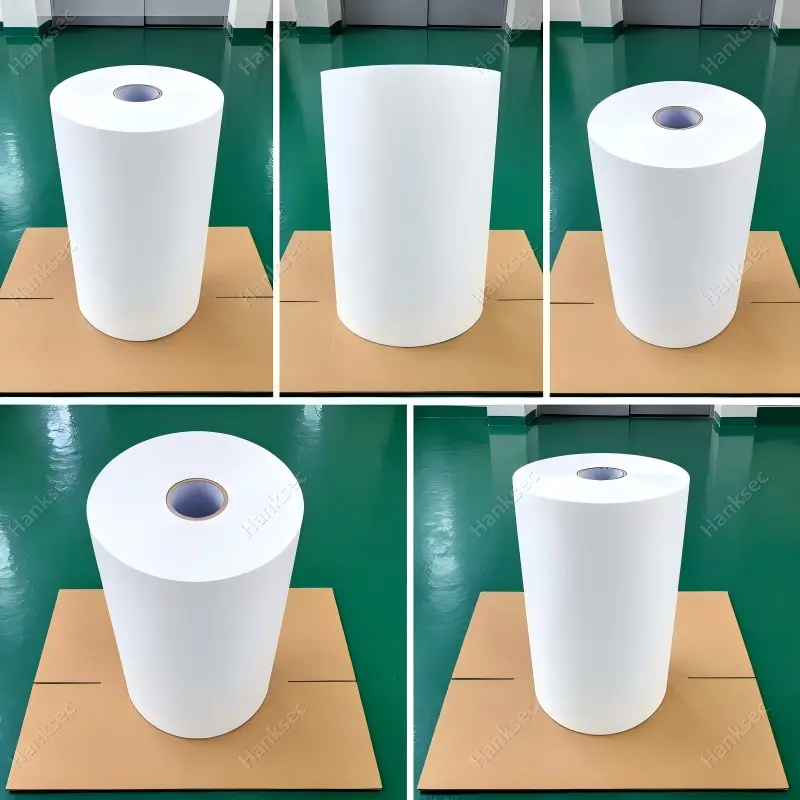
Buy Security Bag Tape or Sealing Film When:
- you manufacture courier or security bags;
- you convert HDPE, LDPE or co-extruded film;
- you need to integrate the tamper-evident closure into your own production process;
- you need slit rolls, production rolls or jumbo rolls.
Bag factories should refer to Hanksec’s Security Bag Tape for Bag Manufacturers guide rather than using the finished-bag selection logic alone.
How Hanksec Supports Tamper Evident Courier Bag Projects
Hanksec approaches tamper evident courier bags as a combination of bag construction, security closure, identification and application requirements.
Depending on the project, the technical discussion can cover:
- finished courier and security bag construction;
- HDPE / LDPE / PE film selection and compatibility;
- VOID / OPENED / custom hidden messages;
- Hanksec Level 1–6 closure configurations;
- heat, cold, water or solvent-responsive functions where required;
- serial number, barcode and QR-code integration;
- tear-off receipt and POD-related structures;
- custom warning text and branding;
- bag sealing tape or film for OEM bag manufacturers;
- sample and application qualification before bulk production.
The recommended development path is:
shipment risk → film structure → closure evidence → additional security functions → identification → finished-bag sample → application test → bulk approval.
This helps avoid a common purchasing problem: a courier bag can look secure in a catalog image while the actual film, seam, closure or inspection process has never been qualified for the real shipment.
FAQ: Tamper Evident Courier Bags
What are tamper evident courier bags?
Tamper evident courier bags are shipping bags designed to provide visible evidence if the intended closure is opened, peeled, resealed or manipulated. Depending on the construction, the evidence may include VOID, OPENED, transfer, residue, color change or another irreversible indication.
What is the difference between tamper evident and tamper proof courier bags?
“Tamper proof” is a common commercial term, but “tamper evident” is normally more precise. The goal is to make manipulation visible and difficult to conceal rather than claim that a flexible bag is impossible to attack.
Which is better for courier bags, HDPE or LDPE?
Neither is universally better. LDPE is often selected for flexibility, while HDPE can provide a stiffer feel. The correct choice depends on film grade, thickness, contents, printing, production process, closure compatibility and handling conditions.
What micron thickness should a tamper evident courier bag use?
There is no universal micron value for every application. Size, contents, weight, film formulation, puncture risk, seam design and logistics environment all influence the requirement. Physical sample testing is more reliable than selecting thickness alone.
Does a permanent self-seal adhesive make a courier bag tamper evident?
Not necessarily. A permanent adhesive can provide a one-time closure, but a tamper-evident system should create a defined and repeatable visible response after manipulation.
Do tamper evident courier bags need serial numbers?
No. Serialization is useful when a specific physical bag must be linked to an order, parcel, warehouse movement or inspection record. It should be included when the operational process will actually record and verify the identifier.
Can tamper evident courier bags include barcodes or QR codes?
Yes. Barcodes, QR codes and other variable data can be integrated into the bag design. The code format, print quality and data workflow should be defined according to the buyer’s logistics or traceability system.
Does a POD pocket increase bag security?
Not automatically. A POD pocket mainly supports document handling. If access to the pocket itself must be controlled, that requirement should be specified separately.
What should be tested before bulk production?
Buyers should evaluate the actual bag dimensions, film behavior, side and bottom seams, closure adhesion, tamper response, printing, serial or barcode readability, and representative packing and transport conditions.
Can Hanksec supply only the security sealing material to a courier-bag manufacturer?
Yes. Hanksec supplies tamper-evident security bag tape and sealing film for bag manufacturers that integrate the security closure into their own HDPE, LDPE or other bag-production process.
Conclusion: Specify Courier Bag Security as a Complete System
Tamper evident courier bags should not be selected as generic poly mailers with a stronger adhesive strip.
The practical purchasing path is:
Shipment Risk → Bag Film → Mechanical Integrity → Closure Evidence → Security Functions → Identification → Testing → Approval
For routine low-risk shipments, a permanent one-time closure may be enough.
Where unauthorized opening needs to be visible, a defined VOID, OPENED or other tamper-evident response provides a clearer inspection signal.
For higher-value or controlled logistics, stronger bag construction, serialization and selected attack-indicating functions may be justified—but only when they match the real risk and the receiving process.
Before bulk production, send Hanksec the bag dimensions, film structure, shipment contents, required tamper response, identification requirements, printing layout and expected logistics conditions. The technical team can then evaluate an appropriate finished-bag or security-closure construction and support sample qualification.