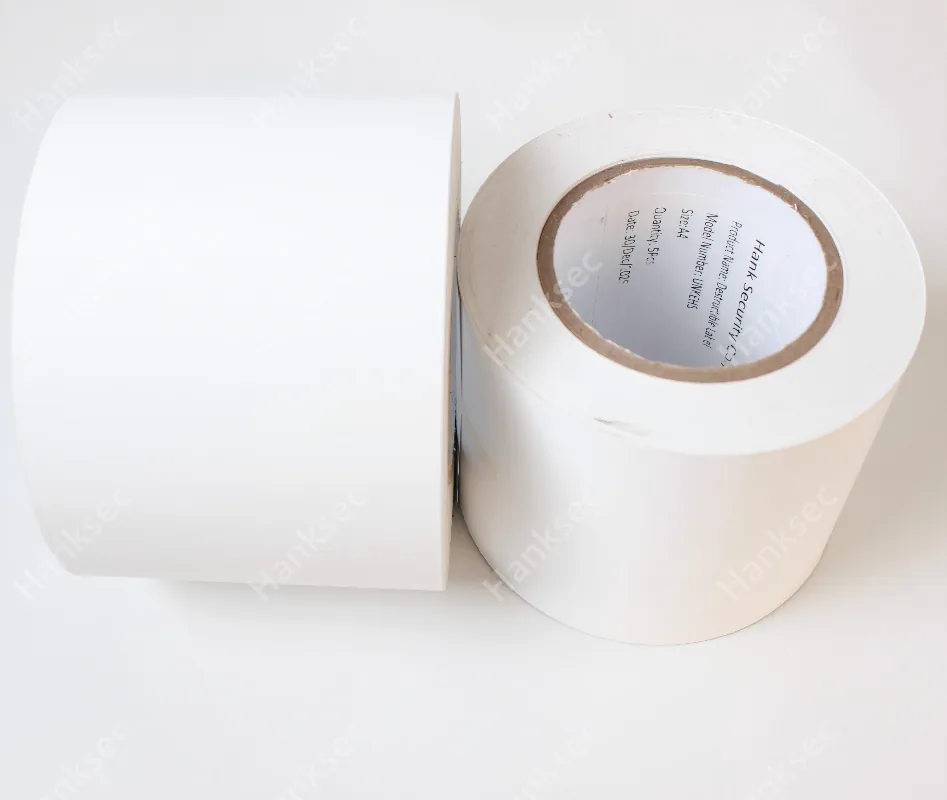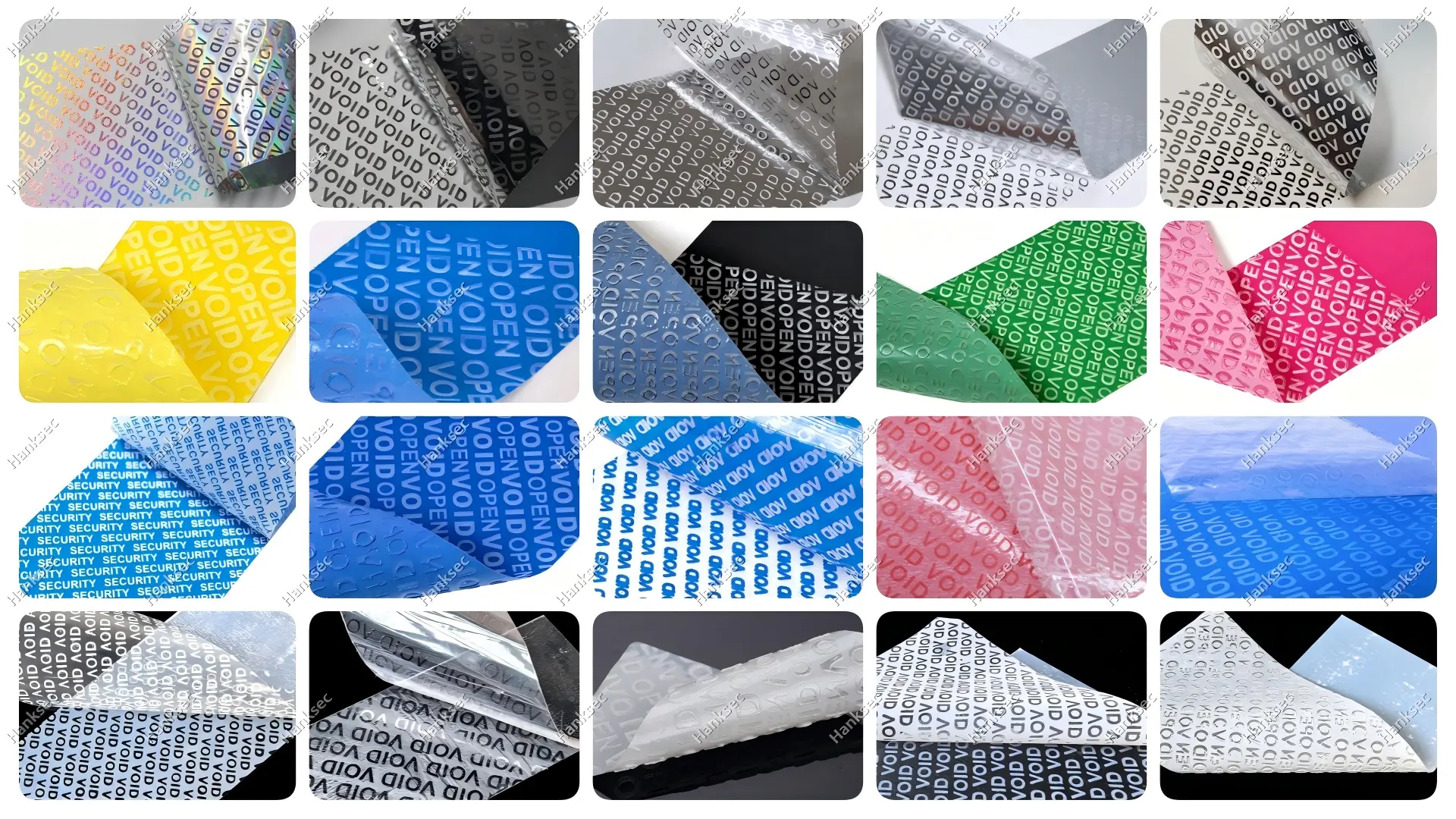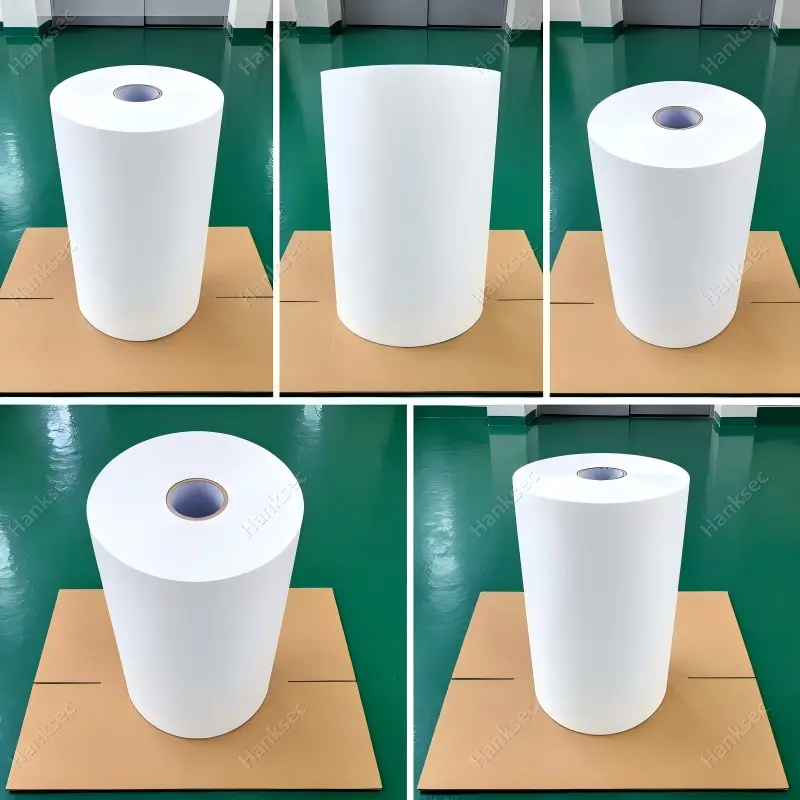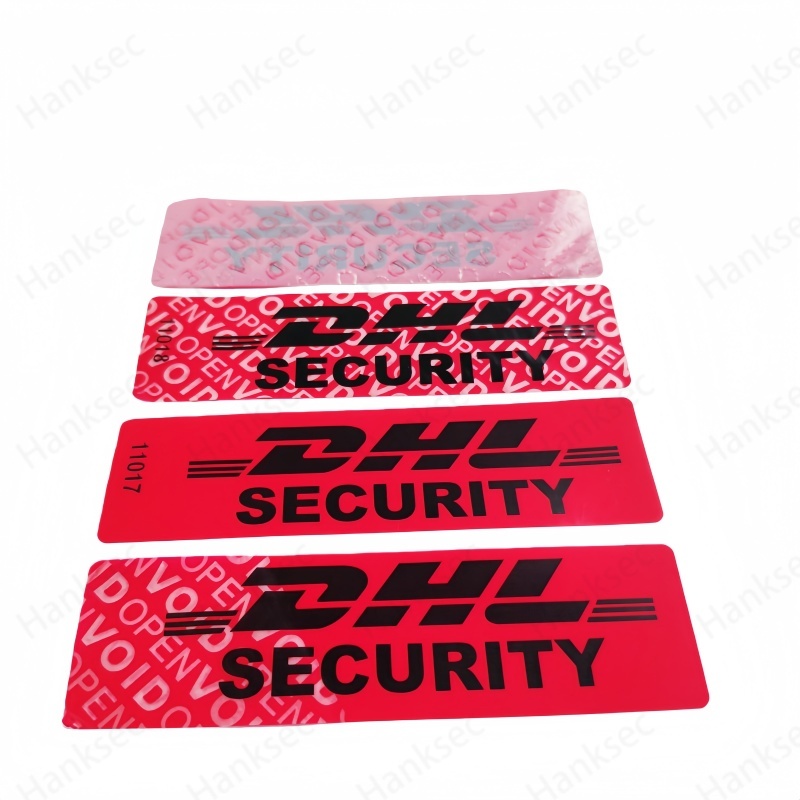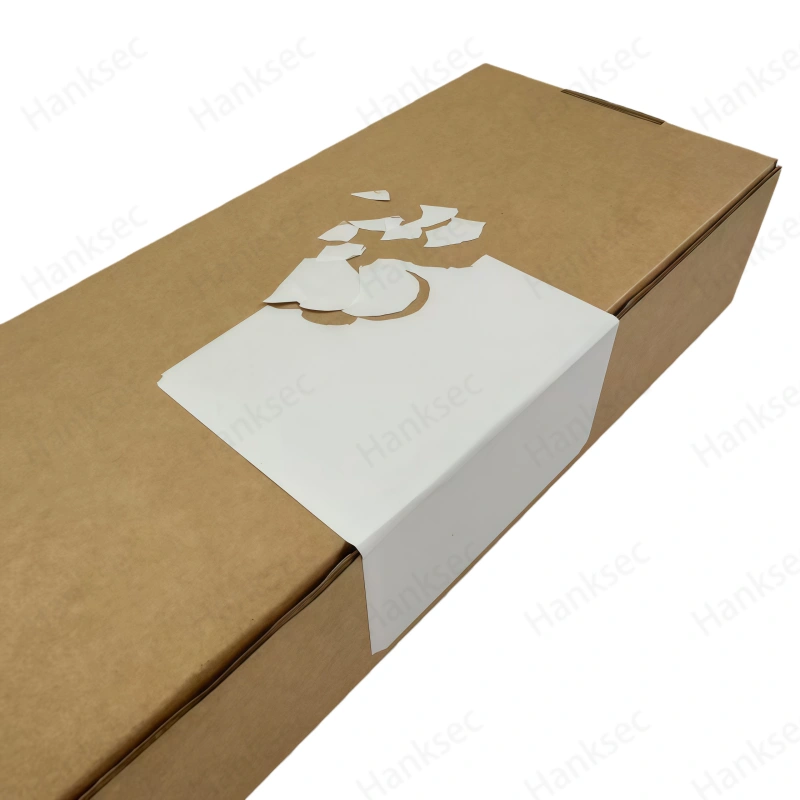
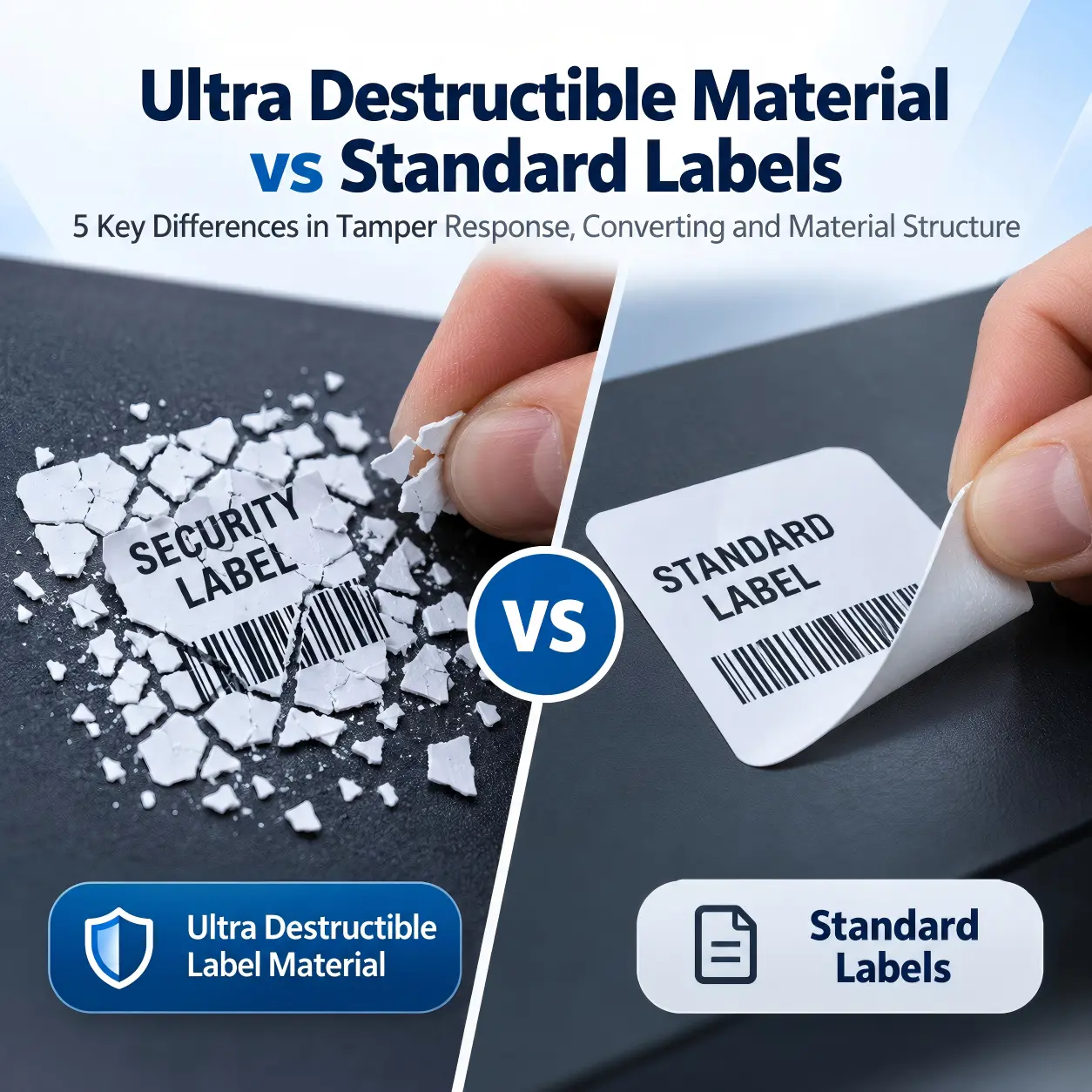
When comparing an ultra destructible label vs standard label, the biggest difference is not simply how easily the finished label tears. The difference begins with the material construction.
Ultra destructible label material uses an intentionally fragile facestock combined with an adhesive system selected to create visible physical damage when removal is attempted. Standard label materials are normally designed to remain stable during printing, converting, application and normal handling.
For buyers and label converters, the practical question is simple.
Do you need a material that remains mechanically stable, or a material that is designed to fracture after application?
This guide compares ultra destructible material with standard labelstock by facestock behavior, adhesive interaction, converting performance, tamper response and final supply format.
Ultra Destructible Label Material vs Standard Labels: Quick Comparison
| Feature | Ultra Destructible Label Material | Standard Label Material |
|---|---|---|
| Main Material Function | Create physical tamper evidence through fragmentation | Provide stable printing, identification and labeling performance |
| Facestock Behavior | Intentionally fragile | Normally designed for mechanical stability |
| Removal Response | Designed to crack, tear or fragment | May remain intact depending on the facestock and adhesive |
| Converting | Requires closer control of die cutting, web tension and matrix stripping | Generally more forgiving during converting |
| Security Function | Suitable for anti-removal and anti-transfer applications | Security depends on the specific construction |
| Supply Format | Jumbo roll, slit roll, sheet or converted label | Jumbo roll, slit roll, sheet or converted label |
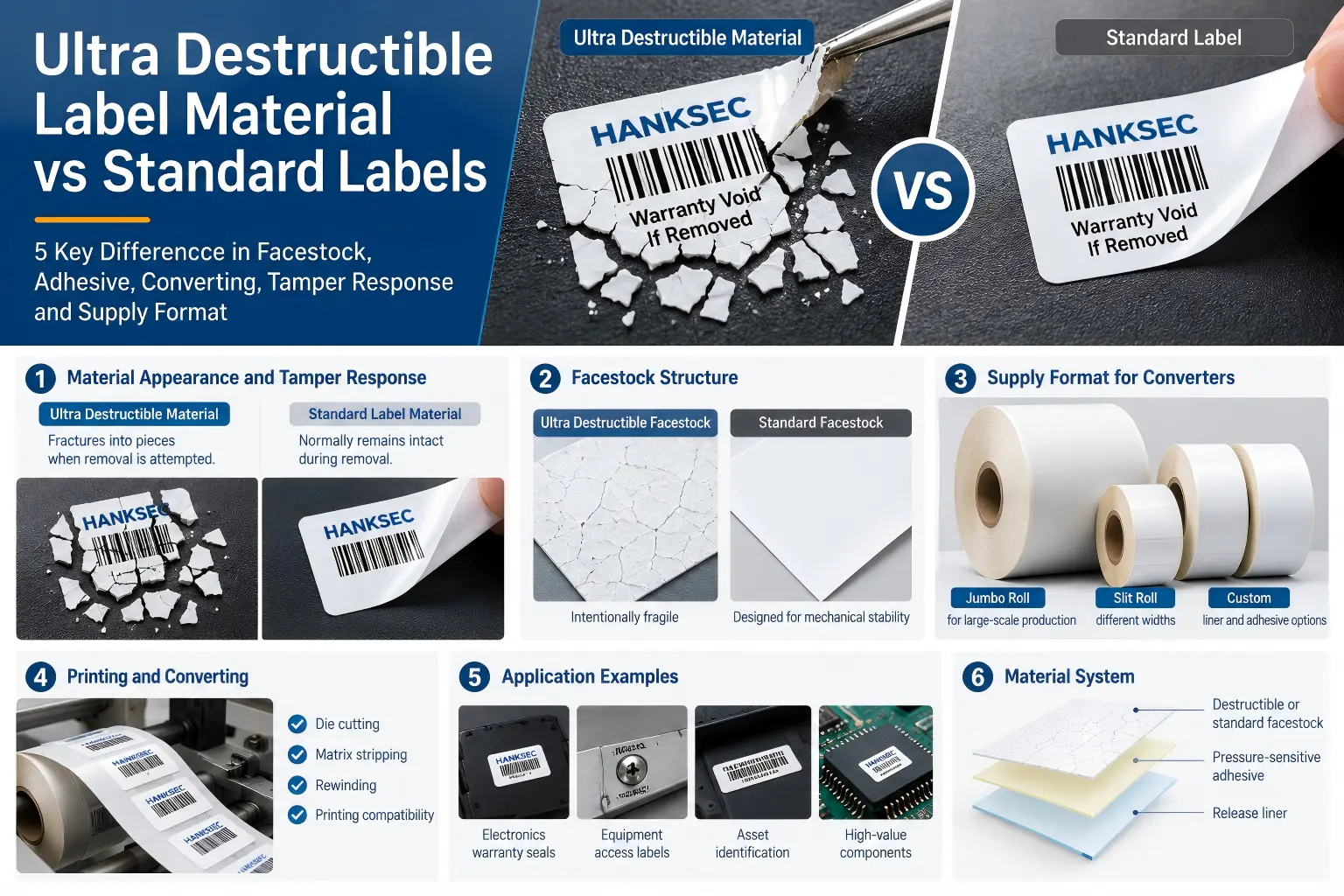
The choice should not be based only on thickness, price or how easily a sample can be torn by hand. The complete construction includes facestock, adhesive, release liner, printing process and final substrate. These elements determine how the material performs.
What Is Ultra Destructible Label Material?
Ultra destructible label material is a pressure-sensitive security material designed with a highly fragile facestock.
After the converted label has been applied and the adhesive has developed sufficient bond to the substrate, an attempt to remove the label should cause the facestock to fracture rather than peel away cleanly as one complete piece.
The European Union Intellectual Property Office describes ultra-destructible labels as being made from very fragile materials combined with strong adhesive so that attempted removal causes the label to break into small pieces. See the EUIPO Ultra-Destructible Labels Guide.
For security label production, this material can be converted into:
- warranty seals
- electronics security labels
- equipment access seals
- asset identification labels
- inspection labels
- anti-transfer product labels
- high-value component security labels
Hanksec supplies Ultra Destructible Vinyl Material for projects requiring high-fracture tamper evidence. Different destructibility levels are also available when converters need a better balance between security response and production stability.
What Is Standard Label Material?
Standard label material is a broader category of pressure-sensitive labelstock designed mainly for printing, identification, branding, instructions, barcode use or other general labeling requirements.
The facestock can include paper, PET, PP, vinyl and other materials. Depending on the application, the adhesive may be permanent, removable, freezer-grade, high-tack or formulated for another specific requirement.
A standard label should not be described as automatically weak or easy to remove.
Some conventional PET or vinyl constructions can provide very strong adhesion and high durability. The important difference is that the material is not intentionally engineered to fracture as its primary tamper-evident mechanism.
5 Key Differences Between Ultra Destructible Material and Standard Labelstock
1. Facestock Failure Is Intentional
The most important difference is how the facestock is expected to behave.
Standard labelstock normally needs enough mechanical strength to survive printing, rewinding, die cutting, dispensing and normal product handling.
Ultra destructible material is engineered with much lower internal strength so that the facestock becomes the security mechanism.
When removal force exceeds the internal strength of the fragile material, the facestock breaks instead of separating cleanly from the substrate.
Greater material strength is not always an advantage in a destructible security construction.
2. Adhesive and Facestock Must Work as One System
Ultra destructibility cannot be evaluated by the facestock alone.
The adhesive must develop sufficient bond to the final substrate. If the adhesive releases too easily, the material may peel away before the facestock has a chance to fragment.
Final performance depends on facestock strength, adhesive bond, substrate surface, dwell time and application conditions.
ABS, PET, glass, metal, coated paperboard, PP and PE can all produce different results with the same material construction.
For substrate-specific selection, see Hanksec’s Tamper Evident Label Adhesive Guide.
3. Converting Requirements Are Different
A material that fractures easily after application can also be more demanding during production.
Ultra destructible material may require closer control of:
- web tension
- die-cutting pressure
- matrix stripping
- rewinding tension
- finished label size
- corner geometry
- release-liner selection
Material that is too fragile for the converter’s process can create matrix breaks or handling problems. Material that is too strong may convert easily but provide insufficient destruction after application.
This is why Hanksec separates destructible materials by different breakage levels rather than treating all fragile material as one product. See the Destructible Label Material Rolls for Converters guide for easy, medium and harder destructibility selection.
4. The Finished Label Has a Different Security Function
Once converted, ultra destructible material creates a finished security label whose main evidence comes from physical fragmentation.
A conventional label may still use permanent adhesive, strong PET film or durable printing, but those features do not automatically make it destructible.
This distinction matters when the purpose of the label is to show whether someone has attempted to remove, transfer or replace it.
For example, a warranty seal covering an electronics housing screw should ideally show visible damage if someone tries to open the device and reuse the original label afterward.
5. Supply Format and Final Use Can Be Customized Separately
Security material supply and finished-label supply are not the same purchasing decision.
Label converters and security printers may require:
- jumbo rolls
- slit rolls
- custom roll widths
- specific release liners
- printable coatings
- custom adhesive systems
Other buyers may require the same base material to be supplied as printed and die-cut finished security labels.
Hanksec supports both material-level supply and converted formats. The material construction should be confirmed before final printing and die cutting.
Which Material Should Label Converters Choose?
The correct choice depends on what the converter needs the finished label to do.
| Project Requirement | Recommended Direction |
|---|---|
| General barcode or product information | Standard labelstock is usually sufficient |
| Warranty label that should break during removal | Destructible security material |
| Very small seal requiring aggressive fragmentation | Ultra destructible material may be suitable |
| High-speed converting with moderate tamper requirement | A less fragile destructible grade may provide better process stability |
| Visible VOID or OPENED message is required | VOID security material should be evaluated instead |
The most fragile material is not automatically the best choice.
The correct grade should balance security response and converting stability.
When Is Ultra Destructible Material the Better Choice?
Ultra destructible material is most useful when intact removal of the finished label should be difficult and visible physical damage is preferred.
Typical application directions include electronics, warranty control, equipment access points, asset protection, repair control and high-value components.
Actual performance should always be tested on the final application surface.
A highly fragile material combined with an unsuitable adhesive may perform worse than a slightly stronger destructible grade with better substrate bonding.
When Is Standard Labelstock the Better Choice?
Standard labelstock remains the more appropriate material when the primary requirement is identification, print quality, durability or production efficiency rather than tamper evidence.
This includes many ordinary barcode labels, product labels, instructions, logistics labels and high-speed labeling applications.
Using a fragile security material where no destructive-removal function is required can unnecessarily complicate converting and dispensing.
Ultra Destructible Material vs VOID Material: What Is the Difference?
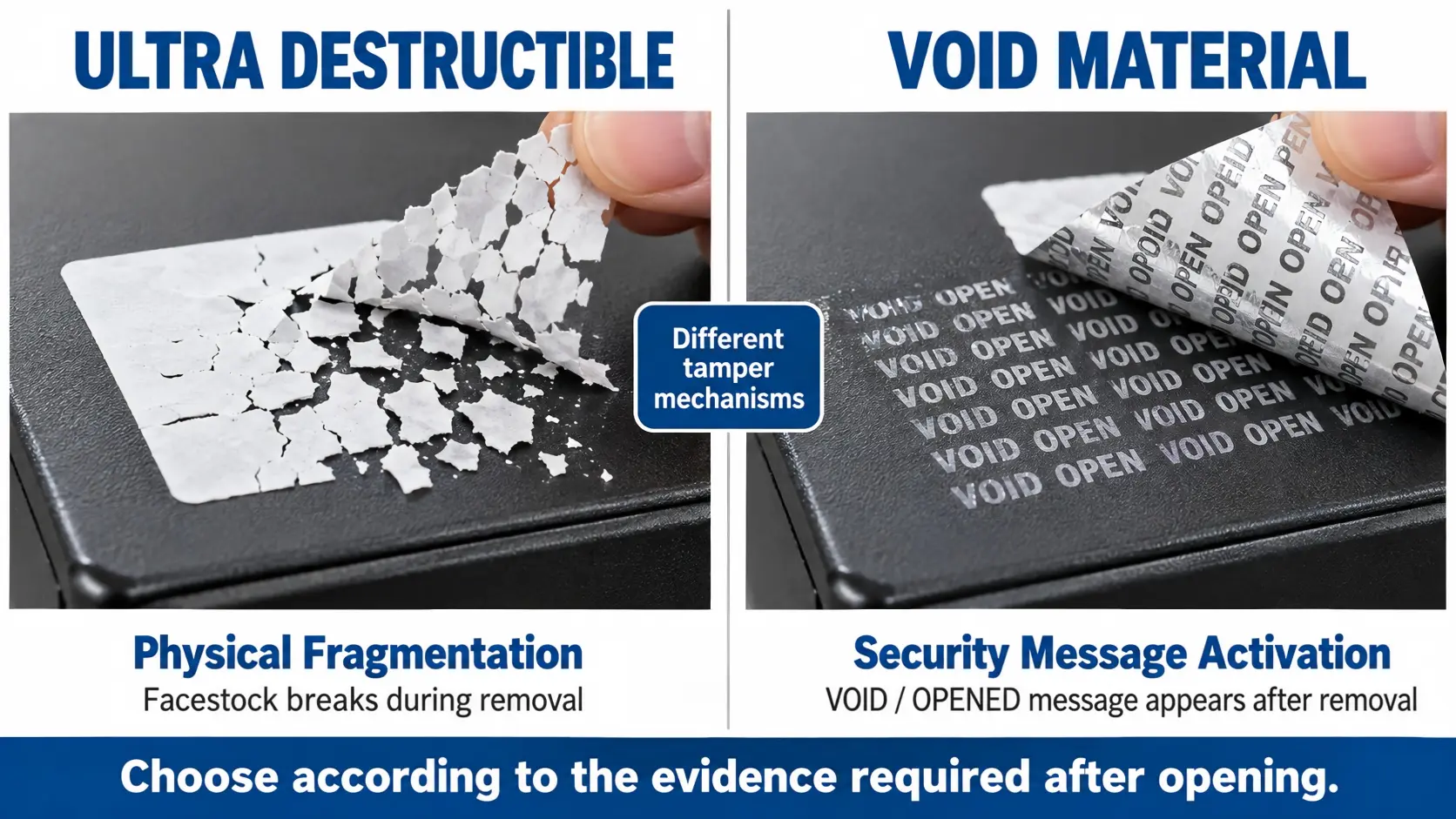
Both are tamper-evident material systems, but the evidence mechanism is different.
| Material System | Main Tamper Response |
|---|---|
| Ultra Destructible Material | Facestock fractures during removal |
| VOID Material | A controlled release structure reveals a VOID, OPENED or custom security message |
Ultra destructible material relies mainly on physical material failure.
VOID material relies on a functional release or transfer layer.
The right system depends on whether the buyer wants broken material, visible residue, a hidden message or a combination of security effects.
What Should Be Tested Before Bulk Production?
Before approving a destructible material, buyers and converters should test the complete construction rather than evaluating only a raw facestock sample.
Key checks include:
- adhesion on the actual substrate
- destruction level after sufficient dwell time
- die-cutting performance
- matrix stripping stability
- release force
- printing compatibility
- finished label dispensing where applicable
Commercial destructible label materials from major material manufacturers combine a fragile facestock, adhesive and liner as a complete pressure-sensitive construction. The fragile film should not be evaluated as if it were the complete finished product. For example, the 3M Destructible Polyurethane Label Material 3812 technical data sheet specifies facestock, adhesive and release liner as part of the material system.
Hanksec’s Security Label Material Quality Control Guide explains how adhesion, release force, converting and final tamper response can be checked before bulk approval.
FAQ: Ultra Destructible Label Material
Is ultra destructible material the same as an ordinary fragile label?
Not necessarily. Destructible materials can be engineered with different fracture levels. Ultra destructible grades are positioned toward the more fragile end of the range and normally break into smaller pieces during attempted removal.
Can ultra destructible material be supplied in jumbo rolls?
Yes. Depending on the project, destructible security materials can be supplied in jumbo rolls, slit rolls, sheets or converted label formats.
Can ultra destructible material be printed?
Yes. The printable surface must be compatible with the intended printing method. UV flexo, screen, thermal transfer and selected digital systems may require different surface treatments or coatings.
Does a stronger adhesive always create better destructibility?
No. The adhesive must be matched to the substrate and service conditions. Final tamper performance depends on the balance between facestock strength, adhesive bond and application surface.
Can Hanksec supply finished destructible labels as well as material?
Yes. Projects can be developed as converter-ready material or as converted security labels depending on printing, die cutting, serialization and final application requirements.
Conclusion: Select the Complete Material Construction
The difference between ultra destructible label material and standard labelstock is not simply whether one material is easier to tear.
Ultra destructible material is engineered so that the facestock becomes part of the tamper-evident mechanism. Standard labelstock is normally optimized for stable printing, converting and normal labeling performance.
For security applications, evaluate the required tamper response, facestock, adhesive, substrate, converting process and supply format together.
Hanksec manufactures destructible security label materials for label converters, security printers, distributors and OEM projects. Hanksec can also support converted security-label formats when required.
Before bulk production, the final material should be qualified on the actual substrate and under the intended printing and converting conditions.