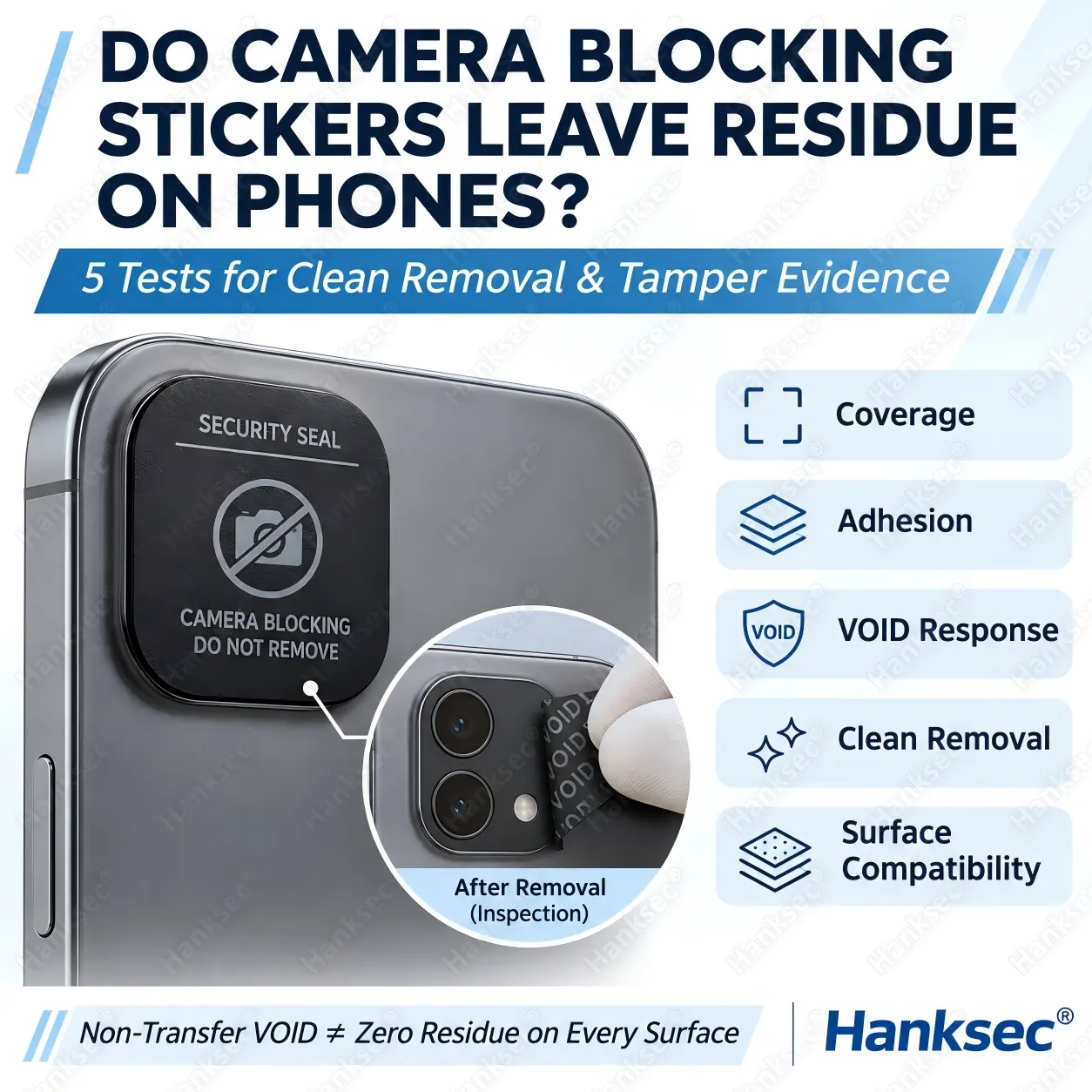
Quick Answer: Do camera blocking stickers leave residue on phones? They can, depending on the adhesive, surface coating, application time and removal conditions. Non-transfer VOID or low-residue security labels are often selected for visitor phones because they can reveal tampering while reducing surface marking. However, non-transfer does not guarantee zero adhesive residue, and compatibility must be checked on representative devices before use.
In factories, laboratories, data centers and restricted production areas, visitors may be required to cover their smartphone cameras. A security label needs to stay attached during the visit, prevent useful image capture through the covered cameras and show visible evidence if someone removes it.
At the same time, the visitor expects to receive the phone back without adhesive marks or damage to the device finish.
These requirements are not automatically compatible. A strong adhesive may remain attached but become difficult to remove. A very low-tack adhesive may release cleanly but lift during normal handling. The correct material must balance optical blocking, adhesive stability, tamper evidence and authorized clean removal.
Why Can Camera Blocking Stickers Leave Residue on Phones?
Residue is influenced by the adhesive formulation and the interaction between the label and the receiving surface.
Camera areas may include smooth glass, coated glass, plastic frames, painted housings, protective films and other finishes. Two devices that look similar may have different surface treatments.
Several factors can change removal behavior:
- Adhesive chemistry: Different pressure-sensitive adhesive systems have different bonding and release characteristics.
- Application time: The adhesive bond may change as contact develops over time.
- Temperature: Warm storage, handling or exposure can change adhesive and coating behavior.
- Surface contamination: Oils, fingerprints or cleaning residues may alter contact and release.
- Surface finish: Oleophobic coatings, protective films and decorative finishes can respond differently to the same adhesive.
- Removal conditions: Peel direction, speed and temperature may influence residue and the appearance of tamper evidence.
The technical question is therefore not only whether a sticker has a “non-residue” product description. It is whether the selected construction satisfies the required limits on the actual phone surfaces and within the intended visitor-control process.
For the broader application and security workflow, see Hanksec’s No Photography Phone Camera Stickers Guide.
Does Non-Transfer VOID Mean No Residue?
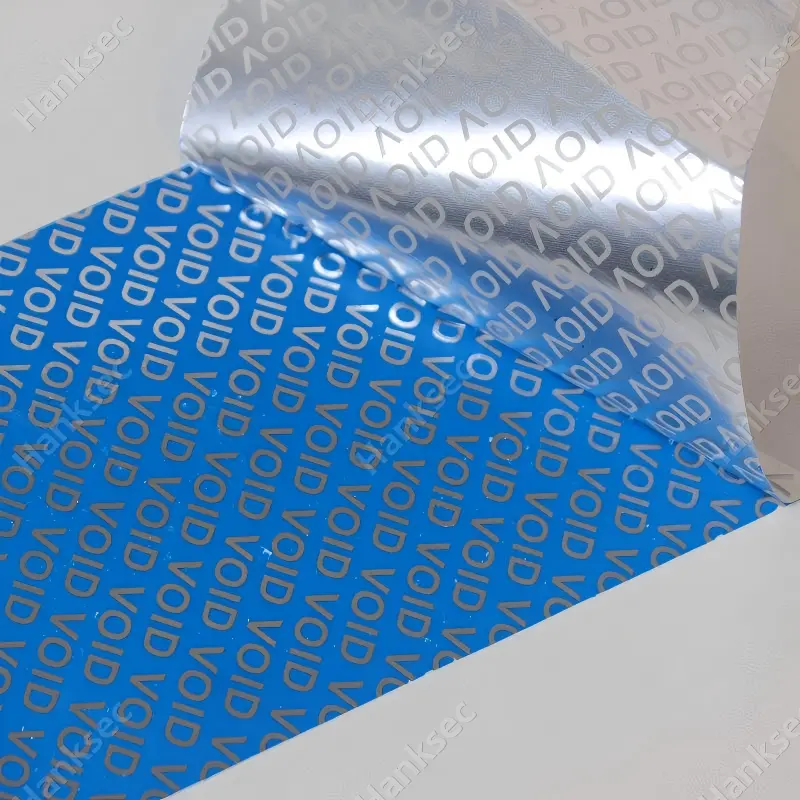
No. A non-transfer VOID construction describes where the intended hidden security message appears after peeling. The message is designed to appear mainly in the removed label rather than being deliberately transferred to the device.
That is different from an absolute promise that every adhesive component will release without a mark on every surface.
| Construction | Expected Removal Evidence | Phone-Surface Consideration |
|---|---|---|
| Non-Transfer VOID | Hidden message mainly on the removed film. | Often a suitable starting point where minimal visible transfer is required. |
| Partial-Transfer VOID | Evidence on both film and application surface. | Surface marking may be unacceptable for visitor-owned devices. |
| Full-Transfer VOID | Strong visible message or transfer on the receiving surface. | Usually not the first choice when a clean phone surface is required. |
| Low-Residue Security Label | Depends on whether a VOID or other tamper mechanism is included. | Adhesive cleanliness and tamper response require separate tests. |
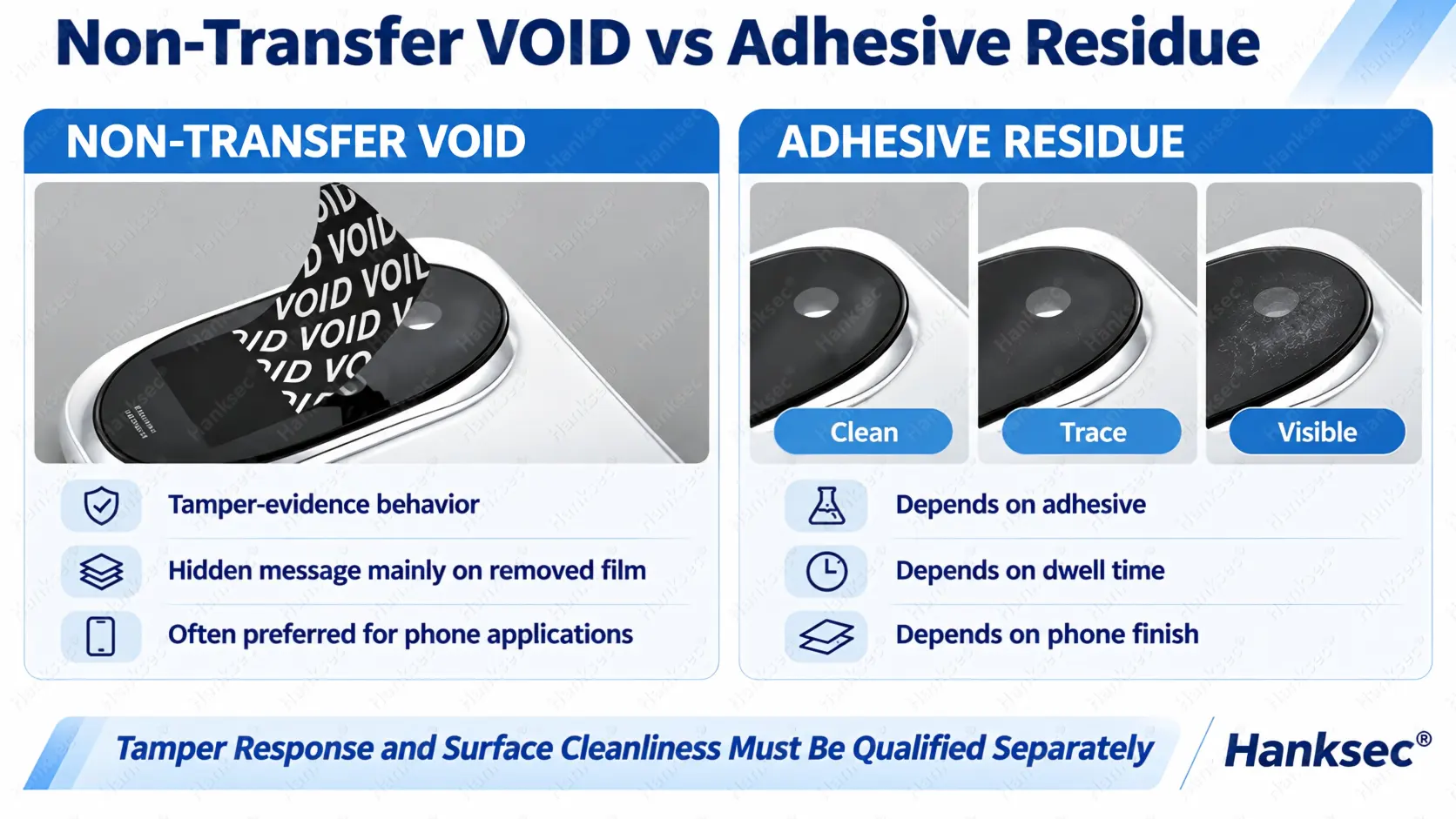
Non-transfer security materials should be qualified for both the intended VOID response and actual surface cleanliness. One property should not be used as a substitute for the other.
For a camera-specific product construction and OEM/ODM options, explore Hanksec’s Non-Transfer Camera Lens Security Label. Residue and surface compatibility should be verified on the intended devices and application areas.
For additional transfer-type information, see Hanksec’s VOID Label Material Technical Guide.
What Five Tests Should Camera Blocking Security Stickers Pass?
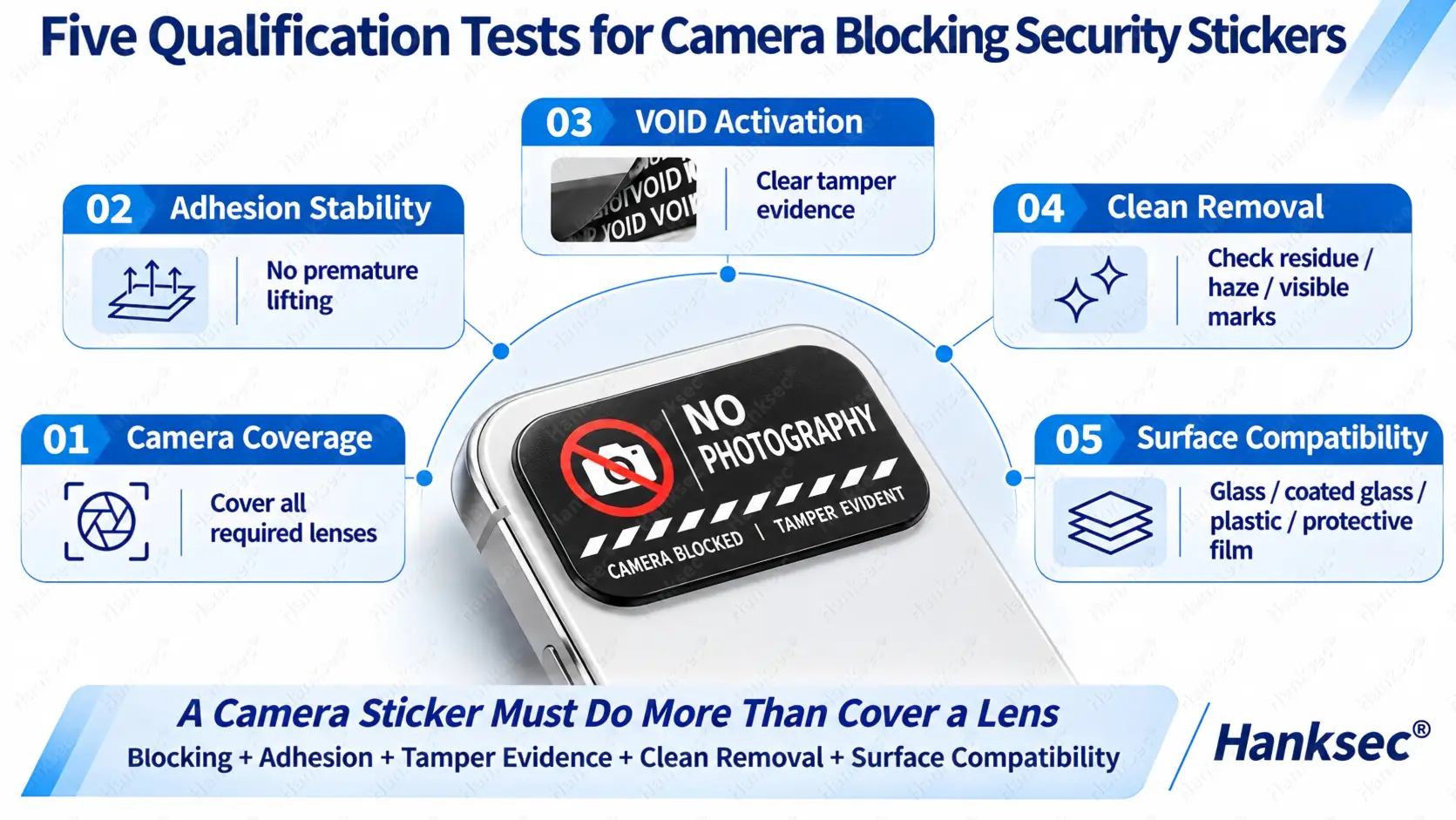
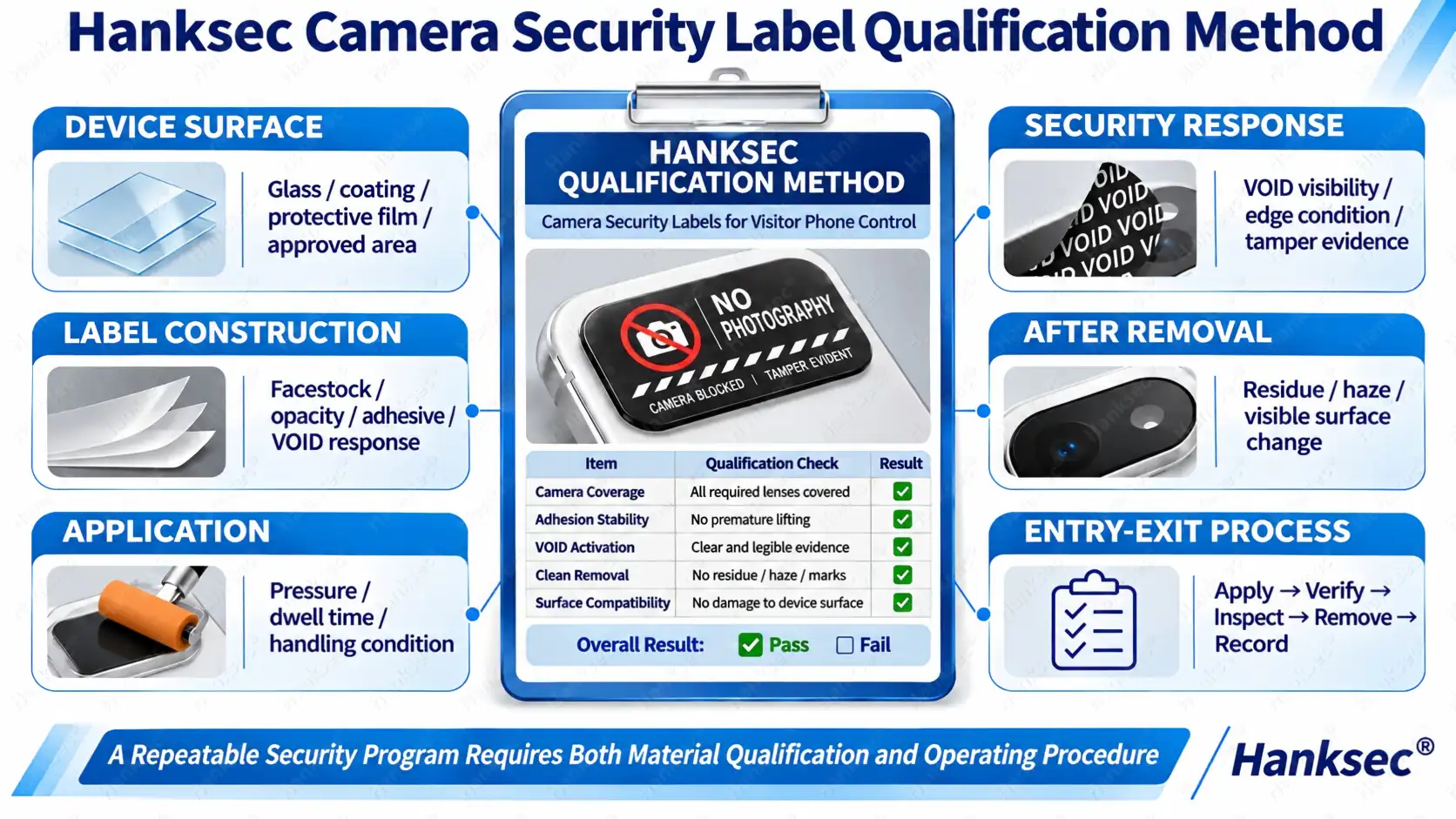
A practical qualification plan should evaluate the complete label and device combination. Hanksec recommends five separate checks before approving a material for a visitor-phone program.
1. Camera Coverage and Optical Blocking Test
Apply the proposed label according to the intended entry procedure. Check whether the required camera areas are fully covered and whether the covered cameras can still capture useful images.
Test the actual camera functions on representative devices. Depending on the phone, these may include front cameras, standard rear cameras, ultra-wide cameras, telephoto cameras and other imaging modes.
The required coverage is project-specific. A label that covers only one visible rear lens may leave another camera functional.
Qualification question: Can the device capture prohibited images through any camera that the security procedure is intended to block?
2. Adhesion Stability During Normal Handling
The label should remain in place throughout the expected visitor period without unexplained edge lifting.
Evaluate the label after the intended dwell time and representative handling conditions, including routine pocket or bag storage and device handling where relevant.
Record any edge lifting, curl, partial release or loss of contact. Do not assume that stronger adhesion is always better: excessive bonding can create other problems during authorized removal.
Qualification question: Does the label remain attached during normal use without creating premature failure or excessive removal difficulty?
3. VOID Activation After a Defined Removal Attempt
On dedicated qualification samples, perform the specified opening or peeling test and inspect the resulting security evidence.
For non-transfer VOID material, the intended hidden message should become visibly recognizable in the removed construction. The exact acceptance criteria depend on the approved material design.
Test the result under representative application conditions rather than relying on one demonstration on a standard laboratory panel.
Qualification question: Can security staff distinguish an attempted removal from an intact label using the approved inspection reference?
4. Authorized Removal and Residue Inspection
Remove dedicated test labels after the specified application periods, following the approved procedure. Inspect the device surface under consistent lighting for adhesive marks, haze, staining or other visible changes.
Where applicable, record the result on glass, plastic, painted surfaces and approved protective films separately.
Do not use aggressive solvents, scraping tools or unapproved cleaning methods on visitor phones. A label that requires risky cleanup is not suitable for a program promising clean authorized removal.
Qualification question: Does removal leave the surface within the project’s defined appearance and residue limits?
5. Surface-Coating Compatibility and Environmental Check
Repeat the intended tests on representative device finishes and after relevant environmental conditioning. Surface coatings may change adhesion or clean-release behavior even when the underlying material is the same.
Compare test samples before and after removal for changes to coating appearance or finish. Use device-manufacturer guidance when selecting suitable test areas and approved cleaning practices.
Qualification question: Does the construction preserve the required performance across the devices, finishes and environmental conditions actually included in the project?
How Should Manufacturers Record the Test Results?
A useful material qualification report records the substrate and test conditions as well as the observed result. “Passes on phones” is too broad to describe an adhesive construction accurately because test results apply to the evaluated material construction and defined device surfaces.
| Test Area | What to Record |
|---|---|
| Device Surface | Surface type, protective film or coating, device reference and approved placement area. |
| Label Construction | Facestock, opacity, adhesive and intended VOID response. |
| Application | Pressure, dwell time, location and representative handling conditions. |
| Security Response | VOID visibility, edge condition and evidence after the defined test. |
| After Removal | Residue, haze, discoloration or other visible surface changes. |
For material suppliers, the test record should also identify the evaluated sample construction and production lot. A change in adhesive, facestock, liner or coating may require requalification.
Hanksec evaluates camera security labels through the five qualification checks described above, including optical blocking, adhesion stability, VOID activation, authorized removal and device-surface compatibility. Test results should be interpreted according to the documented sample construction, substrates and conditions.
Which Phone Surfaces Need Extra Caution?
Different phone finishes can produce different test results. Security labels should not be assumed safe simply because one smooth glass sample passed a peel test.
Extra caution is appropriate for:
- Oleophobic or specialty-coated glass: Surface treatments may affect adhesion and release.
- Camera cover glass: The external optical surface requires careful inspection for haze or residue after removal.
- Decorative or painted camera housings: The finish may differ from the phone’s main glass surface.
- Aftermarket protective films: Films may lift or deform when the label is removed.
- Curved camera islands: Uneven contact can produce edge lifting or incomplete blocking.
Security teams should select approved placement locations and confirm that the label does not interfere with essential device functions outside the intended camera control.
NovaVision’s technical guidance for mobile-device camera seals identifies device glass, plastic and oil-resistant coatings as important compatibility considerations. Manufacturer instructions should also be consulted for particular devices.
What Causes False Tamper Evidence or Poor Clean Removal?
When a security label fails qualification, identify the observed failure before changing materials.
Premature edge lifting may be associated with poor adhesive wet-out, contamination, surface curvature or insufficient application pressure.
Weak or incomplete VOID activation may indicate that the intended separation mechanism is not being triggered consistently under the tested conditions.
Visible adhesive residue may reflect the adhesive formulation, contact history, receiving surface or removal conditions.
Coating or protective-film damage must be treated separately from residue. A surface may appear clean while still showing a change to its finish, or a protective film may release with the label.
Do not correct one failure by automatically increasing adhesive strength. A stronger adhesive might improve edge retention while worsening removal performance. Requalify the full label construction after changes.
How Should Visitor Entry and Exit Inspection Work?
Material qualification is only useful when supported by a repeatable operating procedure.
- At entry: Identify the device and apply the approved camera labels to the required areas.
- Verify blocking: Confirm that the intended cameras cannot capture useful images.
- Record identity: Where required, associate a serial number or other label identifier with the visitor record.
- At exit: Inspect the label condition and any expected VOID evidence before authorized removal.
- Close the record: Document any discrepancy and remove the label under the approved procedure.
A temporary camera sticker is not a substitute for a complete facility security policy. It provides one physical control within a broader process.
Frequently Asked Questions
Do camera blocking stickers leave residue on iPhones or Android phones?
They may, depending on the label construction, application time and device finish. Non-transfer or low-residue security materials are often preferred, but representative devices should be tested before deployment.
Are non-transfer VOID stickers guaranteed to leave no residue?
No. Non-transfer describes the intended security-message transfer behavior. It does not establish universal adhesive cleanliness on every phone surface.
Can a camera blocking sticker damage an oleophobic coating?
Coating compatibility cannot be assumed. Different coatings and adhesives may interact differently, so a project-specific evaluation is required. Avoid unapproved adhesives and cleaning methods on sensitive device finishes.
Can a normal camera cover sticker replace a tamper-evident camera label?
A normal cover may block the lens, but it generally does not provide a designed irreversible opening response. Controlled-area applications may require both optical blocking and tamper evidence.
Should every phone camera be covered?
The required coverage depends on the security policy and device design. Modern phones may contain several front and rear imaging modules, so every prohibited camera function should be considered during qualification.
Can Hanksec supply non-transfer camera security label materials for converters?
Yes. Hanksec provides non-transfer VOID and low-residue security material options for relevant device-label applications. Construction, printing, die cutting, release liner, roll format and performance requirements should be confirmed through sample qualification.
Send Hanksec your device surface, intended application period, required VOID response and residue limits. We can help evaluate compatible security material constructions, printing and converting requirements before sample approval.
Hanksec® | Non-Transfer VOID Materials · Camera Security Labels · Surface Compatibility · OEM/ODM