Author: Hanksec Technical Team
Evidence Bags | Tamper-Evident Closures | Security Bag Tape | Chain of Custody
Quick Answer: How to seal an evidence bag correctly: select packaging suited to the evidence type, record a unique identification number, place the item inside, apply an approved tamper-evident closure, inspect the seal, and document every custody transfer.
A properly sealed evidence bag helps reveal unauthorized opening or interference during storage and transportation. However, the bag itself does not establish a complete chain of custody. Accurate identification, documented handling and appropriate evidence preservation procedures are equally important.
For law enforcement agencies, forensic laboratories, security packaging manufacturers and evidence-bag suppliers, the objective is to make the package identifiable, the closure inspectable and any subsequent interference easier to recognize.
What Should You Prepare Before Sealing an Evidence Bag?
Before sealing an evidence bag, confirm that the packaging, identification method and closure system are appropriate for the specific item.
| Requirement | What to Prepare |
|---|---|
| Packaging | An appropriate evidence bag or approved evidence container. |
| Bag Condition | A clean, undamaged packaging surface and intact closure area. |
| Security Closure | A compatible tamper-evident closure approved for the application. |
| Identification | A unique case or item identification number. |
| Documentation | Required labels, documentation and chain-of-custody records. |
| Additional Security | Any additional security features required by the organization’s procedure. |
Important: Not all forensic evidence should be packaged in plastic security bags. Biological evidence, particularly wet or damp samples, may require drying and breathable paper packaging according to laboratory procedures.
The NIST/NIJ Handbook on Biological Evidence Preservation recommends appropriate packaging to reduce contamination, cross-transfer and evidence degradation. Packaging requirements must therefore be determined by the evidence type and receiving laboratory’s instructions.
How to Seal an Evidence Bag: 6 Steps for Proper Labeling
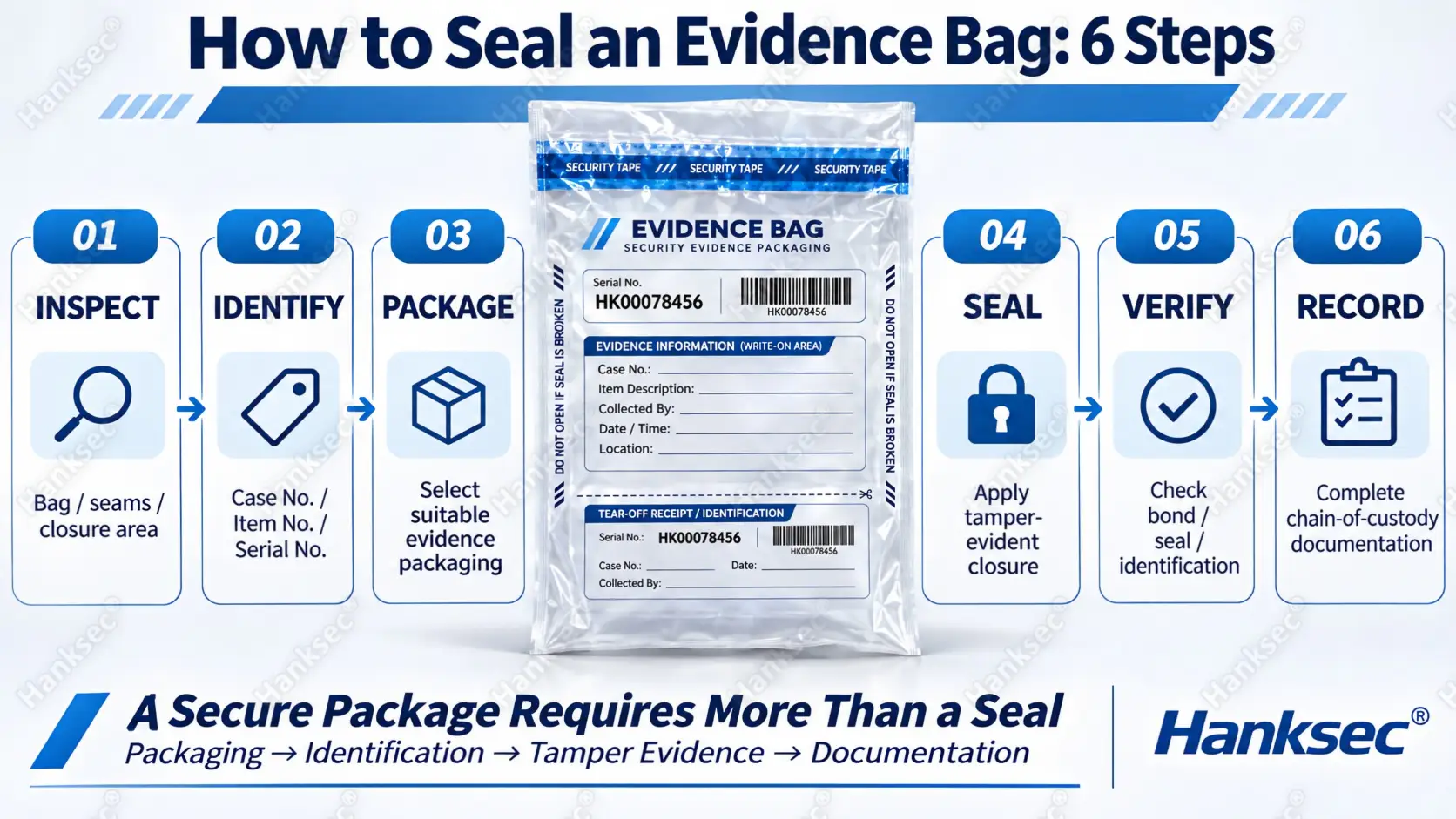
The following table summarizes the six main steps, from initial inspection to final custody documentation.
| Step | Main Action | Key Checkpoint |
|---|---|---|
| 01 | Inspect the evidence bag | Bag condition, seams and closure area. |
| 02 | Record identification information | Case number, item number and serial number. |
| 03 | Place the evidence inside | Suitable packaging and evidence protection. |
| 04 | Apply the tamper-evident closure | Complete bonding and closure coverage. |
| 05 | Inspect the completed seal | Visible tamper evidence and seal integrity. |
| 06 | Complete custody records | Handling history and transfer documentation. |
1. Inspect the Evidence Bag Before Use
Start by checking the bag and its closure area.
Look for:
- Tears, punctures or damaged seams.
- Contamination or foreign material.
- Damaged adhesive closure areas.
- Incorrect or missing identification information.
- Unusual damage to pre-printed serial numbers or security features.
If the bag includes a unique serial number, record it before use and confirm that it corresponds to the intended evidence record.
A damaged or incorrectly identified bag should not be used simply because its adhesive closure still appears functional.
2. Record the Required Identification Information
Each evidence package should be identifiable throughout its handling and storage process.
Depending on the organization’s procedures, the information may include:
- Case or reference number.
- Unique evidence item number.
- Description of the contents.
- Collection date and time.
- Collection location.
- Name or identification of the collecting person.
- Unique bag serial number, where applicable.
For serialized security bags, the printed number should correspond to the associated evidence record or tracking system.
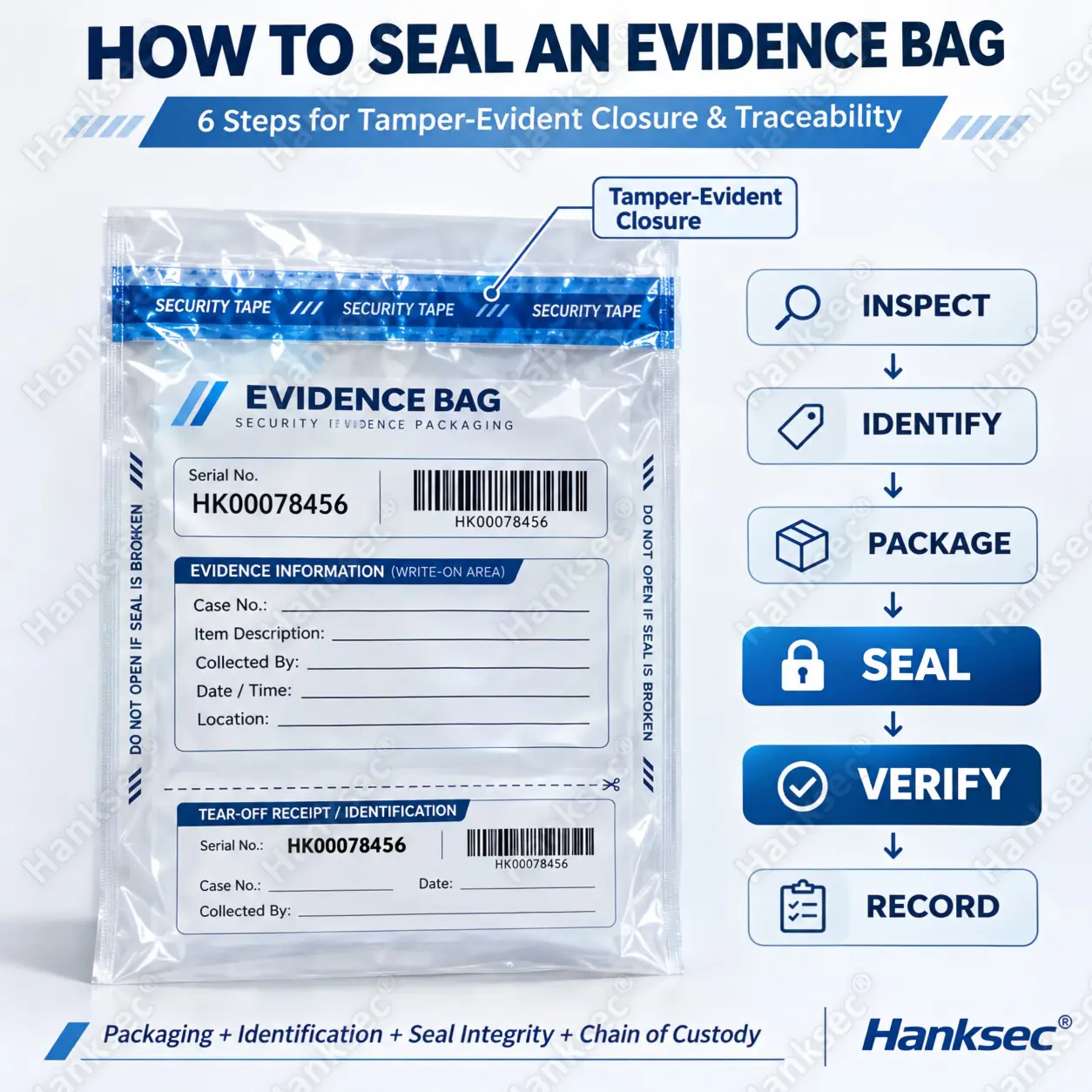
Some bags also incorporate barcodes, QR codes, writable panels or detachable receipts to simplify identification and recordkeeping.
The National Institute of Justice chain-of-custody guidance explains the importance of recording identifying information, collection details and the handling history of evidence.
3. Place the Evidence Inside the Appropriate Package
Place the item inside the selected packaging without damaging the evidence or the bag.
For controlled evidence handling:
- Package individual items separately when required to prevent cross-contamination.
- Avoid overfilling the bag.
- Protect sharp edges that could puncture the packaging.
- Keep identification information readable.
- Follow the receiving laboratory’s requirements for the specific evidence type.
Packaging selection is particularly important for biological samples. Wet or damp biological evidence should not automatically be placed in an impermeable plastic bag. Follow the relevant drying, packaging and storage procedures.
See the NIST Biological Evidence Guidance for additional information.
4. Apply the Tamper-Evident Closure Correctly
The closure is the main physical security feature of an evidence bag.
Depending on the bag construction, the closure may use:
- Integrated pressure-sensitive security tape.
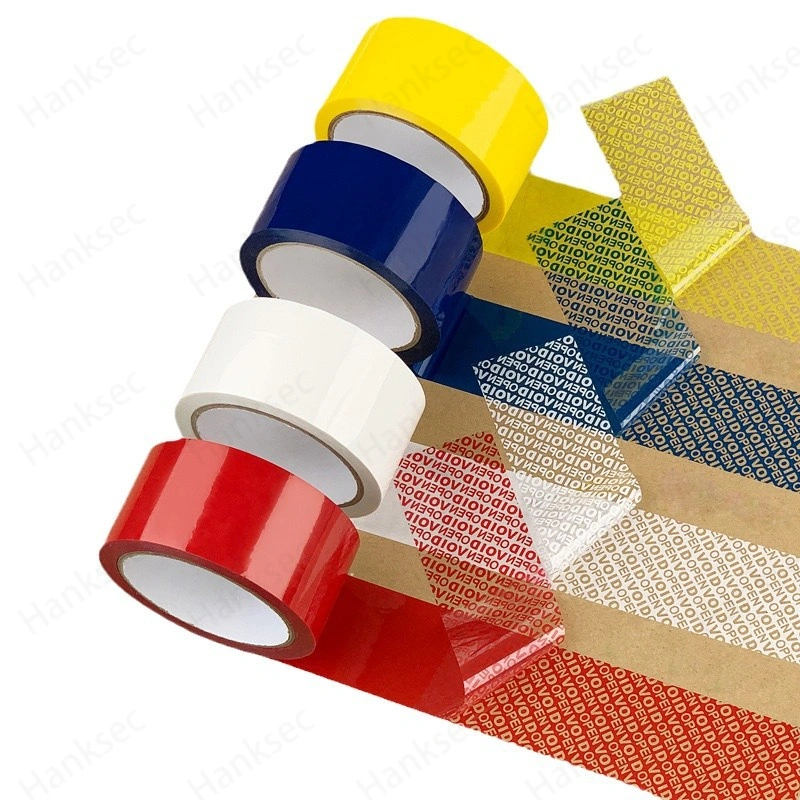
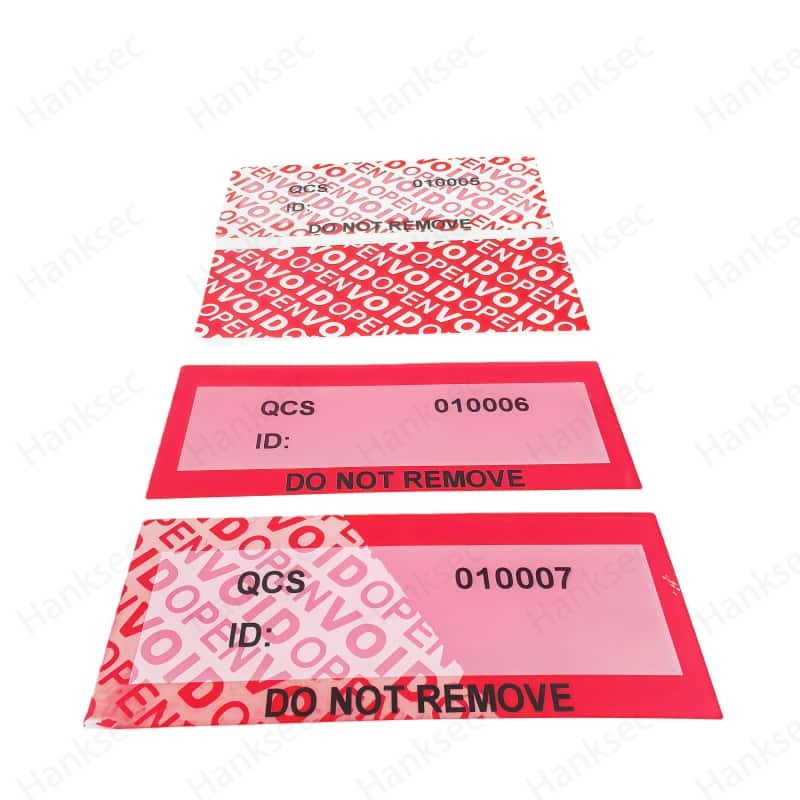
- VOID or OPENED tamper-evident adhesive strips.
- Double-sided security bag tape.
- Specialized evidence sealing tape.
- Other approved one-time closure systems.
For a pressure-sensitive closure, follow the manufacturer’s application instructions. Remove the release liner where applicable, align the closure with the intended sealing area and apply consistent pressure across the complete bonding surface.
Check that:
- The entire opening is covered.
- The closure is properly aligned.
- No visible gaps or exposed opening areas remain.
- The adhesive contacts the intended bag surface.
- The closure is not visibly wrinkled or folded.
Do not assume that ordinary carton sealing tape will provide the same bonding and tamper response as security bag tape.
For a deeper explanation of bag-film compatibility and closure construction, see Tamper Evident Security Bag Tape: Bag Film Compatibility, Security Functions & Selection Guide.
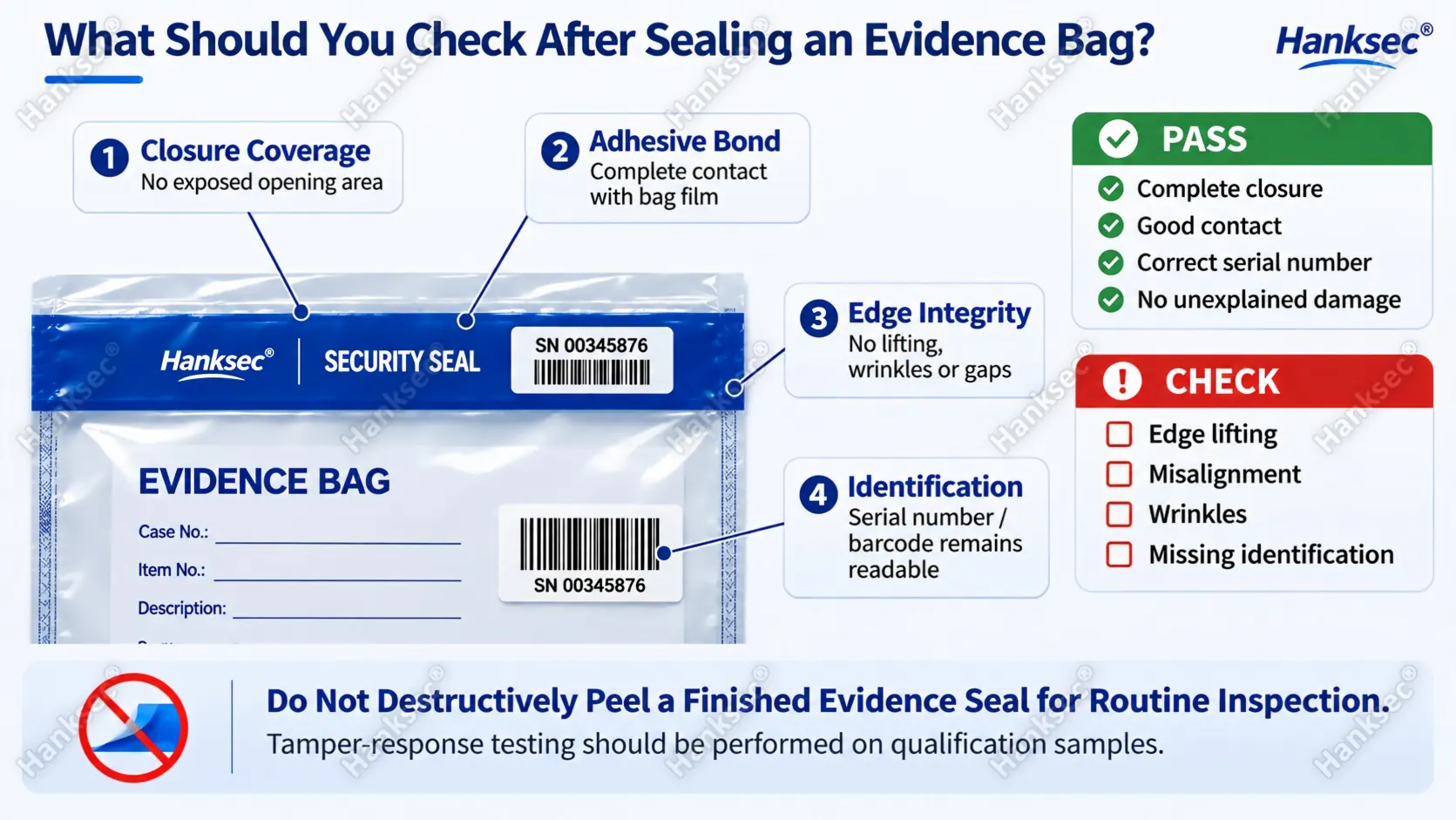
5. Inspect and Document the Completed Seal
After closing the bag, inspect the complete sealing area before releasing it for storage or transportation.
Check the following:
- The closure covers the intended opening.
- The adhesive area appears properly bonded.
- The bag serial number matches the associated record.
- VOID, OPENED or other security markings are undamaged.
- No visible gap, lifting edge or unexplained damage is present.
Where required by the organization’s procedures, the authorized person may add initials, a signature or the date across the seal and adjacent bag surface.
This can provide an additional visual reference for subsequent inspection. It should not be treated as a universal legal requirement or a replacement for unique identification and custody documentation.
Photographs of the completed package and closure can also support the inspection record where permitted by the relevant procedure.
Do not deliberately peel or pull on a completed security closure as a routine inspection method. Such an action could damage the original seal.
6. Complete the Chain-of-Custody Record
Sealing the bag is only one part of evidence control.
Each transfer should be documented according to the applicable procedure.
Typical record fields include:
- Evidence or bag identification number.
- Name or identification of the person releasing the item.
- Name or identification of the receiving person.
- Date and time of transfer.
- Transfer location.
- Reason for transfer.
- Condition of the package and seal.
The NIJ chain-of-custody checklist emphasizes recording each person’s possession and responsibility for the evidence.
A tamper-evident closure helps identify physical interference, while the documentation system records who handled the package and when.
What Happens If an Evidence Bag Must Be Opened?
Sometimes an evidence package must be opened for authorized laboratory examination, inspection or further processing.
The original seal should be inspected and documented before opening, according to the applicable procedure.
After authorized access:
- Document the original seal condition.
- Record who opened the package and why.
- Follow the laboratory’s approved opening procedure.
- Use an appropriate replacement package or closure when required.
- Record the new seal identification number.
- Link the replacement package and seal to the original evidence record.
Replacing a closure without documenting the change can create uncertainty about the package’s handling history.
The original and replacement identification records should remain connected throughout the process.
Common Evidence Bag Sealing Mistakes
Even when the correct type of evidence bag is selected, mistakes during identification, closure application or documentation can affect package integrity and traceability.
| Common Mistake | Why It Matters |
|---|---|
| Using unsuitable packaging | May affect evidence preservation or contamination control. |
| Using ordinary tape instead of an approved security closure | May not provide the intended visible tamper evidence. |
| Leaving gaps in the closure | Creates an incomplete sealing condition. |
| Incorrect serial-number recording | Can create identification and tracking discrepancies. |
| Failing to document a transfer | Creates a gap in the custody record. |
| Opening and resealing without documentation | Makes the package history difficult to verify. |
One important distinction should always be maintained: a tamper-evident bag is designed to reveal defined signs of interference. It does not make unauthorized access physically impossible or independently guarantee legal admissibility.
What Should Evidence Bag Manufacturers Check Before Production?
For security bag manufacturers, the reliability of the final closure depends on the interaction between the bag film and the security tape material.
Important qualification areas include:
| Qualification Area | What to Evaluate |
|---|---|
| Bag Film Compatibility | Check bonding on the actual HDPE, LDPE, PE or other specified film. |
| Adhesive Performance | Evaluate bonding and edge lifting under representative application conditions. |
| VOID Activation | Confirm that the intended opening message appears clearly after the specified removal attempt. |
| Serial Number Control | Verify print quality, numbering sequence and identification accuracy. |
| Liner Release | Confirm stable release during bag production and closure preparation. |
| Production Consistency | Compare finished closures across representative samples and production batches. |
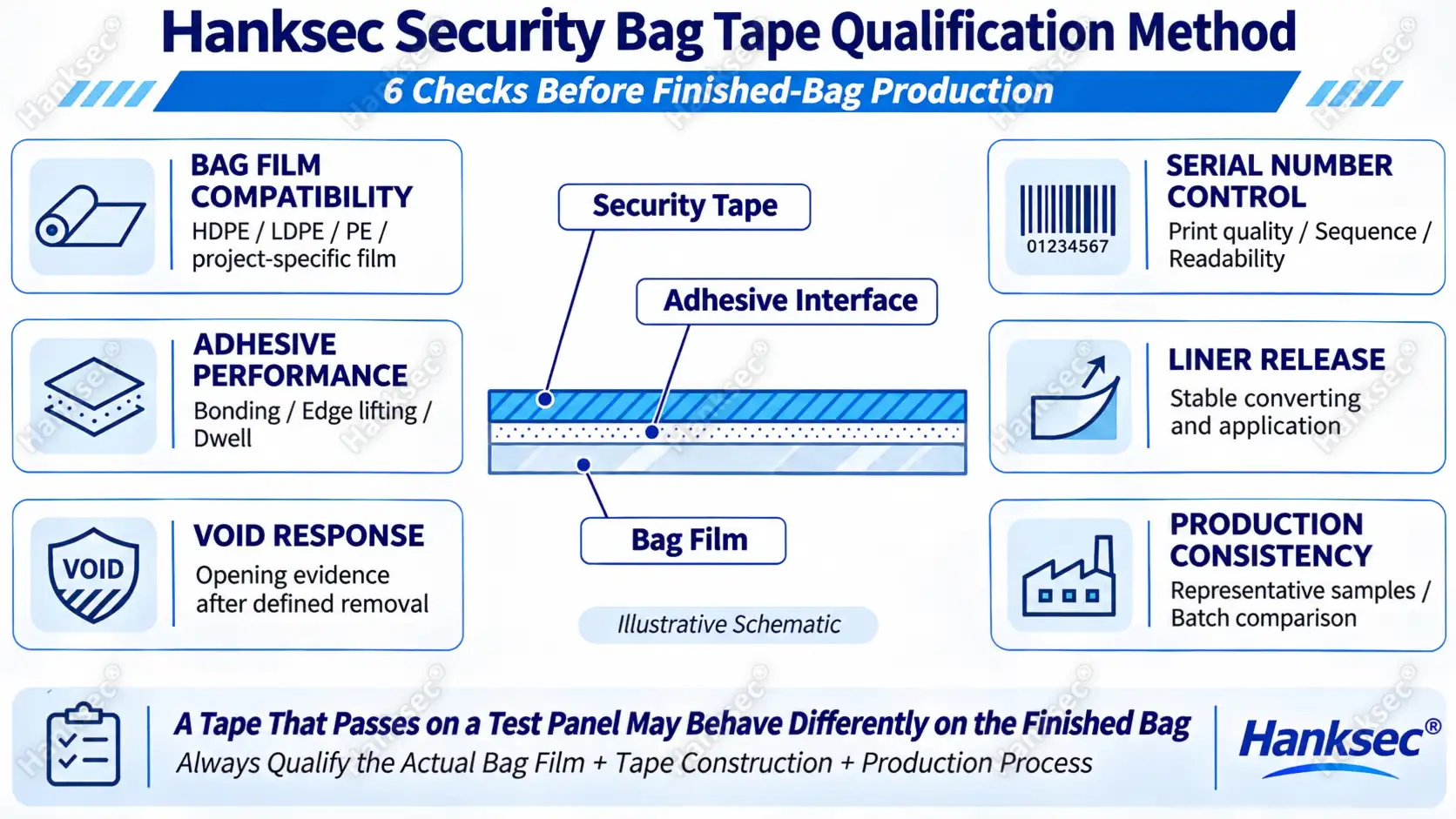
A security tape that performs correctly on a laboratory panel may behave differently after integration with the customer’s actual bag film and manufacturing process.
For more information about different security configurations, see Security Bag Tape Levels Explained: What Does Level 1–6 Actually Protect Against?.
Hanksec supplies Security Bag Tape Materials for security bag factories, packaging converters, distributors and OEM manufacturers. Available configurations can include VOID opening evidence, selected temperature or liquid indicators, security cuts and identification options according to the approved construction.
Frequently Asked Questions
How do you seal an evidence bag properly?
Select the appropriate packaging, record the required identification information, place the evidence inside, apply the approved tamper-evident closure, inspect the complete seal and document the package in the chain-of-custody record.
Should evidence bags always be made from plastic?
No. Packaging depends on the evidence type and laboratory requirements. Wet or damp biological evidence may require drying and breathable paper packaging rather than an impermeable plastic bag.
Should initials be written across an evidence bag seal?
Some evidence-handling procedures recommend or require initials and dates across the seal. Follow the applicable agency or laboratory procedure. This marking does not replace unique identification or chain-of-custody records.
Do serial numbers provide complete chain-of-custody tracking?
No. Serial numbers help identify individual bags or seals, but complete traceability requires associated records documenting handling, transfers and receipt.
Can a security bag be resealed after opening?
A package may be closed again following authorized examination, but the original seal condition and opening should be documented. A new approved closure and identification record should be used according to the applicable procedure.
Send Hanksec your bag film, closure design, expected tamper methods and production process. We can help evaluate security tape compatibility, closure performance and material qualification requirements before sample approval.
Hanksec® | Security Bag Tape · VOID Materials · Temperature Tamper Detection · Security Printing · OEM/ODM