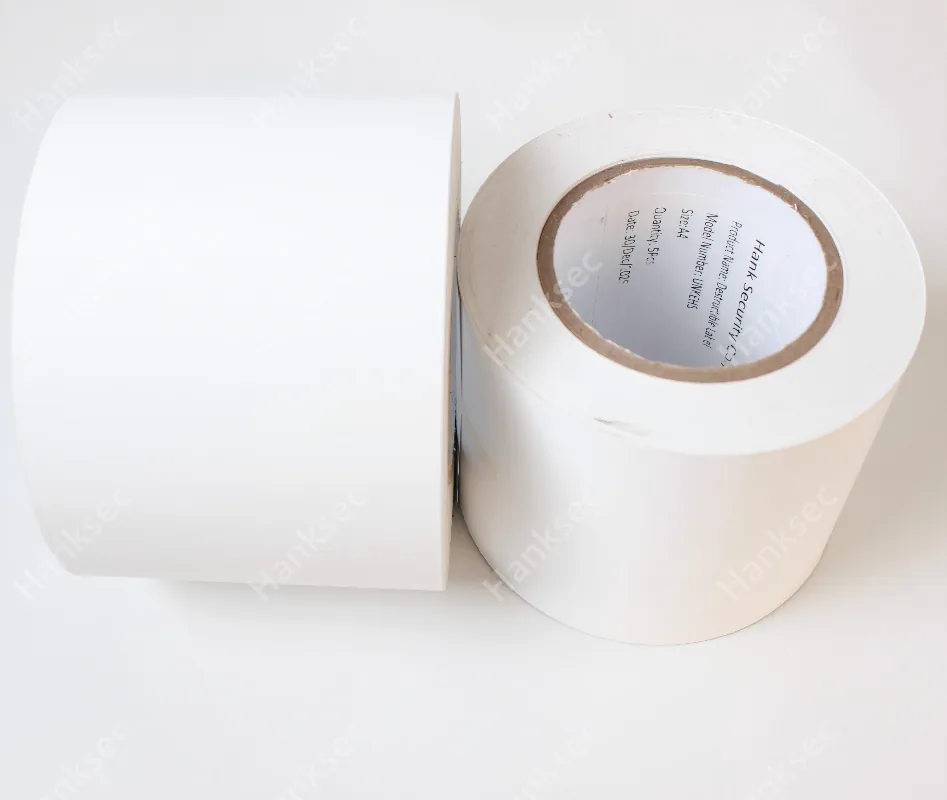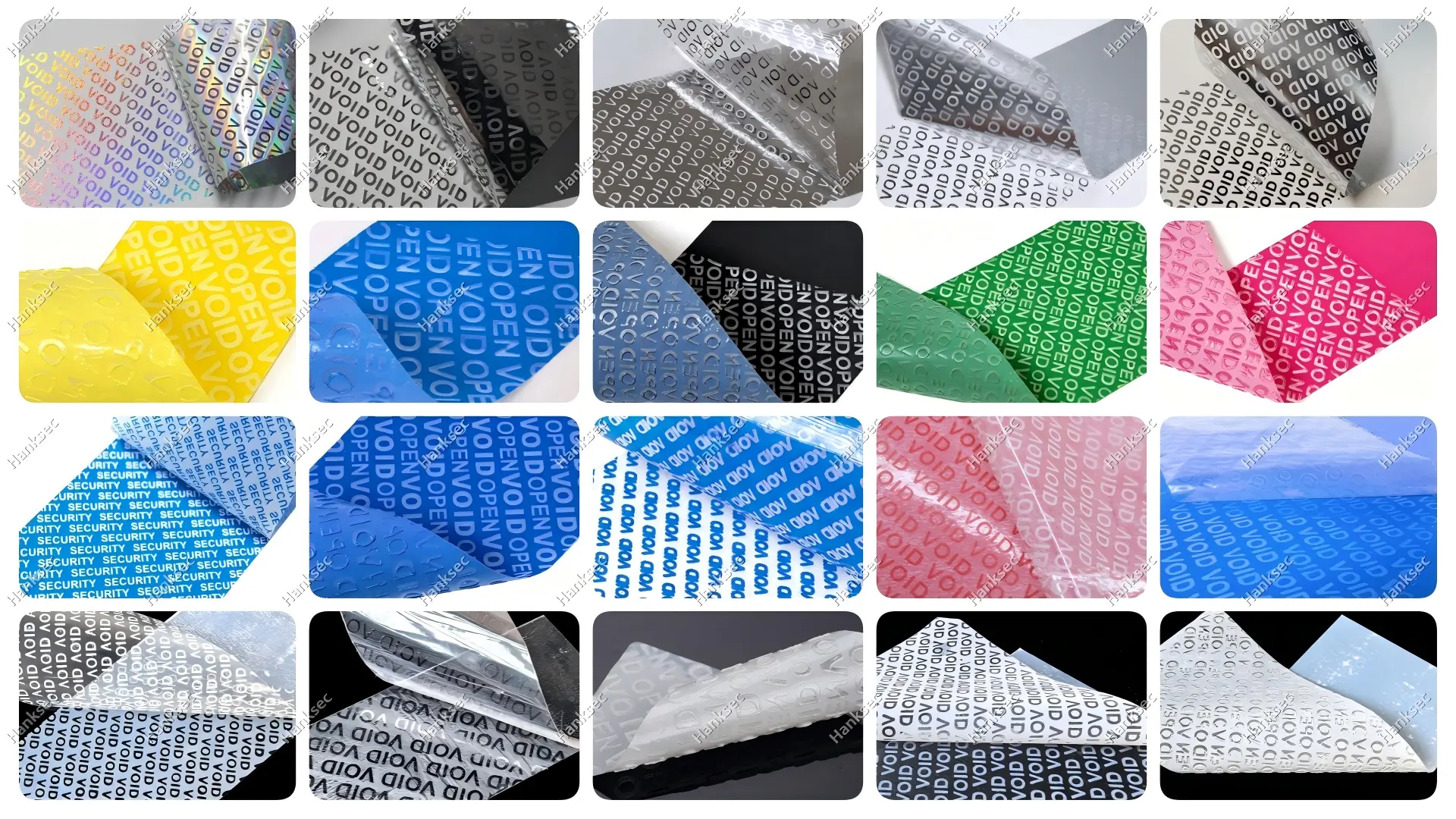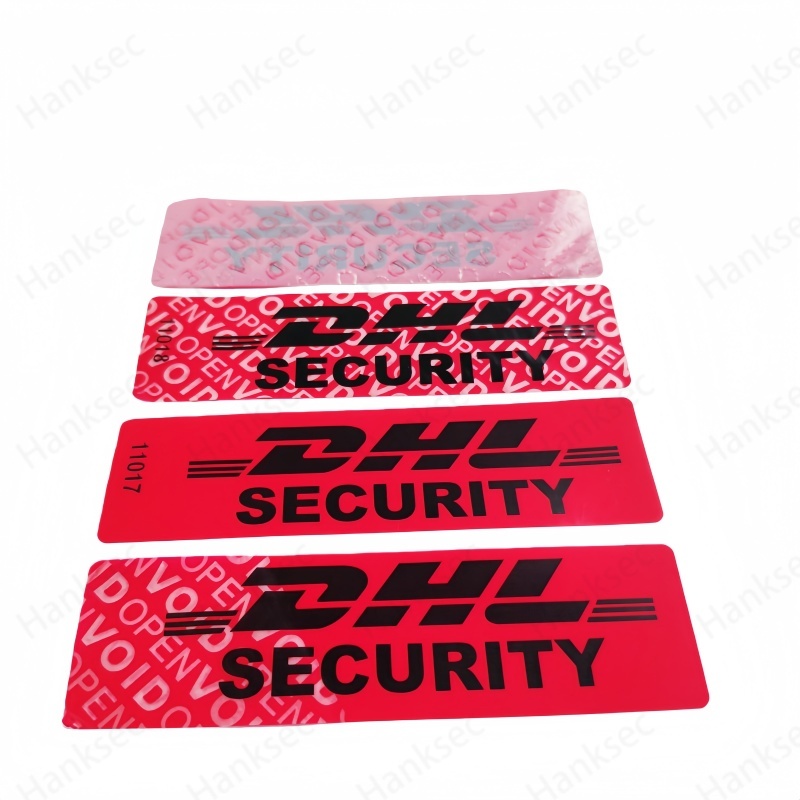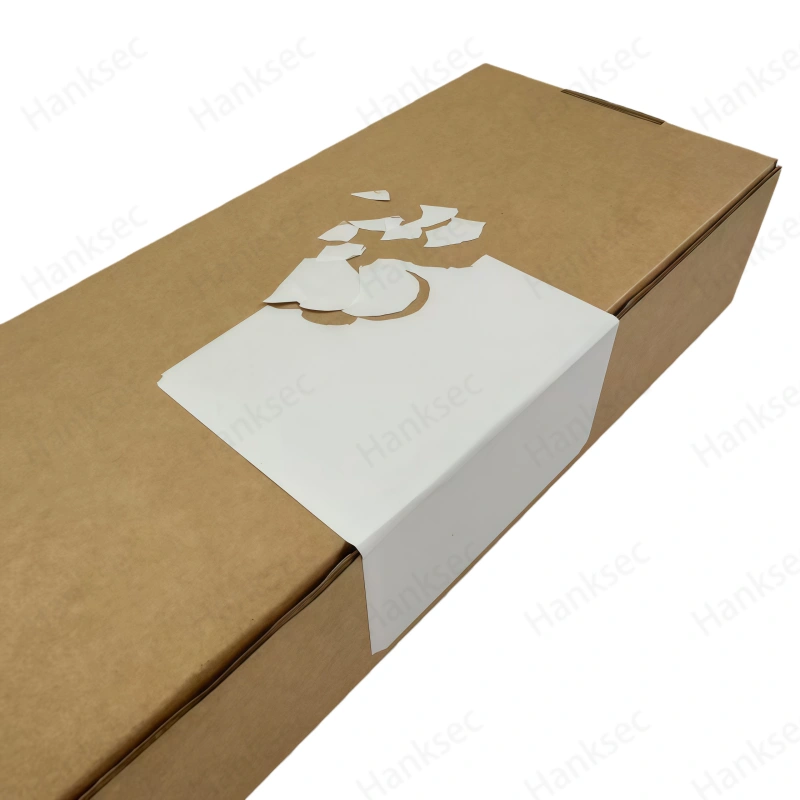
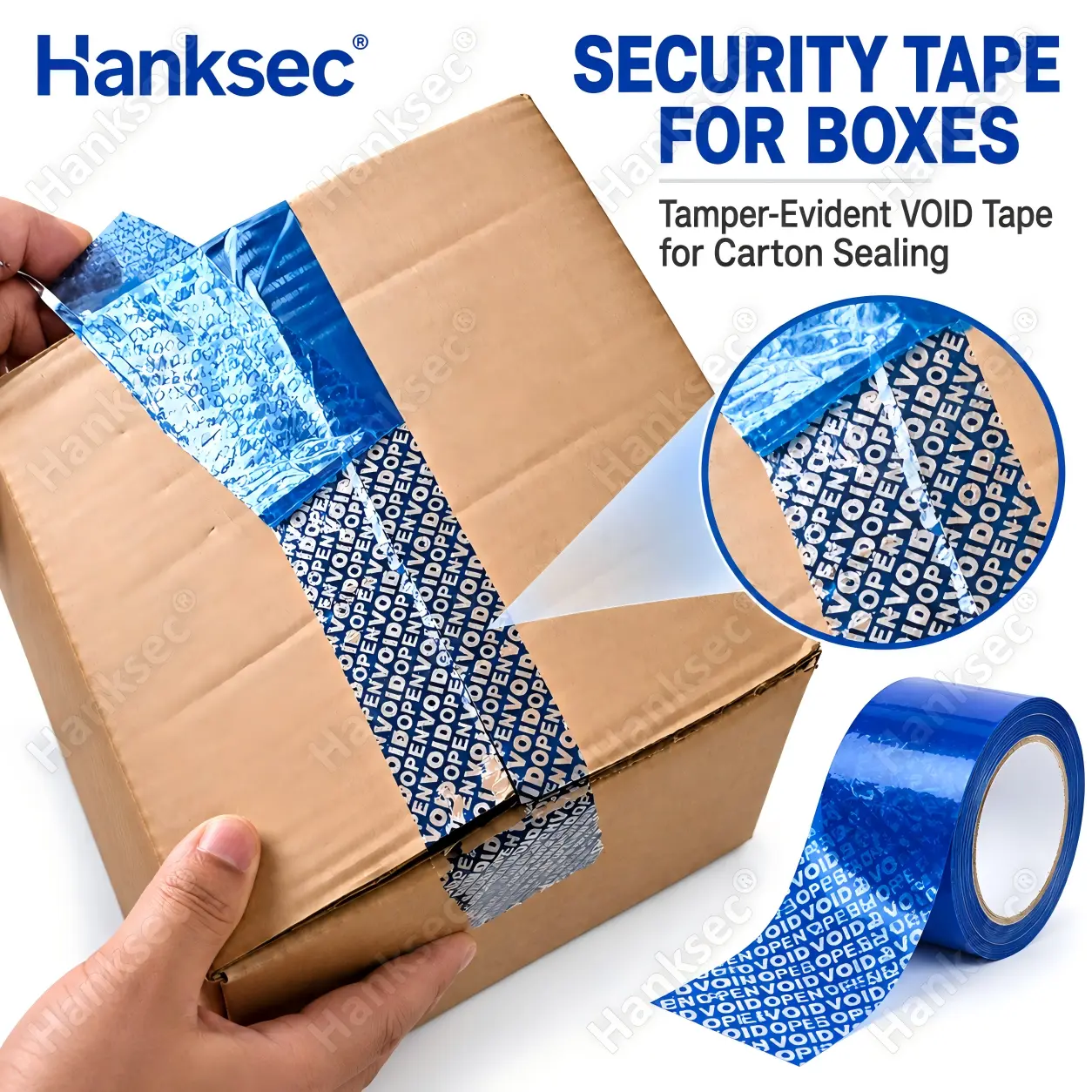
Security tape for boxes is tamper-evident sealing tape designed to make unauthorized opening of cartons easier to detect. When the tape is peeled or lifted, the security structure can reveal a VOID, OPENED or custom message on the tape, the carton surface or both.
Unlike ordinary packing tape, security tape is not selected only by width, color or adhesive strength. The correct construction should match the carton surface, required tamper response, residue preference, application method and storage conditions.
For most box-sealing projects, buyers should define:
box surface + tamper response + transfer type + tape width + application method + storage environment.
This guide explains how to choose tamper-evident security tape specifically for cartons and shipping boxes. For a broader comparison covering bags, envelopes and other packaging formats, see Hanksec’s Tamper Evident Security Packaging Tapes Selection Guide.
What Is Security Tape for Boxes?
Security tape for boxes is pressure-sensitive sealing tape that creates visible evidence when someone attempts to remove or reopen the tape after application.
It is commonly used on:
- corrugated shipping cartons;
- e-commerce boxes;
- electronics packaging;
- pharmaceutical transport cartons;
- confidential document boxes;
- high-value product packaging;
- warehouse transfer cartons.
The goal is not to make a box impossible to open. The purpose is to make opening or resealing more visible during inspection.
This distinction is important because tamper evidence, theft prevention and product authentication are different security functions.
How Does Tamper-Evident Security Tape Work on a Box?
Tamper-evident security tape contains a controlled internal layer structure that changes when removal is attempted.
Depending on the tape construction, peeling can cause:
- a VOID or OPENED message to remain on the carton;
- the security image to appear on both the tape and the box;
- the hidden message to appear mainly inside the removed tape;
- carton fibers to tear or lift;
- another defined irreversible visual change.
The final effect depends on the interaction between the tape construction and the box surface.
For example, a rough kraft carton, recycled corrugated board, coated retail box and laminated carton can produce different adhesion and transfer results even when the same security tape is used.
Hanksec’s Tamper Evident VOIDOPEN Sealing Tape is designed for cartons, shipping boxes and other packaging applications where visible opening evidence is required.
Security Tape vs Standard Packing Tape: What Is the Difference?
Standard packing tape is primarily designed to keep a carton closed during storage and transport. Security tape adds a second function: it should show visible evidence if the sealed box has been opened or the tape has been disturbed.
| Feature | Standard Packing Tape | Tamper-Evident Security Tape |
|---|---|---|
| Main Function | Close and hold the carton | Close the carton and provide visible tamper evidence |
| Opening Evidence | Usually limited | VOID, OPENED, transfer, residue or other defined indication |
| Customization | Color and printed branding | Logo, warning text, hidden message, barcode, QR or serial number |
| Residue Control | Not normally a security specification | Can be designed as full-transfer, partial-transfer or non-transfer |
| Application Testing | Mainly closure and adhesion | Adhesion plus tamper-response testing on the actual box surface |
A strong adhesive alone does not make ordinary tape tamper evident. The security response must be intentionally built into the tape construction.
Which VOID Tape Type Is Best for Boxes?
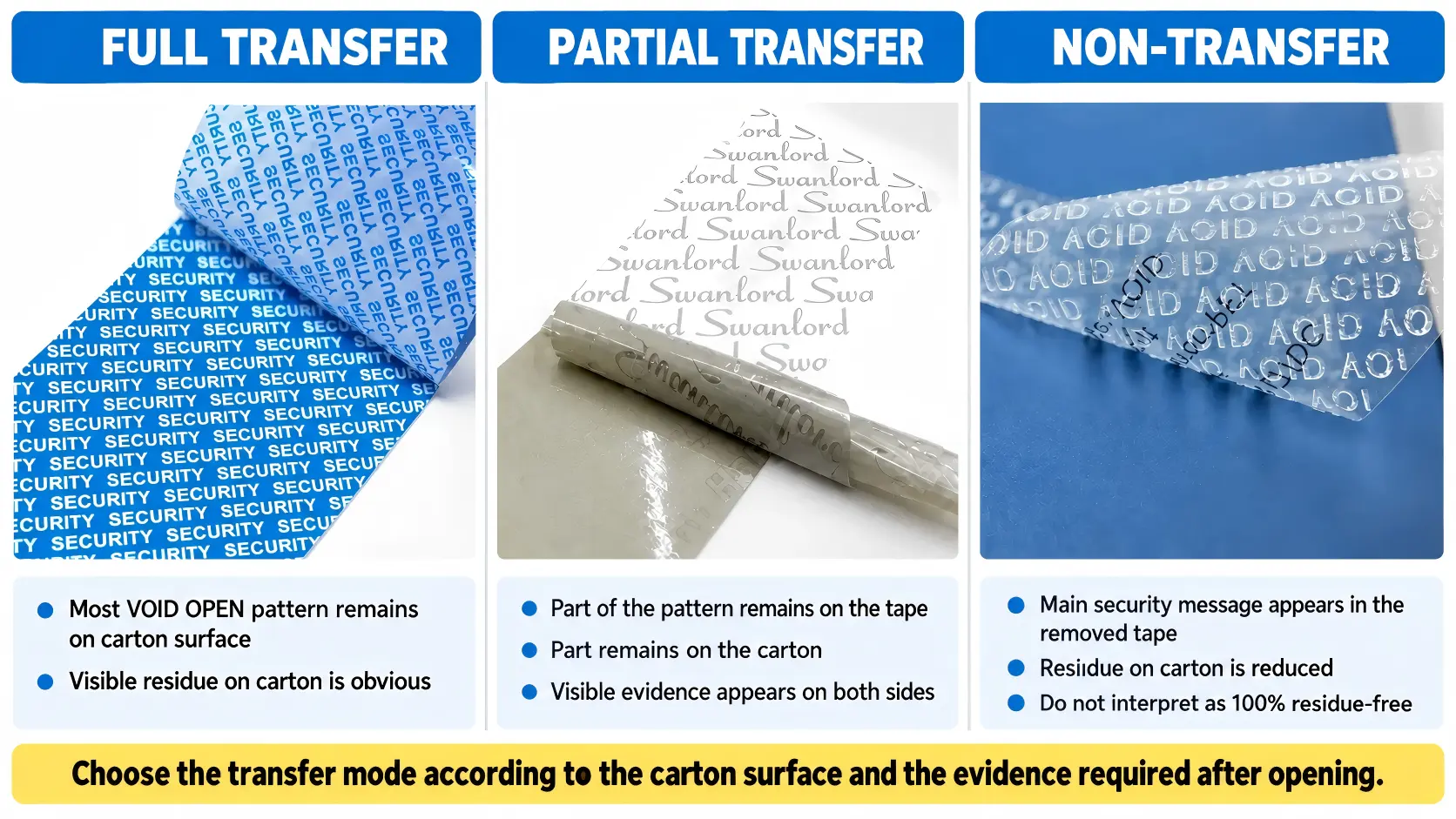
The three most common security-tape constructions are full-transfer, partial-transfer and non-transfer VOID tape.
| Tape Type | Opening Response | Typical Box Application |
|---|---|---|
| Full Transfer | Strong VOID or OPENED residue remains on the carton surface | Shipping cartons where permanent visible evidence is preferred |
| Partial Transfer | Security evidence appears on both the removed tape and carton | General logistics cartons and branded shipping boxes |
| Non-Transfer | Hidden message appears mainly in the tape with reduced residue on the box | Selected coated, decorative or reusable surfaces where cleaner removal is preferred |
Full-transfer and partial-transfer constructions are often suitable when buyers want strong visual evidence directly on a corrugated carton.
Non-transfer tape can be useful where surface cleanliness matters, but it should not be assumed to leave absolutely zero residue under every condition. Actual residue depends on adhesive, carton coating, dwell time, temperature and removal conditions.
For buyers who need a deeper comparison of these three constructions, see Hanksec’s broader Security Packaging Tape Selection Guide.
Which Box Surfaces Need Special Testing?
The carton surface can significantly affect both adhesion and VOID activation.
Buyers should test the actual box when using:
- recycled corrugated board;
- dusty kraft cartons;
- varnished or coated paperboard;
- laminated retail boxes;
- high-gloss printed cartons;
- waxed or moisture-resistant board;
- cold or refrigerated packaging.
A tape that works well on untreated kraft board may behave differently on coated or laminated surfaces.
Surface contamination also matters. Dust, moisture, oil, coating additives and low application pressure can reduce adhesive wet-out and create edge lifting or incomplete tamper activation.
For this reason, the final tape should always be approved on the actual carton rather than only on a standard laboratory panel.
How Should Security Tape Be Applied to Carton Boxes?
Security tape should normally cover the primary carton opening seam so that the box cannot be opened without disturbing the tape.
For most manual box-sealing applications:
- keep the carton surface clean and dry;
- apply the tape continuously across the main seam;
- press the tape firmly onto the board;
- avoid wrinkles and trapped air;
- allow sufficient bond-development time before testing;
- do not stretch the tape excessively during application.
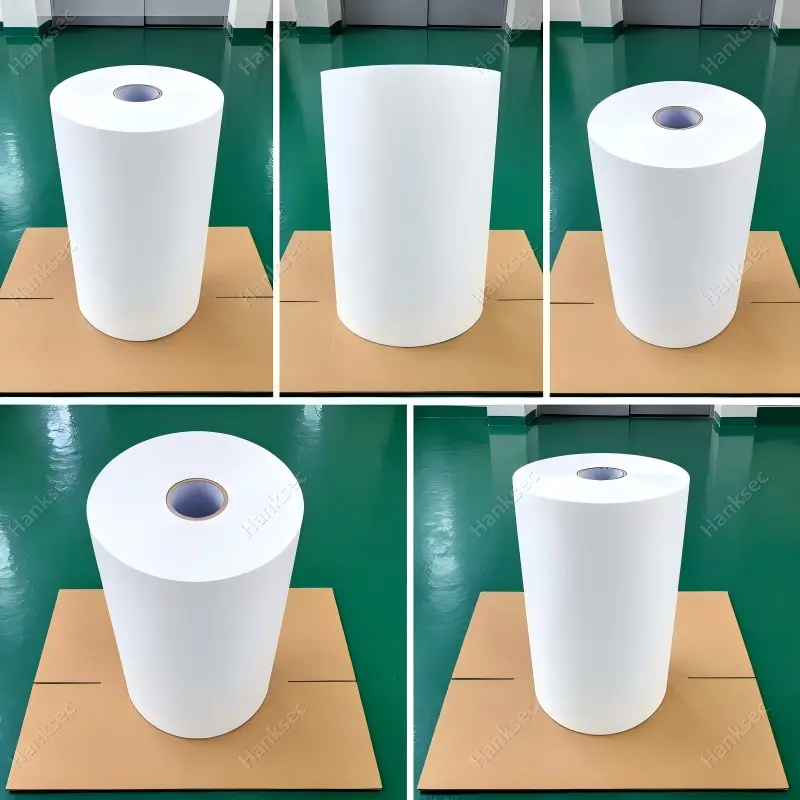
For automatic case sealers, buyers should also confirm roll width, roll length, core size, winding direction and unwind behavior before production.
Commercial tamper-evident carton tapes are also designed to work with conventional carton-sealing processes, including manual dispensers and compatible application equipment. This reinforces an important purchasing point: security tape must function as both a tamper-evident material and a practical box-sealing tape. See tesa 64007 technical information as an industry example.
What Width, Roll Size and Custom Features Should Buyers Specify?
The most suitable roll specification depends on the carton size and packing process.
| Specification | What Buyers Should Confirm |
|---|---|
| Tape Width | Carton seam width, board strength and sealing method |
| Roll Length | Manual packing, dispenser use or automatic case sealer |
| Core Size | Compatibility with the intended dispenser or machine |
| Winding Direction | Manual and automated application requirements |
| Security Message | VOID, OPENED or custom hidden wording |
| Surface Printing | Logo, warning text, brand information or instructions |
| Variable Data | Serial number, barcode or QR code where identification is required |
For automatic packing lines, roll dimensions and winding direction should be confirmed together with the tape construction because a technically suitable security tape can still create feeding or unwind problems if the finished-roll specification does not match the equipment.
Identification features such as barcodes or serial numbers can support tracking, but they should not be confused with tamper evidence. The VOID or transfer mechanism provides physical opening evidence, while the code identifies the package or seal.
What Should Be Tested Before Bulk Production?
Before approving security tape for boxes, buyers should test the complete carton-and-tape system.
Useful checks include:
- initial adhesion;
- edge lifting;
- VOID or OPENED message clarity;
- residue or transfer behavior;
- carton-fiber interaction;
- roll unwind;
- printing durability;
- barcode readability where applicable;
- performance after storage or transport conditions.
Peel adhesion can also be evaluated using standardized methods such as ASTM D3330/D3330M, but laboratory peel values should be combined with actual-carton testing because board texture, coating and contamination can significantly change the final security response.
Hanksec’s Quality Assurance process emphasizes checking the material on representative substrates and confirming the final tamper response before bulk approval.
FAQ: Security Tape for Boxes
What is the best security tape for cardboard boxes?
The best tape depends on the cardboard surface and the required opening evidence. Full-transfer or partial-transfer VOID tape is commonly selected when buyers want visible evidence to remain directly on the carton.
Does tamper-evident tape stop someone from opening a box?
No. Tamper-evident tape is designed to make opening easier to detect rather than make access physically impossible.
Can security tape be used on recycled cartons?
Yes, but recycled corrugated board can vary in surface texture, dust and fiber strength. Sample testing on the actual carton is recommended before bulk production.
Can security tape be applied with an automatic case sealer?
Some constructions can be used with automatic equipment, but unwind force, roll size, core, winding direction and machine path should be confirmed before production.
Can VOID tape include a logo, barcode or serial number?
Yes. Security tape can be customized with logos, warning text, sequential numbers, barcodes, QR codes and custom hidden messages depending on the project.
Should security tape be tested before ordering large quantities?
Yes. The same tape can behave differently on kraft board, recycled corrugate, coated paperboard or laminated cartons. Physical sample testing is the most reliable way to confirm adhesion and tamper response.
Conclusion: Match Security Tape to the Actual Box
Security tape for boxes should be selected according to the actual carton surface and the opening evidence required after tampering.
The main factors are:
box surface + transfer type + adhesive compatibility + application method + roll specification + sample testing.
For ordinary low-risk cartons, standard packing tape may be sufficient. When the package needs visible evidence of opening or resealing, tamper-evident VOID tape adds a dedicated security function.
Hanksec supplies full-transfer, partial-transfer and non-transfer security tape materials for cartons, shipping boxes and other packaging applications, with custom VOID messages, logos, barcodes, serial numbers and OEM/ODM roll formats.
For manufacturing-level information, see Hanksec’s Adhesive Tape Manufacturing Guide. For converting issues involving slitting, rewinding or unwind behavior, see the Security Tape Converting Troubleshooting Guide.