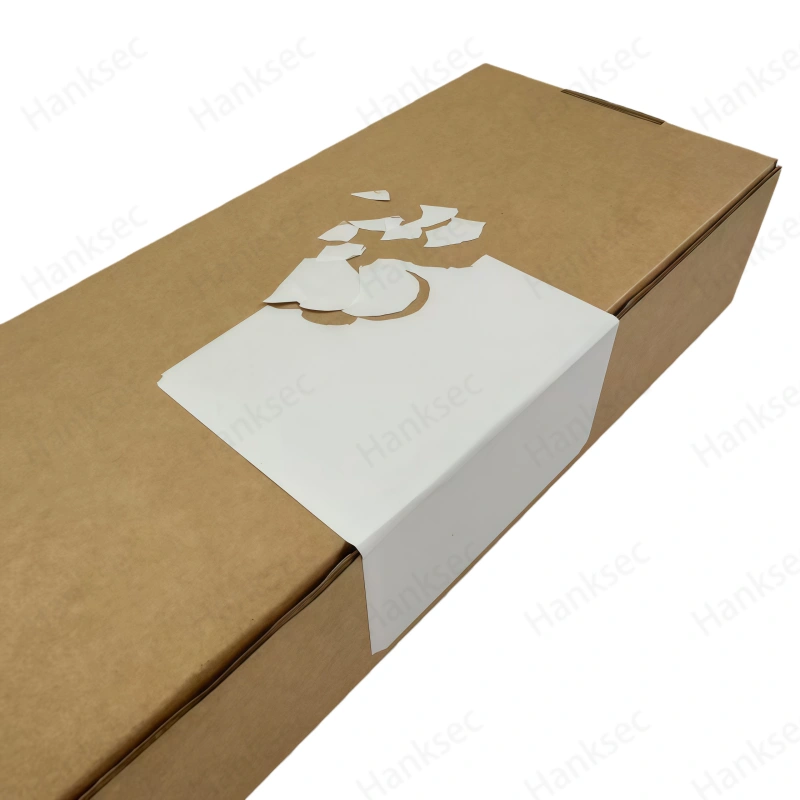
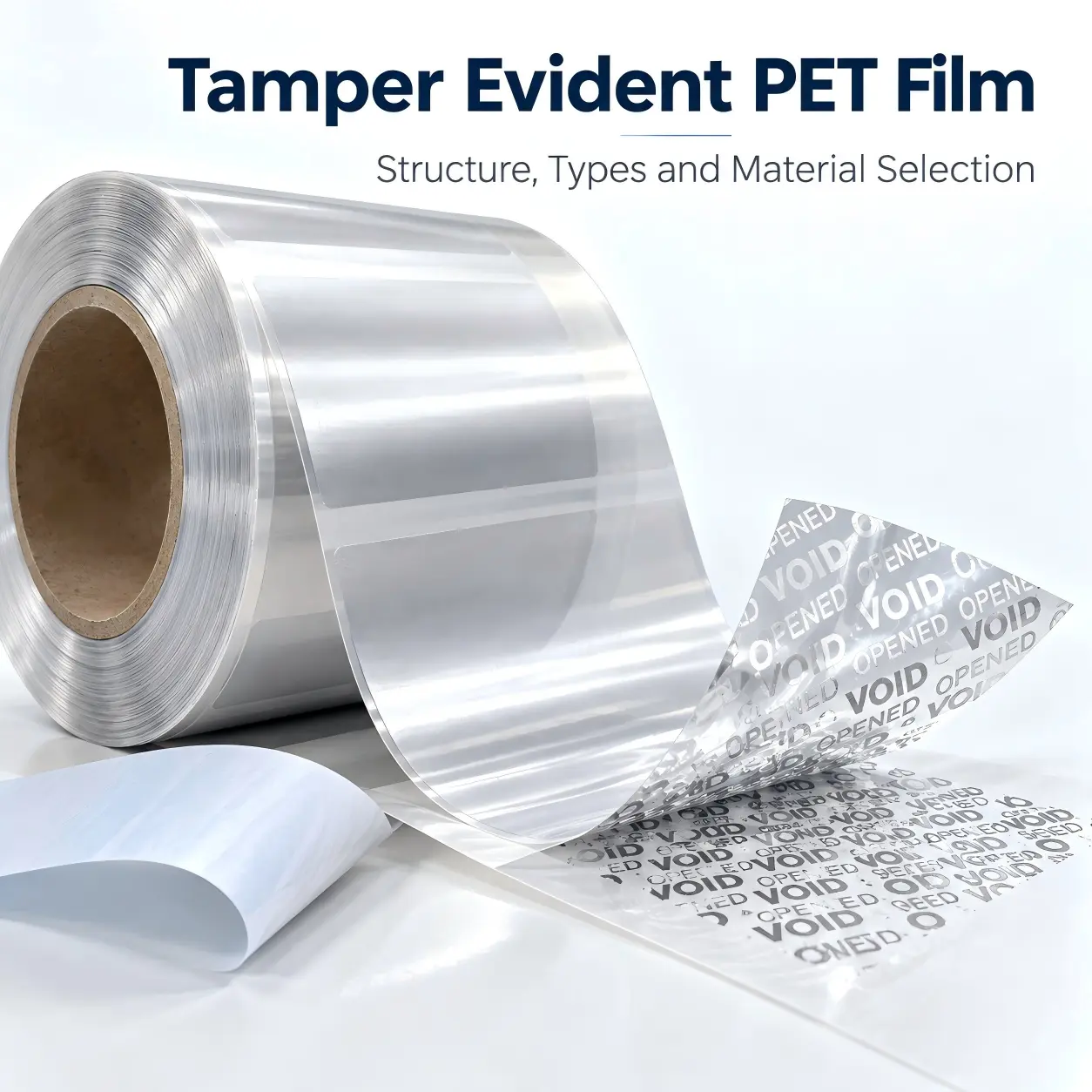
Tamper evident PET film is more than ordinary polyester film with adhesive on the back.
PET usually works as the stable facestock in a security material system.
The tamper evident function comes from the complete construction. This construction may include functional coatings, controlled release layers, adhesive and a release liner.
Different constructions can create full transfer, partial transfer or non transfer tamper evidence.
Holographic, printable and customized security features can also be added when required.
For label converters and security printers, the correct PET film should match the required tamper response, substrate, printing process and converting conditions.
This guide explains how tamper evident PET film works, how it is constructed and how to select the right material before bulk production.
Tamper Evident PET Film Explained
Tamper evident PET film is a pressure sensitive security material based on polyester film.
PET provides mechanical strength and dimensional stability.
The PET film itself does not automatically create tamper evidence.
The security effect is created by additional functional layers in the complete material construction.
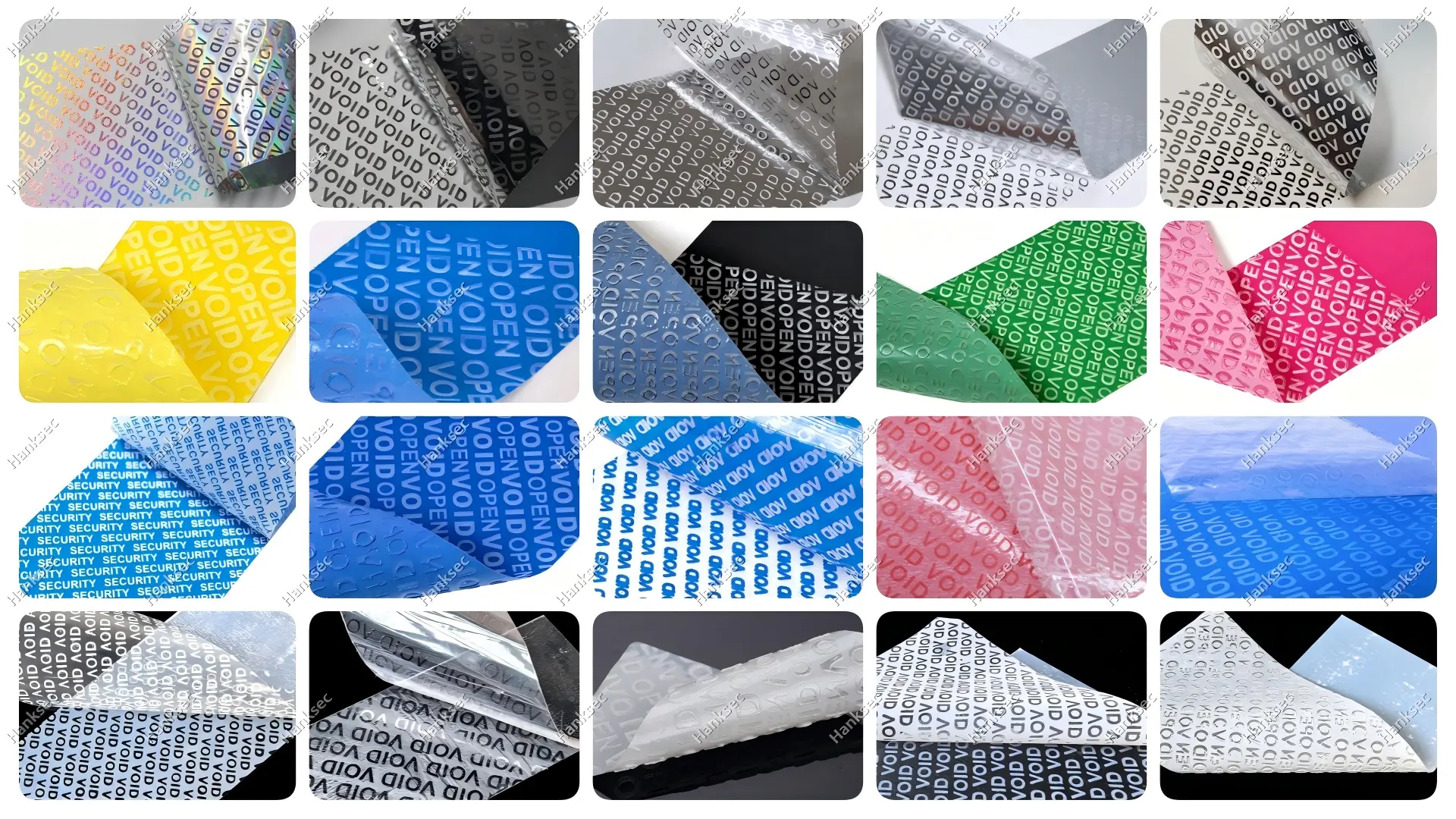
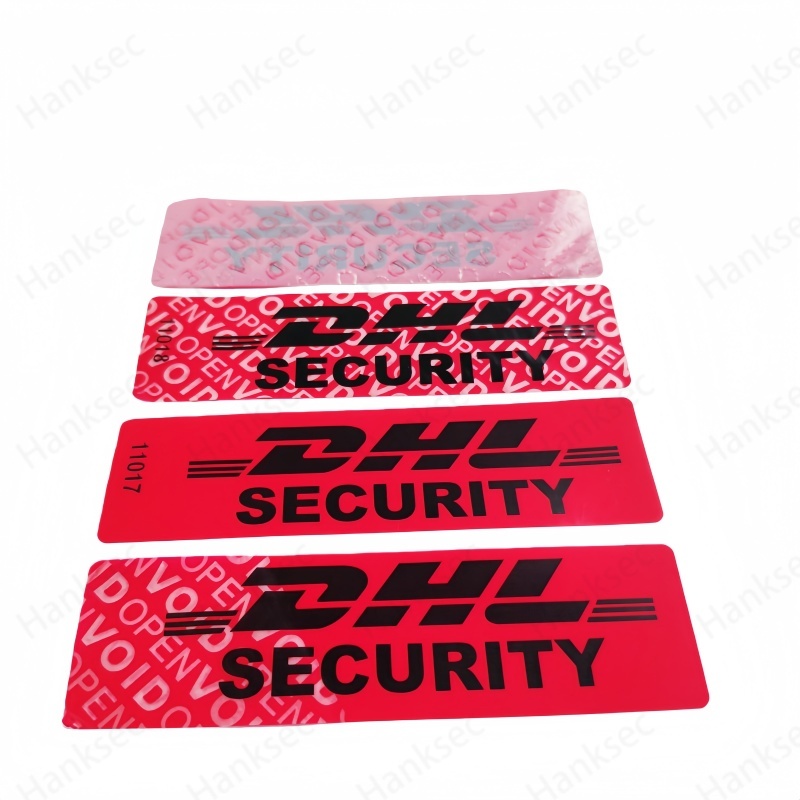
Depending on the design, the material may create a visible VOID message, an OPENED message, partial transfer or another controlled security pattern.
A holographic layer can also be combined with the tamper evident structure when visual authentication is required.
This is why PET security material should be evaluated as a complete material system rather than as a single plastic film.
What Is VOID Label Material Guide
Why PET Works in Security Materials
PET is widely used in security label materials because it provides stable mechanical performance during coating, printing and converting.
It can also support different functional coatings and optical treatments.
Stable Film Base
PET provides dimensional stability during slitting, rewinding, printing, die cutting and matrix stripping.
This stability is important when several functional layers must remain aligned during production.
PET also provides enough strength for jumbo roll and slit roll converting.
Support for Functional Coatings
PET can be combined with many different surface and internal treatments.
- Printable topcoats
- Color coatings
- Metallized layers
- Controlled release layers
- VOID or OPENED message layers
- Holographic optical layers
- Primer and adhesion promoting treatments
These options allow the same PET base film category to support different security functions.
Tamper Evident PET Film Construction
A typical tamper evident PET film contains several functional layers.
The exact structure depends on the required security effect, color, adhesive and printing method.
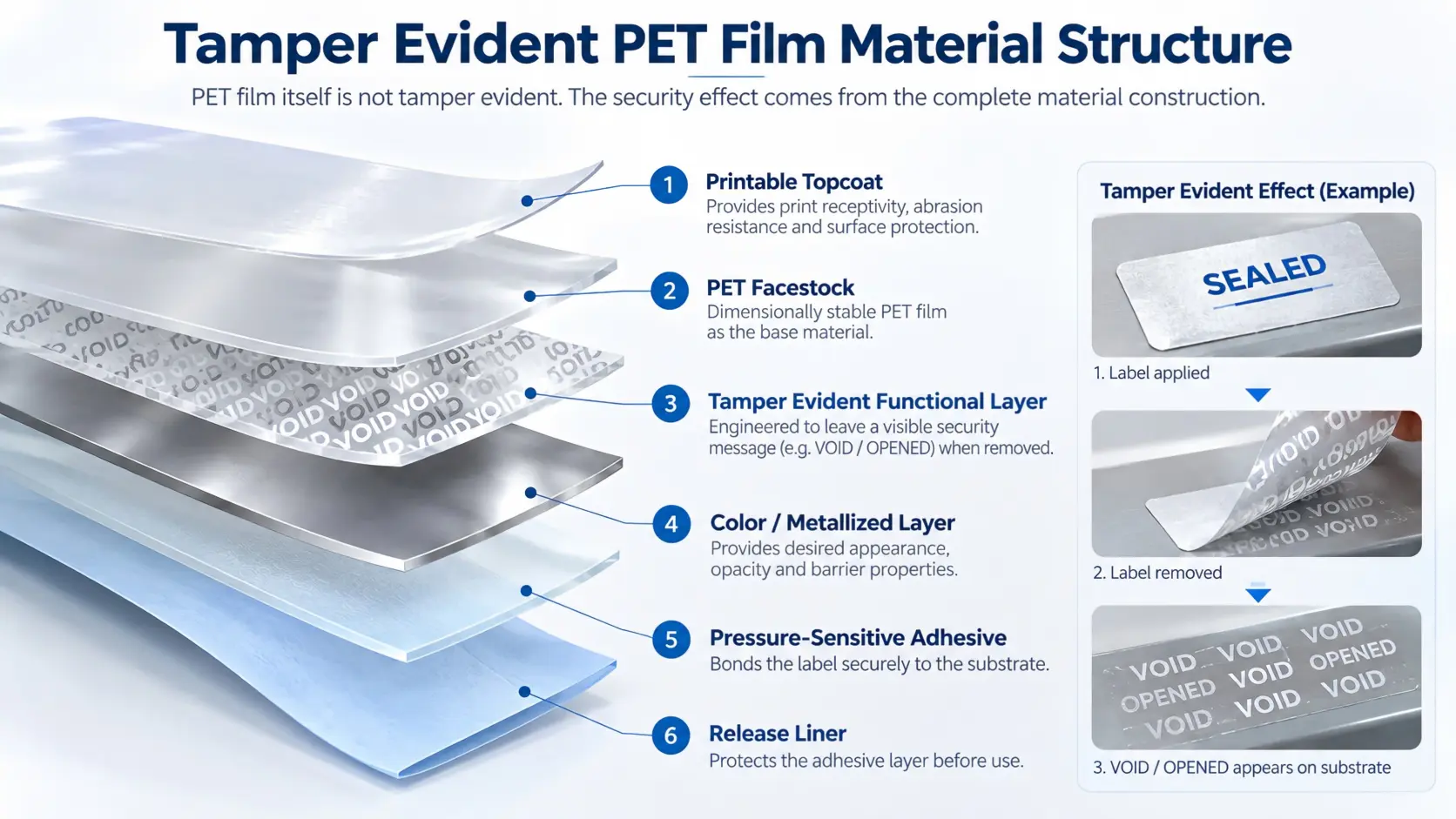
- Printable Topcoat. Supports ink, ribbon or toner when printing is required.
- PET Facestock. Provides mechanical strength and dimensional stability.
- Tamper Evident Functional Layer. Controls separation and creates the security response.
- Color or Metallized Layer. Controls appearance, opacity and security message contrast.
- Pressure Sensitive Adhesive. Bonds the material to the application surface.
- Release Liner. Supports die cutting, matrix stripping, release control and dispensing.
These layers should be evaluated as one material construction.
A change in PET thickness, coating, adhesive or liner can affect converting and final tamper performance.
Security Label Material Manufacturing Capabilities
Main Types of PET Security Film
Tamper evident PET film can be designed with different removal effects.
The correct type depends on what evidence should remain after removal.
Full Transfer PET Security Film
Full transfer PET material leaves clear security evidence on the application surface after removal.
This construction is suitable when visible residue is acceptable and strong opening evidence is required.
The final effect depends on the release layer, adhesive and application surface.
Partial Transfer PET Security Film
Partial transfer PET material divides the visible tamper evidence between the substrate and the removed film.
This construction can provide visible opening evidence with less residue than a full transfer system.
Actual performance should be tested on the intended substrate.
Non Transfer PET Security Film
Non transfer PET material keeps most of the security evidence within the removed film.
The application surface remains relatively clean after removal.
This construction is useful for applications where visible residue on the substrate is not preferred.
Holographic PET Security Film
Holographic PET combines an optical security effect with a tamper evident material construction.
The holographic layer provides visual authentication.
The tamper evident layer provides evidence of unauthorized removal.
Holographic PET Security Label Material
Printable PET Security Film
Printable PET security film can support barcodes, QR codes, serial numbers, logos and variable information.
The top surface must be compatible with the selected printing process.
Printable Security Label Materials Guide
PET Thickness and Converting Performance
PET thickness affects stiffness, flexibility, handling and converting behavior.
Thinner PET is normally more flexible.
Thicker PET generally provides more stiffness and mechanical support.
However, thicker PET does not automatically provide a higher security level.
The final tamper response depends on the complete material construction.
PET thickness can influence several converting steps.
- Web handling during printing
- Slitting and rewinding
- Die cutting pressure
- Matrix stripping
- Finished label stiffness
- Automatic dispensing
PET thickness should therefore be selected together with the converting process and final application.
Printing and Surface Treatment for PET Film
Untreated PET may not provide enough surface anchorage for some printing systems.
Depending on the application, PET may require corona treatment, primer or a dedicated printable coating.
The surface treatment should be matched to the actual ink, ribbon or digital printing technology.
A PET material may produce a good tamper response but still fail during printing if the topcoat is not compatible with the printing system.
For this reason, printability and tamper performance should be tested together.
Tekra Polyester Surface Treatment Guide
Selecting PET Security Film for Label Converting
Material selection should begin with the required evidence after removal.
- Choose full transfer PET when strong visible residue is required.
- Choose partial transfer PET when moderate residue is preferred.
- Choose non transfer PET when the application surface should remain relatively clean.
- Choose holographic PET when visual authentication is also required.
- Choose printable PET when barcodes, QR codes or variable data must be added.
- Confirm PET thickness, liner and release force when stable roll converting is important.
The application surface must also be considered.
The same material may behave differently on PP, PE, PET, glass, metal, coated paperboard or textured plastic.
Adhesive selection is therefore part of the complete PET material selection process.
Tamper Evident Label Adhesive Guide
Supply Formats and Pre Production Testing
Available Supply Formats
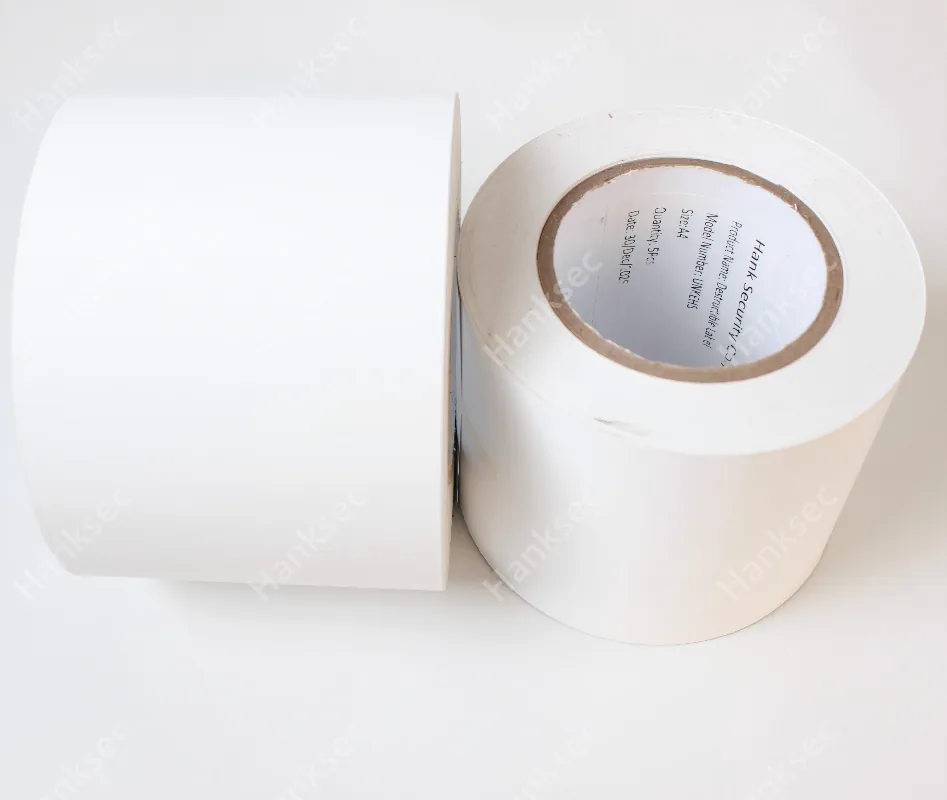
Tamper evident PET film can be supplied before final label converting.
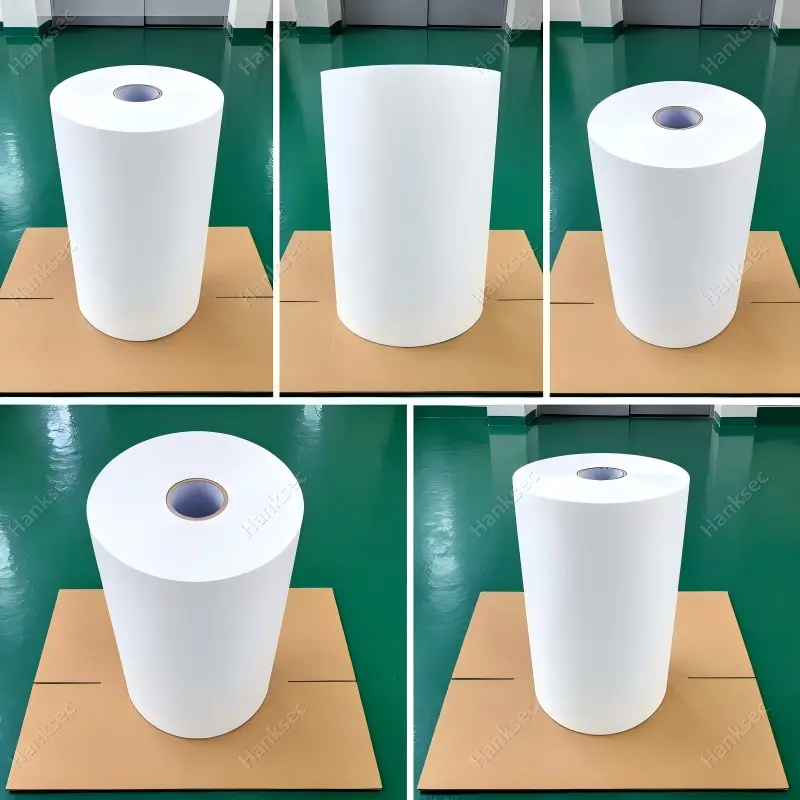
- Jumbo rolls
- Slit rolls
- Custom roll widths
- Sheets
- Converted finished labels when required
Converter ready specifications may include PET thickness, roll width, core size, winding direction, release liner, adhesive system and printable surface.
The roll format should be confirmed before production.
Recommended Pre Production Tests
Tamper evident PET film should be tested as a complete construction before bulk approval.
- Adhesion on the actual substrate
- Tamper response after removal
- Printing and ink anchorage
- Release force
- Die cutting
- Matrix stripping
- Slitting and rewinding
- Finished label dispensing
The final security response should be checked after a representative dwell time.
The test should also reflect the expected service conditions.
Security Label Material Quality Control Guide
Frequently Asked Questions About Tamper Evident PET Film
Is PET Film Itself Tamper Evident
No.
PET normally provides mechanical and dimensional support.
The tamper evident response comes from the functional security layers, adhesive and controlled separation system.
What Is the Difference Between PET Film and VOID PET Film
Standard PET film is a polyester substrate without an inherent hidden tamper message.
VOID PET film combines PET facestock with a functional security structure that reveals a VOID, OPENED or customized message after removal.
Can Tamper Evident PET Film Be Printed
Yes.
The surface must be prepared for the selected printing process.
Corona treatment, primer or a printable coating may be required.
Does Thicker PET Provide Better Security
Not necessarily.
Thickness changes stiffness and converting behavior.
The security level depends on the complete material construction.
Can PET Security Material Be Supplied in Jumbo Rolls
Yes.
Hanksec can supply PET security material in jumbo rolls, slit rolls and customized roll formats for printing and converting.
Selecting the Complete PET Security Material System
Tamper evident PET film should not be selected by thickness or appearance alone.
PET provides the mechanical foundation of the material.
The final security performance depends on the functional layer, adhesive, release liner, application substrate and converting process.
For label converters and security printers, the complete construction should be tested under actual production and application conditions.
Hanksec manufactures tamper evident PET security materials for label converters, security printers, distributors and OEM projects.
Available options include printable coatings, full transfer, partial transfer, non transfer, holographic effects, customized security messages, adhesive selection, release liners, jumbo rolls and slit rolls.