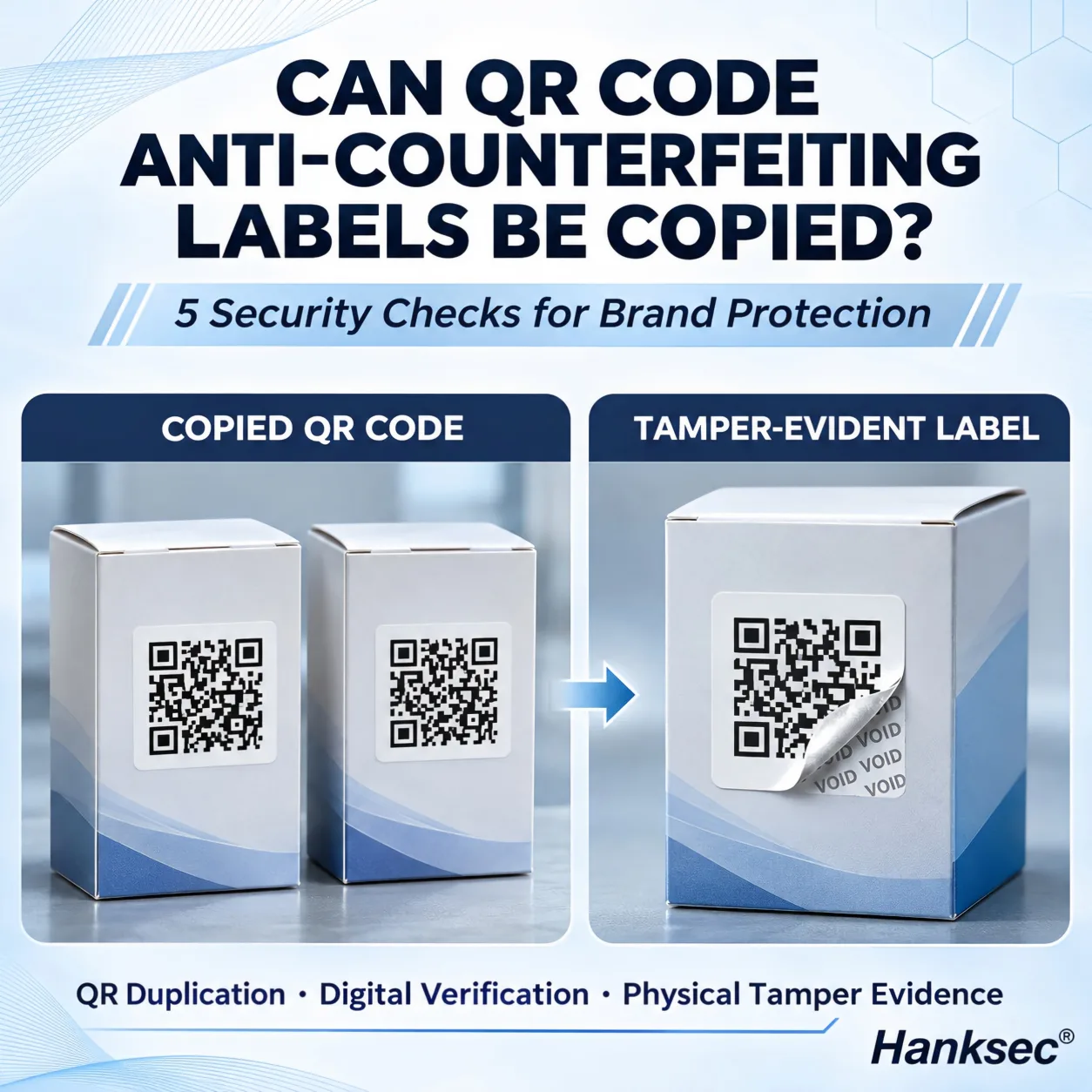
Quick Answer: QR code anti-counterfeiting labels can be copied. A QR code is a machine-readable data carrier, and its visible pattern can be photographed, reproduced or printed onto another label. Even a unique serialized QR code does not make the printed symbol physically impossible to copy. Stronger protection comes from combining controlled digital verification, unique identification and tamper-evident label materials that help reveal removal, transfer or package interference.
For brand owners and security label buyers, this distinction matters. A counterfeit package may carry a copied QR code that still opens the genuine brand’s verification page. Meanwhile, an authentic serialized code can be removed from its original package and transferred to another product if the label construction provides insufficient physical protection.
Hanksec approaches this problem from the material-manufacturing side: how the QR code is printed, how the label bonds to the package, what happens during removal and whether the construction remains suitable for industrial converting and application.
Can QR Code Anti-Counterfeiting Labels Be Copied?
Yes. Standard QR codes do not inherently prevent image duplication. Their black-and-white modules are designed for reliable reading, not for proving that a printed label is an original physical object.
There are three separate risks to consider:
- Code copying: Someone reproduces a visible QR symbol from an authentic product and prints it on another package.
- Label transfer: Someone removes a genuine label and attempts to apply it to another product or package.
- Product or packaging substitution: A genuine identification code remains on a package while the protected contents are replaced or manipulated.
These risks require different controls. Server-side authentication may identify suspicious reuse of a serialized identity, while a VOID or destructible material can help expose physical interference. Neither control alone proves every aspect of product authenticity.
The European Union Intellectual Property Office explains that ordinary two-dimensional barcodes offer no inherent protection against copying, although they can be combined with other authentication technologies. See the EUIPO guide to two-dimensional barcodes.
For a broader explanation of authentication, package security and brand-protection technologies, see Hanksec’s Anti-Counterfeiting Labels for Brand Protection Guide. This article focuses on the specific question of QR code duplication and physical label qualification.
Why Can a Copied QR Code Still Open a Genuine Verification Page?
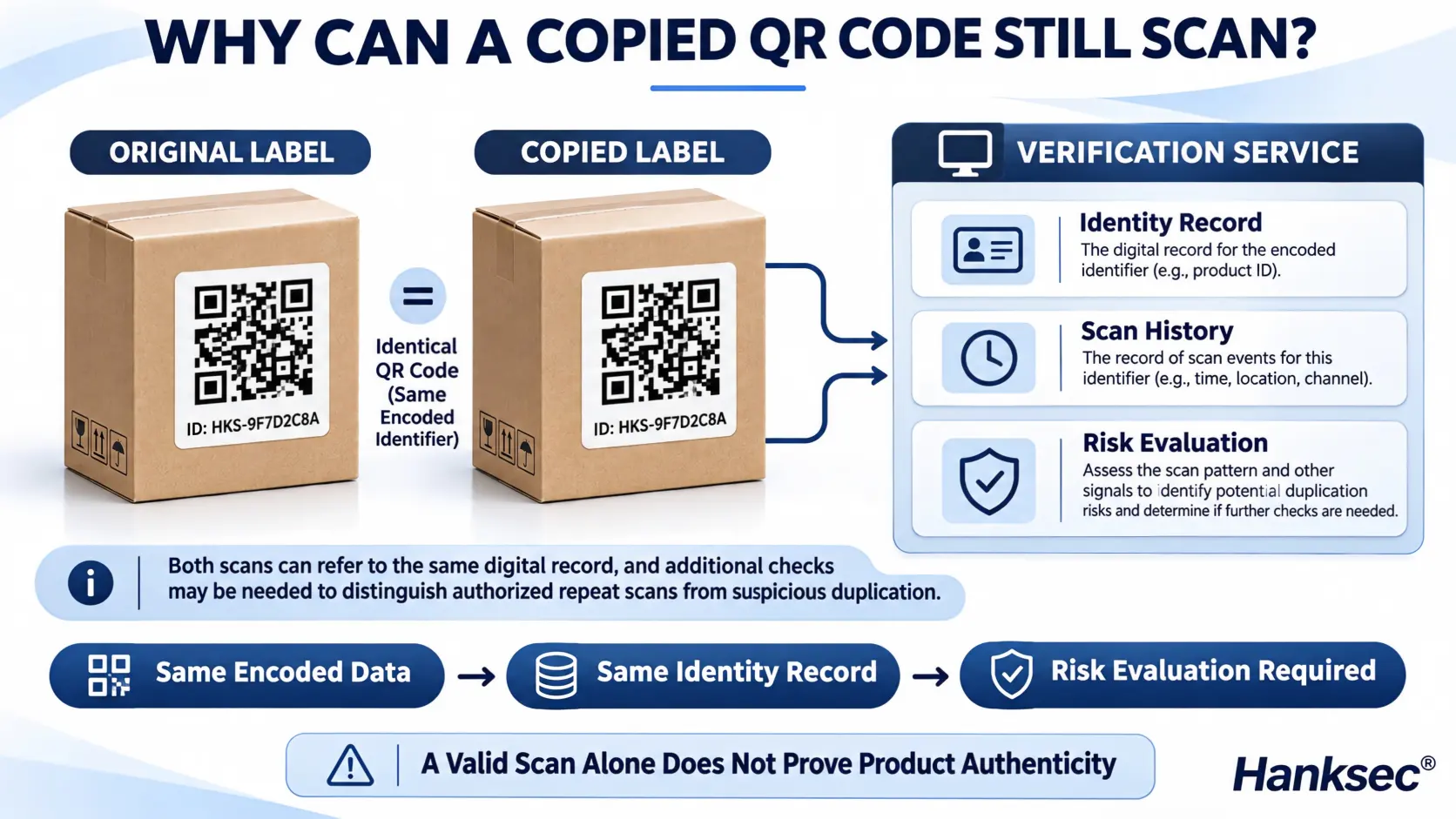
A QR code may encode a website address, a product identifier or a link containing a unique serial number. When a code is copied accurately, the duplicate can contain exactly the same information as the original.
For example, consider a genuine product with a serialized QR label. A counterfeiter photographs the label and prints the same code onto counterfeit packaging. Both codes may direct the user to the same legitimate verification service.
If the verification service only checks whether the identity exists, both scans may appear acceptable. If the service also evaluates scan history, product status, distribution information and other signals, the repeated use may become suspicious.
However, a second scan is not automatically proof of counterfeiting. Genuine products are often scanned more than once by distributors, retailers, buyers or after-sales personnel. Verification rules must distinguish legitimate repeated checks from potentially duplicated labels.
It is therefore misleading to promise that a serialized QR code automatically becomes counterfeit-proof or that every duplicated code will be detected on the first scan.
Static QR Codes vs Serialized QR Codes: What Is the Difference?
The security value of a QR code depends heavily on what the code represents and how the corresponding verification system operates.
| QR Code Type | What It Provides | Remaining Copy Risk |
|---|---|---|
| Shared Static QR | A common link or product information shared by multiple packages. | The same symbol can be reproduced without identifying an individual product. |
| Serialized QR | A distinct identifier assigned to a particular item or defined packaging unit. | The unique printed code itself can still be copied. |
| Serialized QR + Verification | Identity checking, scan history and potentially suspicious-use detection. | Detection depends on platform rules, data quality and scanning activity. |
| Serialized QR + Tamper-Evident Material | Digital identification combined with physical evidence after label removal or package interference. | Copied printing remains possible; both digital verification and physical inspection are required. |
The GS1 Digital Link guidance for brands explains how product identities can connect to digital information and services. A Digital Link can support identification and traceability, but its presence alone is not a guarantee of physical label authenticity.
What Are the 5 Security Checks for QR Code Anti-Counterfeiting Labels?
A practical qualification plan should test the complete system rather than asking only whether a QR code scans successfully. The following five checks address digital identity, physical security and converting performance.
1. Check Whether Every Required Product Has a Unique Identity
First, determine whether the project requires product-level information or individual-item authentication.
A shared product code may be sufficient for instructions, warranty registration or marketing information. It is not sufficient by itself to distinguish two visually identical packages.
For item-level verification, each applicable unit needs a distinct identifier generated and managed under controlled procedures. Depending on the application, a serialized identity may be associated with a product number, production batch, packaging record or distribution event.
When protection against guessing or unauthorized code generation is required, the identity design should account for predictability and access control. Sequential-looking numbers should not be assumed secure merely because they are unique.
Qualification question: Does the digital identity identify the intended unit, and who controls the creation, assignment and activation of that identity?
2. Test What Happens When a Valid QR Code Is Duplicated
A buyer should ask the verification-system provider to demonstrate how its platform behaves when the same authorized identity is scanned in different circumstances.
The test should include a copied symbol, an invalid identity, a legitimate repeat scan and a suspicious pattern of reuse. Results may differ depending on the platform’s design.
Important questions include whether the system records verification events, how suspicious activity is flagged, whether it distinguishes a first scan from later scans and what message is displayed to the consumer.
A response saying only “code found” may confirm database existence without establishing that the physical product is genuine. Likewise, simply rejecting every second scan can create false alarms for legitimate users.
Qualification question: Can the verification process identify suspicious duplicated-code behavior without treating every legitimate rescan as a counterfeit event?
3. Test Whether the Physical Security Label Can Be Removed and Reused
Digital identification and label construction should be evaluated together.
If a genuine QR label can be peeled off a carton, bottle, plastic housing or other surface without visible damage, it may be possible to transfer the authentic label to a different item.
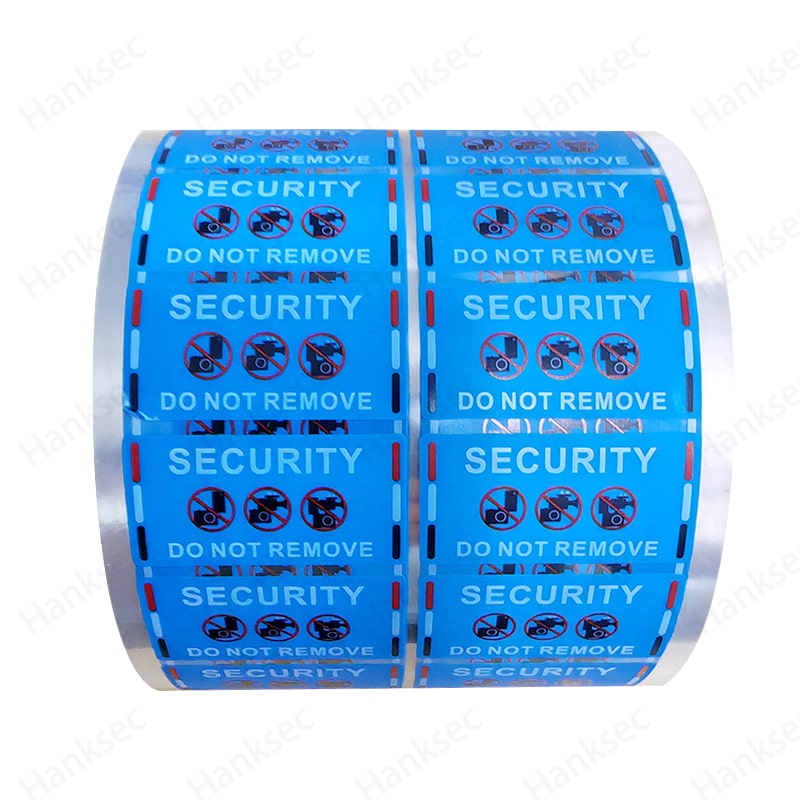
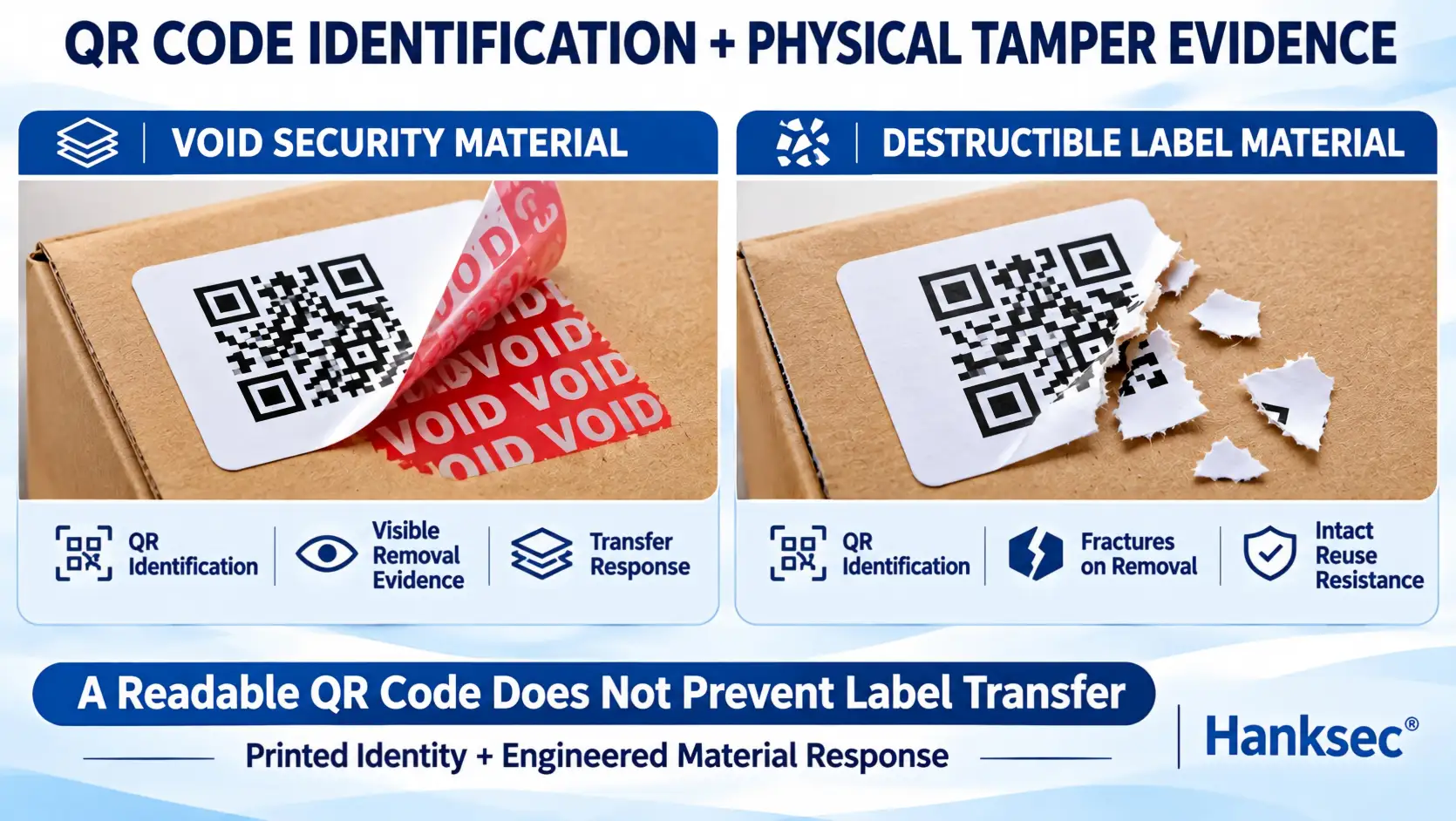
For buyers sourcing tamper evident QR code labels, the key requirement is not only a readable printed identity but also a material construction that provides visible evidence of attempted removal or label reuse.
For applications requiring physical tamper evidence, Hanksec can support security constructions such as:
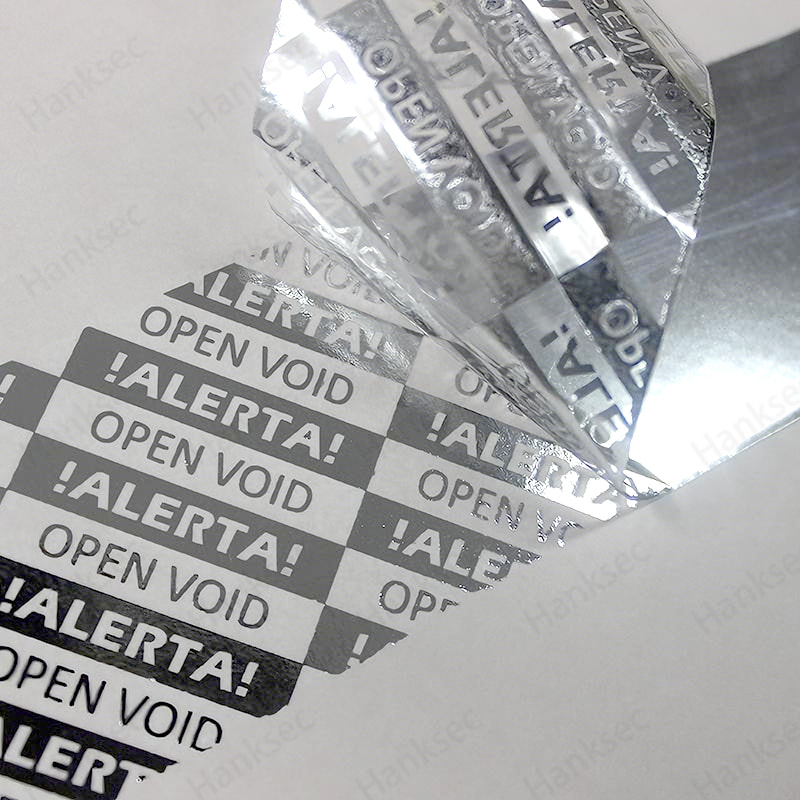
- Full-transfer VOID materials: Designed to leave visible security evidence on the receiving surface when removed under qualified conditions.
- Partial-transfer VOID materials: Designed to divide the security response between the removed label and the application substrate.
- Non-transfer VOID materials: Designed to reveal the hidden message mainly on the removed label, with suitability dependent on the reuse threat and inspection procedure.
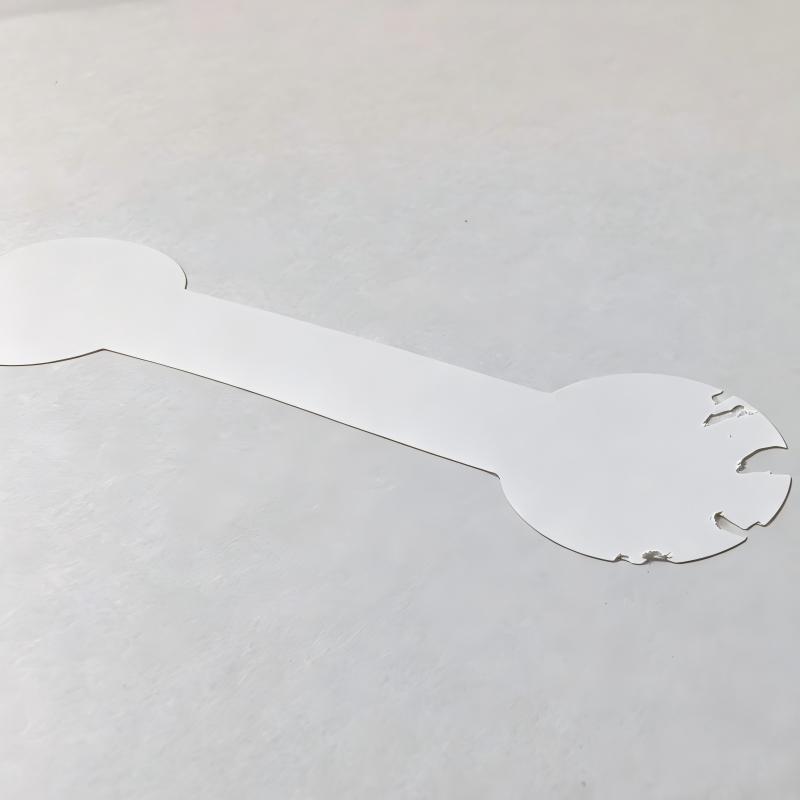
- Destructible label materials: Designed to fracture or fragment during attempted removal, making intact label recovery more difficult.
The best construction depends on the protected surface, the security requirement and the printing method. A highly destructible face material may provide strong removal evidence but also require more careful converting and dispensing.
Explore Hanksec’s Brand Protection Tamper-Proof Material for customized printable security constructions, or Ultra Destructible Vinyl Material when fragile, break-on-removal behavior is a priority.
Qualification question: What visible or irreversible change occurs when the genuine QR label is removed from the actual product or package?
4. Check QR Printability, Scan Readability and Converting Stability
A secure identity is not useful if the finished label cannot be read reliably during its intended service life.
Material selection influences QR code printing and durability. The face material and topcoat should be compatible with the selected printing technology, ink or ribbon, and any finishing process.
For converters, important considerations include:
- Print contrast and clarity: QR modules must remain sufficiently defined after printing and any applicable finishing treatment.
- Quiet zone and size: Label artwork must preserve the required clear area around the symbol and provide a usable module size.
- Surface appearance: Gloss, metallic effects or textured finishes may affect reading performance under some scanning conditions.
- Die cutting and matrix stripping: The security material should survive normal conversion without premature VOID activation or unwanted fragmentation.
- Liner release and dispensing: Finished labels must separate from the release liner reliably without damaging the printed QR symbol or triggering the security response before application.
- Print durability: Rub resistance, handling, moisture and other relevant service conditions should be evaluated.
Because a destructible material is intentionally fragile, a construction that provides excellent tamper evidence can still fail if the label breaks during dispensing. Likewise, a VOID material with excessive or unsuitable release characteristics may create converting difficulties.
Qualification question: Does the finished QR security label remain readable and stable throughout printing, converting, application and normal handling?
5. Verify the Whole Product-to-Database Security Process
The last check connects the physical label to the digital record.
For serialized projects, the assigned identity should correspond to the correct product or packaging unit. Production controls should address duplicate data, rejected labels, reprinted serials and unused label stock.
The verification service should also use a domain and interface that customers can recognize as authorized. A counterfeit label could carry a different QR code directing consumers to an imitation website, so the destination itself is part of the threat model.
Where appropriate, the brand should establish procedures for investigating suspicious scans, invalid identities, damaged seals and unexpected distribution information.
These platform controls normally belong to the brand owner or its chosen authentication-system provider. Hanksec’s role is to supply compatible physical label materials and support qualification of the printed and converted label construction.
Qualification question: Can the brand connect the applied security label to the intended product identity and respond consistently when a scan or physical inspection reveals a discrepancy?
Which Label Material Is Better for QR Code Anti-Counterfeiting Applications?
No single security material is best for every QR code application. Material selection should begin with the intended interference mechanism and application surface.
| Material | Physical Security Role | Buyer Consideration |
|---|---|---|
| Full-Transfer VOID | Provides visible evidence on the applied surface after removal. | Check transfer response and substrate compatibility. |
| Partial-Transfer VOID | Provides a designed split security response. | Confirm which surfaces should show evidence. |
| Destructible Material | Makes intact removal and reuse more difficult through physical fracture. | Qualify die cutting, dispensing and QR print durability. |
| Holographic Security Material | Adds an optical feature that can support visual inspection. | Verify artwork control, QR readability and whether tamper evidence is included. |
| Standard Printable Label | Provides identification but may offer no designed anti-removal response. | Use when physical tamper evidence is not required. |
A material with a high-visibility VOID effect is not necessarily the best substrate for a very small QR label. The adhesive, security response, ink receptivity, label dimensions and converting method must work together.
For buyers selecting QR-compatible tamper-evident materials, the key decision is whether attempted removal should leave a visible VOID pattern or cause the label to break apart. Explore Hanksec’s Destructible Label Materials Selection Guide to compare fracture behavior, adhesive compatibility and converting requirements. The final material should be qualified using the actual packaging surface, QR printing method and intended tamper-evident response.
For detailed descriptions of different VOID constructions, see What Is VOID Label Material?
Can Copy Detection Patterns Make a QR Label Harder to Reproduce?
Some anti-counterfeiting systems use additional high-detail printed features designed to reveal loss of image information during copying and reprinting.
These are often called copy detection patterns. They may be integrated with QR codes or other printed authentication features, but they require an appropriate enrollment and verification process.
Such patterns are different from ordinary QR code graphics and should not be assumed to work without the corresponding technology and software.
The EUIPO guide to copy detection patterns explains how these technologies can help distinguish an original print from a reproduced version.
For security label manufacturers and converters, this creates additional production requirements for fine-detail printing, coating compatibility, registration, abrasion resistance and consistency across batches.
What Should Buyers Specify Before Ordering Custom QR Security Label Materials?
When contacting a material manufacturer, buyers should provide more than QR artwork and finished-label dimensions.
A useful technical request should identify:
- Security objective: Product authentication, package opening evidence, label reuse prevention or a combination of these.
- Digital identification: Shared code, serialized QR code, protected authentication code or another project-specific design.
- Application substrate: Coated carton, kraft paperboard, plastic, glass, metal or another actual receiving surface.
- Expected tamper response: Full transfer, partial transfer, non-transfer, destructible fracture or another approved effect.
- Printing method: Digital, inkjet, thermal transfer, UV or other conversion process.
- Variable data requirements: Serial assignment, print-data control, reprint handling and linkage to the selected authentication system.
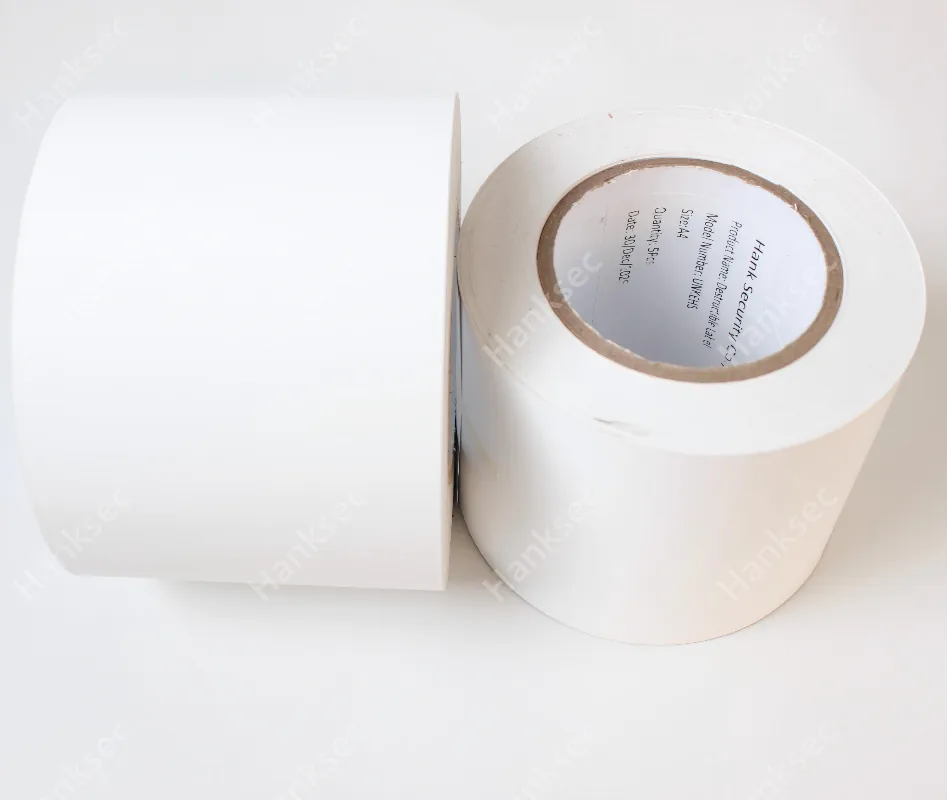
- Converting format: Jumbo rolls, slit rolls, sheets or finished die-cut labels.
- Service conditions: Application temperature, dwell time, humidity, rubbing, storage and inspection requirements.
Hanksec can help evaluate printable security materials, adhesives, hidden security patterns, liner configurations and conversion suitability. The customer or its designated digital platform provider should define and validate the verification software and identity-management requirements.
How Should the Final QR Security Label Be Qualified?
Qualification should use actual labels applied to representative production substrates. Passing a QR scan test on a flat printed sheet does not establish that the same label can be produced and applied reliably at scale.
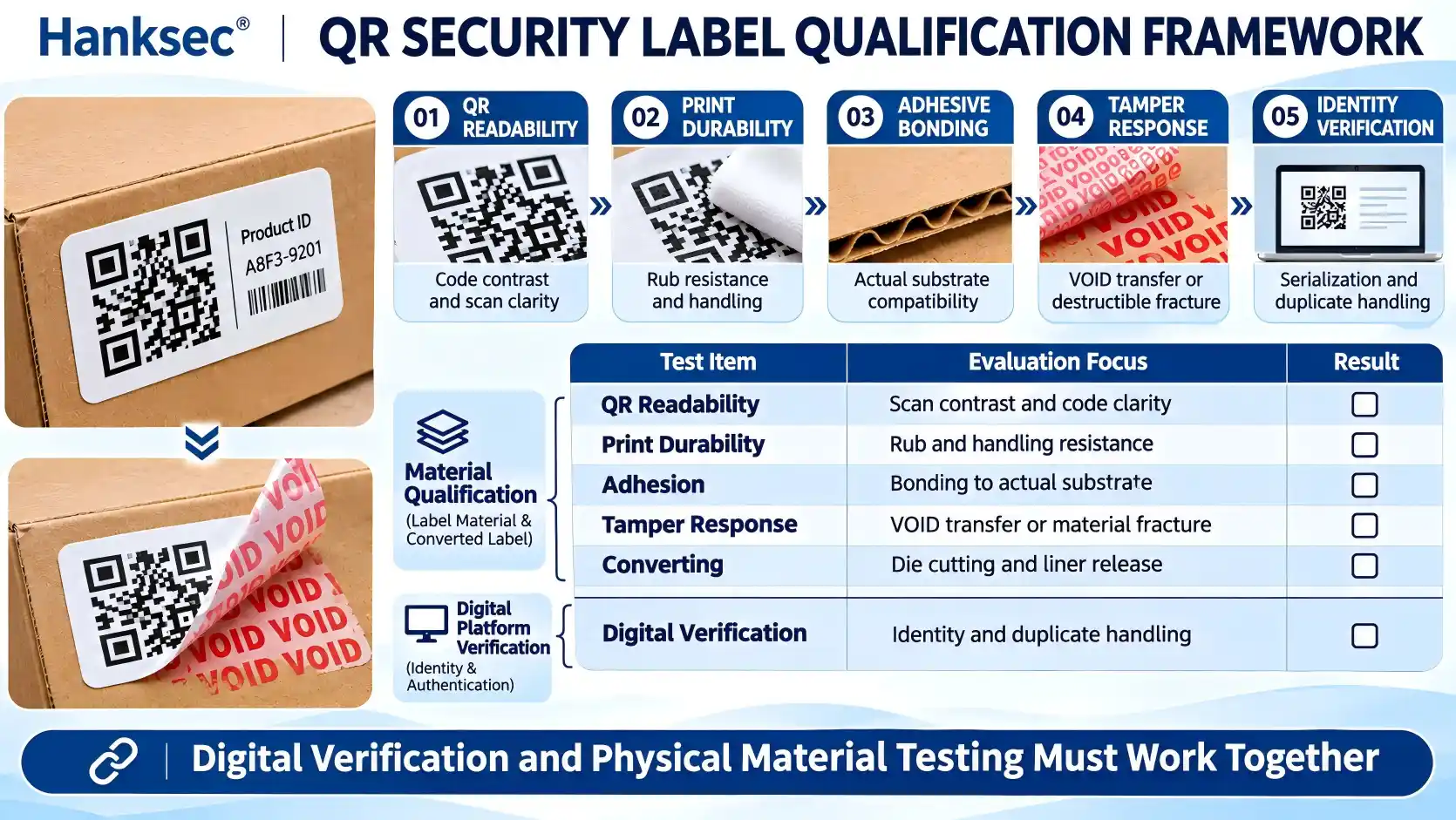
A practical sample-approval record should cover the following checks:
| Qualification Area | Required Evaluation |
|---|---|
| QR Readability | Scan under defined conditions before and after handling. |
| Print Durability | Check ink adhesion, abrasion and relevant environmental exposure. |
| Adhesive Performance | Check contact, dwell, edge stability and bonding to the actual substrate. |
| Tamper Response | Perform defined removal attempts and inspect the intended physical evidence. |
| Converting Performance | Evaluate die cutting, matrix stripping, liner release and dispensing. |
| Identity and Verification | Check printed-code assignment, duplicate handling and verification rules with the digital platform provider. |
Where a security construction or adhesive is changed, the final printed label should be requalified rather than assuming that the previous result remains valid.
Frequently Asked Questions
Can someone copy a genuine anti-counterfeiting QR code?
Yes. The visible QR pattern can be photographed or reproduced. A serialized identity makes individual items distinguishable in a controlled system, but does not make the printed graphic physically uncopyable.
Does a successful QR scan prove that a product is genuine?
No. A successful scan may confirm that the QR code is readable or that a record exists. Product authentication depends on the verification rules, the origin and integrity of the data, and whether the physical product matches the intended identity.
Can two products carry the same serialized QR code?
They should not share the same assigned item-level identity within a properly controlled serialization scheme. However, an unauthorized copy can reproduce the printed symbol. The verification system should have procedures for identifying and investigating possible duplication.
Will a VOID label prevent QR code copying?
No. VOID materials help reveal certain removal or opening attempts. They do not make the QR image impossible to photograph or reprint. Their purpose is to add physical tamper evidence to a broader authentication system.
Are destructible labels better than ordinary QR stickers?
Destructible labels can provide stronger resistance to intact physical removal where the material is correctly matched to the substrate. However, QR readability, printing, die cutting, dispensing and application performance must also be qualified.
Can holographic QR labels be copied?
The QR graphic can be reproduced. A controlled holographic feature may provide an additional visual authentication element, but its effectiveness depends on the optical design, production controls and inspection process.
Does Hanksec provide QR code verification software?
Hanksec specializes in tamper-evident security materials and customized label constructions. Serialized identity management, authentication databases and verification software should be supplied or specified by the brand owner or its designated digital technology partner.
Can Hanksec supply materials for serialized QR security labels?
Yes. Hanksec supports printable VOID materials, destructible materials and custom security constructions suitable for relevant QR and variable-data label conversion projects. Printing and finished-label performance should be confirmed through sample testing.
A unique QR code supports product identification. The physical label must also withstand printing, converting and normal handling while providing the required evidence if removal or replacement is attempted.
Send Hanksec your application surface, QR printing method, label size, expected tamper response and roll-format requirements. Our team can help evaluate suitable VOID, destructible or customized printable security materials for your project.
REQUEST SECURITY MATERIAL TESTING →
Hanksec® | Printable Security Label Materials · VOID / Destructible Constructions · QR & Variable-Data Compatibility · OEM/ODM